



Constructivism: Appraisal and Auction

Key takeaways
- Major architectural works and paintings by Tatlin, Popova, and Lissitzky fetch over one million euros, with prices reaching tens of millions for exceptional pieces.
- Photomontages and posters by Rodchenko or Klucis range from 30,000 to 500,000 euros, depending on the rarity and historical significance of the work.
- Authenticity is a major concern: the extreme rarity of authentic pieces and the sophistication of the market for forgeries require rigorous pre-sale authentication.
Revolutionary geometry, typography, and photomontage: the value of Constructivist works varies greatly depending on the artist, rarity, and provenance.
Below you’ll find all of our valuation guides dedicated to Constructivism—paintings, posters, photographs, and avant-garde prints. Each guide details the price ranges observed at auction and the factors that determine a work’s value before it is entrusted to our state-certified auctioneers.
Guides on this art movement
See all guides >
Rating and value of sculptures, drawings and paintings by Ka...
Katarzyna Kobro is a Polish artist, a pioneer of Constructivism, who produced many works that are highly regarded today.
Learn more >

Rating and value of Luc Lanel's services, dishes and silverw...
Luc Lanel is a twentieth-century artist and designer who has produced numerous pieces of silverware that are highly prized and valued.
Learn more >

Rating and value of paintings, drawings and sculptures by Ni...
Nicolas Schöffer is a twentieth-century artist whose paintings and sculptures are highly prized at auction.
Learn more >

Rating and value of paintings by Friedrich Friedrich Vordemb...
Friedrich Vordemberge Glidewart was a painter of the German avant-garde who produced many works of high value.
Learn more >

Rating and value of paintings by Vilmos Huszar
Vilmos Huzsàr was a Hungarian painter and member of the De Stijl movement, who produced numerous works of great value.
Learn more >

Rating and value of paintings by César Domela
César Domela is a neoplastic artist who has produced many works that are highly rated and valued at auction. 24h estimate.
Learn more >

Rating and value of paintings by Theo van Doesburg
Theo van Doesburg is an abstract painter of neoplasticism who produced works that are highly rated and valued at auction.
Learn more >

Rating and value of Raymond Duchamp-Villon's works and sculp...
Raymond Duchamp-Villon is a twentieth-century Cubist sculptor whose works are highly regarded and valued at auction.
Learn more >

Rating and value of paintings and drawings by Varvara Fiodor...
Varavara Stepanova is a Russian Constructivist artist who left her mark on her period. Her paintings and drawings are highly prized at auction.
Learn more >

Rating and value of drawings and photographs by Gustav Kluci...
Gustav Klucis is a Russian artist who played an active role in Soviet propaganda. Today, his works are highly prized.
Learn more >

Rating and value of drawings and lithographs by Kasimir Male...
Kasimir Malevich is a Suprematist painter who produced works that are highly valued at auction. 24h estimate.
Learn more >

Rating and value of paintings by Alexander Deineka
Alexander Deineka is a Russian artist who has produced engaged art, and works that are highly rated and valued at auction. 24h estimate
Learn more >
Understanding the Value of a Constructivist Work
What Is Market Value in the Modern Art Market?
The market value of a Constructivist work refers to the benchmark value assigned to it by the secondary market at a given moment, based on the artist’s identity, the technique used, the period of creation, the condition of the work, the strength of the documentation, and current international demand.
Constructivism, which emerged in Russia around 1915 in the wake of Malevich’s Suprematist experiments and later established itself as an independent movement after the Bolshevik Revolution of 1917, is one of the most radical and influential avant-garde movements of the 20th century, whose ambition was to place art directly in the service of building a new society.
This movement is distinguished by its explicit rejection of art for art’s sake in favor of a utilitarian, productivist art closely associated with the materials and forms of modern industrial production: metal, glass, standardized wood, and photomontage. Vladimir Tatlin, whose design for the Monument to the Third International remains one of the most powerful symbols of this ambition, and Alexander Rodchenko, whose photographic and graphic work profoundly transformed the visual language of the 20th century, are among the founding figures whose stature today enjoys fully established institutional recognition on a global scale.
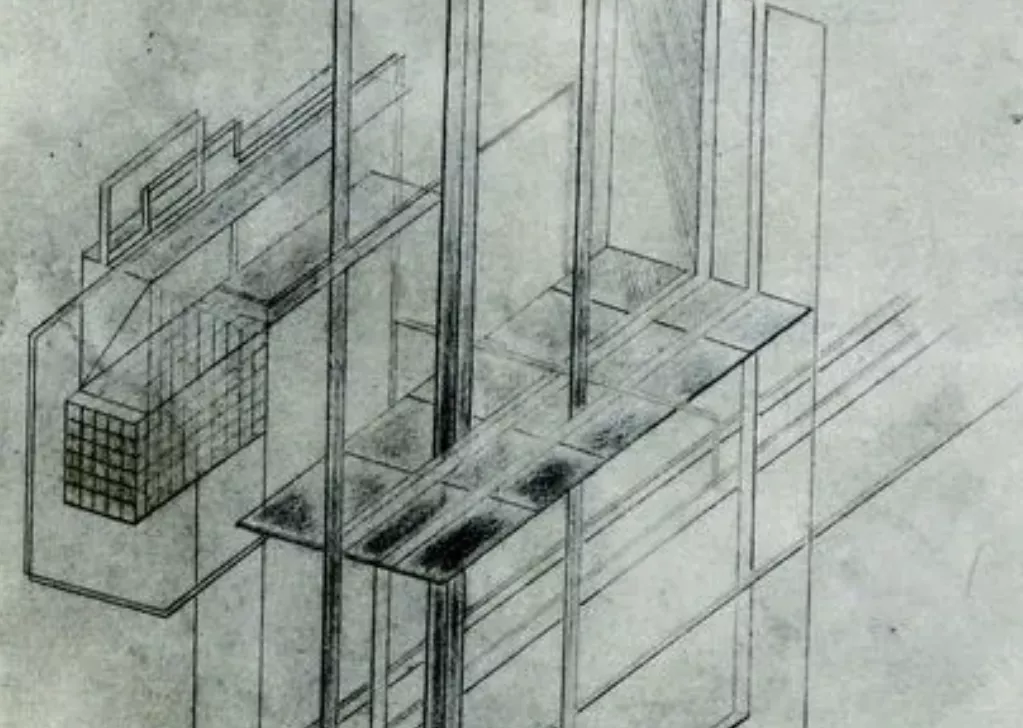
Geometry, industrial materials, and applied art: the essence of Constructivism
The value of a Constructivist work rests on a combination of several factors specific to this movement: the radical formal break with previous pictorial tradition, the use of materials and techniques directly borrowed from the industrial world, “faktura”—referring to the unique material texture of each material— “tektonika,” the structural coherence of the work, and the embedding of the artistic project within a broader political and social ambition that endows these works with exceptional historical significance.
The scarcity of authentic Constructivist works—considerably reduced by destruction, confiscations, and the exile of many artists following the Stalinist turn of the late 1920s, explains the sustained strength of demand for the pieces that have survived and are now well documented.
El Lissitzky, whose “Prouns”—a term coined by the artist to describe his three-dimensional abstract compositions at the intersection of painting, architecture, and typography, had a considerable influence on 20th-century graphic design as a whole, occupies a leading position in this market, as do Liubov Popova and Varvara Stepanova, whose textile and graphic work illustrates the movement’s Productivist ambition to apply its formal principles to everyday objects.
Period | Characteristics | Artists and Works | Market Demand Level |
Suprematism (precursor, 1913–1918) | Pure geometric abstraction, direct influence | Kazimir Malevich | Exceptional, institutional |
Revolutionary Constructivism (1917–1922) | Art in the service of society, spatial construction | Vladimir Tatlin, Alexander Rodchenko, Lyubov Popova | Exceptional, very high auction prices |
Productivism and applied art | 1920–1928 | Varvara Stepanova, Gustav Klucis | Very strong, photomontage and textiles |
International influence (Proun, Bauhaus) | 1922–1930 | El Lissitzky | Very active, very active international market |
International Constructivist sculpture | 1915–1970 | Naum Gabo, Antoine Pevsner (in exile) | Highly supported, international |
Estimate in less than 24h
The criteria that determine the value of a Constructivist work
The market value of a Constructivist work is determined first and foremost by the artist’s identity, which has a significant impact: Tatlin, Rodchenko, and Lissitzky occupy the top of this hierarchy; their scarcity on the open market—since most major works are held in Russian and international museum collections—explains the exceptional prices achieved when pieces appear at public auction.
The period of creation is also a decisive factor; works from the most radical phase, between 1917 and the Stalinist turn of the late 1920s, being the most sought-after, whereas the later output of artists who had to adapt their practice to the constraints of Socialist Realism imposed by the Soviet regime is subject to different market dynamics.
The price ranges observed on the secondary market illustrate this breadth. A study or preparatory drawing by a second-tier artist of the movement can range from 5,000 to 50,000 euros.
A photomontage or poster signed by a major artist such as Klucis or Rodchenko ranges from 30,000 to 500,000 euros, depending on the piece’s rarity and historical significance.
A major painting or spatial installation by Popova, Lissitzky, or Tatlin frequently exceeds one million euros and can reach tens of millions for the most exceptional and best-documented works.
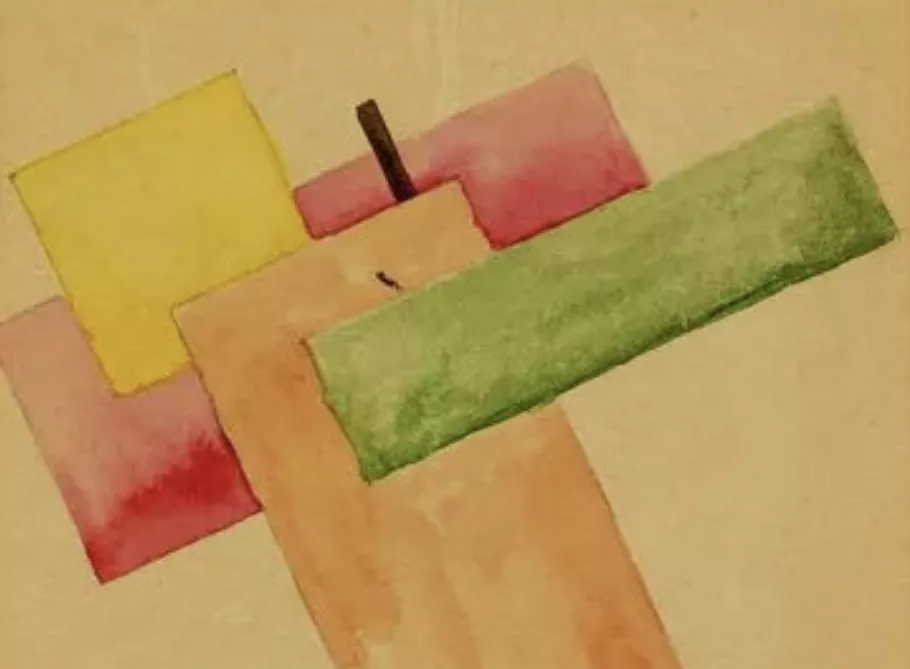
Paintings, photomontages, sculptures: all Constructivist works appraised
The hierarchy of Constructivist works and its impact on value
In Constructivist art, the spatial constructions and abstract paintings by the movement’s founders occupy the very top of the hierarchy of value; their extreme rarity on the open market, combined with their foundational historical significance for all 20th-century abstract art, explains their exceptional market valuations.
Photomontage, a technique favored by Rodchenko and Gustav Klucis for its ability to produce propaganda images of formidable visual impact while remaining fully in line with the Constructivist aesthetic, constitutes a category of its own, whose historical and documentary value complements its strictly formal qualities.
Constructivist sculpture, particularly that developed in exile by Naum Gabo and Antoine Pevsner—who extended and disseminated Constructivist principles in Western Europe after leaving Russia—occupies an important place in this market, as their exploration of transparency and volume exerted a considerable influence on the entire field of 20th-century abstract sculpture.
Posters and models, which are more affordable, reflect the applied and utilitarian dimension championed by the movement.
Category | Characteristics | Estimated Price Range | Market demand |
Spatial construction or major painting (Tatlin, Popova, Lissitzky) | Pioneering work, extremely rare, extensive documentation | €1 million — tens of millions | Institutional, exceptional |
Photomontage or propaganda poster (Rodchenko, Klucis) | Iconic technique, historical and documentary value | €30,000 — €500,000 | Very popular, international |
Sculpture (Naum Gabo, Antoine Pevsner) | Transparency, volume, dissemination in exile | €100,000 — several million € | Very active, international |
Drawing or preparatory study (major artist) | Insight into the creative process, small format | €10,000 — €200,000 | Active, sought-after segment |
Textile work or applied design (Stepanova) | Productivism, everyday object | €5,000 — €80,000 | Well-supported, specialized collectors |
Work by a second-tier artist of the movement | Variable quality, attribution sometimes uncertain | €3,000 — €40,000 | Moderate, affordable |
Rodchenko, Lissitzky, Tatlin, Gabo: the figures driving prices
Alexander Rodchenko, whose work spans painting, photomontage, graphic design, and photography, embodies more than any other artist the interdisciplinary approach championed by the Constructivist movement across various artistic disciplines.
His decisive contribution to the renewal of the language of photography—with oblique framing and daring high-angle shots—continues to exert a considerable influence on contemporary photography, which explains the strong demand for his vintage prints, which are particularly sought-after and rare on the market.
El Lissitzky, whose “Prouns” constitute one of Constructivism’s most original and influential contributions to international abstract art, enjoys comparable institutional recognition.
Vladimir Tatlin, a theorist and practitioner whose tower project for the Third International was never realized on the scale originally planned but whose models and preparatory studies constitute major historical works, occupies a foundational position in this market.
Naum Gabo and Antoine Pevsner, who each pursued careers in Western Europe and the United States that facilitated the international dissemination of Constructivist principles long after the movement’s decline in the Soviet Union, enjoy a solid market standing, as their work is recognized as being in direct continuity with the founding principles of the Russian movement.
Estimate in less than 24h
Get a free appraisal of a Constructivist artwork
A certified appraisal by a licensed auctioneer in less than 24 hours
Appraising a Constructivist work is one of the most challenging tasks in the Russian avant-garde art market, due to the extreme rarity of authentic pieces available and the sophistication of the counterfeit market that has developed for this segment over several decades, with many works attributed to major artists of the movement having been downgraded following in-depth appraisal.
The certified auctioneer has the necessary training and discretion to conduct this appraisal with the rigor it requires.
Auctie’s offers this appraisal free of charge, with a certified response within 24 hours.
Whether you have inherited a work attributed to a Constructivist artist, wish to have a photomontage or a study from this period appraised, or are considering compiling an estate inventory, the process is the same: submit your piece to a trained eye capable of accurately assessing its value.
What You Need to Provide for an Online Appraisal
For a painting or a construction, clear photographs of the front and back of the work are essential, as well as a close-up of the signature and any inscriptions on the back of the support, the precise dimensions of the composition, and any known provenance information: a collection label, purchase invoice, previous certificate of authenticity, or reference in an exhibition catalog or specialized publication.
For photomontages and posters, the condition of the paper support and any text or typographic inscriptions must be specified.
Any provenance information dating from the Soviet period or the Russian emigration must be provided in detail, as the traceability of these works through the political upheavals of the 20th century is a major challenge for authentication.
In the event of serious doubt regarding attribution, a thorough physical examination will be offered prior to any sale, which may include a scientific analysis of the materials.
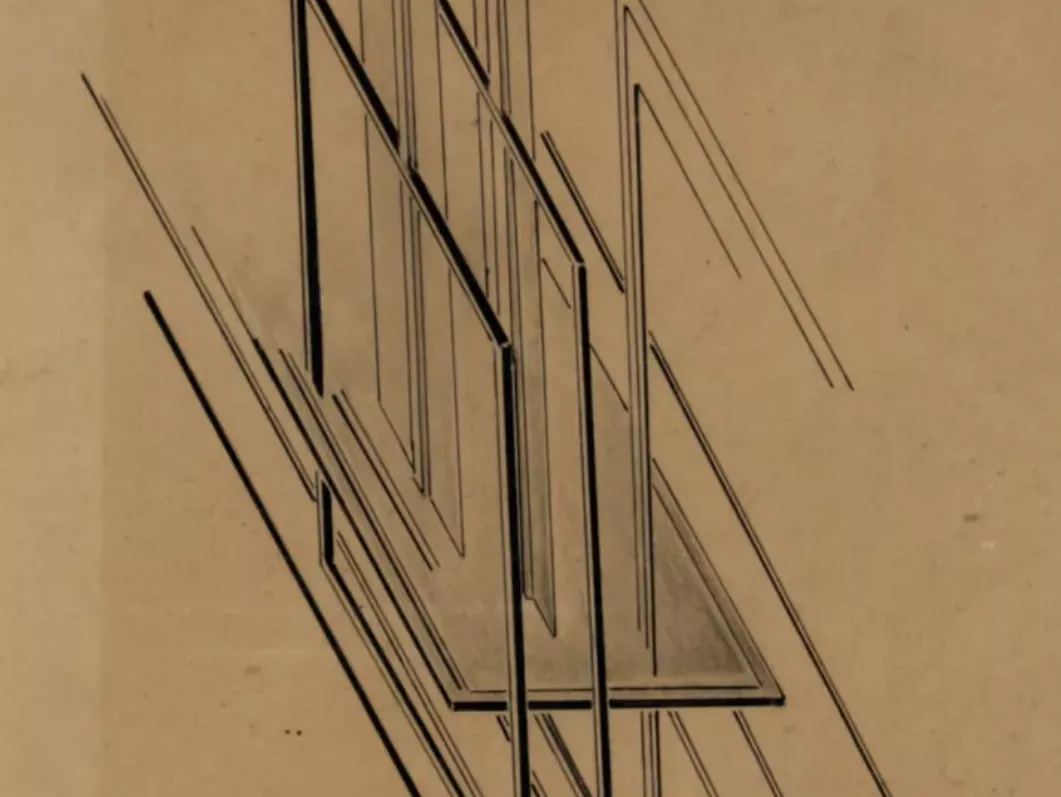
Signature, provenance, and authenticity: the pillars of valuation
Signatures and Attributions: Their Impact on Value
The authentication of a Constructivist work relies on a set of converging clues, the rigor of which must be proportional to the rarity and renown of the artist in question.
A signature, when present, is never sufficient on its own to establish a credible attribution: the sophistication of the forgery market in this segment requires an in-depth stylistic analysis, a study of period materials and pigments, and a systematic review of available archives—particularly those held by Russian and international museums, which house the bulk of the documented body of work.
For the movement’s major artists, catalogs raisonné and reference works are considered authoritative in the market. Research on Rodchenko conducted by his granddaughter and biographer, studies on Lissitzky by recognized specialists in the Russian avant-garde, and the archives held by museums constitute the tools for attribution that the auctioneer systematically employs.
A work listed in one of these collections benefits from the highest level of scholarly credibility, which is directly reflected in its valuation.
Level of Documentation | Impact on the valuation |
Work listed in museum archives or a reference catalog | Maximum assurance; often an essential condition for sale |
Work published in specialized literature or exhibited in a major retrospective | Strong scientific backing; value highly sensitive |
Work with conclusive scientific analysis (pigments, period papers) | Guarantee of material authenticity; provides strong assurance to the buyer |
Work accompanied by a written appraisal from a recognized specialist in the Russian avant-garde | Good guarantee; facilitates the sale and reduces risk |
Work with documented provenance dating back to the Soviet period or the emigration | Solid foundation; rare and valuable traceability |
Work without documentation; uncertain attribution | Maximum uncertainty; sale not recommended without prior in-depth appraisal |
Provenance and Condition: Their Impact on Valuation
The provenance of a Constructivist work is an absolutely decisive factor in building trust in this market, due to the turbulent history that has affected the circulation of these objects from the 1917 Revolution through the upheavals of the late 20th century.
A work that can be shown to have left Russia with an émigré artist, or to come from a historic Western collection assembled as early as the 1920s or 1930s by visionary connoisseurs of the Russian avant-gardeenjoys exceptional legitimacy and legal certainty in this market, which is particularly sensitive to issues of attribution.
The condition of these works requires special attention, as they were often created using experimental materials and limited resources amid the shortages of the Soviet Union in the early post-revolutionary years.
Poor-quality paper, paint applied to makeshift supports, and the fragility of the original photomontages—all these factors make the condition of these works particularly precarious and a decisive factor in determining the value of these historical pieces.
Sell a Constructivist Work at Auction with Auctie's
From the reserve price to the final bid: how the price is determined
Auctions are the most suitable method for selling high-quality Constructivist works in a market where the structural scarcity of authentic pieces can generate intense competition among institutions and major international collectors whenever a well-documented work comes to market.
The reserve price, set in consultation with the seller, must be determined with particular attention to the strength of the attribution and provenance, on which the value of the work in this demanding segment depends almost entirely.
For major, well-documented works, the dynamics of the auction can lead to substantial final bids, as several institutions and specialized collectors are likely to engage in intense competition to acquire a rare work by the Russian avant-garde.
The auctioneer plays a decisive role here by mobilizing networks specialized in this particular segment of the modern art market.
Hôtel Drouot and online auctions: reaching the right bidders
Auctie’s holds its auctions at Hôtel Drouot, the leading auction house in continental Europe, founded in 1852 and frequented by a network of specialists in the Russian avant-garde and international modern art.
For a Constructivist work, Drouot offers visibility among European enthusiasts of this movement, complemented by an online presence that significantly broadens the reach of each auction on an international scale.
A Russian collector eager to return a heritage work to its country of origin, an American museum seeking an iconic piece of the avant-garde, or a European art lover passionate about the history of 20th-century abstraction can bid in real time from their own country.
For Constructivism, whose historical renown is now global, this international dimension is almost always decisive in securing the highest hammer price.
Estimate in less than 24h
Estate Planning, Inheritance: Valuing an Inherited Constructivist Artwork
Inventory and Distribution of an Estate
Constructivist works rarely—though occasionally—appear in the estates of families linked to 20th-century Russian emigration or who built collections with avant-garde specialists in the decades following the revolution.
These pieces, whose rarity and historical significance may far exceed what their current owners realize, warrant a thorough appraisal before any estate division, as the financial stakes can be considerable even for a modestly sized work.
Auctie’s regularly collaborates with notaries to compile comprehensive estate inventories that include works of the Russian avant-garde.
Each piece is appraised individually, with particular attention paid to provenance research—a factor that is absolutely critical to determining value in this segment, which is marked by a complex history. The resulting report is an official document that is legally enforceable and may be submitted to the estate file without reservation.
Confidentiality of the process and preservation of anonymity
The circumstances leading to the appraisal of an inherited Constructivist work are often personal: discovery within an estate linked to the history of Russian emigration, reorganization of a collection, or a decision to sell after a long period of holding the work.
Auctie’s handles each case with absolute discretion. The owner’s identity is never disclosed to third parties without their explicit consent, and the works may be offered for sale under complete anonymity if the owner so desires.
This confidentiality is a fundamental commitment of Auctie’s, valid at every stage of the relationship, from the initial contact through to the receipt of the proceeds from the sale.
Entrust the appraisal of your Constructivist artwork to Auctie’s
A Constructivist work deserves an appraisal commensurate with its exceptional rarity and the historical significance of this movement, which laid the foundation for 20th-century abstraction.
The sophistication of the counterfeit market, the decisive importance of provenance in a turbulent historical context, and the need for a thorough understanding of the history of the Russian avant-garde: these are all factors that only a certified auctioneer, well-versed in the specifics of this demanding segment, can assess with the rigor they require.
Auctie’s guides you from the initial appraisal through to the final auction, with the rigor of an expert trained in these matters and the discretion your financial decisions deserve. The appraisal is free, confidential, and non-binding, and you’ll receive a response within 24 hours.
Discover in the same theme

Rating and value of Alexander Calder's mobiles, luminaires a...
Alexander Calder is a twentieth-century American artist who produced a number of highly prized mobiles and lighting fixtures.
Learn more >

Rating and value of paintings, jewelry, mobiles by Alexander...
Alexander Calder was an American artist of the 20th century who was part of the cinematic movement and produced highly-acclaimed works.
Learn more >

Rating and value of Le Corbusier's furniture, drawings and p...
Le Corbusier was a Franco-Swiss architect, painter, artist and designer whose works are highly regarded and valued.
Learn more >
Estimate in less than 24h
Frequently asked questions
-
What are the price ranges for Constructivist works?Prices vary considerably depending on the category and the artist. A study or drawing by a second-tier artist ranges from 5,000 to 50,000 euros. A photomontage or signed poster by a major artist such as Rodchenko ranges from 30,000 to 500,000 euros. A major painting or installation by Popova, Lissitzky, or Tatlin frequently exceeds one million euros and can reach tens of millions for the most exceptional and well-documented pieces.
-
How do you have a Constructivist artwork authenticated?Auctie's offers a free, no-obligation appraisal conducted by a certified auctioneer. Simply submit clear photographs of the front and back of the artwork, a close-up of the signature, the exact dimensions, and any known provenance information (collector’s labels, invoices, certificates, publication references). A certified response is provided within 24 hours.
-
What factors determine the value of a Constructivist work?Value depends primarily on the artist's identity (Tatlin, Rodchenko and Lissitzky are at the top), the period of creation (works from 1917 to the late 1920s are the most sought-after), rarity, condition, the strength of the documentation, and provenance. The technique used (spatial construction, photomontage, sculpture) and the historical significance of the piece also significantly influence the valuation.
-
Is now a good time to sell a Constructivist artwork?Yes. Constructivism enjoys very strong international demand and established institutional recognition. The extreme scarcity of authentic works available on the open market—with most major works held in museum collections—creates sustained market momentum for works that come up for auction.
-
How does the sale of a Constructivist artwork work at Auctie's?Auctie's supports sellers from the appraisal stage through to the auction. Following a free, certified appraisal by a licensed auctioneer, the artwork is evaluated within its market context, meticulously cataloged, and presented to an international audience of buyers. Auctie's handles the documentation, promotion, and administrative management of the sale.
