



Rating and value of paintings, jewelry, mobiles by Alexander Calder

Key takeaways
- Calder's works sell for up to 16.7 million euros, with his mobiles being the most highly valued segment of the international modern art market.
- Prices vary by medium: paintings range from 490 to 2.37 million euros, drawings from 320 to 301,390 euros, and prints from 10 to 40,660 euros.
- Mobiles from the 1930s–1950s—the period in which he developed his abstract style—command prices 1.5 to 3 times higher than those of his later works.
Alexander Calder (1898-1976) is an American artist who is highly regarded on the auction market today. His extraordinary career testifies to his genius and the scope of his production. His extraordinary career is a testament to his genius and the breadth of his output. The artist's current market value is a testament to the passion his works arouse among collectors, defying time and trends.
If you own a work by or based on the work of artist Alexander Calder and would like to know its value, our state-approved experts and auctioneers will guide you. Our specialists will carry out a free appraisal of your work, and provide you with a precise estimate of its value on the current market. Then, if you wish to sell your work, we will guide you towards the best possible arrangement to obtain the optimum price.
Rating and value of the artist
By the success and notoriety of his works, Alexander Calder established himself from his lifetime as a sure value on the art market. In recent years, the artist's market value has continued to grow. Calder's most sought-after works are his paintings, mobiles and volume sculptures (including jewelry), which are very popular on the French and American markets. Thus, a work by Calder can fetch millions of euros, as evidenced by his mobile Poisson volant dating from 1957, adjudged €16,714,100 at Christie's in 2014.
Order of value from the most basic to the most prestigious
Technique used / Type of work | Result |
|---|---|
Estamp - multiple | From €10 to €40,660 |
Drawing - watercolor | From €320 to €301,390 |
Painting | From €490 to €2,373,750 |
Estimate in less than 24h
The artist's creations and style
Throughout his career, Calder's artistic output was prolific and varied. His works stand out for their innovative use of all types of metal, including brass and bronze. He meticulously researched the structure of his sculptures and paintings in order to achieve balance. His ingenuity is also evident in his pictorial compositions, where every detail is calculated.
His production and style are quite apart in the history of the twentieth century, although they are part of the kinetic art movement; consisting in producing works in motion or giving the impression of motion.
.
Alexander Calder, his life, his work
Alexander " Sandy " Calder was an American artist born in Pennsylvania in 1898, into a family of already talented and renowned artists. His mother, Nadette Lederer Calder, was a painter and his father, Alexander Stirling Calder, a sculptor. His grandfather was also an artist he was therefore educated in the art world and as an artist developed a certain singularity and stylistic identity of his own from childhood.
He graduated in mechanical engineering from the Stevens Institute of Technology. He then entered the Art Students Legaue of New-York in 1923, to complete his artistic training. He had been making art since he was a child, using his father's equipment, and eventually never stopped. Arriving in Paris in 1926, the following year he presented a series of toys he had created at the Salon des humoristes.
Passionate about the circus, he went on to create an absolutely considerable sculptural work from 1929 onwards, Calder's Circus, in which he created and sculpted miniature inlays of automata. It was a performance in the true sense of the word, and he exhibited it all over Europe - the whole thing lasting around two hours. In Paris, he rubbed shoulders with Joan Miro, Jean Cocteau, Robert Desnos and Le Corbusier.
In some of his works, we can discern a strong stylistic proximity to Miro, in the treatment of shapes and the choice of colors. In the latter parameter, he also echoes Mondrian, borrowing the same color palette from him.
He began production of his Mobiles in 1932, to be so named by Marcel Duchamp. He fled to the United States during the Second World War with other artists like Chagall to continue producing in peace. He won a number of awards, including the Grand Prix at the Venice Biennale.
.
Techniques of the artist
Style of Alexander Calder
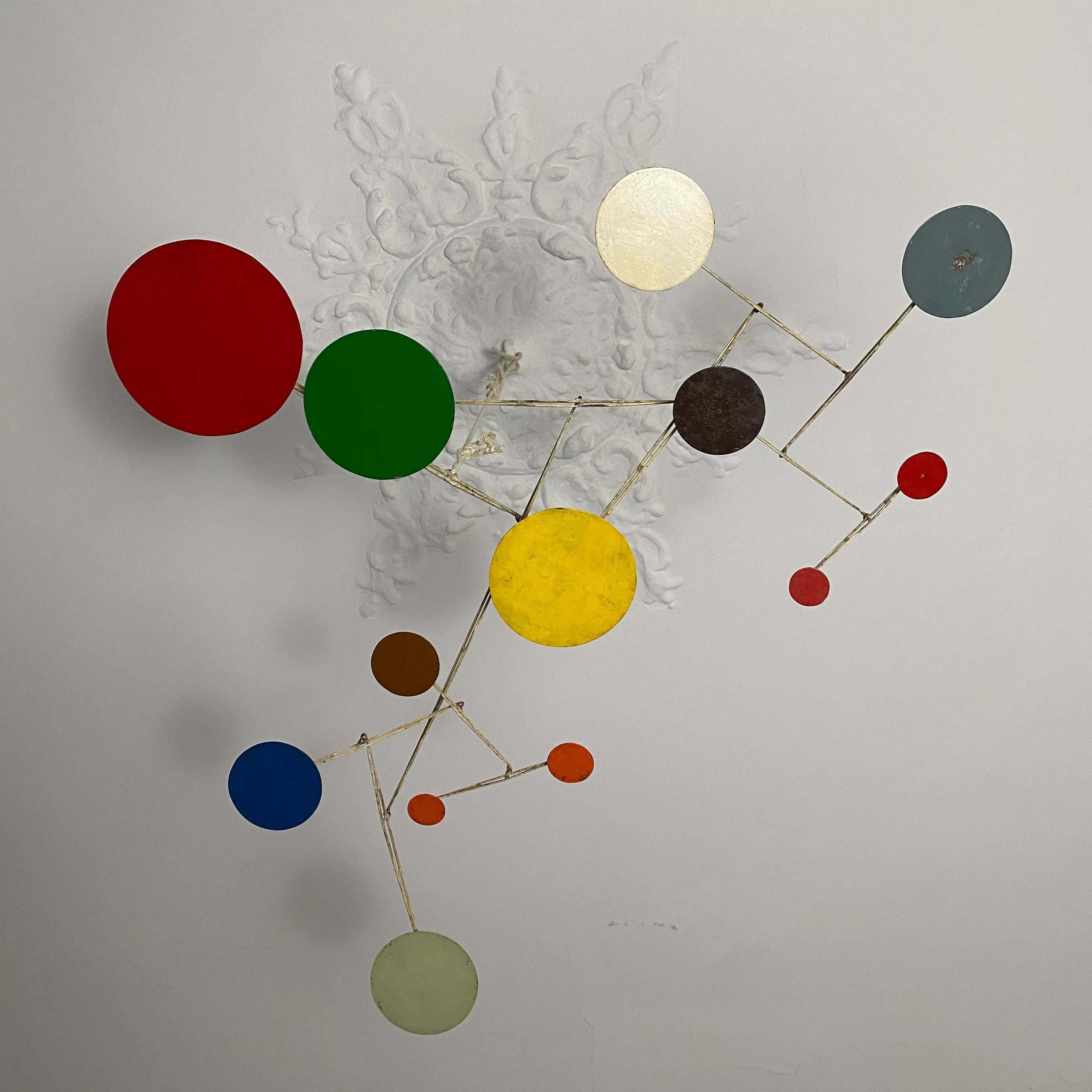
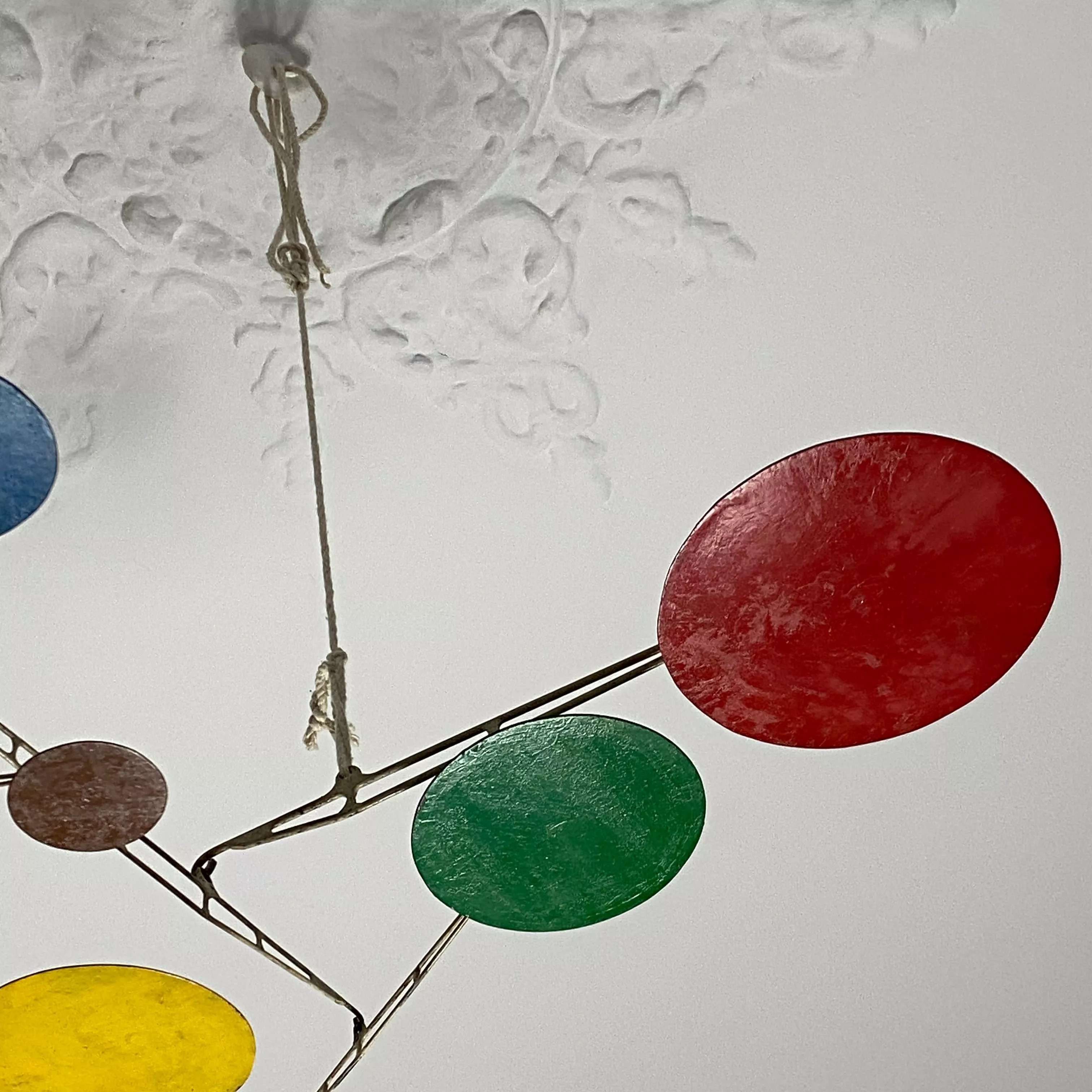
Calder developed a plastic language based on line in space, transforming sculpture into a system of dynamic balances rather than solid volume. He made a decisive contribution to twentieth-century abstraction with the invention of mobiles and stabiles, which introduced real movement as an aesthetic principle.
He radically simplified forms, often biomorphic or geometric, inscribed in a visual economy close to drawing. He uses modest industrial materials such as wire, painted sheet metal and brass, revealing an aesthetic of construction and lightness.
His chromatic palette is reduced but intense, dominated by red, black, white and yellow - the primary colors intended to reinforce spatial legibility. He establishes a continuity between monumental sculpture, graphic works and jewelry, testifying to a unitary conception of artistic creation.
Focus on a key work
Lobster Trap and Fish Tail (1939)
This is a mobile composed of suspended black and white elements organized in an open structure, evoking a three-dimensional drawing. It strikes a subtle balance between structural immobility and potential movement, the work oscillating slowly in space.
The linear construction recalls Calder's early wire sculptures, where line becomes a visual armature. The sober chromatic opposition accentuates the legibility of the forms and their interaction with the surrounding void. It incorporates organic references suggested by the title, without recourse to descriptive figuration.
This is an emblematic work illustrating the maturity of Calder's language, where abstraction, movement and space merge into a total sculptural experience.
The legacy of Alexander Calder
Alexander Calder is an artist who has inevitably left his mark on the twentieth century, with his absolutely gigantic output and ever greater, unexpected innovation. Today, his value continues to evolve positively on the auction market he is a particularly sought-after artist.
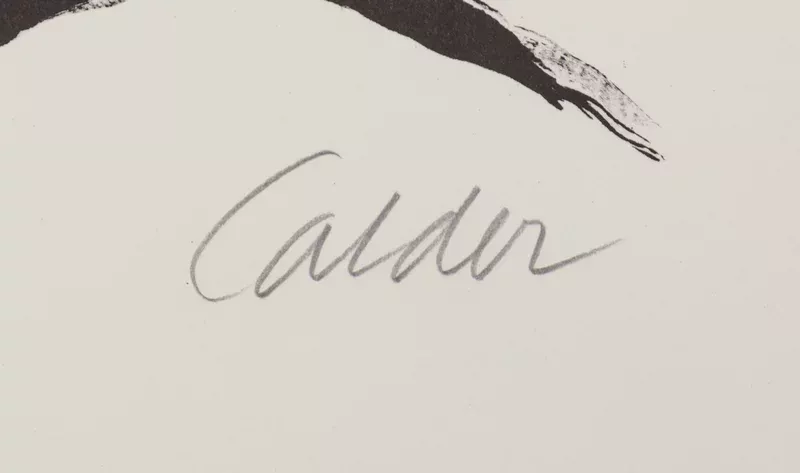
His signature
Not all Alexander Calder's works are signed.
Although there are variations, here's a first example of his signature:
Market segmentation
Mobile prices
Mobiles are the most emblematic and valued segment of Calder's oeuvre, and occupy a " blue chip " position on the international market for 20th-century art, with strong institutional and private demand.
Monumental mobiles frequently fetch between €5 and €20 million, with some major examples exceeding this threshold depending on provenance. Intermediate hanging mobiles make up a central segment of the market, often fetching between €800,000 and €5 million.
Small mobiles or tabletop models generally fetch between €80,000 and €600,000, depending on the formal complexity of the work.
Valuation factors
Several major mobiles have exceeded $20 million at public sale, confirming the centrality of this medium in the artist's overall valuation and the extreme rarity of historic pieces. The mobile of the 1930s - 1950s corresponds to the phase of invention and maturity of Calder's abstract language, and can achieve prices 1.5 to 3x higher than those of the late productions of the 1960s - 1970s.
Multiple-branched compositions with sophisticated dynamic balance and primary polychromy are the most sought-after. Size, apparent lightness and kinetic quality strongly influence price formation.
His signature
Not all of Alexander Calder's mobiles are signed or numbered.
Although there are variations, here's a first example of his signature:
Expertise your property
If you own a work by Alexander Calder, don't hesitate to request a free appraisal by filling in our online form. A member of our team of experts and licensed auctioneers will contact you to provide an estimate of the market value of your Dunand-signed work.
If you're considering selling your work, our specialists will also guide you through the various alternatives available to obtain the best possible price, taking into account market trends and the specific features of each object.
Estimate in less than 24h
Discover in the same theme

Rating and value of paintings by Sayed Haider Raza
Sayed Haider Raza is a twentieth-century Indian abstract painter who has produced works whose value is exploding on the auction market.
Learn more >

Rating and value of paintings by Georges Rouault
Georges Rouault is a twentieth-century Expressionist painter who produced many works that are highly valued at auction.
Learn more >

Rating and value of drawings and paintings by Édouard Pignon
Édouard Pignon is a French painter of the New School of Paris who produced a vast number of paintings that are highly valued and command high prices.
Learn more >
Works from the same period sold at auction

Estimated 10.000 - 20.000 €
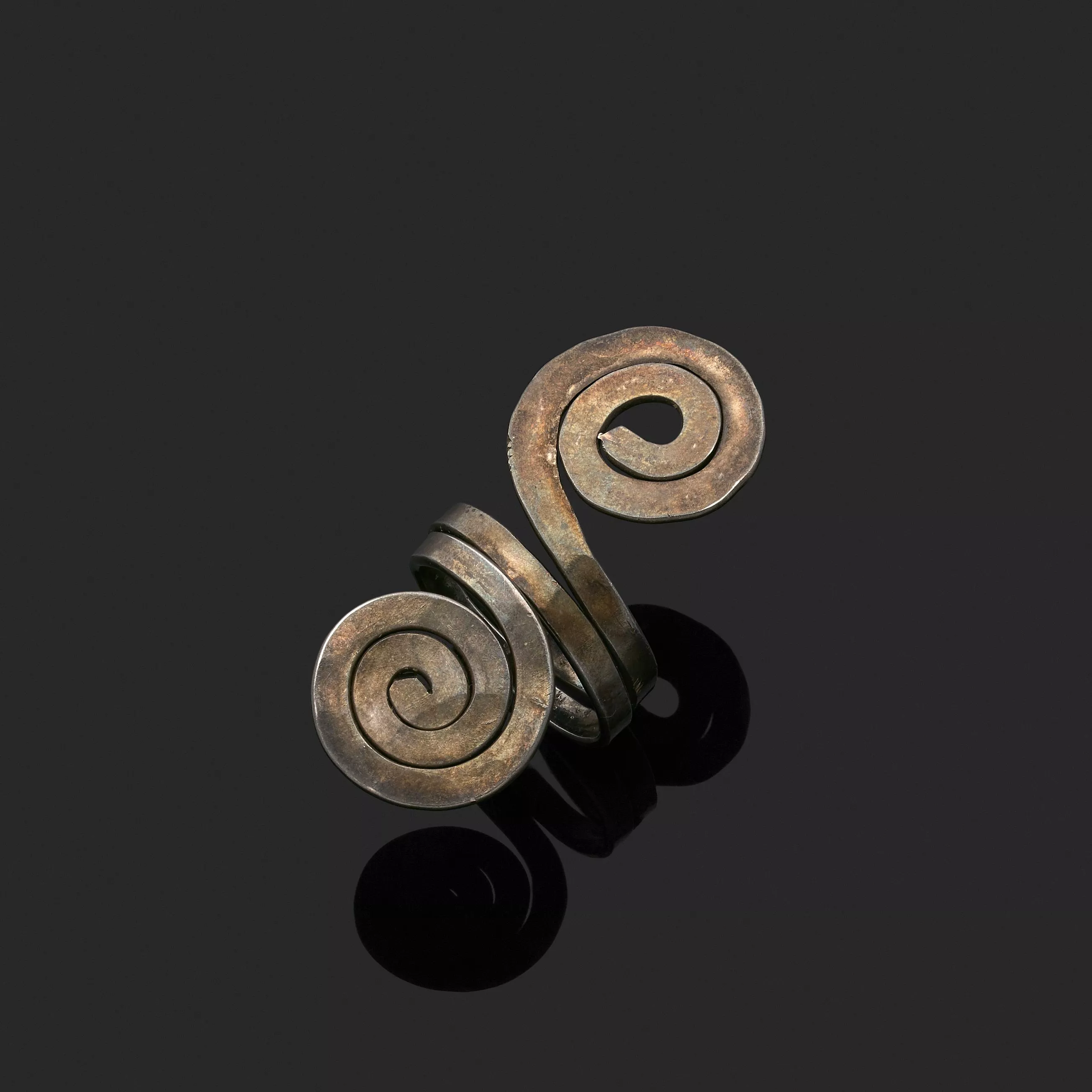
Alexander CALDER (1898-1976) Silver ring with double spiral motif

Estimated 20.000 - 40.000 €
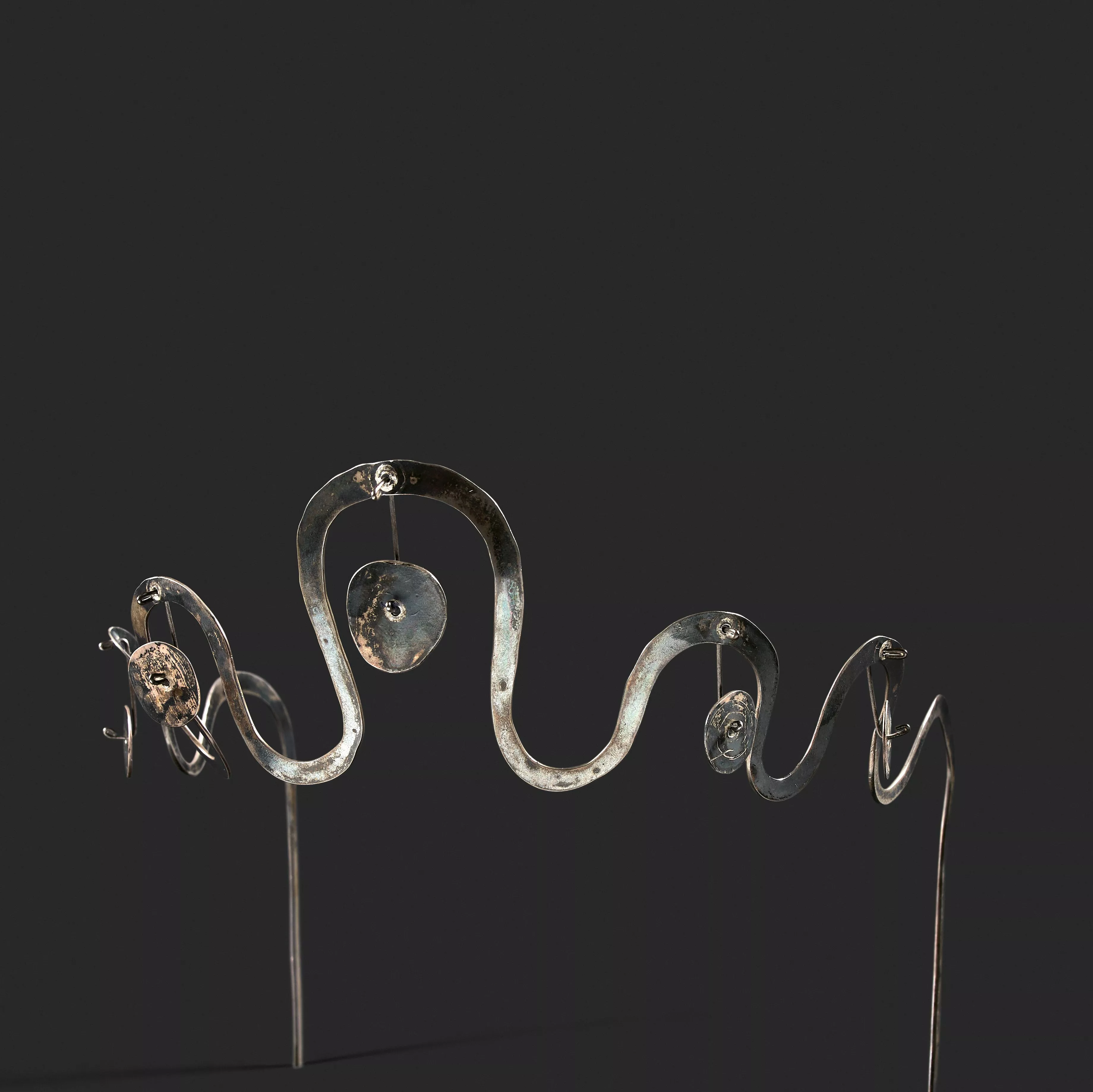
Alexander CALDER (1898-1976) Silver tiara with wave motifs holding pendants

Estimated 4.000 - 6.000 €
GASTON CHAISSAC (1910-1964) Composition 1947, Gouache and Indian ink on paper.

Estimated 300-500€
Roger Capron, set of 7 plates

Secure site, anonymity preserved

Auctioneer approved by the State

Free and certified estimates
Frequently asked questions
-
Who is Alexander Calder, and what is his major contribution to modern art?Alexander Calder (1898–1976) was a major figure in international modern art. Trained as an engineer, he revolutionized sculpture by inventing the mobile in the early 1930s, incorporating actual movement as a fundamental principle of the work. His abstract biomorphic style, based on line, primary color, and spatial balance, placed him at the heart of the European and American avant-garde movements, alongside Mondrian, Arp, and Miró.
-
What is the price range for Calder's works, depending on the type of object?Prints and multiples range from €10 to €40,660; drawings and watercolors from €320 to €301,390; and paintings from €490 to €2,373,750. Mobiles, the segment with the highest values, vary considerably: small tabletop mobiles range from €80,000 to €600,000, medium-sized mobiles from €800,000 to €5 million, and monumental mobiles from €5 million to €20 million or more, depending on their historical provenance.
-
How do you authenticate a work by Calder, and what documents are important?Authentication is based on an analysis of Calder’s distinctive stylistic criteria (quality of line, balance of forms, use of bold colors), precise dating, and, above all, documented provenance. Provenance linked to exhibitions, publications, or records in the Calder Foundation’s archives is a key factor. For a reliable appraisal, we recommend consulting our state-certified auctioneers, who will provide a free, no-obligation estimate.
-
Is this the right time to sell a Calder piece?Yes, Calder’s market value has been steadily rising over the past few years, particularly for his mobiles, which hold a “blue-chip” position in the international market for 20th-century art. Strong institutional and private demand—particularly in France and the United States—along with the growing scarcity of historic works from the 1930s through the 1950s, creates a favorable environment for sales.
-
How does the appraisal and sale of a work of art take place at Auctie's?The appraisal is free, with no obligation, and is conducted by our experts and state-certified auctioneers. Once you submit your online form, you’ll receive a reliable assessment of the market value within 48 hours. If you’re considering a sale, we’ll guide you every step of the way—from the appraisal to the auction—to ensure you get the best possible price for your artwork.
