



Rating and value of drawings and paintings by Tran Van Can

Key takeaways
- Tran Van Can’s works sell for between €800 and €285,000 at auction, with a silk painting from 1936 exceeding its estimate of €285,000 in 2024.
- The Vietnamese artist (1910–1994), who trained at the Indochina School of Fine Arts in Hanoi, synthesizes Asian tradition with Western academic training.
- Works from the 1930s and 1940s related to Vietnamese modernism are worth two to three times as much as his later works, with those exhibited in Paris commanding even higher prices.
Paintings and drawings by Tran Van Can trade up to €285,000 on the auction market. An appraisal enables us to accurately determine the price of your Tran Van Can work on the current market and to optimize, if necessary, the sale of a work.
If you own a work by Tran Van Can and would like to know its value, our state-approved auctioneers will carry out a free appraisal based on authenticity, quotation and recent market results.
Rating and value of the artist Tran Van Can
The artist Tran Van Can leaves behind a distinctive body of work, composed mainly of drawings and paintings. He is Vietnamese. Now, the prices of his works are rising under the auctioneers' gavel.
The price at which they sell on the art market ranges from €800 to €285,000, a significant gap but one that says a lot about the value that can be attributed to Tran Van Can's works. He is especially prized by buyers from Hong Kong, Vietnam and France.
In 2024, an ink on silk entitled Rêverie, dating from 1936, sold for €285,000, whereas it was estimated at between €100,000 and €150,000. Its value has exploded in recent years.
Order of value from a simple work to the most prestigious
Technique used | Result |
|---|---|
Estamp - multiple | From €800 to €12,800 |
Painting | From €12,000 to €102,300 |
Drawing - watercolor | From €1,100 to €285,000 |
Estimate in less than 24h
Situate the artist
Period
Tran Van Can is a twentieth-century artist (1910 - 1994), who worked in the context of Vietnam's artistic modernization under the joint influence of local traditions and Western art education.
He is set in the late colonial period of French Indochina, followed by the political upheavals associated with the wars of independence and the cultural construction of modern Vietnam.
Currents
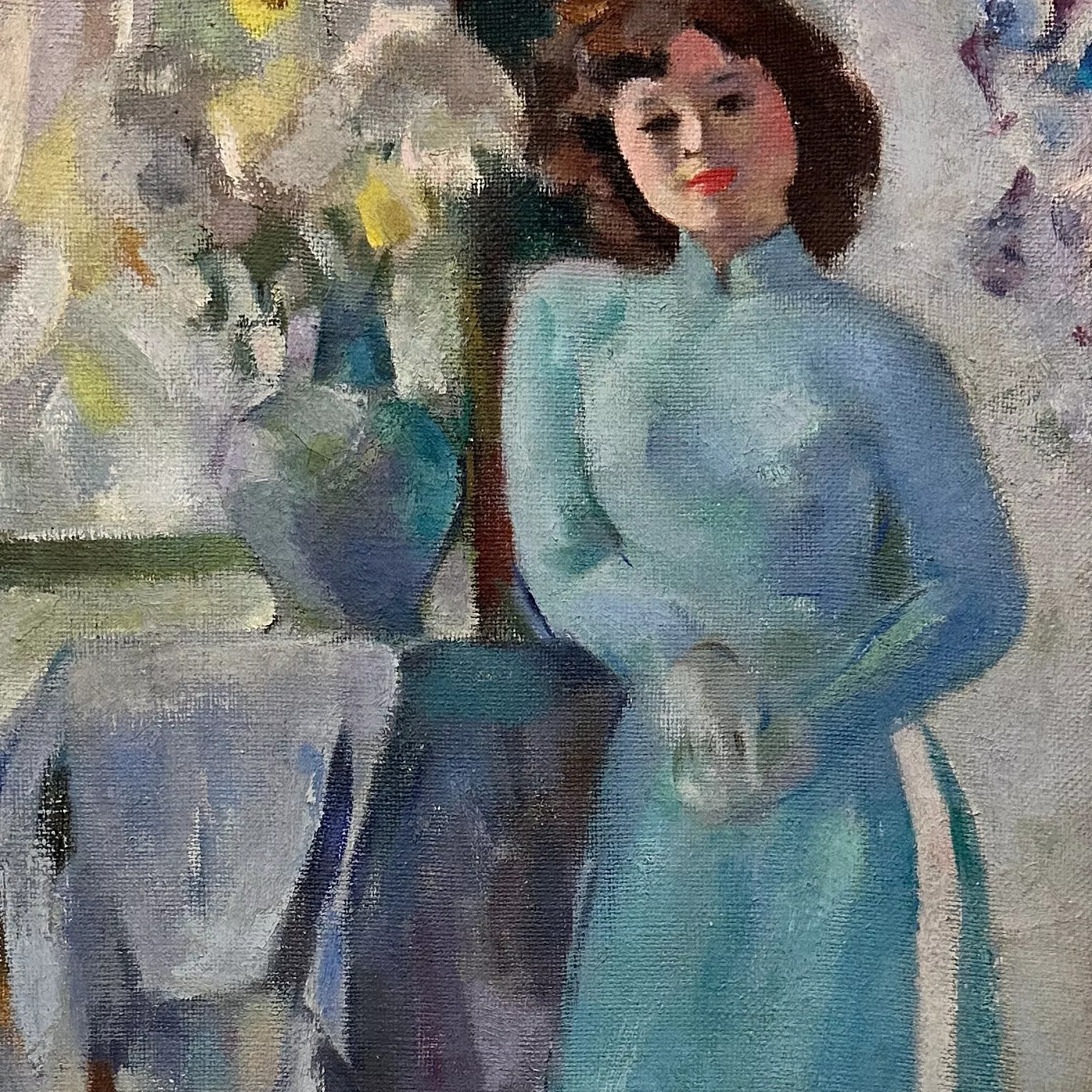
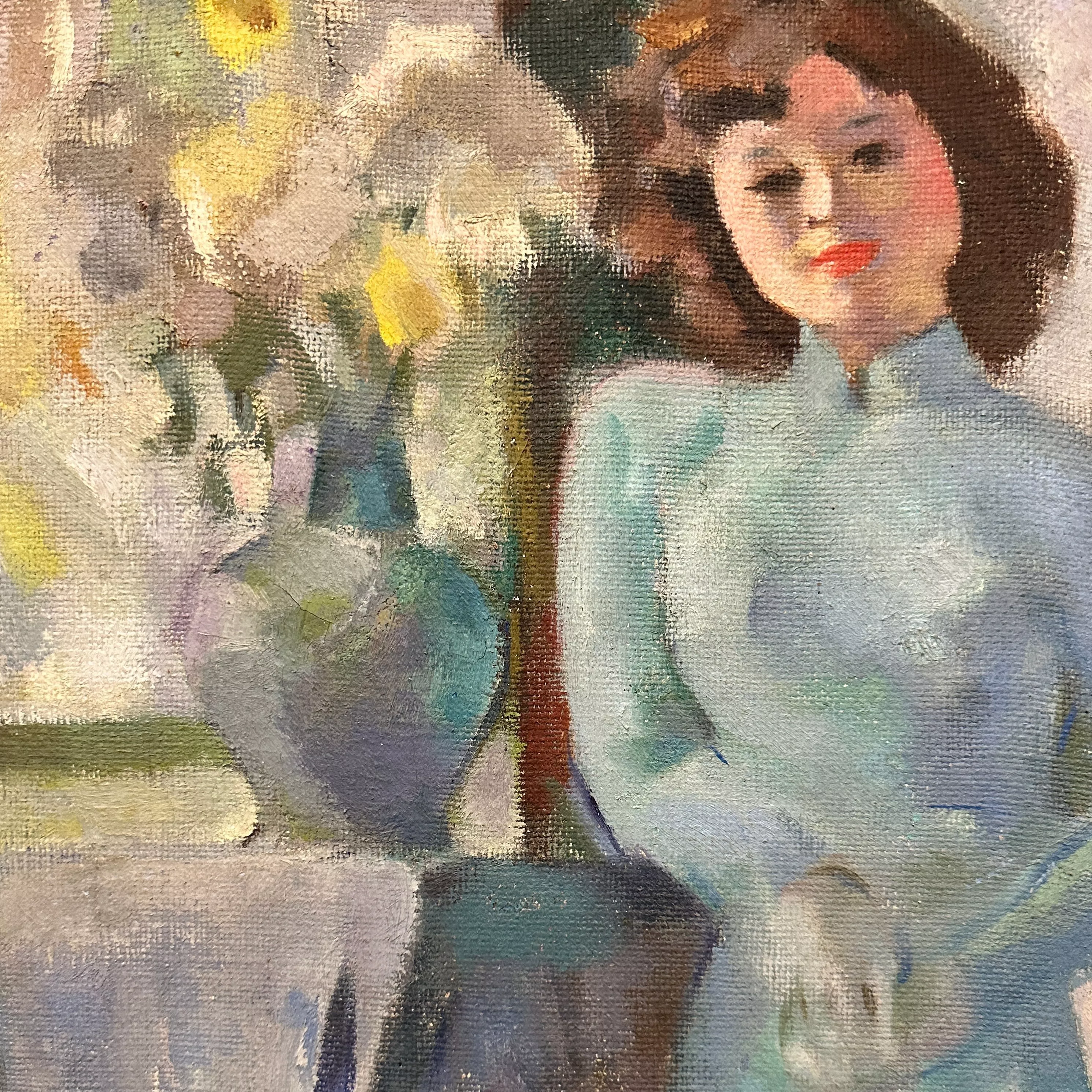
Tran Van Can is very close to Vietnamese modernism, operating a synthesis between Asian pictorial heritage (sense of line, chromatic economy, importance of calligraphy), and Western academic principles introduced by colonial teaching.
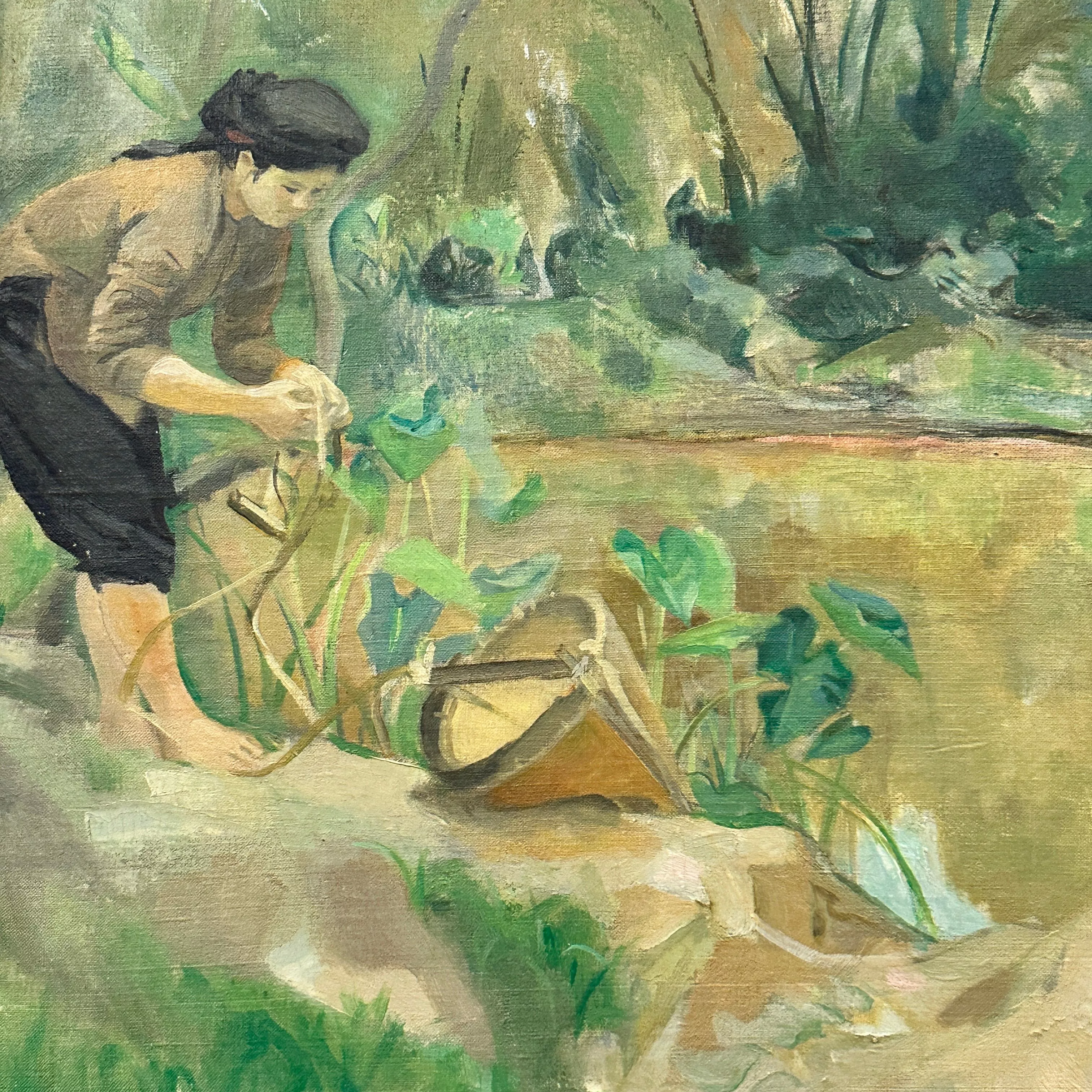
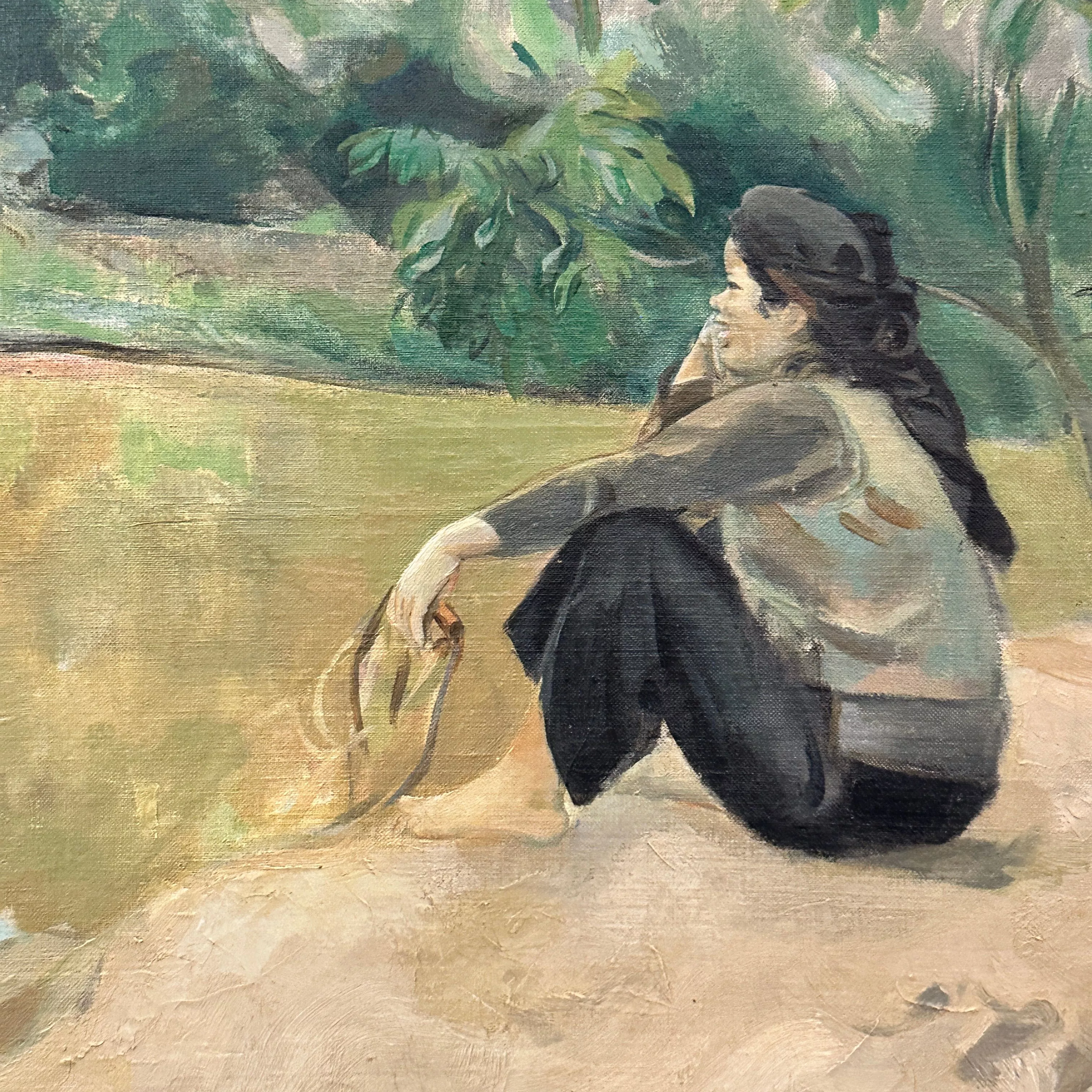
He gradually moved towards a committed style of painting, valuing work, daily life and collective ideals in the political context of North Vietnam. He depicts popular figures, rural scenes and landscapes, articulated with a desire to build a national visual identity.
Tran Van Can's life
Cultural background
Tran Van Can was born in 1910 in Vietnam, then under French colonial rule, in a context marked by the encounter between local artistic traditions and Western academic education.
He trained at the School of Fine Arts of Indochina in Hanoi, a central institution in the emergence of a modern Vietnamese painting, which combines European techniques and artistic aesthetic heritage.
After the Vietnamese revolution, he became part of an artistic production linked to the country's political and cultural issues, contributing to the dissemination of a committed and accessible art.
Artistic and intellectual entourage
He belongs to the generation of artists trained with Victor Tardieu, founder of the École des beaux-arts de l'Indochine, whose teaching played a decisive role in structuring the local art scene.
He rubbed shoulders with several major figures of modern Vietnamese painting, notably Nguyen Phan Chanh and To Ngoc Van, with whom he shared a reflection on the synthesis between tradition and modernity.

Techniques of Tran Van Can
Style of the artist
Tran Van Can seeks a balance between naturalism and stylization, which is marked by a simplification of lines and particular attention to the structure of the drawing. He makes masterful use of color, which is often tempered and harmonious.
He shows a constant interest in scenes of daily life and human figures, which are treated with restraint and interiority. He incorporates elements from silk painting and Asian aesthetics, perceptible in the delicacy of contours and the sobriety of compositions.
Focus on a key work
Em Thuy (Little Sister Thuy), 1943
This portrait of a child is characterized by a calm frontality and an economy of plastic means, reflecting an intimate approach to the model. The palette is soft and luminous, and the light tones contribute to the creation of a silent atmosphere.
The line is precise yet supple, inherited from both French academic teaching and Asian pictorial traditions. The subject's psychology is emphasized by the simplicity of the pose and the absence of superfluous narrative elements.
This work is emblematic of Vietnamese modernity, and illustrates the encounter between Western portraiture and local aesthetic sensibility.
FAQ - How to value a work by Tran Van Can ?
1) What stylistic criteria specific to Tran Van Can are decisive ?
For this artist, it is above all a question of the synthesis between Vietnamese pictorial traditions and Western academic contributions, the finesse of the drawing, the chromatic sobriety and the representation of scenes of daily life or idealized figures.
2) How important is the historical context of creation ?
The period of production plays a central role, particularly in distinguishing works predating Vietnamese independence from those linked to the socialist realist aesthetic, with each phase presenting specific historical and aesthetic issues.
3) How does the art market influence valuation ?
The estimate is based on an analysis of the results of public sales of modern Vietnamese art, taking into account the rarity of major works, their importance in national artistic history and the growing interest of the international market, the value remaining indicative and subject to change.
Market segmentation
Price of works
Tran Van Can's work shows a clear hierarchy between silk paintings, inks and watercolors. Silk paintings generally fetch between €100,000 and €300,000.
Drawings and watercolors belong to a median segment, with results observed around €100,000 to €150,000 for important sheets.
Small works or secondary lots sometimes sell for under €1,000, illustrating the strong amplitude of the market.
Valuation factors
Works dating from the 1930s - 1940s linked to the emergence of modern Vietnamese painting and international exhibitions can fetch amounts two to three times higher than later productions.
Works exhibited in Paris or associated with the École des Beaux-Arts d'Indochine benefit from increased valuation. Growing interest in modern Vietnamese painting and specialized sales are contributing to a gradual rise in prices.
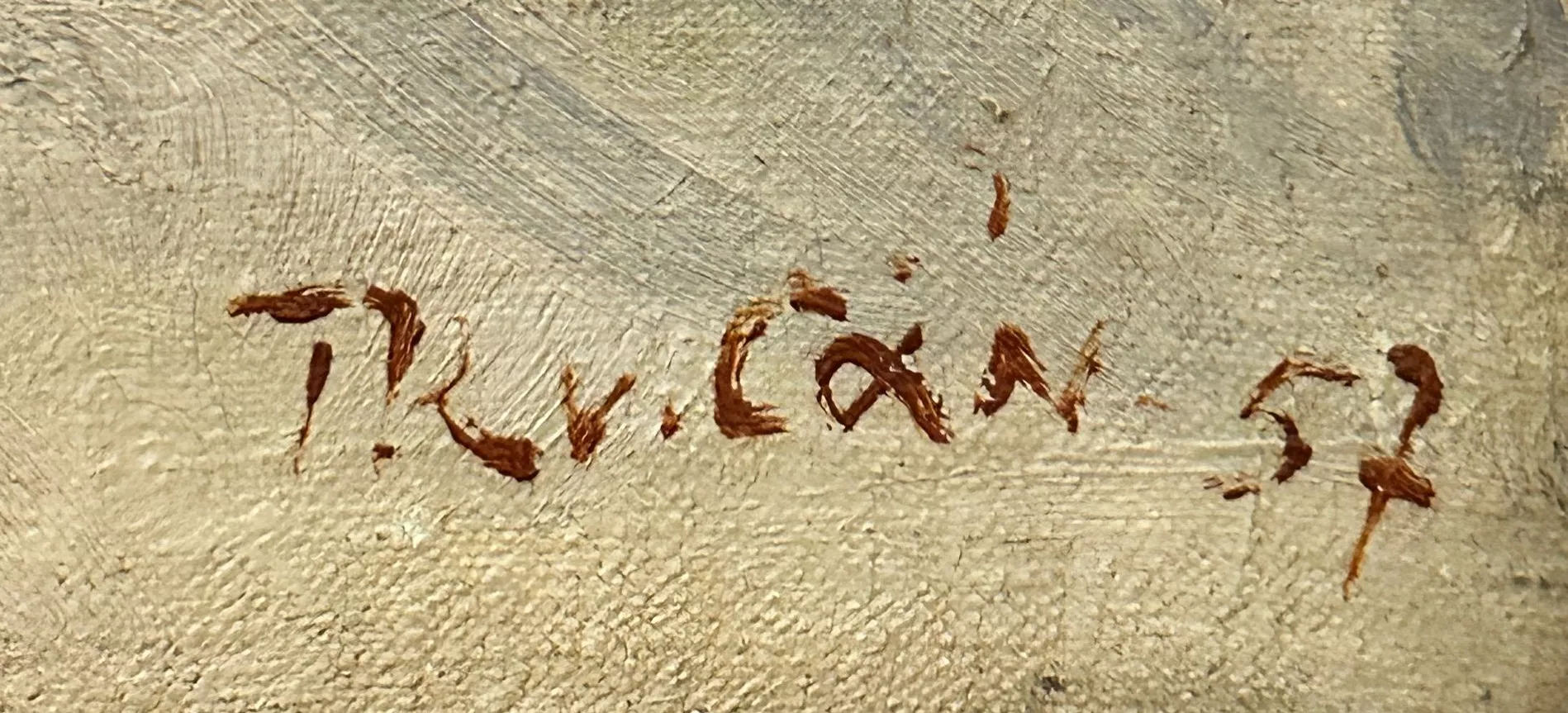
Recognize the artist's signature
Tran Van Can usually signs his works. However, it is essential to have your work appraised to be sure of its originality. What's more ; there are of course many copies.
Have your work by Tran Van Can
If you own a work by Tran Van Can, an appraisal can help you appreciate its value on today's market.
Using our online form, our experts and certified auctioneers will carry out a free appraisal and provide you with a reliable estimate of your work's market value.
If you're considering selling it, we'll work with you to ensure the best value.
Estimate in less than 24h
Discover in the same theme

Rating and value of works, paintings, drawings by Louis Valt...
Louis Valtat was a Fauvist painter who produced many valuable paintings and drawings, which are highly prized at auction.
Learn more >

Rating and value of Charles Catteau's ceramics, vases, stone...
Charles Catteau is a Franco-Belgian ceramist of the Art Nouveau and Art Deco periods, who produced works of great value.
Learn more >

Rating and value of paintings by Frantisek Kupka
Frantisek Kupka is an abstract painter who produced works that are highly rated and valued at auction. Estimate in 24h.
Learn more >
Nos records d'enchères à l'hôtel Drouot

Estimated 10.000 - 15.000 €
Ebridge Ayer BURBANK(1858-1949), Young African-American boy, Oil on panel.

Estimated 20.000 - 30.000
EXCEPTIONAL LARGE OVAL DISH IN VINCENNES SOFT PASTE PORCELAIN FROM THE "BLEU CÉLESTE" SERVICE OF KING LOUIS XV AT THE CHÂTEAU DE VERSAILLES

Estimated 20.000 - 30.000
MANUFACTURE ROYALE DE SÈVRES, 18th century "L'Empereur de la Chine" - Portrait of the Emperor Qianlong, Hard porcelain bisque, 1775

Estimated 1.500 - 3.000
HERMÈS, "Kelly" 32 saddle bag in black box calf

Estimated Between €5,000 and €8,000
KRACHKOWSKY (1854-1914), Before the storm, oil on canvas

Estimated 40.000 - 80.000
Alexandre ROUBTZOFF (1884-1949), Portrait of Arbia, oil on canvas

Secure site, anonymity preserved

Auctioneer approved by the State

Free and certified estimates
Frequently asked questions
-
Who was Tran Van Can, and what was his artistic background?Tran Van Can (1910–1994) was a leading Vietnamese painter of the 20th century who trained at the Indochina School of Fine Arts in Hanoi. He represents the generation of artists who synthesized Asian painting traditions (calligraphy, use of color) with Western academic principles. His work is part of the emergence of Vietnamese modernity and, after the revolution, of a socially engaged style of painting that celebrated everyday life and ordinary people.
-
What is the price range for Tran Van Can's paintings and drawings?Tran Van Can's works sell for between €800 and €285,000, depending on the technique and size. Silk paintings generally fetch between €100,000 and €300,000, while drawings and watercolors range from €1,100 to €285,000. Prints and small works sell for less than €13,000. Prices vary significantly depending on the date of creation, with works from the 1930s and 1940s commanding higher values.
-
How can you authenticate a work by Tran Van Can?To authenticate a work by Tran Van Can, it is essential to have your piece appraised by a professional, as there are many copies in circulation. Auctie's offers a free, no-obligation appraisal by state-certified auctioneers and experts, who assess authenticity by analyzing the signature, style, materials, and recent market trends. The appraisal report will be sent to you within 48 hours.
-
Is this a good time to sell a work by Tran Van Can?Yes, the market for modern Vietnamese painting is seeing a gradual increase in international interest. Tran Van Can’s market value has skyrocketed in recent years, particularly for his major works from the 1930s and 1940s that were exhibited in Paris or are associated with the Indochinese School of Fine Arts. Specialized auctions and the enthusiasm of Asian and French collectors are contributing to the continued appreciation of his work.
-
How does the appraisal and sale process work at Auctie's?Appraisals at Auctie's are free and non-binding: you fill out an online form with photos of your artwork, and our certified auctioneers will analyze it and provide you with a reliable estimate of its market value within 48 hours. If you decide to sell, Auctie's will guide you through the process from appraisal to auction to ensure you get the best possible price for your artwork.
