



Rating and value of paintings by Joseph Inguimberty

Key takeaways
- Works by Joseph Inguimberty (1896–1991) sell for between €30 and €750,000; one oil on canvas sold for €750,000 in 2017, compared to an estimate of €270,000.
- A French painter trained at the École des Beaux-Arts in Paris, he drew inspiration from his travels in Asia (1926–1930) to develop a style that fuses Western and Eastern influences with a masterful use of light.
- His major works include prints (€30 to €4,000), watercolor drawings (€100 to €22,500), and oil paintings on canvas, with prices on the rise in recent years as he has become highly sought after by French buyers.
If you own a work by or after Joseph Inguimberty, and would like to know its value, our state-approved experts and auctioneers will offer you their appraisal services.
Our specialists will carry out a free appraisal of your work, and provide you with an accurate estimate of its value on the current market.
Then, should you wish to sell your work, we will direct you to the best possible arrangement to obtain the optimum price.
Rating and value of the artist Joseph Inguimberty
The artist Joseph Inguimberty leaves behind a distinctive body of work, composed mainly of drawings. He is French. Now, prices for his works are rising under the auctioneers' gavel.
The price at which they sell on the art market ranges from €30 to €750,000, a significant gap but one that says a lot about the value that can be attributed to Joseph Inguimberty's works.
He is especially prized by French buyers. In 2017, an oil on canvas entitled Le Hamac sold for €750,000, while it was estimated at between €270,000 and €330,000. Its value has been rising in recent years.
Order of value from a simple work to the most prestigious
Technique used | Result |
|---|---|
Estamp - multiple | From €30 to €4,000 |
Drawing - watercolor | From €100 to €22,500 |
Oil on canvas | From €150 to €750,000 |
Estimate in less than 24h
Style and technique of the artist Joseph Inguimberty
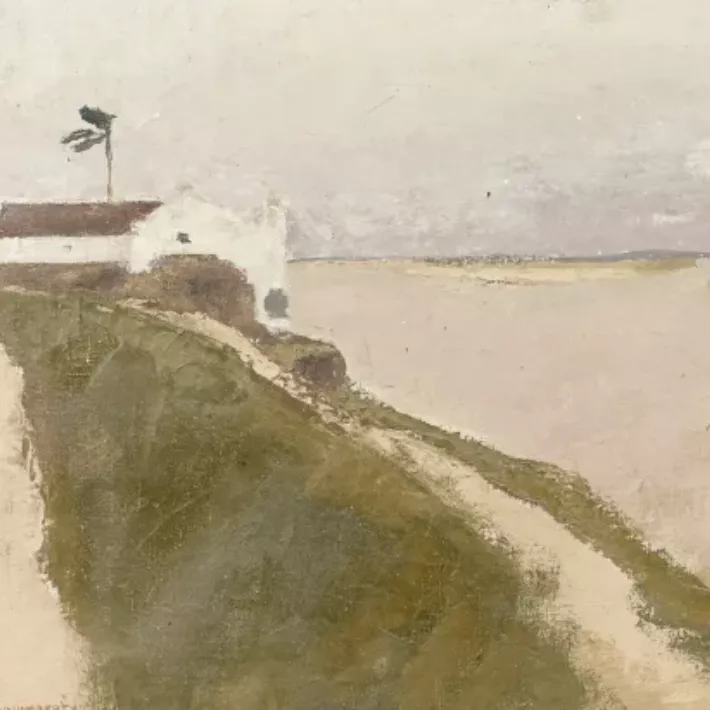
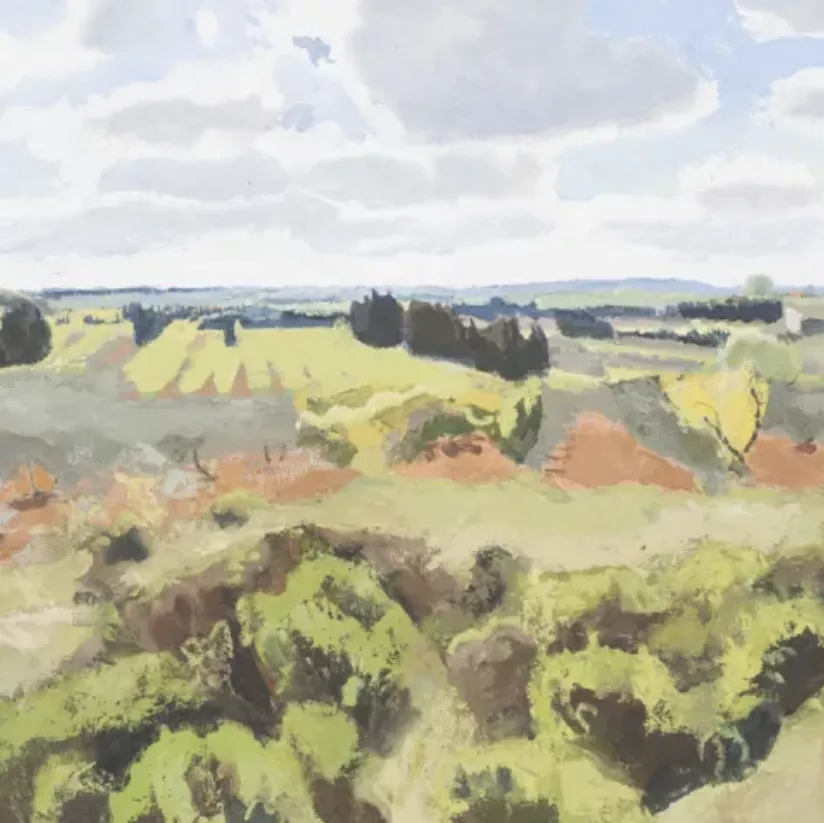
Joseph Marie Inguimberty, a French painter of Italian origin, is distinguished by a style that combines finesse of observation and a vibrant palette of colors.
His work, often influenced by his travels in Asia, testifies to a great sensitivity to light and atmosphere.
In her compositions, nature and people are often depicted with apparent simplicity, but every detail is meticulously crafted to evoke emotion.
The artist masters nuances and contrasts, rendering each canvas with great depth and rare delicacy.
His technique, both fluid and precise, relies on the careful application of color, which he uses to shape forms and imbue his works with a unique luminosity.
Inguimberty demonstrates great mastery of watercolor and oil, exploiting the transparency and texture of pigments to create plays of light that reveal the richness of his subjects.
Each painting seems to capture a suspended moment, where light and color meet to bring landscapes or intimate scenes to life.
Through his works, Joseph Inguimberty manages to combine a deep respect for artistic tradition with a personal search for harmony between color, light and form.
His style, imbued with poetry, invites silent contemplation, where each canvas becomes an open window on a world both distant and near.
.
The life of Joseph Inguimberty
Joseph Marie Inguimberty, born in 1896 in Marseille and died in 1991 in Menton, led an artistic life marked by a profound quest for light and harmony.
Trained at the École des Beaux-Arts in Paris, he quickly established himself as a painter of great sensitivity, nourishing his work with his many trips to Asia.
China, Japan and Indochina became major sources of inspiration for him, shaping his view of the world.
These Eastern discoveries, integrated with his personal vision, added a new dimension to his art, while remaining faithful to a rigorous Western tradition.
Through his compositions, he manages to capture the essence of his subjects, be they landscapes, portraits or scenes from everyday life.
Light, at the heart of his work, unfolds with subtlety, transforming each canvas into a suspended moment.
His works, in which color and texture blend with great finesse, testify to his unique talent for translating the atmosphere and beauty of the world around him.
Exhibited both in France and abroad, Joseph Inguimberty remains a respected figure of the 20th century, leaving behind him an artistic legacy marked by the encounter between East and West.
Joseph Inguimberty's Indochinese period
Joseph Marie Inguimberty's stay in Indochina, between 1926 and 1930, was a defining artistic and human experience.
The cultural richness and majestic landscapes of this region became an inexhaustible source of inspiration for the artist, who immersed himself fully in this new reality.
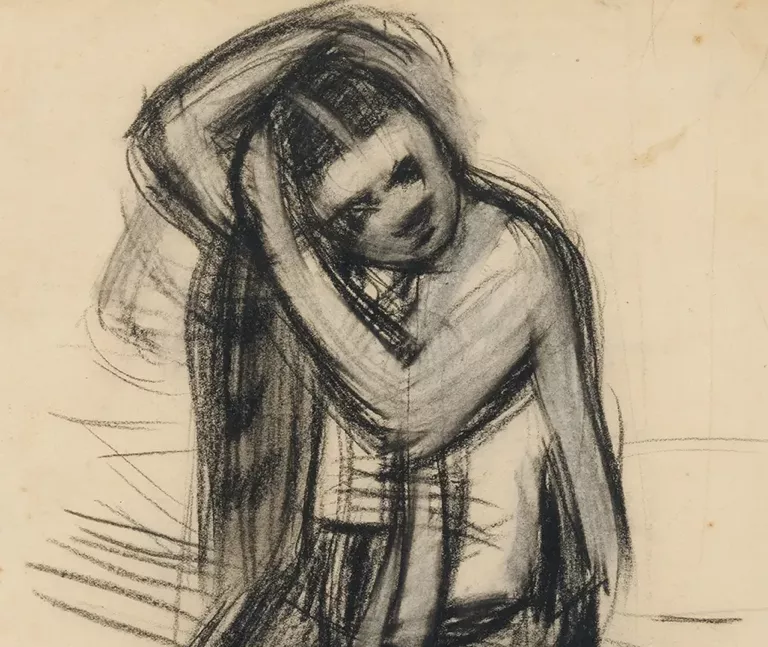
His paintings, produced during this period, capture the particular light of Indochinese scenes, where soft, luminous hues pay tribute to the beauty of rice paddies, temples and people.
The influence of Asian culture is embodied in his compositions, where Western rigor blends with a fluidity inspired by Eastern forms and philosophy.
Inguimberty deploys a shimmering color palette and a subtly mastered technique, playing with textures to render the atmosphere of these places imbued with mystery and serenity.
His Indochinese portraits and landscapes reveal a personal, intimate approach to the world, where light seems to filter through every detail.
These Indochinese years marked a turning point in his career, forging a style that expresses both the influence of the Orient and his relentless quest for beauty and harmony.
.
Focus on Les Rizières, Joseph Inguimberty
La Rizière by Joseph Inguimberty is a canvas where soft, enveloping light slowly diffuses through space, bringing this rural Indochinese landscape to life.
This work demonstrates a perfect mastery of light and color, characteristic of the artist's style during his stay in Indochina.
Inguimberty's approach is close to that of his contemporaries at the École des beaux-arts d'Indochine, notably Le Pho, Mai Trung Thu, and Victor Tardieu. All share this ability to capture the essence of the Asian landscape, while incorporating Western influences.
Through La Rizière, Inguimberty achieves an elegant fusion of these two worlds, similar to the way Tardieu, in his landscapes, captures the light and atmosphere of Asia, while preserving a touch of typically Western finesse and softness.
The colors chosen by Inguimberty, in their subtlety, recall those in the canvases of Le Pho, who, like the French artist, captures light like a real character in his compositions.
In this work, the balance between background and form, soft mood and impressionistic realism, echoes the art of these Indochinese artists, while bringing to it a personal, poetic and intimate vision of the Indochinese landscape.
Joseph Inguimberty's imprint on his period
Joseph Inguimberty left a striking imprint on his period, particularly during his stay in Indochina, where he developed a body of work at the crossroads of Western and Eastern influences.
His work is part of a key moment in the history of art, at a time when exchanges between East and West are taking on particular significance.
Inguimberty, through his travels and immersion in Indochinese landscapes and cultures, succeeds in creating a body of work in which light and color are at the center of every composition.
This luminous approach, which he manages to transcribe with a rare sensitivity, recalls that of his contemporaries at the Indochina School of Fine Arts, such as Le Pho, Mai Trung Thu, or Victor Tardieu.
However, Inguimberty stands out for his unique way of interpreting light, transforming it into a central player in his works, a soft, almost invisible light that seems to seep into the viewer's soul.
His imprint is also evident in his approach to nature and the human figure, where he manages to capture the beauty of Indochina in both its intimate and universal dimensions.
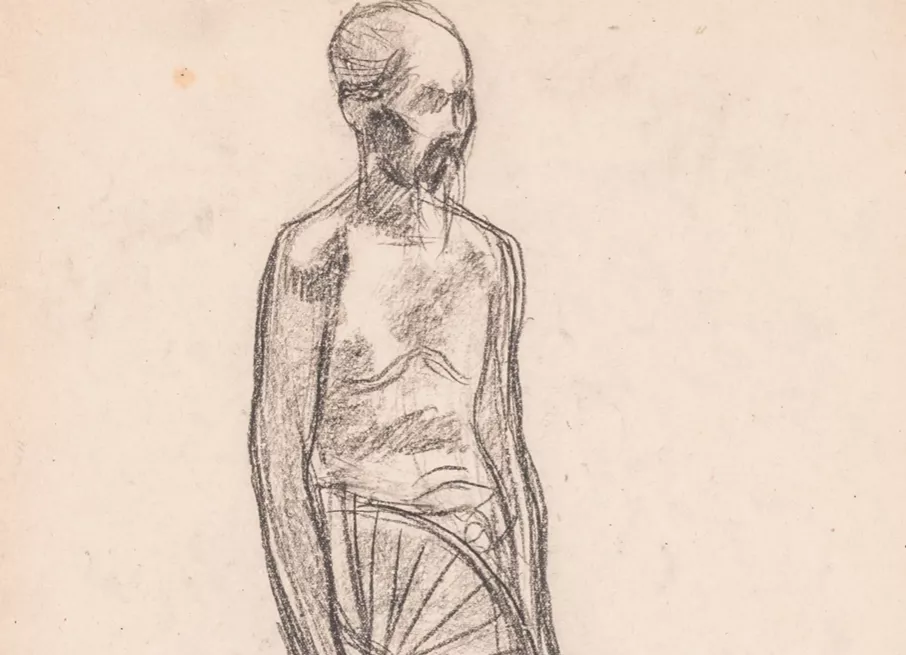
Through scenes of everyday life, portraits and landscapes, Inguimberty succeeds in capturing suspended moments, on the borderline between abstraction and realism.
Each canvas thus becomes an open window on a world both distant and near, whose light and forms, all soft, seem to melt into the atmosphere.
His art, deeply rooted in the geographical and cultural realities of Indochina, leaves an indelible trace of the encounter between two worlds: that of the Western artist and that of Asian civilizations.
Inguimberty, through his distinctive style, thus enriched the artistic heritage of his time, making his works a true testimony to this period of cultural fusion.
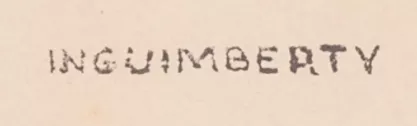
Recognizing the artist's signature
Joseph Inguimberty's works are not all signed. He sometimes leaves a signature, but this may have faded over time. This is why the estimate is important.
Knowing the value of a work
If you happen to own a work by or after Joseph Inguimberty, don't hesitate to request a free valuation using our form on our website.
A member of our team of experts and chartered auctioneers will contact you promptly to provide you with an estimate of the market value of your work, as well as ad hoc information about it.
If you wish to sell your work, you will also be accompanied by our specialists in order to benefit from alternatives for selling it at the best possible price, taking into account the inclinations of the market.
.Estimate in less than 24h
Discover in the same theme

Marcel Coard, value and rating of his creations
Marcel Coard is a 20th-century decorator. His creations are still highly prized and quoted at auction.
Learn more >

Cote and value of paintings by Jacques Villeglé
Jacques Villeglé is a Nouveau Réalisme painter who has produced works, drawings and collages that are highly valued at auction.
Learn more >

Rating and value of boxes, inkwells and vases by Eugène Feui...
Eugène Feuillâtre is an Art Nouveau silversmith who produced few objects that have a significant value at auction. 24h estimate.
Learn more >
Other similar works sold at auction

Estimated 1000 - 2000 €
NGUYEN TUONG LAN (1906-1947) - Ink and gouache painting on silk depicting a temple.

Estimated 2.000 - 4.000
VIETNAM, 20th century. Lacquer on panel, fishermen and sampans on a river. Signed Thanh and dated 55

Estimated 300 - 600
CHINA, 19th century. Large 8-leaf folding screen in red lacquered wood

Estimated 12.000 - 15.000
Nguyễn Tường Lân (1906-1946), (Workshop of) Tuong Lan NGUYEN "Hiện vẻ hoa - Showing the flowers" Ink and colors on silk, mounted on paper.

Estimated 1.000 - 1.200
Nguyen Tri Minh (1924-2010) "Lotus and Bamboo" Oil on isorel

Estimated 500 - 1.000
Huang GANG (b. 1961) Untitled, Lacquered and gilded wood panel

Secure site, anonymity preserved

Auctioneer approved by the State

Free and certified estimates
Frequently asked questions
-
Who is Joseph Inguimberty, and what is his artistic background?Joseph Marie Inguimberty (1896–1991) was a French painter of Italian descent who trained at the École des Beaux-Arts in Paris. He was known for a style that combined keen observation with a vibrant color palette, strongly influenced by his travels in Asia, particularly in Indochina (1926–1930). His work blends Western and Eastern influences, with light as a central element of his compositions.
-
What is the market value and price range for Joseph Inguimberty's paintings?The prices of Joseph Inguimberty’s works range from €30 to €750,000, depending on the medium and the work’s reputation. Prints sell for between €30 and €4,000, drawings and watercolors for between €100 and €22,500, and oil paintings on canvas for between €150 and €750,000. His market value has been rising for several years, particularly among French collectors.
-
How can you authenticate a work by Joseph Inguimberty?To authenticate a work of art and determine its value, we recommend that you request a free appraisal from Auctie's using our online form. A state-certified expert or auctioneer will examine your piece and provide you with a precise, no-obligation estimate of its market value within 48 hours.
-
Is this the right time to sell a work by Joseph Inguimberty?Yes, now is a good time to sell a work by Joseph Inguimberty. His market value has been rising in recent years, and his paintings—particularly those from his Indochinese period—are in steady demand, especially among French collectors.
-
How does the appraisal and sale process work at Auctie's?Appraisals at Auctie's are free and non-binding. After you fill out our online form, an expert will contact you to appraise your artwork. If you'd like to sell, we'll guide you through the process from start to finish, offering you the best options for selling your painting at the best possible price, taking market trends into account.
