



Rating and value of paintings, drawings and watercolours by Mai Thu

Key takeaways
- Mai Thu’s works sell for between €40 and €2,148,900 at auction, with a record set in 2021 for “Portrait of Mademoiselle Phuong,” which sold for €2,148,900.
- A Franco-Vietnamese artist (1906–1980) trained at the Beaux-Arts d’Indochine, his paintings on silk blend Eastern traditions with Western academic techniques.
- Oil-on-canvas works fetch up to €1,749,280, while watercolor drawings reach up to €1,735,335, with 73.7% of sales occurring in France and strong international demand from Asia.
If you own a work created by Mai Thu or after the artist, and would like to know its value, our state-approved experts and auctioneers will offer you their appraisal services.
Our specialists will work to carry out a free appraisal of your work, and will provide you with an accurate estimate of its value on the current market.
Then, should you wish to sell your work, we will direct you to the best possible arrangement to obtain the optimum price.
Rating and value of the artist Mai Thu
The artist Mai Thu leaves behind a distinctive body of work, composed mainly of drawings and paintings. He is French-Vietnamese. Now, prices for his works are rising under the auctioneers' gavels.
The price at which they sell on the art market ranges from €40 to €2,148,900, a significant gap but one that speaks volumes about the value that can be attributed to Mai Thu's works. He is especially prized by buyers from Hong Kong, Vietnam and France.
In 2021, an oil on canvas entitled Portrait de Mademoiselle Phuong was sold for €2,148,900, while it was estimated at between €805,840 and €999,240. Its value has exploded in recent years.
Order of value from a simple work to the most prestigious
Technique used | Result |
|---|---|
Estamp - multiple | From €50 to €7,730 |
Drawing - watercolor | From 270 to 1 735 335€ |
Oil on canvas | From 220 to 1 749 280€ |
Estimate in less than 24h
Style and technique by artist Mai Thu
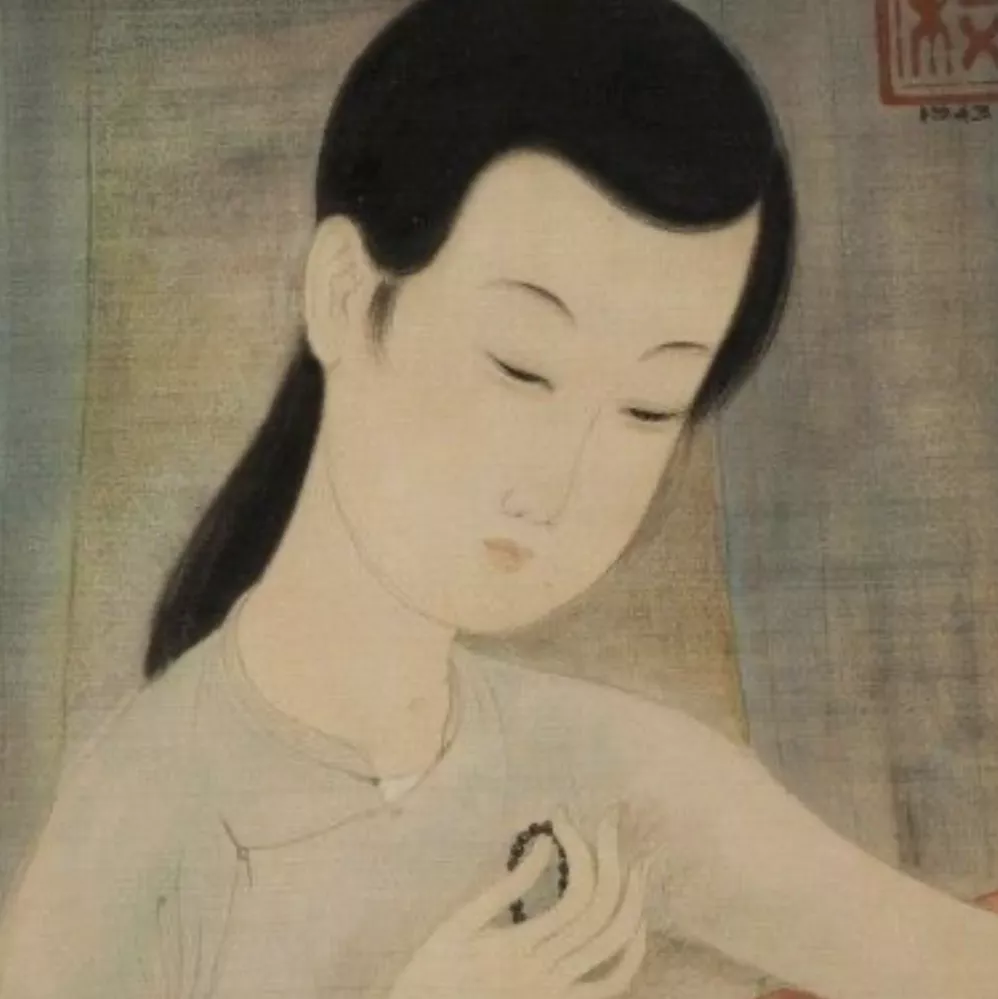
In Mai Thu's painting, silk retains this property of capturing light and softening forms, giving figures a diffuse, subtle presence.
But it's at the cost of a shift: no longer limited to being a simple support, it becomes a vibrant space where colors infuse themselves in delicate gradations. The line almost disappears, but what remains are the variations in tone that shape the face, the folds of a garment, the shadow of a gaze.
In the portrait of a child (fig. 1), ink and gouache melt onto silk in a translucent weave, where each nuance unfolds without break. The form is guessed at rather than defined, bathed in a light that skims over and dissolves it.
The figurative element persists, but is fragmented into infinitely nuanced touches, absorbed into the very fabric of the painting.
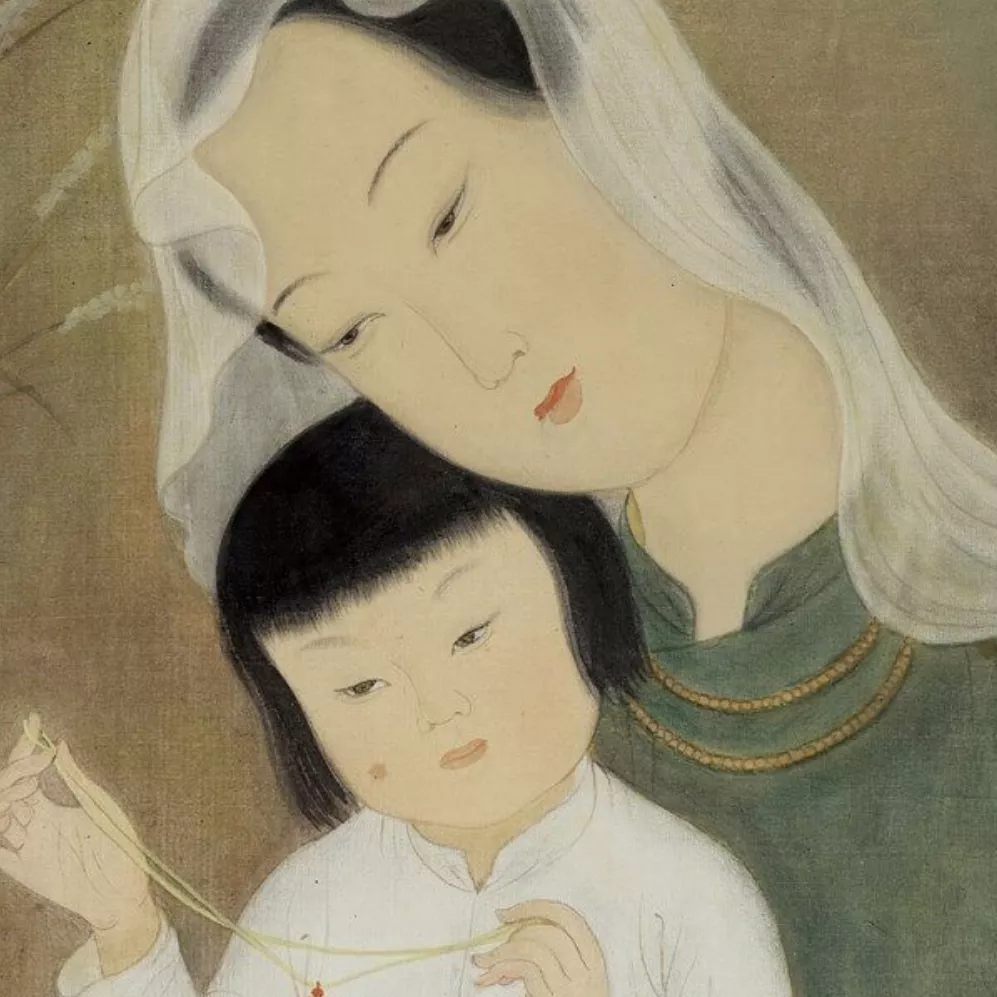
This dissolution of contours will become more pronounced in subsequent compositions. In Mother and Child (fig. 2) and Young Girl with Lotus (fig. 3), painted at the same time and with the same impetus, the pictorial material seems to merge with the very weft of the silk.
The boundaries between light and shadow become blurred, shapes melt into a network of subtly superimposed hues that absorb the subject more than they define it.
Then, stripped of its classic delimiting function, the line fades away in favor of a modeling where every color transition becomes a modulation of light.
The world of these paintings knows only muted hues, muted harmonies where the chromatic range narrows around half-tones and diffuse reflections.
This aspect of Mai Thu's painting is related to a desire to neutralize overly marked contrast, to favor a tonal continuity that preserves the softness and interiority of the figures.
"I don't paint light directly," Mai Thu seems to suggest, "but I let it shine through in the very material of the silk."
Mai Thu's life
In Mai Thu's career, academic training retains this property of structuring the eye and refining the gesture, but it comes at the price of a shift: no longer confined to the strict discipline of Western drawing, it is imbued with a sensibility specific to Vietnamese art, where the line softens and extends into a continuous breath.
Born in 1906 in Hanoi, he was one of the first generation of students at the École des Beaux-Arts de l'Indochine, founded by Victor Tardieu and Joseph Inguimberty.
From his earliest works, he explored the potential of silk painting, diverting its traditional use to make it the vehicle for a more personal and elaborate expression.
This assimilation of diverse influences would become more pronounced after his move to France in 1937. In the years that followed, he exhibited regularly and developed a style in which the softness of the wash dialogues with the rigor of the composition.
His portraits of children, mothers and young girls reflect an attachment to the evocation of a silent harmony, where each gaze seems suspended in an almost meditative immobility.
In these works, which mark his pictorial language, Vietnamese tradition is no longer content to be an inheritance; it is reinvented through a modern approach, where silk becomes the site of a subtle vibration of color and light.
Thus, detached from academic conventions, Mai Thu inscribes his art in a fragile balance between memory and renewal, and it is in this tension that he finds his deepest expression.

Artist's techniques
Style
The boundaries between light and shadow become blurred, shapes merge into a network of subtly superimposed hues that absorb the subject more than they define it.
Stripped of its classic delimiting function, the line fades away in favor of a modeling where every color transition becomes a modulation of light.
The universe of these paintings knows only muted hues, muted harmonies where the chromatic range narrows around half-tones and diffuse reflections.
This aspect of Mai Thu's painting is related to a desire to neutralize overly marked contrast, to favor a tonal continuity that preserves the softness and interiority of the figures.
"I don't paint light directly," Mai Thu seems to suggest, "but I let it shine through in the very material of the silk. "
Focus on a key work
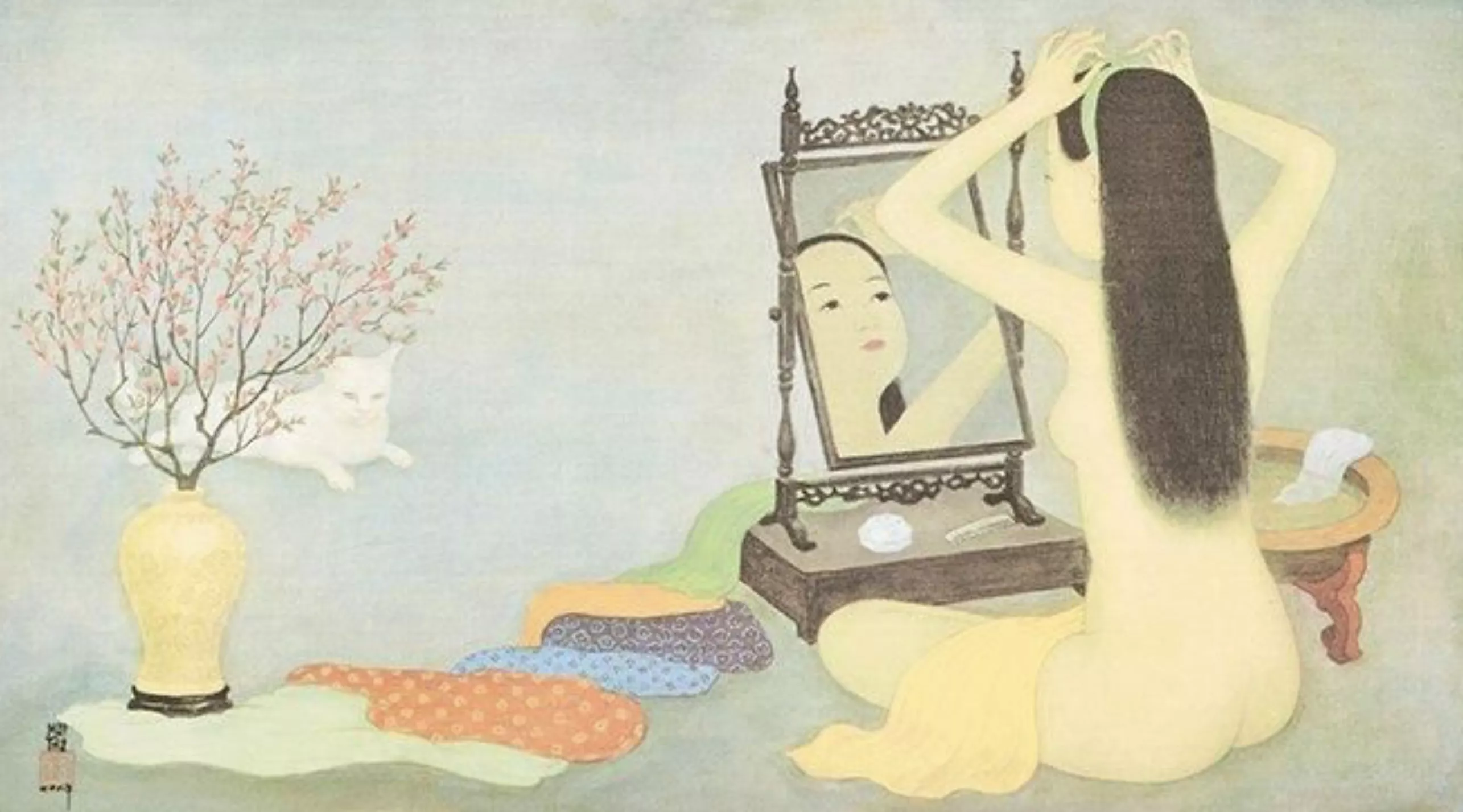
Maternity
The maternal figure disappears as a distinct individual, but persists through the tangle of supple lines and hushed nuances that define her presence.
The child curled up in his mother's arms seems to emanate from the background itself, absorbed in a diaphanous atmosphere where contour fades in favor of a fluid continuity between body and space.
In this work, which embodies the essence of Mai Thu's style, the Vietnamese tradition of silk painting undergoes a mutation: flat tints give way to a network of delicately superimposed tones, creating an elusive modelling.
FAQ - How to appraise a work by Mai Thu ?
1) What is the first step in the appraisal process for Mai Trung Thu ?
The first step is to precisely identify the technique, which is most often painting on silk. We then examine the support, dimensions, signature, dating and state of preservation. The fragility inherent in silk is an essential parameter.
2) How important was the artist's French period ?
The works produced after he settled in France attract particular attention from collectors and are often considered the most stylistically accomplished and sought-after on the international market for modern Vietnamese art.
3) What stylistic criteria specific to Mai Thu are decisive ?
The analysis focuses first and foremost on the linear finesse, chromatic delicacy and stylization of figures, particularly feminine and childlike, characteristic of her plastic language, but also on the quality of composition and the subtlety of gradations.
Mai Thu's imprint on his period
Mai Thu is a well-known and appreciated artist in Vietnam, with critics taking notice of him during his lifetime. His work blends Eastern and Western influences, which today is highly appreciated by the art market. To this day, most of his works are held by private collectors.
In Mai Thu's art, painting on silk retains this ability to suggest delicacy and transparency, the infinite modulations of light on matter.
But it's at the cost of a shift: it's no longer limited to a faithful transcription of reality, it becomes the site of a silent transfiguration where each figure, each motif, is inscribed in a hushed, almost suspended vibration.
The line remains, but it becomes lighter, embracing the contour without enclosing it, while the color seeps into the fabric of the support, dissolving into light, imperceptibly shaded layers. In his compositions, space is no longer constructed by perspective, but by a play of subtle balances, where emptiness dialogues with form and imposes a new rhythm.
Then, freed from its classical function, painting on silk no longer coincides with the meticulousness of line for which it was primitively intended, it is now devoted to defining a fluid space, to making forms vibrate in a continuous field, as the vaporous touch has the charge in the pictorial element.
Today, the artist stands out on the international auction scene, with her works reaching record amounts in recent years. Although his rating has fallen slightly in recent months, his world ranking has risen since 2024.
73.7% of the artist's sales take place in France, and 97.8% of the lots that are auctioned belong to the drawing-watercolor category. His quotation was low and stable from 2000 to 2015, and has risen sharply since then (following in the footsteps of artists such as Alix Aymé and Vu Cao Dam) then dropped slightly.
Recognizing the artist's signature
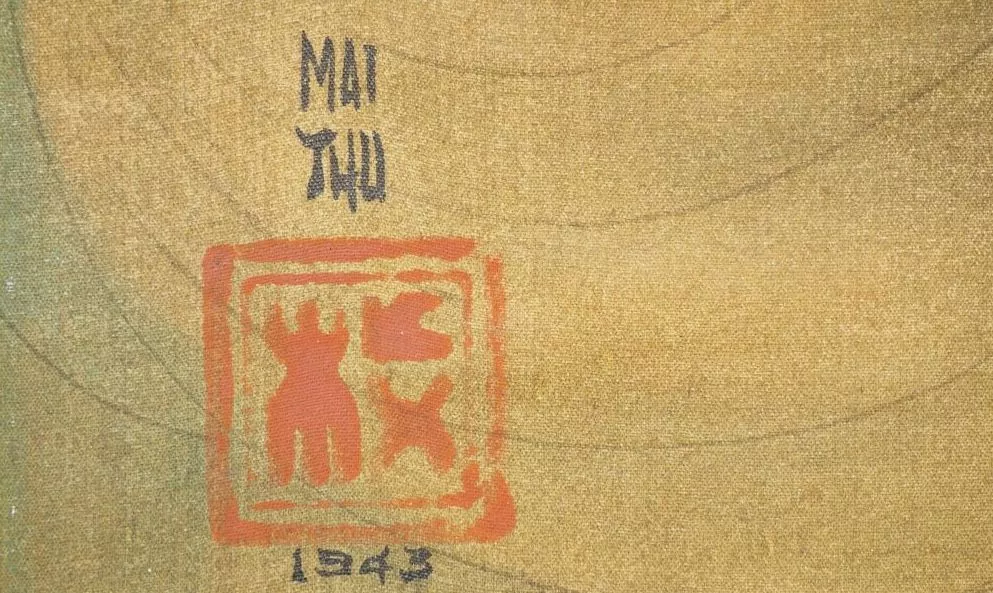
Mai Thu signs his works most of the time, in French and Vietnamese, and marks his watercolors with a seal. However, it is essential to have your work appraised to be sure of its originality. What's more ; there are naturally many copies.
Knowing the value of a work
If you happen to own a work by Mai Thu or after the artist, don't hesitate to request a free appraisal using our form on our website.
A member of our team of experts and certified auctioneers will contact you promptly to provide you with an estimate of the market value of your work, as well as any relevant information about it.
If you wish to sell your work, you will also be accompanied by our specialists in order to benefit from alternatives to sell it at the best possible price, taking into account market inclinations.
Estimate in less than 24h
Discover in the same theme

Rating and value of paintings by Ram Kumar
Ram Kumar is a 20th-century Indian abstract artist whose works in a variety of media are highly regarded and sought-after at auction.
Learn more >

Rating and value of paintings by Zinaida Serebryakova
Zinaida Serebryakova is a Russian realist painter of the 19th century, who produced works that are quoted and valued on the art market.
Learn more >

Ratings and values of paintings by Alfred Guillou
Learn more >
Similar works sold at auction

Estimated 1000 - 2000 €
NGUYEN TUONG LAN (1906-1947) - Ink and gouache painting on silk depicting a temple.

Estimated 1.500 - 3.000
Henri MEGE (1904-1984), oil on canvas

Estimated 3.000 - 5.000
NUGUYEN VAN TROUNG (1919-1961), lacquer on panel

Estimated 600 - 800
UTAGAWA HIROSHIGE (1797-1858). Oban tate-e, Meisho Edo Hyakkei series, plate no. 111, Meguro Taiko-bashi yuhi no hoka

Estimated 1.000 - 2.000
TRAN DUY (1920-2014). École des beaux-arts de l'Indochine, preparatory class 1945, ink and color painting on silk

Secure site, anonymity preserved

Auctioneer approved by the State

Free and certified estimates
Frequently asked questions
-
Who is Mai Trung Thu, and what is his artistic background?Mai Trung Thu (1906–1980) was a Franco-Vietnamese artist and a pioneer of modern Vietnamese painting. Trained at the Indochinese School of Fine Arts in the 1920s and 1930s, he blended Western academic training with local artistic traditions. Having settled in France in the 1930s, he was part of a historic generation alongside Le Pho and Vu Cao Dam, and contributed to the international recognition of Vietnamese silk painting.
-
What are the price ranges for Mai Thu's works based on the medium used?Prices vary considerably depending on the medium: prints range from €50 to €7,730, watercolor drawings from €270 to €1,735,335, and oil paintings on canvas from €220 to €1,749,280. Paintings on silk, which constitute the dominant segment of his body of work, generally fetch between 200,000 and 1.5 million euros for major compositions.
-
How can you authenticate a work by Mai Thu and determine its true value?To authenticate a work by Mai Thu, it is essential to have it appraised by a professional, as there are many copies in circulation. Auctie's offers a free, no-obligation appraisal conducted by state-certified auctioneers, who examine the work’s authenticity, technique, dimensions, signature, date, and condition. You will receive a reliable response within 48 hours.
-
Is this a good time to sell a work by Mai Thu?Yes, now is a good time to sell. Although her market value has dropped slightly in recent months, Mai Thu is among the “blue-chip” artists in the Indochinese art market, with strong international demand. Since 2024, her global ranking has risen, and her works continue to fetch record prices on the Vietnamese modern art market.
-
How does the appraisal and sale of a work of art take place at Auctie's?The appraisal is free and non-binding: simply submit your artwork via our online form, and you’ll receive a reliable appraisal within 48 hours from a certified expert or auctioneer. If you decide to sell, Auctie's will guide you through the process from the appraisal to the auction to ensure you get the best possible price for your artwork.
