



Alix Aymé Drawings - Value, rating, artist

Key takeaways
- Alix Aymé (1894–1989), a major artist of the 20th century, has seen her prices rise steadily, particularly for her oil paintings on canvas.
- Aymé’s works range in price from €30 for prints to €345,000 for oil paintings, with “Nu au lotus” selling for €250,000 in 2021.
- Her drawings and watercolors, influenced by Gauguin and Denis, combine Art Deco style with Eastern techniques she learned in Indochina, where she taught.
If you own a work by or after the artist Alix Aymé, and would like to know its value, our state-approved experts and auctioneers will offer you their appraisal services.
Our specialists will carry out a free appraisal of your work, and provide you with a precise estimate of its value on the current market.
Then, if you wish to sell your work, we will direct you to the best possible arrangement to obtain the optimum price.
Rating and value of the artist Alix Aymé
Alix Aymé is a major artist of 20th century painting. Now, prices for her works are rising under the auctioneers' gavels.
His oils on canvas are particularly prized, especially by French buyers, and the price at which they sell on the art market ranges from €30 to €345,000, a considerable delta but one that speaks volumes about the value that can be attributed to the artist's works.
In 2021, an oil on canvas entitled Nu au lotus, was sold for €250,000, whereas it was estimated at €100,000 to €150,000. Its value is on the rise.
Order of value from a simple work to the most prestigious
Technique used | Result |
|---|---|
Estamp - multiple | From €55 to €6,500 |
Drawing - watercolor | From €30 to €78,000 |
Oil on canvas | From €120 to €345,000 |
Estimate in less than 24h
Style and technique by artist Alix Aymé
Alix Aymé, influenced by Paul Gauguin and Maurice Denis, has developed a singular style that finds particularly refined expression in her drawings.
Her works on paper reveal a remarkable delicacy and precision that reflect a keen sense of observation, as well as a marked sensitivity for shapes, movements and the subtleties of light.
Often working in pencil or ink, she favored fluid lines and pared-down compositions, where each stroke carried the accuracy of her intention and testified to her technical mastery.
These drawings, imbued with an Art Deco-like aesthetic, are distinguished by subtle touches of gold that emphasize contours and add a sophisticated decorative dimension to her creations.
With remarkable finesse, Alix Aymé captured exotic motifs, vibrant landscapes and scenes of everyday Indochinese life, transforming ordinary moments into poetic evocations imbued with a rare serenity.
Her graphic palette reflected a harmonious dialogue between modern Western influences and an inspiration deeply rooted in Oriental culture.
Integrating a perfect balance between sobriety and ornamentation into her compositions, her drawings stand out as the reflection of an artistic quest that is both rigorous and imbued with elegance, bearing witness to her innovative eye and her talent for weaving subtle links between two worlds.
.
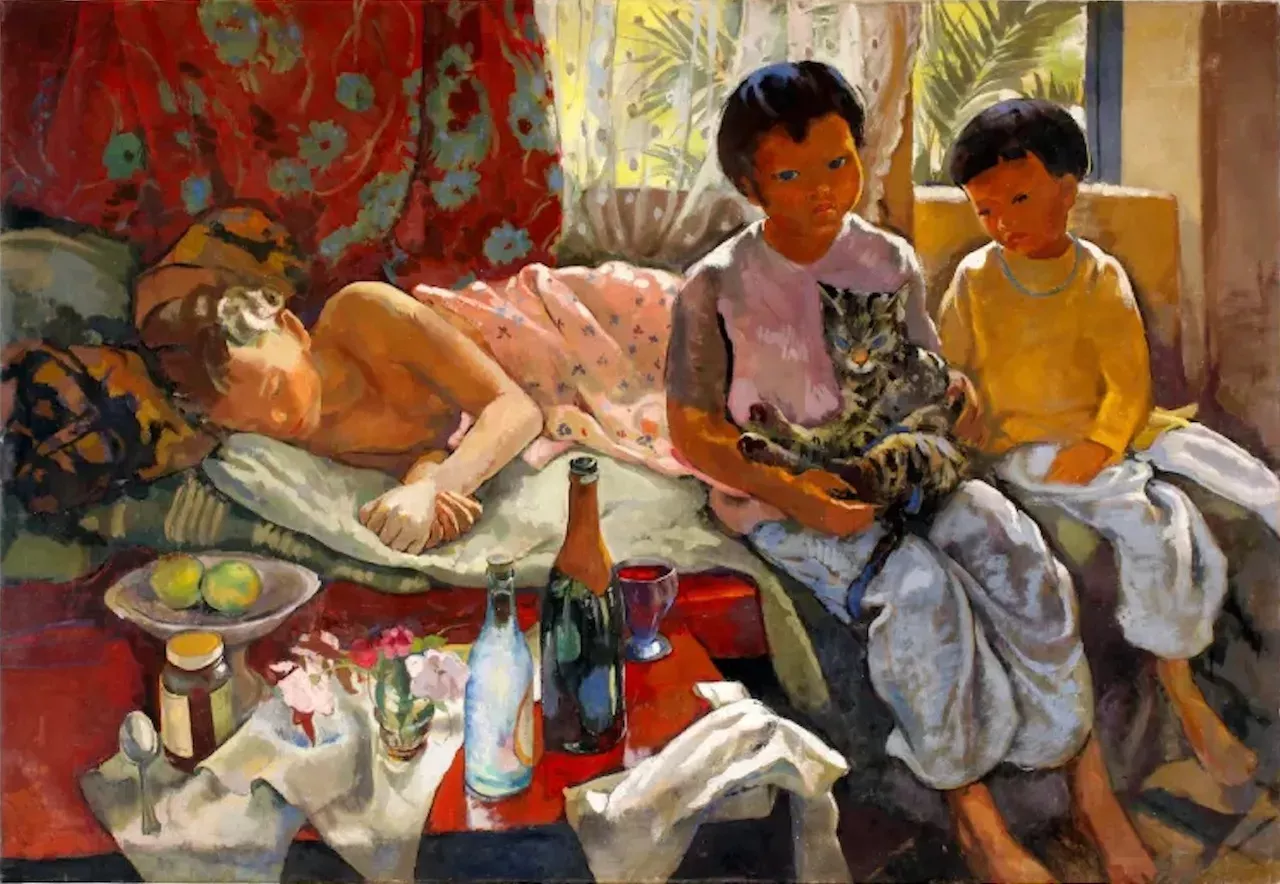
Alix Aymé, from Marseille to Indochina
Alix Aymé (1894-1989) was a French artist who marked her era with her exceptional talent for drawing and her role as a cultural bridge between the West and Asia.
Born in Marseille, she developed a taste for drawing and music from an early age, which she studied at the Toulouse Conservatoire.
Although talented in both fields, she devoted herself entirely to drawing, a discipline that allowed her to explore her fascination with shapes and lines.
In Paris, she joined Maurice Denis' studio, where she perfected her style while taking part in prestigious projects, such as the decoration of the Champs-Élysées theater.
Married to a professor of literature, she left France for Asia, where she taught drawing and painting at the French lycée in Hanoi. This stay in Indochina became a turning point in her career, nourishing her work with a new visual richness.
Returning to France, she accepted an assignment from the French government to organize the 1931 Colonial Exhibition, before returning to Asia with her son.
Settled in Laos, then again in Vietnam, she drew from these environments an inexhaustible source of inspiration for her drawings, which bear witness to an attentive eye and a unique sensitivity for everyday scenes and local landscapes.
Aymé was appointed professor at the École des Beaux-Arts d'Indochine, founded by Victor Tardieu, where she trained a generation of artists while deepening her own art.
Aymé is particularly interested in silk drawing, a refined technique that she approaches with remarkable precision and delicacy. This approach, influenced by Asian traditions, was in constant dialogue with her Western artistic heritage.
At the end of her career, she created a monumental masterpiece, the Stations of the Cross of Notre-Dame de Fidélité, in which she boldly combined Eastern techniques and European inspirations.
She passed away in 1989, leaving behind her a body of work profoundly marked by her passion for drawing and her desire to fuse cultures.
Focus on a drawing by Alix Aymé
A drawing by Alix Aymé, depicting a seated Vietnamese woman, embodies the elegance of her graphic art. Working in pencil and ink, the work illustrates an everyday scene with delicate precision.
The woman's serene posture, with crossed legs and pensive gaze, testifies to the artist's keen sense of observation. The folds of the garment, drawn with finesse, reveal a particular attention to detail without ever weighing down the composition.
Aymé's fluid, uncluttered line lends the scene an almost meditative clarity. The minimalist background highlights the main subject, while hinting at the peaceful atmosphere typical of Vietnamese villages.
This drawing also reflects the influence of Art Deco in the sobriety of the lines and the balance of the forms.
With this type of work, Alix Aymé manages to transcend cultural barriers, combining her Western eye with a sincere admiration for local traditions.
Each detail, from the woman's restrained gesture to the overall harmony, reflects an artistic quest combining simplicity and refinement, characteristic of her singular approach.
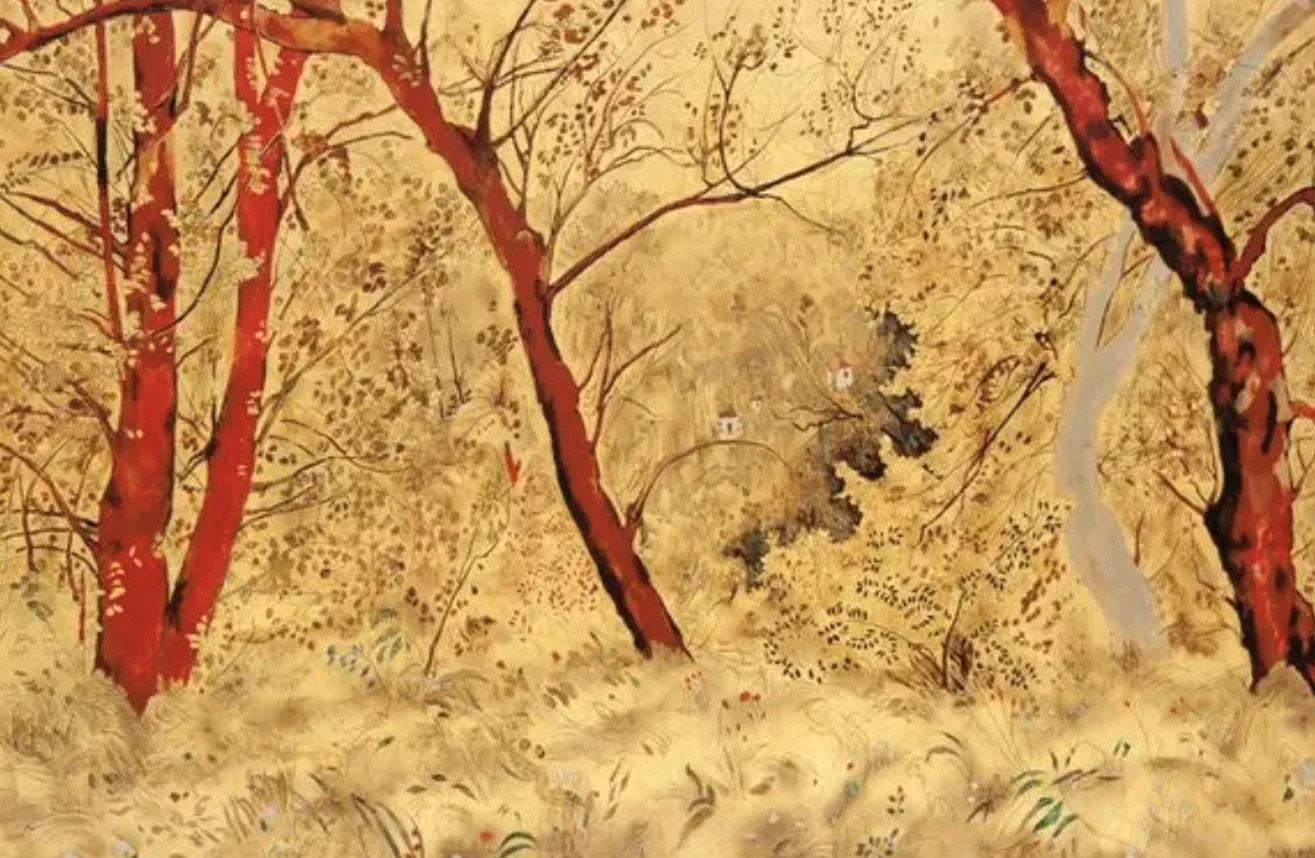
Alix Aymé's legacy on her period
Alix Aymé's legacy on her period, particularly through her drawings and watercolors, is marked by a subtle fusion of Western influences and Eastern traditions.
Her unique view of the world, whether Indochinese landscapes or everyday scenes, offered a refined, poetic vision that left its mark on her contemporaries.
Through her drawings, she was able to transcend simple observation, giving each line a poetry and gentleness characteristic of her style.
Her works also played a key role in introducing Vietnamese artistic techniques to a Western audience, establishing a bridge between cultures.
Through her teaching at the École des Beaux-Arts d'Indochine, she trained several generations of artists, instilling in them a love of Vietnamese lacquer and silk painting.
Today, this legacy lives on through contemporary artists who continue to draw inspiration from her pared-down compositions and graphic experiments.
The richness of her drawings and watercolors has helped to spread the art of Indochina beyond its borders, inscribing Alix Aymé's style as an essential milestone of 20th-century decorative art.
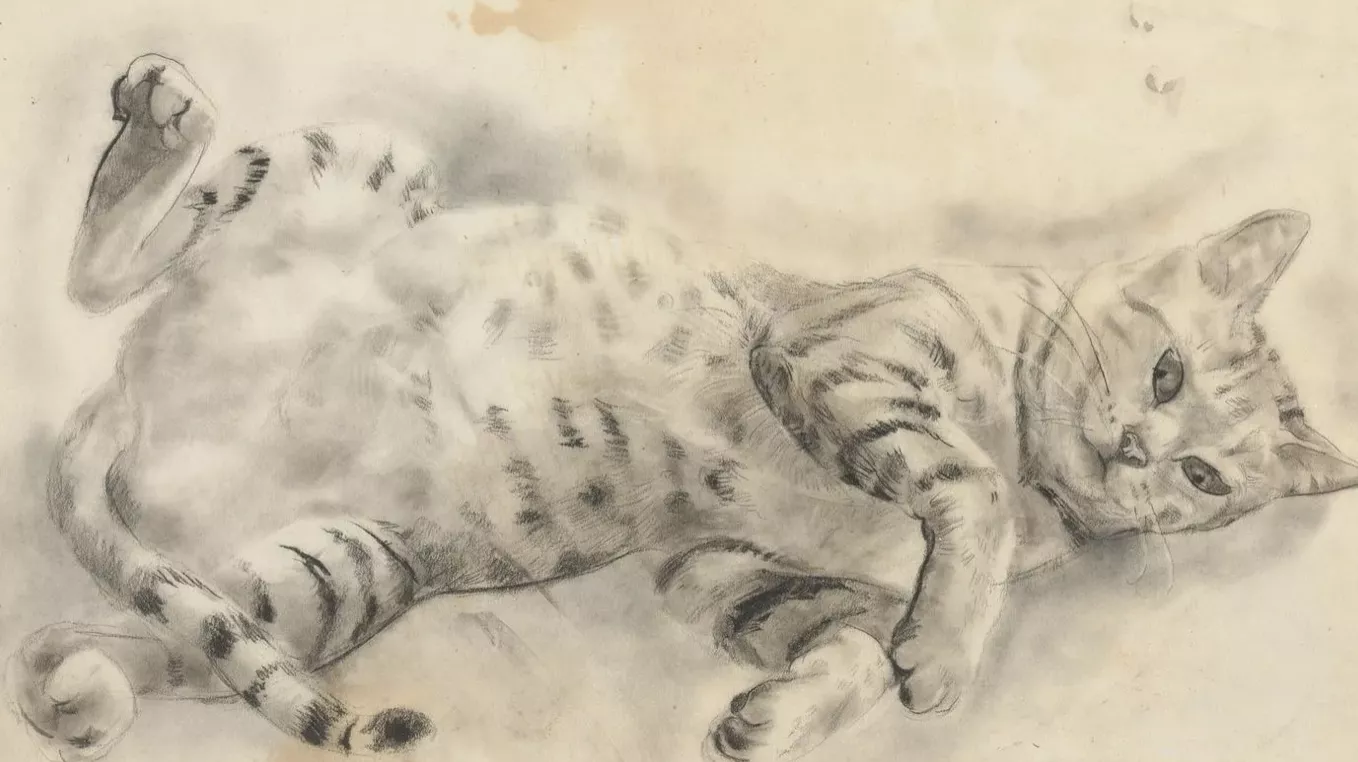
Alix Aymé's influence on the teaching of Indochinese art
Alix Aymé played a fundamental role in the teaching of Indochinese art in the 20th century, inscribing her influence at the heart of this period of intense cultural dialogue.
Installed in Hanoi, she was a key figure at the École des Beaux-Arts d'Indochine, founded by Victor Tardieu, where she helped to perpetuate the tradition of Vietnamese lacquerware and introduce silk painting techniques.
Her approach, both rooted in Western sensibility and open to local artistic riches, helped introduce and evolve these skills within the Vietnamese educational system.
Through his teaching, Aymé passed on values of technical rigor and inventiveness, while cultivating a deep respect for Vietnamese craft traditions, also used by artists such as Vu Cao Dam or Trung Thu Mai.
She encouraged her students to appropriate these ancestral methods, while experimenting with new forms and styles inspired by artistic exchanges between East and West.
Her works, in both painting and drawing, are a direct reflection of this dual influence, blending clean lines, exotic motifs and a subtle palette.
Her work as an educator has trained a new generation of artists capable of perpetuating these practices while infusing them with a contemporary outlook.
Through her, Indochinese art has thus found a path of expression that is both faithful to its origins and resolutely forward-looking. Alix Aymé's legacy in teaching art in Vietnam lives on, still influencing today's creators.
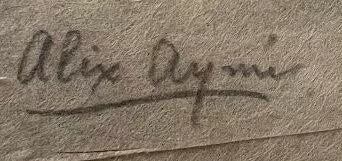
Recognizing the artist's signature
Aymé often signs her name at the bottom of her drawings, or oils on canvas. Copies may exist, so expertise remains important.
Knowing the value of a work
If you happen to own a work by or after Alix Aymé, don't hesitate to request a free valuation using our form on our website.
A member of our team of experts and licensed auctioneers will contact you promptly to provide you with an estimate of the market value of your work, not forgetting to send you ad hoc information about it.
If you are considering selling your work, you will also be accompanied by our specialists in order to benefit from alternatives for selling it at the best possible price, taking into account market inclinations.
Estimate in less than 24h
Discover in the same theme

Rating and value of chairs, tables and desks by Jean Prouvé
Jean Prouvé is a 20th-century designer best known for his chairs, an essential piece of furniture that he reinvented. They are highly prized.
Learn more >

Rating and value of works, paintings, sculptures by Max Erns...
Max Ernst is a 20th-century Surrealist painter who produced many highly-regarded paintings and sculptures, which have a high value at auction.
Learn more >

Rating and value of paintings by Joseph Inguimberty
Joseph Inguimberty is a twentieth-century French painter who worked in Indochina, producing works that are highly regarded and valued.
Learn more >
Works from the same period sold at auction

Estimated 80 - 120
CHINA or JAPAN, 19th century. Two porcelain bottle vases that can form pendants

Estimated 2.000 - 4.000
VIETNAM, 20th century. Lacquer on panel, fishermen and sampans on a river. Signed Thanh and dated 55

Estimated 1.500 - 3.000
CHINA, 19th century Rare rhinoceros horn libation cup

Estimated 12.000 - 15.000
Nguyễn Tường Lân (1906-1946), (Workshop of) Tuong Lan NGUYEN "Hiện vẻ hoa - Showing the flowers" Ink and colors on silk, mounted on paper.

Estimated 1.000 - 1.200
Nguyen Tri Minh (1924-2010) "Lotus and Bamboo" Oil on isorel

Estimated 500 - 1.000
Huang GANG (b. 1961) Untitled, Lacquered and gilded wood panel

Secure site, anonymity preserved

Auctioneer approved by the State

Free and certified estimates
Frequently asked questions
-
Who was Alix Aymé, and what was her artistic style?Alix Aymé (1894–1989) was a leading French artist of the 20th century who trained in Maurice Denis’s studio in Paris. Her distinctive style blends modern Western influences with Eastern inspiration, characterized by clean, flowing lines, an Art Deco aesthetic, and subtle touches of gold. Her drawings and watercolors, created in pencil or ink, display remarkable delicacy and a keen sensitivity to form, movement, and light, shaped by her extended experience in Indochina.
-
What is the market value of Alix Aymé's drawings and watercolors?The prices of Alix Aymé’s drawings and watercolors range from €30 to €78,000, depending on the size and quality of the work. Her market value is currently on the rise, particularly among French collectors. Her oil-on-canvas paintings, which are considered more prestigious, fetch significantly higher prices, up to 345,000 €, while multiple prints range from 55 € to 6,500 €.
-
How can I authenticate a work by Alix Aymé and get an estimate of its value?To authenticate a drawing or artwork by Alix Aymé, we recommend that you request a free appraisal from our state-certified auctioneers and experts. Fill out our online form: a specialist will contact you within 48 hours to examine the work and provide you with an accurate estimate of its current market value, with no obligation on your part.
-
Is this a good time to sell a work by Alix Aymé?Yes, now is a good time to sell a work by Alix Aymé. The artist’s market value is currently on the rise, prices are steadily increasing at auction, and demand from collectors remains strong, particularly in France. The market is increasingly recognizing her historical and artistic significance in the dialogue between Western and Eastern cultures in the 20th century.
-
How does the sales process work at Auctie's?At Auctie's, we guide you every step of the way, from appraisal to auction. Once your drawing or artwork has been appraised free of charge by our experts, we’ll offer you the best options for selling it at the highest possible price, taking current market trends into account. We manage the entire process transparently, from cataloging to the auction, ensuring that your art collection is valued to its fullest potential.
