



Rating and value of paintings, drawings and sculptures by Louise Bourgeois

Key takeaways
- Louise Bourgeois (1911–2010) was a major Franco-American artist whose works sell for between €20 and 26.2 million, depending on the medium and format.
- Her monumental bronze and steel sculptures—particularly her “spiders” and “cells”—fetch between 10 and 25 million euros, while her drawings and prints remain more affordable, ranging from 5,000 to 200,000 euros.
- The artist’s market value has been rising since 2000 thanks to international recognition, growing interest in female artists, and the scarcity of works on the market.
If you own a work by or after the artist Louise Bourgeois, and would like to know its value, our state-approved experts and auctioneers will offer you their appraisal services.
Our specialists will carry out a free appraisal of your work, and provide you with an accurate estimate of its value on the current market.
Then, if you wish to sell your work, we will direct you to the best possible arrangement to obtain the optimum price.
Rating and value of the artist Louise Bourgeois
Louise Bourgeois is an artist appreciated by collectors of modern art sculptures. Now, the prices of her creations are rising at the auctioneers' gavel.
Her creations are particularly prized, especially by French buyers, and the price at which they sell on the art market ranges from €20 to €26,254,200, a significant delta but one that speaks volumes about the value that can be attributed to the artist's works.
In 2023, a bronze sculpture, Spider, was sold for €26,254,200, while it was estimated at between €27,000,000 and €37,000,000. Auction results were very high, regularly exceeding
Order of value ranging from a simple work to the most prestigious
Technique used | Result |
|---|---|
Objects | From €40 to €26,000 |
Estamp - multiple | From €40 to €341,800 |
Painting | From €680 to €422,300 |
Drawing - watercolor | From €1,500 to €2,002,300 |
Sculpture - volume | From €20 to €26,254,200 |
Estimate in less than 24h
Style and technique by artist Louise Bourgeois
Louise Bourgeois (1911 - 2010), is a French-American artist. She works with a wide variety of materials, including bronze, steel, marble, plaster, latex, fabric and wood, sometimes reused and hybrid.
She produces monumental works such as spiders in steel and bronze, but also pieces in fabric and transformed domestic objects. She practices drawing and engraving in parallel, often to prepare or extend her sculptures.
Her work is often manual and gestural, visible in the rough, incised or polished surfaces depending on the desired effect. She alternates between organic and biomorphic forms (cells, bodies, organs) and architectural structures (cages, towers, cells).
She also uses sewn, patched or upholstered fabric, a highly personal technique developed in the 1990s-2000s that links the fragile with the sculptural. Her universe is centered on the human body, sexuality, maternity, the feminine, but also traumatic memory.
The recurrent motifs in her work are spiders (maternity, protection), cells (enclosed spaces of memory), fragmented limbs, with an ambivalence between monumentality and intimacy, fragility and power.
Louise Bourgeois's sculptures are often conceived as immersive environments (cells) or totemic forms isolated in space. The artist also attaches importance to the viewer's bodily experience, confronted with scales that range from the minuscule to the monumental.
The contrast between architectural rigor and organic form is deliberate, with a contract between metal structures, cages and soft limbs, tissues and objects.
Her work has a not inconsiderable autobiographical aspect : the plastic forms translate personal emotions, memories and traumas. The themes of family, childhood and motherhood, as well as fear, desire and death, are omnipresent.
There is also a significant psychoanalytical dimension: sculpture is conceived as an exorcism or catharsis, making the unconscious visible. Her organic and symbolic imagination is close to Surrealism, but not limited to it.
Louise Bourgeois is also linked to artistic feminism, as her work explores the female condition with unprecedented intensity. She anticipates and dialogues with contemporary art (installation, conceptual art, body art and monumental public sculpture).
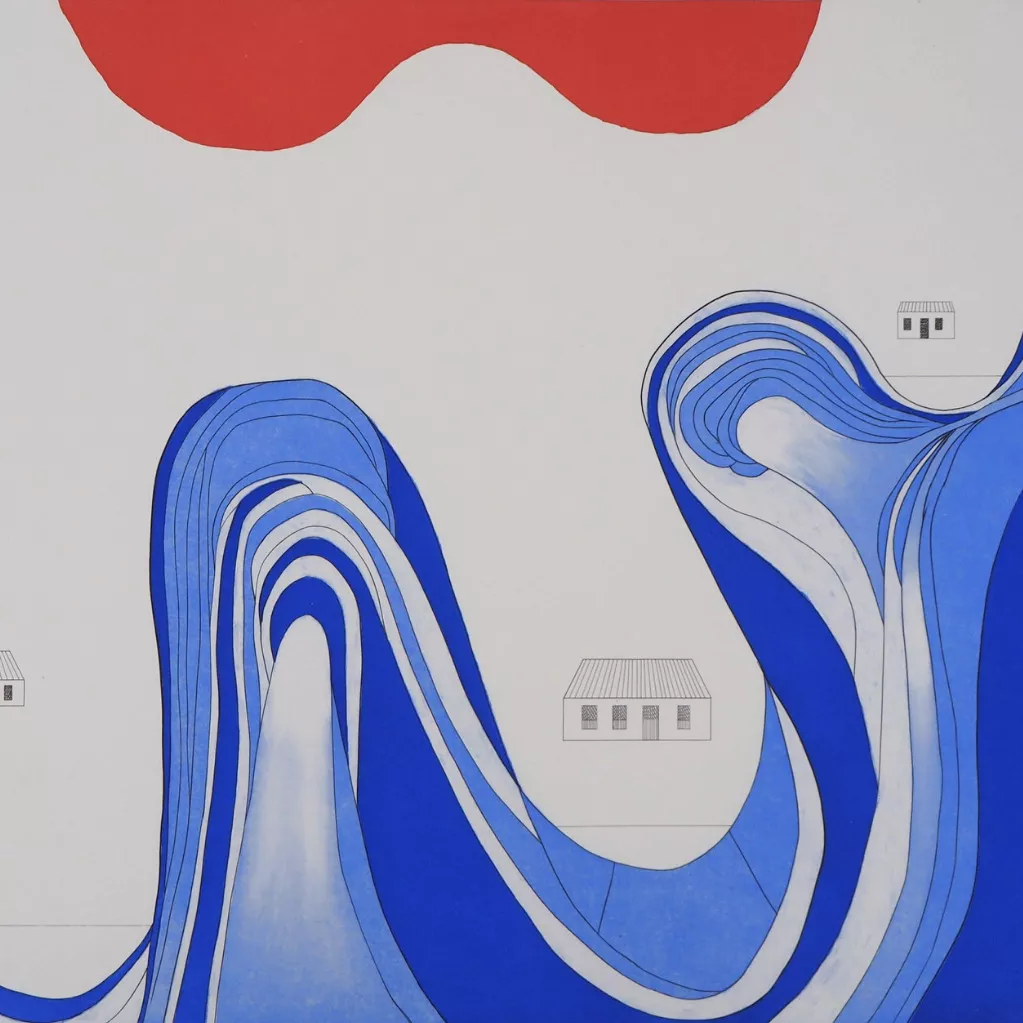
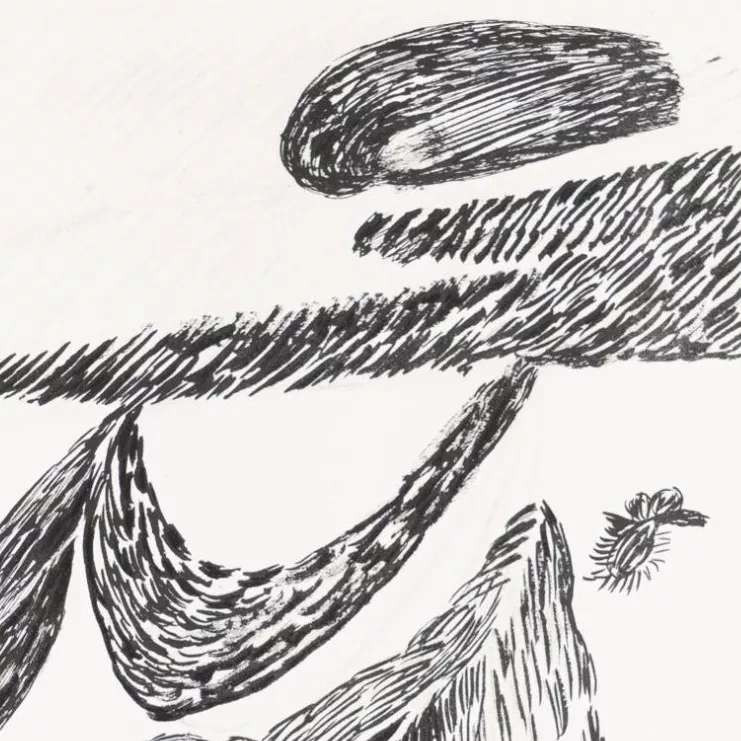
The artist's career and the world of Louise Bourgeois
Louise Bourgeois (1911 - 2010) was born in Paris into a family of tapestry restorers in Choisy-le-Roi. Her childhood was marked by work in the family workshop, where she took part in restoration work by dissolving missing parts of tapestries.
She had a complex relationship with her very authoritarian father, who was to become a major source of trauma and autobiographical themes in her art.
Louise Bourgeois studied mathematics and geometry at the Sorbonne from 1930 to 1932, which she eventually abandoned to devote herself to art. She then trained in several Parisian studios, such as those of Fernand Léger, André Lhote or Roger Bissière, and also attended courses at the École des Beaux-Arts and the Académie de la Grande Chaumière.
In 1938, she married American art historian Robert Goldwater, and moved to New York, where she became part of the modern art scene. Her first works were paintings and engravings, before she switched definitively to sculpture in the 1940s.
In the 1940s - 1960s, she produced her first wood sculptures, influenced by organic abstraction and surrealism. In the 1960s, she came to prominence with her biomorphic sculptures and works in latex and resin.
In the 1970s - 1980s, her recognition increased and her art was reread through the prism of feminism, although she always distanced herself from it. In the 1990s - 2000s, she created her monumental cells and spiders, including Maman (1999), which became an icon of contemporary art.
Louise Bourgeois used sculpture as a psychological and psychoanalytical catharsis. Themes of family, motherhood, desire, fear and death are of particular importance in her production through the ages.
In 1982, a major retrospective was held at MoMA on her work, and she was the first female artist to be honored in her lifetime by such an exhibition. From then on, she was considered a major figure in international contemporary art.
She died in New York in 2010, aged 98, and is now seen as one of the most influential artists of the 20th century, having paved the way for autobiographical art and a bodily, psychoanalytical reading of sculpture.
.
Market segmentation and the artist's quotation
Louise Bourgeois is one of the artists of her time whose works are currently selling at the highest prices. They are quite rare in circulation, as many are already in museums or foundations.
When they appear, they reach absolute records, fetching several million euros. His most sought-after sculptures are bronzes, plaster casts and small-scale marble works.
These creations are at the heart of his valuation, with prices ranging from 500,000 to 5 million euros, depending on importance, rarity and provenance. Works on paper, drawings and prints are the most accessible segments.
Preparatory drawings or watercolors sell for between €30,000 and €200,000. Prints and etchings constitute the most affordable segment, with prices ranging from €5,000 to €40,000, with a wide distribution to private collectors.
Textile works produced between the 1990s and 2000s have been highly sought-after since the 2010s. Their value is now comparable to that of medium-format bronzes (€300,000 to €2,000,000).
Several monumental spiders regularly exceed $20 - $25m. Cellules, created in the 1990s, fetch between $10 and $20m, depending on size and provenance. His smaller bronzes (torsos, figures, reduced spiders) fetch $1 to $3M.
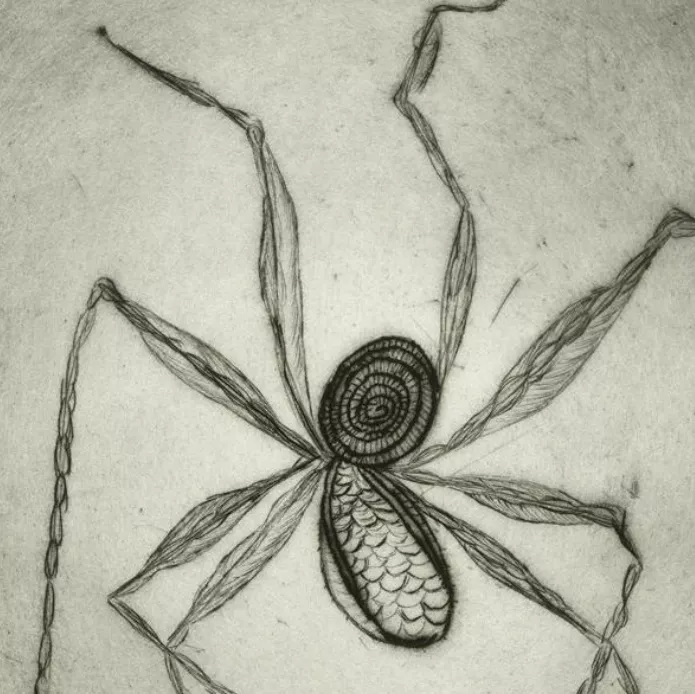
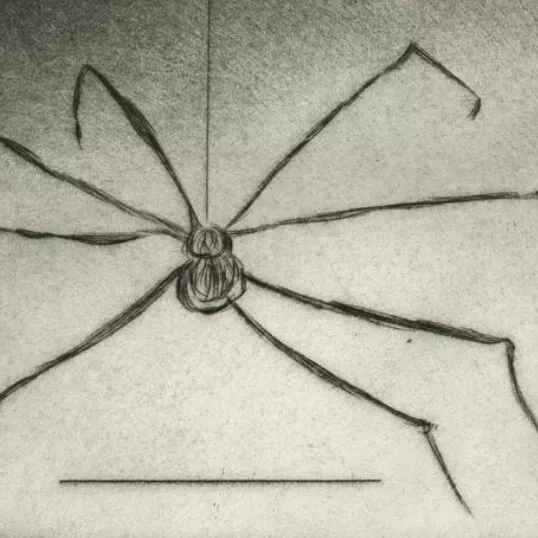
Her textile works are very dynamic on the market, testifying to the broadening of collectors towards women's contemporary. MoMA, the Tate, the Centre Pompidou and the Tate limit the disposition of major works.
High demand subsists among private collectors worldwide. Louise Bourgeois is considered " blue-chip ", a stable or even rising value, with strong institutional demand.
Prices have been rising since 2000, with international recognition and major retrospectives. Growth is reinforced by the interest in women artists in the market (Sotheby's, 2025, Women Artists in the Market report).
The segmentation is clear, with monumental sculptures in an ultra-premium market, and drawings and prints in a broader diffusion market.
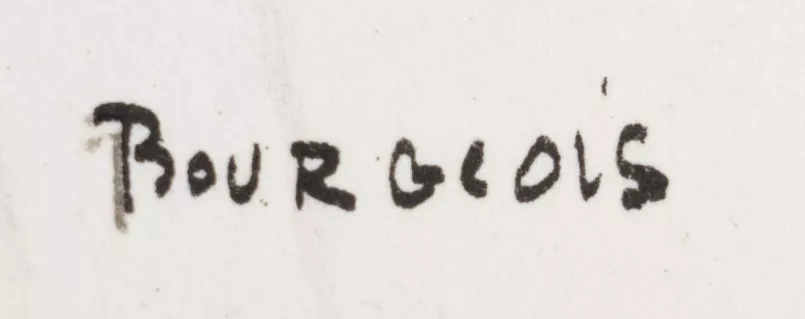
Recognizing the artist's signature
Louise Bourgeois doesn't necessarily sign her works. Copies may exist, which is why expertise remains important.
Knowing the value of a work
If you happen to own a work by or after Louise Bourgeois, don't hesitate to request a free appraisal using our form on our website.
A member of our team of experts and chartered auctioneers will contact you promptly to provide you with an estimate of the market value of your work, as well as ad hoc information about it.
If you are considering selling your work, you will also be accompanied by our specialists in order to benefit from alternatives for selling it at the best possible price, taking into account the inclinations of the market.
.Estimate in less than 24h
Discover in the same theme

Market Value and Pricing of Henri Lebasque's Paintings, Draw...
Henri Lebasque is a French Post-Impressionist painter who produced works that are listed and valued at auction. Estimated in 24h.
Learn more >

Rating and value of paintings by Nathalie Goncharova
Nathalie Goncharova is a Russian Futurist and Radiant artist who has produced works that are highly valued at auction.
Learn more >

Rating and value of works, sculptures, bronzes by Robert Cou...
Robert Couturier is a 20th-century artist who produced sculptures and furniture. His works are relatively popular at auction.
Learn more >
D'autres bronzes modernes vendus aux enchères

Estimated Between €2,000 and €4,000
Edouard Marcel SANDOZ (1881-1971) curly stingray, bronze print

Estimated Between €1,500 and €3,000
Renato CARVILLANI (1896-1986), seated woman, gilded bronze print

Estimated Between €1,500 and €3,000
César BALDACCINI dit CESAR (1921-1998), Poule Cartier, bronze print

Estimated Between €10,000 and €20,000
Baltasar LOBO (1910-1993), female nude in bronze

Estimated 5.000 - 8.000
Igor MITORAJ (1944-2014), Bust of Asclepius, Green patina bronze sculpture

Secure site, anonymity preserved

Auctioneer approved by the State

Free and certified estimates
Frequently asked questions
-
Who was Louise Bourgeois, and what impact has she had on contemporary art?Louise Bourgeois (1911–2010) was a major Franco-American artist of the 20th century and a pioneer of autobiographical art and contemporary sculpture. Trained in Paris under Fernand Léger and André Lhote, she moved to New York in 1938 and became a leading figure in the art world, honored with a retrospective at MoMA in 1982—the first female artist to receive this honor during her lifetime. Her work, centered on the body, motherhood, traumatic memory, and feminism, paved the way for a psychoanalytic and bodily interpretation of modern and contemporary sculpture.
-
What is the price range for Louise Bourgeois's works, broken down by type?Prices vary considerably depending on the medium: prints and engravings range from €5,000 to €40,000; drawings and watercolors range from €30,000 to €200,000; small-scale sculptures in bronze, plaster, or marble range from 500,000 to 5 million euros; textile works from the 1990s–2000s range from 300,000 to 2 million euros; and large “cells” or monumental “spiders” regularly exceed 10 to 25 million euros.
-
How do you authenticate a work by Louise Bourgeois?Since Louise Bourgeois did not always sign her works and copies exist, a professional appraisal is essential. Auctie's offers a free, no-obligation appraisal: simply submit your artwork via the form on the website, and a certified expert or auctioneer will contact you for a comprehensive evaluation within 48 hours.
-
Is this the right time to sell a work by Louise Bourgeois?Yes, now is an excellent time to sell. Louise Bourgeois is a “blue-chip” artist whose market value is stable and rising, with prices increasing since 2000 thanks to her growing international recognition and the market’s interest in female artists. The scarcity of works on the market enhances their value, particularly for sculptures and textiles.
-
How do I sell a work by Louise Bourgeois at Auctie's?Auctie's supports you every step of the way: after a free, no-obligation appraisal conducted by our certified auctioneers, we explore the best sales options based on current market conditions. We then guide you through the auction process to secure the best possible price for your artwork, taking into account market trends and international demand.
