



Rating and value of sculptures, drawings and paintings by Katarzyna Kobro

Key takeaways
- Katarzyna Kobro’s works are valued between €11,500 and €129,110, with prices skyrocketing since 2010, particularly for her sculptures.
- A Polish artist (1898–1951), she was a pioneer of Constructivist abstract sculpture, using steel, aluminum, and industrial materials with rational and minimalist techniques.
- Her watercolor drawings are priced between €400 and €800, while her three-dimensional sculptures constitute the largest segment of the market for her works.
If you own a work by or based on the work of artist Katarzyna Kobro and would like to know its value, our state-approved experts and auctioneers will guide you.
Our specialists will carry out a free appraisal of your work, and provide you with an accurate estimate of its value on the current market.
Then, should you wish to sell your work, we'll direct you to the best possible arrangement to obtain the optimum price.
Artist's rating and value
A Polish artist, Katarzyna Kobro won over the art critics, dealers and collectors of her day. Since then, the artist's works have established themselves as sure values on the art market.
From the 2010s onwards, her quotation exploded and showed a progression, particularly for her works created from the 20s onwards.
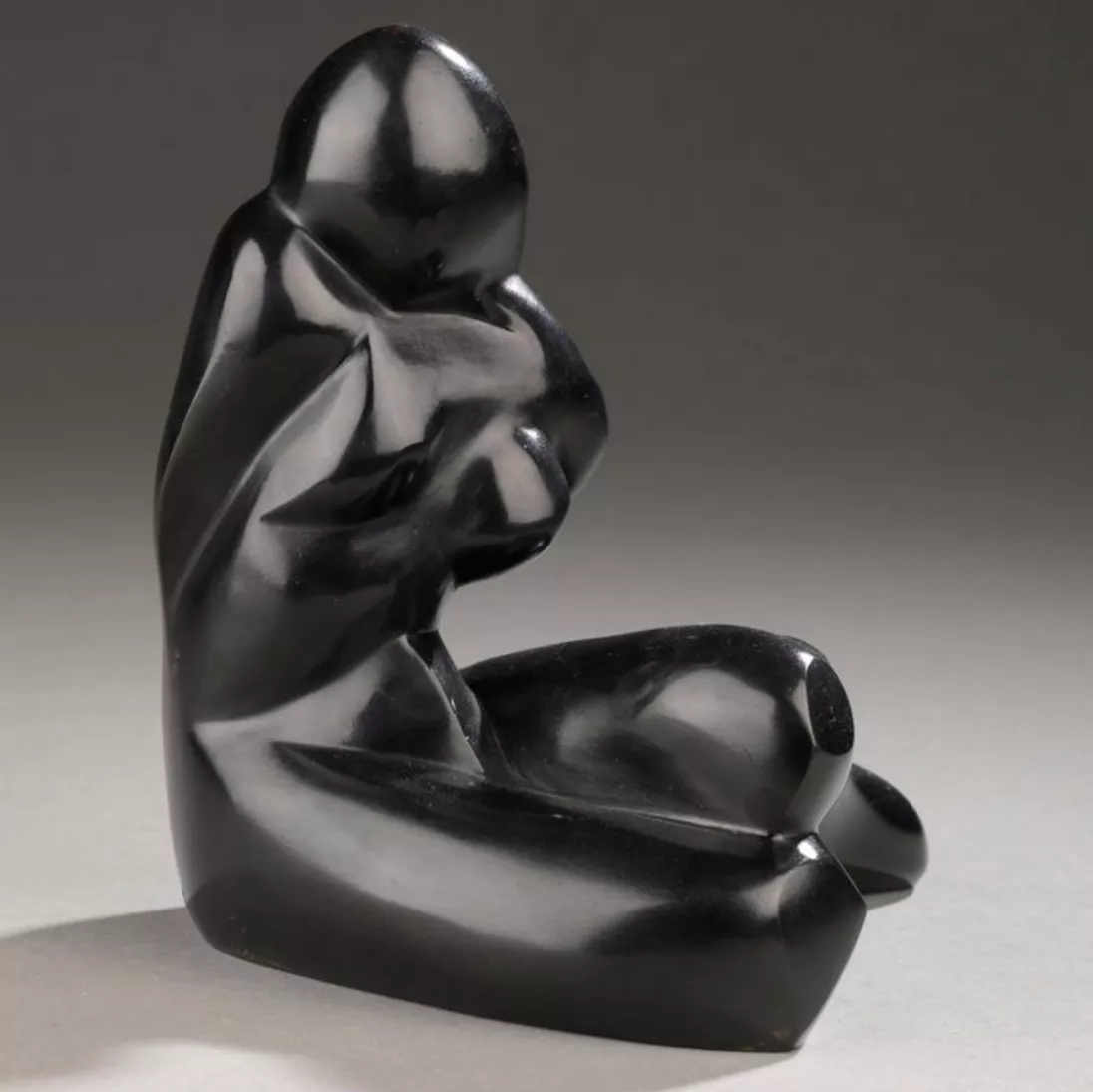
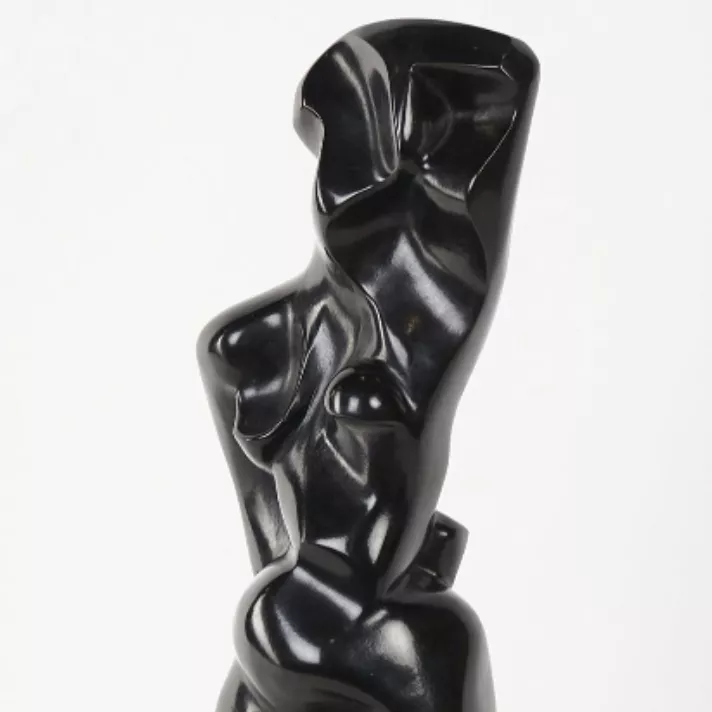
As a result, the price at which Katarzyna Kobro's works sell ranges from €11,500 to €129,110. A bronze sculpture of a woman entitled Female nude sold for €129,110, while it was estimated at between €117,000 and €164,000.
Order of value ranging from the most basic to the most prestigious
Technique used | Result |
|---|---|
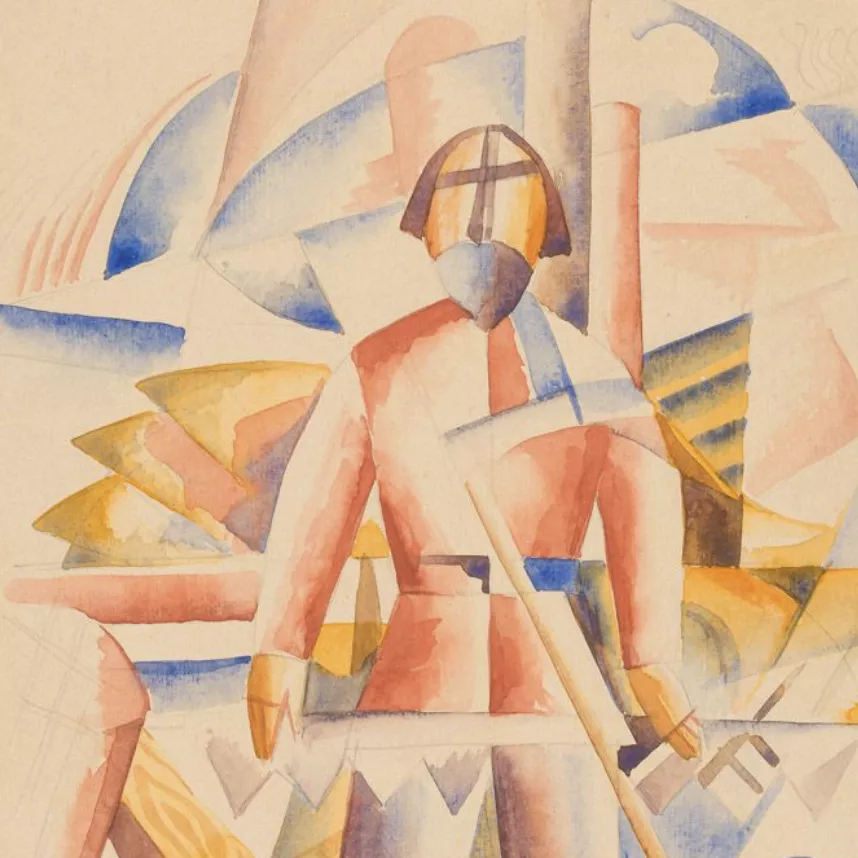
Drawing - watercolor | From €400 to €800 |
Sculpture- volume | From €11,500 to €129,110 |
Estimate in less than 24h
The artist's works and style
Katarzyna Kobro (1898 - 1951) was a major figure in constructivist avant-garde sculpture in Eastern Europe. She uses industrial materials such as sheet metal, steel, aluminum, glass, painted wood and sometimes wire.
The techniques are precise, often derived from architecture or engineering (cutting, folding, assembling), without modeling or adding expressive matter. She refuses any subjective or gestural intervention in the execution. Her technique is rational, mathematized and uncluttered.
Her sculptures are generally non-figurative, based on the articulation of geometric elements in space (planes, circles, arcs, lines). For the most part, she rejects the traditional pedestal her sculptures are conceived in direct interaction with the surrounding space. She seeks transparency, lightness and spatial movement.
Thus, the work is not designed to dominate the space, but to fit into it as a logical extension. The forms are dynamic, open, often suspended or balanced without solid mass.
Kobro rejects sculpture as a compact or autonomous object, and conceives it as a spatial rhythm, traversed by air and light. The central idea is that sculpture does not organize a volume but organizes a void.
Space becomes co-creator of the work, interacting with the forms that run through it. She uses standardized modules and proportions based on rational calculations and mathematical sequences.
She co-founded Polish Constructivism with her husband Wladyslaw Strzeminski. She defended scientific, objective art in the service of social harmony, breaking with bourgeois, individualistic art. Her style is a rigorous synthesis of the Russian avant-garde (Tatline, Rodchenko), De Stijl (Mondrian, van Doesburg) and the Bahaus.
She thus developed an anti-expressionist, anti-decorative and functional vision of sculpture. She produced no figurative works. From the outset, her work has been placed in the field of radical abstraction.
Although she is part of the constructivist movement, she develops a unique approach to three-dimensional space, and rejects sculpture as a symbolic or emotional object but conceives the work as a pure spatial system.
The life of Katarzyna Kobro
Katarzyna Kobro (1898 - 1951) was a key figure in the European avant-garde and a pioneer of abstract sculpture. Born in Moscow in 1898 to a family of German-Russian origin, she studied at the Moscow School of Fine Arts during the revolutionary period, and rubbed shoulders with the artistic circles of the Russian avant-garde.
She was trained in a context marked by Russian Constructivism, the ideas of Tatline, Malevich and Rodchenko. In 1920, she left Soviet Russia to settle in Poland with her husband, the painter and theoretician Wladyslaw Strzeminski.
Together they became the leaders of Polish Constructivism, promoting rational, functional and social art. She obtained Polish nationality and made a lasting mark on the country's cultural scene.
Kobro co-founded the " Blok " group in 1924, then the " Praesens " and " a.r. " groups, all of which were linked to the international avant-gardes, and developed a radical sculptural oeuvre based on a scientific and spatial vision of art.
She defends an anti-subjective aesthetic, where creation is based on logic, mathematical harmony and social function, and participates in the writing of major theoretical texts on constructive art with her husband, notably around the concept " d'unisme ".
Kobro teaches sculpture, but remains quite marginalized in official institutions, often remaining in her husband's shadow. She also suffered the increasing marginalization of art in Poland from the 1930s onwards. The Second World War destroyed some of her work, and she and Stzeminski went through a painful divorce after the war.
Sick and destitute, she died in 1951 in Lodz, in relative anonymity. Her work was rediscovered in the 1960s, first in Poland and then internationally. Today, she is recognized as one of the greatest abstract sculptors of the 20th century, alongside Barbara Hepworth or Naum Gabo.
Her works are today held at the Museum of Modern Art in Lodz, at the Centre Pompidou and in various European collections.
The success of twentieth-century female artists at auction
Since 2020, auction sales devoted to female artists have enjoyed steady growth, based on an active rereading of the market, a critical reappraisal of the works, a new structuring of demand.
The figures, published by the leading auction houses, confirm this dynamic: Yayoi Kusama, Joan Mitchell, Louise Bourgeois, Georgia O'Keeffe, Cecily Brown are reaching heights rarely equaled until now, not for conjunctural reasons, but because their works are now part of a broader reading of the history of modern and contemporary art.
The results do not merely reflect a phenomenon of belated correction, they translate a transformation of the gaze, a redefinition of value.
The multiplication of thematic sales organized by Sotheby's or Christie's, exclusively dedicated to women artists, is another indication: the market is not adjusting, it is reconfiguring. Works are extracted from the margins, presented in museum contexts, published, analyzed, integrated into mainstream narratives.
This recognition is neither marginal nor temporary; it alters established hierarchies. It imposes a new cartography, in which works by Tanning, Saint Phalle, Hepworth or Leonor Fini find their place, not as objects of rehabilitation, but as constitutive structures of another history.
The evolution is slow but steady: it doesn't correct an omission, it transforms the visible foundations of artistic recognition.
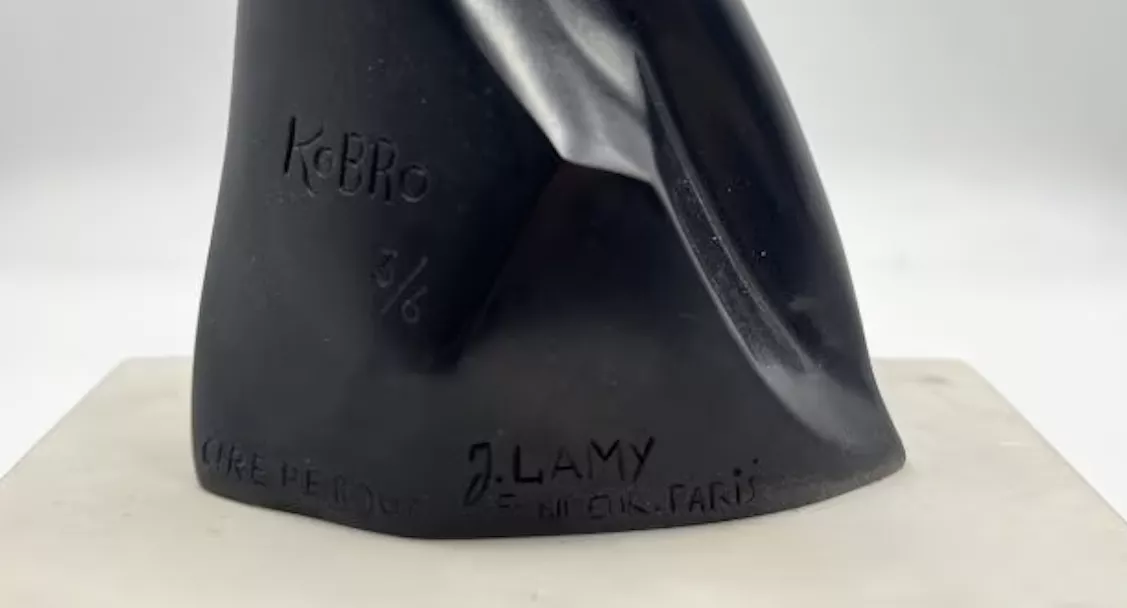
Her signature
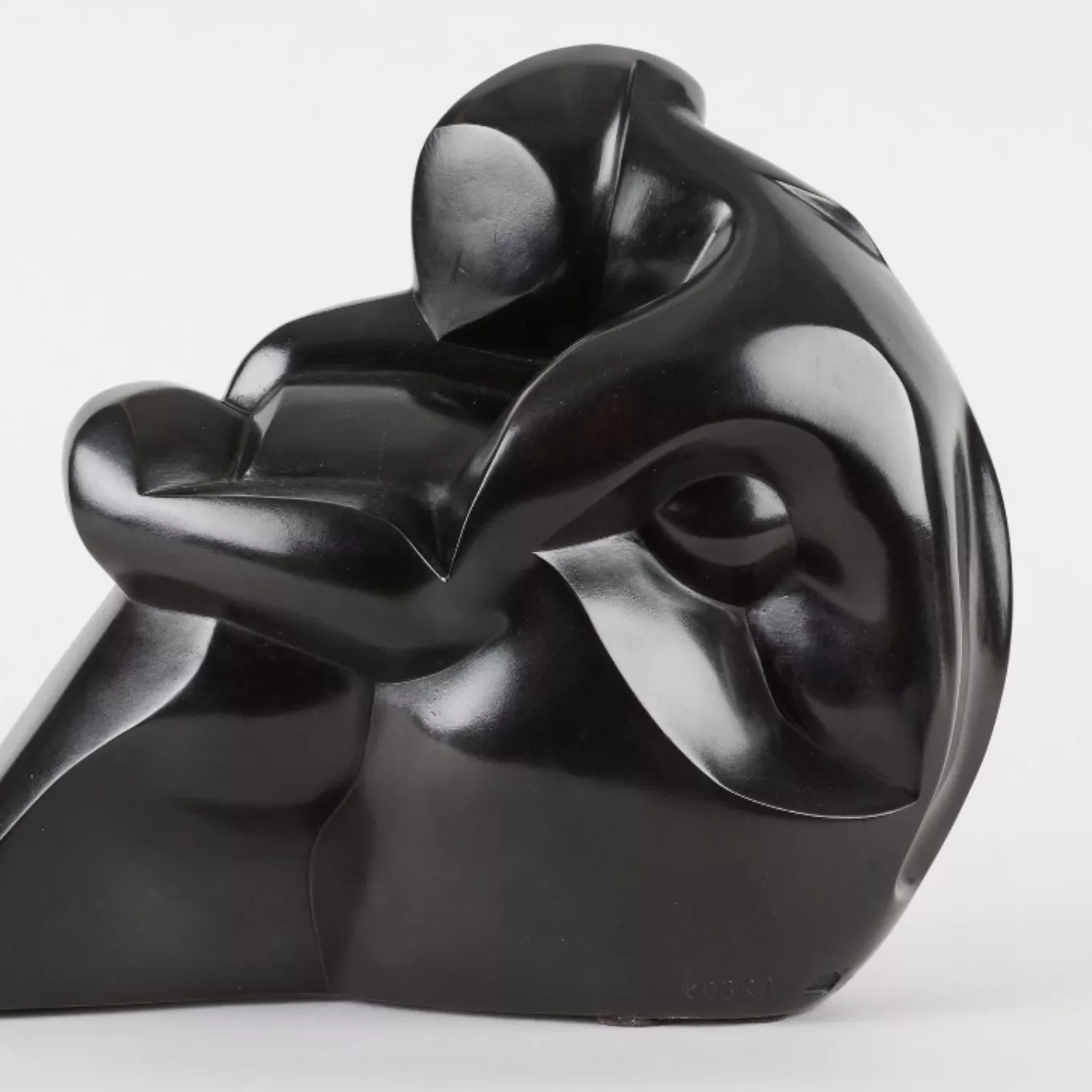
Not all of Katarzyna Kobro's works are signed, and copies exist.
An example of her signature can be seen in the drawing below.
Expertise your property
If you own a work by Katarzyna Kobro, feel free to request a free appraisal by filling in our online form.
A member of our team of experts and certified auctioneers will contact you to provide an estimate of the market value of your work.
If you are considering selling your work, our specialists will also guide you through the various alternatives available to obtain the best possible price, taking into account market trends and the specific features of each object.
Estimate in less than 24h
Discover in the same theme

Rating and value of works, drawings, paintings by Kees Van D...
Kees Van Dongen is a 20th-century Fauvist and Expressionist painter whose paintings and drawings are highly prized at auction. Estimated in 24h.
Learn more >

Rating and value of paintings by Constantin Terechkovitch
Terechkovitch is a Russian Expressionist painter who has produced works that are quoted and valued on the auction market.
Learn more >

Rating and value of works, ceramics, paintings by Jacques Po...
Jacques Pouchain is an artist who has produced modernist ceramics that are highly valued at auction. Estimate in 24h.
Learn more >
D'autres bronzes modernes vendus aux enchères

Estimated Between €2,000 and €4,000
Edouard Marcel SANDOZ (1881-1971) curly stingray, bronze print

Estimated Between €1,500 and €3,000
Renato CARVILLANI (1896-1986), seated woman, gilded bronze print

Estimated Between €1,500 and €3,000
César BALDACCINI dit CESAR (1921-1998), Poule Cartier, bronze print

Estimated Between €10,000 and €20,000
Baltasar LOBO (1910-1993), female nude in bronze

Estimated 5.000 - 8.000
Igor MITORAJ (1944-2014), Bust of Asclepius, Green patina bronze sculpture

Secure site, anonymity preserved

Auctioneer approved by the State

Free and certified estimates
Frequently asked questions
-
Who was Katarzyna Kobro, and what is her role in the history of sculpture?Katarzyna Kobro (1898–1951) was a Polish sculptor, a pioneer of abstract sculpture, and a co-founder of Polish Constructivism. A major figure in the European avant-garde, she developed a revolutionary approach to three-dimensional sculpture, conceived as a streamlined spatial system based on geometric elements and mathematical calculations. Her works are now recognizable for their use of industrial materials (steel, sheet metal, aluminum, glass) and their rejection of figurative form and the traditional pedestal.
-
What are the prices and values of Katarzyna Kobro's works?Katarzyna Kobro's works range in price from 400 to 129,110 euros, depending on the medium and the size of the piece. Drawings and watercolors generally range from €400 to €800, while sculptures range from €11,500 to €129,110. For example, a bronze sculpture titled *Female Nude* sold for €129,110 at auction. The artist’s market value has seen a notable increase since the 2010s, particularly for his works from the 1920s and later.
-
How can you authenticate a work by Katarzyna Kobro?To authenticate a work by Katarzyna Kobro, we recommend that you request a free appraisal from Auctie's. Our team of auctioneers and certified experts will conduct a detailed examination of your artwork and provide you with a reliable appraisal, taking into account the authentic characteristics of her work, including her signature (which is not present on all works) and her distinctive constructivist techniques.
-
Is this a good time to sell a work by Katarzyna Kobro?Yes, now is a good time to sell a work by Katarzyna Kobro. Since 2010, her market value has been rising steadily, and this trend is part of a broader movement toward the revaluation of 20th-century female artists in the art market. Collectors are gradually rediscovering her major role in the history of abstract sculpture, which is driving strong auction results.
-
How does the appraisal process work at Auctie's?Appraisals at Auctie's are free and non-binding. Simply fill out our online form and describe your artwork. A certified expert or auctioneer will contact you to examine the piece and provide you with an accurate assessment of its market value within 48 hours. If you’re considering selling, our specialists will then guide you toward the best sales strategy for your item.
