



Rating and value of works, drawings, paintings by Georg Baselitz

Key takeaways
- Prices for Baselitz's works vary considerably, ranging from €30 for a print to 7.5 million euros for a prestigious oil on canvas.
- In 2022, the painting "Spekulatius" sold for 6.27 million euros, reflecting the artist’s record prices in recent years.
- Baselitz works in several media (prints, watercolor drawings, oil on canvas), and his works are part of the German Neo-Expressionist movement influenced by Die Brücke.
If you own a work by or after Georg Baselitz, and would like to know its value, our state-approved experts and auctioneers will offer you their appraisal services.
Our specialists will work to carry out a free appraisal of your work, and provide you with an accurate estimate of its value on the current market.
Then, if you wish to sell your work, we will direct you to the best possible arrangement to obtain the optimum price.
Rating and value of the artist Georg Baselitz
The artist Georg Baselitz leaves behind a classic body of work, consisting mainly of abstract paintings. Now, prices for his works are exploding under auctioneers' hammers.
His paintings are highly prized, especially by English and American buyers. The price at which they sell on the art market ranges from €30 to €7,487,350, a very substantial range but one that speaks volumes about the value that can be attributed to Baselitz's works.
In 2022, his dark-toned oil on canvas Spekulatius sold for €6,267,000. Its value is at its highest in recent years.
Order of value from a simple work to the most prestigious
Technique used | Result |
|---|---|
Estamp | From €30 to €123,410 |
Drawing - watercolor | From 200 to 1,080,640€ |
Oil on canvas | From 1,700 to 7,487,350€ |
Estimate in less than 24h
Style and technique of artist Georg Baselitz
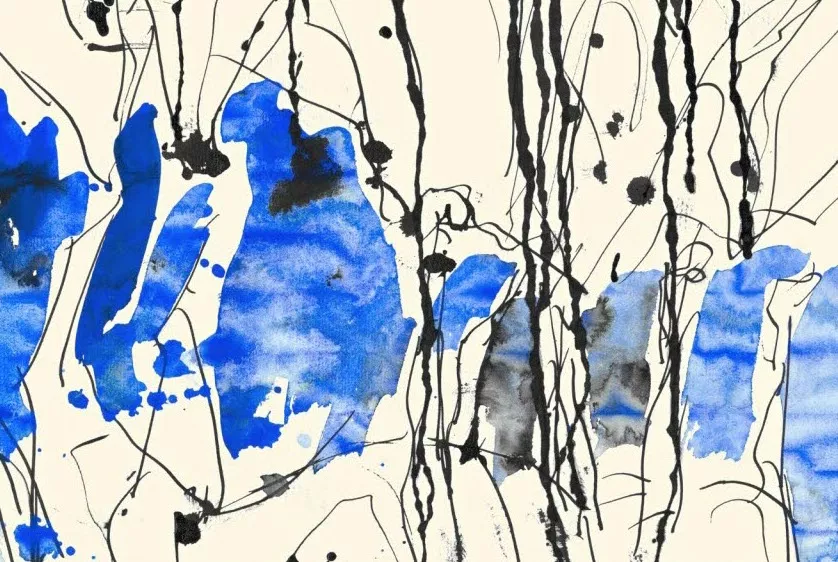
Georg Baselitz mainly makes prints. He also works in gouache, simple drawing and oil on canvas. He belongs to the neo-expressionist movement and is influenced by Die Brücke. His painting is figurative, and he has the particularity of exhibiting his paintings turned upside down. He makes extensive use of the brush.
Georg Baselitz, artistic figure of West Berlin
Georg Baselitz (real name Georg Hans Kern), a German artist, was born in Saxony during the Nazi period in 1938. He is now 85 years old and still teaches at the Berlin Art Academy.
He is an engraver, sculptor and painter. His life was punctuated by the Second World War and the Cold War. He grew up in the GDR, then left to study in West Germany. He made a name for himself in Berlin in the 60s, and began to represent Berlin's western art scene. He soon found his pictorial outlet in German neo-expressionism, influenced by Die Brücke.
He failed to enroll at the Dresden School of Fine Arts, and so studied at the Berlin School of Visual and Applied Arts, which expelled him for his " socio-political immaturity ". He was admitted to the Charlottenburg School of Fine Arts, where he was inspired by the art theories of Malevich and Kandinsky. After a trip to Amsterdam, he left his studies to work on his own, producing works at home. He travels to Paris, where he discovers the work of Eugène Leroy, with whom he becomes friends for the rest of his life. He drew much inspiration from them. He also became interested in art brut, including artists such as Gaston Chaissac.
He exhibited his work with another artist and wrote two manifestos. In 1963, he held his first solo exhibition, and two of his works were seized by a bailiff for disturbing the peace.
In the 1980s, his painting became more abstract. At the end of his career, he moved to Italy and exhibited in New York. Very much a Berliner, he acquired an international reputation for scandal and refusal of conformity. Retrospectives of his work are held all over the world.
.
Understanding the role of German Expressionism in the 20th century
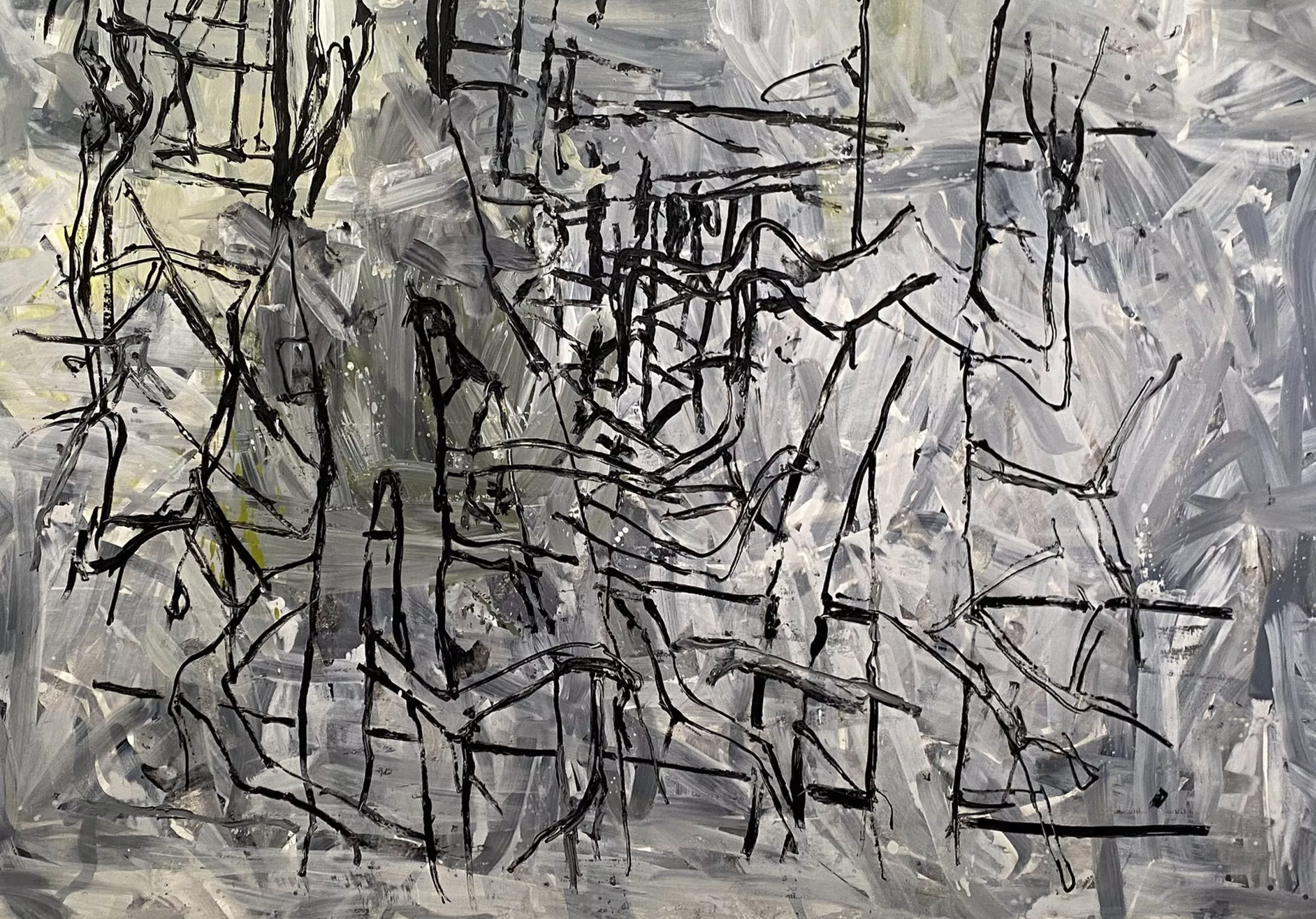
German Expressionism, particularly during the 20th century, was durably influenced by Germany's complex history, marked by the Second World War and the Cold War.
This artistic movement, born in the early 20th century thanks to groups like Die Brücke, and linked to artists like Otto Dix, continued to develop through these periods of upheaval, finding landmarks and opportunities for expansion in the city of Berlin.
Berlin, devastated by war and divided by the Wall, became a symbol of the political and ideological tensions that marked this era. It was in this context that Expressionism, and later Neo-Expressionism, took on a new dimension.
Berlin artists drew on the city's oppressive atmosphere to express the traumas of war and the anxieties of the post-war period.
.
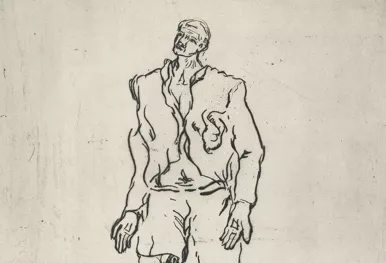
Berlin, fragmented between East and West, became a laboratory for artistic experimentation, where painters, printmakers and sculptors reacted to their environment by creating works marked by raw emotional intensity and a rejection of aesthetic conventions.
The work of these artists, often imbued with a sense of disillusionment and anger, reflected the brutality of the times and the absurdity of ideological divisions.
The emblematic figures of Berlin Expressionism, such as those influenced by the two most famous Expressionist groups, Die Brücke or the Blaue Reiter, were direct witnesses to the horrors of war and repression.
They translated these experiences into works in which distorted forms and expressive use of color were used to denounce human suffering. In the context of the Cold War, West Berlin became a bastion of artistic freedom, contrasting with rigorous censorship in the East.
Neo-Expressionism, which emerged in the 1960s and 1970s, resurrected the rebellious spirit of its predecessors, while integrating the new realities of a divided Germany.
Georg Baselitz, for example, with his provocative works and refusal of conformity, embodied this resurgence of the movement in Berlin. He drew inspiration from the Expressionist masters while bringing a contemporary perspective to the anxieties of his time.
Thus, Berlin Expressionism, through the Second World War and the Cold War, remained a mirror of Germany's tumultuous times, an artistic cry against the atrocities of history, and an affirmation of the creative spirit in the face of adversity.
More about Georg Baselitz's work
The auction market value of Baselitz's works
Georg Baselitz's works are extremely highly valued at auction. His canvases are sought after by many collectors.
Stemming from a very particular artistic, sociological and historical context, Baselitz's works are particularly prized as unique historical witnesses to Berlin's creative context from the 40s to the 80s, and even beyond.
His paintings exude a particular aura, imbued with anger, a desire for freedom and a certain violence characteristic of society during this period.
Georg Baselitz's imprint on his period
Georg Baselitz marked his time with his provocative spirit and constant artistic renewal. Rejected and expelled from two schools, he is now a professor at Berlin's School of Fine Arts, and keeps his artistic identity alive among his students. Strongly influenced by Eugène Leroy, they were associated in a French exhibition in 2013, which presented the two artists' respective paintings.
Recognizing the artist's signature
Not all Georg Baselitz's works are signed. They may be at the bottom of the painting, but if you think you own one, it's best to have it appraised to be sure of its originality.

Knowing the value of a work
If you happen to own a work by Baselitz or after the artist, don't hesitate to request a free valuation using our form on our website.
A member of our team of experts and licensed auctioneers will contact you promptly to provide you with an estimate of the market value of your work, not forgetting to send you ad hoc information about it.
If you wish to sell your work, you will also be accompanied by our specialists in order to benefit from alternatives to sell it at the best possible price, taking into account market inclinations.
Estimate in less than 24h
Works from the same period sold at auction

Estimated 4.000 - 6.000 €
GASTON CHAISSAC (1910-1964) Composition 1947, Gouache and Indian ink on paper.

Estimated 100-200€
Vassiliew Slavik, Oil on canvas

Estimated Between €5,000 and €8,000
Jean MIOTTE (1926-2016), acrylic on canvas

Estimated 2.500 - 5.000
Alfred RETH (1884-1966) Composition, 1959, Oil and sandblasting

Estimated 20.000 - 30.000
Chaffic ABBOUD (1926-2004) "La visite", Oil on canvas
Discover in the same theme

Rating and value of works, drawings and paintings by Victor...
Victor Vasarely is a Bahaus-inspired 20th-century artist whose works are highly valued at auction.
Learn more >

Rating and value of Caesar's sculptures, jewelry and expansi...
César is a French sculptor of the Nouveau Réalisme movement who has produced works that are highly valued on the auction market.
Learn more >

Rating and value of paintings by Bart van der Leck
Bart van der Leck is a 20th-century artist who researched abstraction and produced works in a variety of media.
Learn more >

Secure site, anonymity preserved

Auctioneer approved by the State

Free and certified estimates
Frequently asked questions
-
Who is Georg Baselitz, and what is his artistic movement?Georg Baselitz is a German artist born in 1938 in Saxony; he is an internationally renowned printmaker, sculptor, and painter. An iconic figure of German Neo-Expressionism influenced by Die Brücke, he is known for his provocative figurative works—notably his upside-down paintings—and for his major role in the West Berlin art scene since the 1960s. His art reflects the traumas of World War II and the Cold War, expressed through raw emotional intensity and a rejection of aesthetic conventions.
-
What is the price range for Georg Baselitz's works?The prices of Georg Baselitz’s works vary considerably depending on the medium and quality: prints range from €30 to €123,410, drawings and watercolors from €200 to €1,080,640, and oil paintings on canvas from €1,700 to €7,487,350. This range reflects the wide variation in value based on the historical significance and quality of each piece, as evidenced by the 2022 sale of “Spekulatius” for €6,267,000.
-
How do you authenticate a work by Georg Baselitz?To authenticate a work by Georg Baselitz, we recommend that you request a free appraisal from Auctie's using the form on our website. Our state-certified experts and auctioneers will contact you promptly to examine your artwork and provide you with an accurate estimate of its market value, as well as all information regarding its authenticity—with no obligation on your part.
-
Is this the right time to sell a work by Georg Baselitz?Yes, this is an excellent time to sell a work by Georg Baselitz. His market value has been at an all-time high in recent years, his paintings are highly sought after by British and American collectors, and the art market for German Neo-Expressionism remains vibrant and recognizes the historical and artistic significance of his work.
-
How does the process of selling a work of art at Auctie's work?The process begins with a request for a free, no-obligation estimate: an Auctie's expert will contact you within 48 hours to appraise your artwork and provide you with its market value. If you decide to sell, our specialists will then work with you to present the best options and guide you through the auction process, taking market trends into account to secure the best possible price.
