



Value and quotation of works, paintings by Eugène Leroy

Key takeaways
- Eugène Leroy (1910–2000), a 20th-century French abstract painter and a major figure influenced by Malevich, Mondrian, and Flemish masters such as Rembrandt.
- Prices for Leroy’s works range from €90 for watercolor drawings to €80,000 for oil-on-canvas paintings, with his market value at its highest since 2022.
- The artist primarily works with color in oil, gouache, and printmaking, creating vague forms with blurred lines to enhance chromatic nuances.
If you own a work by or after the artist Eugène Leroy, and would like to know its value, our state-approved experts and auctioneers will offer you their appraisal services. Our specialists will carry out a free appraisal of your work, and provide you with a precise estimate of its current market value. Then, if you wish to sell your work, we will guide you towards the best possible arrangement to obtain the optimum price.
Rating and value of the artist Eugène Leroy
Considered one of the promising abstract painters of his time, Eugène Leroy participated in the artistic revolution of the 20th century. His legacy includes paintings, watercolor drawings and prints. Today, prices for his works are rising under the auctioneer's hammer. His paintings are particularly prized, and the price at which they sell on the art market ranges from €90 to €80,000, a considerable delta but one that speaks volumes about the value that can be attributed to Leroy's works. In 2022, a polychrome composition in neutral tones entitled L'été par Temps Gris and dating from 1997 sold for €80,000. The artist's stock is therefore at an all-time high.
Order of value from a single Eugène Leroy painting to the most prestigious
Technique used | Estimation |
|---|---|
Estamp | From 120 to 600€ |
Drawing - watercolor | From €90 to €9,500 |
Oil on canvas | From €500 to €80,000 |
Estimate in less than 24h
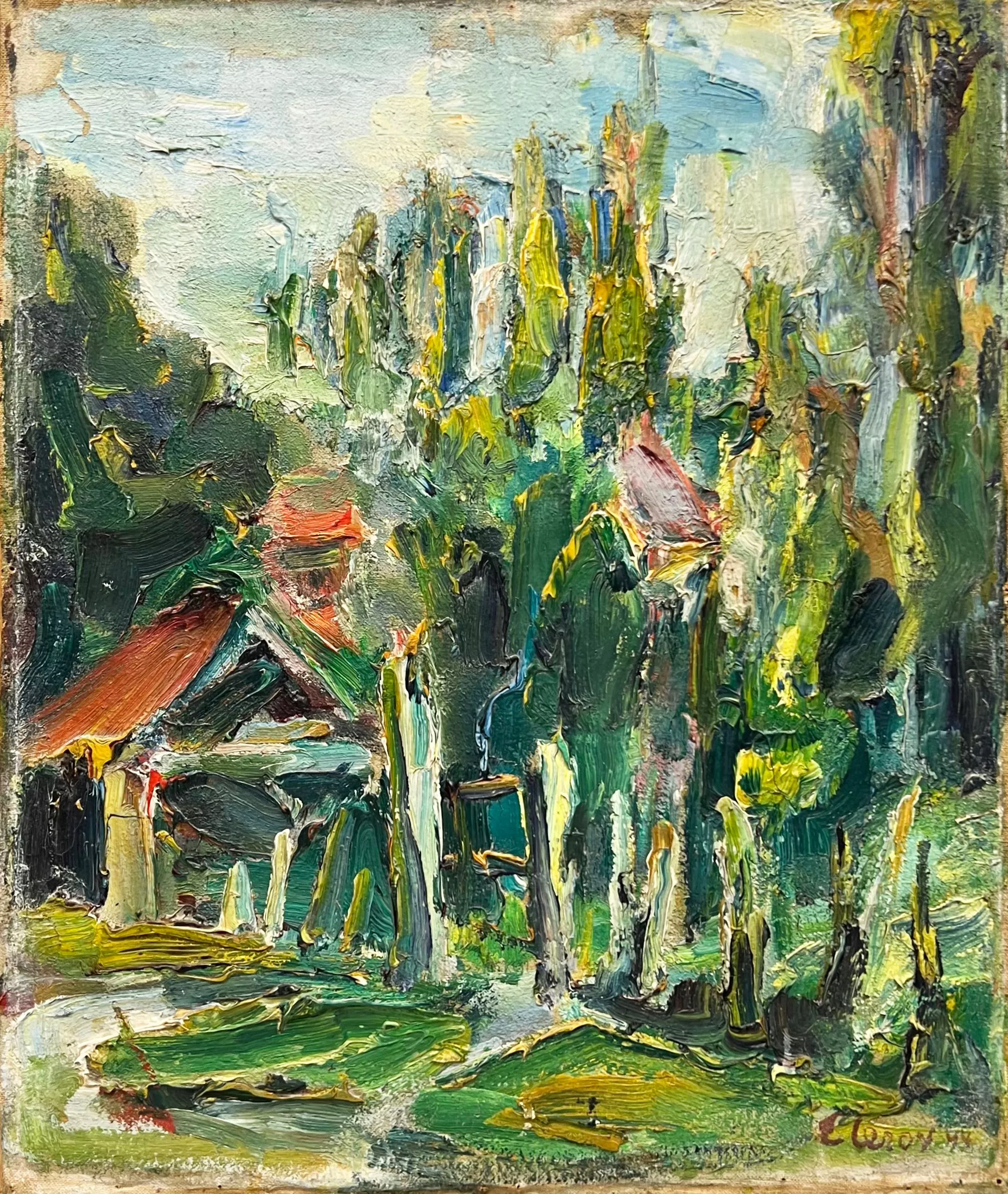
Style and technique of artist Eugène Leroy
Most of Eugène Leroy's artistic process focuses on color work. He was influenced by several great painters of his time, such as Malevitch or Mondrian. He would draw inspiration from them, but also from the great masters, especially of Northern art, such as Rembrandt or Van Gogh. He is not associated with any particular movement, his work being highly evolutionary and based on an intellectual reflection of abstraction.
He uses oil paint (on canvas), with brush or knife, drawing, gouache, and produces a few prints.
The life of Eugène Leroy
Eugène Leroy (1910-2000), French artist, became a fairly important figure in the 20th-century art world. He was born in northern France.
His father was an amateur painter, but died when Eugène Leroy was just 18 months old. He was raised very strictly by his uncle, who was a priest, and his mother. For his fifteenth birthday, his mother gave him his father's painting palette. He then decided to become an artist.
He drew on the advice of his teachers, using nature as a model. He leaves for Rome shortly before his 18th birthday. He fell victim to pleurisy (an effusion of the lung membrane), which caused him great pain for three years: painting helped him through this ordeal.
His early canvases are imbued with an Impressionist influence, but also Flemish in the use of color. That's why it's hard to pin him down to a particular current or style.
He began his training at the Beaux-Arts in Lille, near his hometown. He didn't stay there long, and soon left for Paris to attend the Académie de la Grande Chaumière. He didn't think he was cut out for art studies and returned to Roubaix, in the north of France, to study literature and teach Latin and French in a secondary school. But he didn't stop painting.
He continues to travel to the Netherlands and Belgium to meet artists and observe works. It was there that he was struck by Rembrandt. He also had the opportunity to see Malevich, which would influence him for the rest of his career. Along with Mondrian, Malevich is a source of inspiration in his search for abstraction, even if he won't go as far as he did.
He remains, for his painterly manner, in a figurative art, which does not prevent him from taking an interest in the work of the more abstract, such as Kandinsky.
He is discovered by Bazelitz in the 1960s, which will really launch his career.
The legacy of Eugène Leroy
Eugène Leroy, among all the painters of the 20th century, stands out for the multiplicity of his influences. He blends Flemish art, Futurism, Impressionism, Expressionism and many other influences. He was also a man of letters, who applied his reading and study of philosophy to his art. Vague shapes can be seen in his canvases, the strokes are not sharp, allowing him to create an infinity of color shades. Like Jacques Germain, he uses the knife in the finishing touches, if not in the entirety of his canvases.
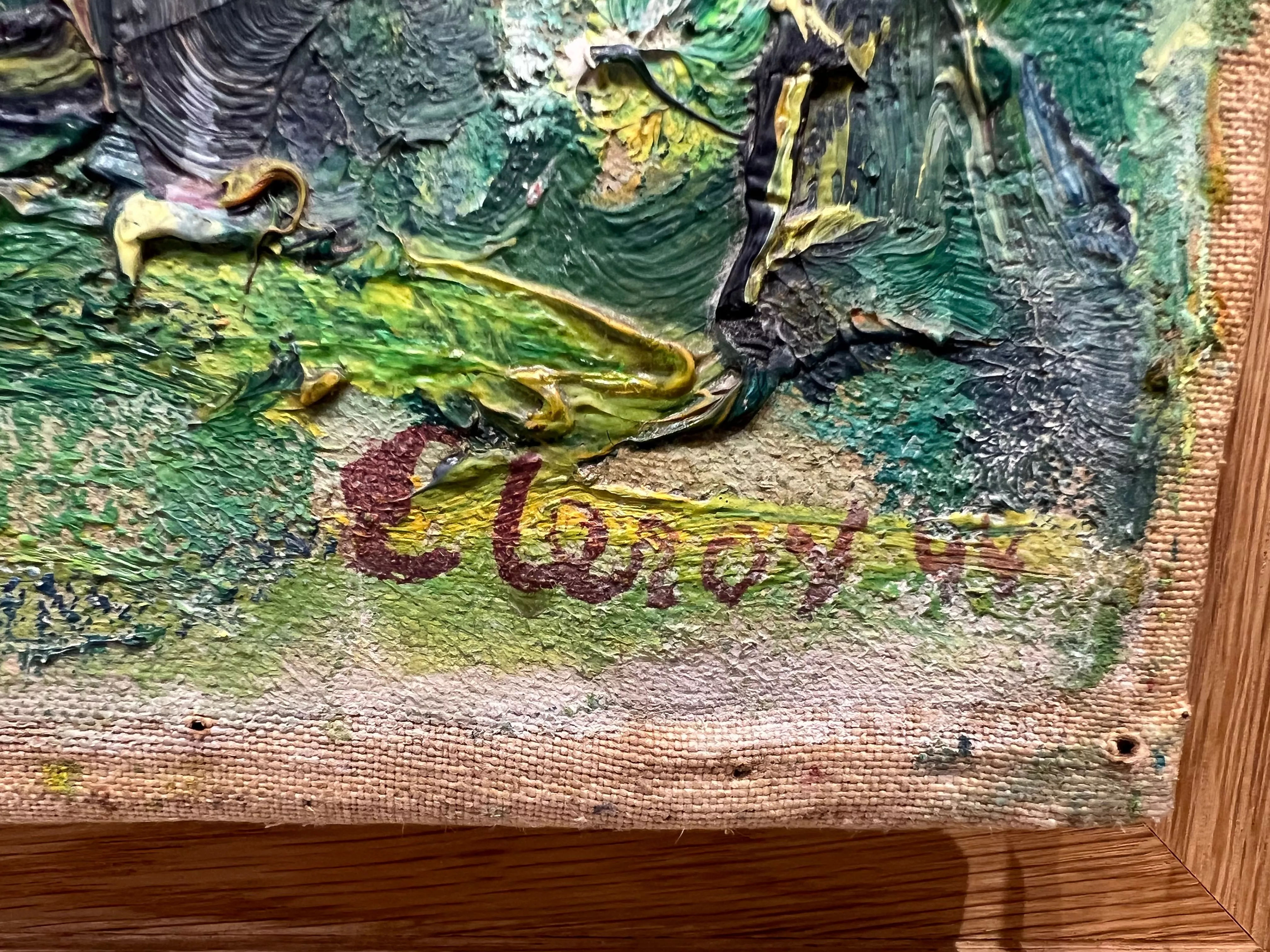
Recognizing Eugène Leroy's signature
The artist's works are often signed. If he does, the signature appears at the bottom of the painting, in a color that contrasts with the background. Here's an example.
Getting to know the value of a work by Eugène Leroy
If you happen to own a work by or after Eugène Leroy, don't hesitate to request a free appraisal using the form on our website. A member of our team of experts and certified auctioneers will contact you promptly to provide you with an estimate of the market value of your work, as well as ad hoc information about it. If you are considering selling your work, you will also be accompanied by our specialists in order to benefit from alternatives for selling it at the best possible price, taking into account market inclinations.
Estimate in less than 24h
Discover in the same theme

Lucien Lévy Dhurmer's vases rating and value
Lucien Lévy Dhurmer is a twentieth-century painter and ceramist who produced vases that are highly prized at auction.
Learn more >

Rating and value of paintings by Nikolai Sapunov
Nikolai Sapunov is a twentieth-century Russian Symbolist painter whose paintings are highly valued at auction.
Learn more >

Rating and value of sculptures, bronzes and marbles by Naoum...
Naoum Aronson is a Latvian sculptor who has produced bronzes and marbles that are highly valued at auction. Estimate in 24h.
Learn more >
Works in the same style sold at auction

Estimated 4.000 - 6.000 €
EUGÈNE LEROY (1910-2000), Maison dans un sous bois, oil on canvas mounted on panel.

Estimated 15.000 - 20.000 €
Jacques MAJORELLE (1886-1962) - Fishermen embarking, Abidjan, Ivory Coast - Oil on canvas.

Estimated 3.000 - 5.000 €
Henri EPSTEIN (1892-1944), Place du sud de la France, Oil on canvas.

Secure site, anonymity preserved

Auctioneer approved by the State

Free and certified estimates
Frequently asked questions
-
Who was Eugène Leroy, and what was his role in 20th-century art?Eugène Leroy (1910–2000) was a French painter considered one of the leading figures in 20th-century abstract art. Influenced by masters such as Rembrandt, Malevich, and Mondrian, he distinguished himself through a highly personal approach that blended Impressionism, Expressionism, and Abstraction, without adhering to any single movement. His career truly took off in the 1960s after he was discovered by the gallery owner Bazelitz.
-
What is the price range for Eugène Leroy's works on the market?The prices of Eugène Leroy’s works vary considerably depending on the medium and quality: prints range from €120 to €600, drawings and watercolors from €90 to €9,500, and oil paintings on canvas from €500 to €80,000. A major composition from 1997 sold for €80,000 at auction in 2022, confirming that the artist’s market value is currently at its highest level.
-
How can you authenticate a work by Eugène Leroy?To authenticate a work by Eugène Leroy, we recommend that you request a free appraisal from Auctie's using our online form. Our state-certified experts and auctioneers will examine the work and provide you with an accurate estimate of its market value within 48 hours, with no obligation on your part.
-
What techniques and materials did Eugène Leroy use in his works?Eugène Leroy was skilled in several techniques: oil painting on canvas (using a brush or palette knife), drawing, gouache, and printmaking. His work is based primarily on an in-depth exploration of color and its nuances, creating deliberately vague forms with blurred contours to produce an infinite variety of chromatic gradations.
-
Is this the right time to sell a work by Eugène Leroy?Yes, this is an excellent time to sell a work by Eugène Leroy. The artist’s market value is currently at its peak, with prices rising steadily at auction. At Auctie's, our specialists will guide you toward the best selling conditions to achieve the optimal price, taking into account current trends in the art market.
