



Rating and value of paintings and drawings by Alexandre Altmann

Key takeaways
- A Russian Post-Impressionist painter, Alexander Altmann (1878–1932) drew on the legacy of French Impressionism combined with a Russian sensibility for landscape painting.
- Altmann’s works sell for between €70 and €90,000 at auction, with strong potential for appreciation since the 2000s despite their rarity.
- In 2004, “Tree on the Lake in Winter” sold for €90,000, more than ten times its initial estimate of €9,000 to €12,000.
If you own a work by or after the artist Alexandre Altmann, and would like to know its value, our state-approved experts and auctioneers will offer you their appraisal services.
Our specialists will carry out a free appraisal of your work, and provide you with an accurate estimate of its value on the current market.
Then, should you wish to sell your work, we will direct you to the best possible arrangement to obtain the optimum price.
Rating and value of the artist Alexandre Altmann
Altmann is a Russian-born painter who is relatively unknown to the general public. He leaves behind a unique artistic repertoire characteristic of Russian realism. This legacy consists of paintings that are predominantly oils on canvas. Now, prices for his works are flying off the auctioneers' hammers.
His paintings and other works are particularly prized, especially by European, Russian and American buyers, and the price at which they sell on the art market ranges from €70 to €90,000, a considerable delta but one that speaks volumes about the value that can be attributed to Altmann's works.
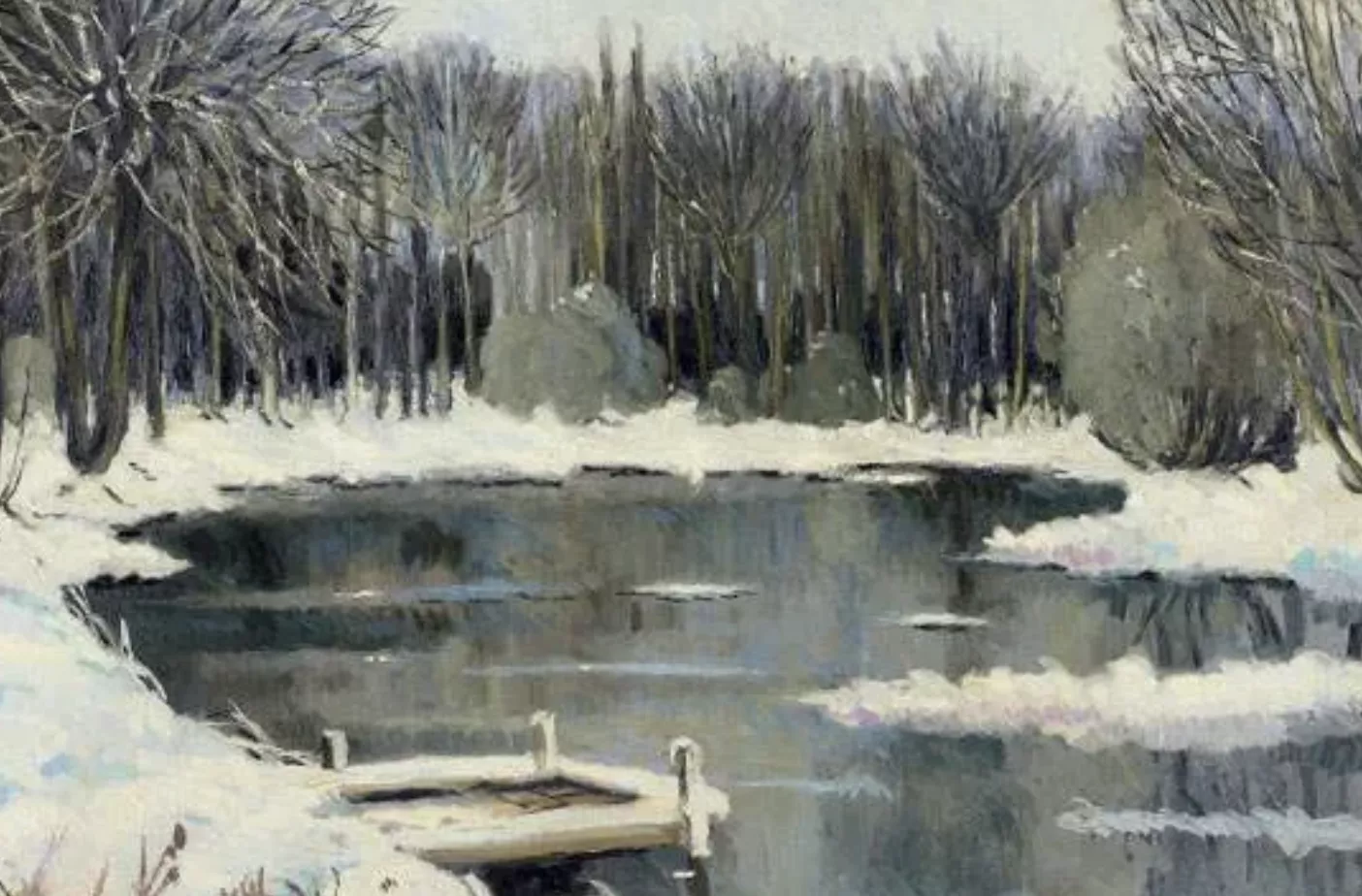
In 2004, the oil on canvas Arbre sur le lac en hiver was sold for €90,000, whereas it was estimated at between €9,000 and €12,000, more than ten times the high estimate.
Alexandre Altmann's works on the auction market have very strong upside potential since the 2000s, they are relatively rare and extremely sought-after.
Order of value from a simple work to the most prestigious
Technique used | Result |
|---|---|
Drawing - watercolor | From €80 to €1,900 |
Oil on canvas | From €70 to €90,000 |
Estimate in less than 24h
Style and technique of artist Alexandre Altmann
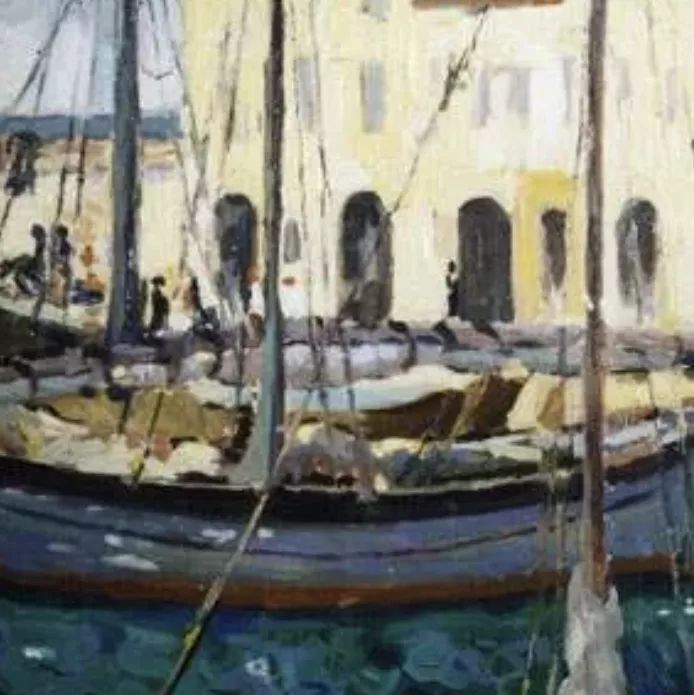
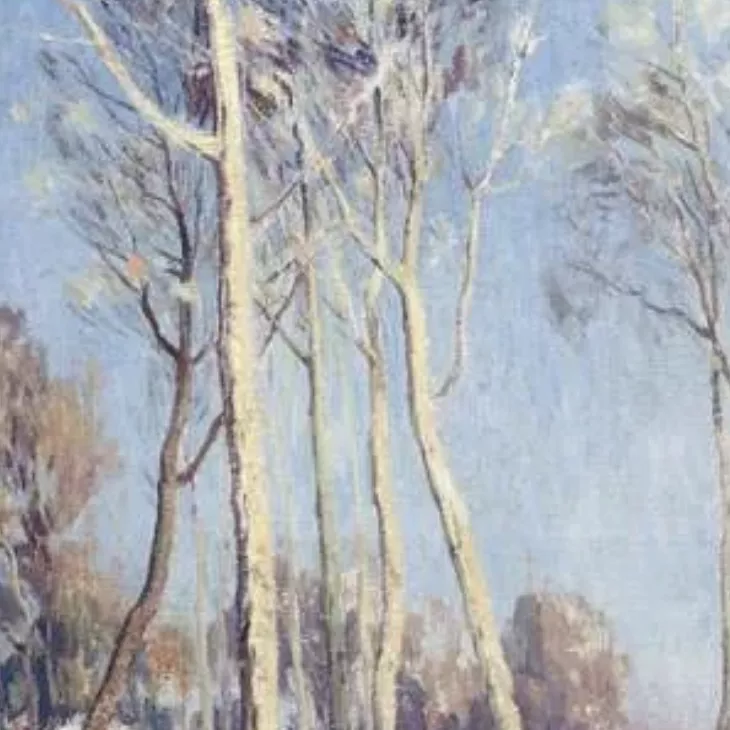
In Alexandre Altmann's landscapes and outdoor scenes, the brief, vigorous touch modulates light vibrations with a rigor that excludes neither suppleness nor brilliance.
Heir to late Impressionism, he absorbs the lessons of Sisley and Pissarro while opening up to the research of the École de Paris: the fragmentation of planes and the softening of the drawing in Bonnard, the chromatic density in Vuillard.
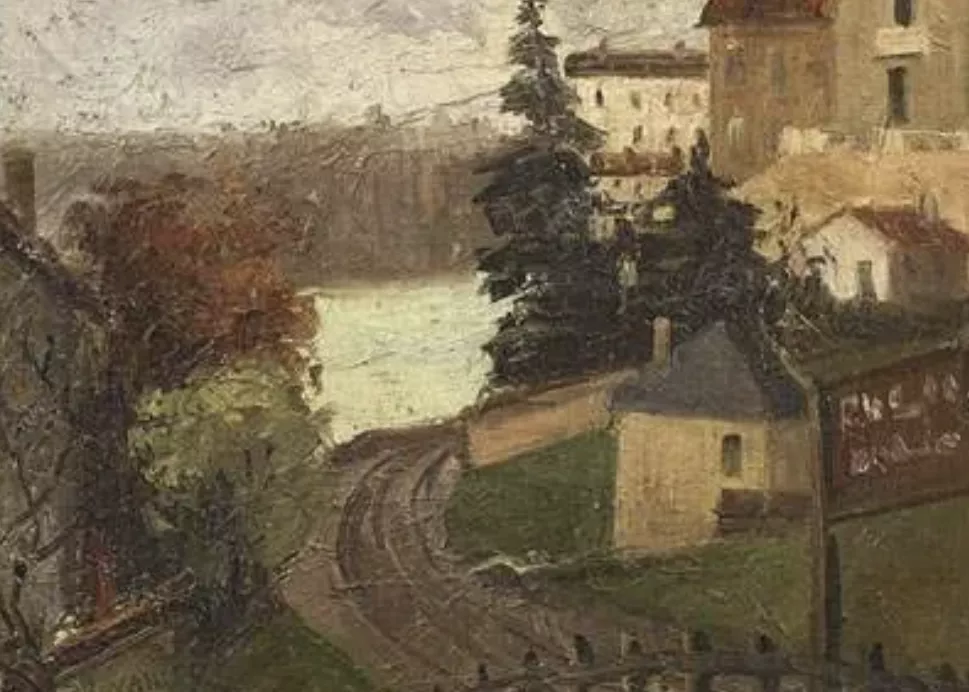
In his views of the Seine and Montmartre, the fluid paste and skilfully distributed impastos transcribe an atmosphere where air and light seem to circulate freely.
The palette, often dominated by ochres, faded blues and silvery greys, evokes an almost muted tone, where the brilliance of whites contrasts sparingly.
Around 1920, in his street scenes and snowy landscapes, he accentuated the simplification of forms, reducing anecdote in favor of a synthetic reading of space.
At this point, Altmann's painting became more constructed, carried by a network of tight strokes and diffused light, in search of a synthesis between naturalism and personal expression.
Alexandre Altmann, his life, his work
Born in 1878 in Sobolevka, Russia, Alexandre Altmann first trained in Odessa before moving to Munich, where he attended the Academy of Fine Arts and immersed himself in the teaching of Ludwig von Löfftz.
In this city marked by naturalism and academic tradition, he refined his sense of composition and developed a fluid touch, sensitive to atmospheric variations.
From 1909, he moved to Paris, where he found the landscapes of the Seine and the streets of Montmartre a privileged terrain for exploration.
Close to the Russian colony of La Ruche, he exhibited at the Salon des indépendants and the Salon d'automne, where his painting, somewhere between impressionism and modern synthesis, was noticed by the critics.
His work became more refined over the years: the fluidity of his early work gave way to a more constructed touch, where light plays a structuring role and the harmony of colored grays tempers the brilliance of his skies.
From 1920, he spent regular periods in Cagnes-sur-Mer and Normandy, territories where his gaze became fixed on the changing reflections of skies and waters.
Far from the picturesque, he strove to recreate an atmosphere, working in small, superimposed brushstrokes that lend his canvases a singular vibration.
His career came to an abrupt halt in 1932, the year of his death, just as his art, in its search for a balance between sensitivity and rigor, seemed to be reaching a new maturity.
Focus on Neige à Montmartre, Alexandre Altmann
In Neige à Montmartre, Alexandre Altmann deploys a technical mastery where the fragmented, rhythmic touch modulates the perception of space and light.
The composition is based on a stratification of planes, where the accumulation of impastos and the superimposition of glazes generate atmospheric depth without recourse to linear perspective.
The chromatic palette revolves around a restricted range of bluish grays and muted browns, where values are rigorously balanced to avoid any abrupt contrasts.
The snow, far from a uniform white, is worked in a juxtaposition of broken tones, oscillating between the coldness of bluish ashes and the diffuse warmth of muted ochres.
The architecture, barely outlined by highlights of denser matter, melts into a diffuse light, generating an effect of formal dissolution close to impressionist synthesis.
This approach testifies to an optical treatment of the landscape, where the diffraction of colors and the instability of contours translate an empirical work on retinal perception.
By minimizing narrative elements in favor of a purely pictorial reading, Altmann favors a sensory transcription of reality, where the interaction between matter and light becomes the work's true subject.
Alexandre Altmann's place in Russian postimpressionism
Alexandre Altmann's approach to Russian postimpressionism combines the heritage of French impressionism with a sensibility specific to turn-of-the-century Russian landscape painters.
Trained in Odessa and then Munich, he assimilated the principles of vibrant light and split brushstrokes, while retaining a more assertive structuring of space, characteristic of the Russian realist schools.
His passage through Paris and integration into the École de Paris anchored him in a modernity where the synthesis of forms took precedence over strictly naturalistic observation.
In his urban views and landscapes along the Seine, he distinguishes himself by a more subdued chromatic range and a pictorial materiality that favors the balance of planes over the burst of color.
Spatially close to the work of Konstantin Korovine and Pyotr Konchalovsky, he nonetheless distances himself from their more expressionist approach in favor of a more measured transcription, where light structures the composition without ever yielding to decorative effect.
In this respect, his work occupies a singular place: that of an artist operating at the junction of Russian naturalism and the analytical tendencies of European post-impressionism, where sensation gradually gives way to formal synthesis.
Altmann's imprint on his period
Alexandre Altmann's imprint on his period is measured by the yardstick of a double belonging: that of a Russian painter trained in naturalistic rigor and that of an artist fully rooted in the plastic research of the École de Paris.
At a time when modernity was oscillating between the last fires of Impressionism and the emergence of the avant-gardes, he imposed a vision in which light and matter balanced each other in a measured synthesis.
Without seeking the radical experimentation of Cubism or the chromatic deconstruction of Fauvism, he inscribes his work in a continuity where sensation becomes structure, where luminous vibration does not dissolve form but underlines its coherence.
His influence, more diffuse than obvious, can be seen in several painters from the Russian colony in Paris, notably in the way he integrates the Impressionist touch with a more stable construction of space.
Through his urban landscapes and nature scenes, where immediate perception is combined with rigorous organization of the motif, he opens up a median path between spontaneity of gesture and mastery of drawing, a path that will find extensions in certain Russian artists who remained in France, anxious to combine modernity and formal legibility.
The stylistic influences of Alexandre Altmann
The stylistic influences of Alexandre Altmann are part of a constant dialogue between the Russian landscape tradition and the successive contributions of French Impressionism and Post-Impressionism.
Trained in an environment where plein air painting, inherited from Itinérance, favored the study of atmospheric variations and spatial depth, he quickly assimilated the principles of vibrant light and fragmented brushstrokes developed by Monet and Pissarro.
In Paris, his approach evolved through contact with the chromatic syntheses of Sisley and the more structured ordering of urban scenes by Luce or Raffaëlli.
The pictorial material, initially subject to Impressionist principles of fragmentation, gradually thickens, revealing an affinity with the tactile density of certain Post-Impressionists such as Guillaumin or Bonnard.
However, Altmann never gives in to the exuberance of colorful effects or incipient expressionism, preferring a vision where sensory perception is articulated around a rigorous construction.
His work on light and the dissolution of forms in atmospheric space brings him closer to the research of Korovine and certain Russian landscape painters of the late 19th century, while asserting a singularity in which the structuring of the motif remains preponderant.
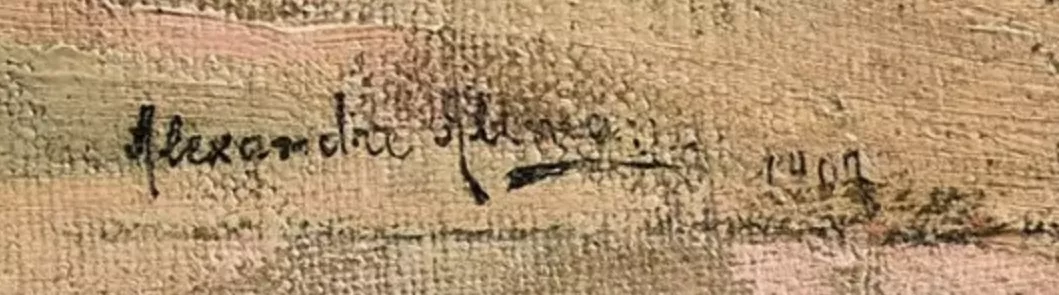
Recognizing Alexandre Altmann's signature
Alexandre Altmann's paintings are often signed at the bottom of the painting. He signs with his first and last name, often in a dark tone; sometimes with the town where he painted the picture, or the date.
Knowing the value of a work
If you happen to own a work by or after Alexandre Altmann, don't hesitate to request a free appraisal using our form on our website.
A member of our team of experts and certified auctioneers will contact you promptly to provide you with an estimate of the market value of your work, as well as ad hoc information about it.
If you are considering selling your work, you will also be accompanied by our specialists in order to benefit from alternatives for selling it at the best possible price, taking into account the inclinations of the market.
.Estimate in less than 24h
Discover in the same theme

Rating and value of Christopher Wool's works, drawings and p...
Christopher Wool is a contemporary artist of the 20th and 19th centuries whose paintings and drawings are listed at auction.
Learn more >

Rating and value of paintings, drawings, sculptures by Akbar...
Akbar Padamsee is a 20th-century Indian contemporary artist who has produced works that are highly rated and sought-after on the auction market.
Learn more >

Rating and value of Jacques and Dani Ruelland's ceramics, la...
Jacques and Dani Ruelland are ceramists who have produced lamps, vases and other shared works that are highly prized at auction.
Learn more >

Secure site, anonymity preserved

Auctioneer approved by the State

Free and certified estimates
Frequently asked questions
-
Who was Alexandre Altmann, and what was his artistic style?Alexandre Altmann (1878–1932) was a Russian painter trained in Odessa and Munich who settled in Paris in 1909. His style is rooted in the tradition of late Impressionism, influenced by Sisley and Pissarro, while incorporating the artistic explorations of the École de Paris. He is particularly known for his urban landscapes of the Seine and Montmartre, characterized by a fluid brushstroke, a subdued palette of grays and ochres, and a quest for balance between sensation and formal rigor.
-
What is the price range for Alexandre Altmann's works at auction?The prices of Alexandre Altmann’s works vary considerably depending on the medium and provenance. Drawings and watercolors range from €80 to €1,900, while oil paintings on canvas range from €70 to €90,000. This variation reflects the importance of factors such as rarity, provenance, and the condition of each work.
-
How can you authenticate a work by Alexandre Altmann?To authenticate a work by Alexandre Altmann, we recommend requesting a free appraisal from our state-certified auctioneers and experts. Our team will conduct a comprehensive evaluation of your painting or drawing, with no obligation, and provide you with an accurate estimate of its market value as well as relevant information regarding its authenticity.
-
Is this the right time to sell a work by Alexandre Altmann?Yes, now is a good time to sell a work by Altmann. His paintings have shown strong appreciation potential since the 2000s; they are relatively rare and highly sought after by European, Russian, and American collectors. The market remains dynamic for this Russian Post-Impressionist artist.
-
How does the appraisal process work at Auctie's?The appraisal is free and non-binding. Simply fill out the form on our website to request an appraisal. An expert or certified auctioneer from our team will contact you shortly to provide you with an estimate of your artwork’s market value. If you’d like to sell, our specialists will work with you to secure the best terms for the sale.
