



Rating and value of works, paintings, drawings by Maximilien Luce

Key takeaways
- Maximilien Luce's works fetch millions of euros at auction; his painting "Baigneuse à Saint Tropez" sold for more than 3 million euros in 2022.
- Estimates vary depending on the medium: prints range from 20 to 6,420 euros, watercolor drawings from 20 to 114,340 euros, and paintings from 120 to 3,508,860 euros.
- A major Neo-Impressionist artist known for his Divisionist technique, his scenes of workers, cityscapes, and industrial subjects remain the most sought-after by collectors.
If you own a work by or based on the artist Maximilien Luce and would like to know its value, our state-approved experts and auctioneers will guide you.
Our specialists will carry out a free appraisal of your work, and provide you with an accurate estimate of its value on the current market.
Then, should you wish to sell your work, we will direct you to the best possible arrangement to obtain the optimum price.
Artist's rating and value
Maximilien Luce's work is quite present and quoted on the auction market. His works arouse interest among collectors and art lovers, particularly those who appreciate the neo-impressionist movement and the artist's social commitment.
The most sought-after pieces are depictions of working-class scenes, urban landscapes and industry-related subjects.
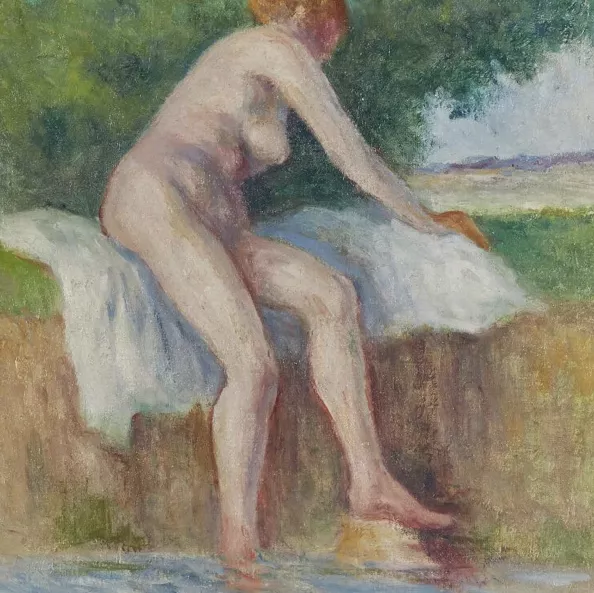
A work by Maximilien Luce can fetch millions of euros at auction, such as his paintingBaigneuse à Saint Tropez, which fetched over 3 million euros in 2022.
Order of value from the most basic to the most prestigious
Technique used | Result |
|---|---|
Estamp | From €20 to €6,420 |
Drawing - watercolor | From 20 to 114 340€ |
Result | From 120 to 3 508 860€ |
Estimate in less than 24h
The artist's works and style
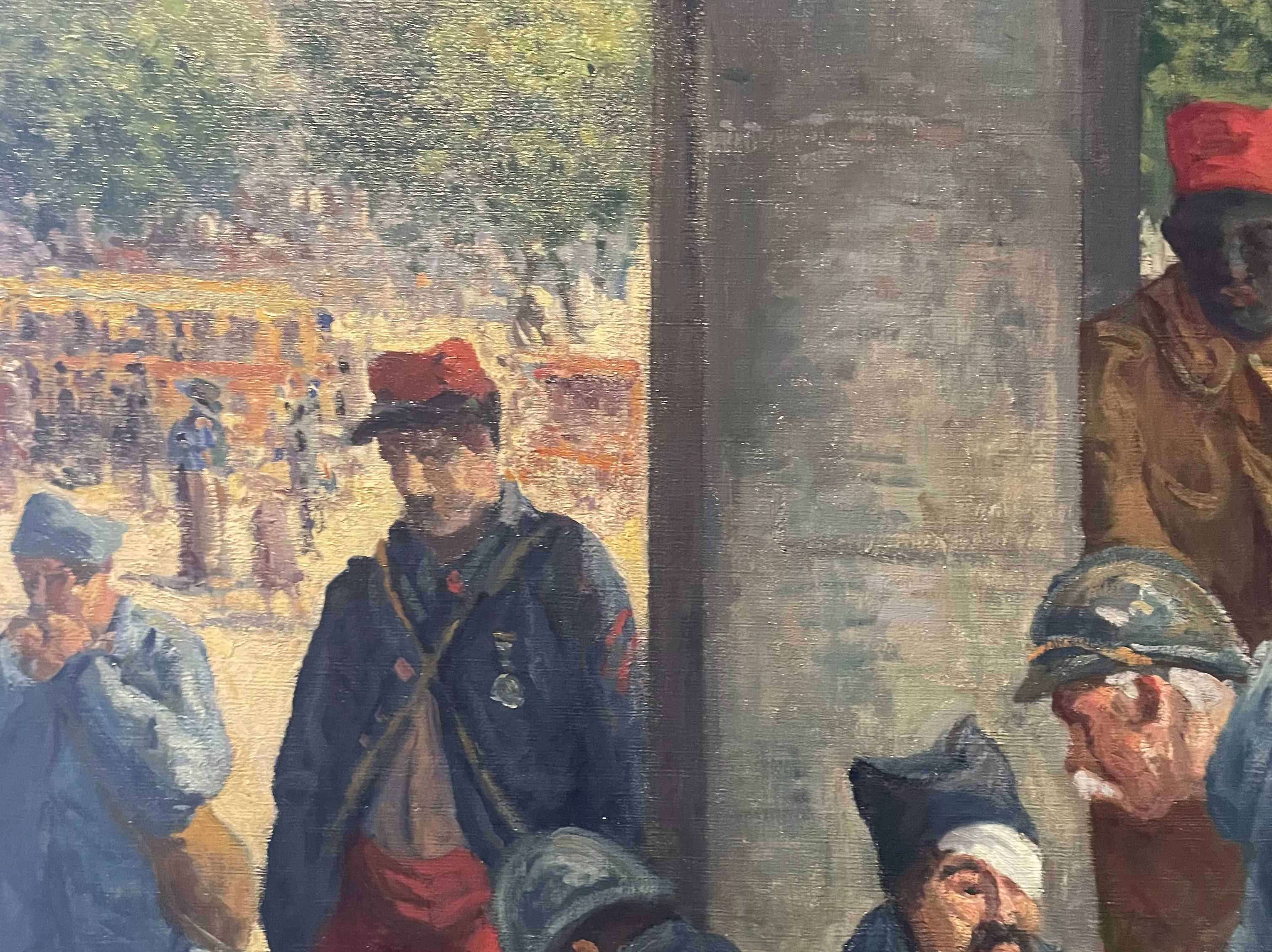
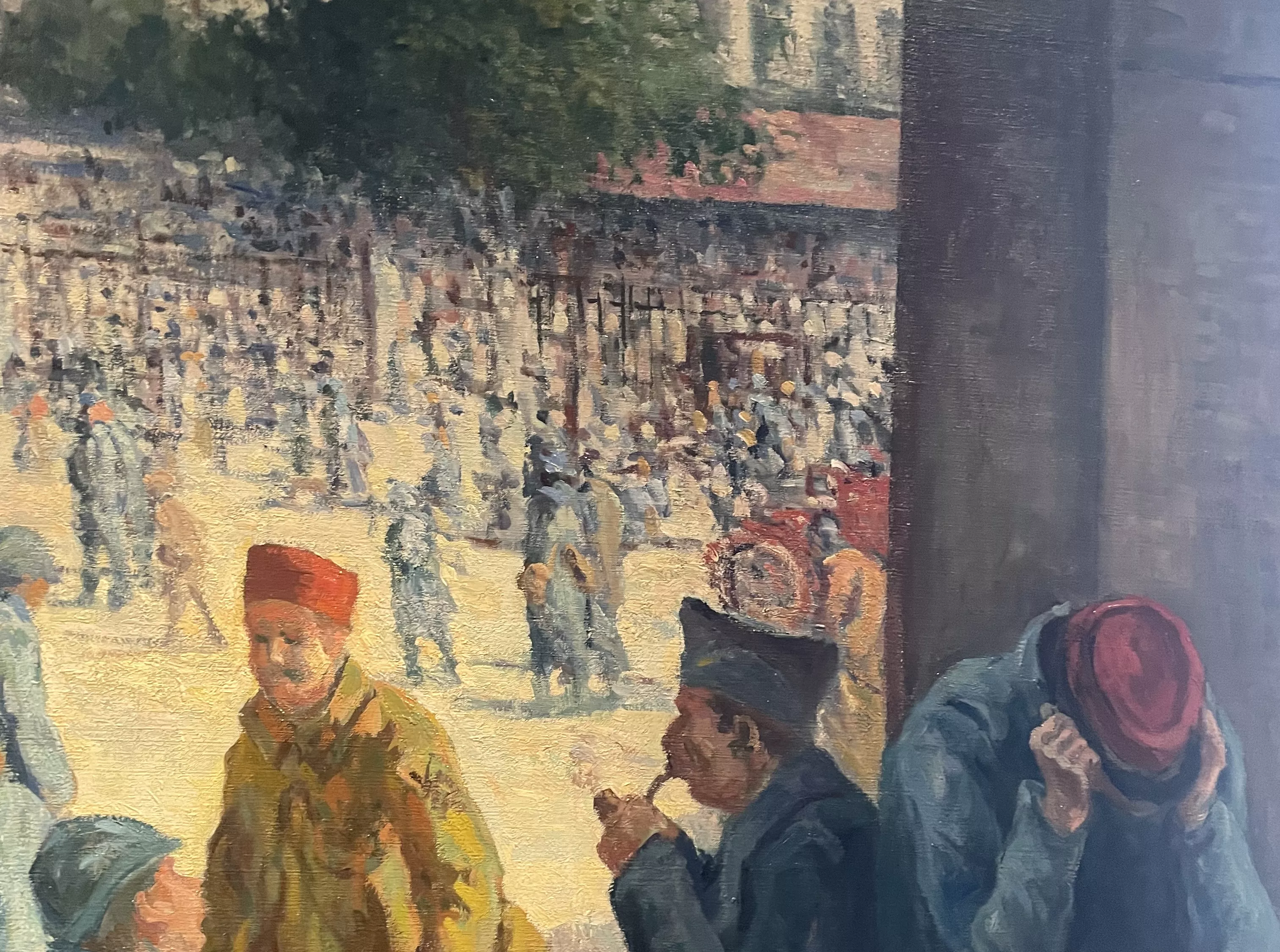
Maximilien Luce, associated with the Post-Impressionist movement, is best known for his Divisionist technique. This process consisted of applying touches of pure color side by side on the canvas, creating an optical vibration and a particular luminosity when the colors were perceived from afar.
This way of working gave his works a sensation of movement and light, as if the scene came to life before the viewer's eyes. Each color seemed to have its own vibration, and together they created a particular dynamic, a play of light and color that captured the viewer's attention.
The artist tackled a wide variety of themes: from urban landscapes to rural scenes, from harbors to work scenes. His canvases bear witness to his interest in the social and political realities of his time.
He not only depicted the beauty of nature or city life, but also painted the harshness of working-class life, with a realistic vision of their daily lives. These themes, often imbued with compassion and social criticism, gave a profound dimension to his works.
Through his brushes, he made visible the hard work of men and women in often difficult conditions, capturing moments of struggle, but also of hope.
In addition to his divisionist technique, Luce was a master in the use of color. He chose bright, contrasting tones, capturing the effects of natural light and creating a vibrant atmosphere.
His compositions, rich in color, immersed the viewer in a reality where light and movement seemed to merge.
Light became almost living matter, moving across the canvas, lending his works a rare intensity. These interplays of color and light created a total immersion, as if each painting offered a unique sensory experience.
The life of Maximilien Luce
From a family of craftsmen, Maximilien Luce was born in Paris in 1858. At an early age, he developed a passion for drawing and joined a wood engraver's workshop.
This apprenticeship, fundamental to his training, nurtured his curiosity for art and enabled him to master the precision techniques that would be essential to his career.
After several years of practice in the workshop, he devoted himself entirely to painting in 1880, a choice that marked a decisive turning point in his life. Far from limiting himself to the conventions of his time, he constantly sought to push back the boundaries of his art.
Very involved in the anarchist milieu, Maximilien Luce was not content with his artistic work. He used his pen and brushes to support his political ideals, producing numerous drawings for anarchist-oriented newspapers.
His commitment went beyond art, and he took part in the social conflicts of his time, ardently defending his convictions through his works. This militant dimension enriched his painting, bringing a social and political depth that can be seen in many of his works.
Luce found inspiration in the work of Camille Pissarro and, in the 1890s, joined a circle of Neo-Impressionist artists who shared his innovative vision of painting.
Although deeply admiring of classical painting, particularly the works of Nicolas Poussin, it was in Divisionism that he found a true affinity.
Maximilien Luce's Divisionism
This style, based on the juxtaposition of touches of pure, complementary colors, enables him to create a luminous vibration that gives a new dimension to his canvases.
Far from the conventions of the time, Luce thus explored technical processes that renewed the perception of light and color, while enriching the visual language of the neo-impressionist movement.
After a stay in the Hainaut region, Maximilien Luce developed a keen interest in the steel industry. This subject, often considered crude and unsightly, became for him an inexhaustible source of motifs and emotions.
He succeeded in transcribing, through his canvases, the poetic power of these industrial landscapes, reinventing his style to capture the hidden beauty of these work scenes.
His unique view of urbanism and industry is reflected in works that, while deeply rooted in the social reality of his time, possess an emotional force that touches the viewer deeply.
Industrialization in his painting
Industrialization, in his work, becomes a field of experimentation where light, form and movement mingle, reinventing the art of his time and capturing the essence of modernity.
The artist is also interested in urbanism, another recurring theme in his work. Her canvases bear witness to this constant search for a poetry hidden in city structures, bridges, streets and factory chimneys.
Luce succeeds in capturing the effervescent rhythm of urban life, while translating into her compositions a quest for a balance between human life and the machine.
Maximilien Luce died in 1941, leaving behind a prolific artistic output, rich in a great diversity of themes and techniques.
His work, which blends social realism and aesthetic research, remains a vibrant testimony to an artist deeply engaged with his time, always seeking to reveal beauty in the most everyday and often ignored aspects of society.
Artists who influenced Luce
Maximilien Luce was deeply inspired by the works of Georges Seurat and Paul Signac, two major figures of Neo-Impressionism. In the 1890s, he became part of this circle of avant-garde artists, sharing with them a fascination for light and color.
Although seduced by the classical harmony of painters like Nicolas Poussin, Luce committed himself to divisionism, a style that allowed him to translate the complexity of reality through pure, juxtaposed strokes of color.
This process, inherited from Seurat, gives his canvases a unique luminous intensity, capturing variations in light with almost scientific precision. Influenced by his contemporaries, he pushed the boundaries of traditional painting by exploring new ways of bringing the world to life on canvas.
Far from settling for the tranquil landscapes dear to Pissarro, he chose to paint urban and industrial scenes, becoming a witness to the upheavals of his time.
In contact with Paul Signac, Luce deepened his mastery of color and adopted an increasingly vivid and contrasting palette. These exchanges nourished his reflection on the transformation of modern cities, and his compositions became a field of experimentation for light and matter.
Fascinated by the rise of metropolises and industrial landscapes, he captured the sometimes hidden beauty of factories, busy streets and working-class suburbs.
Maximilien Luce thus succeeds in transcribing, with singular sensitivity, the effervescence of urban life and the harshness of the working-class world, reopening a theme dear to artists such as Jean François Millet.
His works, while following in the footsteps of the great names of Neo-Impressionism, reveal a personal and committed view of a society in the throes of change.
By remaining faithful to the principles of Divisionism while exploring less conventional subjects, Luce leaves a strong imprint on the history of art, that of an artist deeply connected to the realities of his time, but always in search of unexpected beauty.
Focus on Les Usines de Saint Denis, Maximilien Luce
In Les Usines de Saint-Denis, Maximilien Luce chose to depict a lively industrial landscape at the heart of modernity. Using a divisionist technique, he plays with pure, precisely juxtaposed strokes of color to capture the light.
The massive chimneys belch out wisps of white smoke, creating a striking contrast with the cold blue sky. The scene, bathed in an almost unreal light, seems to vibrate, as if every element in the painting were in motion.
Luce doesn't just paint buildings and machines. He shows us a living scene, marked by human activity, where every detail tells the story of the workers' lives.
The interplay of cold colors, mixed with warmer touches, conveys the duality of this changing world: the harshness of industry set against the beauty of natural light.
Far from being a simple illustration of the industrial landscape, this work is a testimony to the era. Luce reveals his fascination with the working-class world, while highlighting the transformation of cities by industrialization.
Through his mastery of color and light, he gives this scene a particular intensity, where raw reality blends with an almost poetic vision. Les Usines de Saint-Denis thus becomes an open window on a changing world, captured with the sensitivity of a committed artist.
His signature
Not all of Maximilien Luce's works are signed.
Although there are variations, here's a first example of his signature:
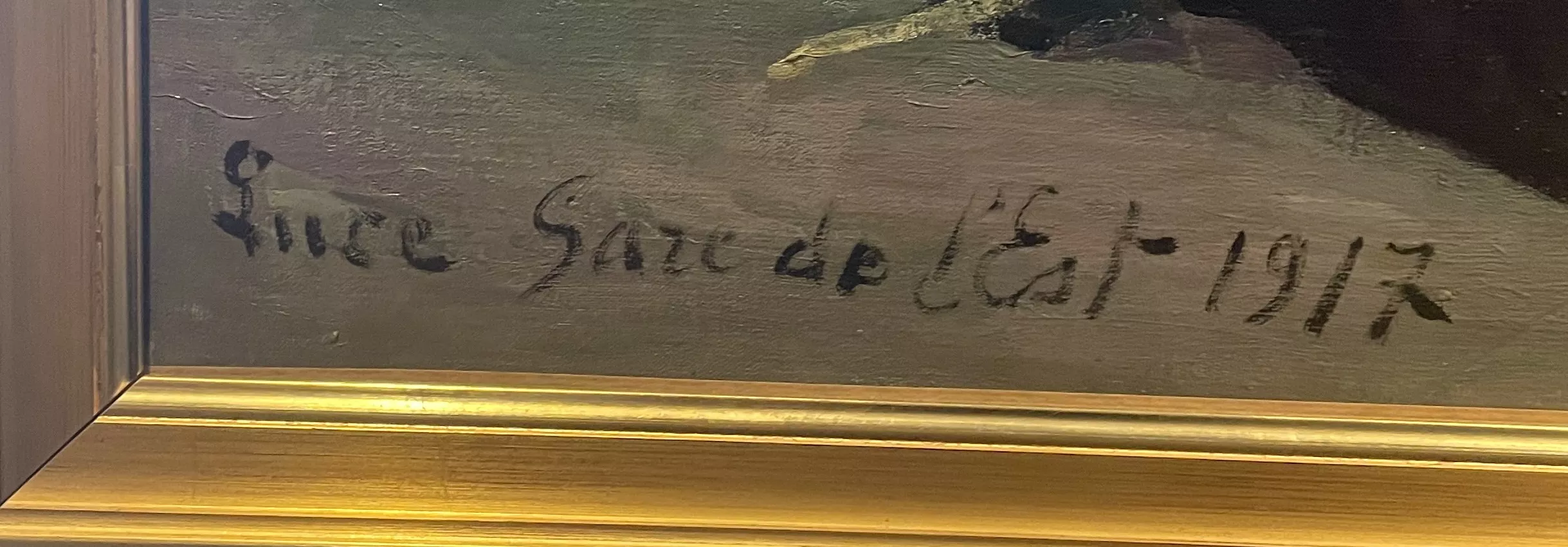
Our team remains at your disposal to identify your works.
Expertise your property
If you own a work by Maximilien Luce, don't hesitate to request a free appraisal by filling in our online form.
A member of our team of experts and chartered auctioneers will contact you to provide an estimate of the market value of your work.
If you are considering selling your work, our specialists will also guide you through the various alternatives available to obtain the best possible price, taking into account market trends and the specific features of each work.
Estimate in less than 24h
Works from the same period sold at auction

Estimated 4.000 - 6.000 €
EUGÈNE LEROY (1910-2000), Maison dans un sous bois, oil on canvas mounted on panel.

Estimated 15.000 - 20.000 €
Jacques MAJORELLE (1886-1962) - Fishermen embarking, Abidjan, Ivory Coast - Oil on canvas.

Estimated 3.000 - 5.000 €
Henri EPSTEIN (1892-1944), Place du sud de la France, Oil on canvas.

Estimated 4.000 - 6.000 €
GASTON CHAISSAC (1910-1964) Composition 1947, Gouache and Indian ink on paper.

Estimated 100-200€
Vassiliew Slavik, Oil on canvas
Discover in the same theme

Rating and value of First World War paintings
Paintings from the First World War are sought-after by collectors and are quite popular on the auction market.
Learn more >

Rating and value of Amalric Walter paperweights, vides-poche...
Amalric Walter is a twentieth-century glassmaker who collaborated with Daum, producing works that are highly regarded and valued.
Learn more >

Rating and value of drawings and paintings by Nicolas Eekman
Nicolas Eekman is an original painter from Brussels whose style defies categorization. His work is reminiscent of the School of Paris and is highly va...
Learn more >

Secure site, anonymity preserved

Auctioneer approved by the State

Free and certified estimates
Frequently asked questions
-
Who is Maximilien Luce, and what is his artistic style?Maximilien Luce (1858–1941) was a French artist associated with the Neo-Impressionist movement, particularly renowned for his Divisionist technique. This method involves juxtaposing small patches of pure color on the canvas to create an optical vibration and a distinctive luminosity. Luce also distinguished himself through his social commitment, painting scenes of working-class life, urban landscapes, and industrial subjects with political depth and a masterful command of light.
-
What is the price range for Maximilien Luce's works?Maximilien Luce’s works span a wide range of prices depending on the medium and quality. Prints range from €20 to €6,420, drawings and watercolors from €20 to €114,340, while paintings range from €120 to over €3.5 million. The most sought-after pieces, particularly those depicting industrial and working-class scenes, can fetch millions of euros at auction.
-
How can you authenticate a work by Maximilien Luce and determine its value?Auctie's offers a free, no-obligation appraisal of your artwork. Simply fill out an online form, and a state-certified expert or auctioneer will contact you to provide an accurate estimate of your item’s current market value. Our team is also available to identify artworks and verify their authenticity.
-
Why is now the right time to sell a work by Maximilien Luce?The market for Maximilien Luce’s works remains dynamic and highly valued. His works continue to attract sustained interest among collectors and art lovers, particularly those who appreciate Neo-Impressionism and social engagement. Demand remains strong for the artist’s signature themes, notably scenes of workers and industrial landscapes.
-
How does the sales process work at Auctie's?Auctie's guides you from the appraisal to the auction. Once our experts have appraised your artwork for free, we’ll help you find the best solution to achieve the highest possible price, taking into account market trends and the unique characteristics of your item. As an auction house, we manage the entire sales process professionally and transparently.
