



Value and quotation of works, ceramics by Roger Capron

Key takeaways
- Works by Roger Capron, a leading 20th-century ceramic artist, sell for between €30,000 and €42,000 on the current art market.
- Ceramics are the most sought-after category, with estimates ranging from €5,000 to €8,000, while furniture can fetch up to €42,000.
- His creations are distinguished by floral and geometric motifs on stoneware or earthenware, using a palette of warm colors inspired by the South of France.
If you own a work by or based on the artist Roger Capron and would like to know its value, our state-approved experts and auctioneers will guide you.
Our specialists will carry out a free appraisal of your work, and provide you with a precise estimate of its value on the current market.
Then, if you wish to sell your work, we will direct you to the best possible arrangement to obtain the optimum price.
Artist's rating and value
A key ceramist of the second half of the 20th century, Roger Capron is considered one of the most prolific and important artisans of post-war European design.
On the art market, Roger Capron's works are highly rated, and the price at which his works sell ranges between €30 and €42,000.
Highly sought-after by collectors, some exceptional works signed by Capron can fetch tens of thousands of euros at auction. A case in point is his ceramic Claustra, which fetched €42,000 in 2022.
Order of value from the most basic to the most prestigious
Object type | Estimation |
|---|---|
Drawings/watercolors | From 60 to 260€ |
Paintings | From 150 to 2,100€ |
Ceramics | From 5 to 8 000€ |
Miscellaneous objects | From 20 to 9 000€ | Sculptures/volumes | From 60 to 18 000€ |
Luminaires | From 40 to 16 000€ |
Furniture | From €30 to €42,000 |
Estimate in less than 24h
Roger Capron's style and technique
Roger Capron's style is characterized by elegant simplicity and harmonious form. From his earliest works, he favors soft lines and motifs inspired by nature, such as flowers, leaves or arabesques, which he applies to stoneware or earthenware pieces.
His creations are marked by rounded curves and volumes that evoke fluidity and lightness. He uses a palette of warm colors, such as ochre, yellow and brown, reminiscent of the light and landscapes of southern France.
The texture of the material is also a central element of his work: Capron plays with the contrast between smooth and rough surfaces, adding a tactile dimension to each piece.
In the 1950s, Roger Capron evolved towards a more geometric style. The introduction of molding enabled him to produce series of pieces while retaining great attention to detail.
His creations became more structured, with square and rectangular shapes, but always in a search for fluidity. He incorporates simple, uncluttered motifs, creating balanced compositions that combine functionality and aesthetics.
This period marks a turning point in his production, where the decorative aspect harmonizes perfectly with the utilitarian.
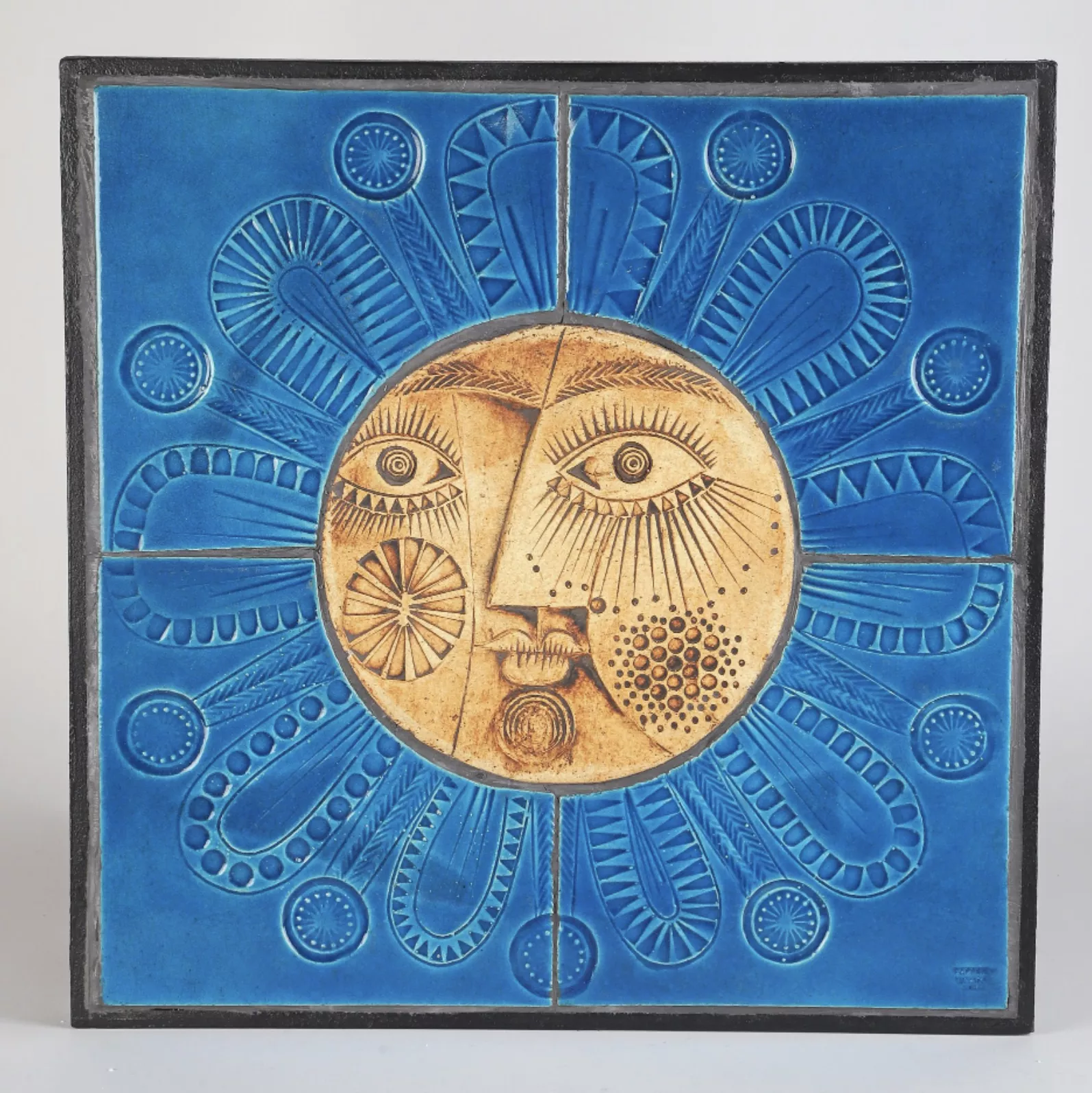
From the 1960s onwards, Capron explored more modernist forms. He took a particular interest in architectural ceramics, creating decorative panels and furniture elements. His work became more refined, while remaining deeply rooted in a search for texture and volume.
He turned away from organic forms in favor of clean lines, geometric patterns and more restrained colors. His entire body of work bears witness to a constant quest for perfection, where the art of ceramics blends with modern design with great technical mastery.
The life of Roger Capron
Roger Capron was born in 1922 in Vincennes, Île-de-France. Quickly attracted to the arts, Capron became a student and then a teacher at the Ecole des Arts Appliqués et de l'Industrie in Paris. In the same year, the young artist discovered ceramics.
Evoking a real passion for the practice, Roger Capron soon decided to leave his teaching role to found a ceramics workshop with Robert Picault and Jean Derval, in the south of France.
"L'atelier Callis" thus opened its doors in Vallauris in 1947, a propitious post-war period of great revival for the small southern town.
Very quickly, the workshop's reputation grew, attracting the attention of customers eager for novelty and craftsmanship.
At the start of his career, Roger Capron devoted himself mainly to creating small items for everyday use.
Vases, plates, pitchers and decanters: his early works are marked by flowing curves and expressive free-form motifs.
His spontaneous, colorful style appealed to an ever-widening clientele, who appreciated these objects that were as utilitarian as they were aesthetically pleasing.
Through these creations, Capron strives to capture the essence of the Mediterranean, playing with warm hues and raw textures inspired by the local landscape.
In the 1950s, Roger Capron took a turn by leaving "l'atelier Callis" to acquire an old pottery factory.
He opened a small ceramics factory, where he began to employ several workers to increase production.
He then developed a more structured style, moving towards molded pieces that reflected the spirit of the 1950s, with geometric shapes and clean lines.
This period is marked by a constant search for balance between artisanal tradition and industrial innovation.
The 1960s saw Roger Capron turn to a more modern, controlled design. He developed a passion for architectural ceramics and broadened his practice by integrating his creations into interior design projects.
His works, which range from wall panels to tables to decorative tiles, testify to a refined style and heightened technical precision.
Capron also develops ceramic furniture, with particular attention to the harmony between materials and forms.
Throughout his career, Roger Capron receives numerous awards in recognition of his talent. In 1980, he was awarded the Grand Prix International de la Céramique, a recognition of his major contribution to the world of ceramics.
Capron continued to work and innovate until his death in 2006, leaving behind a significant artistic legacy. His works, in public and private collections, continue to inspire and fascinate.
Roger Capron is today considered a key figure in twentieth-century design, his name intimately linked to the revival of French ceramics and Art Deco.
The collaboration between Capron and Vallauris
The collaboration between Roger Capron and the town of Vallauris was part of a key post-war moment, when this small commune in the South of France became a major center for artistic ceramics.
Attracted by the creative effervescence driving the region, Capron moved there in 1946 and played an active part in the revival of this traditional craft.
With the opening of the Callis workshop in 1947, founded alongside Robert Picault and Jean Derval, he helped restore Vallauris' dynamism, reinventing simple, accessible forms while highlighting local know-how.
Inspired by ancient techniques and locally available raw materials, he combines tradition and innovation, creating pieces that capture the spirit of the South.
This collaboration goes far beyond the workshop. Roger Capron is fully integrated into the artistic and cultural life of Vallauris, where he rubs shoulders with other iconic figures such as Picasso. He takes part in collective projects to promote Vallauris ceramics on a national and international scale.
His creations, often marked by Mediterranean motifs and a palette of natural colors, become a symbol of the town's influence - just like those of Picasso.
Working alongside the local community, he helped transform Vallauris into a veritable laboratory of ideas, where craftsmanship and design intertwine to write a new page in the history of ceramics.
Roger Capron's legacy
Roger Capron's legacy makes a profound mark on his era by making ceramics part of an artistic and design approach accessible to all. Through his work, he reinvents craftsmanship by blending it with the modern trends of the XXᵉ century, reconciling functionality and aesthetics.
His creations, whether utilitarian ceramics, decorative pieces or architectural works, embody a distinctive style that reflects the Mediterranean spirit and post-war revival, just like the works of Jacques Pouchain or by Alice Colonieu.
Capron plays a key role in the international recognition of French ceramics, thanks in particular to his mass production, which democratizes this art, while retaining artisanal quality and identity.
His influence extends beyond the borders of Vallauris and into the history of modern design, where he is recognized as one of the major players in the fusion of tradition and modernity.
The motifs and techniques he popularized continue to inspire contemporary designers and craftsmen, and his works remain timeless testaments to an era when art and everyday life came together with elegance and simplicity.
Recognizing a work by Roger Capron
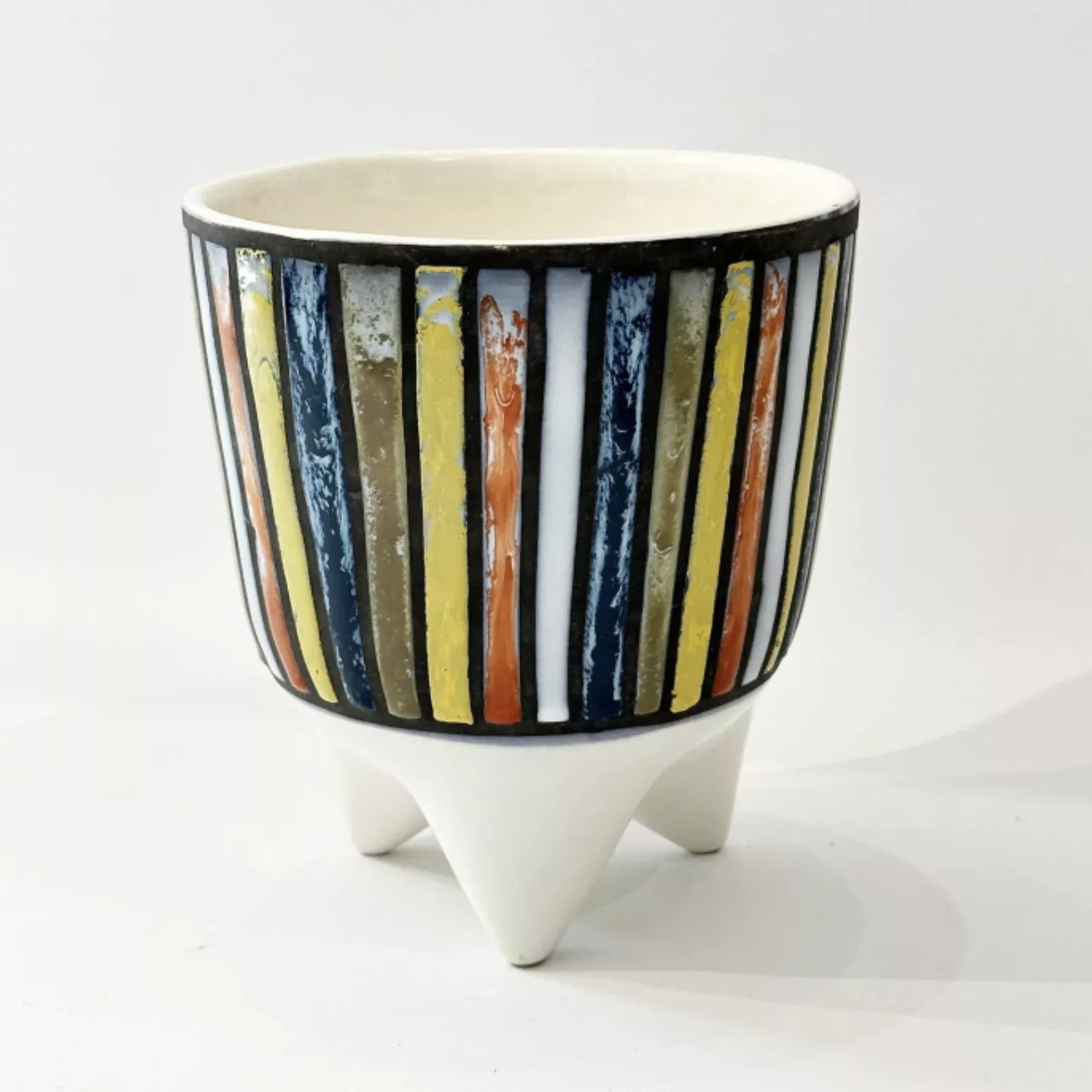
Roger Capron's creations are distinguished by a distinctive style, blending organic forms and geometric motifs. Fluid lines and elegant curves reflect his quest for balance in his creations.
Roger Capron's works are often decorated with abstract motifs, floral designs and depictions of nature.
Known for his great mastery of ceramics, the artist produced some of his works by hand with molded or sculpted forms, and often used colored glazes.
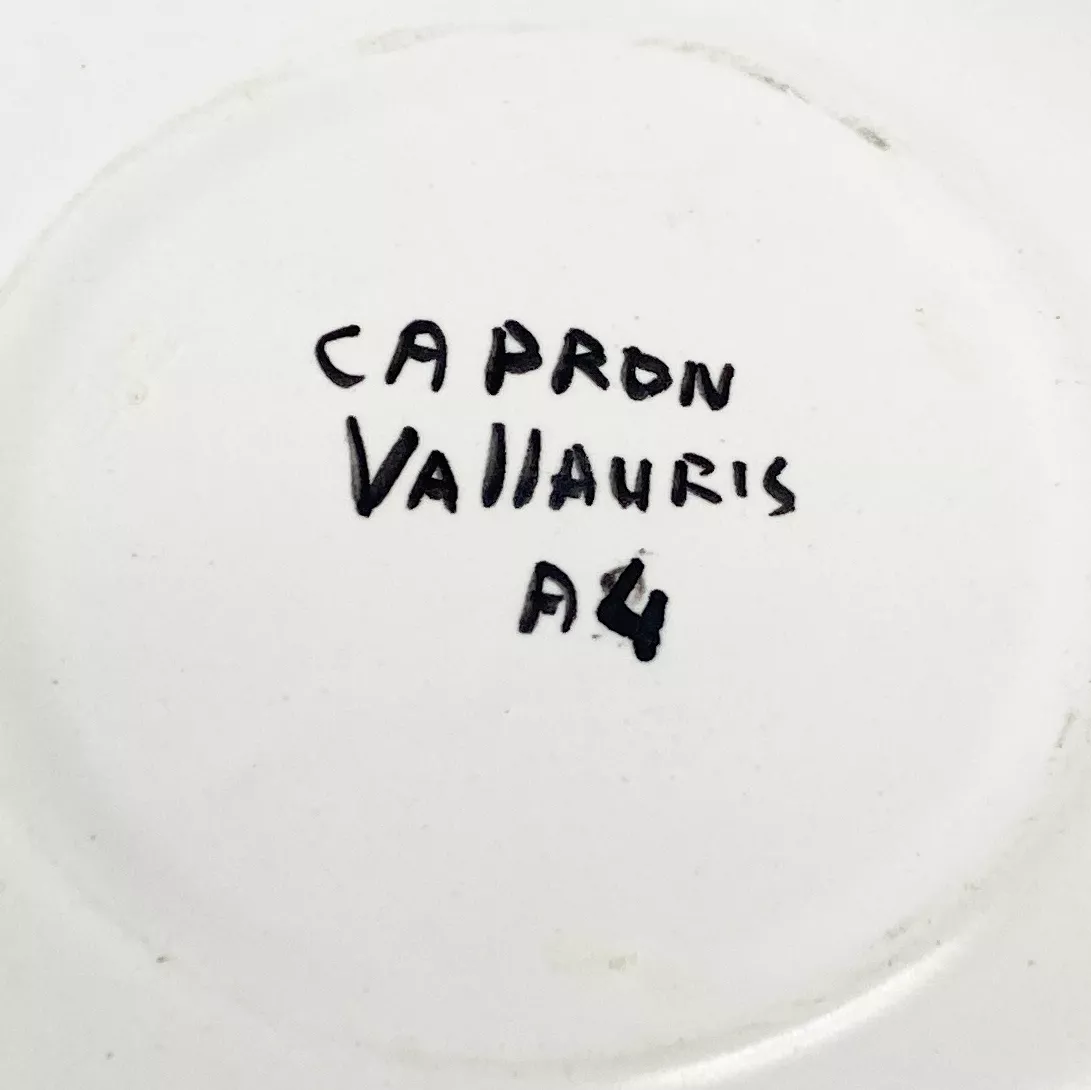
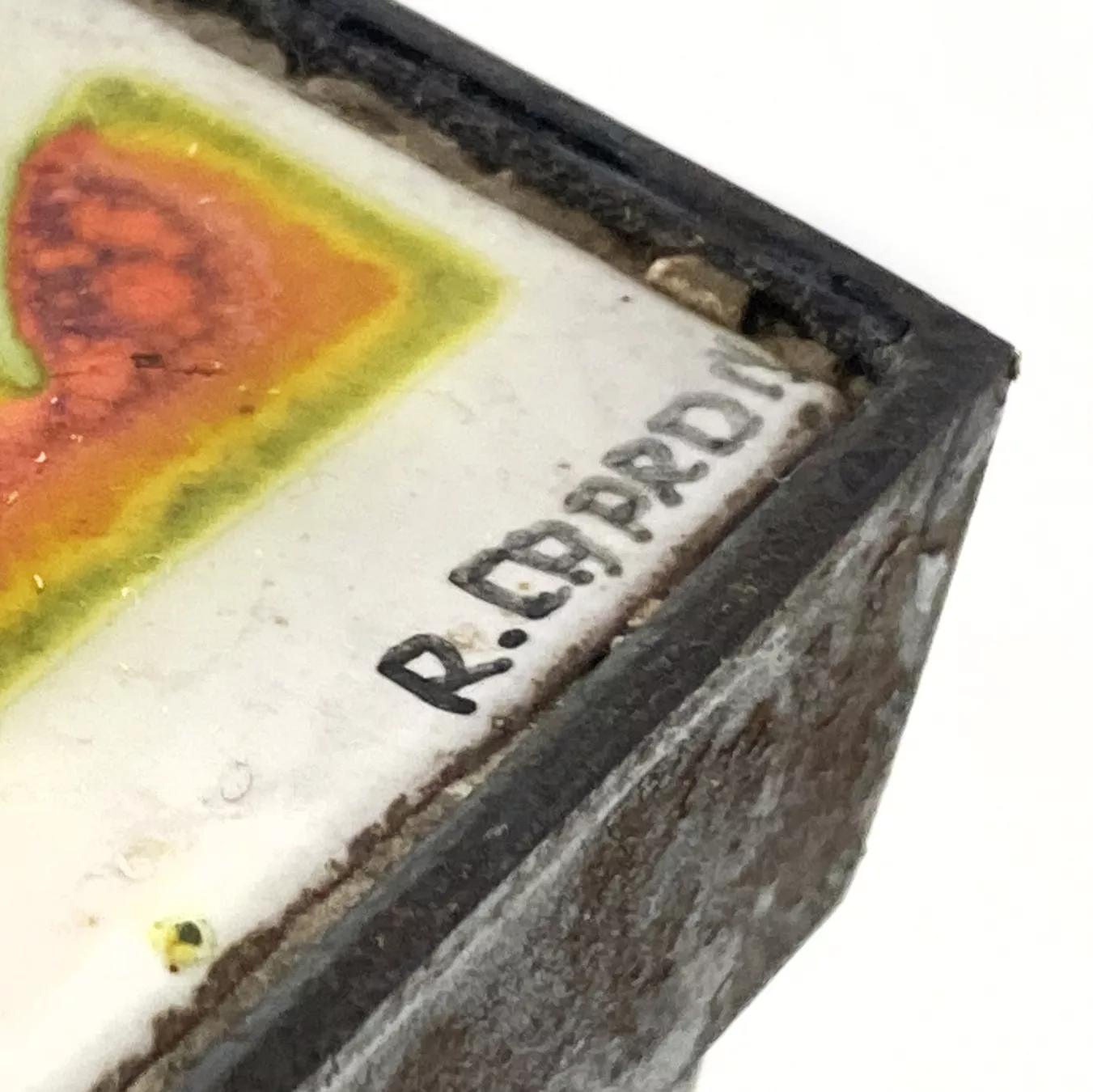
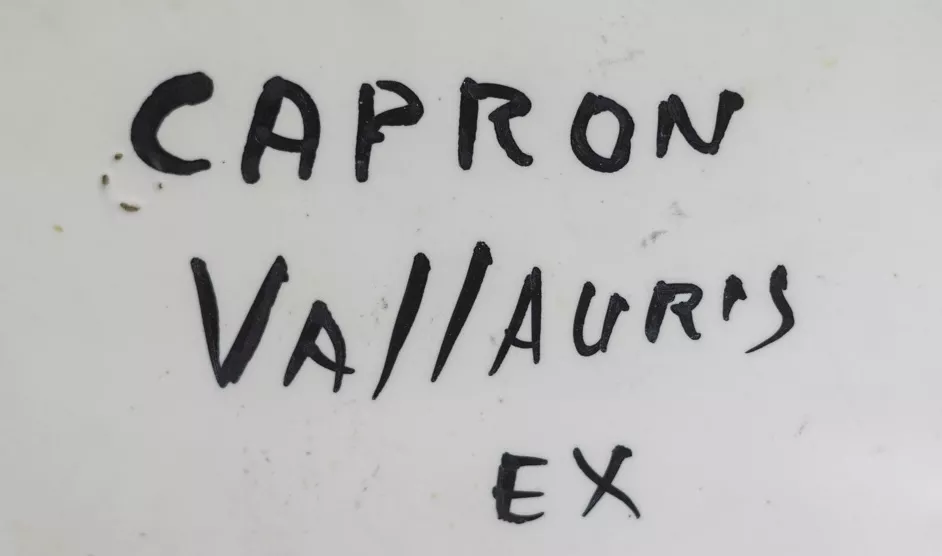
His signature
Not all of Roger Capron's works are signed.
Although there are variations, here is a first example of his signature:
Expertise your property
If you own a work by Roger Capron, don't hesitate to request a free valuation by filling in our online form.
A member of our team of experts and licensed auctioneers will contact you to provide an estimate of the market value of your signed Capron work.
If you are considering selling your work, our specialists will also guide you through the various alternatives available to obtain the best possible price, taking into account market trends and the specificities of each object.
Estimate in less than 24h
Discover in the same theme

Rating and value of works, watercolors, paintings by Nam Son...
Nguyen Nam Son is a 20th-century Vietnamese artist who produced watercolors and paintings. His works are quoted on the art market.
Learn more >

Rating and value of paintings by Pierre Hodé
Pierre Hodé is a Cubist painter who produced paintings that are now highly valued at auction. Estimate in 24h.
Learn more >

Rating and value of Jean Dufy's watercolors and paintings
Jean Dufy is a modern artist who has produced numerous paintings and watercolors that are highly valued at auction.
Learn more >
Other works from the same period sold at auction

Estimated 15.000 - 20.000 €
Charlotte PERRIAND (1903-1999) - Suite of 6 "berger" stools.

Estimated Between €3,000 and €5,000
Camille Fauré, enamelled vase with geometric decoration

Estimated 300-500€
Roger Capron, set of 7 plates

Estimated 800 - 1.200
Roger CAPRON (1922-2006) Large dish, circa 1950

Estimated 4.000 - 6.000
Roger CAPRON (1922-2006) Soleil rectangular coffee table, circa 1965

Estimated 2.500 - 4.500
Roger CAPRON (1922-2006) Soleil rectangular coffee table, circa 1965

Secure site, anonymity preserved

Auctioneer approved by the State

Free and certified estimates
Frequently asked questions
-
Who is Roger Capron, and what is his role in the history of ceramics?Roger Capron (1922–2006) was a leading ceramic artist of the second half of the 20th century and one of the major figures in postwar European design. Founder of the Callis studio in Vallauris in 1947, he revolutionized ceramics by blending traditional craftsmanship with modern design, creating pieces that were both functional and aesthetically pleasing and embodied the Mediterranean spirit. His work helped establish Vallauris as a major center for artistic ceramics, and he was awarded the International Grand Prix of Ceramics in 1980.
-
What is the price range for Roger Capron's works?Roger Capron's works are highly valued on the art market, with prices generally ranging from €30 to €42,000. His ceramics range from €5,000 to €8,000, while his furniture can reach up to €42,000. Some exceptional pieces may exceed these estimates; for example, his ceramic piece *Claustra* sold for €42,000 in 2022.
-
How can you authenticate a work by Roger Capron?To authenticate a work by Roger Capron, we recommend that you request a free appraisal from Auctie's by filling out our online form. Our team of experts and state-certified auctioneers will examine your piece and provide you with an accurate estimate. Capron’s works are recognizable by their distinctive style: a blend of organic forms and geometric patterns, fluid lines, elegant curves, and the use of colorful glazes.
-
Is this the right time to sell a work by Roger Capron?Yes, now is an excellent time to sell a work by Roger Capron. His creations are highly sought after by collectors, and the market remains strong for this ceramic artist, who is recognized as a key figure in 20th-century design. Demand remains steady for his pieces, whether they are functional, decorative, or architectural.
-
How does the appraisal and sale process work at Auctie's?Appraisals at Auctie's are free and non-binding: simply fill out our online form, and a certified expert or auctioneer will contact you to examine your item and provide you with an estimate of its market value. If you’d like to sell, our specialists will guide you through the various options available to help you get the best price, taking into account market trends and the characteristics of your piece.
