



Rating and value of paintings by Marcel Gromaire

Key takeaways
- Paintings by Marcel Gromaire, a leading figure of Post-Cubism, sell for between €280 and €282,000, with the highest price achieved by "Nude with a Blue Hat" in 1930.
- Large-scale oil-on-canvas works (over 50 cm) are valued between €40,000 and €60,000, while drawings and prints make up the entry-level segment (€10,000 to €28,000).
- The French market dominates, with prices remaining stable since the 1920s and 1930s, particularly for powerful figurative compositions, female nudes, and social themes depicting the working class.
If you own a work by or after the artist Marcel Gromaire, and would like to know its value, our state-approved experts and auctioneers will offer you their appraisal services.
Our specialists will carry out a free appraisal of your work, and provide you with an accurate estimate of its value on the current market.
Then, should you wish to sell your work, we will direct you to the best possible arrangement to obtain the optimum price.
Rating and value of the artist Marcel Gromaire
Considered one of the leaders of post-cubism, Marcel Gromaire participated in the artistic revolution of the 20th century. This legacy is made up of paintings, watercolor drawings and prints.
At present, prices for his works are rising under the auctioneer's hammer. His paintings are particularly prized, and the price at which they sell on the art market ranges from €10 to €282,000, a considerable delta but one that speaks volumes about the value that can be attributed to Gromaire's works.
A polychrome composition entitled Nu au chapeau bleu and dating from 1930 sold for €282,000. Another canvas, L'après-midi d'été, also dating from 1930, went for €170,000 while it was estimated at €60,000-80,000.
Order of value from a simple work to the most prestigious
Technique used | Result |
|---|---|
Estamp - multiple | From €10 to €4,600 |
Drawing - watercolor | From €30 to €28,000 |
Painting | From €280 to €282,000 |
Estimate in less than 24h
Style and technique by artist Marcel Gromaire
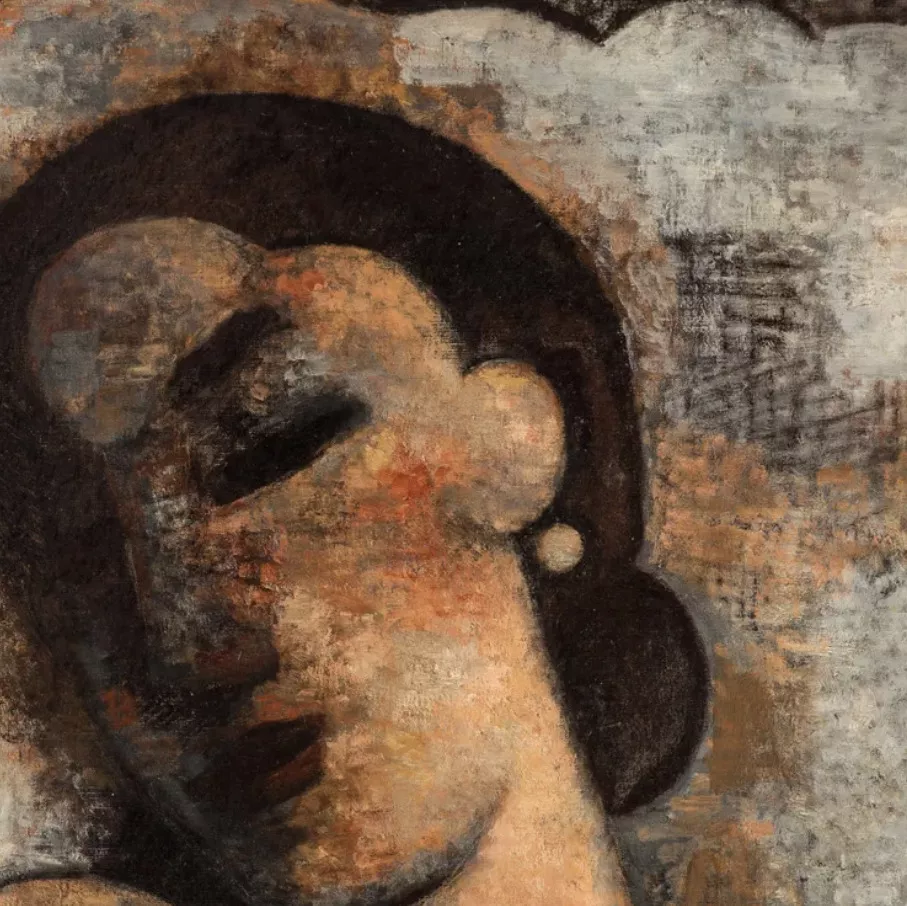
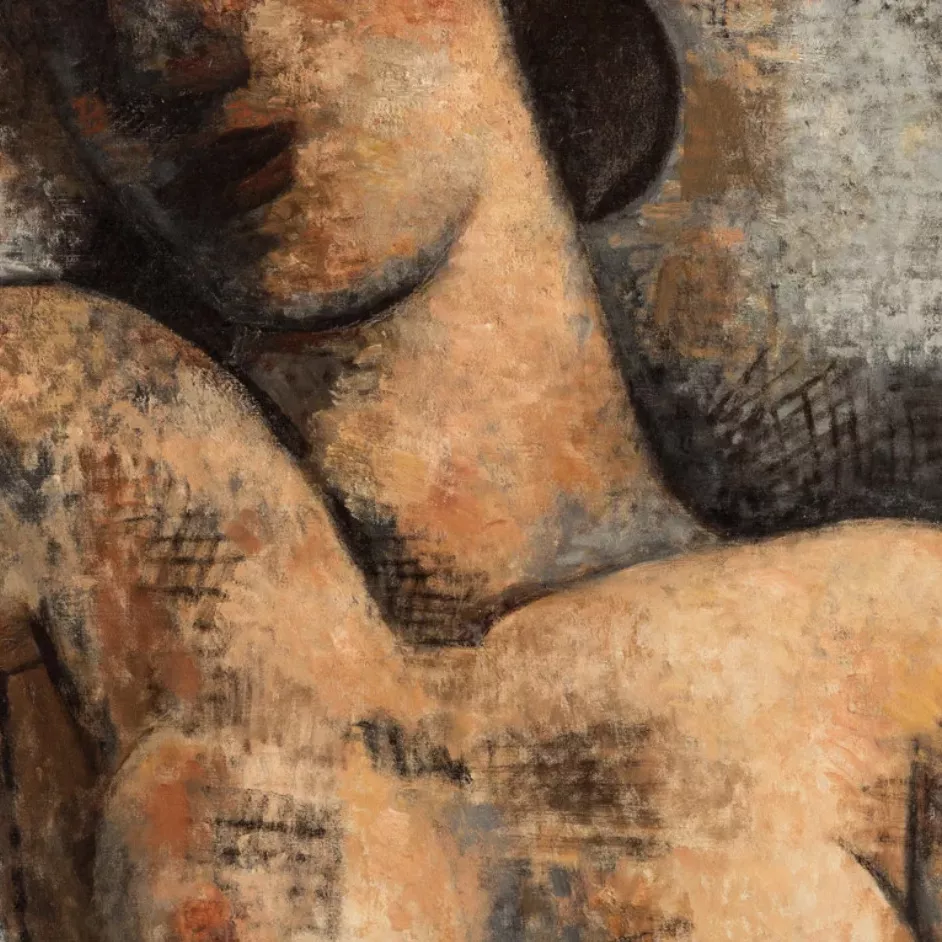
Gromaire develops a solidly architectural figurative style, in which forms are reduced to the essential. His style is characterized by a limited chromatic range, with dominant browns, ochres, earthy colors that are often enhanced by blues or greens.
He blends rigorous geometric constructions with a certain pictorial sensuality in his nudes and figures. The drawing is often encircled by a pronounced black ring, with a hyphen between Gothic/Romanesque art and modernity.
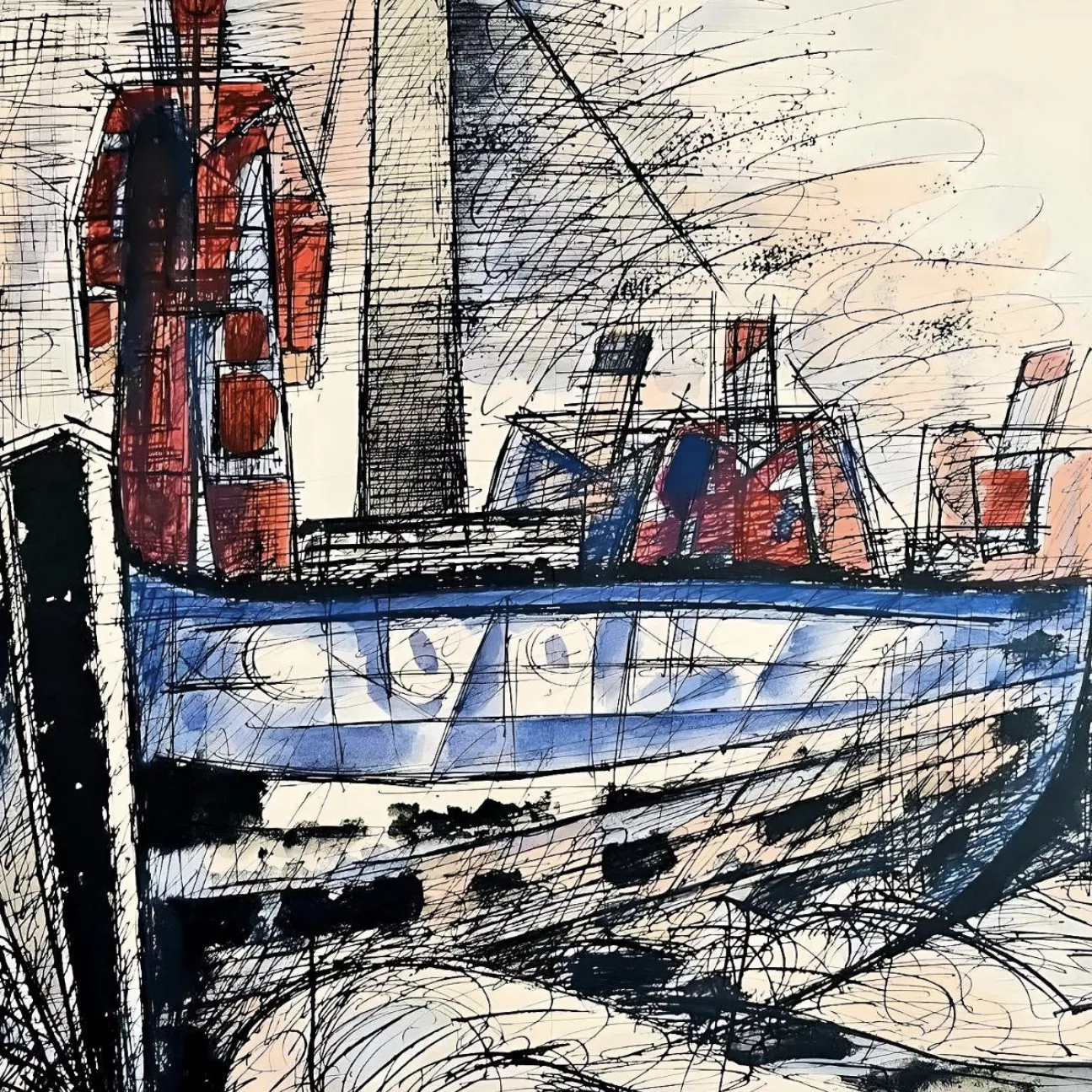
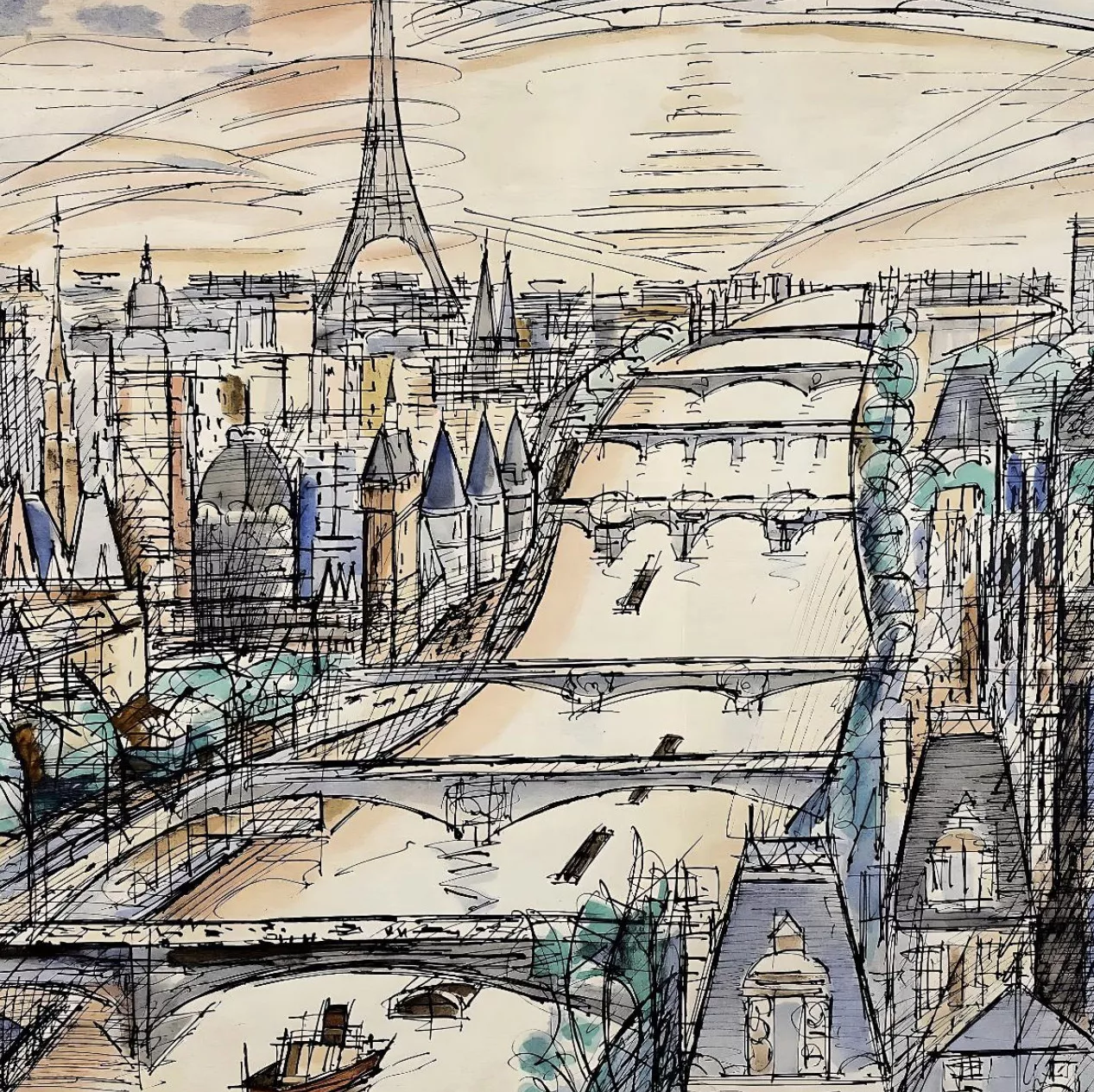
The themes he deals with most often are everyday life, workers, war, and cities, which he arranges like monumental objects (cf La Guerre, 1925). He worked mainly in oil on canvas, but also used watercolors, drawings and etchings.
He mastered oil, sometimes enriched with resins, to create dense, textured, almost sculptural surfaces. He applies superimposed layers with accentuated modelling and pronounced volume, rather than smooth enamel. The figures thus appear massive and architectural.
The figures do not merge into the background but remain distinct, like autonomous volumes in a constructed space. He draws inspiration from the Romanesque and Gothic primitives, which explains his relationship with monumentality, verticality and statuary.
Marcel Gromaire's life
Marcel Gromaire (1892 - 1971) was a painter born in northern France to a French father and Flemish mother.
After his secondary education in Douai, he obtained a law baccalaureate in 1909 in Paris. He attended the free academies of Montparnasse (Académie Colarossi, Académie de la Palette) around 1910.
During the First World War, he was mobilized and wounded in 1916 on the Somme. His battlefield experience would influence the rest of his work. In 1919, he returned to Paris and set up in a studio on rue Delambre, then at the Villa Seurat from 1925.
He then met Dr. Maurice Giradin, who bought Gromaire's output for ten years, ensuring him a certain stability as well as recognition.
He exhibited at the Kunsthalle Basel in 1933 (retrospective) as a mark of consecration. He carried out state commissions, such as decorating the Sèvres porcelain pavilion for the 1937 Paris Exposition.
Between 1939 and 1944, he worked as a tapestry weaver in Aubusson, Creuse, and contributed to the revival of modern tapestry alongside Jean Lurçat. He taught at the École natioanle supérieure des arts décoratifs (Paris) from 1950 to 1962.
He was awarded the Légion d'honneur in 1954 and the Grand Prix National des Arts in 1958. He died in Paris in 1971; his output is estimated at around 700 oils and canvases, averaging around ten a year.
A large part of his work is preserved at the Musée d'Art moderne de la Ville de Paris thanks to the Giradin bequest.
Focus on La Guerre, Marcel Gromaire, 1925
La Guerre is an oil on canvas by Marcel Gromaire measuring approximately 127 x 100 cm, housed in the Musée d'Art moderne de la Ville de Paris. It was exhibited at the Salon des Artistes Indépendants in 1925.
The work depicts French soldiers in a trench, helmeted and clad in coats and armor. The geometry and visual mass are strong, the bodies reduced to compact, almost monolithic volumes, evoking the objectification or dehumanization of the combatants.
The colors are dark, earthy and cold, with dominants of gray, metallic blue-gray, and ochres with little tonal variation, reinforcing the heavy atmosphere.
The work is part of a structured return to figuration after the First World War, the large mass of forms recalls " pneumatic " cubism, we note in particular the influence of Fernand Léger, while retaining an expressive gravity.
With this work, Gromaire, a veteran wounded in 1916, transforms his experience into a symbolic image : this is not a historical or allegorical narrative but a visual memory of war as machine, as have also Otto Dix, Frantisek Kupka or Alfred Aberdam.
Market segmentation and artist rating
The type of works present on the market are oils on canvas (main segment), drawings and inks, etchings, lithographs and tapestries.
Medium to large canvases are better valued. Paper or small-sized supports enter a more accessible range. Valued subjects are female nudes, powerful figurative compositions, labor or social themes, and paintings from the 1920s-1930s.
The market is mainly French (Paris) but also American and European for major lots. Valuation factors include the period of production, a possibly iconic subject, condition, provenance and format.
Small-format drawings and inks constitute the entry-level segment, while oils of significant size and strong subjects constitute the high-end segment. For oils on canvas, valuations start at around €10,000, rising to between €40,000 and €60,000 for canvases larger than 50cm. They can exceed €100,000 for large compositions.
For drawings and inks, average valuations are between €1,000 and €15,000, and between €500 and €5,000 for lithographs. Marcel Gromaire's value is stable and well placed in the French modern art market. We can speak of sure values.
The fact that estimates for major works exceed €100,000 shows a mature market for the high-end segment of his work. The large number of lots offered for sale indicates good liquidity, but also a wide dispersion of supports, formats and qualities, which can lead to high volatility depending on condition and subject.
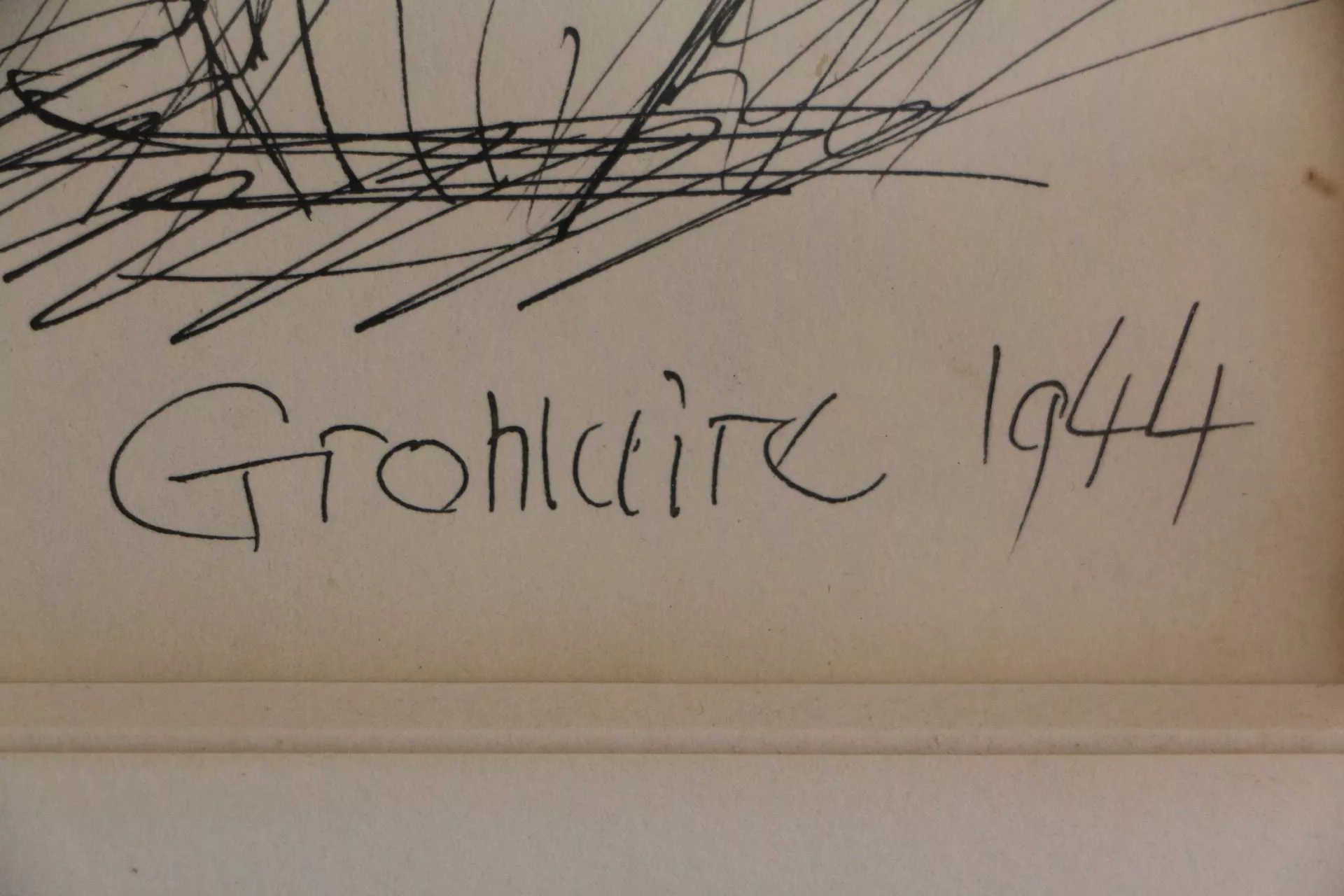
Recognizing Marcel Gromaire's signature
The artist's works are often signed. If he does, the signature appears at the bottom of the painting, in a color that contrasts with the background.
Knowing the value of a work
If you happen to own a work by or after Marcel Gromaire, don't hesitate to request a free valuation using our form on our website.
A member of our team of experts and certified auctioneers will contact you promptly to provide you with an estimate of the market value of your work, as well as ad hoc information about it.
If you are considering selling your work, you will also be accompanied by our specialists in order to benefit from alternatives for selling it at the best possible price, taking into account the inclinations of the market.
.Estimate in less than 24h
Discover in the same theme

Rating and value of works, drawings, paintings by Suzanne Va...
Suzanne Valadon is a 20th-century artist who produced Impressionist and Naturalist works that are highly prized and sought-after at auction.
Learn more >

Rating and value of paintings by Maximilien Luce
Maximilien Luce is a twentieth-century post-impressionist painter who produced works that are listed and valued on the auction market.
Learn more >

Rating and value of chests of drawers, sideboards and bookca...
Pierre Chapo is an iconic 20th-century designer who has produced works that are prized and in demand on the auction market. Estimate in 24h
Learn more >
D'autres tableaux expressionnistes vendus aux enchères


Secure site, anonymity preserved

Auctioneer approved by the State

Free and certified estimates
Frequently asked questions
-
Who is Marcel Gromaire, and what is his historical context?Marcel Gromaire (1892–1971) was a French painter considered one of the leading figures of 20th-century Post-Cubism. A veteran wounded at the Somme in 1916, his experience of World War I profoundly influenced his work. He distinguished himself through an architectural style of figurative painting that blended geometric precision with pictorial sensuality, focusing primarily on themes of daily life, workers, and war.
-
What is the price range for Marcel Gromaire's paintings?The prices of Gromaire's works vary considerably depending on the medium and format. Oil paintings range from €280 to €282,000, watercolor drawings from €30 to €28,000, and prints from €10 to €4,600. For high-quality oil paintings on canvas, valuations start around €10,000 and can exceed €100,000 for large compositions from the 1920s and 1930s.
-
How can you authenticate a work by Marcel Gromaire?To authenticate a piece of art and determine its exact value, we recommend that you request a free appraisal from Auctie's. Our team of experts and licensed auctioneers will analyze your piece and provide you with an accurate appraisal within 48 hours, with no obligation on your part.
-
Is this the right time to sell a work by Marcel Gromaire?Yes, the market for Marcel Gromaire is currently strong. His market value is stable and on the rise in the French modern art market, with good liquidity and strong demand for his major works. The segment of large-scale compositions from the 1920s and 1930s, in particular, is gaining increasing recognition among French, American, and European collectors.
-
How does the sale of a work of art work at Auctie's?Auctie's guides you from the appraisal to the auction. Once our experts have appraised your artwork for free, we’ll offer you the best options for selling it at the optimal price, taking market trends into account. As a licensed auction house, we manage the entire auction process, ensuring transparency and professionalism at every step.
