



Rating and value of paintings by Tamara de Lempicka

Key takeaways
- Tamara de Lempicka’s oil-on-canvas paintings sell for between €20 and €16.8 million, with a record set in 2020 for “Portrait of Marjorie Ferry” (1932), which sold for €16.8 million.
- A Polish artist (1898–1980) with a unique neo-Cubist style, she developed an instantly recognizable aesthetic blending refined figuration and visual opulence in the 1920s and 1930s.
- Prints range in price from €20 to €39,200, and watercolor drawings from €210 to €72,000, while her market value has been rising sharply since her rediscovery in the 1970s.
If you own a work by or based on the artist Tamara de Lempicka and would like to know its value, our state-approved experts and auctioneers will guide you.
Our specialists will carry out a free appraisal of your work, and provide you with an accurate estimate of its value on the current market.
Then, if you wish to sell your work, we will direct you to the best possible device to obtain an optimal price.
Rating and value of the artist Tamara de Lempicka
Tamara de Lempicka is a Polish artist known to modern art lovers. Now, the prices of her works are rising under the auctioneers' gavel.
Her oils on canvas are particularly prized, especially by French buyers, and the price at which they sell on the art market ranges from €20 to €16,840,700, a significant delta but one that speaks volumes about the value that can be attributed to the artist's works.
In 2020, his oil on canvas Portrait de Marjorie Ferry, dating from 1932 sold for €16,840,700, whereas it was estimated at between €9,455,000 and €14,180,000. Its value has risen sharply.
Order of value from the most basic to the most prestigious
Technique used | Result |
|---|---|
Estamp - multiple | From €20 to €39,200 |
Drawing - watercolor | From €210 to €72,000 |
Painting | From €20 to €16,840,700 |
Estimate in less than 24h
The artist's works and style
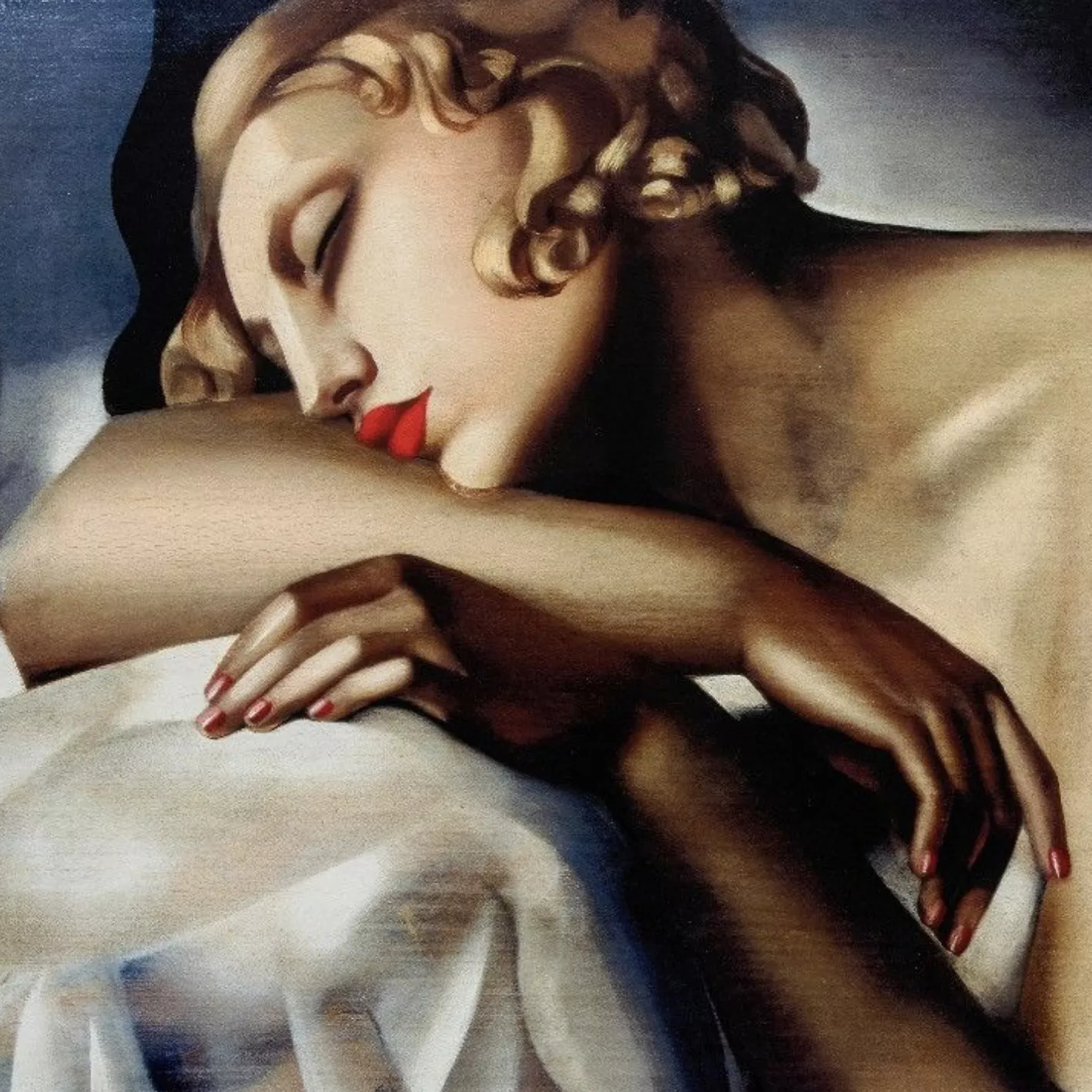
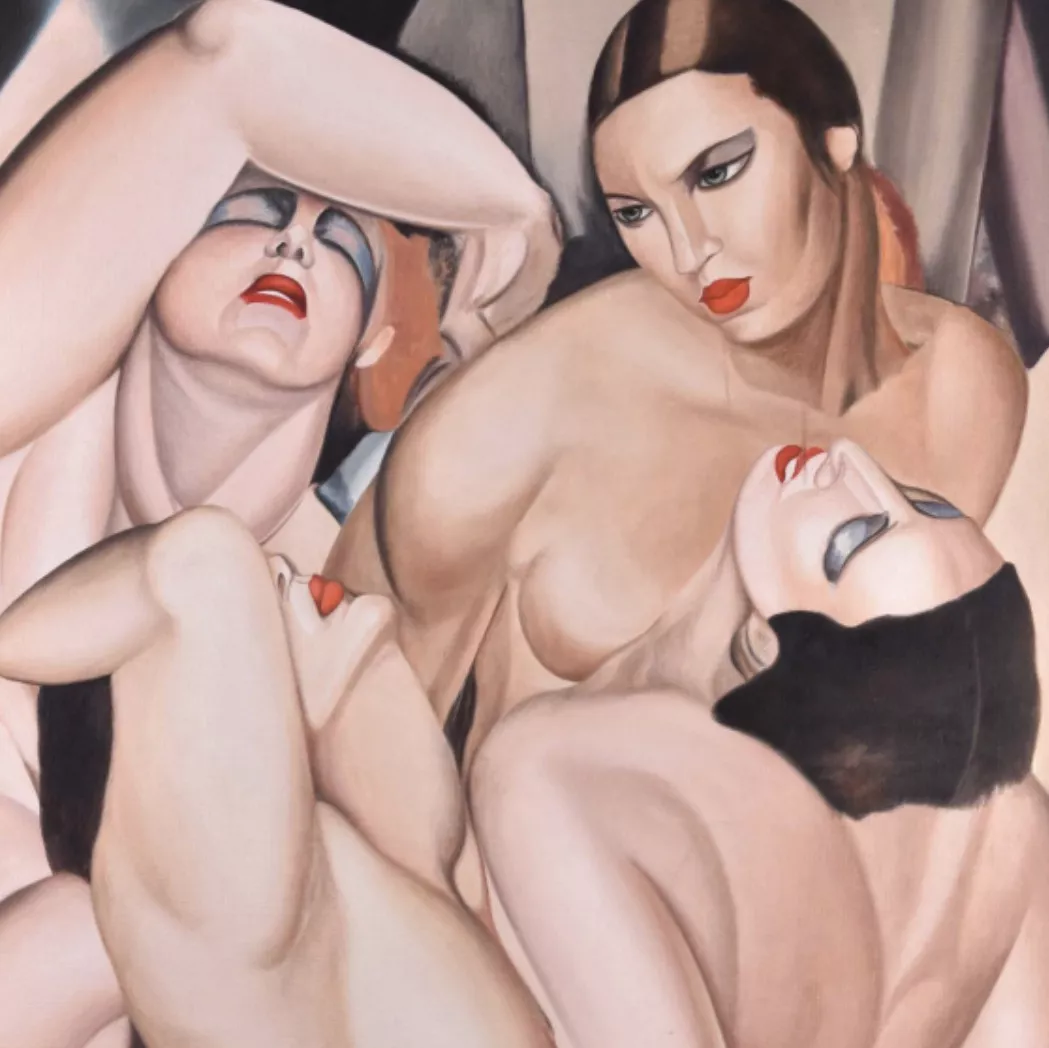
Tamara de Lempicka (1898 - 1980) is an artist with a very distinctive style, which could be described as neo-cubist. She developed a personal, figurative and refined style, halfway between stylized realism and fashion painting.
She favors full, closed, legible forms, without blurring or fragmentation, in contrast to impressionism or cubism. Her painting is resolutely modern without being avant-garde: she adapts figuration to the graphic spirit of the 1920s-30s.
The figures she depicts are stylized and hieratic. The bodies, often female, are massive, sculptural, almost androgynous at times, imposing a frontal, posed presence.
Lempicka develops her own iconography, with women with red lips, bodies sheathed in shiny fabric and frozen faces where emotion is contained behind the veneer of style.
His technique is mastered and brilliant, his drawing very precise, and returns a fluid modulation of forms without visible texture. The paint is smooth, taut, glazed and close to a polished surface. It uses a cold, directional light that sculpts the volumes, and is often from above or to the side, creating a strong contrast.
The colors are saturated but cool, the beiges are pearly, the greens acidic and the blues metallic, reinforcing the effect of luxury distancing.
The models are posed and staged as if in a photo studio, often associated with modern objects (cars, gloves, mirrors), which underline their belonging to an urban, wealthy and cultured world.
Lempicka thus creates an aesthetic of the contemporary icon, neither entirely realistic nor symbolist but in a tension between nature and artifice.
The artist stood on the bangs of the great movements of his time (cubism, surrealism), choosing to integrate a little of both movements into his work with a highly personal style, suited to the high society of the interwar period.
His output is closer to fashion or poster graphics than to history painting, though he does come close to certain avant-garde cubists such as André Lhote.
As a result, she leaves a strong imprint on the visual culture of the 1920s-1930s, with an immediately recognizable style.
The life of Tamara de Lempicka
Tamara de Lempicka (1898 - 1980) was born in Warsaw in the Russian Empire, into a wealthy, cosmopolitan Polish family. She spent her childhood between Switzerland, Italy and Saint Petersburg. The artist fled the Russian Revolution in 1917 with her mother and daughter, after the arrest of her husband, Tadeusz Lempicki.
She settled in Paris in 1918, and began painting seriously at this time to support herself. She studied at the Académie de la Grande Chaumière, then in the studio of Maurice Denis and cubist André Lhote. Lempicka then adopted a modern figurative style, which she quickly developed with her own personal codes: powerful women, curvaceous silhouettes and visual luxury.
In the 1920s, she became a figure of Parisian high society, exhibiting at Salons and painting portraits and self-portraits of various women. Renowned for her unique style, she seduced the aristocracy, the cosmopolitan bourgeoisie and the fashion and design worlds.
In the 1930s, she exhibited in Milan, Berlin and New York, and fled Europe during the Second World War, settling in the United States in 1939, then Mexico in the 1960s. Her style evolved little after the 1940s, and she experienced a period of relative artistic withdrawal.
She was rediscovered in the 1970s, in the context of the Art Deco revival and the growing recognition of women artists. Tamara de Lempicka dies e, 1980 in Cuernavaca, Mexico, after requesting that her ashes be scattered on the Popocatépetl volcano.
She is today a visual icon of Art Deco, and a symbol of independence, modernist elegance and freedom.
Focus on Jeune hollandaise, Tamara de Lempicka, 1941
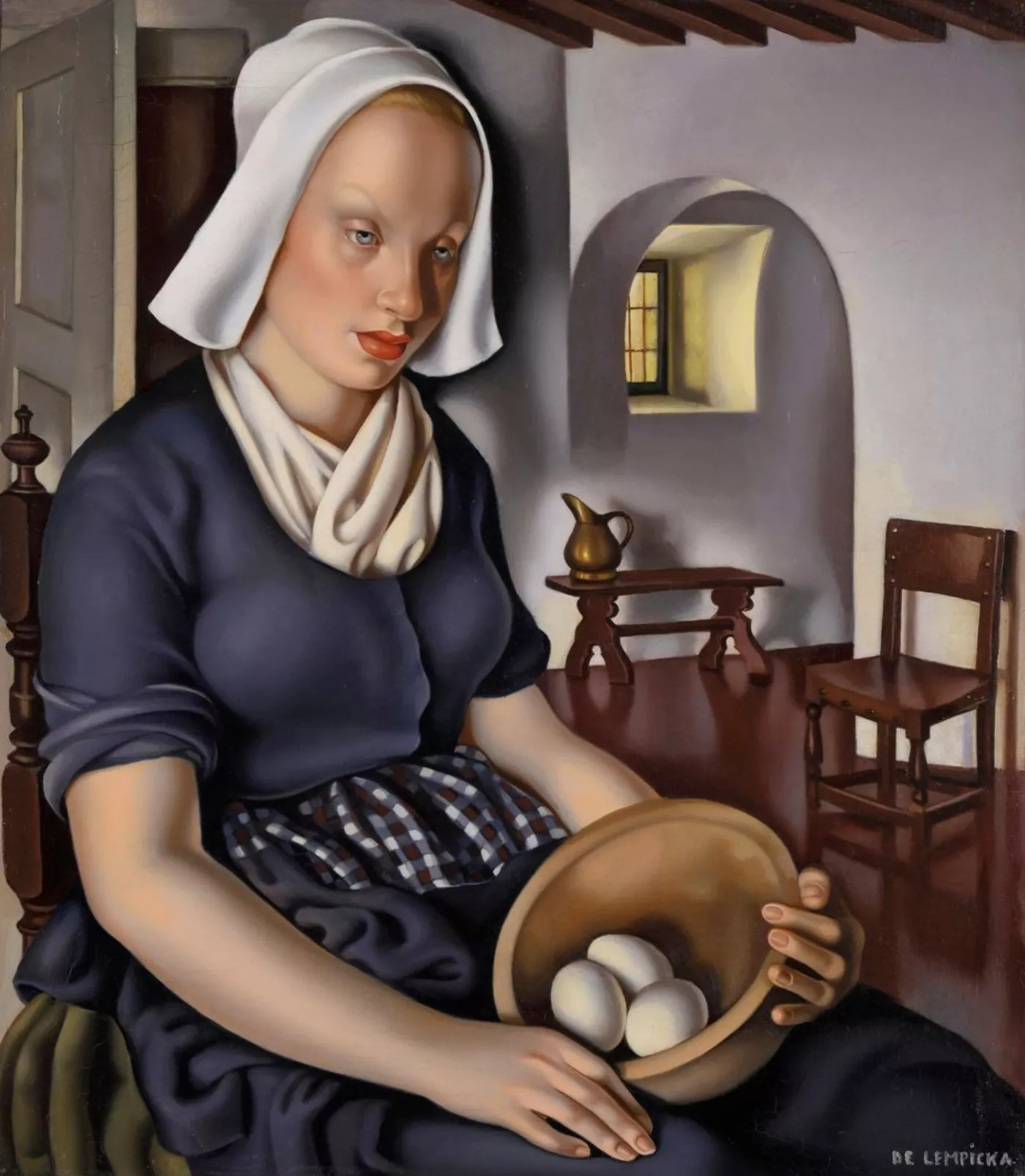
This painting entitled Jeune Hollandaise by Tamara de Lempicka was created in 1941. It came from the collection of Louise Riz (direct purchase in 1947) and was subsequently acquired by descent. Measuring 63.5 x 56 cm, it is signed " De Lempicka " lower right and was exhibited at the Salon d'Automne in 1944 and at the André Weill gallery in 1955.
The work was widely published, and is notably present in Alain Blondel's catalog raisonné (n°B 223).
It depicts a young woman seen from mid-body, dressed in the manner of Dutch peasant women (white headdress, dark blouse, checked apron) holding a bowl containing three white eggs.
The figure's expression is restrained, almost absent, and the gaze is fixed, lowered, without direct contact with the viewer : interiority, silence, withdrawal. The composition is poised, symmetrical, and built from closed masses, in a restrained atmosphere.
The interior evokes a simple, rural room, with whitewashed walls, ceiling beams, a rustic table, a chair and a jug resting on a cabinet. The space is perfectly ordered, silent and bathed in a dull light that illuminates only in fragments.
In this painting, the artist directly echoes the intimate Flemish or Dutch scenes of the 17th century (Vermeer, De Hooch), which she treats with a modern coolness.
The modeling is extremely smooth, with no trace of brushwork, and the volumes are sculpted in a compact, polished material. The bodies are massive, the arms round, the face frozen. The treatment of the flesh is more reminiscent of statuary than of living painting.
The colors are muted and closed (deep blue, cream, warm wood, without spectacular effect, but with an austere elegance). Impasto is absent, replaced by a lacquered finish, typical of Lempicka, but here less glamorous and more meditative.
This picture was painted during the artist's American sojourn (escape from the war) and marks a break with the worldly icons of his Parisian years. Here, the artist moves away from the world of luxury and desire to explore a new, almost mystical form of identity.
The figure of the Dutch peasant woman could refer to a quest for archaism, sobriety and spiritual identity in troubled times. There is a preparatory drawing for this work (catalog raisonné no. A197) and a second, later version preserved in Lublin (La Hollandaise II, 1957).
Tamara de Lempicka's imprint on her period
The artist embodied through her work and personality the aesthetics and spirit of the 1920s-30s, through notions of luxury, modernity, speed and elegance.
She was one of the few female painters to become a worldly and artistic celebrity in her own right, painting the great figures of European high society. At a time when recognition of women artists remained marginal, she managed to build an international career, without stylistic compromise or male dependence.
Her way of occupying the public space, through her self-portraits, her personal image and her lifestyle choices made her a pioneer of the figure of the free, female and modern artist. She assumes her success, her sexuality and her ambition, becoming a model of emancipation in the artistic and social model, in the image of artists like Vera Molnar or Leonora Carrington.
She imposes an immediately recognizable style, based on stylized forms, frontality, sensual coolness and shiny surfaces. Her visual language is close to fashion photography, modern graphic design and traditional painting. She anticipates the modern image culture between art, advertising and design.
Long sidelined from the great narratives of art history, she was rediscovered in the 1970s. Today, her work is celebrated as that of a singular, free, cross-disciplinary artist who eschews labels. She still inspires fashion, cinema and photography, and is the subject of major exhibitions in the world's greatest museums.
Her signature
Not all Tamara de Lempicka's works are signed.
Although there are variations, here is a first example of her signature:

Expertise your property
If you own a work by Tamara de Lempicka, don't hesitate to request a free appraisal by filling out our online form.
A member of our team of experts and certified auctioneers will contact you to provide an estimate of the market value of your work.
If you are considering selling your work, our specialists will also guide you through the various alternatives available to obtain the best possible price, taking into account market trends and the specific features of each work.
Estimate in less than 24h
Discover in the same theme

Rating and value of works, drawings, paintings by Henri Le S...
Henri Le Sidaner is a 20th-century Expressionist painter whose drawings and oils on canvas are highly prized at auction.
Learn more >

Rating and value of paintings by Lee Ufan
Lee Ufan is a contemporary South Korean artist who has produced works of considerable value at auction.
Learn more >

Rating and value of drawings and paintings by Tran Dinh Tho
Tran Dinh Tho is a modern Vietnamese painter whose paintings on lacquer and silk are highly prized and valued.
Learn more >
D'autres tableaux modernes figuratifs vendus aux enchères

Estimated 800 - 1.500
Jean Roger SOURGEN (1883-1978) Trees and dunes Oil on panel

Estimated 3.000 - 5.000
Georges LAPCHINE (1885-1951) The port of St Tropez Oil on canvas

Estimated 18.000 - 30.000
Charles CAMOIN (1879-1965) "Le Port de Marseille, 1928" Oil on canvas.

Estimated 1.500 - 3.000
Jean VANDEN EECKHOUDT (1875-1946), Basket of persimmons, Oil on canvas

Estimated 2.000 - 4.000
Charles LACOSTE (1870-1959) Starry night, Oil on paper mounted on canvas

Secure site, anonymity preserved

Auctioneer approved by the State

Free and certified estimates
Frequently asked questions
-
Who is Tamara de Lempicka, and what is her artistic style?Tamara de Lempicka (1898–1980) was a pioneering Polish artist of the 20th century, known for her unique and instantly recognizable Neo-Cubist style. Her work is characterized by clean, stylized forms; massive, hieratic female figures; a smooth, glossy technique; and an aesthetic of luxury and modernity typical of the 1920s and 1930s. She left her mark on Art Deco by becoming one of the few female painters to achieve artistic and social fame during her time.
-
What is the price range for Tamara de Lempicka's works?The prices of Tamara de Lempicka’s works vary considerably depending on the medium and rarity: prints range from €20 to €39,200, drawings and watercolors from €210 to €72,000, and paintings from €20 to €16,840,700. Her auction record was set in 2020 with the “Portrait of Marjorie Ferry” (1932), which sold for €16,840,700, reflecting the sharp rise in her market value.
-
How can you authenticate a work by Tamara de Lempicka?To authenticate a work by Tamara de Lempicka, we recommend that you request a free appraisal from Auctie's. Our team of experts and state-certified auctioneers will examine your artwork, verify its authenticity, provenance, and condition, and then provide you with an accurate estimate of its market value within 48 hours, with no obligation on your part.
-
Is this the right time to sell a work by Tamara de Lempicka?Yes, this is an excellent time to sell a work by Tamara de Lempicka. Her market value has been rising sharply for several years, particularly among French and international buyers. The artist is enjoying growing recognition thanks to the Art Deco revival and the rediscovery of 20th-century women artists, which is actively supporting prices in the market.
-
How does the sales process work at Auctie's?At Auctie's, we guide you through every step of the process, from the appraisal to the final sale of your artwork. After a free, no-obligation appraisal by our experts, we help you determine the best sales strategy to achieve the highest possible price, taking into account market trends and the unique characteristics of your artwork. Our licensed auctioneers then manage the entire process leading up to the auction.
