



Rating and value of paintings by Barbara Hepworth

Key takeaways
- Barbara Hepworth’s bronzes span a very wide price range, from €50 to €9,061,400, with the record set in 2023 by “The Family of Man: Ancestor II.”
- The British artist (1903–1975) developed an abstract biomorphic style based on fluid forms inspired by nature, characterized by the introduction of negative space as a sculptural element beginning in 1932–1933.
- Sculptures in wood, stone, and bronze are the most prestigious, while multiple prints start at €50 and watercolor drawings can reach up to €450,000.
If you own a work by or after the artist Barbara Hepworth, and would like to know its value, our state-approved experts and auctioneers will offer you their appraisal services.
Our specialists will carry out a free appraisal of your work, and provide you with a precise estimate of its value on the current market.
Then, if you wish to sell your work, we will direct you to the best possible arrangement to obtain the optimum price.
Rating and value of the artist Barbara Hepworth
Barbara Hepworth is an English artist who has worked in sculpture, particularly bronze, but also in painting and drawing.
At present, the prices of her works are soaring exponentially at the auctioneers' gavel.
Her bronzes are particularly prized, and the price at which they sell on the art market ranges from €50 to €9,061,400, a considerable delta but one that speaks volumes about the value that can be attributed to Barbara Hepworth's works.
In 2023, the bronze The Family of Man : Ancestor II, dating from 1970, sold for €9,061,400, while it was estimated at between €3,736,600 and €5,605,000, suggesting strong upside potential for the artist's works.
Order of value from a simple work to the most prestigious
Technique used | Result |
|---|---|
Estamp - multiple | From €50 to €29,200 |
Drawing - watercolor | From €370 to €450,000 |
Painting | From €960 to €475,600 |
Sculpture - volume | From €250 to €9,061,400 |
Estimate in less than 24h
Style and technique by artist Barbara Hepworth
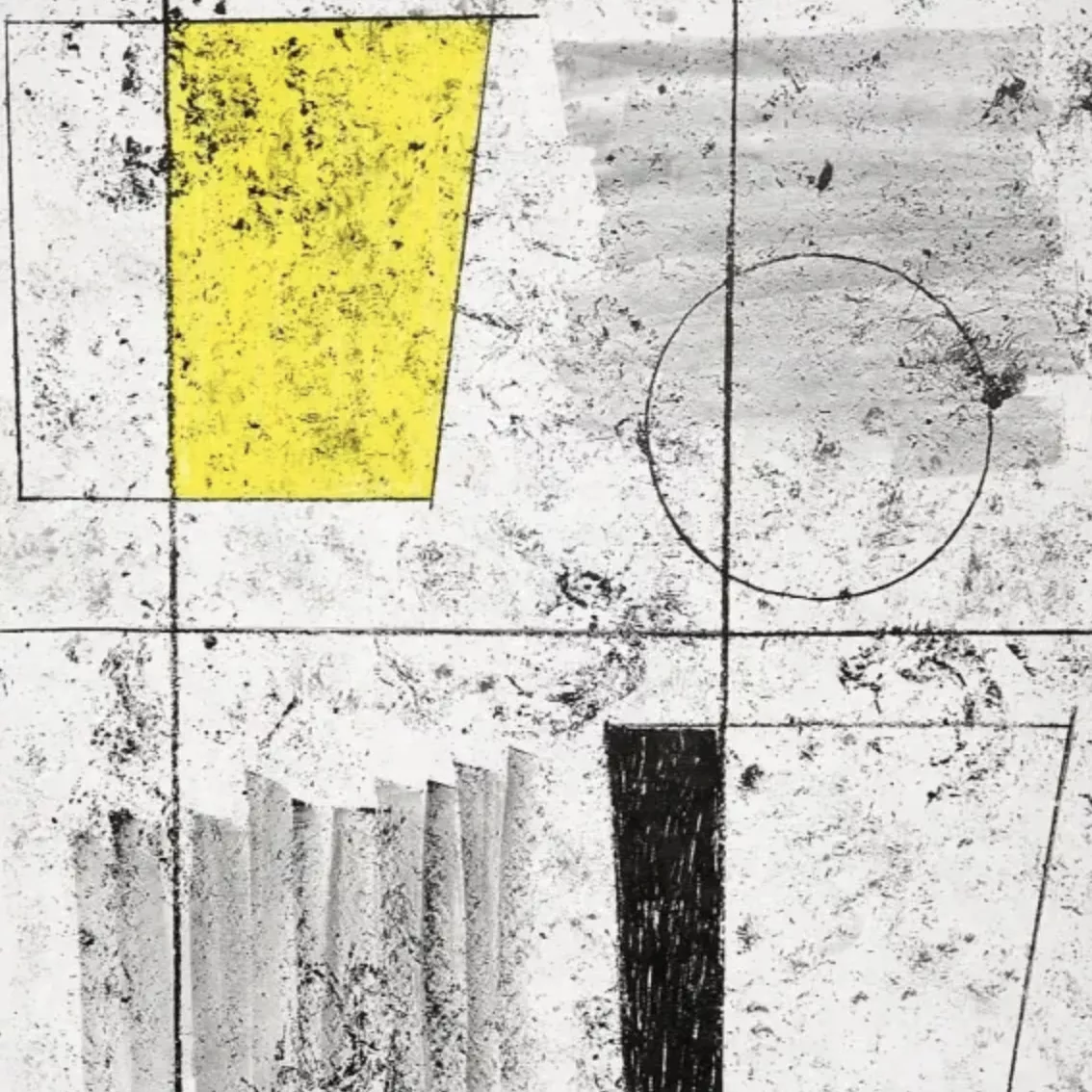
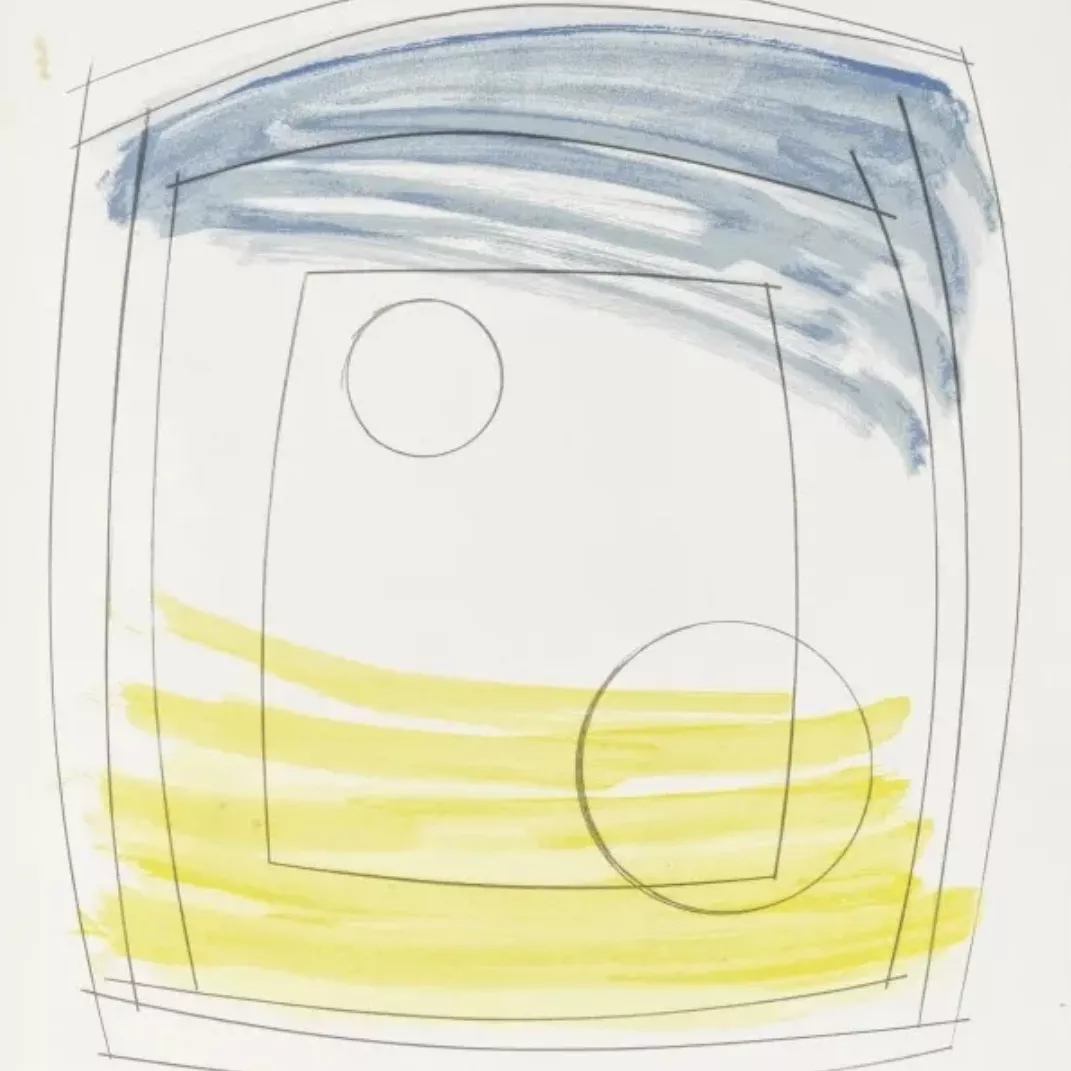
Barbara Hepworth (1903 - 1975) is a major British artist of the 20th century. From the 1930s onwards, Hepworth developed a non-geometric abstract style based on fluid, uncluttered, biomorphic forms inspired by nature and the human body.
She favored ovoid shapes, curves and hollowed volumes, evoking shells, pebbles, torsos and landscapes. This artist's abstraction is never rigid: she seeks to render visible the living balance between the inner and outer forces of her subjects.
From 1932 - 1933, she introduced piercing into her work. She opened the heart of the mass, creating a dialogue between the full and the empty. The latter becomes a sculptural element in its own right, structuring the work from within, playing with light and the environment.
This approach places her in a parallel evolution to that of Brancusi, Arp or Moore, with her own poetics, more contemplative and interior.
She uses wood, stone and bronze, which are sometimes left rough, or sometimes polished to a smooth, tactile texture. The artist works in direct carving, sculpting her pieces herself. She hollows, polishes and files with a close physical relationship to the material.
Some volumes are bound together by taut wires (colored ropes), creating internal networks that add a spatial and rhythmic dimension.
Inspired by the landscapes of Cornwall, where the artist lived from the war onwards, she seeks to express a cosmic harmony between man, nature and form. Many of her sculptures are designed to be installed in the open air, where light and wind can interact with the sculpture.
The relationship with the sea, wind and mineral forms also runs through her entire production. Her abstraction remains open to the sensitive and symbolic, as she refuses any formal coldness or break with the visible world.
She conceives her works as forms of plastic meditation, evoking maternity, growth and inner resonance. Her work also combines formal rigor with great poetic intensity, between spirituality and sensation.
The life of Barbara Hepworth
Barbara Hepworth was born in 1903 in Wakefield, Yorkshire, northern England. The daughter of a civil engineer, she developed a sensitive relationship with shapes, volumes and landscapes from an early age.
She studied at the Leeds School of Art, where she met Henri Moore, then at the Royal College of Art in London, from which she graduated in 1924. She perfected her technique in Italy, where she learned to carve marble directly in Florence, which was rare for a woman at the time.
She began sculpting in a simplified figurative style, then moved towards abstraction from the 1930s, influenced by Brancusi, Jean Arp and Sophie Tauber Arp but also other European avant-gardes.
Hepworth moved to London and frequented British modernist circles, and exhibited with the Unit One group (founded by Paul Nash). She introduced the use of the void in sculpture as early as 1932 - 1933, becoming one of the first artists to do so in a structuring way.
She married first the sculptor John Skeaping, then the painter Ben Nicholson in 1938, with whom she worked on questions of abstraction and spirituality. Barbara Hepworth would have four children, including a daughter who died young and triplets.
Her children would influence her sculptures, which focused on themes of maternity and interiority. The artist refused to delegate her work and carved, hollowed and polished herself, asserting a bodily and instinctive relationship with the material.
She took refuge in Cornwall during the Second World War, in Saint Ives, where she established her permanent studio, and became one of the pillars of the Saint Ives school, alongside Nicholson, Peter Lanyon, Naum Gabo and others.
Barbara Hepworth represented Great Britain at the Venice Biennale in 1950, received the Grand Prix in Sao Paulo in 1959, and was made Dame Commander of the Order of the British Empire in 1965. She died accidentally in her studio in 1975, aged 72.
The site has now been transformed into a museum (Barbara Hepworth Museum) and is run by the Tate, which retains most of her furniture and tools.
She is now recognized as one of the greatest sculptors of the 20th century, and as one of the first women to make their mark fully in the field of modern monumental sculpture.
Focus on La Suggestion, Barbara Hepworth (1946)
Pelagos by Barbara Hepworth is a sculpture in chestnut wood, gesso, blue paint and stretched wires, measuring approx. 43 x 46 x 38 cm. It is housed at the Tate Britain in London and its title means " open sea " in Greek. It is a tribute to the seascapes of Saint Ives, where she has lived since the war.
The formal structure is materialized by a spiral form, hollowed out from the inside, like a shell or a whirlpool. The exterior is smooth and curved, while the interior reveals a central void linked by taut wires. The sculpture is closed but breathable.
The wood is hollowed out by hand, sanded, coated with gesso and partially painted a pale blue on the inside. The interplay between the natural wood and the painted surface accentuates the duality between nature and abstraction, and between matter and space. The white threads the artist has stretched on either side of the void draw an invisible network, like harp strings or sea waves.
Inspired by the offshore wind, wave-cut coves and taut sails, this work translates the circular energy of nature. It does not represent a place, but a sensation of inner landscape, even an abstraction of movement and breath.
The spiral recalls certain natural forms such as the shell, the horn, the ear or the vortex, in a reading that is both cosmic and human. The central void of the sculpture becomes a space of concentration or breathing, in contrast to the solid forms.
Pelagos thus perfectly illustrates Hepworth's research through notions of harmony between the human, matter, void, landscape and invisible energy.
This sculpture is a key work of the post-war period, as it achieves a synthesis between direct carving, biomorphic form, controlled piercing and the use of wire. This work was exhibited internationally, and is today considered one of his most accomplished sculptures in wood.
It crystallizes the fusion of modernist abstraction and organic spirituality that characterizes his entire oeuvre.
.
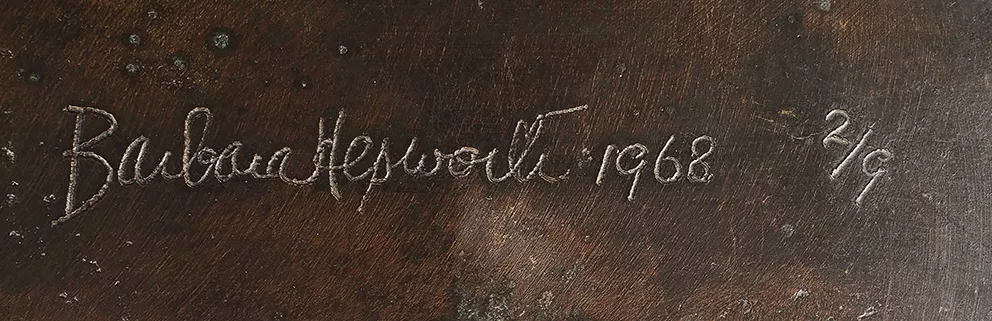
Recognizing Barbara Hepworth's signature
The artist does not always sign his works. He can make approximate identifications, which is why expertise remains important.
Knowing the value of a work
If you happen to own a work by or after Barbara Hepworth, don't hesitate to request a free valuation using our form on our website.
A member of our team of experts and certified auctioneers will contact you promptly to provide you with an estimate of the market value of your work, as well as ad hoc information about it.
If you are considering selling your work, you will also be accompanied by our specialists in order to benefit from alternatives for selling it at the best possible price, taking into account market inclinations.
Estimate in less than 24h
D'autres tableaux abstraits vendus aux enchères

Estimated 2.000 - 4.000
Serge POLIAKOFF (1900-1969), Composition en rouge et bleu. 1965, Lithograph

Estimated Between €5,000 and €8,000
Jean MIOTTE (1926-2016), acrylic on canvas

Estimated 3.000 - 5.000
Roberto MATTA (1911-2002), Composition, Gouache on canvas
Discover in the same theme

Rating and value of works, paintings, drawings by Véra Pagav...
Véra Pagava is a contemporary artist whose figurative and abstract paintings are skyrocketing at auction. Estimated in 24h.
Learn more >

Rating and value of paintings, drawings and sculptures by An...
Antoni Tapies is an abstract artist of the Arte Povera movement. He has produced works in a variety of media, which are highly prized and valued.
Learn more >

Rating and value of paintings by Leonora Carrington
Leonora Carrington is a surrealist artist who produced works that are highly valued at auction. 24h estimate.
Learn more >

Secure site, anonymity preserved

Auctioneer approved by the State

Free and certified estimates
Frequently asked questions
-
Who was Barbara Hepworth, and what was her artistic style?Barbara Hepworth (1903–1975) was a major British sculptor of the 20th century and a pioneer of non-geometric abstraction. Her style is characterized by fluid, biomorphic forms inspired by nature, with the revolutionary introduction of negative space as a sculptural element in its own right beginning in 1932–1933. She worked primarily in bronze, stone, and wood, carving directly from the block, creating a poetic harmony between humanity, material, and landscape.
-
What are the prices and price ranges for Barbara Hepworth's works?Prices for Barbara Hepworth’s works vary considerably depending on the medium: prints sell for between €50 and €29,200, watercolor drawings between €370 and €450,000, paintings between €960 and €475,600, and large-scale sculptures between €250 and €9,061,400. In 2023, her bronze sculpture “The Family of Man: Ancestor II” (1970) sold for €9,061,400, far exceeding its initial estimate and confirming strong upside potential.
-
How do you authenticate a work by Barbara Hepworth?To authenticate a work by Barbara Hepworth, we recommend that you request a free, no-obligation appraisal from Auctie's. A certified expert or auctioneer will examine your piece and provide you with an accurate appraisal within 48 hours, along with essential information about its authenticity and market value.
-
Is this the right time to sell a work by Barbara Hepworth?Yes, the market for Barbara Hepworth’s works is currently very strong. Prices are rising exponentially, particularly for her bronzes, and recent results indicate significant upside potential. This is a favorable time to consider selling a work by this major 20th-century artist.
-
How does the sale of a Barbara Hepworth artwork at Auctie's work?Auctie's supports you every step of the way: a free and confidential appraisal of your artwork, an accurate estimate of its market value, and guidance on the best sales options to achieve the best possible price. Our specialists guide you through the entire process, from appraisal to auction, based on market conditions and your goals.
