



Rating and value of works, drawings, paintings by Bernard Buffet

Key takeaways
- Bernard Buffet's oil-on-canvas paintings fetch exceptional prices, reaching up to 1.5 million euros, as seen with "Les clowns musiciens," which sold in 2021.
- The artist’s market value shows a significant increase of 17.4% between 2024 and 2025, reflecting growing demand in the market.
- His most sought-after works depict clowns, harlequins, cityscapes, and views of Paris and New York, recognizable by their angular forms and distorted perspectives.
If you own a work by or based on the artist Bernard Buffet and would like to know its value, our state-approved experts and auctioneers will guide you.
Our specialists will carry out a free appraisal of your work, and provide you with an accurate estimate of its value on the current market.
Then, if you wish to sell your work, we will direct you to the best possible arrangement to obtain the optimum price.
Artist's rating and value
On the art market, Bernard Buffet's rating is quite high. His most prized works are his colorful canvases depicting clowns or harlequins.
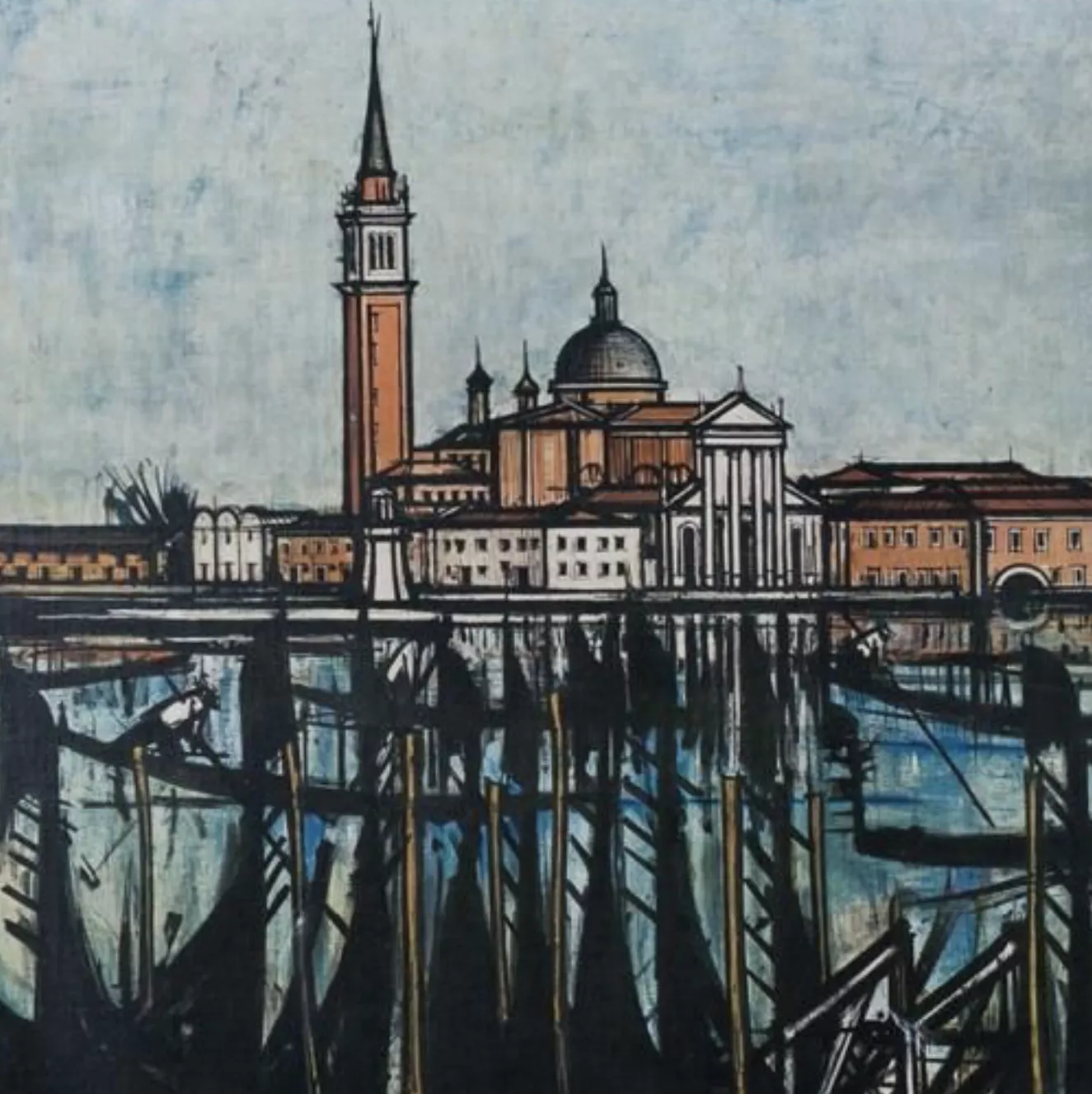
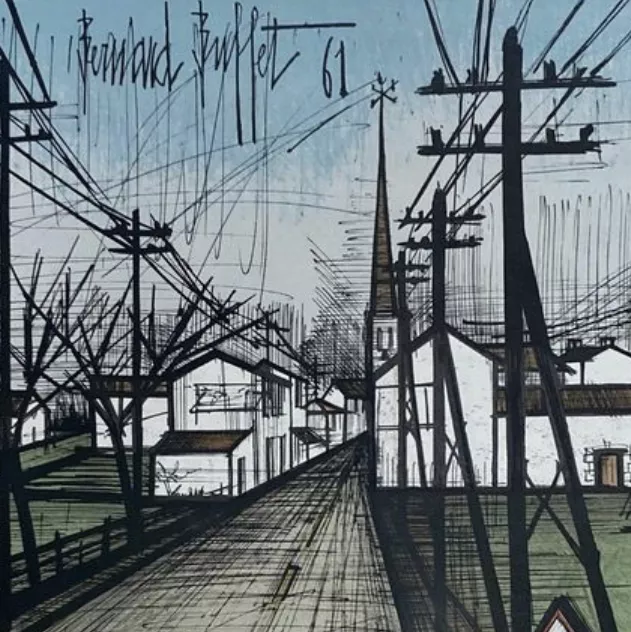
The artist also produces many landscapes and views of cities such as Paris and New York, also quoted on the market.
A work by Bernard Buffet can fetch millions of euros at auction, as demonstrated by his painting Les clowns musiciens, le saxophoniste, sold for €1,529,577 in 2021.
Order of value from the most basic to the most prestigious
Technique used | Result |
|---|---|
Sculpture - volume | From €40 to €6,000 |
Estamp - multiple | From €10 to €125,199 |
Drawing - watercolor | From €70 to 228,234 |
Oil on canvas | From €30 to 1,529,577 |
Estimate in less than 24h
The artist's style and technique
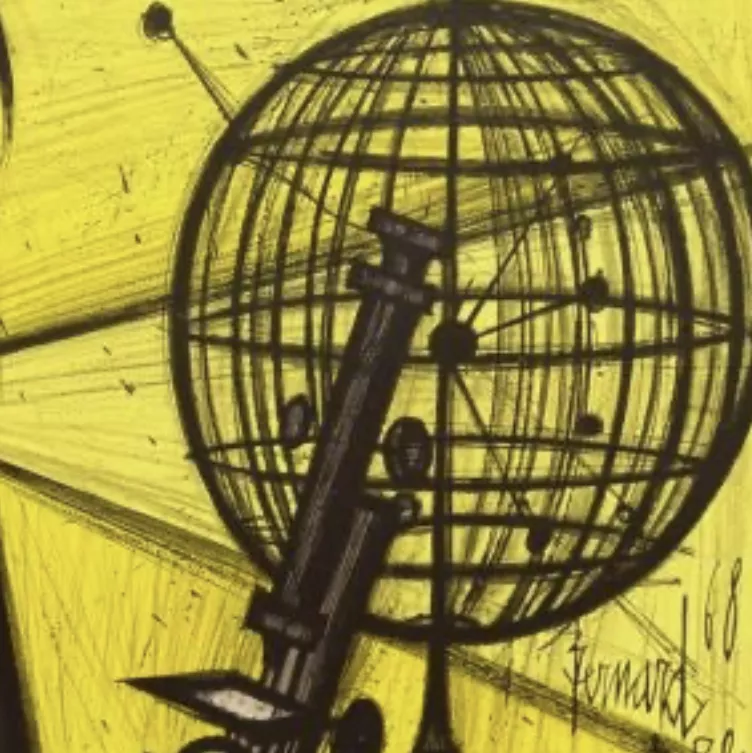
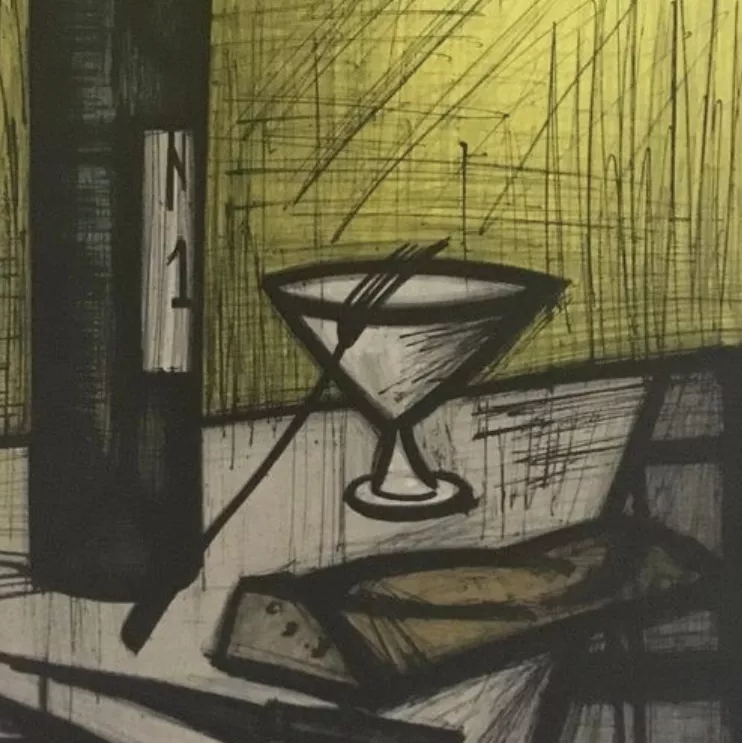
With their singular appearance, Bernard Buffet's works are recognizable for their depiction of angular shapes and objects with distorted perspectives, creating a bitter, moody and introspective mood despite the use of rather bright colors, often primary colors.
With his unique technique and ability to create imposing compositions, Bernard Buffet is admired by some but criticized by others who regard his works as austere and iterative. The elongated silhouettes and blank stares that fill the canvas thus divide the public.
In Bernard Buffet's painting, the line retains this property of carving up space, building up forms with a sharp, almost cutting rigor.
But it comes at the price of a shift: it no longer submits to the logic of volume, instead imposing a rigid framework, a structure that constrains the subject in a network of sharp angles and exacerbated contours.
Modeling fades, brushstrokes disappear, and all that remains are black striations, dry, taut strokes that encircle figures with graphic intransigence.
In her landscapes as in her still lifes, space is no longer depth but a surface traversed by a nervous mesh, where monochrome solids seem hemmed in by a corset of implacable lines.
The emotion in Buffet's work lies not in direct expressivity, but in the tension between the fixity of the drawing and the muted density of the color, between the imposed stiffness and the latent quiver that seems to want to escape.
The life of Bernard Buffet
Bernard Buffet (1928-1999) was a French artist who showed a keen interest in the visual arts from an early age. After studying drawing with Monsieur Darfeuille, Bernard Buffet entered the École des Beaux-Arts de Paris in 1943. He soon began exhibiting and attracting the attention of collectors, including the French state, which even bought one of his paintings.
Bernard Buffet signed an exclusive contract with gallery owner Emmanuel David. In 1955, aged just 28, he was named Painter of the Year by the renowned magazine Connaissance des Arts, dethroning Pablo Picasso.
This distinction greatly contributed to his emergence and celebrity, positioning him as one of the most influential and recognized artists of his time. The following year, he exhibited in Venice and had his first retrospective under the direction of Pierre Bergé.
Throughout his career, Bernard Buffet produced around 100 drawings a year until 1999, and created nearly 8000 canvases in all. His work is therefore very rich and brings together several techniques.
His success can be explained by his ability to fuse traditional academic style with contemporary artistic trends.
His work is regarded as a legacy of 19th-century realism, and art critics are particularly effusive in their praise, giving him international renown. The Japanese in particular are devoted to a veritable adoration of the "Bernard Buffet style" - from which other artists such as Claude Venard would pick up certain codes.
In the 1960s, Bernard Buffet produced a bit of sacred art, creating religious decors as well as paintings donated to the Vatican museum. Honored with the Légion d'honneur in 1971, Buffet was elected Academician in 1974.
Focus on Le Cirque, Bernard Buffet, 1967
In Le Cirque (1967), an oil on canvas by Bernard Buffet, space no longer breathes, it is compressed under the weight of line. The characters, acrobats and clowns, are reduced to gaunt silhouettes, treated in a range of grays and blacks that accentuate the coldness of their representation.
Their faces, devoid of any roundness, are composed of angular facets, emerging from the shadows of an almost monochrome background. The scene, despite its apparent animation, exudes a heavy sense of solitude and unease.
The flesh is absent, the light is harsh and only accentuates the rigidity of the figures. This distanced treatment of reality seems to both dissect it and enclose it in a network of vivid lines that contain all the tension of the work.
Movement, far from expressing itself through fluidity, manifests itself here through frozen positions, as if suspended in time, reinforcing the idea of a circus where the illusion of joy, however expected, is no more than a mask.
The isolation of each character in this enclosed space prevents any possibility of communion or free movement. The acrobats, frozen in their positions, seem prisoners of a world where agility is relegated to the background, replaced by sharp geometric shapes.
The spectator, far from being invited to joyful contemplation, is confronted with a frozen, almost claustrophobic universe, where the line, in its purity and violence, refuses any escape.
Light, instead of nourishing the forms with warmth, dries them out, sculpting them into a destabilizing coldness, creating disquieting shadows, like a veil separating the scene from the viewer's soul.
Bernard Buffet's imprint on his period
In 1948, in his Self-Portrait (Musée Bernard Buffet, Montmartre), in his Melancholic Clowns (private collection), Buffet had chosen the sharp line and sliced shadow to accentuate the emaciation of his figures: likely reminiscences of the German expressionist tradition he was discovering at the time, to which was added his predilection for graphic dryness.
Giacometti, around the same time, intensified the elongation of his sculptures under the effect of a progressive erasure of the material, as witnessed by Walking Man I (Fondation Giacometti, Paris) or Woman of Venice (Peggy Guggenheim collection, Venice).
At this time, figuration underwent a stiffening that must have - one imagines - offended contemporaries, still attached to the curves of Maillol and the bright colors of the Nouvelle École de Paris (cf Jean Le Moal, Maurice Estève....)
With its muted hues, dominant blacks and austere beiges, Buffet's painting, from 1948-1949, began a trend that, he himself would later say, "brought painting back to the essential, to the skeleton".
But the drawing, too, embraced this rigor: in 1955, when he engraved Le Bouquet (Musée d'Art Moderne, Paris), it was no longer Expressionist striations or Goyesque hatching that he summoned, but, he wrote to his gallery owner Maurice Garnier, a "... dry rigor, without grease, like a hard Burin...".
Buffet, for his part, would later declare: "I was looking for purity, an image which, through its stiffness, says more than emotion". This desire for expressive abstraction led, according to several critics, to his decision, around the same period, to avoid any sfumato in his shadows, favoring sharp contrast.
In etching, this radicalism is reflected in a line of equal hardness, breaking with the sensitive nuances of the Romantic line.
In his etchings, emotion is contained beneath methodical work. Here again, the attitude evokes the engravers of the classical period: with Buffet, as with them, the line is not an inner breath but a tool for structuring reality.
Today, although some of his works are exhibited in museums in France and abroad, it is private collectors who play the greatest role in preserving his work. What's more, his stock price is on the rise, having risen by 17.4% in one year, from 2024 to 2025, which augurs excellent results at auction.
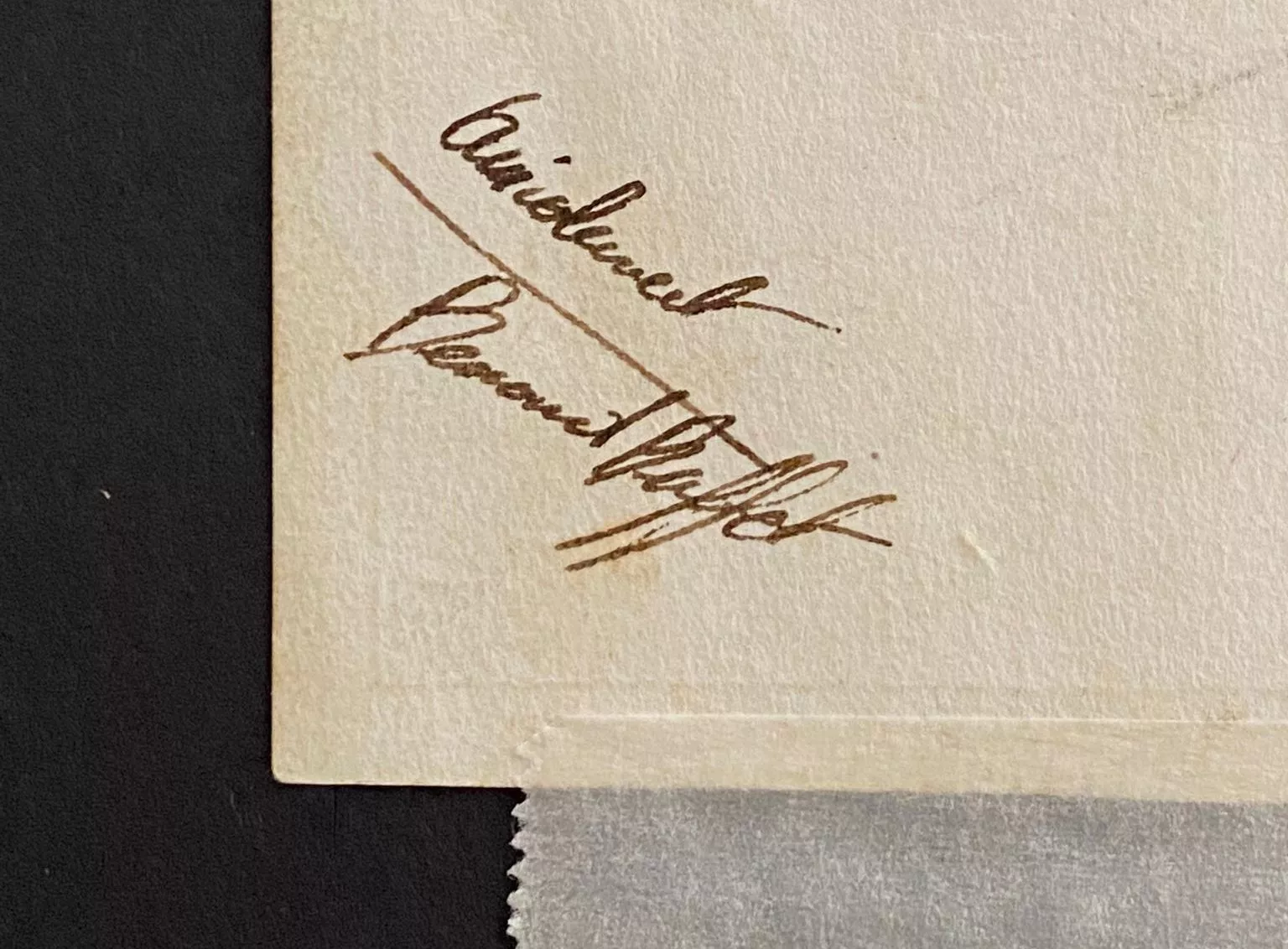
His signature
Although there are variations, here's a first example of his signature:
Expertise your property
If you happen to own a work by or after Bernard Buffet, don't hesitate to request a free valuation by filling in our form on our website.
A member of our team of experts and certified auctioneers will contact you promptly to provide you with an estimate of the value of your work, not forgetting to send you ad hoc information about it.
If you are planning to sell your work, you will also be accompanied by our specialists in order to benefit from alternatives for selling it at the best possible price, taking into account the inclinations of the market and its specificities.
Estimate in less than 24h
Discover in the same theme

Rating and value of Jean Prouvé furniture, chairs and desks
Jean Prouvé is a 20th-century ironmonger and designer, who produced a great deal of furniture that is highly valued at auction.
Learn more >

Rating and value of paintings by Louis Mathieu Verdilhan
Louis Mathieu Verdilhan is a twentieth-century figurative painter who produced
Learn more >

Rating and value of drawings and paintings by Frédéric Benra...
Frédéric Benrath is a painter associated with the French lyrical abstraction movement (nuagisme) whose paintings command high prices and are highly va...
Learn more >
Similar works sold at auction


Secure site, anonymity preserved

Auctioneer approved by the State

Free and certified estimates
Frequently asked questions
-
Who is Bernard Buffet, and what is his artistic background?Bernard Buffet (1928–1999) was a leading French artist of the 20th century who enrolled at the École des Beaux-Arts in Paris in 1943. Named “Painter of the Year” in 1955 at the age of just 28 by the magazine *Connaissance des Arts*, he produced approximately 8,000 paintings and 100 drawings per year. His distinctive style, blending academic realism with modernity, is characterized by angular forms, distorted perspectives, and a graphic precision that creates an introspective atmosphere despite the use of vivid colors.
-
What is the market value and price range of Bernard Buffet's works?Bernard Buffet's market value is quite high in the art market. Oil-on-canvas paintings range from €30 to €1,529,577; drawings and watercolors from €70 to €228,234; prints from €10 to €125,199; and sculptures from €40 to €6,000. His most sought-after works are his colorful paintings depicting clowns or harlequins, as well as his landscapes and cityscapes of places like Paris and New York.
-
How do I have a work by Bernard Buffet authenticated and appraised?Auctie's offers a free, no-obligation appraisal of your artwork, conducted by state-certified experts and auctioneers. Simply fill out the appraisal form on our website: a member of our team will contact you shortly to provide you with a precise estimate of your item’s value and relevant information within 48 hours.
-
Is this the right time to sell a work by Bernard Buffet?Yes, this is an excellent time to sell a work by Bernard Buffet. His market value rose by 17.4% between 2024 and 2025, reflecting positive market momentum for his works. This upward trend points to excellent auction results and a strong return on your investment.
-
How does the sale of a Bernard Buffet artwork work at Auctie's?As an auction house, Auctie's guides you through the entire process, from appraisal to the final bid. After a free appraisal of your artwork, our specialists will guide you toward the best options for selling it at the highest possible price, taking into account current market trends and collectors’ preferences—particularly those of Japanese collectors, who have a special appreciation for the “Bernard Buffet style.”
