



Rating and value of paintings, drawings and sculptures by Hans, Jean Arp

Key takeaways
- Hans Arp, a leading figure in Surrealism and Dada, has seen his market value rise since the 2000s, with works fetching several million euros at auction.
- His sculptures are his most prestigious works, valued between 100 and 4.32 million euros, while his prints range from 10 to 133,900 euros.
- His abstract organic compositions, characterized by fluid and biomorphic forms, explore chance and the unconscious through painting, sculpture, collage, and drawing.
If you own a work by or based on the artist Hans Arp and would like to know its value, our state-approved experts and auctioneers will guide you.
Our specialists will carry out a free appraisal of your work, and provide you with a precise estimate of its value on the current market.
Then, if you'd like to sell your work, we'll guide you towards the best possible arrangement to obtain the optimum price.
Rating and value of the artist
Famous and highly-rated during his lifetime, Hans Arp quickly enjoyed great success on both the European and American markets. Since the 2000s, his value has continued to rise.
The artist has thus established himself as a sure bet on the world art market. His most prized works are his surrealist sketches done in gouache or pastel, as well as his so-called automatic sketches.
A work by Hans Arp can fetch millions of euros at auction, as demonstrated by his oil on canvas Torse holding a horse's head by the bridle, dating from 1925, which sold for over 2 million euros in 2013.
Order of value from the most basic to the most prestigious
Technique used | Result |
|---|---|
Estamp - multiple | From €10 to €133,900 |
Drawing - watercolor | From €220 to €325,670 |
Painting | From €100 to €2,455,900 |
Sculpture - volume | From €100 to €4,322,900 |
Estimate in less than 24h
The artist's style and technique
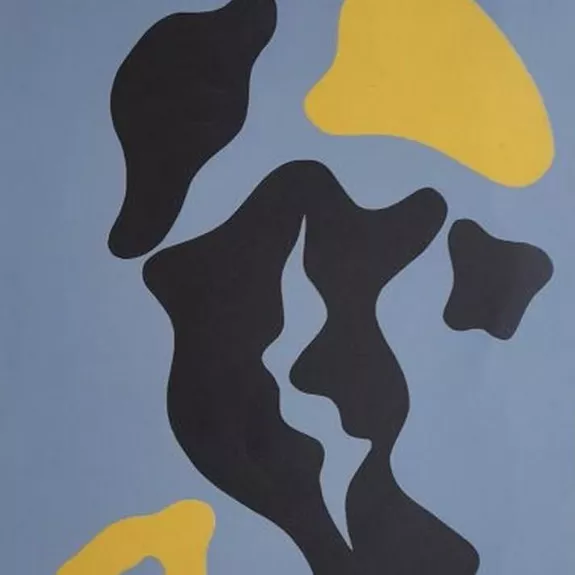
Hans Arp's works are characterized by organic and often abstract compositions, in which forms float freely, inspired by the forces of nature and the mysteries of the unconscious.
These compositions reflect a constant search for balance and spontaneity, while breaking free from academic constraints and traditional compositional rules.
Arp sought to capture the essence of the invisible world, that of dreams and myths, which he translated into fluid and sometimes biomorphic forms, giving the impression of natural, effortless movement.
The artist explored the boundaries of several techniques, using in turn oil paint, etching, drawing, collage, and sculpture.
Each of these methods brought a unique textural richness to his works, enabling striking visual contrasts between the smooth and the rough, the light and the dense.
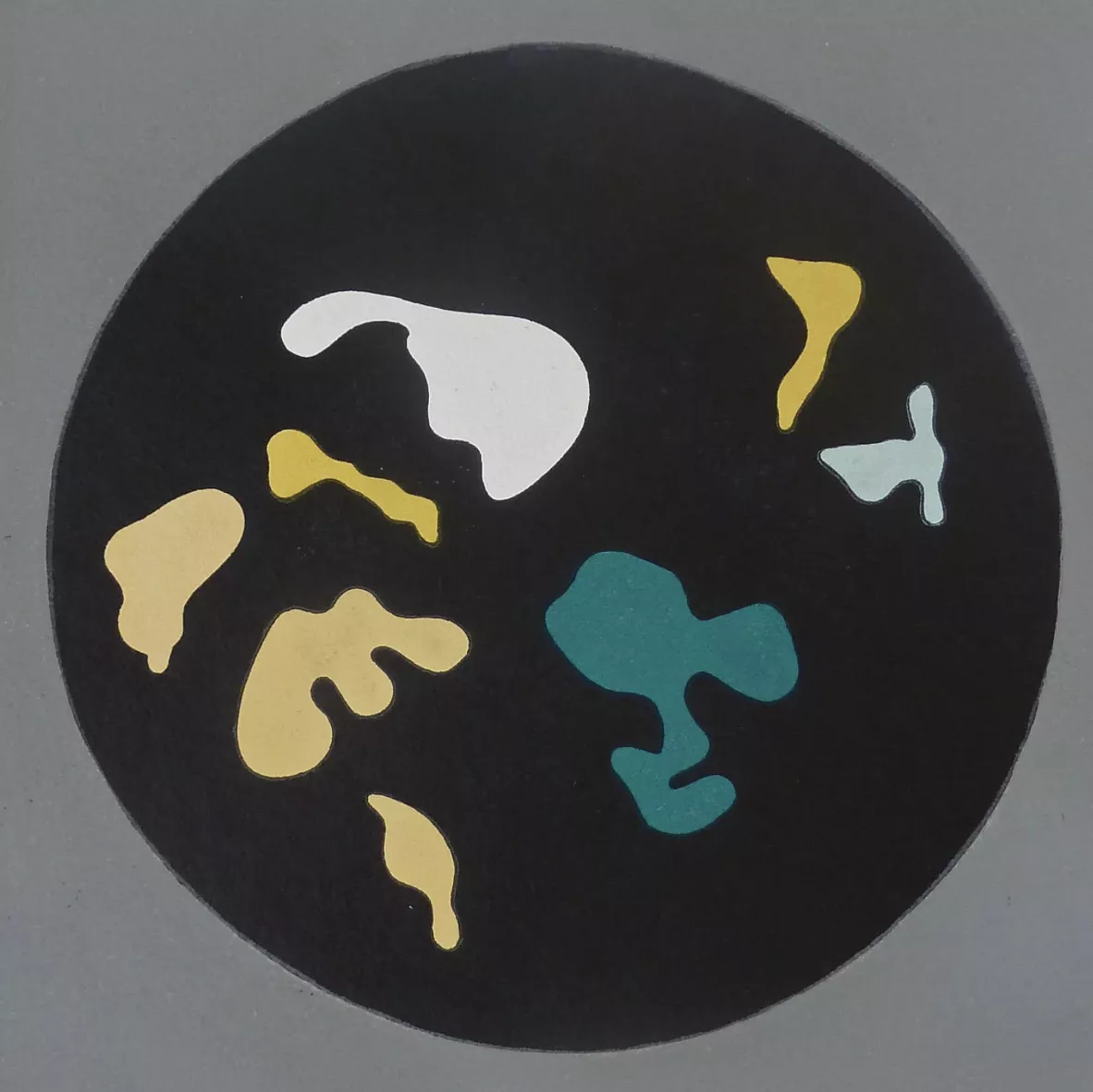
Collage, in particular, became a field of experimentation where Arp created abstract compositions by juxtaposing cut-out shapes, playing with colors, negative spaces, and superimpositions.
This technique brought a sense of spontaneity and improvisation, while remaining guided by a strong sense of structure.
Arp's choice of shapes and colors was never haphazard. They were chosen with a meticulousness that reflected both organic abstraction and symbolic intent. In his works, rounded forms evoked the human body, nature or mythological beings, while remaining open to multiple interpretations.
The color palette, often restricted to soft, earthy or pastel tones, reflected his desire to create harmony between visual elements and nature. This subtle use of color reinforces the fluid, natural aspect of his creations.
Arp also introduced a playful, random aspect to his art. His use of chance - whether in the arrangement of forms or in the execution of the works themselves - reflected a willingness to let go and allow the work to almost create itself. This approach resonated with the Groupe Dada, of which Arp was a founding member. He saw chance as a creative force in its own right, capable of producing unpredictable yet perfectly harmonious forms and compositions.
The sculptural dimension of his work cannot be ignored. His sculptures, often in the round, show the same penchant for abstraction and fluidity of form.
The materials he used, such as bronze, marble, or plaster, were chosen for their ability to express movement and continuity of line.
His sculptures seemed to escape gravity, giving an impression of lightness, as if floating in space. Here again, the organic, natural aspect of the forms was central to his aesthetic, lending his sculptures a timeless, universal character.
The career of Hans Arp
Hans Peter Wilhelm Arp, better known as Hans Arp or Jean Arp depending on the linguistic context, left his mark on 20th-century art history through his innovative approach and his contribution to the Surrealist movement and the Dada group.
Born in Strasbourg in 1886, he grew up in a culturally rich environment, at the crossroads of German and French influence. In fact, his nationality oscillated between these two poles, as he became a French citizen following Alsace's reintegration into France after the First World War.
His early training at the Weimar School of Art and the Académie Julian in Paris didn't suit him, with Arp quickly rejecting the academicism advocated there.
His independent, non-conformist spirit prompted him to look elsewhere, notably Switzerland, where he co-founded the Moderne Bund group, focused on promoting the artistic avant-garde. This group, a forerunner in the development of modernist ideas, offered Arp fertile ground for exploring new creative avenues.
He was part of an artistic movement that wanted to explore all the new possibilities that art had to offer, which included artists such as Arman or Jean-Michel Atlan.
Arp's Zurich period was crucial to his career. It was there, at the heart of the European cultural effervescence, that he joined the ranks of the founders of the Dada movement in 1916, a movement whose rejection of artistic and social conventions perfectly matched his state of mind.
With his fellow artists, Arp participated in the exploration of new forms of expression, in which the absurd and chance played a central role.
In 1922, Arp met Sophie Taeuber, a multi-talented Swiss artist who would become his partner and creative equal. Their marriage symbolized an artistic union, and their collaboration gave birth to some of the most striking works of the period.
Together, they settled in Clamart, where Arp deepened his research into sculpture in the round, a field in which he excelled in translating into matter his quest for pure, organic forms.
Despite the tragic loss of Sophie in 1943, Arp continued to produce and evolve as an artist. His work now took on a more spiritual dimension, and his sculptures became increasingly refined, almost meditative.
Sophie's influence and their collaboration remained palpable throughout his career.
His fame grew over the years, and by the end of his life he was already enjoying international recognition.
The studio he shared with Sophie was transformed into a museum by his second wife, Marguerite Hagenbach, allowing the couple's artistic legacy to be preserved and celebrated.
Today, the Fondation Arp in Clamart remains a must-see for modern art lovers, testifying to Hans Arp's major place in the history of contemporary art.
Focus on Tie and head, Hans Jean Arp
Focus on Jean Arp's sculpture Human Concretion
Human Concretion, Jean Arp's iconic sculpture, is distinguished by its organic, abstract forms and the artist's choice of monochrome. This work reveals the artist's quest for visual purity and harmony with nature.
The soft lines and elegant curves evoke natural elements, while suggesting a human essence.
Arp chooses here not to reproduce a body figuratively, but rather to capture the very idea of the human form, leaving room for each viewer's personal interpretation so that the work adapts to any audience.
The title Human Concretion enriches this experience. The word "concretion" evokes a natural formation, a process of transformation and accumulation of matter. This reflects Arp's intention to propose a sculpture that, although abstract, dialogues with notions of humanity and nature.
The work presents itself as a bridge between the material world and the deeper ideas that animate it.
In this sculpture, Arp uses bronze in a surprising way. The polished surface captures the light, adding an almost ethereal dimension to the whole. This treatment of the material offers an unexpected lightness, echoing the fluidity of the forms.
This contrast between the solidity of the bronze and the delicacy of the lines reflects Arp's talent for transforming classical elements into contemporary expressions of beauty.
Human Concretion also illustrates Arp's philosophy on the importance of chance in the creative process. The artist draws on the principles of Dadaism, where the unexpected is essential. This approach gives sculpture a living character, as if it had emerged naturally, without outside intervention. Arp thus succeeds in capturing the essence of form, playing on simplicity and spontaneity.
The impact of Human Concretion on the viewer is significant. Its apparent simplicity conceals a wealth of interpretations. Some may see it as a representation of the human condition, while others will perceive echoes of nature.
This ability to elicit a variety of reflections is one of Arp's strengths, as he succeeds in establishing a deep connection between his work and the public.
Through Human Concretion, Jean Arp invites us to re-examine our relationship with forms and nature. He creates a dialogue between abstraction and reality, exploring the connections between art and existence.
His sculpture, though minimalist, evokes familiar sensations and immerses us in a reflection on the beauty of forms.
In conclusion, Human Concretion bears witness to Jean Arp's artistic evolution and his exploration of the relationship between art and nature. The work is an invitation to appreciate the beauty of simplicity and to discover the depths that can be concealed in uncluttered forms.
This sculpture remains an essential reference in the history of modern art, highlighting Arp's innovative vision and his lasting impact on the contemporary art world.
.
Hans Arp's imprint on his time
Recognized as one of the most important artists of his time, Hans Arp received numerous distinctions for his work.
Leaving behind a significant artistic legacy, he is considered a great master of surrealist art. His works are highly prized at auction and sought after by many collectors.
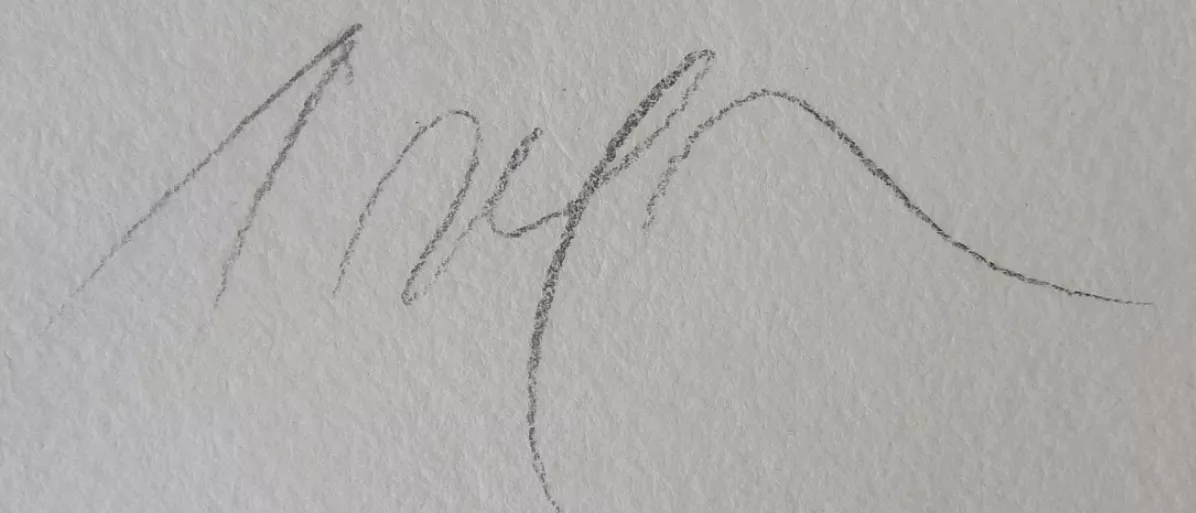
His signature
Not all of Hans Arp's works are signed.
Although there are variations, here is a first example of his signature:
Expertise your property
If you happen to own a work by or after Hans Arp, don't hesitate to request a free valuation by filling in our form on our website.
A member of our team of experts and certified auctioneers will contact you promptly to provide you with an estimate of the value of your work, not forgetting to send you ad hoc information about it.
If you are planning to sell your work, you will also be accompanied by our specialists in order to benefit from alternatives for selling it at the best possible price, taking into account the inclinations of the market and its specificities.
Estimate in less than 24h
Discover in the same theme

Rating and value of works, paintings, drawings by Paul Jouve
Paul Jouve, a twentieth-century animal painter, produced many paintings and drawings listed at auction, which can be very valuable.
Learn more >

Rating and value of works, drawings, paintings by François L...
François Lembo is a ceramist and goldsmith whose mirrors are highly prized at auction. Estimated in 24h.
Learn more >

Rating and value of works, furniture, tables by Willy Rizzo
Willy Rizzo is a 20th-century Italian designer of designer furniture, most famous for his tables, which are highly prized at auction.
Learn more >
Similar works sold at auction


Secure site, anonymity preserved

Auctioneer approved by the State

Free and certified estimates
Frequently asked questions
-
Who was Hans Arp, and what was his impact on modern art?Hans Arp (1886–1968), also known as Jean Arp, is one of the most important artists of the 20th century. A co-founder of the Dada movement in 1916 in Zurich, he distinguished himself through his innovative approach combining organic abstraction, fluid forms, and an exploration of chance as a creative force. His works, characterized by compositions free from academic constraints, have profoundly influenced Surrealist and contemporary art and remain highly sought after by collectors worldwide.
-
What is the price range for Hans Arp's works based on the medium used?Prices for works by Hans Arp vary considerably depending on the technique used. Multiple prints sell for between €10 and €133,900, drawings and watercolors for €220 to €325,670, paintings from €100 to €2,455,900, and three-dimensional sculptures from €100 to €4,322,900. His most prestigious works—notably his surrealist sketches in gouache or pastel, as well as his bronze sculptures—are among the highest-valued on the art market. Since the 2000s, the artist’s market value has continued to rise, confirming his status as a safe bet.
-
How can you authenticate a work by Hans Arp and determine its exact value?To authenticate a work by Hans Arp and obtain an accurate estimate, we recommend that you request a free appraisal from Auctie's by filling out our online form. A certified expert or auctioneer will contact you promptly to examine your artwork and provide you with a detailed estimate of its current market value, with no obligation on your part. This professional appraisal takes into account the technique, condition, provenance, and market specifics.
-
Is this the right time to sell a work by Hans Arp?Yes, this is an excellent time to sell a work by Hans Arp. Since the 2000s, the artist’s market value has been rising steadily, reflecting his growing international recognition and strong demand from collectors. The market for modern and surrealist art remains dynamic, particularly for high-quality pieces by such a major artist. Auctie’s can advise you on the best sales strategy to achieve the optimal price based on your artwork and current trends.
-
How does the sale of a work of art work at Auctie's?At Auctie's, the sales process is simple and transparent. Following a free, no-obligation appraisal, our experts and auctioneers will present you with the best options for selling your artwork at the best price. We guide you every step of the way—taking into account market trends and the unique characteristics of your artwork—all the way through to its successful sale at auction. Our state-certified team ensures that the sale meets the professional standards of the art market.
