



Rating and value of Isabelle Waldberg's sculptures

Key takeaways
- Isabelle Waldberg's bronze sculptures sell for between €160 and €46,000, with their value steadily rising on the contemporary art market.
- In 2021, her sculpture “Le cyprès dans la cour” (1974) exceeded estimates, selling for €46,000 instead of the projected €6,000–8,000.
- A French artist born in Switzerland in 1911, she explored abstraction and surrealism, using bronze, wood, metal, and plaster to create ethereal geometric forms.
If you own a work by or after the artist Isabelle Waldberg, and would like to know its value, our state-approved experts and auctioneers will offer you their appraisal services.
Our specialists will work to carry out a free appraisal of your work, and provide you with an accurate estimate of its value on the current market.
Then, if you wish to sell your work, we will direct you to the best possible arrangement to obtain the optimum price.
Rating and value of the artist Isabelle Waldberg
Isabelle Waldberg is a well-known artist among collectors of abstract sculptures. Now, prices for her creations are rising under the auctioneers' gavel.
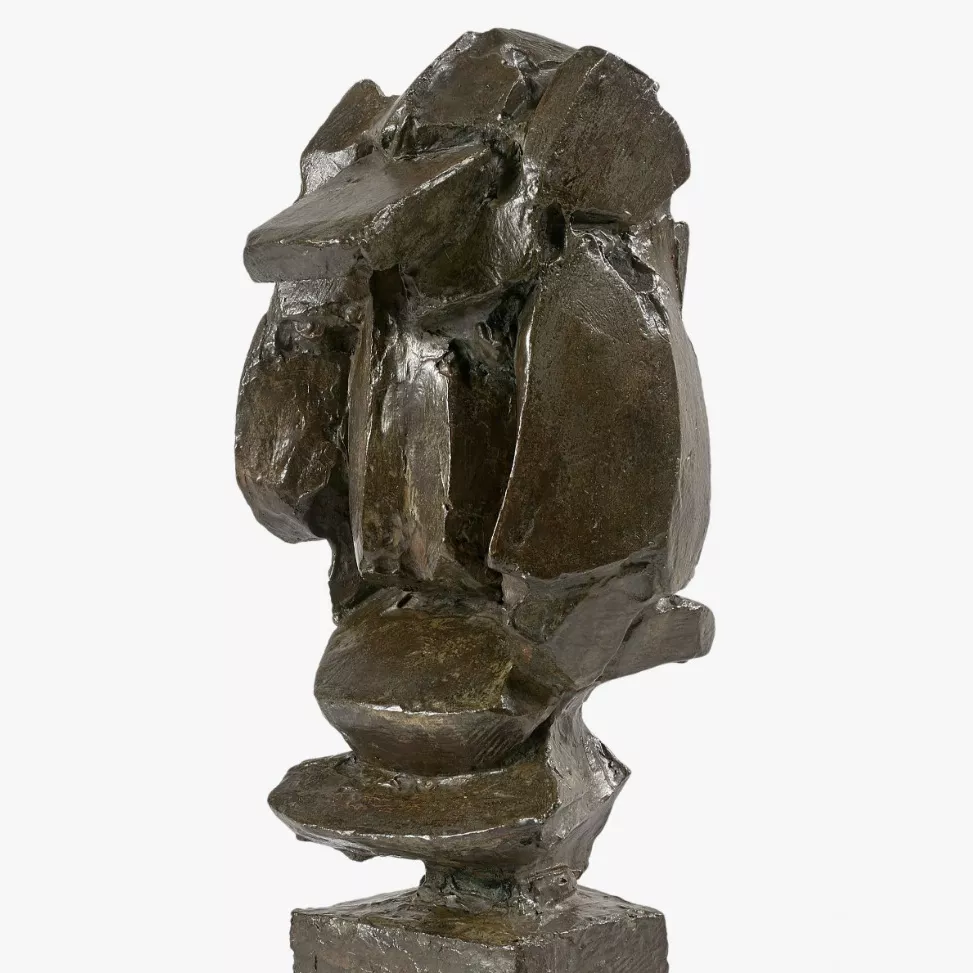
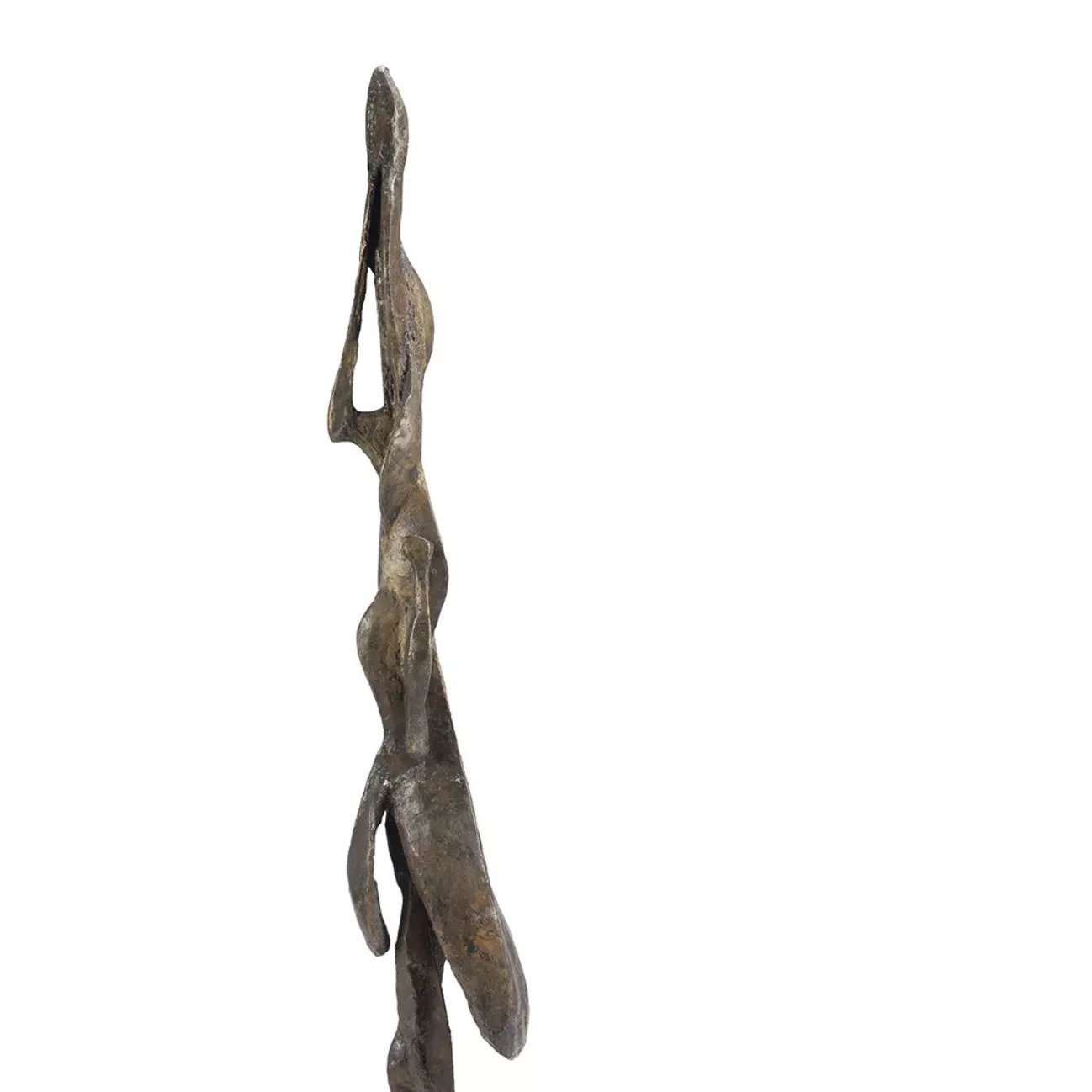
Her bronzes are particularly prized, especially by French buyers, and the price at which they sell on the art market ranges from €90 to €46,000, a significant delta but one that speaks volumes about the value that can be attributed to the artist's works.
In 2021, bronze sculpture, Le cyprès dans la cour, dating from 1974 sold for €46,000, while it was estimated at between €6,000 and €8,000. Its value is on the rise.
Order of value from a simple work to the most prestigious
Technique used | Result |
|---|---|
Drawing - watercolor | From 90 to 600€ |
Golden bronze | From 1 000 to 8 000€ |
Bronze | From 160 to 46 000€ |
Estimate in less than 24h
Style and technique by artist Isabelle Waldberg
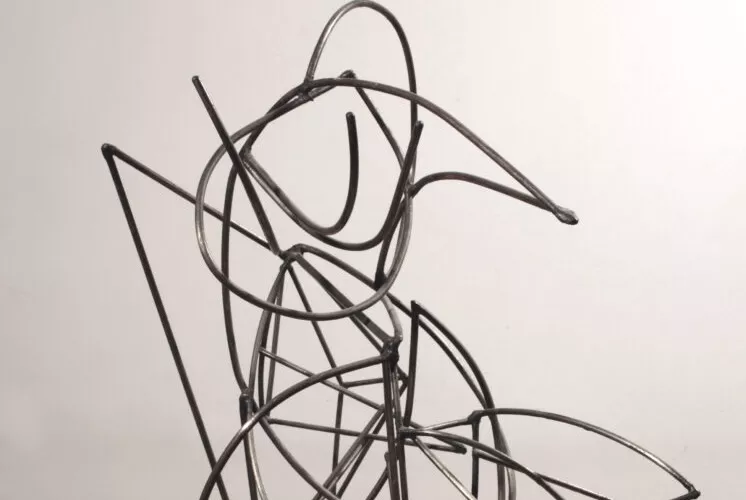
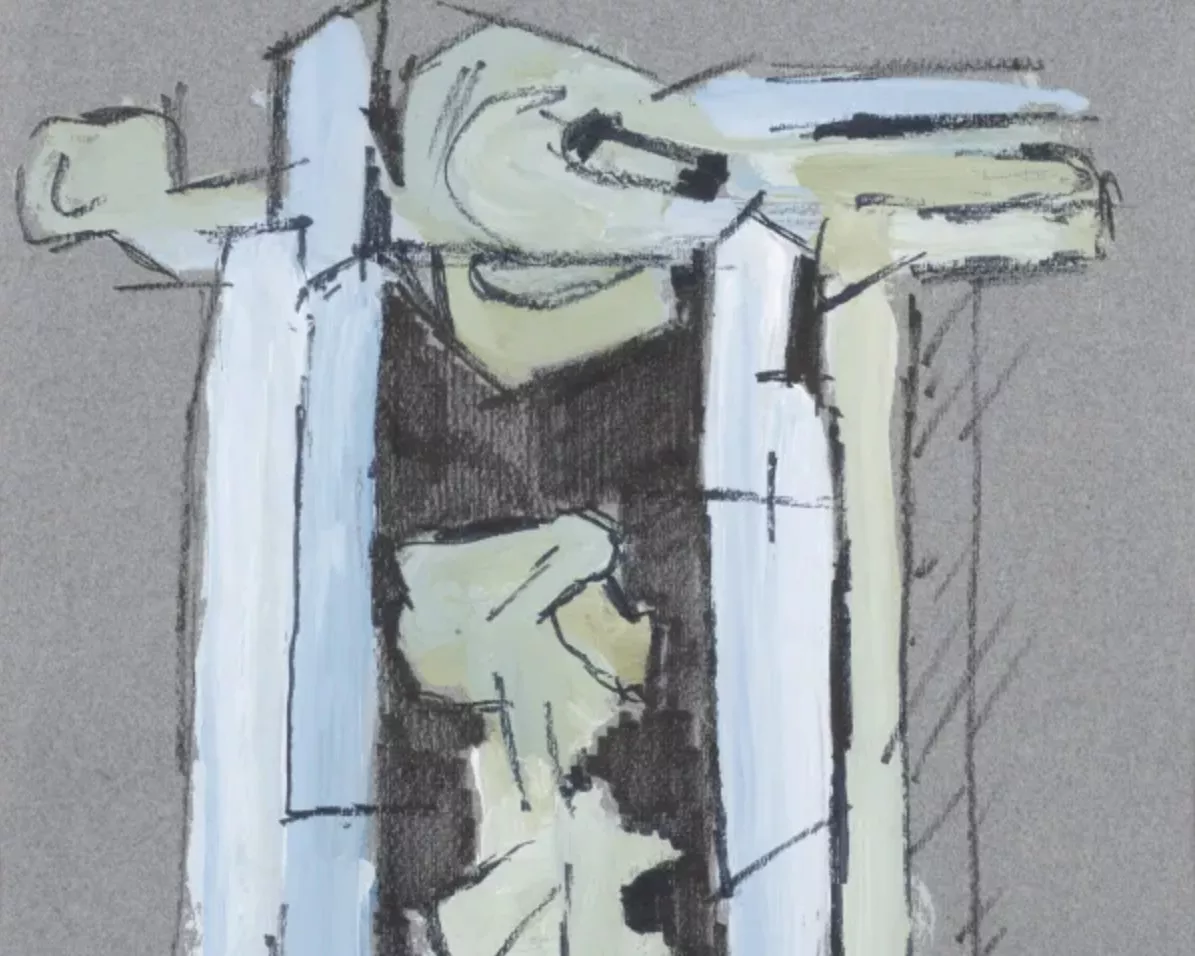
Isabelle Waldberg is a French artist who has notably produced bronze sculptures, taking an abstract approach. She has also produced drawings and watercolors in preparation for her sculptures.
The artist works with a variety of materials. She uses wood (notably beech), metal, plaster, bronze, cork and Plexiglas, employing methods such as " plâtre direct ", which involves applying plaster in successive layers and over a framework, and the shaping of heated wooden rods to create curved forms.
She creates constructions in wood and metal, characterized by airy, geometric structures. Her style lies somewhere between figuration and abstraction, involving both recognizable forms and abstract structures, exploring the boundary between the real and the imaginary.
She participates in the surrealist movement, integrating dreamlike and symbolic elements into her sculptures. Her work underwent a major stylistic evolution, moving from light wooden constructions in the 1940s to more massive sculptures in plaster and bronze in the following decades.
She explored female identity above all, her works tackling themes linked to femininity, eroticism and memory. She draws inspiration from studies in sociology and ethnology, incorporating motifs and concepts from a variety of cultures.
Waldberg collaborates with well-known intellectuals on the international scene such as Georges Bataille, André Breton and Marcel Duchamp, who have a lasting influence on her artistic thinking.
The artist's career and the world of Isabelle Waldberg
Isabelle (née) Marghareta Waldberg is a French sculptor born in Switzerland in 1911.
She became interested in metal forging and welding techniques thanks to her uncle's forge, where she observed and learned, and studied at the Sorbonne, where she defended a thesis on Nietzsche, after studying ethnology and sociology.
In Paris, she meets Alberto Giacometti and Patrick Waldberg, who urges her to change her first name because of that of his first wife, which is why her artist's name will remain Isabelle Waldberg.
They both join the secret society Acéphale. She produced her first works in France, but soon moved to New York, where she became close to the Surrealist group, which influenced her work although her work was not categorized as such.
From 1943, the artist produced her successful metal constructions.
In 1946, she returned to Paris, where she worked in Marcel Duchamp's studio and presented her work in several exhibitions.
In 1975, she was appointed professor at the Ecole des Beaux-Arts in Paris.
Isabelle Waldberg's imprint on her period
Isabelle Waldberg made a significant contribution to art and culture, although she is not widely known to the general public. Her own work reflects the influence of the artistic movements of her time, making her an important figure in twentieth-century art, impacting a whole generation of sculptors.
Her works are extremely highly rated on today's art market, the value they achieve at auction is constantly rising.
She was an active member of the Surrealist movement, being the only woman integrated into the Acéphale secret society founded by Georges Bataille, she was very active in Parisian intellectual circles of the 1930s.
During her exile in New York during the Second World War, she associated herself with exiled Surrealist artists such as Marcel Duchamp, André Breton and Max Ernst, contributing to the movement's rise on the American scene.
It introduces bentwood and metal constructions, exploring abstract and organic forms, which are influenced by native arts and ritual masks. L'aritste explores different materials and forms and uses wood, metal, plaster, bronze, cork and Plexiglas ; and experiments with innovative techniques to create airy, geometric structures.
She moved from lightweight wooden constructions in the 1940s to more massive sculptures in plaster and bronze in the following decades, incorporating elements of abstraction and surrealism.
Isabelle Waldberg also exerted an influence as a teacher, becoming professor of sculpture at the École nationale supérieure des Beaux-Arts de Paris in 1975. She was the first woman to hold this position, influencing a whole generation of sculptors.
The artist is also the originator of writings, participating in surrealist publications ; notably the review Da Costa Encyclopédique, and illustrating books, thus mixing art and literature.
She presented her work in major exhibitions such as Art of This Century in New York in 1944, and the retrospective at Bern's Kunstmuseum in 1981. Her sculptures are preserved in prestigious institutions, testifying to her importance in the history of modern art.
There is a contemporary rediscovery of the artist's work, which is being reappraised and celebrated in recent exhibitions, highlighting her pioneering role in surrealist and abstract sculpture.
Recognizing the artist's signature
Isabelle Waldberg does not necessarily sign her works. Copies may exist, which is why expertise remains important.

Knowing the value of a work
If you happen to own a work by or after Isabelle Waldberg, don't hesitate to request a free valuation using our form on our website.
A member of our team of experts and certified auctioneers will contact you promptly to provide you with an estimate of the market value of your work, as well as ad hoc information about it.
If you are considering selling your work, you will also be accompanied by our specialists in order to benefit from alternatives for selling it at the best possible price, taking into account the inclinations of the market.
.Estimate in less than 24h
Discover in the same theme

Rating and value of works, drawings, paintings by Pinchus Kr...
Pinchus Kremegne is a Russian artist of the Paris School who produced drawings and oils on canvas that are valued at auction.
Learn more >

Rating and value of furniture, table, bench Claude Lalanne
Claude Lalanne is a 20th-century artist who has created and produced a great deal of furniture that is highly valued at auction.
Learn more >

Rating and value of works, sculptures, bronzes by Robert Cou...
Robert Couturier is a 20th-century artist who produced sculptures and furniture. His works are relatively popular at auction.
Learn more >
Similar works sold at auction

Estimated Between €1,500 and €3,000
Renato CARVILLANI (1896-1986), seated woman, gilded bronze print

Estimated Between €1,500 and €3,000
César BALDACCINI dit CESAR (1921-1998), Poule Cartier, bronze print

Estimated Between €10,000 and €20,000
Baltasar LOBO (1910-1993), female nude in bronze

Estimated 800 - 1.500
Henry Étienne DUMAIGE (1830-1888), bronze print

Estimated 500 - 1.000
After Stefano MADERNO (1575-1636), Hercules and Antaeus, bronze with brown patina

Estimated 1.500 - 3.000
Salvador DALI (1904-1989) Gilded bronze menorah on a travertine base

Secure site, anonymity preserved

Auctioneer approved by the State

Free and certified estimates
Frequently asked questions
-
Who is Isabelle Waldberg, and what is her artistic background?Isabelle Waldberg (1911–1992) was a French sculptor born in Switzerland and a leading figure in 20th-century abstract and surrealist sculpture. She collaborated with renowned intellectuals such as Marcel Duchamp, André Breton, and Georges Bataille, and was the only woman to be admitted to the secret society Acéphale. Her metal and wood constructions, which explored abstract and organic forms, influenced an entire generation of sculptors, particularly after her appointment as a professor at the École des Beaux-Arts in Paris in 1975.
-
What is the price range for Isabelle Waldberg's sculptures?The prices of Isabelle Waldberg’s works vary considerably depending on the technique and the nature of the piece: drawings and watercolors range from €90 to €600, gilded bronzes from €1,000 to €8,000, and bronzes from €160 to €46,000. In 2021, her sculpture *Le cyprès dans la cour* (1974) exceeded estimates by fetching €46,000, confirming an upward trend in her market value.
-
How can you authenticate a work by Isabelle Waldberg?Since Isabelle Waldberg did not consistently sign her works and copies may exist, authentication by an expert is essential. Auctie's offers a free, no-obligation appraisal: simply fill out a form on the website, and a certified auctioneer or appraiser will contact you within 48 hours to examine the work and provide you with a reliable estimate of its market value.
-
Is this a good time to sell a sculpture by Isabelle Waldberg?Yes, now is an excellent time to sell a work by Isabelle Waldberg. The market is experiencing a contemporary rediscovery of her work, with a growing reappraisal and celebration of her pioneering role in surrealist and abstract sculpture. The prices her works fetch at auction continue to rise, particularly for her bronzes, which are highly sought after by French collectors.
-
How do I sell a work by Isabelle Waldberg through Auctie's?Auctie's supports you every step of the way: you start by requesting a free estimate via our form, and then our experts and licensed auctioneers will offer you the best options for selling your artwork at the highest possible price, based on market trends. The estimate is non-binding, and we’ll guide you all the way through to the auction.
