



Estimating the value and price of a bronze

Key takeaways
- Bronzes from the 19th and 20th centuries, particularly those by sculptors such as Barye and Chiparus, can fetch exceptional prices at auction depending on their authenticity and rarity.
- Appraising bronzes is a complex process: carefully verifying the engraved signature, the meticulous finish, and the presence of a foundry mark guarantee the authenticity of an original piece.
- Original lost-wax bronze sculptures, numbered in limited editions (usually 7 or 8 copies), are worth considerably more than the overmolds or industrial reproductions that appeared in the 19th century.
If you own one or more bronzes, from any period, and would like to know their value, our state-approved experts and auctioneers will offer you their appraisal services.
Our specialists will carry out a free appraisal of your bronze, and provide you with an accurate estimate of its value on the current market.
Then, should you wish to sell your work, we'll direct you to the best possible arrangement to obtain the optimum price.
Rating and value of bronzes
Bronzes are collectibles currently in demand for many different types and craftsmanship. If you own one or more, they may be worth more than you think. On the art market, prices for these objects can be very high under the auctioneer's hammer.
Their appraisal is also sometimes very complicated and subject to many rules. The value of your bronze can vary according to many factors, and it needs, for all the reasons listed below, to be entrusted to a specialist if it has a minimum value or if it falls within a precise field of specialization.
Buying bronzes at auction, whether antique or contemporary, has many advantages for collectors and art lovers.
On the one hand, auctions offer the opportunity to acquire unique works, often steeped in history, which may come from different eras and artistic movements.
These works, sometimes otherwise inaccessible, are brought to light by experts who guarantee their authenticity and value. What's more, auctions enable buyers to discover rare pieces and build up a diversified collection at prices potentially lower than those on the traditional market.
Many bronzes are presented for sale every week at Drouot, throughout France, Europe and the world, enabling buyers to go to exhibitions to look at the potential of the works, and choose which one will be their next purchase.
Buyers may bid for bronzes for a variety of reasons: love at first sight, a collection, a decorative need, an investment ... All these factors ensure that your bronze will sell quickly once its appraisal has been carried out.
.Estimate in less than 24h
Understanding the history and market for bronzes
On the art market, bronzes occupy a special place, particularly those dating from the late 19th and early 20th centuries, when the industrial era made production more widespread and accessible.
These bronzes, often the product of traditional craftsmanship, can be worth far more than we imagine, especially when they have passed under an auctioneer's hammer.
Their authenticity and rarity make them particularly prized by collectors. But the appraisal of these pieces is often complex, requiring numerous verifications and in-depth knowledge of casting methods and workshop marks.
Although Renaissance bronzes can also appear on the market, those from the 17th century are rarer, while those from the 19th century are relatively common. They often depict mythological or historical subjects, reflecting an era fascinated by classical art.
Whether old or more contemporary pieces, the auction market enables art lovers to acquire unique works, often inaccessible otherwise.
Experts play a crucial role here, guaranteeing not only the authenticity of bronzes but also their value, offering buyers the chance to build up a prestigious collection.
Acquiring bronzes via the auction market also offers the advantage of discovering rare pieces, sometimes at competitive prices compared to the traditional market.
Whether it's a coup de coeur or an investment, these works continue to appeal to a wide audience, while maintaining an important place in the art market.
The most sought-after bronze sculptors
On the art market, bronzes occupy a central place, especially those produced during the late 19th and early 20th centuries.
The bronzes of the 19th century
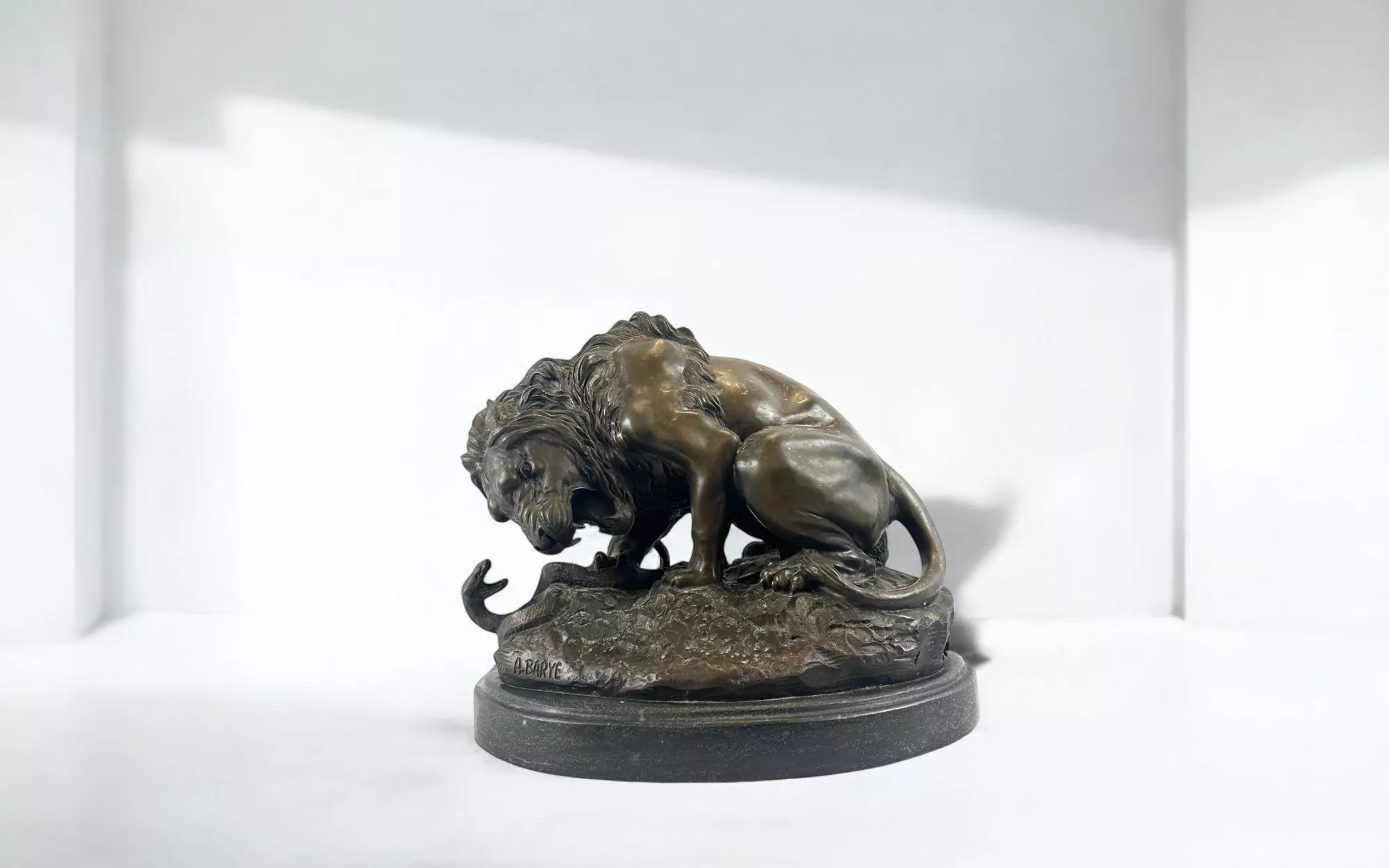
The 19th century is a period dominated by artists whose works are still very common today, such as Antoine-Louis Barye, known for his animal sculptures full of realism, or Pierre-Jules Mène, another great name in 19th-century animal sculpture.
Albert-Ernest Carrier-Belleuse, with his works of mythological and decorative inspiration, or artists like Jean-Baptiste Auguste Clésinger have remained during the 19th century in the neoclassical artistic vein.
Following academic canons, and learning from the greatest, their period being characterized by a return to Antiquity, all these artists drew inspiration from Renaissance sculptors who were already following the canons of antique sculpture in their own time.
The 19th century was particularly marked by animal sculpture, the production of which was very significant. Beyond seducing with their decorative interest, many works were commissioned for a greater purpose.
With the paintings of the same period, art became, more than ever, a means of propaganda. Napoleon had his imperial eagle, which he had sculpted on two numerous occasions, while others insisted on the equestrian portrait.
As this century went through many wars and saw some very important military figures (Marshal Ney, Marshal Liautey, General Bertrand, Talleyrand...), the latter commissioned equestrian portraits to establish their legitimacy.
The various regimes, to pay tribute to their warlords, also commissioned equestrian portraits, often monuments placed in gardens or squares, as well as funerary monuments.
It was also the occasion for other experiments, such as the draping work of artists like Agathon Léonard, which would endure into the 20th century.
Twentieth-century bronzes
The early twentieth century saw the blossoming of the Art Deco movement, notably by Demetre Chiparus, famous for his elegant sculptures, also among the artists most encountered at auction.
However, it should be noted that, in Chiparus's case, the market is often flooded with copies, making the authenticity of his works more complex to establish.
At the turn of the century, the Art Deco movement was a goldmine for sculptors, who saw their practice evolve towards new subjects. Women, and dancers in particular, were back at the center of iconographic programs.
Beyond the works of Chiparus, this was largely the case with Edgar Degas, who didn't hesitate to mix pieces of fabric with bronze at the beginning of the 20th century.
Lesser-known Art Deco figures such as Georges Le Bourgeois explored new aesthetics, often influenced by the social and cultural upheavals of the time.
Rarer bronzes by modernist or avant-garde artists bear witness to the evolution of this practice over the centuries.
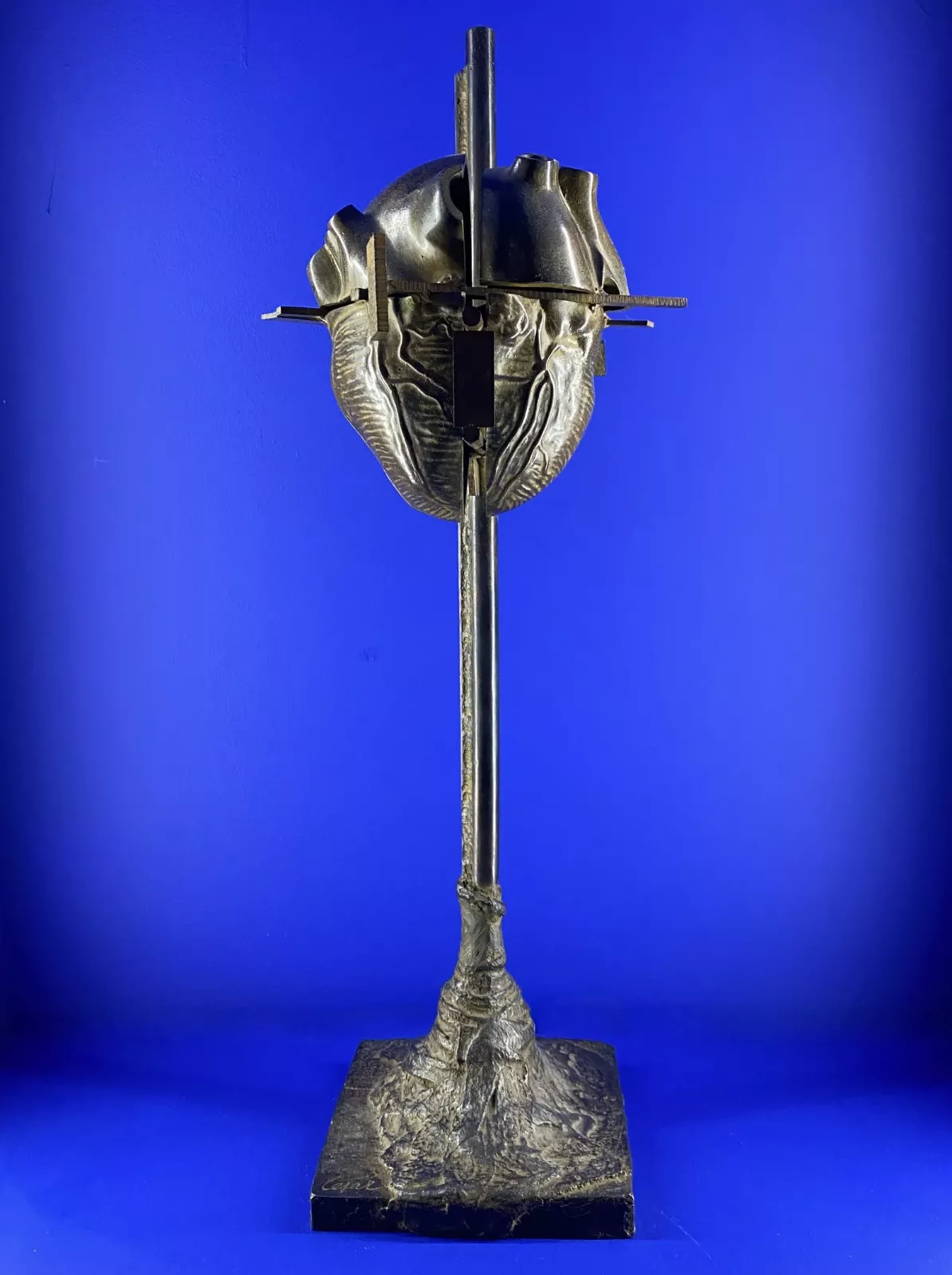
Sculptors such as Diego Giacometti, with his slender, gaunt figures, or François-Xavier Lalanne, master of surrealist animal sculpture, are examples of artists whose works are becoming rarer and more valuable.
Camille Claudel, whose bronzes convey a unique sensibility, or Rembrandt Bugatti, famous for his highly expressive animal sculptures, are also among the most sought-after artists.
Also on the market are pieces by the great names of surrealism, such as Salvador Dalí, or works by Alfred Boucher and César, emblematic figures of the 20th century.
While the works of these artists are still relatively present on the market, those by Rodin, Camille Claudel, or Giacometti, for example, are selling at exceptional prices, testifying to the rarity and value attributed to them by the art market.
Whether old or more contemporary bronzes, these sculptures continue to fascinate collectors, enthusiasts and investors, while reflecting the evolution of artistic currents from the 19th to the 20th century.
How to recognize an authentic bronze sculpture from an overmolding?
Recognizing an authentic bronze sculpture from an overmolding may seem complicated, but a few clues can help. Overmoulds first appeared at the end of the 19th century, a period marked by industrialization.
At the time, some foundries kept the moulds of works, allowing sculptures to be produced after the artist's death, or even without his consent.
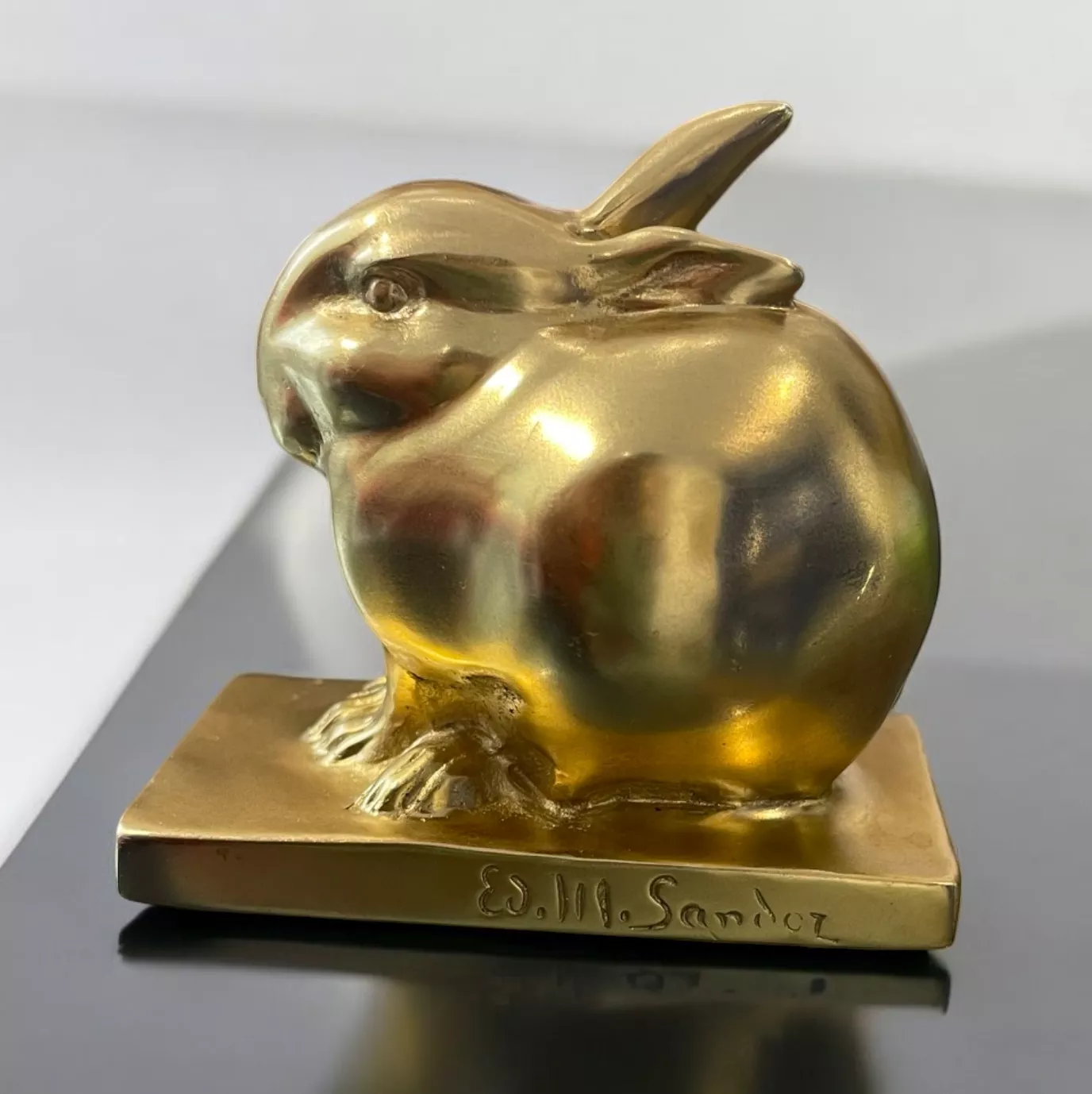
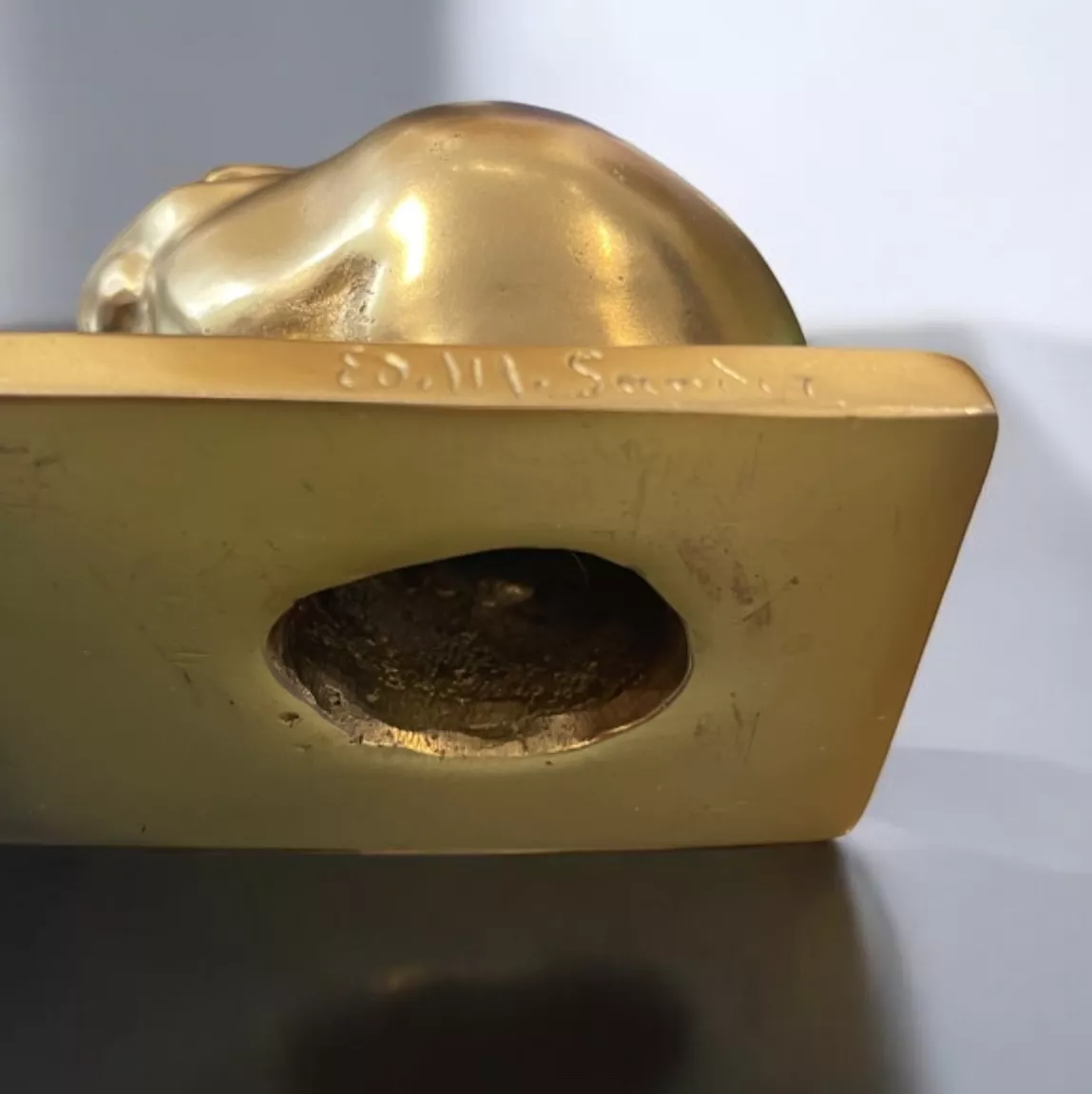
One of the first signs to look for is the signature. On an authentic bronze, the artist's signature is precisely engraved into the material. On the other hand, on an overmolding, it is often more blurred, sketched rather than engraved.
The appearance of the underside of the sculpture is also revealing: overmoldings often have sloppy finishes, whereas original bronzes are taken care of down to the smallest detail.
Genuine bronzes are often numbered, in limited editions, usually 7 or 8 copies. You can also look for the presence of a founder's stamp, a guarantee of quality and authenticity.
Finally, the mention "cire perdue" is a good indicator: this artisanal process, used to create original bronzes, guarantees a unique piece that is far more valuable than industrial reproductions.
Lost wax is a casting technique that involves modeling a metal sculpture from a wax model, which is eliminated by heating during the process, consisting of wrapping the model in a refractory material so that the bronze takes the place of the wax.
The wax sculpture is placed on " jets ", cone-shaped elements that serve as funnels. Filaments called " vents " serve as conduits for materials and air, and are also made of wax.
The wax leaves a hollow when it is evacuated, which is then filled thanks to the jets. As both elements are also made of wax, this ensures optimum distribution of the metal, as well as total evacuation of the air.
The mold is then destroyed chemically or mechanically to recover the final bronze specimen.
Lost-wax casting is a precision process used to produce one-off pieces, and differs from wax modelling, which is used to produce mass-produced pieces.
It is therefore essential to ensure that all these elements are present when estimating your bronze. However, only a specialist can tell you whether your bronze is an original casting, an overmolding or a complete copy.
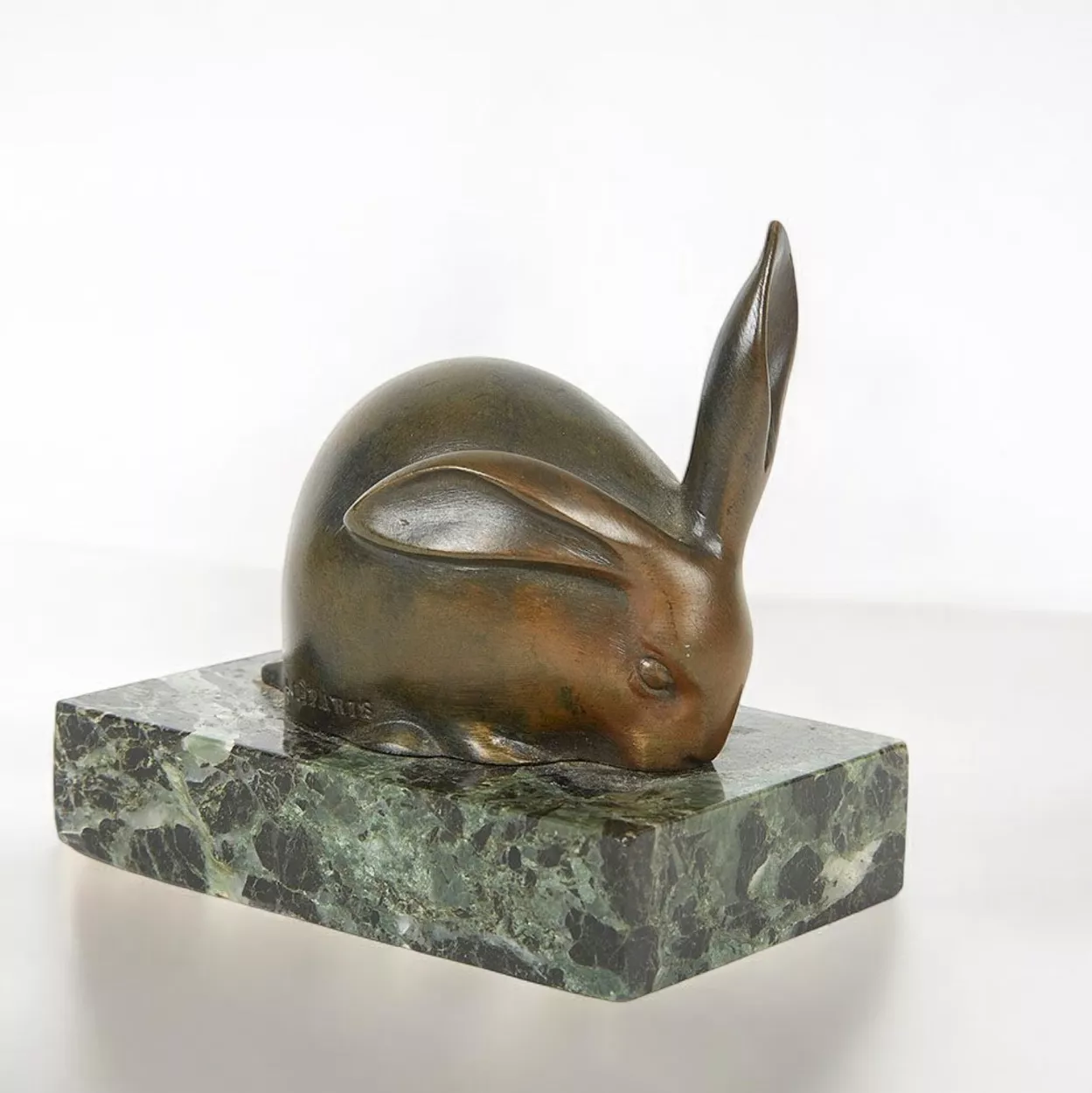
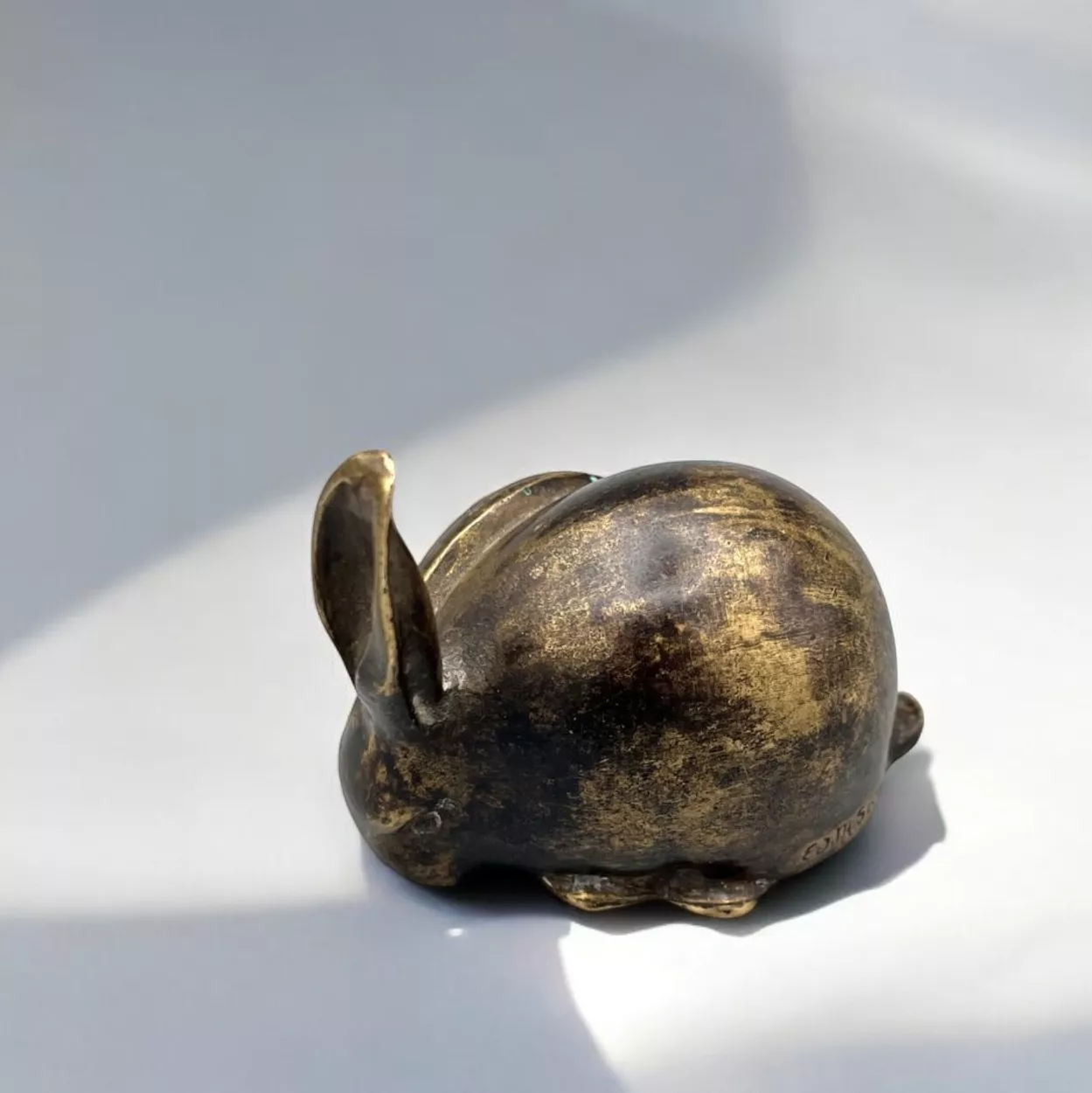
Here are two examples (top overmolding, bottom original casting) :
Know the value of your bronze
If you happen to own one or more bronzes, don't hesitate to request a free appraisal using our form on our website.
A member of our team of experts and certified auctioneers will contact you promptly to provide you with an estimate of the market value of your work, as well as any relevant information about it.
If you're thinking of selling your work, our specialists will also help you find alternatives to sell it at the best possible price, taking into account market trends.
Estimate in less than 24h
Discover in the same theme

Dihl et Guérhard, value of porcelain from the rue du Temple...
The Dilh et Guérhard manufacture, less well known than Sèvres, is nevertheless very much in demand on the auction market. Estimate in less than 24h.
Learn more >

Estimating the quality and true value of diamonds
Diamonds are precious objects whose value is increasing, but whose appraisal is very delicate and must be entrusted to an expert.
Learn more >

Symbolism rating: free appraisal │ Auctie's
Symbolism is a 19th-century artistic movement whose works command high prices and are highly valued at auction.
Learn more >
Bronzes at auction

Estimated Between €2,000 and €4,000
Edouard Marcel SANDOZ (1881-1971) curly stingray, bronze print

Estimated Between €5,000 and €8,000
Agathon LEONARD (1841-1923), Dancer with scarf, bronze lamp, ed. Susse frères

Estimated Between €1,500 and €3,000
César BALDACCINI dit CESAR (1921-1998), Poule Cartier, bronze print

Estimated 1.500 - 3.000
Antoine Louis BARYE (1796-1875) Eagle and heron, bronze print with shaded brown-green patina

Secure site, anonymity preserved

Auctioneer approved by the State

Free and certified estimates
Frequently asked questions
-
How can you tell an authentic bronze from a cast replica or a copy?An authentic bronze features a precisely engraved signature, a foundry mark, and a meticulous finish that extends all the way beneath the sculpture. Replicas generally have a blurry signature and a sloppy finish. The phrase “lost-wax casting” is a good indicator of authenticity, as is limited-edition numbering (usually 7 or 8 copies). Only a specialist can determine with certainty whether your bronze is an original cast, a re-cast, or a complete copy.
-
What is the current market for bronzes, and is now a good time to sell?Bronze sculptures, particularly those from the 19th and early 20th centuries, hold a significant and stable position in the art market. They attract collectors for various reasons: a spontaneous attraction, building a collection, home decor, or investment. The auction market allows for a quick sale once an appraisal has been completed, offering the opportunity to discover rare pieces at prices that may be more competitive than those on the traditional market.
-
Which artists' bronze sculptures are the most sought-after and highly valued?In the 19th century, Antoine-Louis Barye, Pierre-Jules Mène, and Albert-Ernest Carrier-Belleuse dominated the market. In the 20th century, Demetre Chiparus (Art Deco) and modernists such as Diego Giacometti and Rembrandt Bugatti are highly sought after. Bronzes by Rodin, Camille Claudel, and Giacometti fetch exceptional prices, reflecting their rarity and prestige in the market.
-
How can I get a free appraisal of a bronze sculpture at Auctie's?Simply fill out the appraisal form available on our website. A member of our team of experts and state-certified auctioneers will contact you promptly to provide you with a free, no-obligation estimate of your artwork’s market value. You’ll receive a response within 48 hours, along with relevant information about your bronze sculpture.
-
What factors influence the value of a bronze sculpture?The period of creation (19th or 20th century), the artist and their reputation, the casting technique (lost-wax for originals), authenticity, rarity, provenance, and condition all play a crucial role. The signature, the foundry mark, the serial number, and the finish also affect the value. Professional expertise is essential to accurately assess these factors.
