



Rating and value of works, sculptures by Camille Claudel

Key takeaways
- Camille Claudel’s bronze sculptures sell for between €1,350 and €5,271,750, with prices rising exponentially since her posthumous recognition.
- In 2018, the bronze *L'Abandon* (large model, 1905) fetched €1,081,380, reflecting the rising value of her expressionist and realist sculptures.
- Her marble sculptures range from €56,400 to €2,100,000, while her drawings and watercolors vary from €90,000 to €240,000 depending on their significance.
If you own a work by or after the artist Camille Claudel, and would like to know its value, our state-approved experts and auctioneers will offer you their appraisal services.
Our specialists will carry out a free appraisal of your work, and provide you with a precise estimate of its value on the current market. Thereafter, if you wish to sell your work, we will direct you to the best possible arrangement to obtain the optimum price.
Rating and value of the artist Camille Claudel
Camille Claudel is an important artist of sculpture in the 20th century. She was part of Symbolism and worked with Rodin. Now, prices for her works are soaring exponentially at auctioneers' gavels.
Her bronzes are particularly prized, and the price at which they sell on the art market ranges from €1,350 to €5,271,750, a considerable delta but one that speaks volumes about the value that can be attributed to Claudel's works. In 2018, the bronze l'Abandon, large model, dating from 1905 was sold to the tune of €1,081,380.
Order of value from a simple work to the most prestigious
Technique used | Result |
|---|---|
Drawing - watercolor | From €90,000 to €240,000 |
Marble | From €56 400 to 2,100,000€ |
Bronze volume | From 1,350 to 5,270,000€ |
Estimate in less than 24h
Style and technique of artist Camille Claudel
Camille Claudel producesexpressionist and realist sculptures, she works mainly with bronze and is the collaborator of Auguste Rodin. She will also produce marble sculptures, but few.
Her work is highly regarded on the art market. Various art institutions are keen to highlight her work, which for a long time was wrongly overshadowed by that of Auguste Rodin.
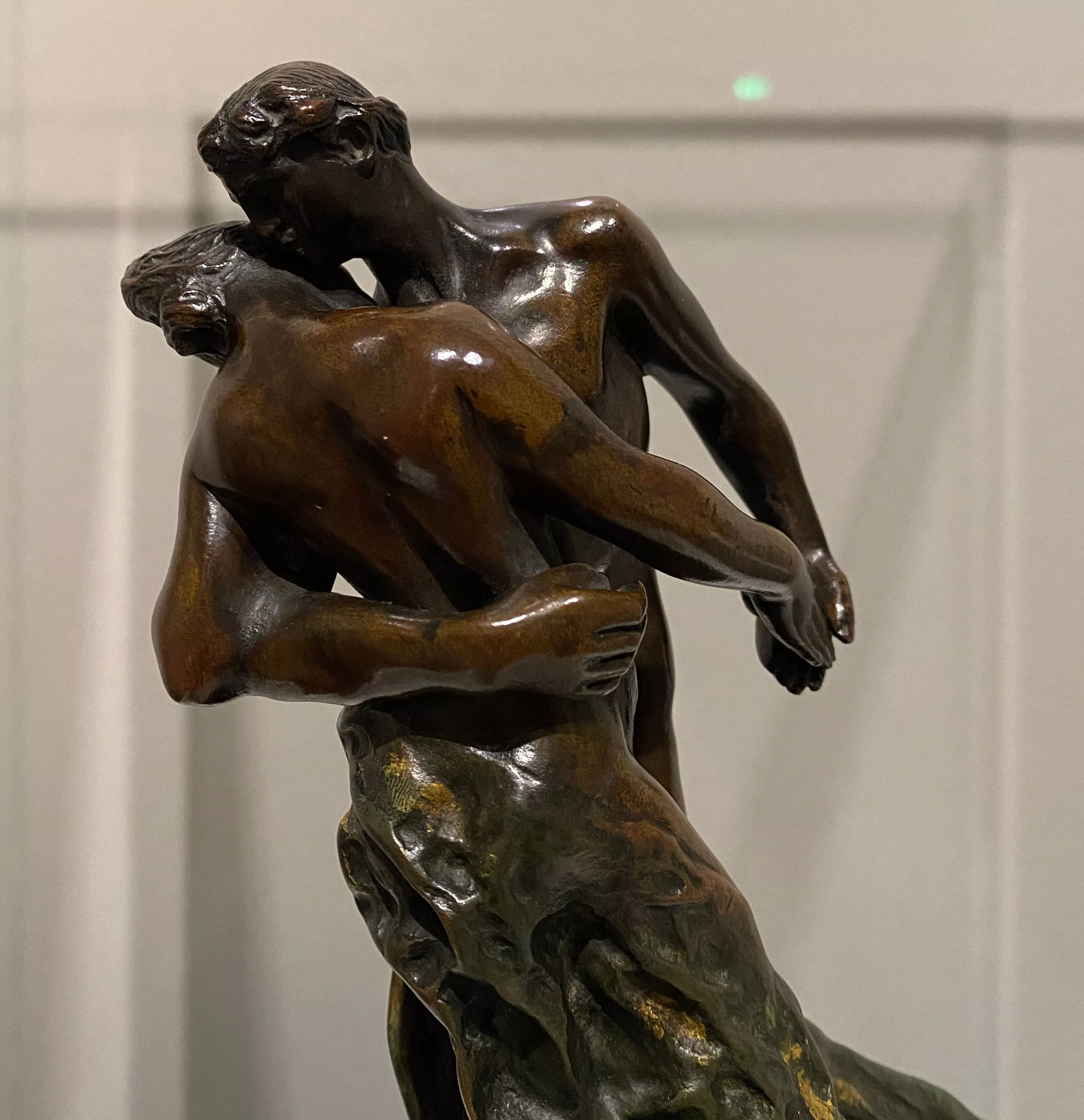
Camille Claudel ou l'ombre de Rodin
Camille Claudel (1864-1943) was a renowned French artist, born on December 8, 1864 in Fère-en-Tardenois, France. She is widely recognized for her exceptional talent and contribution to sculptural art in the late 19th century.
Camille Claudel studied at the Académie Colarossi in Paris, where she developed her artistic skills. She was a student and lover of the famous sculptor Auguste Rodin, and their relationship greatly influenced her work.
She contributed to many of Rodin's works, although she often remained in his shadow and even today, her works are often attributed to Auguste Rodin.
Her sculptures were characterized by their realism, expressiveness and emotional exploration. She often depicted the human body with a unique sensitivity and was hailed for her ability to capture the intensity of emotion in stone and bronze.
However, despite her talent, Camille Claudel struggled to gain the recognition she was due during her lifetime.
Her career was hampered by gender prejudice and her tumultuous relationship with Rodin. She also faced personal difficulties and mental health problems, which eventually led to her commitment to a psychiatric institution in 1913.
Camille Claudel spent the last decades of her life in an institution, far from the artistic world. She died on October 19, 1943 in a psychiatric hospital in Montdevergues, France.
Despite the challenges she faced during her lifetime, her work is now widely celebrated and considered a significant contribution to the history of sculpture. Over the years, she has received the recognition she deserved as a talented and visionary artist.
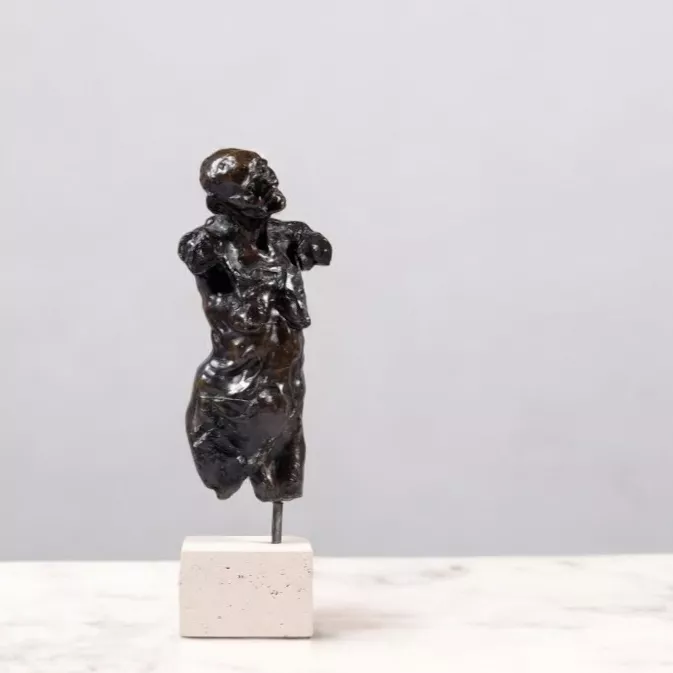
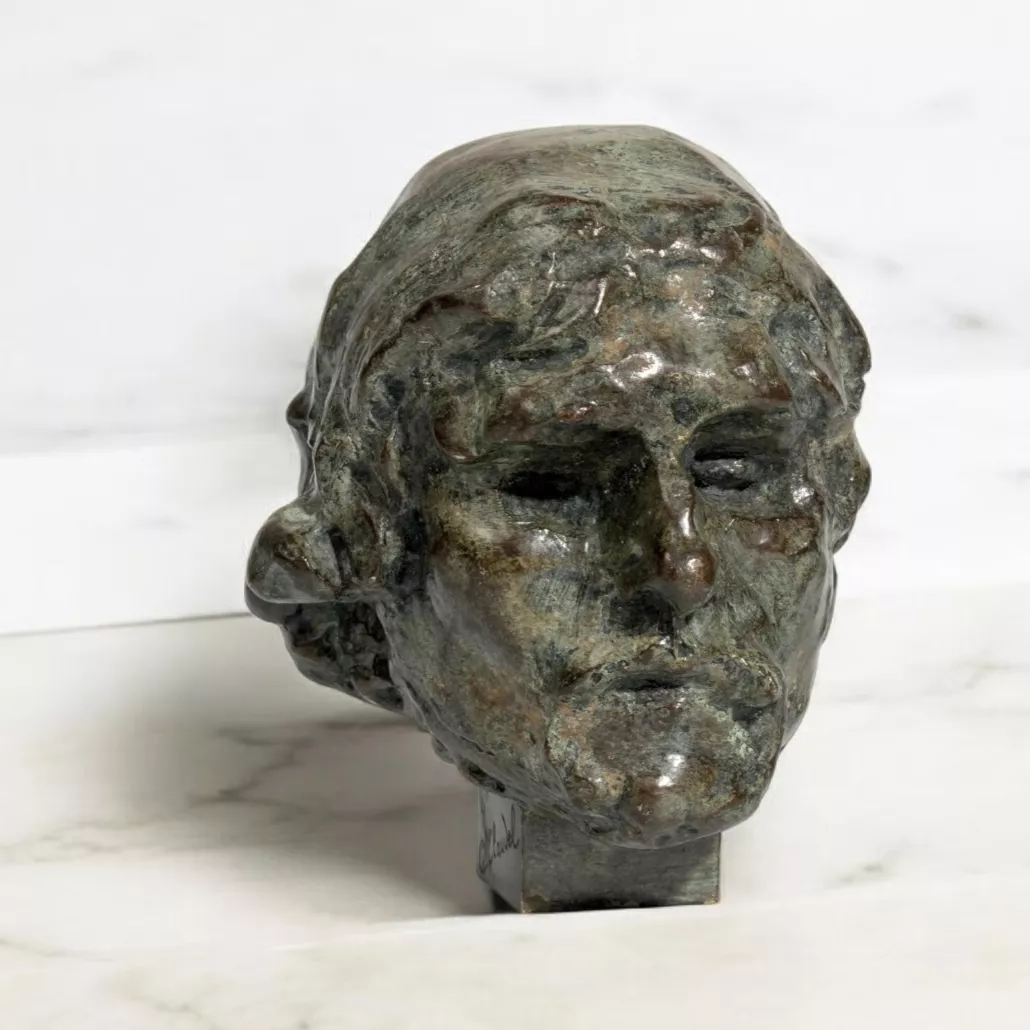
Claudel, the example of an invisibilized artist
The 20th century, marked by social and cultural upheaval, nevertheless did not spare women artists, who had to overcome immense obstacles to gain the recognition they deserved.
The story of Camille Claudel, a talented French artist born in 1864, is a poignant example. Trained at the Académie Colarossi in Paris, Claudel quickly made a name for herself with the finesse and expressiveness of her work, but she constantly came up against the prejudices of a society that confined women to often secondary roles.
Student and lover of Auguste Rodin, she not only contributed to many of the master's works, but also developed an aesthetic of her own, marked by a profound emotional exploration and a technical mastery that rivaled that of the greatest sculptors of her time.
However, despite her undeniable talent, Camille Claudel spent much of her career in Rodin's shadow, her genius often overshadowed by her mentor's celebrity, as was the case for artist couples such as Picasso and Françoise Gilot or Christo and Jeanne Claude.
His sculptures, though praised by some critics, have often been attributed to Rodin, reinforcing the idea that the female artist could only be a mere assistant, incapable of producing a work of importance on her own.
This lack of recognition was not an isolated case; it reflected a broader trend in which women, although active and innovative in the artistic field, were systematically marginalized and undervalued.
Claudel's tumultuous relationship with Rodin, mixed with the social pressures of the time, exacerbated her difficulties. Women artists were not only judged on their work, but also on their personal behavior, and any deviation from social norms could disqualify them in the eyes of critics and the public.
Claudel, who was also battling mental disorders, was institutionalized in 1913, marking the start of three decades of enforced isolation, far from the art world that had once greeted her with distrust and reluctance.
This internment, decided largely by a family anxious to preserve its reputation, symbolizes the way in which women artists were often silenced, their creativity stifled by oppressive social structures.
The case of Camille Claudel is representative of a wider reality for women artists in the twentieth century. Despite their significant contributions to various artistic movements, they had to fight against invisible but powerful barriers, which prevented them from fully asserting themselves in a male-dominated milieu.
Galleries, museums and critics systematically favored male artists, relegating female works to subordinate positions or ignoring them altogether.
It wasn't until well after her death in 1943 that Camille Claudel began to receive the recognition she deserved, and even then,the reappraisal of her work was slow and gradual.
Today, she is celebrated as a pioneer, an important figure of sculpture, but thisposthumous recognition cannot erase the years of injustice and invisibility she endured.
Claudel, like so many other women artists, had to pay a high price for her passion and independence, and her story remains a poignant example of the work women have had to do to carve out a place for themselves in art history.
Understanding the Claudel - Rodin relationship
Camille Claudel's imprint on her period
Camille Claudel marked her time with the contribution she made to modern sculpture, although her work was not recognized until after her death.
She also influenced the work of Rodin, who created numerous busts of her in bronze and marble.
Today, Camille Claudel's value on the art market is steadily rising, reflecting a belated but growing recognition of her sculptural genius.
Her works, once undervalued due to her association with Auguste Rodin, are now fetching record prices at auction.
For example, pieces such as La Valse or L'Âge mûr regularly sell for several million euros, sums that testify to the growing interest of collectors and institutions in his work.
The rarity of his works on the market also contributes to this increase in value. Original bronzes, as well as the few marbles signed by his hand, are particularly sought-after, attracting bidders from all over the world.
The rediscovery of his work over the decades, thanks in particular to retrospective exhibitions and academic studies, has solidified his position among the great sculptors of his time.
In short, Camille Claudel, long marginalized, is now recognized as an essential figure of nineteenth-century art, and her works have become priceless treasures on the contemporary art market.
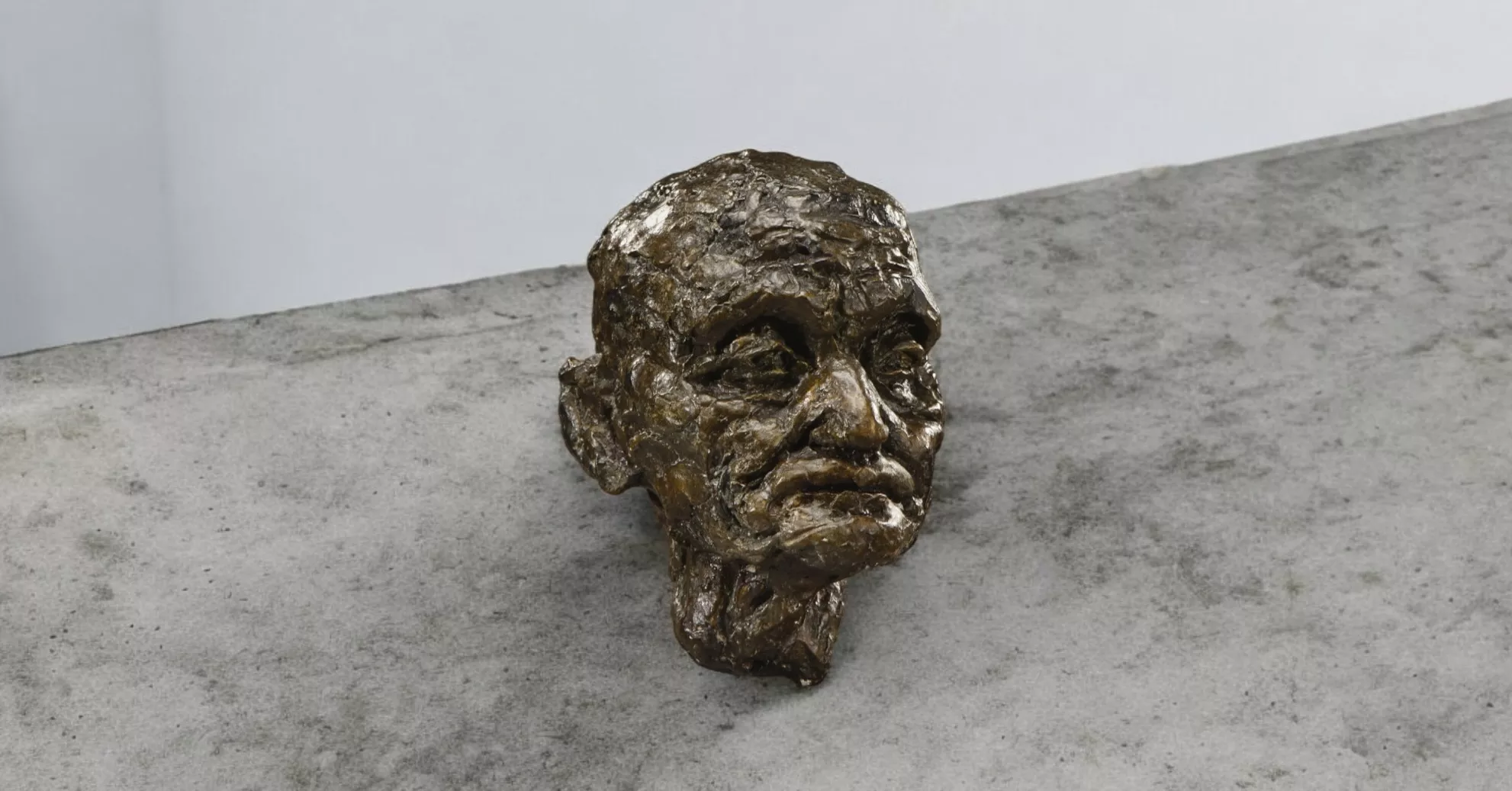
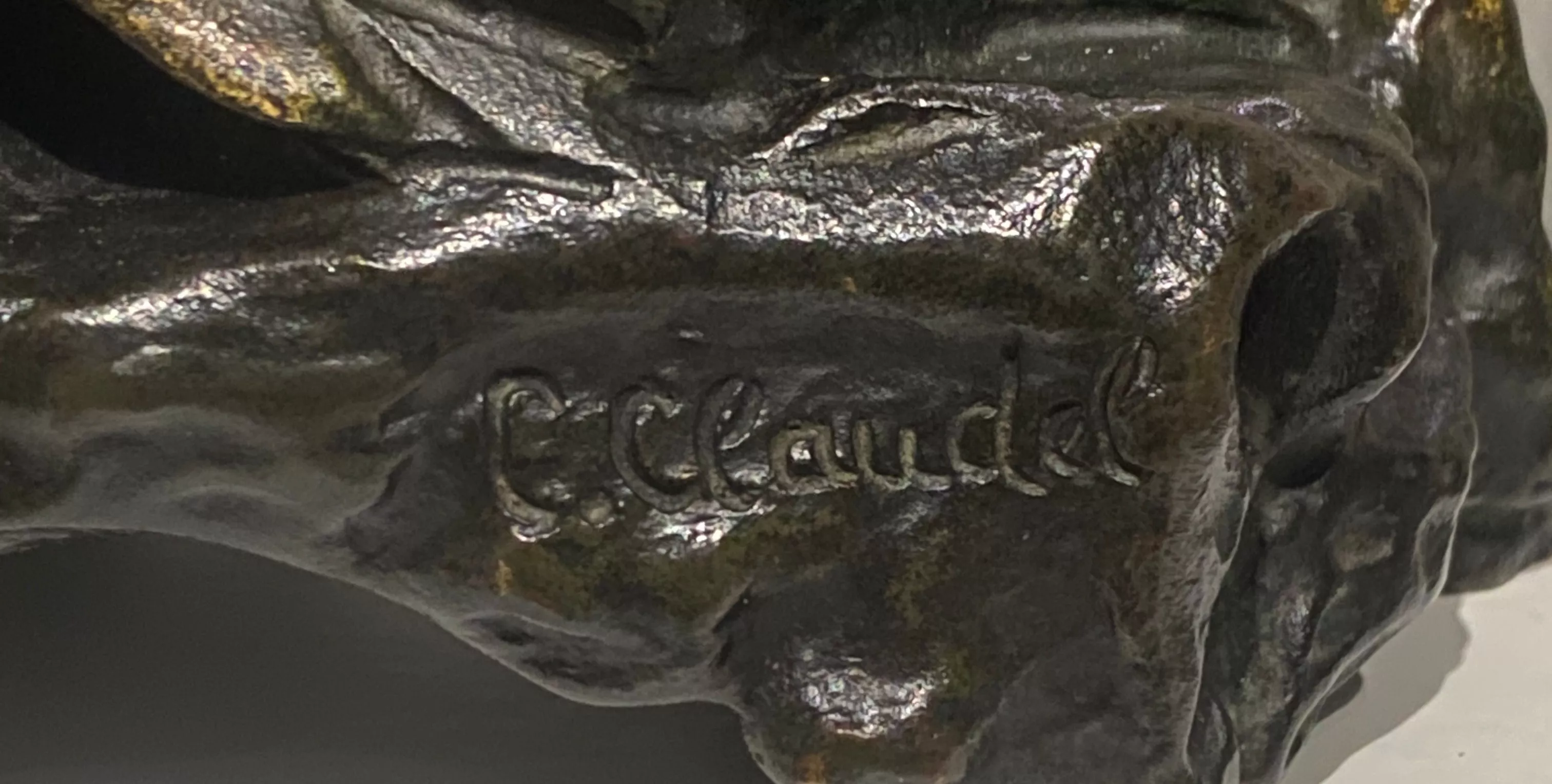
Recognizing Camille Claudel's signature
The artist often signs " Claudel " in small, on the base of her sculptures. Copies may exist, so expertise remains important.
Knowing the value of a work
If you happen to own a work by or after Camille Claudel, don't hesitate to request a free appraisal using our form on our website.
A member of our team of experts and certified auctioneers will contact you promptly to provide you with an estimate of the market value of your work, not forgetting to send you ad hoc information about it.
If you are considering selling your work, you will also be accompanied by our specialists in order to benefit from alternatives to sell it at the best possible price, taking into account market inclinations.
Estimate in less than 24h
Works from the same period sold at auction

Estimated 800 - 1.500€
Barye, seated lion

Estimated Between €1,500 and €3,000
César BALDACCINI dit CESAR (1921-1998), Poule Cartier, bronze print

Estimated 1.500 - 3.000
Antoine Louis BARYE (1796-1875) Eagle and heron, bronze print with shaded brown-green patina
Discover in the same theme

Rating and value of Claude Lalanne's jewels, brooches and ne...
Claude Lalanne is a twentieth-century artist and jewelry designer who has produced works that are highly prized and sought-after on the art market.
Learn more >

Rating and value of Caesar's sculptures, jewelry and expansi...
César is a French sculptor of the Nouveau Réalisme movement who has produced works that are highly valued on the auction market.
Learn more >

Rating and value of paintings by Marko Celebonovik
Marko Celebonovik is a Serbian figurative painter who has produced many works that are highly rated and valued at auction.
Learn more >

Secure site, anonymity preserved

Auctioneer approved by the State

Free and certified estimates
Frequently asked questions
-
Who was Camille Claudel, and what was her artistic context?Camille Claudel (1864–1943) was a renowned French sculptor and a pioneer of 19th-century modern sculpture. A student and collaborator of Auguste Rodin, she made her mark through her expressive realism and her emotional exploration of the human body, although she remained in Rodin’s shadow for many years. Her sculptures, characterized by their sensitivity and exceptional technical mastery, are now widely celebrated as a major contribution to the history of sculpture.
-
What is the price range for Camille Claudel's sculptures?Prices for Camille Claudel’s works vary considerably depending on the medium and rarity. Bronzes range from €1,350 to over 5 million euros, marble sculptures between €56,400 and €2,100,000, while drawings and watercolors range from €90,000 to €240,000. This wide range reflects the importance of factors such as the signature, authenticity, size, and history of the work.
-
How can you authenticate a sculpture by Camille Claudel?To authenticate a work attributed to Camille Claudel, it is essential to consult qualified experts. Claudel typically signed “Claudel” in small letters on the base of her sculptures, but copies do exist. Auctie's offers a free, no-obligation appraisal: contact us via our online form, and a certified auctioneer or appraiser will get back to you within 48 hours with a detailed estimate and information regarding authenticity.
-
Is this the right time to sell a work by Camille Claudel?Yes, now is an excellent time to sell a work by Camille Claudel. The artist’s market value is steadily rising, reflecting a growing recognition of her sculptural genius. Original bronzes and marbles are particularly sought after by collectors and institutions around the world, and the scarcity of her works on the market contributes to the steady rise in prices.
-
How does the appraisal and sales process work at Auctie's?Auctie's supports you every step of the way: submit your request for a free estimate using our form, and a certified expert or auctioneer will contact you within 48 hours with an accurate, no-obligation appraisal. If you decide to sell, our specialists will guide you in choosing the best sales strategy, taking market trends into account, to ensure you get the best possible price for your artwork.
