



Rating and value of Picasso x Madoura dishes

Key takeaways
- The Picasso x Madoura plates, produced starting in 1938 in collaboration with Suzanne Ramié, sell for between €3,200 and €37,000 depending on the design and rarity.
- A “Visage” dish sold for €28,000 in 2017, far exceeding its initial estimate of €1,500 to €2,000, revealing strong upside potential.
- Picasso created more than 3,600 ceramic pieces at Madoura, which are accessible to collectors at more affordable prices than his other major works.
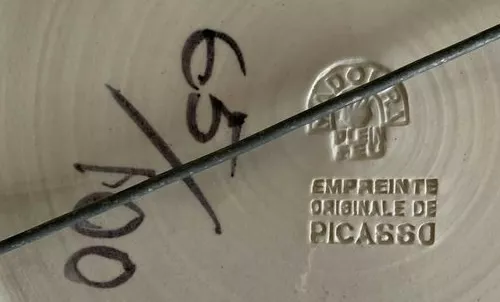
- Authenticity is verified by the “Picasso Madoura Edition” stamp and the serial number; there are many counterfeits on the market.
If you own a dish made by the artist Pablo Picasso in collaboration with the Madoura workshop or after, and would like to know its value, our state-approved experts and auctioneers will offer you their appraisal services.
Our specialists will carry out a free appraisal of your work, and provide you with a precise estimate of its value on the current market.
Then, if you wish to sell your work, we will direct you to the best possible arrangement to obtain the optimum price.
Rating and value of Picasso x Madoura dishes
The works born of the Pablo Picasso and Suzanne Ramié collaboration were produced in the Madoura studio from 1938 onwards. Most of these works are in ceramic, but there are also a number of terracotta and earthenware pieces.
The two artists worked together to produce everyday objects, including dishes, always in the Provencal tradition. Dishes from this collaboration fetch between €3,200 and €37,000.
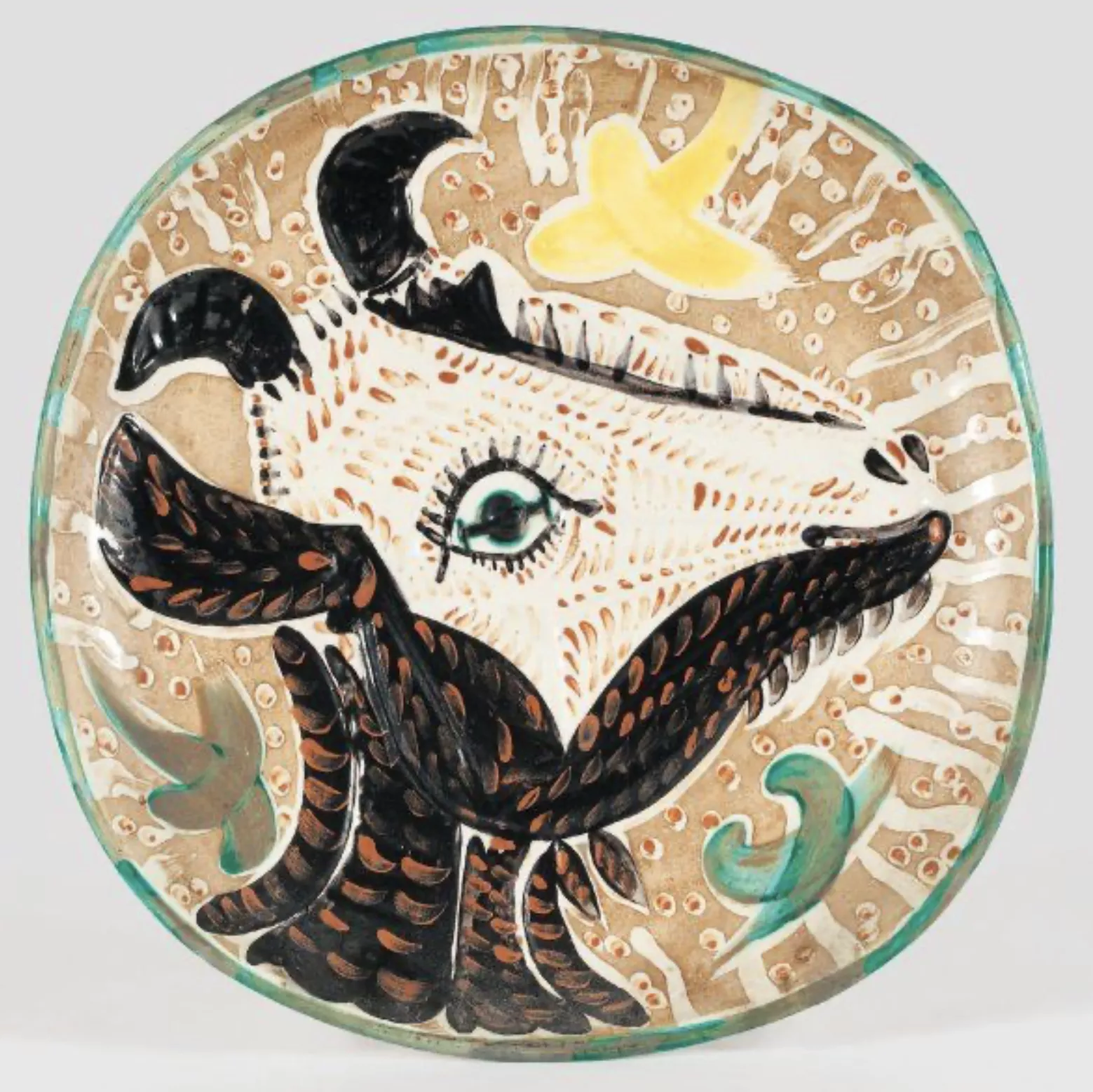
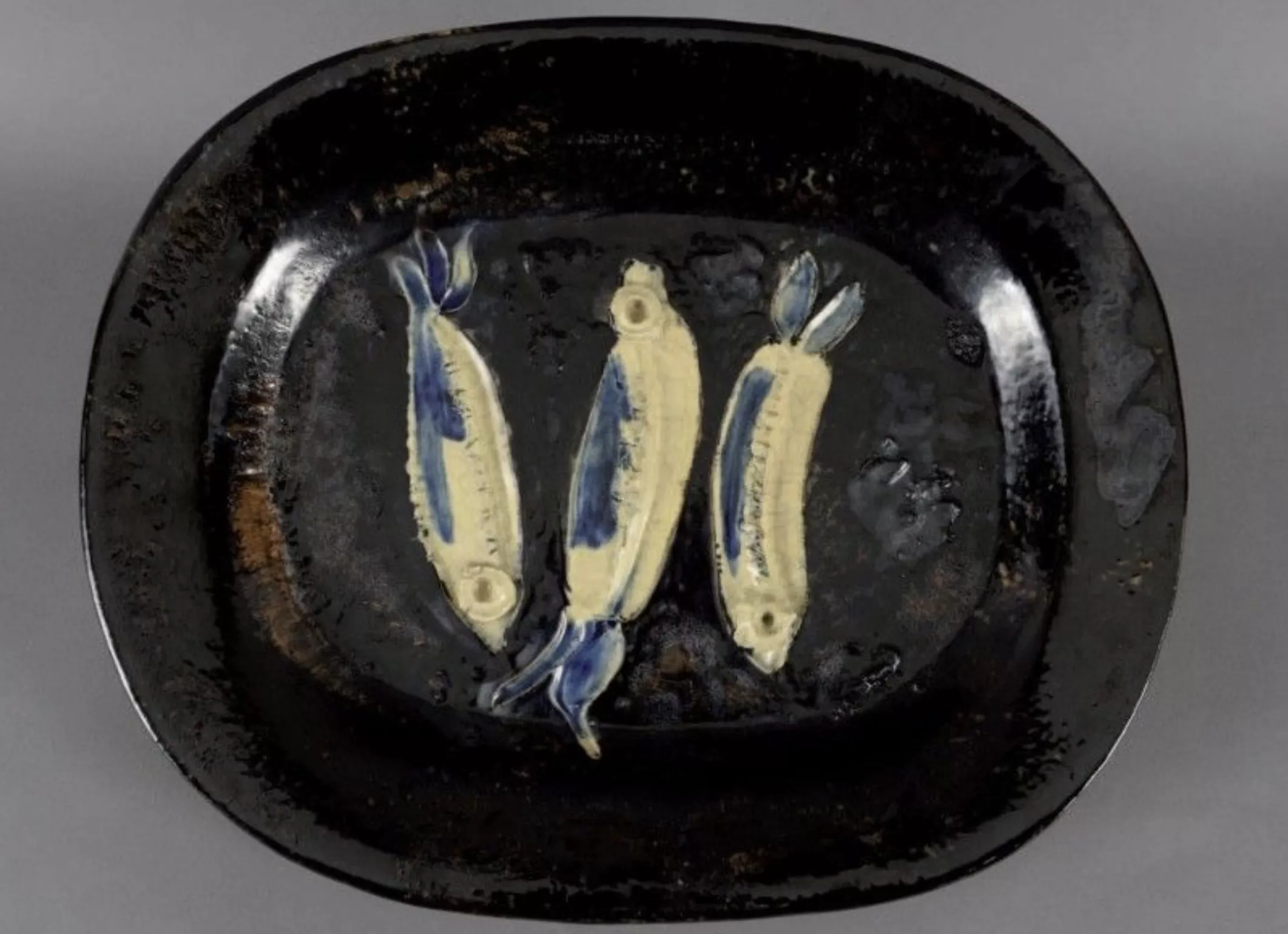
A large circular blue-glazed ceramic dish known as " Visage ", sold for €28,000 in 2017, while it was estimated at between €1,500 and €2,000, suggesting strong upside potential for these objects.
Order of value from a simple work to the most prestigious
Type of dish | Result |
|---|---|
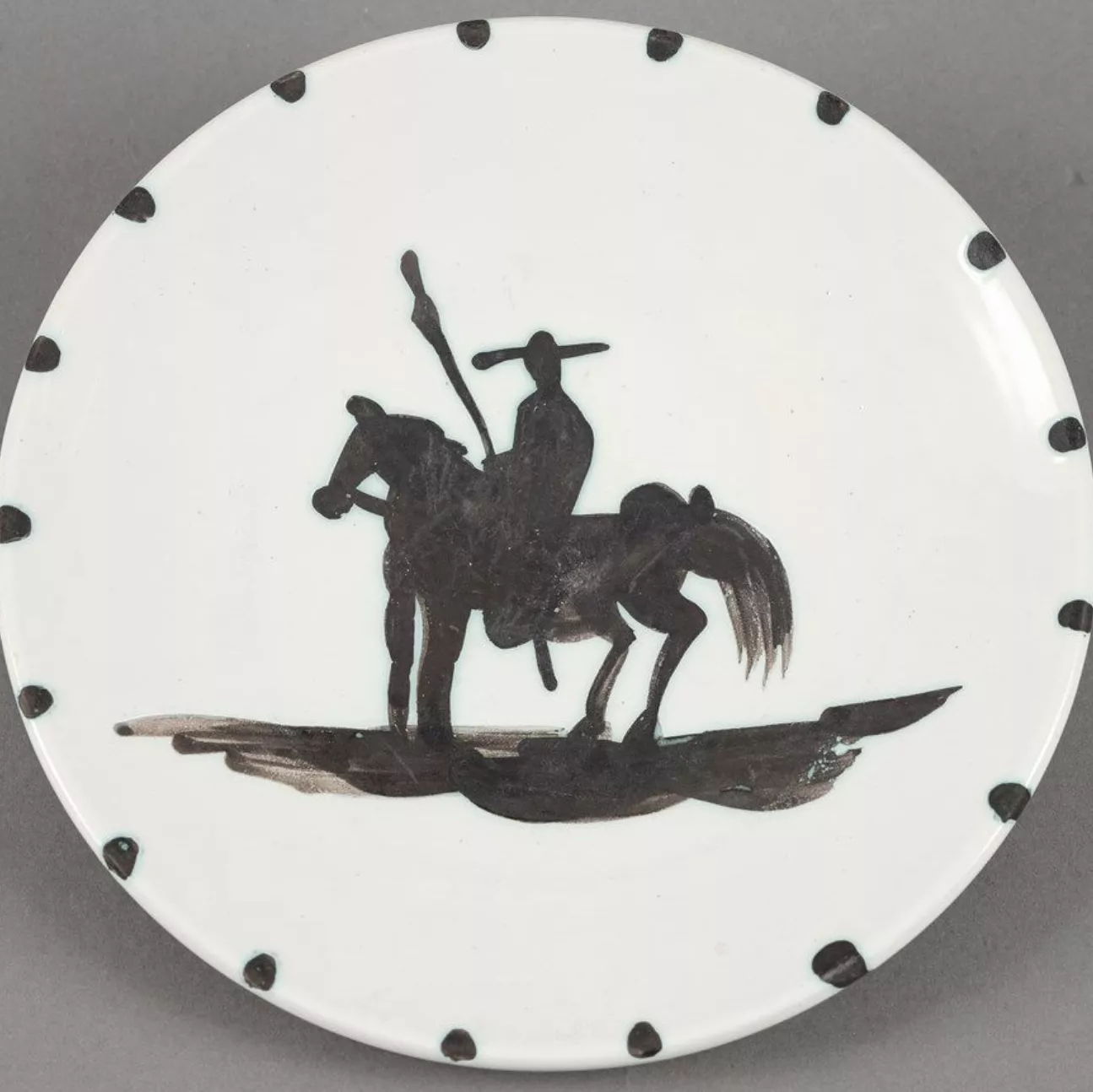
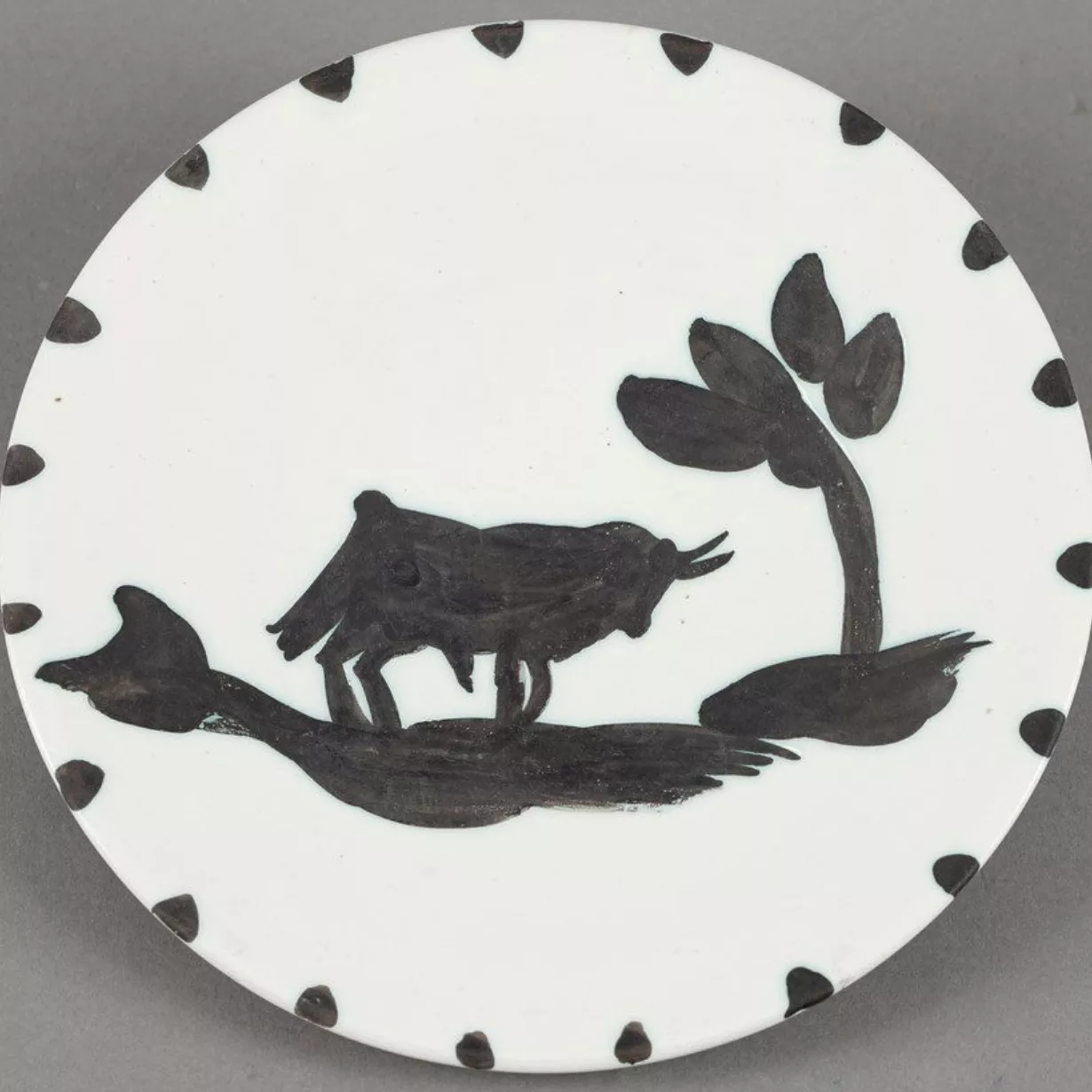
Plat Toros | From €3,250 to €8,600 |
Plat tauromachie | From €5,100 to €11,050 |
Plat bullfighting | From €3,200 to 22 950€ |
Plat face | From 4 300 to 28 000€ |
Estimate in less than 24h
Style and technique of Picasso Madoura works
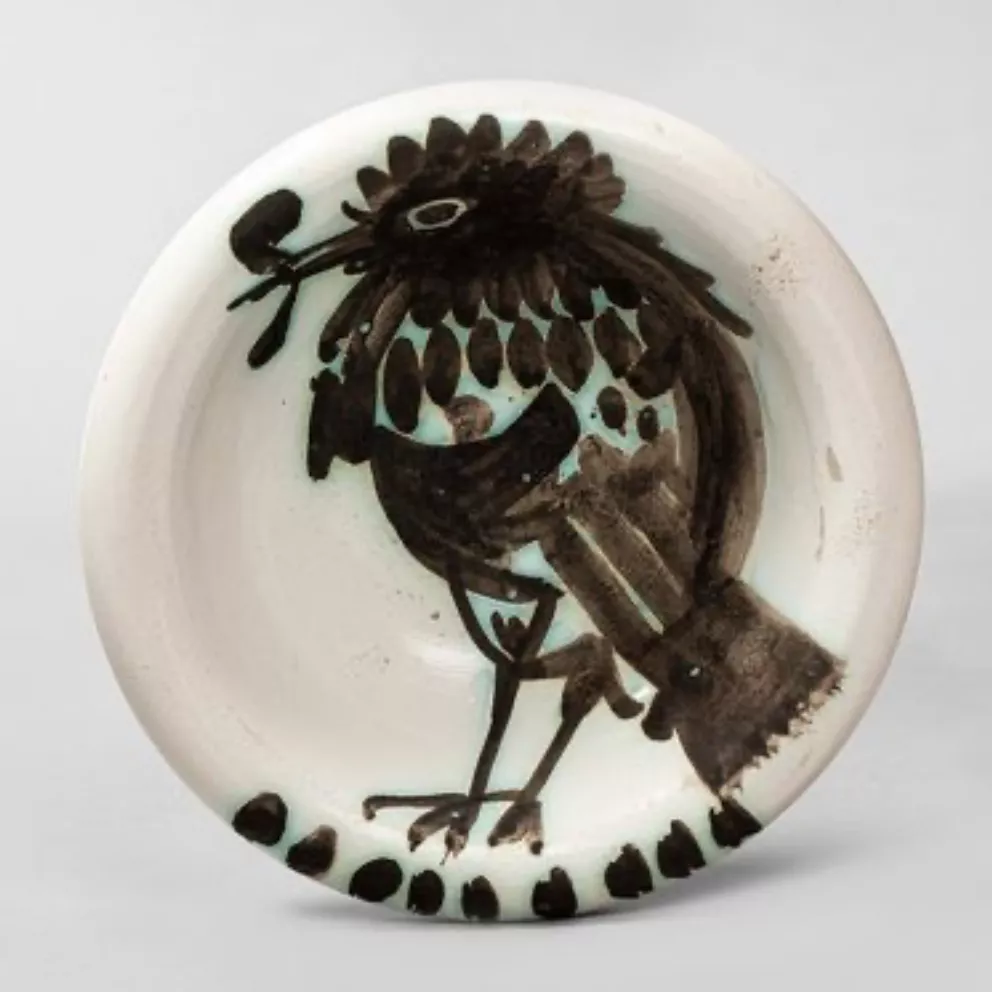
At the Madoura workshop, Picasso and Suzanne Ramié explore anthropomorphic and zoomorphic forms with fascination. They fashioned a myriad of creatures, from hieratic owls and majestic birds to owls, fish and white doves.
The shapes of the jugs produced by Madoura are highly diverse, as are the materials used: earthenware, glazed ceramics and terracotta. The result can vary from one work to the next, depending on the animal chosen and the colors used.
The style of the Picasso x Madoura works translates into a fusion of art and craft, where Picasso explores the expressive possibilities of terracotta.
He works in limited series : many dishes are issued in controlled, numbered and stamped series, with Picasso's direct involvement in the creation of the original models.
The motifs he uses are recurrent, with stylized faces, mythological figures, bulls, fish, and birds, for example. He uses a free, immediately recognizable graphic language.
The dishes he creates are most often circular, with a centered composition and an economy of means that aims to bring out the line, the gesture and the visual impact.
He plays with engobes and enamels, experimenting with different decorative techniques : engraving in fresh clay, engobe painting, resist, and colored or monochrome enameling.
Picasso was careful to strike a balance between form and decoration, with the design not merely adorning the support but perfectly embracing the shape of the dish, creating a dialogue between volume, material and image.
The style of the dishes created with Madoura is, like many of the artist's works, playful and inventive, reflecting Picasso's creative freedom, his taste for play and his ability to transform a utilitarian object into a work of art in its own right.
L'atelier Madoura and the collaboration with Picasso
Madoura is a pottery workshop created in 1938 by the couple Suzanne and Georges Ramié, in Vallauris, a town nestled in the hills between Antibes and Cannes.
During a summer vacation in 1946, in the company of Françoise Gilot, painter and writer, Suzanne Ramié showed Pablo Picasso around the admirable Madoura pottery workshop for the first time. He was amazed.
The Ramié couple diligently encouraged him to model the Madoura clay, serving up on a silver platter to the illustrious artist a new way of exercising his dazzling creativity.
The imprint of Picasso x Madoura works on their time
Picasso made over 3 600 ceramic pieces at the Madoura workshop that were the fruit of the encounter between Suzanne Ramié and Picasso. Picasso's ceramics reveal reckless exploration and great creative spontaneity.
He relentlessly investigates the use of ceramics, both the secrets of its technique and its aesthetics. Picasso succeeded in giving rise to new artistic formalisms that he had already been trying to approach since his Cubist period by combining sculpture, painting and printing techniques.
By virtue of their third dimension, ceramic objects confer a new playground for the artist, attributing semantic and conceptual significance through his remarkable way of employing surface and volume.
In this way, he conveys in three dimensions what he had wanted to communicate through his canvases, painted in this case without perspective, without laws or academic rules.
Moreover, these ceramics require great skill to be able to paint it without knowing the final rendering, appearing once the firing is complete.
Picasso offered his art to a new public able to own a work by the artist thanks to more accessible prices.
The plates resulting from this collaboration are particularly prized and sought-after works for their originality, their decorative aspect but also their utilitarian aspect.
Focus on Visage noir, Pablo Picasso x Atelier Madoura, 1956, ceramic dish
The composition of the Visage Noir dish is intended to be frontal : it presents a stylized face seen from the front, with an almost childlike sumplicity of features, giving the image an immediate expressive presence.
The contrast is marked between the matte black background of the dish, which highlights the white lines etched into the clay, creating a striking play of opposition between light and shadow.
The line is etched into the clay : rather than painting, Picasso chose the technique of direct etching into the still-fresh clay, which gives the drawing a spontaneous, tactile aspect.
This dish is also characterized by an expressive minimalism, a few strokes being enough to evoke an entire face, complete with eyes, nose and mouth, demonstrating Picasso's ability to condense a maximum of meaning into a maximum of form.
The symmetry of the dish is disrupted, given that while the face is symmetrical overall, slight shifts and irregularities provide a visual tension that avoids any formalism.
This dish is one of those everyday objects that Picasso elevates to the status of art. The dish, utilitarian in form, becomes a work in its own right, blending sculpture, drawing and design in a single artistic gesture.
The aesthetic is deliberately tribal and archaic, the face sometimes evoking African art or ancient masks, in a search for primal forms and universal symbols.
The presence of the Madoura workshop on the auction market
These ceramics became part of the home and were quickly snapped up by collectors. Between 1950 and 1960, many distinguished artists such as Marc Chagall, Victor Brauner, Foujita and Matisse parade past La Poterie Madoura in turn.
The workshop acquired such a reputation that in 1953, Suzanne Ramié was awarded the title of Chevalier de la Légion d'Honneur.
The ceramics produced by the Madoura workshop thus acquired international visibility, particularly for those made with Picasso, which were highly represented at auctions in Europe, the United States and Asia.
Signed editions are extremely successful, and pieces produced in limited editions under Picasso's supervision and stamped " Maudoura Plein Feu " are highly sought-after, particularly dishes, vases, pichet-hiboux and plates.
The market offers a wide variety of pieces with prices ranging from a few centraines to several hundred thousand euros, depending on rarity, subject and state of preservation.
Ceramics from the Madoura workshop represent a certain attraction for modern collectors, which maintains sustained demand.
Some emblematic pieces, such as dishes decorated with bulls, faces or mythological figures are reaching records in some 20th century sales.
The Madoura ceramics market (plates, pichets, vases), thanks in part to Picasso's reputation and the workshop's quality of workmanship, is dynamic and stable. Madoura works retain good liquidity and a strong heritage value.
Recognizing the signature on Picasso Madoura works
It is important to have your work appraised, as there are unfortunately many counterfeits. The stamp (" édition Picasso Madoura ") and the serial number indicate the authenticity of the work.
Know the value of a Picasso x Madoura plate
If you happen to own a " Picasso x Madoura " plate, don't hesitate to request a free appraisal via our website form.
A member of our team will contact you promptly to provide you with an estimate of the value of your work, not forgetting to send you ad hoc information about it.
If you're thinking of selling your work, our specialists will also help you find alternative ways of selling it at the best possible price.
Estimate in less than 24h
Discover in the same theme

Rating and value of Jean Dunand's vases
Jean Dunand is a twentieth-century artist and coppersmith who is very successful at auction. His value is constantly rising. Estimate in 24h.
Learn more >

Rating and value of paintings by Pierre Dmitrienko
Pierre Dmitrienko is an abstract painter who has produced works that are highly rated and valued at auction. 100% free estimate!
Learn more >

Rating and value of bronzes, sculptures and drawings by Anne...
Anne-Marie Profillet mainly produced animal sculptures, which today have a fairly high auction value.
Learn more >
Similar works sold at auction

Estimated 2.000 - 4.000 €
PABLO PICASSO (1881-1973) ATELIER MADOURA " Profil de femme n° 67 " Round plate.

Estimated 500 - 800€
Pierre Adrien Dalpayrat (1844-1910), ceramic mask

Estimated Between €1,000 and €2,000
Mithé ESPELT (1923-2020) Glazed ceramic mirror, "Soleil" model

Estimated 18.000 - 20.000
PICASSO Pablo (after, 1881-1973) MADOURA (ceramist, publisher) "Femme du barbu" turned pitcher

Estimated 40.000 - 60.000
Georges JOUVE (1910-1964), free-form sculpture in glazed ceramic

Estimated 2.000 - 3.000
Pablo PICASSO (1881-1973) MADOURA Service Black face, A plate

Secure site, anonymity preserved

Auctioneer approved by the State

Free and certified estimates
Frequently asked questions
-
Who is Pablo Picasso, and what is the background of his collaboration with the Madoura studio?Pablo Picasso was a major artist of the 20th century who discovered the Madoura studio in 1946 during a visit to Vallauris, in Provence. Founded in 1938 by Suzanne and Georges Ramié, this pottery studio offered Picasso a new medium for creative expression. Between 1946 and his death, Picasso created more than 3,600 ceramic pieces in collaboration with Suzanne Ramié, transforming everyday objects into true works of art.
-
What is the price range for Picasso x Madoura dishes?Plates created by Picasso in collaboration with the Madoura studio sell for between €3,200 and €37,000, depending on the design and condition. Prices vary significantly depending on the subject: the “Toros” plates range from €3,250 to €8,600, while the “Visage” plates can reach €28,000 or more. In 2017, a large circular “Visage” platter estimated at between €1,500 and €2,000 sold for €28,000, illustrating the strong potential of these objects.
-
How can you authenticate a Picasso x Madoura plate and avoid counterfeits?It is essential to have your piece appraised by a certified professional to verify its authenticity, as there are many counterfeits in circulation. The key authentication features are the “Édition Picasso Madoura” stamp and the serial number engraved or stamped on the piece. Auctie’s offers a free, no-obligation appraisal conducted by auctioneers and experts, who will provide you with an accurate estimate within 48 hours.
-
Is this the right time to sell a Picasso x Madoura dish?Yes, this is an excellent time to sell. The market for Madoura ceramics—particularly those by Picasso—is dynamic and stable, with strong demand from modern collectors. These pieces enjoy good liquidity and established heritage value, and they are highly sought after at auctions in Europe, the United States, and Asia.
-
How does the appraisal and sale of a Picasso x Madoura dish work at Auctie's?Appraisals at Auctie's are free and non-binding: simply fill out a form on the website, and an expert will contact you and provide an estimate for your artwork within 48 hours. If you decide to sell, our specialists will then guide you through the process from appraisal to auction, offering you the best options for selling your artwork at the highest possible price.
