



Knowing the value of Antoine-Louis Barye's bronzes

Key takeaways
- Barye’s bronze sculptures sell for between €20 and €630,000, with an equestrian sculpture selling for €200,000 in 2022, exceeding its initial estimate.
- The most highly valued works are bronze casts with brown or golden patina from the first Gonon castings, which guarantee precision and exceptional quality.
- A 19th-century animal sculptor (1795–1875), Barye mastered anatomy with scientific realism and depicted dramatic scenes of animal struggle and movement.
If you own a work by or after Antoine-Louis Barye, and would like to know its value, our state-approved experts and auctioneers will offer you their appraisal services.
Our specialists will carry out a free appraisal of your work, and provide you with a precise estimate of its value on the current market.
Then, should you wish to sell your work, we will direct you to the best possible arrangement to obtain the optimum price.
Rating and value of the artist Antoine-Louis Barye
Antoine Louis Barye leaves in his wake a very singular body of work, in the Romantic movement. He was one of the most talented sculptors of his time. Today, prices for his works are skyrocketing under auctioneers' hammers.
His animal bronzes are particularly prized, especially by French and European buyers. The price at which they sell on the art market ranges from €20 to €630 000, a considerable delta but one that speaks volumes about the value that can be attributed to Barye's works.
In 2022, a bronze equestrian proof with brown patina sold for 200 000€ while it was estimated at between 120,000 and 150,000€.
Order of value from a simple work to the most prestigious
Technique used | Estimation |
|---|---|
Lithography | From €30 to €1,150 |
Bronze relief | From €30 to €38,200 |
Bronze proof with brown or gold patina | From €20 to €630,000 |
Estimate in less than 24h
Style and technique of the artist Antoine-Louis Barye
Antoine-Louis Barye (1795 - 1875) was an absolute master of animal sculpture in the 19th century. His aesthetic blends scientific naturalism, romantic dramatization and muscular power.
In his works, he strives for anatomical realism of a precision quite unheard of at the time, linked to the systematic observation of living and dead animals, notably at the Jardin des Plantes, but also through dissections and sketches from life.
He captures animals in dynamic, often extreme attitudes, depicting struggles, attacks, leaps, tensions, bites and escapes. His compositions are based on energy, torsion, diagonal and muscular concentration.
He has a dramatic relationship between predator and prey (lions, tigers, bears, crocodiles, deer). His silhouettes are powerful, with a low center of gravity and poses in controlled imbalance, amplifying the sensation of movement. Braye's extensive anatomical knowledge of muscles, tendons and limb joints are accurately rendered.
He meticulously studies the textures of fur, scales, taut skin and claws, the rendering of breath, exertion, the internal tension of the animal body.
Barye's work bears witness to an exceptional mastery of modeling, which is nervous, energetic, with alternating smooth surfaces and choppy areas. He also uses plaster and wax for extremely detailed studies before casting.
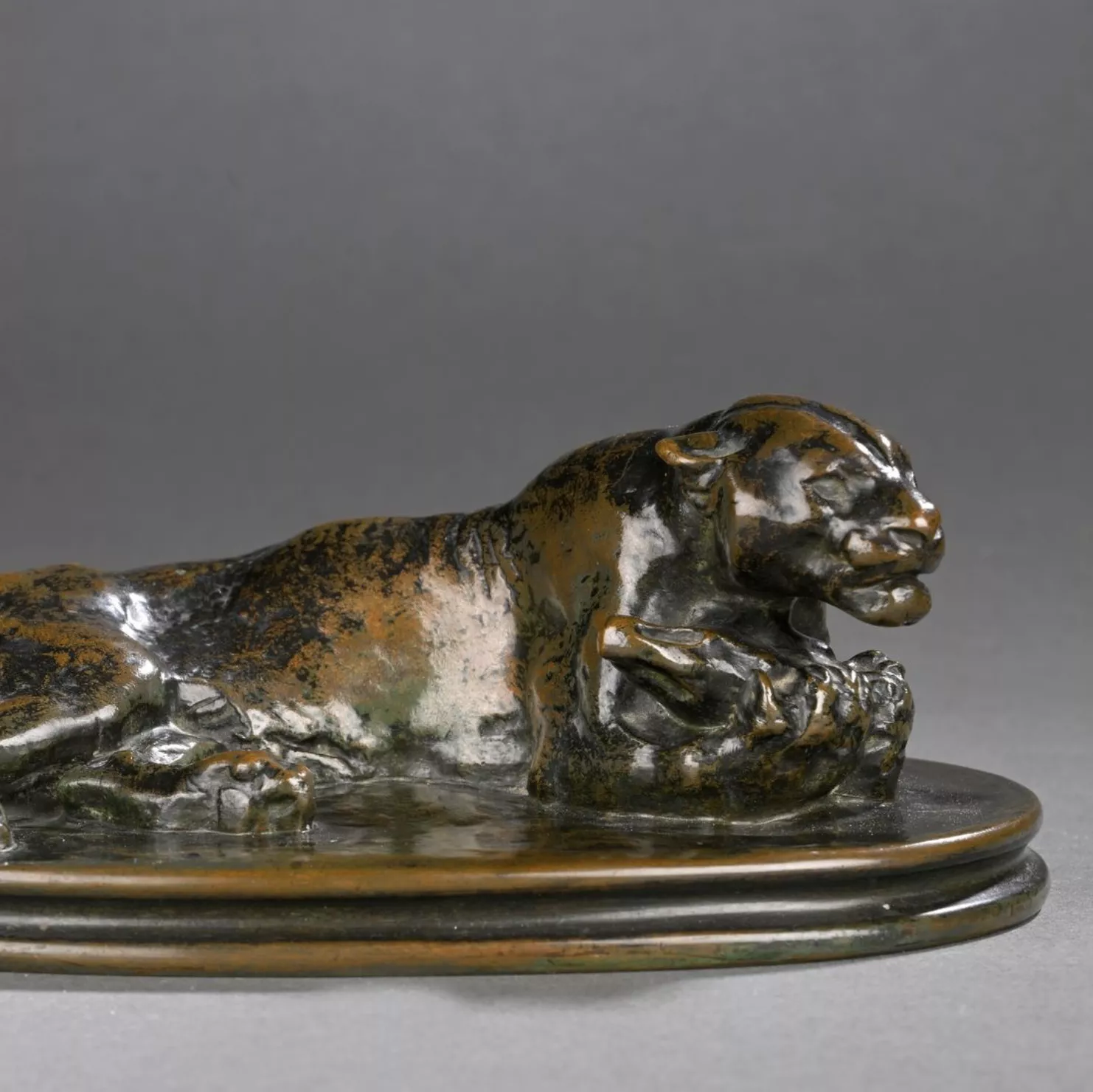
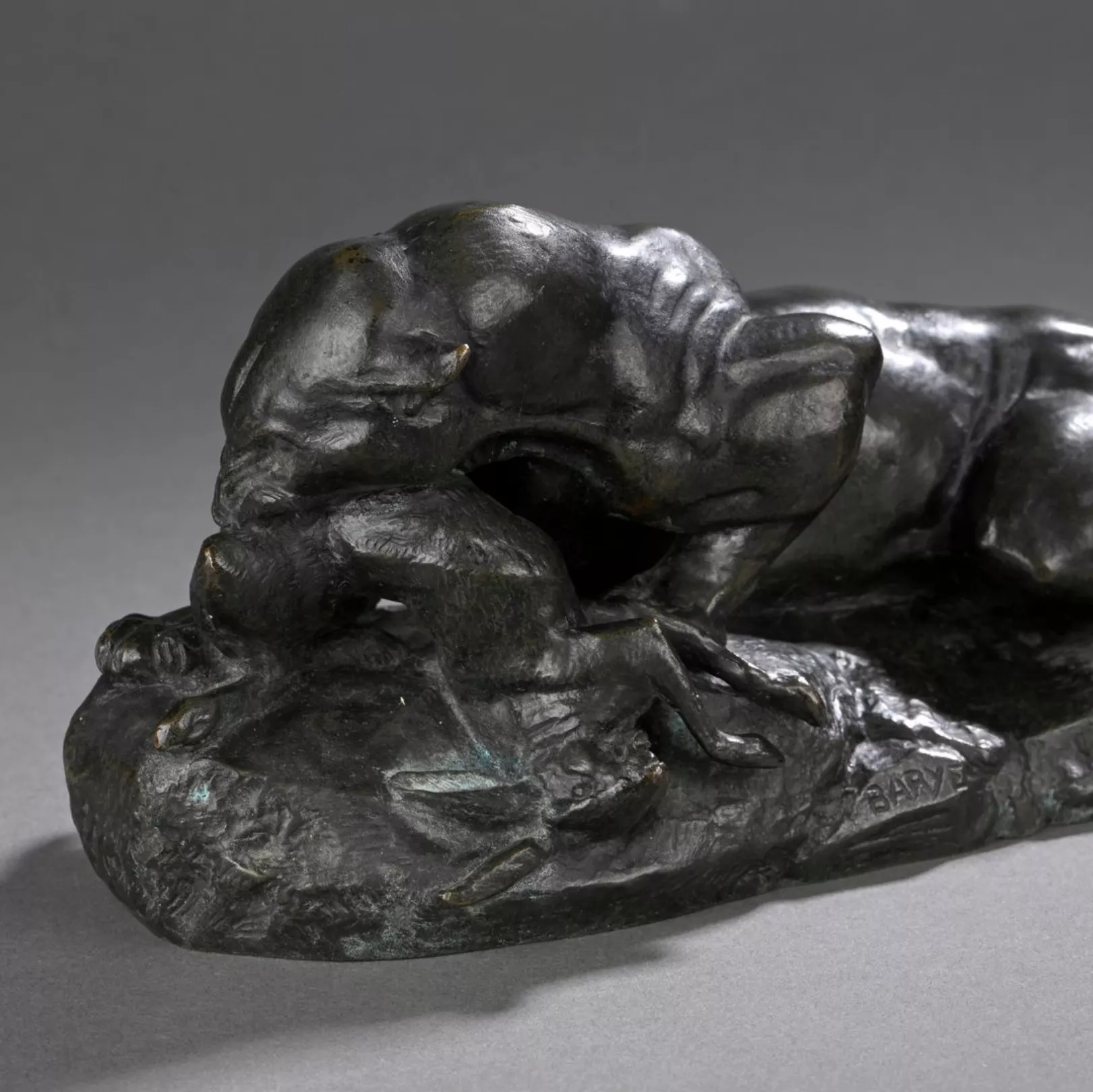
He favors compact, concentrated compositions, where volumes fit together like a single organism. His collaboration with the foundryman Honoré Gonon, and then with his son, was essential, guaranteeing castings of remarkable quality.
The patinas are varied, ranging from deep brown, green brown, red brown, with occasional cloudy patinas. The importance of the early fonts known as " Gonon " or " Barye père " is paramount, with extreme precision of detail and very fine prints.
Later fonts (Barbedienne ; etc) are more numerous, sometimes less detailed but technically sound. He makes frequent use of violent diagonals, spirals of energy and asymmetrical masses.
The base is not neutral : rocks, trunks and asperities structure the scene and participate in the dramaturgy. The representation is quasi-narrative : each sculpture recounts a decisive moment (fight, kill, latent tension).
There is an influence of French Romanticism (Delacroix, Géricualt) in the desire to represent the raw energy of animal instinct, but also an influence of the Museum's scientific tradition (Cuvier, Geoffroy Saint-Hilaire) in comparative anatomy.
He is a forerunner of modern animal sculpture, paving the way for Frémiet, Mène, Cain and Pompon. The dramatic tension is permanent, nothing is decorative or anecdotal. Each sculpture is a reflection on strength, violence, survival and animal nobility.
Antoine-Louis Barye, from Baron Gros's studio to the Prix de Rome
Antoine-Louis Barye (1795-1875), a French artist, became an important figure in the 18th-century art world. Born in Paris, he studied from the age of 13 with a steel engraver who worked for the Grande Armée.
He then chose to continue his training with the sculptor Bosio and then in the workshop of Baron Gros. He then worked for Fauconnier and began to take an interest in animals, which he sculpted.
In the image of the group Hercules étouffant Antée, he succeeded in reproducing on bronze the violence of the embraces and the antique-style representation of the bodies.
Like many artists of the period, the Salons were a springboard for making himself known to the public. After the Salon of 1831, he surprised the public with his technical mastery and succeeded in establishing himself as a major artist. Like Riccio or Donatello, he worked throughout his career on bronzes and gilded bronzes, and mastered the technique to perfection.
He opened a foundry around 1840 and definitively broke with academic canons to produce the works he wanted.
Like many artists of his time, he went to Rome in residence and was awarded the precious Prix de Rome as early as 1820.
Barye's imprint on his time
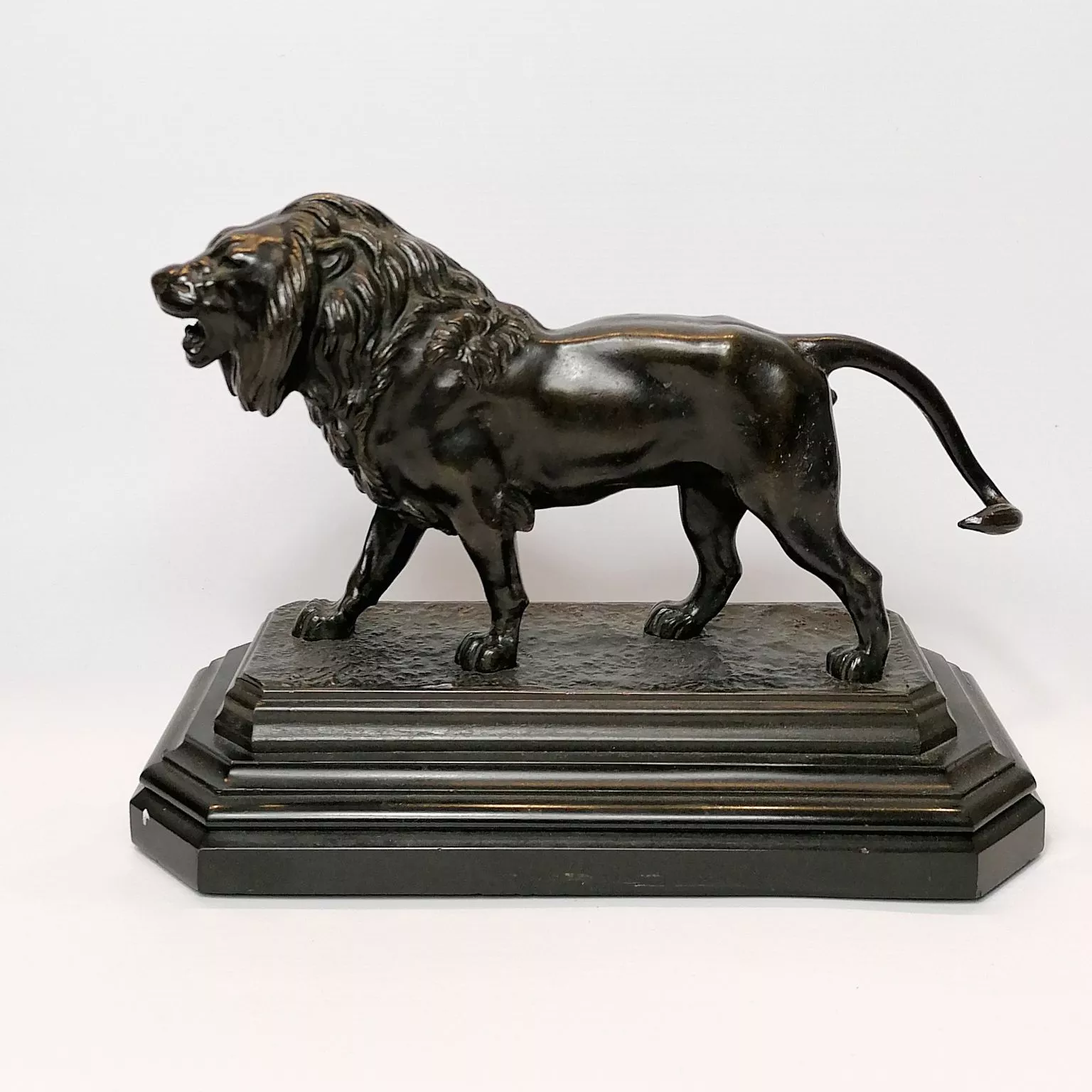
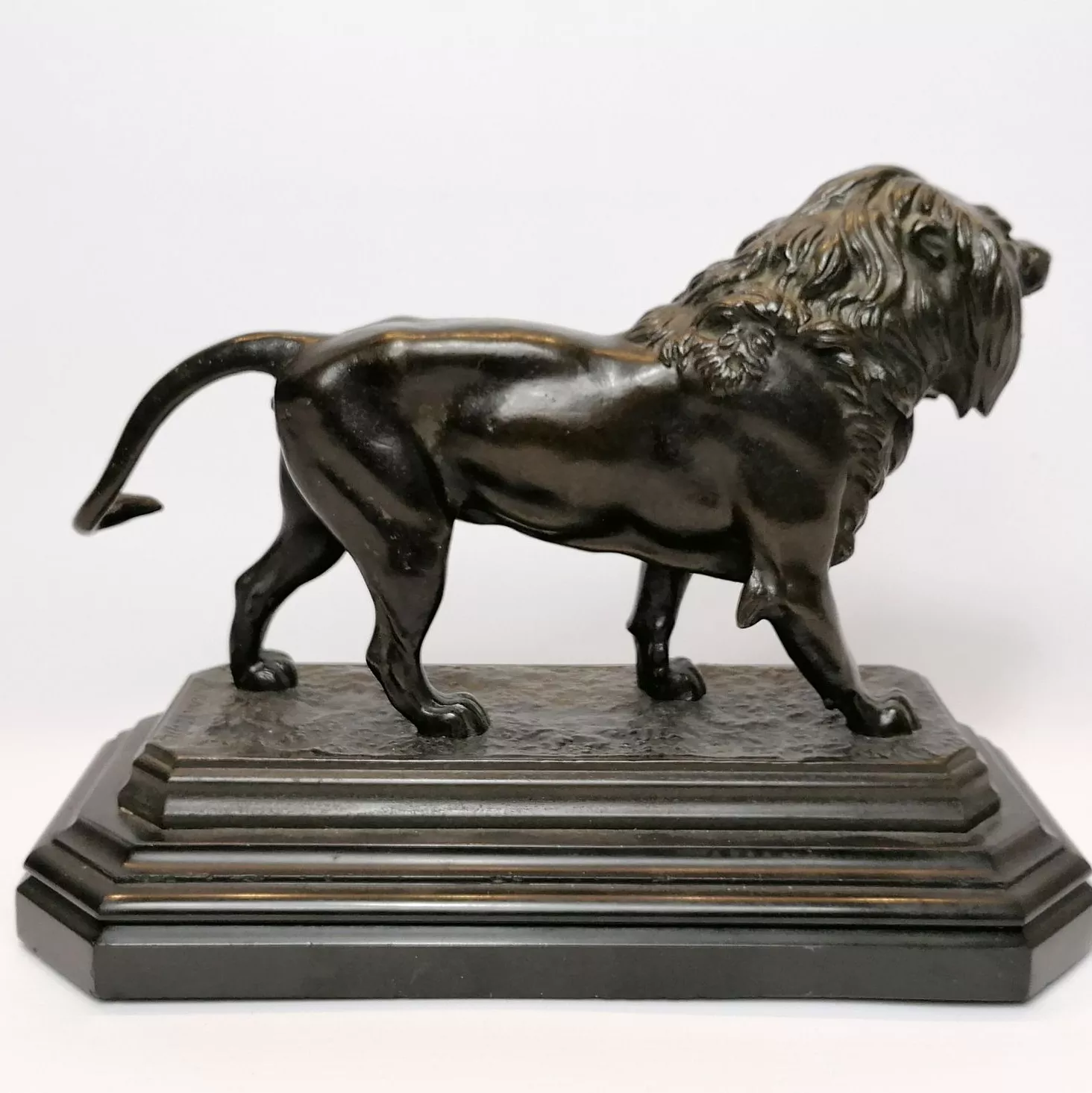
Thanks to his participation in numerous Salons, Barye was a recognized artist, although he broke the rules of the Académie and traditional sculptural representations. He prefers to depict animals, including lions, bulls and even domestic pets.
He will also produce bronzes of horsemen, including a gilded bronze of the Emperor on horseback. Today, Barye remains highly sought-after by collectors because his works, although attached to the Romantic movement, have a unique artistic identity.
Recognize the artist's signature
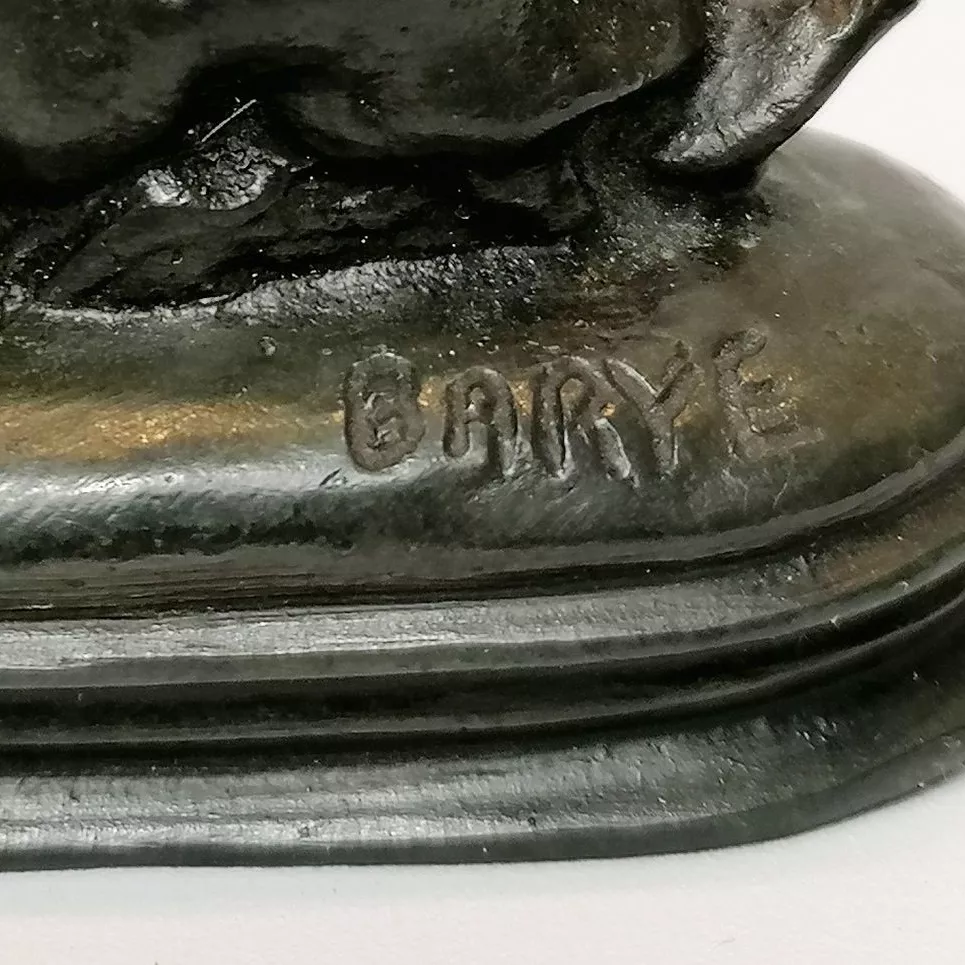
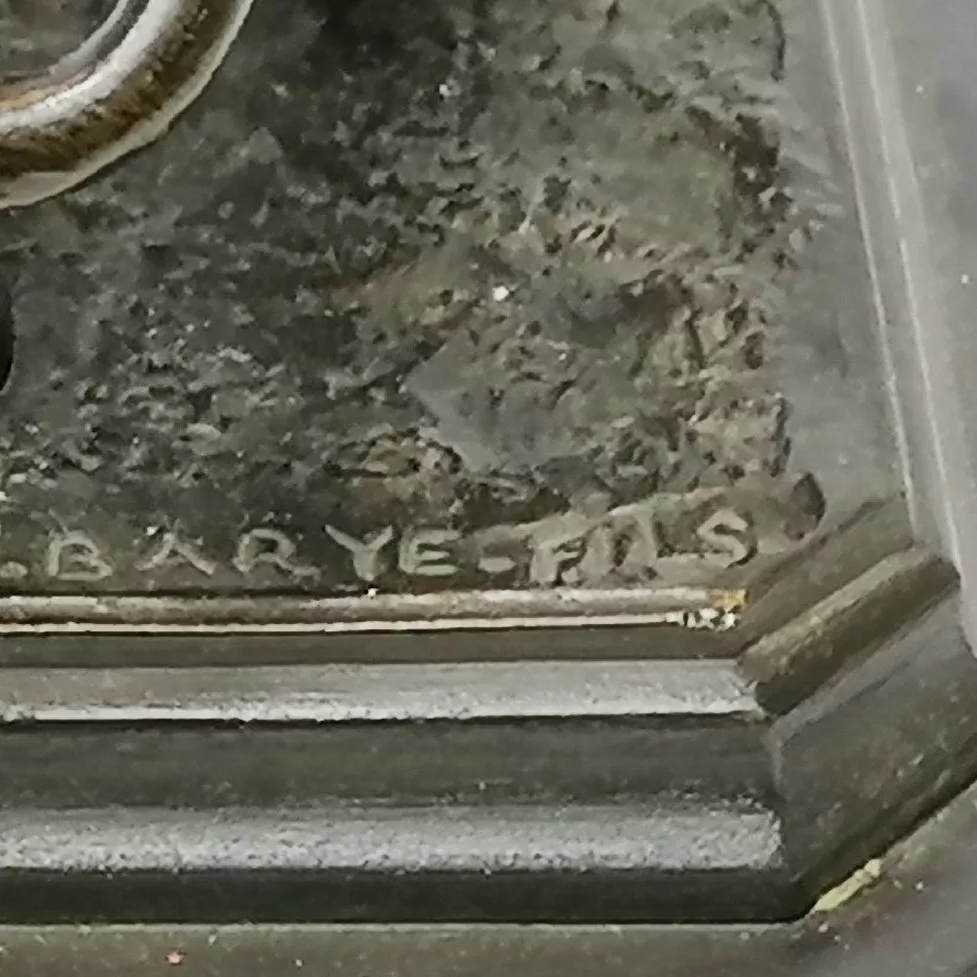
Louis-Antoine Barye's works are generally signed. He engraves " Barye " in bronze. However, many copies exist, which is why it's important to have your work appraised.
Knowing the value of a work
If you happen to own a work by Barye or after the artist, don't hesitate to request a free appraisal using our form on our website.
A member of our team of experts and certified auctioneers will contact you promptly to provide you with an estimate of the market value of your work, not forgetting to send you ad hoc information about it.
If you wish to sell your work, you will also be accompanied by our specialists in order to benefit from alternatives to sell it at the best possible price, taking into account market inclinations.
Estimate in less than 24h
Discover in the same theme

The value of furniture by renowned cabinetmaker Adam Weiswei...
If you own a piece of furniture by or after cabinetmaker Adam Weisweiler, our experts and auctioneers will be happy to advise you.
Learn more >

Rating and value of drawings, prints and paintings by Louis...
Louis de Carmontelle was an 18th-century French draughtsman who produced works that are highly valued on the art market.
Learn more >

Rating and value of paintings by Rachel Ruysch
Rachel Ruysch is a Dutch artist of the Golden Age who produced still lifes that are highly valued at auction.
Learn more >
Similar works sold at auction

Estimated 18000 € - 20000 €
Paul JOUVE (1878-1973): "Panther on the march

Estimated 800 - 1.500€
Barye, seated lion

Estimated 1.500 - 3.000
Antoine Louis BARYE (1796-1875) Eagle and heron, bronze print with shaded brown-green patina

Estimated 1.500 - 2.000
After Antoine-Louis BARYE (1795-1875), Panther seizing a deer

Estimated 400 - 600
After Antoine Louis BARYE (1796-1875) Les trois Grâces Brown patina bronze proof forming a lamp base

Estimated 4.000 - 6.000
After Antoine Louis BARYE (1796-1875) Elephant of Senegal, Bronze with patina

Estimated 300€ - 500€
Antoine-Louis BARYE (1796-1875) The rooster Bronze with patina...

Secure site, anonymity preserved

Auctioneer approved by the State

Free and certified estimates
Frequently asked questions
-
Who was Antoine-Louis Barye, and what was his artistic style?Antoine-Louis Barye (1795–1875) was a master of 19th-century animal sculpture, associated with the Romantic movement. He distinguished himself through his innovative approach, which combined precise anatomical realism (studied at the Jardin des Plantes) with romantic dramatization, depicting animals in dynamic poses and scenes of struggle, capture, or tension. His influence on modern animal sculpture paved the way for artists such as Frémiet, Mène, and Pompon.
-
What is the price range for Antoine-Louis Barye's bronze sculptures?The prices of Barye's works vary considerably depending on the technique and rarity. Lithographs range from €30 to €1,150, relief bronzes from €30 to €38,200, while bronze proofs with brown or gold patina can fetch between €20 and €630,000. In 2022, a brown-patinated equestrian cast even exceeded its initial estimate, selling for €200,000.
-
How can you authenticate a work by Antoine-Louis Barye?Authentic works by Barye are generally signed “Barye,” engraved in the bronze. However, many copies exist, making a professional appraisal essential. We recommend that you request a free appraisal from Auctie’s: our state-certified experts and auctioneers will examine your piece and provide you with an accurate appraisal within 48 hours, with no obligation.
-
Is this the right time to sell a sculpture by Barye?Yes, now is a good time to sell a work by Barye. His animal bronzes are particularly sought after by French and European collectors, and prices continue to rise on the art market. Demand remains strong, especially for the early “Gonon” or “Barye père” quality castings.
-
How does the appraisal process work at Auctie's?Appraisals at Auctie's are completely free and non-binding. Simply fill out a form on our website with information and photos of your artwork. A certified expert or auctioneer will contact you within 48 hours to provide you with an estimate of its market value. If you decide to sell, our specialists will then work with you to explore the best sales options to help you get the best possible price.
