



Rating and value of works, sculptures and bronzes by François Pompon

Key takeaways
- Works by François Pompon, a master of animal sculpture, sell for between €370 and €620,000, depending on the technique and the rarity of the piece.
- Bronze is the artist’s signature medium, commanding the highest prices, while his watercolor drawings fetch between €2,900 and €6,200.
- In 2021, his sculpture “Grand cerf” (1929) sold for €620,000, far exceeding its initial estimate of €80,000 to €120,000, reflecting the market’s appreciation of his work.
If you own a work by or after the artist François Pompon, and would like to know its value, our state-approved experts and auctioneers will offer you their appraisal services.
Our specialists will carry out a free appraisal of your work, and provide you with a precise estimate of its value on the current market.
Then, should you wish to sell your work, we will direct you to the best possible arrangement to obtain the optimum price.
Rating and value of the artist François Pompon
Considered one of the masters of animal sculpture, François Pompon was recognized during his lifetime. He followed in the artistic vein of Maillol and Rodin, even though he developed his own style.
His legacy therefore consists mainly of sculptures made from several types of material, especially bronze. At present, the prices of his works are rising recurrently at the auctioneers' gavel.
His sculptures are prized above all by European buyers, and the price at which they sell on the art market ranges from €370 to €620,000, a considerable delta, which speaks volumes, however, about the value that can be attributed to François Pompon's works.
In 2021, one of his bronze sculptures, Grand cerf, dating from 1929, sold for €620,000 while it was estimated at between €80,000 and €120 000.
Order of value from a simple work to the most prestigious
Technique used | Result |
|---|---|
Painting | From €1,370 to €3,500 |
Drawing - watercolor | From €2,900 to €6,200 |
Ceramics | From €2,200 to €15,000 |
Marble | From €12,100 to €443,000 |
Bronze | From €370 to €620,000 |
Estimate in less than 24h
Style and technique of the artist François Pompon
François Pompon belongs to the current of animal sculpture, a specialty that enabled him to achieve lasting renown, after starting out as a practitioner in prestigious workshops, including Rodin's.
This passage through influential workshops refined his technique, but it was by simplifying forms and searching for the essence of animals that he found his way.
He works mainly in marble and stone, materials that respond to his search for purity, while exploring bronze, whose subtle nuances and ability to render the living aspect of subjects he appreciates.
The latter material became emblematic of his style, and his bronze works are particularly prized on the art market.
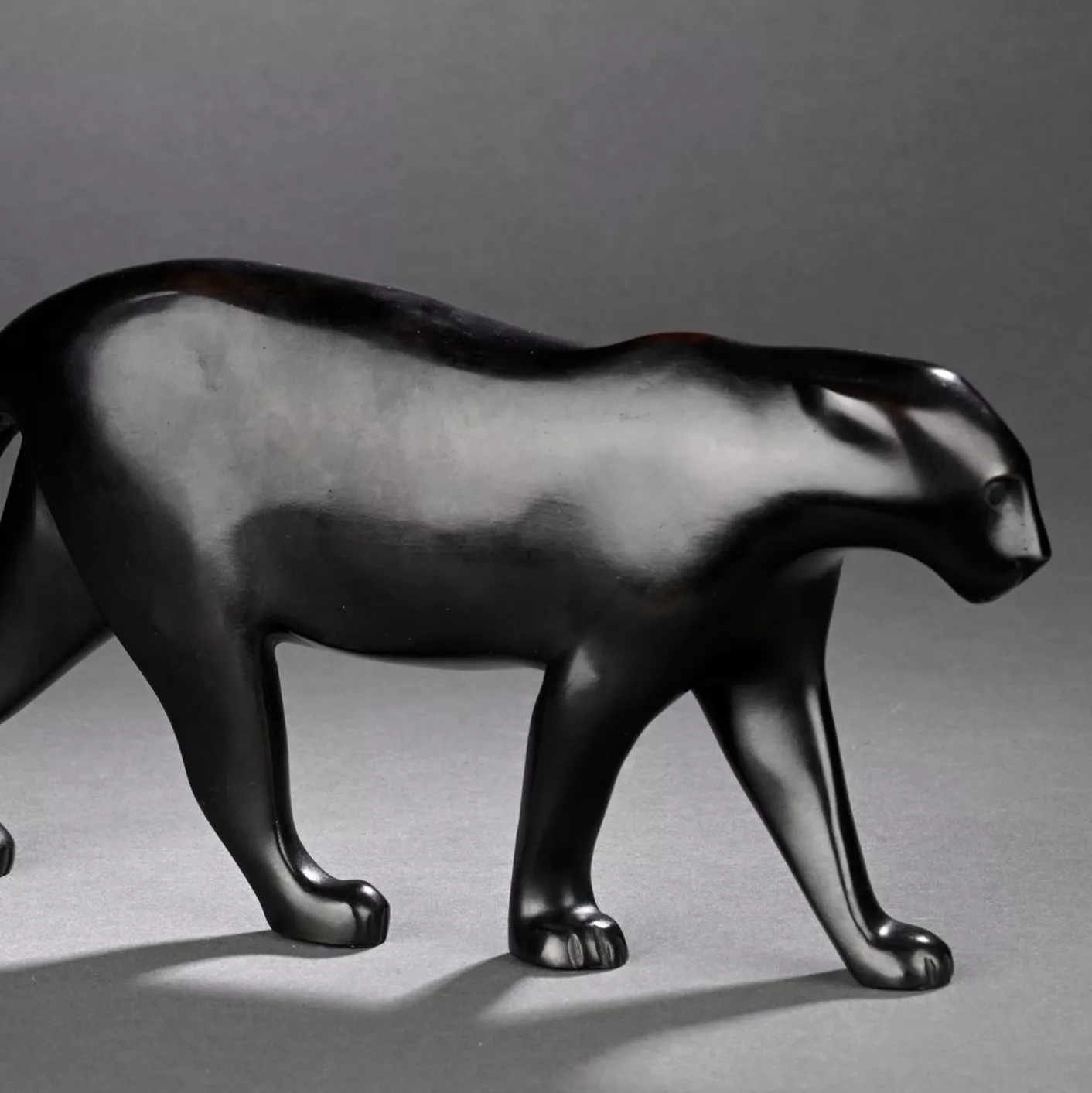
With smooth volumes and a minimalist aesthetic, Pompon translates the elegance and power of animals, each sculpture capturing their movement or natural posture with remarkable precision.
This stylized approach, pared down to the essentials, remains one of the most distinctive aspects of his work to this day, consolidating his place in animal art and captivating collectors and enthusiasts to this day.
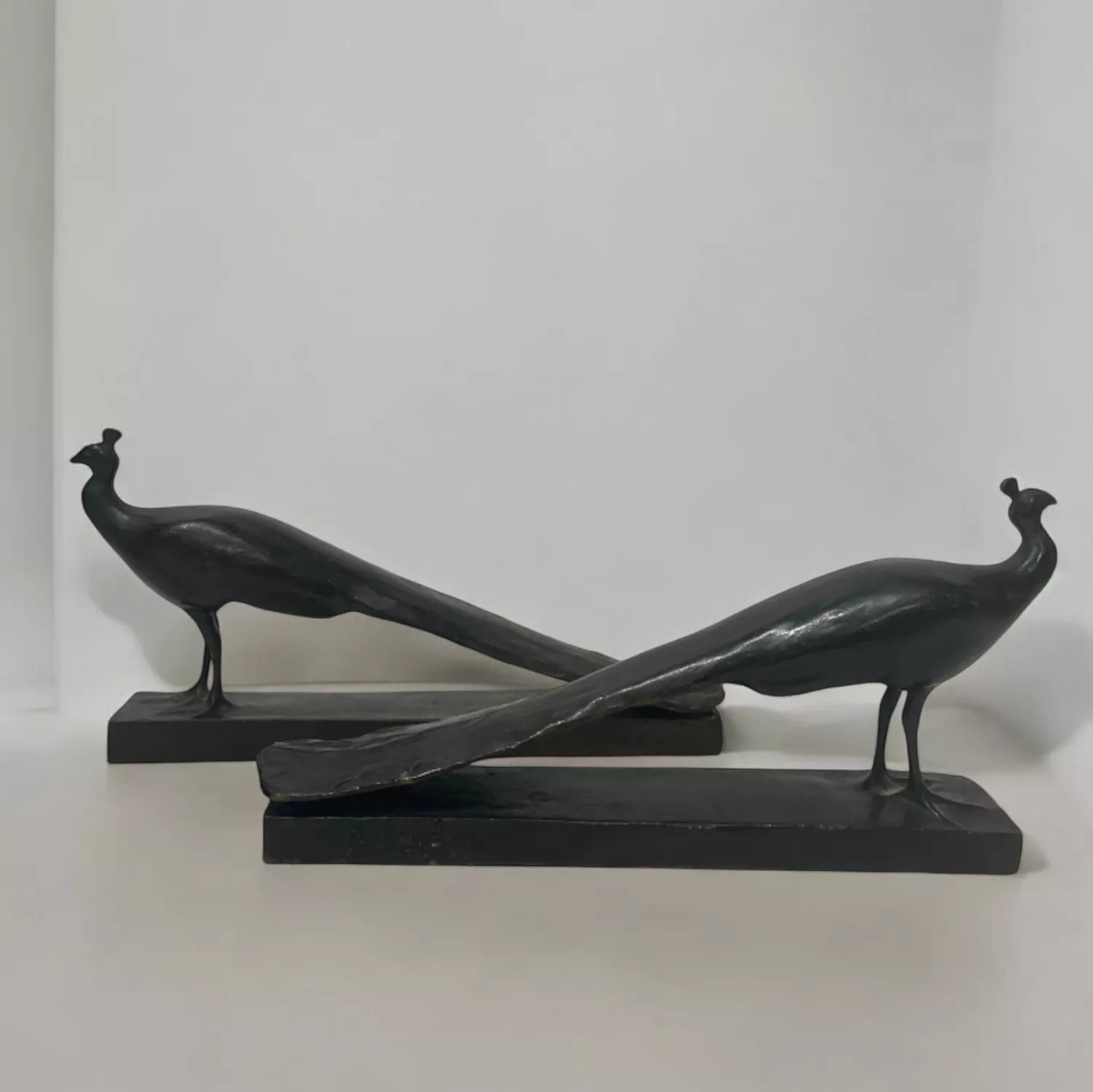
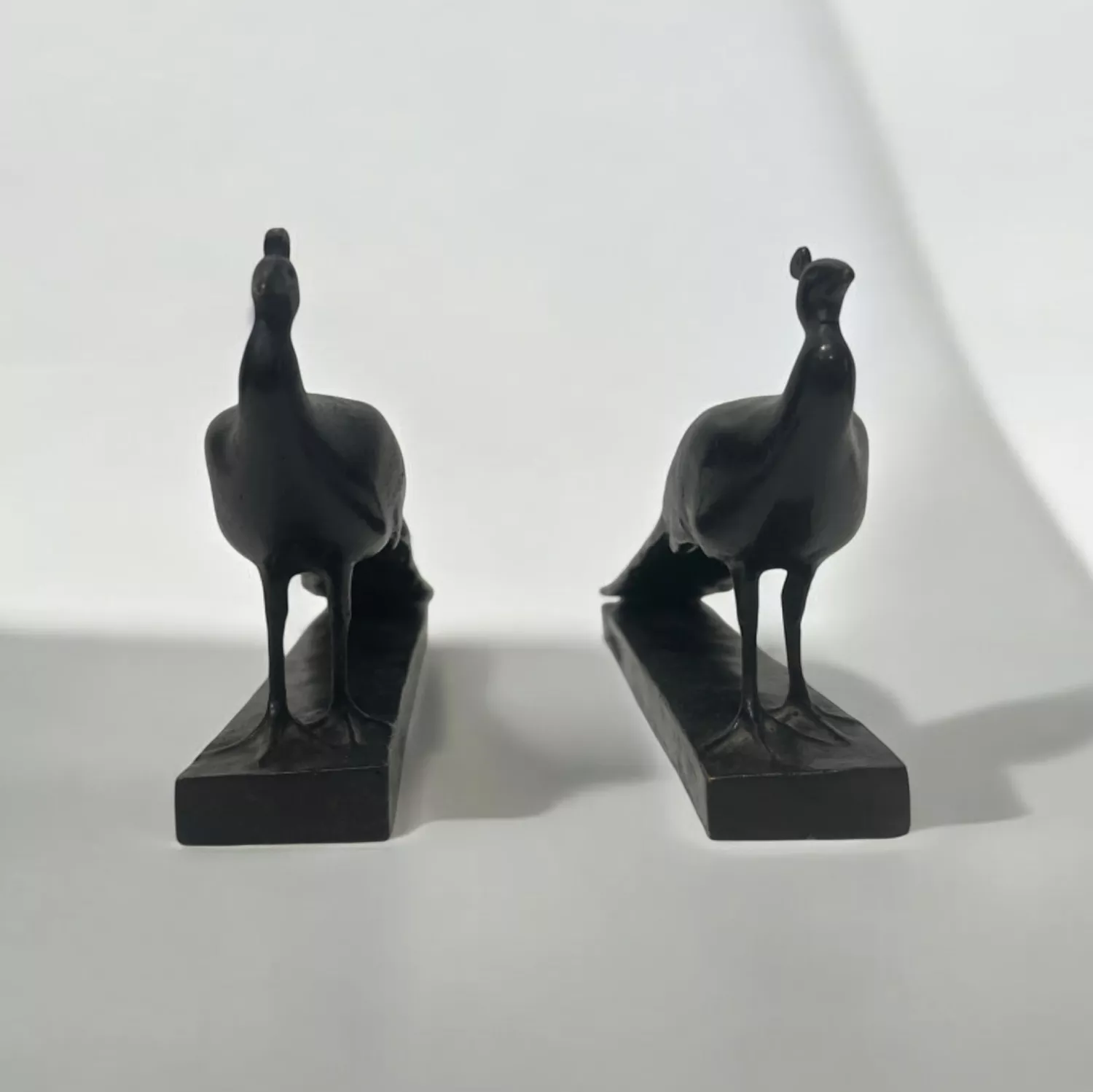
François Pompon, sculptor of animal modernity
François Pompon (1855-1933), a French sculptor, became one of the leading figures of modern animal sculpture in the 20th century.
Born in Saulieu, he was the son of a carpenter. He began by carving stone, before training in sculpture at the École des Arts Décoratifs in Paris.
His career led him to work in the workshops of the great masters, notably Auguste Rodin, where he perfected his skills as a practitioner and developed a technical rigor that would mark his style.
His path became clearer through contact with these influential sculptors, but it was his particular regard for the animal world that guided his art.
From around 1920, Pompon chose to emancipate himself from meticulous realism by simplifying the forms of his works, seeking to capture the essence of animals through pure lines and smooth volumes.
In 1922, the exhibition of L'Ours blanc at the Salon d'Automne marked his consecration: this immaculate colossus, with its clean lines and appeased posture, won the admiration of the public and critics alike.
This belated success suddenly puts him in the spotlight, and his style, marked by sobriety and abstraction, quickly becomes iconic.
From then on, Pompon devotes his entire career to animals, favoring materials such as marble and bronze, which highlight the softness and finesse of his lines.
His creations - from bulls and panthers to horses and owls - embody a soothing, almost mystical vision of the animal world.
Pompon's sculptures are worked in a spirit of observation and restraint, a rare aesthetic that contrasts with the more realistic approaches of his time.
Today, his works are housed in major museums, including the Musée d'Orsay and the Musée Pompon in Saulieu. They bear witness to the lasting impact of this sculptor who, by seeking to capture the purity of the animal, left an indelible mark on animal art.
Focus on Pompon's White Bear (Musée d'Orsay)
François Pompon's White Bear, a landmark sculpture, perfectly illustrates his unique vision of animal sculpture and his pared-down approach to form.
From the outset, this imposing work captures attention with the softness of its lines. The bear, though a brute and massive-looking animal, is presented here in a calm and serene, almost motionless posture.
Pompon foregoes all embellishment and simplifies the forms, reducing the animal to the very essence of its silhouette. The curves are gentle, the volumes perfectly smooth, creating a harmonious figure with no superfluous details.
This simplification, far from detracting from the power of the subject, lends the bear great majesty. The animal seems to stand in an almost mystical tranquility, a pure vision of animality, which goes beyond simple realistic representation to touch on a form of sculptural poetry.
The bear, here, is not a simple living being, but a symbol of nature, a mirror of the animal's quiet strength.
Pompon chooses to work in white marble, which reinforces the timeless aspect of the work. The smooth, almost polished surface invites contemplation and admiration, while the immaculate whiteness of the sculpture evokes purity and appeasement.
The animal, both robust and graceful, exudes a calm power, where every line seems expressed in a concern for simplicity and balance.
The bear's expression, calm and introspective, accentuates this impression of serenity. The minimal facial features, without aggression or exaltation, reinforce this vision of an animal in perfect harmony with its environment.
Pompon manages, through this sobriety, to offer an almost spiritual reading of the animal world.
This work, preserved at the Musée d'Orsay, testifies to Pompon's ability to reduce the animal to its very essence, and to confer upon it a rare dignity.
It remains a masterpiece of his art, embodying the perfect encounter between nature and modern sculpture, and a decisive step in the evolution of twentieth-century animal art.
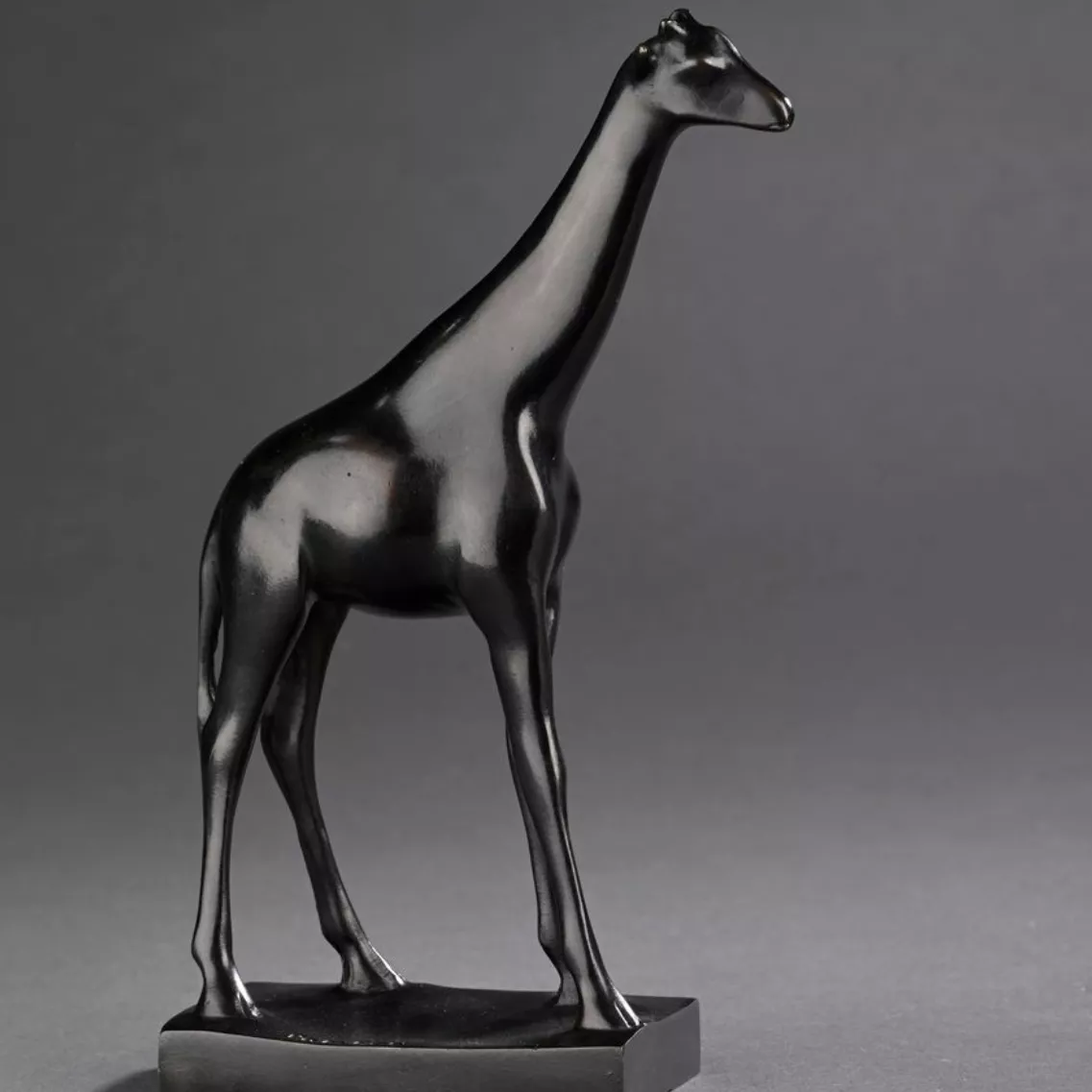
The legacy of François Pompon, between sculptural modernity and inspiration for the avant-garde
François Pompon, sculptor of formal purity, leaves a legacy that transcends his era and helps define a modern vision of animal sculpture.
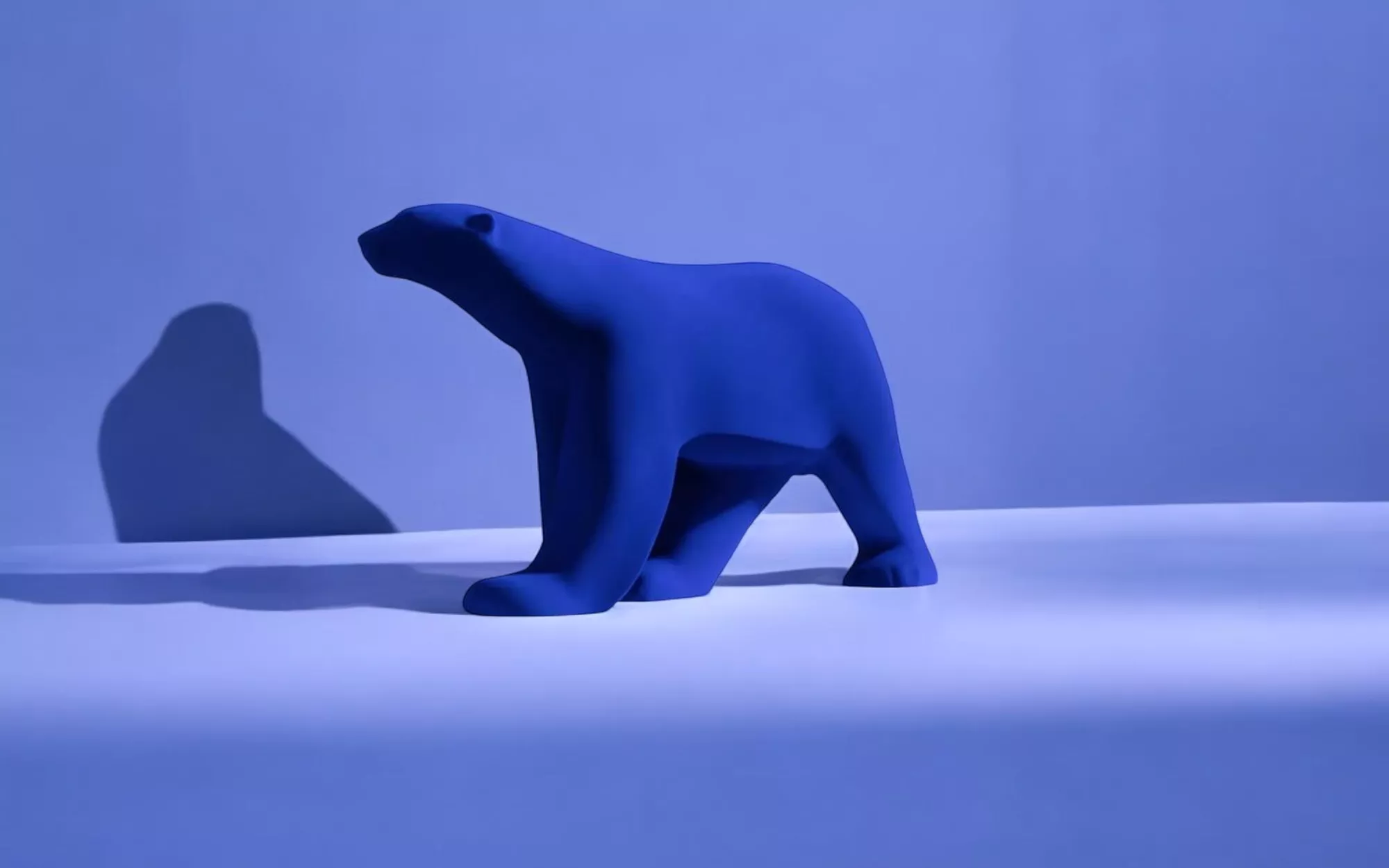
His radical choice to abandon realistic detail in favor of pared-down forms and fluid lines made him an emblematic figure for artists of modernity, in particular Yves Klein, whose art finds a direct echo in this quest for essence.
Inspired by Pompon's ability to capture animal presence in all its serenity and strength, Klein sees in his work a decisive influence that goes beyond mere mimicry and explores the relationship between form and emotion.
In the 1950s, Klein began to incorporate this pared-down aesthetic by creating monochrome sculptures, in which he took animal molds from Pompon, notably in his famous series of Blue Monoglyphs.
Through this intense blue, he transcended animal forms, inheriting from Pompon the art of revealing essence rather than appearance.
This influence translates into Klein's art as a subtle dialogue with nature, where each sculpture becomes a celebration of the animal as a universal symbol of strength and elegance.
Pompon, through this indirect transmission, thus resonates as a precursor of abstraction and conceptual art, paving the way for the minimalists who would in turn seek to capture the essential.
Pompon's imprint is visible today not only in museums, where his works are exhibited as icons of animal sculpture, but also in the approach of many contemporary sculptors.
His aesthetic approach, based on restraint and precision of line, continues to nourish a reflection on representation and perception.
Pompon's career, enriched by artistic and aesthetic dialogues such as that with Yves Klein, confirms his role as a pioneer, whose innovative vision continues to influence and inspire generations of artists in search of pure, timeless expression.
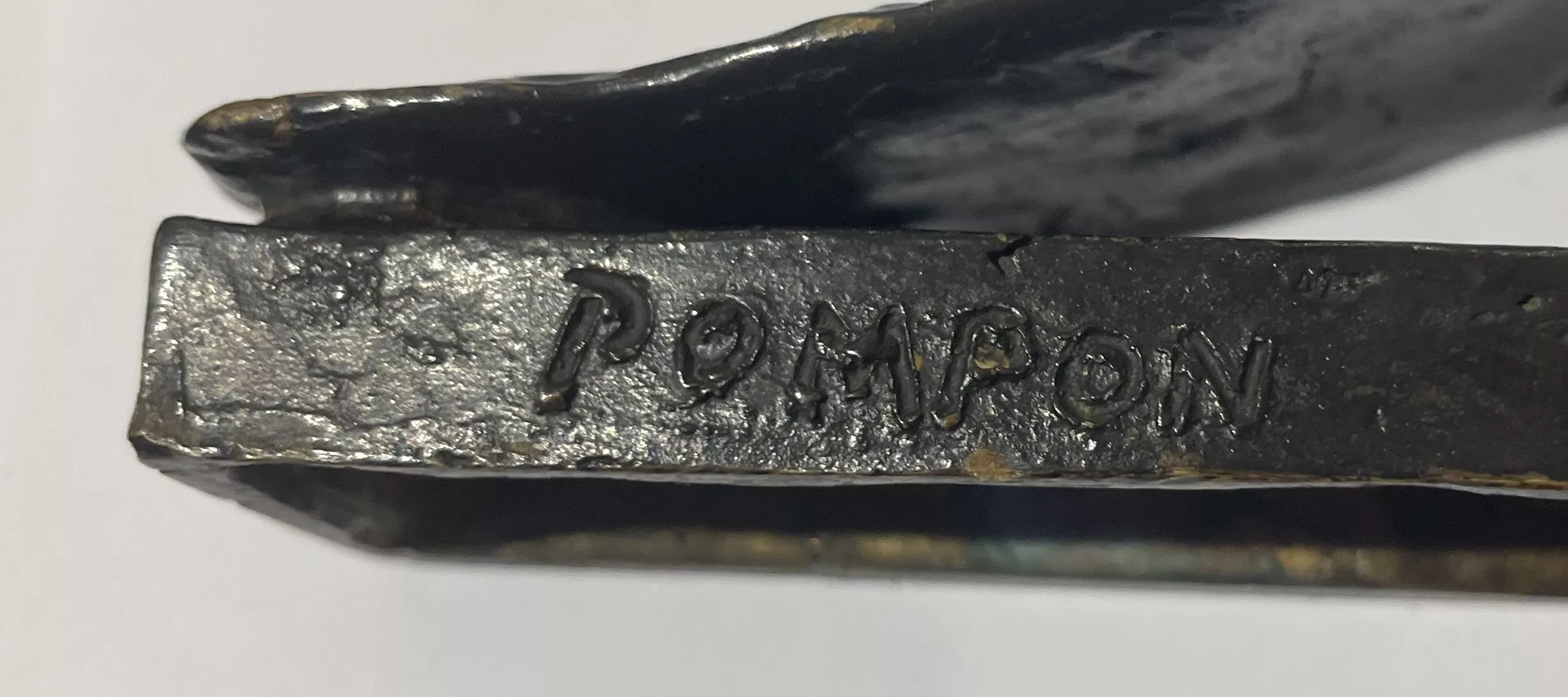
Recognizing François Pompon's signature
Arno Breker sometimes signs his sculptures. There are, however, many copies, which is why expertise is important.
Knowing the value of a work
If you happen to own a work by or after François Pompon, don't hesitate to request a free valuation using our form on our website.
A member of our team of experts and certified auctioneers will contact you promptly to provide you with an estimate of the market value of your work, as well as ad hoc information about it.
If you are considering selling your work, you will also be accompanied by our specialists in order to benefit from alternatives for selling it at the best possible price, taking into account the inclinations of the market.
.Estimate in less than 24h
Discover in the same theme

Rating and value of furniture, armchairs, tables by Eileen G...
Eileen Gray is a 20th-century English designer and architect who produced furniture that is highly regarded and valued at auction.
Learn more >

Rating and value of paintings by Isaac Dobrinsky
Isaac Dobrinsky is a painter from the École de Paris who produced expressionist works that are highly valued at auction.
Learn more >

Rating and value of paintings and drawings by Léon Bazile Pe...
Léon Bazile Perrault is a French painter of firework art who produced numerous works of high value.
Learn more >
Sculptures from the same period sold at auction

Estimated Between €2,000 and €4,000
Edouard Marcel SANDOZ (1881-1971) curly stingray, bronze print

Estimated Between €1,500 and €3,000
Renato CARVILLANI (1896-1986), seated woman, gilded bronze print

Estimated Between €1,500 and €3,000
César BALDACCINI dit CESAR (1921-1998), Poule Cartier, bronze print

Estimated Between €10,000 and €20,000
Baltasar LOBO (1910-1993), female nude in bronze

Estimated 5.000 - 8.000
Igor MITORAJ (1944-2014), Bust of Asclepius, Green patina bronze sculpture

Secure site, anonymity preserved

Auctioneer approved by the State

Free and certified estimates
Frequently asked questions
-
Who is François Pompon, and what is his role in the history of sculpture?François Pompon (1855–1933) was a French sculptor considered one of the masters of 20th-century modern animal sculpture. After studying at the École des Arts Décoratifs in Paris and serving an apprenticeship in Auguste Rodin’s studio, he found his own style by simplifying animal forms to capture their essence rather than their realistic details. His breakthrough came late in life, in 1922, with the exhibition of *The White Bear* at the Salon d’Automne, a work that remains emblematic of his refined and harmonious style.
-
What are the price ranges for François Pompon's works, depending on the material?The prices of François Pompon’s works vary considerably depending on the material used: paintings range from €1,370 to €3,500, drawings and watercolors from €2,900 to €6,200, ceramics between €2,200 and €15,000, marble between €12,100 and €443,000, and bronze between €370 and €620,000. This range reflects the importance of technique and the rarity of each work on the market.
-
How can you authenticate a sculpture or a work attributed to François Pompon?To authenticate a work by François Pompon, we recommend requesting a free, no-obligation appraisal from Auctie's. Our team of experts and state-certified auctioneers will examine your artwork and provide you with an accurate estimate, as well as useful information regarding its authenticity, given that there are many copies in circulation.
-
Is this the right time to sell a sculpture by François Pompon?Yes, now is a good time to sell a work by François Pompon. Prices for his sculptures are rising steadily in the current market, and his bronze and marble works are particularly sought after by European collectors. Demand for this artist remains strong, creating a favorable environment for sales.
-
How does the process of selling a work of art at Auctie's work?The process begins with a request for a free, no-obligation estimate using the form on the Auctie's website. A certified expert or auctioneer will contact you within 48 hours to provide you with an estimate for your artwork. If you decide to sell, our specialists will then guide you through the process from the appraisal to the auction, identifying the best options to achieve the highest possible price based on current market trends.
