



Rating and value of paintings by Nathalie Goncharova

Key takeaways
- A leading figure in the Russian avant-garde, Natalia Goncharova’s works fetch tens of thousands of euros at auction, notably her painting *Spanish Woman*, which sold for €6,538,470 in 2010.
- Estimates vary depending on the medium: prints range from €80 to €200, watercolor drawings from €70 to €386,370, and paintings from €230 to €6,538,470.
- Goncharova fuses Neo-Primitivism, Cubo-Futurism, and Rayonism, drawing inspiration from Russian icons and folk art to create a style that is both archaic and resolutely modern.
If you own a work by or based on the artist Natalia Goncharova and would like to know its value, our state-approved experts and auctioneers will guide you.
Our specialists will carry out a free appraisal of your work, and send you a precise estimate of its value on the current market.
Then, if you wish to sell your work, we will direct you to the best possible arrangement to obtain the optimum price.
Rating and value of the artist
A major artist of the Russian avant-garde, Natalia Goncharova quickly established herself as a sure value on the art market. Sought after by collectors the world over, the artist's works boast a high price tag that continues to grow.
As a result, a signed work by Goncharova can fetch tens of thousands of euros at auction, as evidenced by her painting Espagnole, dating from 1916, which fetched €6,538,470 in 2010. His works are rare on the market, suggesting record-breaking auctions to come.
Order of value from a single work to the most prestigious
Technique used | Result |
|---|---|
Estamp - multiple | From 80 to 100 200€ |
Drawing - watercolor | From €70 to €386,370 |
Painting | From €230 to €6,538,470 |
Estimate in less than 24h
The artist's works and style
Natalia Goncharova is close to the Rayonist and Futurist movements, following in the footsteps of the German Expressionists and in particular the Die Blau Reiter group.
However, the influences exerted on her works are multiple, and she adds something more personal and inherent to her artistic identity, having never said herself that she belonged to a particular current.
She produced drawings, paintings but also sculptures ; although only one is listed presented at auction. Trained in academic painting in Moscow, she quickly and radically detached herself from it to develop a free, experimental pictorial language.
Her style integrates and combines Russian icons, popular art, neo-primitivism, cubo-futurism and rayonnism, all in a hybrid, evolving dynamic. Her painting is rooted in Russian culture, but open to the European avant-garde.
Gontcharova works mainly in oil on canvas, but also on wood, textiles and paper, often with a dense, brushed, unpolished material that reveals the gesture. She uses a frank palette, laid down in mases or broken strokes, sometimes bordering on abstraction.
The artist refuses smooth finishes and wants her painting to be alive, jolted, impulsive and changed by visual rhythms and raw energy. She is largely inspired by Orthodox icons, naive art, embroidery, rural signs and mural frescoes.
She adopts these different forms in a new plastic vocabulary, between extreme stylization and fragmented figuration. Her approach is at once archaic and modern, in dialogue with folklore and avant-garde aesthetics.
Natalia Goncharova confuses Rayonism with Larionov in 1912, who seeks to represent the energy emanating from objects rather than their form. Cubism and Futurism exerted a notable influence on the artist, which she fused into exploded, dynamic compositions that multiplied points of view.
She claimed an art of rupture, visual shock and plastic liberation. Goncharova also worked for the theater (sets and costumes, notably for Diaghilev's ballets), as well as textiles, illustration and posters, in a total vision of art.
Her graphic style, structured and colorful, adapts to a variety of media without losing its expressive force. She always combines form, rhythm and symbolic content, whatever the discipline.
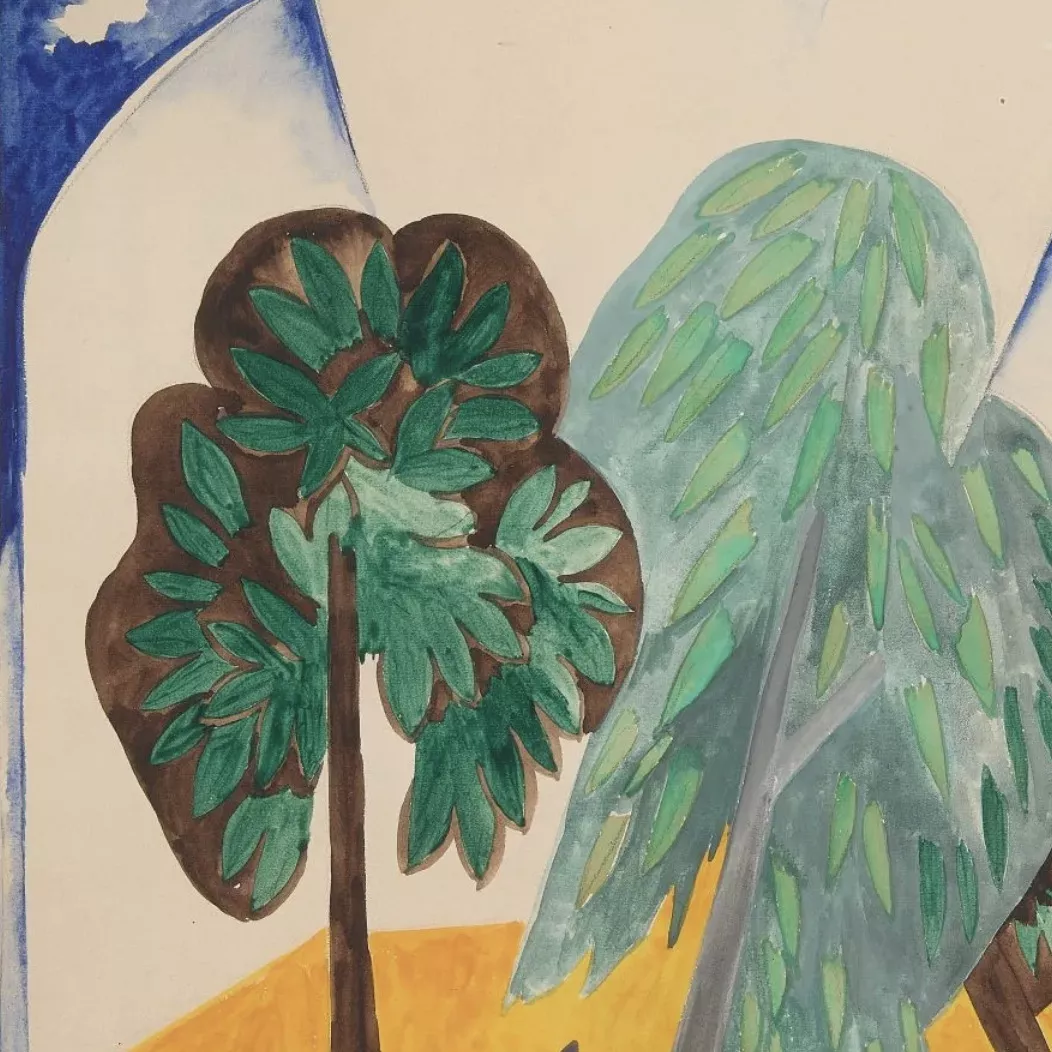
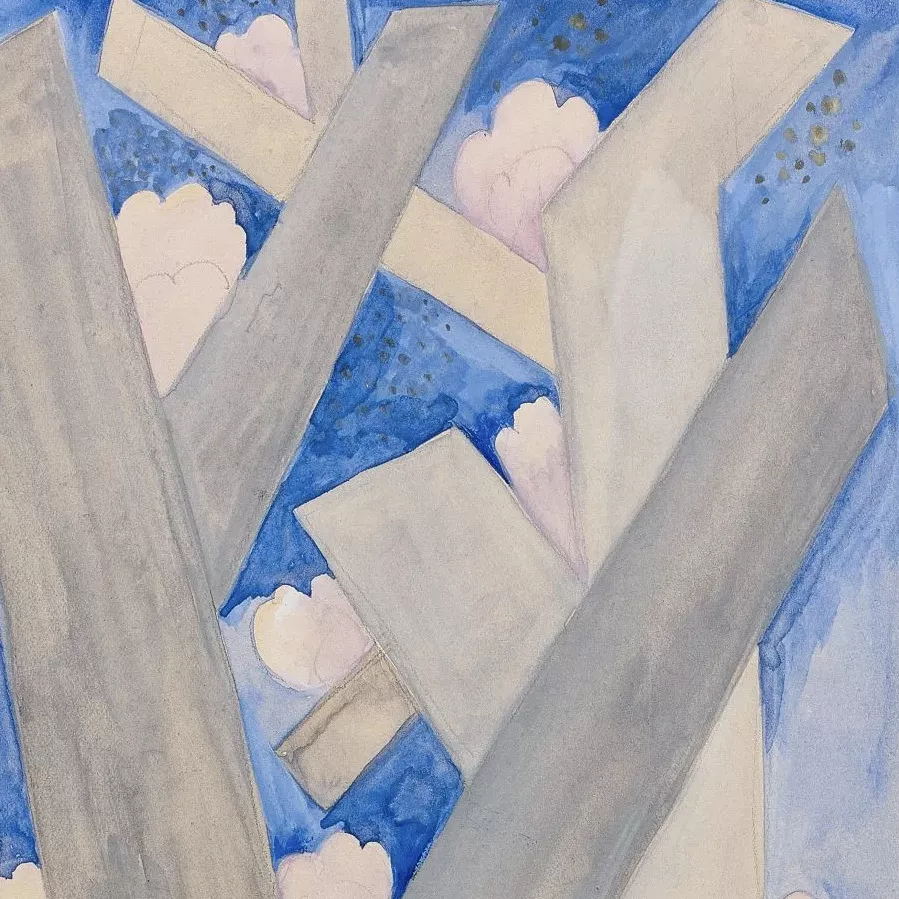
Natalia Goncharova, Futurism between Moscow and Paris
Natalia Sergueïvena Goncharova (1881-1962) was a Russian Futurist artist.
She was born in the Tula region into a Russian noble family. She developed an interest in art as a child through Orthodox devotional icons.
She chose to move to Moscow to study painting with Constantin Korovine, and sculpture aurpès Paul Troubetskoy. She chose to devote herself exclusively to painting after meeting her future husband, Michel Larionov, also a painter.
She was initially inspired by icons, then became interested in cubism. Still seeking her own path, she also experimented with Futurism, which is more suited to understanding her work, and then with Rayonism (with which Rayonism has much in common).
Gontrachova exhibited her work at the Salon d'Automne from the 1910s, thanks to the support of husband and wife Delaunay.
In the 1920s, the artist worked for ballet and theater sets between Paris and Switzerland.
She later fully integrated the École de Paris until the post-war years, when she and Larionov were forgotten by the public and critics alike.
The artist died in Paris in 1962.
Focus on The Washerwomen, Natalia Goncharova, circa 1911
The Washerwomen is a painting by Goncharova done in oil on canvas on a medium to large format depending on the version. It depicts women washing clothes in a river, who are shown in action, in groups.
The work depicts a scene from Russian peasant life, which is a central theme in Goncharova's art of this period. The washerwomen are depicted at work, in a dynamic, fragmented composition far removed from any Romantic idealization.
Here she lays claim to a " national art ", popular and rooted in traditions and simple gestures, at odds with aristocratic or academic art. Bodies are massive, schematized and almost sculpted, with faces treated synthetically.
Space is flattened and perspectives abolished everything is placed head-on, in a logic close to icons or popular images. The drawing is energetic, and circumscribed with a desire for monumentality in the everyday.
The colors she uses are vivid and pure (reds, whites, ochres, blacks) often juxtaposed without modeling or gradation. The paint is applied in straightforward flat tints, with no illusionism and a vibrant, rough surface.
The whole creates an impression of physical strength and direct, almost primitive presence. Les Lavandières does not simply document a gender scene, but exalts the power of female labor and the vigor of an autonomous rural world.
It is a response to the Western avant-gardes, a Russian pictorial manifesto that is both archaic and innovative. The work bears the mark of a desire for cultural reappropriation and affirms the artistic value of forgotten folk forms.
This painting is central to his cycle on the Russian peasantry, and was exhibited in the first exhibitions of the group La Queue d'Âne (Valet de carreau) in Moscow. It perfectly embodies his neo-primitivist style, before his transition to cubo-futurism and rayonism.
It is recognized today as a key work in the history of the Russian avant-garde, standing between redefined tradition and combative modernity.
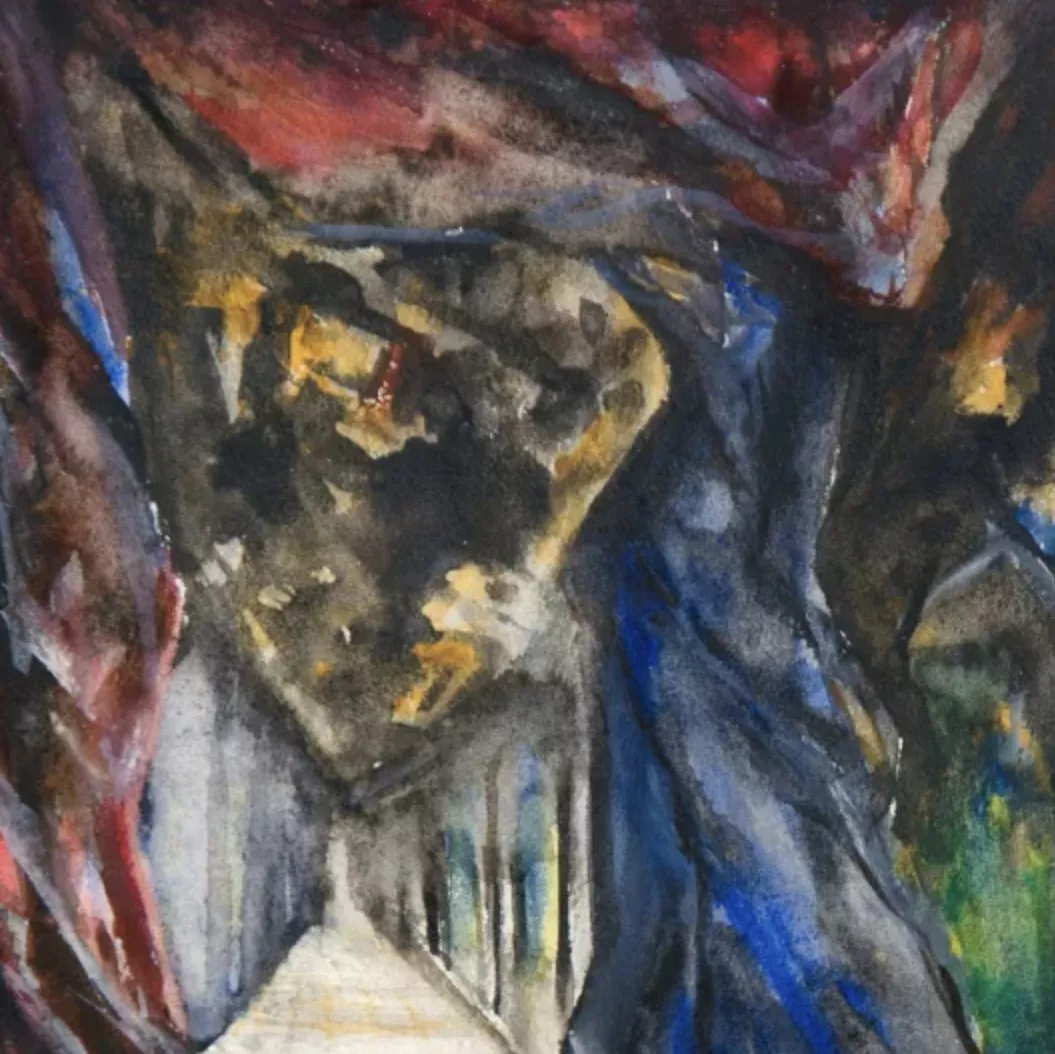
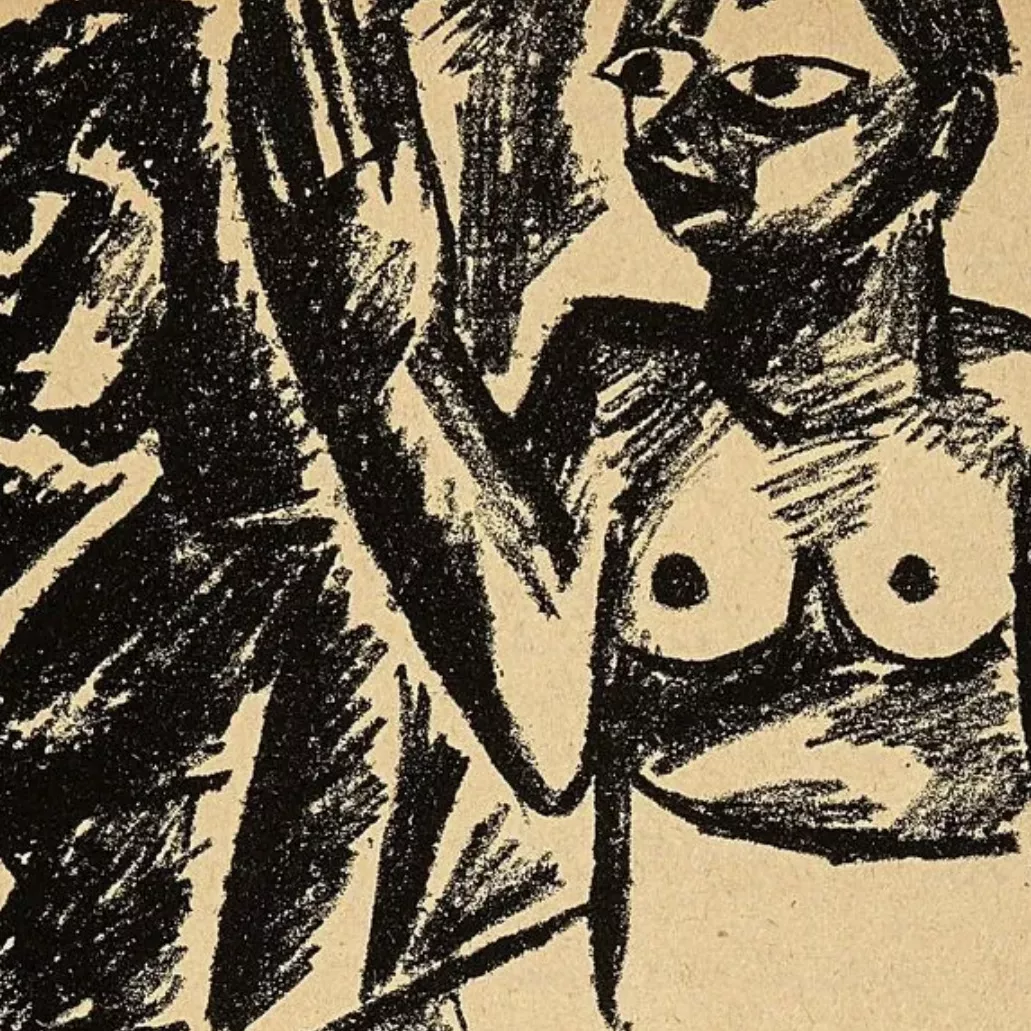
Natalia Goncharova's imprint on her period
Natalia Goncharova made a lasting mark on her time with her substantial artistic output, which spanned the artistic changes of the first half of the century. She is well known to the French public, her works are highly successful at auction and her stock continues to rise.
Some of her works are held in museums, but private collectors play the biggest role in preserving her work.
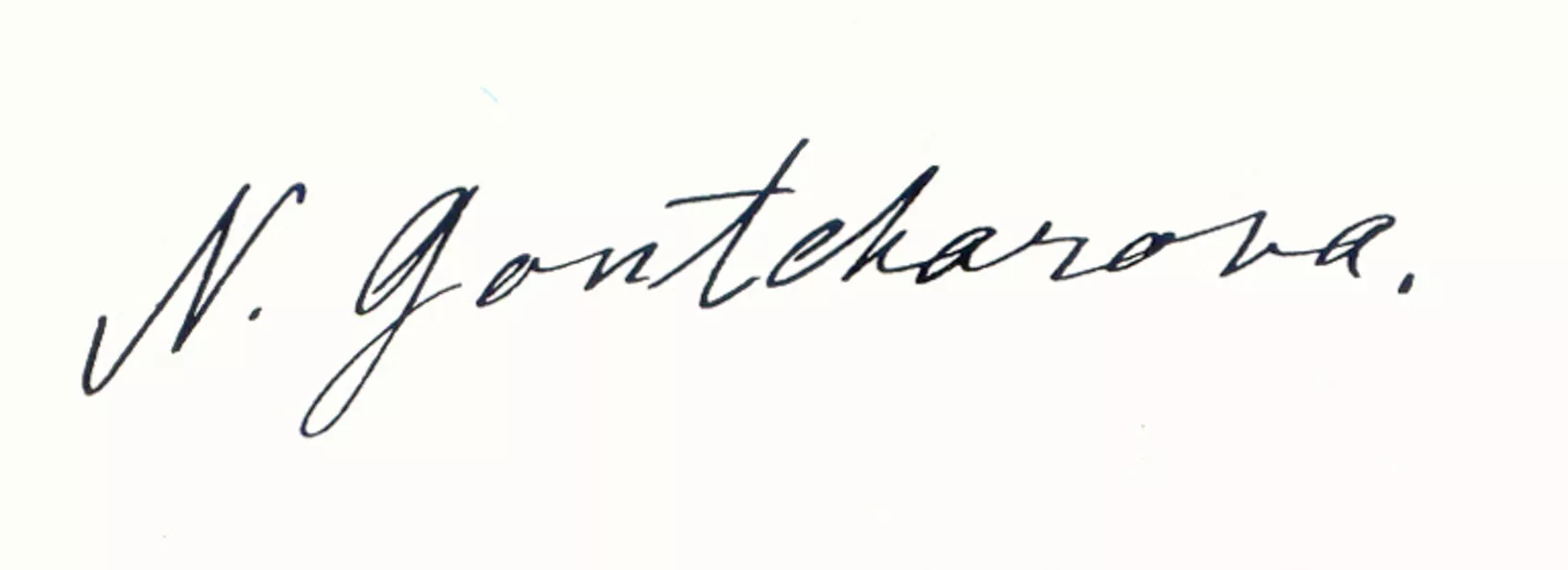
Her signature
Not all Natalia Goncharova's works are signed.
Although there are variations, here is a first example of her signature:
Expertise your property
If you own a work by Natalia Goncharova, don't hesitate to request a free appraisal by filling in our online form.
A member of our team of experts and licensed auctioneers will contact you to provide an estimate of the market value of your work.
If you are considering selling your work, our specialists will also guide you through the various alternatives available to obtain the best possible price, taking into account market trends and the specific features of each object.
Estimate in less than 24h
Discover in the same theme

Rating and value of paintings by Zinaida Serebryakova
Zinaida Serebryakova is a Russian realist painter of the 19th century, who produced works that are quoted and valued on the art market.
Learn more >

Market Value and Price of Etel Adnan's Paintings, Drawings,...
Etel Adnan is a twentieth-century Lebanese abstract artist who has produced many works that are highly regarded and valued.
Learn more >

Rating and value of paintings and drawings by Le Van De
Van De is a painter from Vietnam's early modern period whose works command high prices and are highly valued at auction.
Learn more >
Similar works sold at auction


Secure site, anonymity preserved

Auctioneer approved by the State

Free and certified estimates
Frequently asked questions
-
Who is Natalia Goncharova, and what is her artistic background?Natalia Goncharova (1881–1962) was a leading artist of the Russian avant-garde, a painter, sculptor, and theater set designer. Born into a Russian noble family, she trained in Moscow and developed a hybrid style that fused Orthodox icons, Neo-Primitivism, Cubo-Futurism, and Rayonism. She co-founded the Rayonist movement with Larionov in 1912 and established herself as a central figure in Russian modernism, working between Moscow and Paris until her death.
-
What is the price range for works by Natalia Goncharova?Gontcharova’s works command high and rising prices depending on the medium: multiple prints range from 80 to 200 €, drawings and watercolors between €70 and €386,370, and paintings between €230 and several million euros, as evidenced by the 2010 auction sale of her painting *Espagnole* for €6,538,470. The scarcity of her works on the market contributes to the steady rise in prices.
-
How can you authenticate a work by Natalia Goncharova?To authenticate a work by Goncharova, we recommend requesting a free appraisal from Auctie's by filling out our online form. Our team of experts and state-certified auctioneers will contact you to assess the authenticity and market value of your item, with no obligation on your part.
-
Is this the right time to sell a work by Natalia Goncharova?Yes, now is a good time to sell a work by Goncharova. The artist’s market value is steadily rising, her works are sought after by collectors worldwide, and their scarcity on the market creates optimal conditions for securing a favorable price. The current market shows a growing interest in the Russian avant-garde.
-
How does the appraisal process work at Auctie's?Appraisals at Auctie's are free and non-binding. You fill out an online form, and a certified expert or auctioneer will contact you to examine your piece and provide you with an accurate assessment of its market value. If you wish to sell, our team will advise you on the best options for achieving the highest possible price at auction.
