



Rating and value of paintings by Henri Matisse

Key takeaways
- Prices for Matisse's works vary considerably, ranging from €10 to €60,138,700 for oil-on-canvas paintings, depending on the technique and provenance.
- In 2019, “La Terrasse” (1912) sold for €15,133,200, far exceeding its initial estimate of 4.4 to 7.1 million.
- A leading figure of Fauvism, Matisse revolutionized modern art by liberating color and developed the paper-cutout technique beginning in the 1930s.
If you own a work by or after the artist Henri Matisse, and you d like to know its value, our state-approved experts and auctioneers will offer you their appraisal services.
Our specialists will carry out a free appraisal of your work, and provide you with a precise estimate of its value on the current market.
Then, if you wish to sell your painting, we will direct you to the best possible arrangement to obtain the optimum price.
Rating and value of the artist Henri Matisse
Considered a pioneering painter of modern art, Henri Matisse quickly established himself in the history of twentieth-century art.
This legacy is made up of various creations : mainly oils on canvas, among which are his Fauvist paintings.
At present, the prices of his works are rising enormously under auctioneers' hammers. His still lifes are particularly prized, and the price at which they sell on the art market ranges from €10 to €15,133,200, a considerable gap but one that speaks volumes about the value that can be attributed to Henri Matisse's paintings.
In 2019, an oil on canvas, La Terrasse, dating from 1912, sold for €15,133,200 while it was estimated at between €4,450,000 and €7,121,500.
Order of value from a simple work to the most prestigious
Technique used | Result |
|---|---|
Estamp - multiple | From €10 to €3,300,000 |
Drawing - watercolor | From 80 to 11 235 500€ |
Oil on canvas | From 60 to 60 138 700€ |
Estimate in less than 24h
Henri Matisse's style and technique
Henri Matisse is the leader of fauvism, a movement based on a radical liberation of color, which he applies in expressive flat tints, without concern for local realism, constantly seeking a synthetic, uncluttered plastic language, where form, line and color merge in poetic construction.
His style evolves from a naturalism acquired from the Academy to a decorative and abstract art focused on the visual and affective essentials.
He works with oil paint in his early decades, applied in broad, fluid strokes, then in pure flat tints, often ringed with black outlines (here we find the influence of cloisonnism).
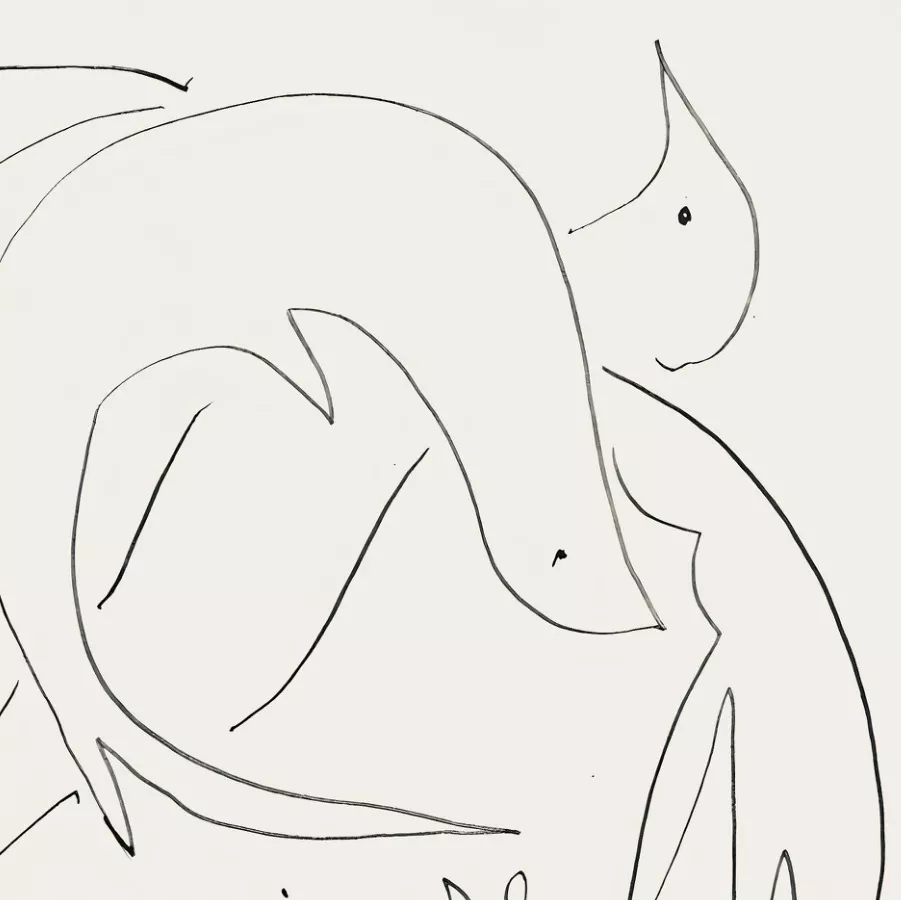
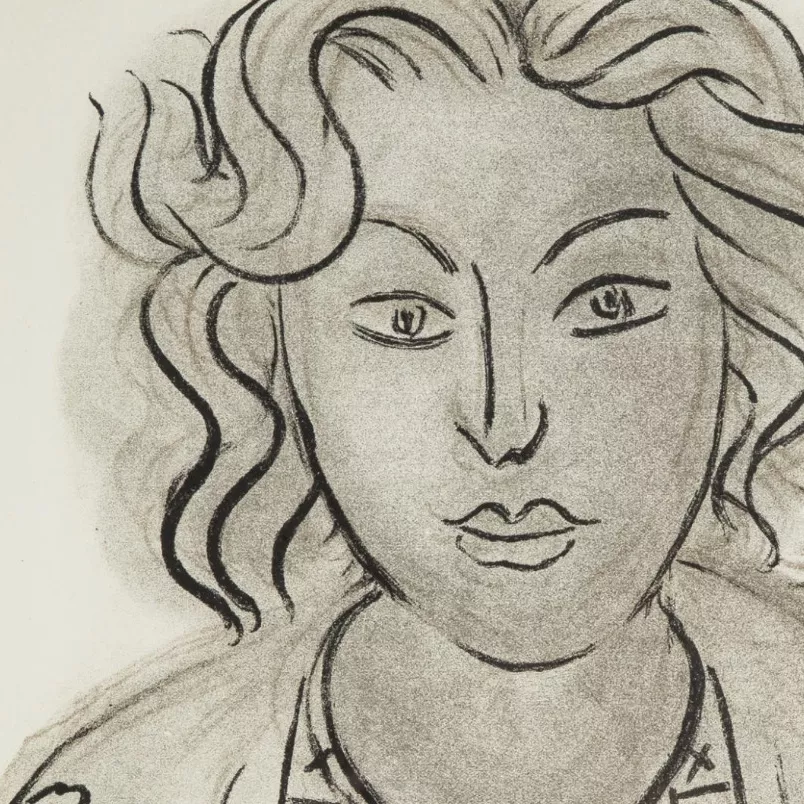
He worked in series (progressive modifications of the same subject to purify the form : portraits, still lifes, female nudes, interiors). He uses preparatory drawings in charcoal, ink or pencil, with extreme attention paid to expressive line.
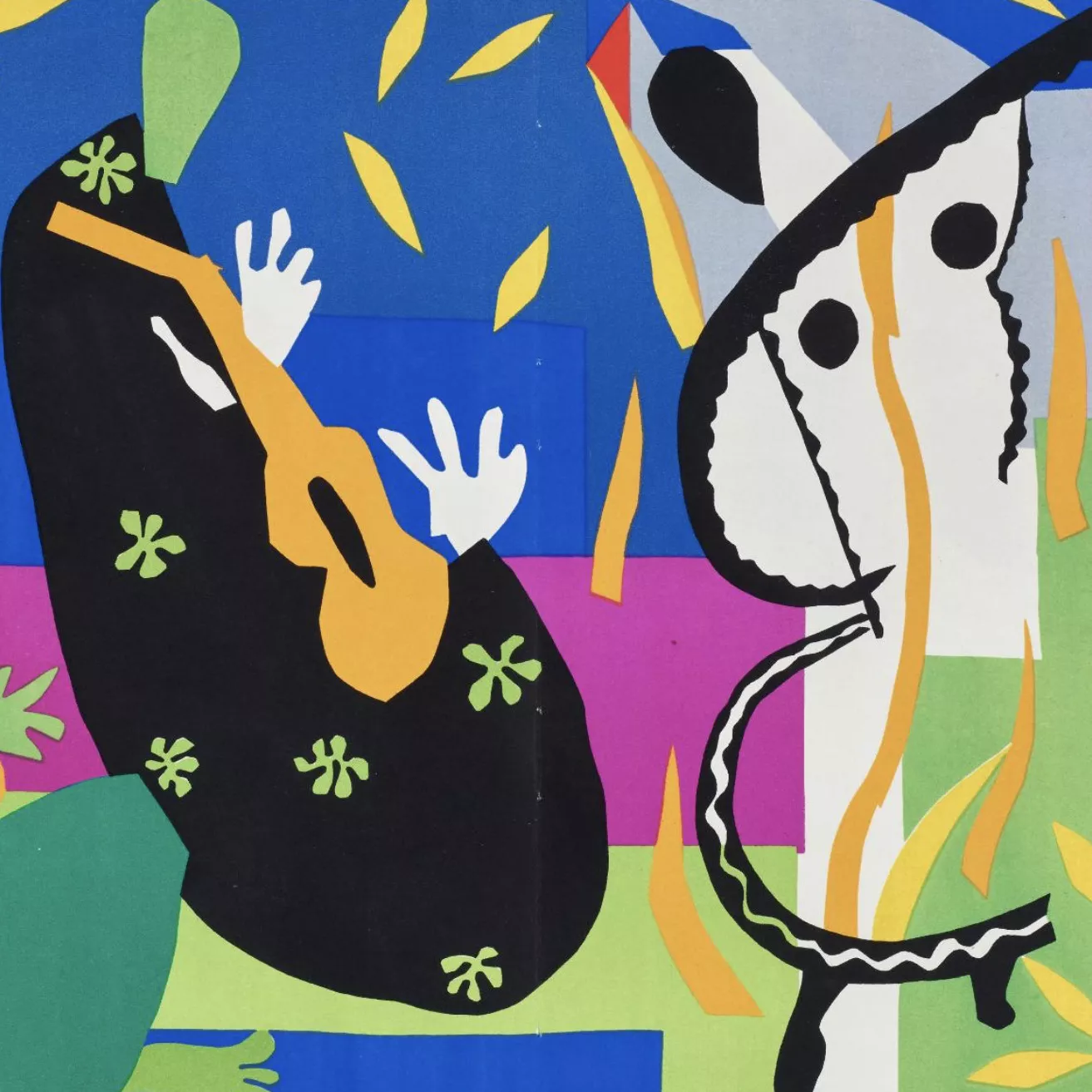
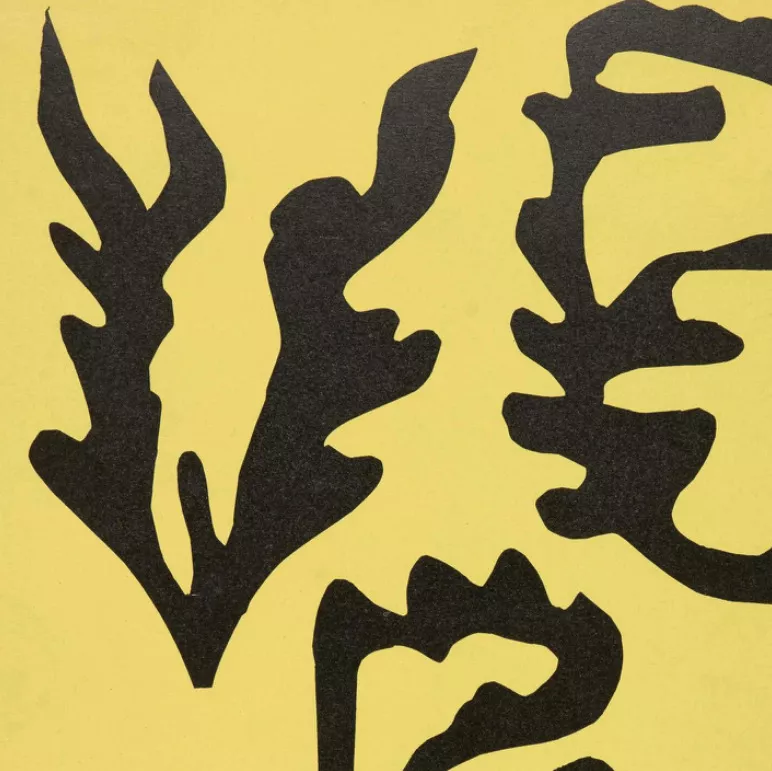
From the 1930s and especially after 1941, he developed the technique of gouache découpée : these are papers painted with gouache then cut with scissors to compose flat or mural works.
The cut-out becomes a drawing with scissors : the direct line, sliced in color, with no possible repentance. He drew with a brush (black line on a white background) in his graphic works, with remarkable calligraphic flexibility (influence of Islamic and Far Eastern art).
Matisse works with orientalizing interiors, flowery still lifes, languid women, windows open onto the sea and plant motifs, always with a concern for visual and decorative rhythm. The subject is a pretext for plastic organization, not narrative.
Space is often de-hierarchicalized, without classical perspective : juxtaposed planes, flat colors, abolished volumes.
Decorative thinking is constant, as Matisse designs tapestries, stained-glass windows such as those for the chapel in Vence, ceramics and various fabrics.
He thinks of the work as a total surface, where each element participates in the balance of the composition. He rejects modeling, chiaroscuro and illusionism, and seeks an immediate, harmonious presence of paint.
Henri Matisse's career
Henri Matisse was born in 1869 in northern France, into a family of shopkeepers. He first studied law in Paris, then worked briefly as a solicitor.
He turned to painting at the age of 21, after a prolonged convalescence. He then trained at the Ecole des Beaux-Arts in Paris in Gustave Moreau's studio, and studied the Old Masters, copied paintings in the Louvre and was introduced to Impressionism.
He first exhibited at the Salon de la Société Nationale des Beaux-Arts in 1896, and took part in the Salon d'Automne in 1905, where his brightly colored canvases, notably Woman in a Hat, triggered a scandal.
Louis de Vauxcelles said " orgy of pure tones : it's Donatello among the fauvists ". This qualification gave rise to the term " fauvism ". Matisse soon became the group's leader, alongside Derain, Vlaminck or Dufy, advocating the emancipation of color and formal simplification.
He spent time in Algeria, Morocco, Spain, Italy and Tahiti. His sojourns nurtured his palette, his taste for ornament, textiles and exotic motifs. He discovered Islamic art and Japonism, which would strongly influence his compositions and approach to space.
He set up his studio in Nice in the 1920s, and his painting blossomed in a more decorative vein, with luminous interiors, odalisques and studio scenes. In 1941, after an operation for cancer, he found himself in a wheelchair.
His activity evolved towards cut paper, a medium he elevated to a major art.
He created the Chapelle du Rosaire in Vence (1947 - 1951), a total work that integrates stained glass, ceramics, liturgical furniture and architecture. In 1947, he published Jazz, an album of cut-paper plates accompanied by handwritten texts, considered a masterpiece of the artist's book.
He died in Nice in November 1954, leaving behind an immense body of work, marked by a constant quest for balance, clarity and visual joy, and by a discreet but decisive formal radicalism.
His influence is considerable on 20th-century avant-gardes (expressionism, lyrical abstraction, minimal art) and on artists such as Ellsworth Kelly, David Hockney or Pierre Soulages.
Focus on L'Atelier rouge, Henri Matisse, 1911
L'atelier rouge is an oil on canvas by Matisse measuring 181 x 219 cm and held at MoMA, painted in Issy-les-Moulineaux in his summer studio.
It's an interior view of Matisse's studio, represented in uniform red solids, against which the furniture, objects and canvases in the space stand out in yellow lines.
Classical perspective is deliberately abolished : space is defined not by depth but by flat color and the graphic arrangement of elements. The canvas becomes a continuous surface, where object, wall and ground seem to melt into a single crimson-red hue.
The dominant red, applied after a more neutral first sketch, absorbs space and unifies the entire scene, the color creating architecture. Matisse uses reserve and light yellow outlines to make objects appear by subtraction, like a form of drawing in painting.
This method gives the work a decorative dimension, akin to the applied arts or stained glass. The studio is both an intimate space and a mental world : the canvases represented in the work are earlier works by the artist, as if to freeze a personal museum.
The work celebrates the act of creation, showing an artist's space sublimated by color and harmony. It embodies his quest for " pure painting " where form and color are inseparable and without hierarchy.
L'Atelier rouge marks a key stage between Fauvism and the decorative research of the 1920s. It foreshadows the cut-out gouaches with their flat surface treatment and desire for decorative abstraction.
The work also prefigures the research of American abstraction (Rothko, Newman) through its monochrome and spatial treatment.
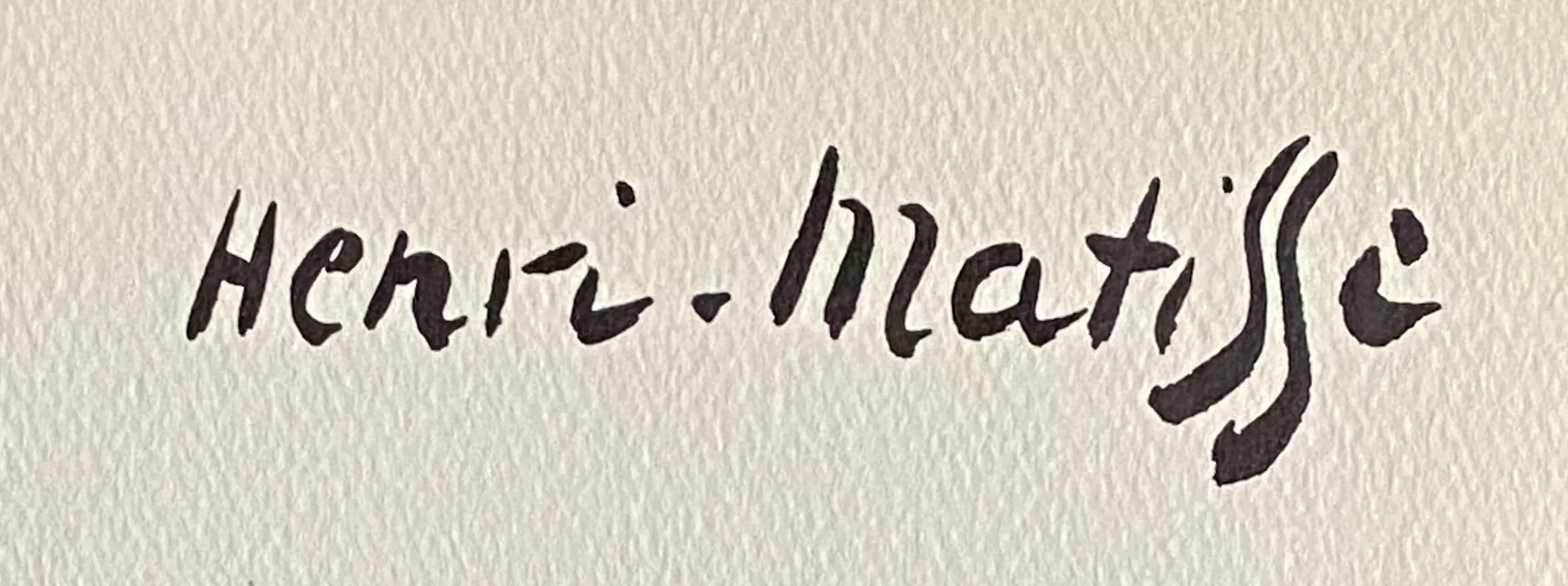
Henri Matisse's signature
Henri Matisse often signs his works, but his signature has changed over the years. Expertise remains essential to ensure the authenticity of your work.
Knowing the value of a work
If you happen to own a work by or after Henri Matisse, don't hesitate to request a free appraisal using our form on our website.
A member of our team of experts and chartered auctioneers will contact you promptly to provide you with an estimate of the market value of your work, as well as ad hoc information about it.
If you wish to sell your work, you will also be accompanied by our specialists in order to benefit from alternatives for selling it at the best possible price, taking into account the inclinations of the market.
.Estimate in less than 24h
Discover in the same theme

Rating and value of Goudji's works, sculptures and jewelry
Goudji, the unusual goldsmith and sculptor of the 20th century, wields the arts of fire to create an enchanting universe that is highly prized at auct...
Learn more >

Rating and value of works, drawings, paintings by Albert Mar...
Albert Marquet is a twentieth-century painter influenced by Impressionism who produced works and drawings that are sold at auction.
Learn more >

Rating and value of paintings by Blanche Odin
Blanche Odin is a 19th-century watercolorist and painter who produced highly-rated works that are valued at auction. Estimate in 24h
Learn more >
D'autres tableaux de fauvistes vendus aux enchères

Estimated 8.000 - 15.000
Maurice de VLAMINCK (1876-1958), Still life with jugs and leeks, oil on canvas

Estimated 18.000 - 30.000
Charles CAMOIN (1879-1965) "Le Port de Marseille, 1928" Oil on canvas.

Estimated 200€ - 400€
André DERAIN (1880-1954) Decorative project, black ink (insolation),...

Estimated 2.000 - 4.000
Jean DUFY (1888-1964) Vase of anemones, Watercolor

Estimated 2.000 - 4.000
Jean DUFY (1888-1964) Vase of anemones, Watercolor

Secure site, anonymity preserved

Auctioneer approved by the State

Free and certified estimates
Frequently asked questions
-
Who was Henri Matisse, and what is his role in art history?Henri Matisse (1869–1954) is considered a pioneering painter of modern art and the leader of Fauvism, a movement based on the radical liberation of color. His influence on the avant-garde movements of the 20th century was considerable, particularly on Expressionism, lyrical abstraction, and Minimal Art. He left his mark on art history through his constant quest for balance, clarity, and visual joy, as well as through a subtle yet decisive formal radicalism.
-
What are the price ranges for Henri Matisse's works, broken down by medium?The prices of Matisse’s works vary considerably depending on the technique used. Prints range from €10 to €3,300,000, drawings and watercolors from €80 to €11,235,500, and oil paintings on canvas from €60 to €60,138,700. This wide range reflects the diversity of his body of work, from his simple creations to his most prestigious pieces.
-
How can you authenticate a work attributed to Henri Matisse?To authenticate a work by Matisse, we recommend requesting a free appraisal from Auctie's. Our team of experts and licensed auctioneers will examine your artwork and provide you with an accurate estimate of its market value, along with relevant information regarding its authenticity—all with no obligation on your part.
-
Is this the right time to sell a Matisse painting?Yes, now is a good time to sell a work by Matisse. Prices for his works are rising sharply at auction, and his still lifes are particularly sought after. The art market shows sustained demand for his works, whether they are oil paintings on canvas, drawings, or prints.
-
How does the sales process work at Auctie's?At Auctie's, the process is simple and transparent. You start by requesting a free estimate through our online form. An expert or auctioneer will contact you within 48 hours to provide you with an estimate for your artwork. If you decide to sell, our specialists will then guide you through the auction process, offering you the best options to achieve the highest possible price.
