



Rating and value of works, lithographs, paintings by Pierre Soulages

Key takeaways
- Pierre Soulages (1919–2022), a pioneer of French Informel painting, fetches millions of euros at auction, notably €15.3 million in 2021.
- Estimates vary considerably depending on the medium: prints range from €10 to €72,000, prints up to €200,000, and paintings up to €15 million.
- The artist works exclusively in black, creating “Outrenoir” through incisions and striations on canvas to capture light and transform the material.
French painter, Pierre Soulages (1919-2022) is considered the pioneer of informal painting.
If you own a work by or based on the work of artist Pierre Soulages and would like to know its value, our state-approved experts and auctioneers will guide you.
Our specialists will carry out a free appraisal of your work, and provide you with a precise estimate of its value on the current market.
Then, should you wish to sell your work, we will direct you to the best possible arrangement to obtain the optimum price.
Artist's rating and value
Considered the leader of informal painting, Pierre Soulages exhibited widely during his lifetime. As a result, he already enjoyed an immense reputation and presence on the art market.
Today, his value continues to rise, with the artist establishing himself as a sure bet on the auction market.
A work by Soulages can fetch millions of euros at auction, as evidenced by his oil on canvas Peinture, August 4, 1961, fetched €15,271,320 at Sotheby's in 2021.
Order of value from the most basic to the most prestigious
Technique used | Result |
|---|---|
Estamp | From €10 to €72,000 |
From €200 to €200,000 | Drawing - watercolor | From €1,300 to €600,000 |
Painting | From €960 to €15,271,320 |
Estimate in less than 24h
Pierre Soulages : l'œuvre au noir
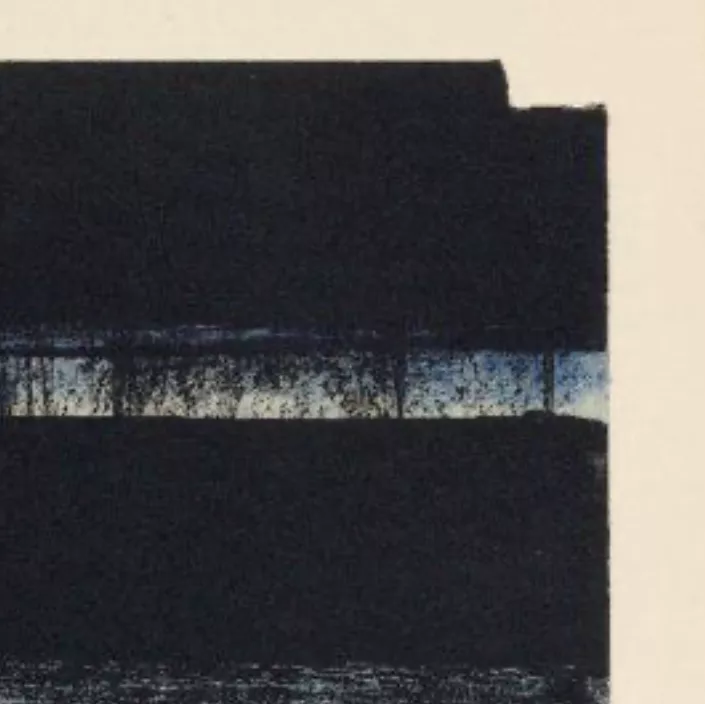
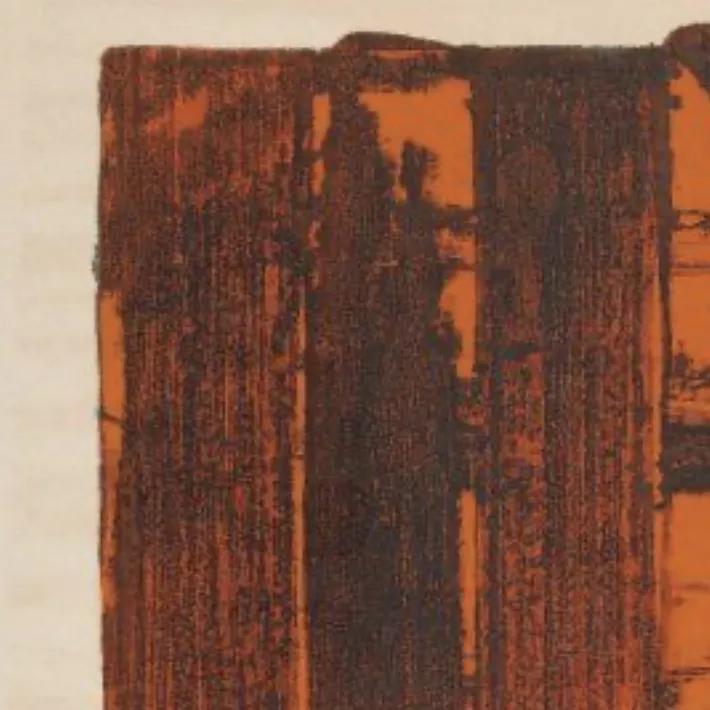
Pierre Soulages was born in Rodez in 1919. At an early age, he discovered Romanesque art and the stones of the Rouergue region, elements that were to have a profound influence on his work. Early on, he rejected figurative painting in favor of working with light and matter. Black becomes his playground.
He doesn't just apply it, he sculpts it, scratches it, incises it. He doesn't just paint in black, he plays with black. Using knives, he digs into the canvas, creating deep striations, abraded surfaces, where each brushstroke, each incision, transforms the material, making it more fluid, more alive.
Light is reflected in these striations, black becomes a space of light, a living space. Each glint, each variation in the surface, allows the black to metamorphose into a multitude of shadows and reflections.
The surface of the canvas is never frozen.
Soulages works the material so that it vibrates, changing before the viewer's eyes. Black then becomes a presence, a material that captures light and redistributes it differently. He doesn't seek to enclose the black in its darkness, he opens it up, liberates it.
Everything in his work, from the slightest knife stroke to the movement of light, seems in perpetual motion. Darkness becomes a form of resonance, of echo. He doesn't paint what you should see, he paints what you should feel.
Pierre Soulages : l'œuvre au noir
Pierre Jean Louis Germain Soulages was born in 1919 in Rodez. His father, a coachbuilder, placed him early in a religious institution, which was responsible for his education, and died when Soulages was still very young.
He was raised by his mother and older sister, who had been marked throughout his childhood by the death of Armand Soulages. He was fascinated by the stones of Rouergue, which would later inspire his work.
His vocation as an artist was discovered during a visit to the abbey of Sainte-Foy de Concques, where he became fascinated by the details of Romanesque art. He was also impressed in the same years by the paintings at Lascaux and Font-de-Gaume.
This interest in the art of the Neolithic period and medieval art is a crucial and rather little-known point that helps to give meaning to his canvases and prints.
Soulages owes his first artistic experiments to landscape painting, copying Lorrain and Rembrandt, whose pictorial study would have a consequent impact on his work.
He trained in the studio of René Jaudon, painter and lithographer, who quickly noticed his talent and presented him to the Beaux-Arts competition. He disliked the teaching, however, finding it too conformist.
Mobilized in 1940 as a cadet, he was soon demobilized and taught for a time at the Montpellier School of Fine Arts. At the end of the war, Pierre Soulages met Sonia Delaunay, who introduced him to abstraction. He took a keen interest in it and stopped producing figurative works for good.
The bulk of his work was now devoted to charcoal and the various techniques of etching. He exhibited at the Salon d'Automne, the Salon des Réalités Nouvelles and many other venues throughout Europe. Later, he moved on to New York and Sao-Paulo. Kootz even organized a solo exhibition for him.
Today, he is one of the most highly-rated artists on the auction market, with sales far exceeding those of the majority of French artists of all currents - even when it comes to his lithographs, serigraphs and prints.
Commentary on the work Peinture 162 x 130 cm, 3 août 1967
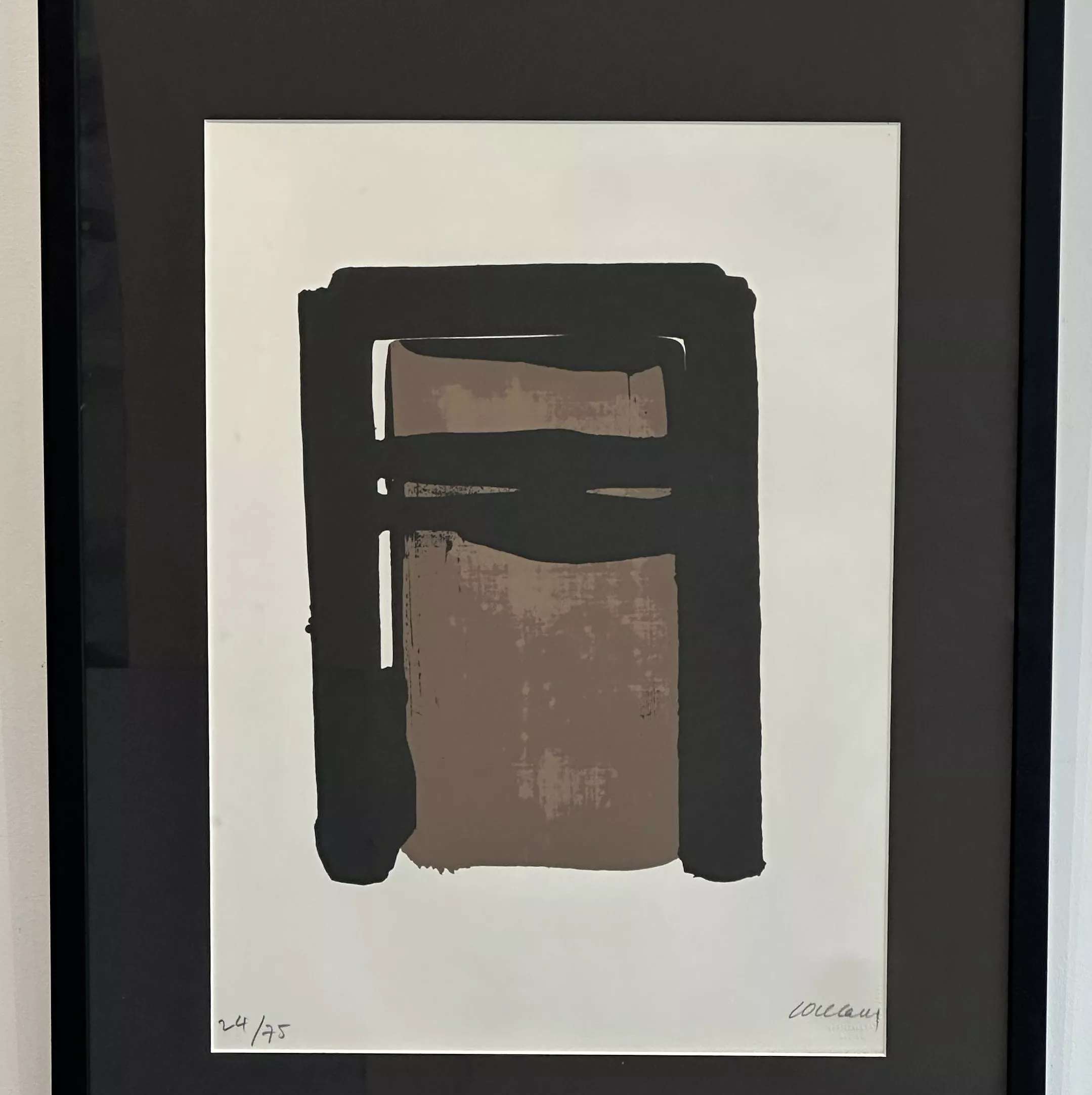
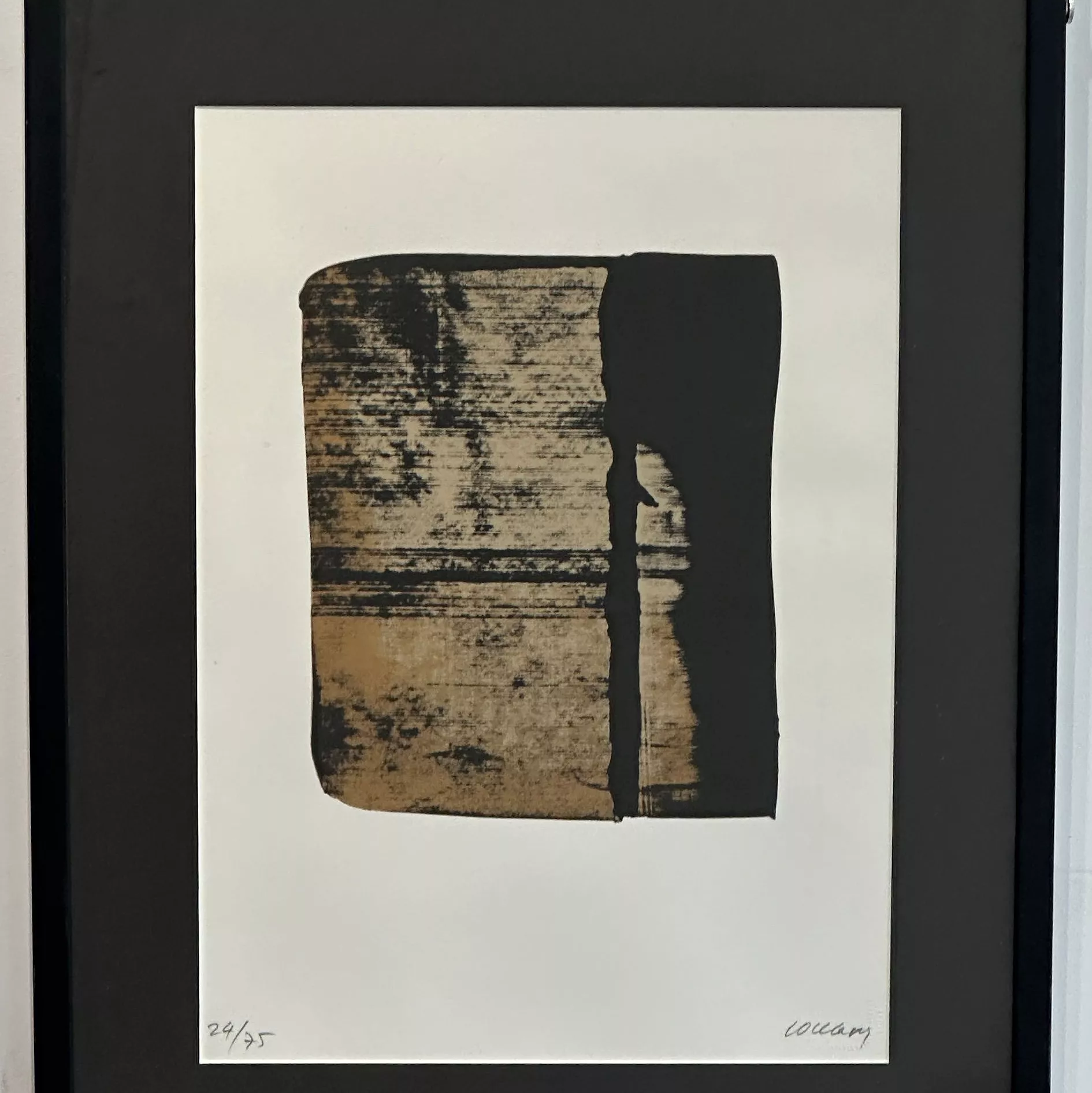
A Soulages canvas is never frozen, it lives, it breathes. Peinture 162 x 130 cm, August 3, 1967, is a striking example. Broad black stripes run across the surface, drawn with a knife, laid down in dense solids.
Between them, bursts of deep brown, almost coppery, emerge, vibrate, reveal themselves under the light. Nothing is frozen, everything is in motion. Black doesn't cover, it reveals. It plays with light, catches the eye, changes according to the angle and intensity of the lighting.
The work is part of a pivotal period. At the end of the 60s, Soulages was exploring the relationship between black masses and colored transparencies.
Here, brown is not just a background, it's a space, a breath between the black streaks. The balance is there, powerful and sober, without superfluous effect. This is a painting that imposes itself without narrative, without anecdote. It doesn't represent anything, it just exists.
To look at this canvas is to accept that you can't grasp everything at once. It means letting yourself be drawn in by the contrasts, feeling the material, perceiving the light circulating between the black stripes.
It means entering into a silent dialogue with the painting, where each glance reveals a nuance, an unsuspected radiance. This is Soulages' strength: he doesn't paint what you should see, he paints what you should feel.
Posterity and legacy of l'outrenoir
L'Outrenoir isn't a color, it's a territory, an experience. Soulages doesn't paint black, he paints with it. He hollows it out, streaks it, polishes it. He plays with light, makes matter vibrate, transforms shadow into brilliance.
He doesn't seek to enclose black in its obscurity, he opens it up, liberates it. For him, it's a passage, a presence that captures light and redistributes it differently.
He speaks of "another mental field", a space where the viewer doesn't simply see black, but a depth that evolves with movement and lighting.
His work transcends borders. By the end of the 20th century, Soulages was everywhere. He exhibits in the greatest museums, from Paris to New York, Tokyo to London. His canvases interact with those of of Olivier Debré, Hans Hartung, Zoran Mušič.
He is part of the history of abstraction without ever totally blending in. He retains his singularity, this visceral relationship with matter, this unique way of turning black into a source of light.
Homage is also architectural.
At the Abbey of Sainte-Foy de Conques, he designed stained glass windows of radical purity. He doesn't want colored glass, he wants glass that captures light, transforming it into silent resonance.
He also works with the Manufacture de la Savonnerie, creating two monumental tapestries for the Ministry of Finance. His art was not limited to canvases, but took on space and time.
His death, on his 80th wedding anniversary, marked the end of a life devoted entirely to painting. France paid tribute to him, recognizing him as one of the last giants of modern art. But Soulages does not belong to the past.
L'Outrenoir continues to live, to vibrate, to question. His work has never sought to please, it has sought to exist, to reveal what plays out between light and darkness. And this is perhaps its greatest mark.
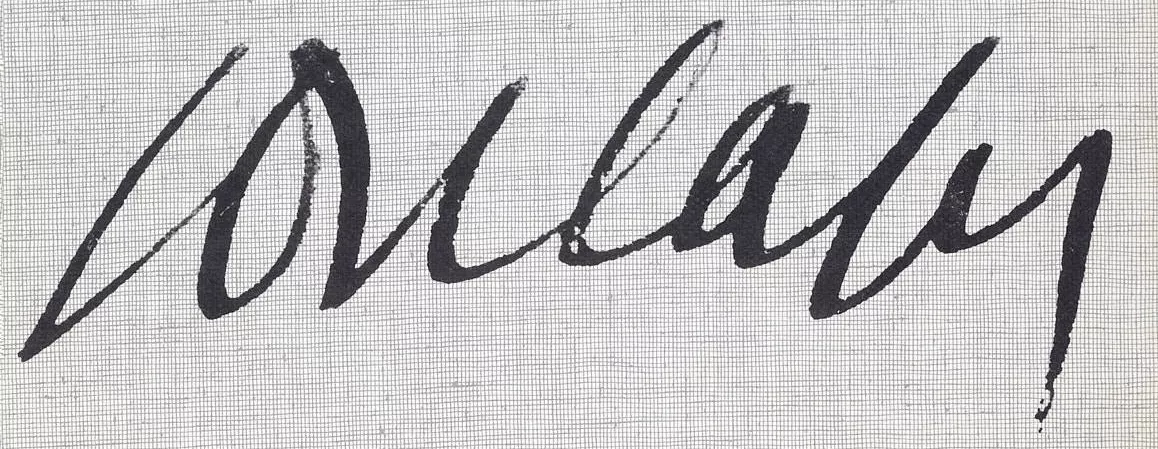
His signature
Although there are variations, here is a first example of his signature :
Our team remains at your disposal to identify your works.
Our team remains at your disposal to identify your works.
Expertise your property
If you own a work by Pierre Soulages, don't hesitate to request a free appraisal by filling in our online form. A member of our team of experts and chartered auctioneers will contact you to provide an estimate of the market value of your work.
If you are considering selling your work, our specialists will also guide you through the various alternatives available to obtain the best possible price, taking into account market trends and the specific features of each work.
Estimate in less than 24h
Works from the same period sold at auction


Discover in the same theme

Rating and value of works, posters, paintings by Alphonse Mu...
Alphonse Mucha is a major Art Nouveau artist. He produced many works that are highly prized at auction.
Learn more >

Rating and value of sculptures and bronzes by Édouard Marcel...
Edouard Marcel Sandoz is an Art Nouveau sculptor of the 20th century, who produced works that are highly regarded and valued at auction.
Learn more >

Gustave Miklos's paintings, drawings and sculptures rated an...
Gustave Miklos is a twentieth-century Art Deco artist whose works are highly valued at auction.
Learn more >

Secure site, anonymity preserved

Auctioneer approved by the State

Free and certified estimates
Frequently asked questions
-
Who is Pierre Soulages, and what is his contribution to modern art?Pierre Soulages (1919–2022) was a French painter considered a pioneer of Informel painting and a leading figure in abstract art. Fascinated by Romanesque art and the stones of the Rouergue region, he developed a unique artistic language centered on black, which he did not simply paint but worked with by carving, striating, and incising it to create a dialogue between matter and light. His concept of “Outrenoir”—a visceral exploration of black as a source of light and revelation—profoundly influenced 20th-century abstract art.
-
How are Pierre Soulages' works valued based on their technique?The value of Soulages’s works varies considerably depending on the medium: prints range from €10 to €72,000, prints between €200 and €200,000, drawings and watercolors between €1,300 and €600,000, and paintings between €960 and €15,271,320. Major paintings regularly fetch several million euros at auction, as evidenced by the sale of “Peinture, August 4, 1961” for €15,271,320 at Sotheby’s in 2021. His market value continues to rise, and he has established himself as a safe bet on the auction market.
-
How can you authenticate a work by Pierre Soulages?To authenticate a work attributed to Pierre Soulages, we recommend that you request a free appraisal from Auctie's by filling out our online form. A state-certified expert or auctioneer will examine your artwork and contact you to provide a detailed and reliable assessment of its authenticity and market value, with no obligation on your part.
-
Is this the right time to sell a work by Pierre Soulages?Yes, this is an excellent time to sell a work by Soulages. The artist enjoys worldwide recognition, and his market value continues to rise steadily. Demand for his paintings, lithographs, and prints remains very strong on the auction market, among both French and international collectors. The prices achieved reflect the rarity and quality of each piece.
-
How does the sales process work at Auctie's?At Auctie's, we support sellers from the appraisal stage through to the auction. The process begins with a free, no-obligation appraisal of your artwork by our experts and certified auctioneers, who will provide you with an accurate estimate within 48 hours. Our specialists will then guide you toward the best sales strategy to achieve the optimal price, taking into account market trends and the unique characteristics of your piece.
