



Rating and value of works, paintings, drawings by Olivier Debré

Key takeaways
- Works by Olivier Debré (1920–1999), a major 20th-century artist, sell for between €25 and €260,000, depending on the medium and the artist’s reputation.
- Paintings command the highest prices, ranging from €240 to €260,000, particularly the large, vibrantly colored lyrical abstract canvases.
- His style combines geometric abstraction, energetic brushstrokes, and a vibrant palette, creating a distinctive tactile and emotional dimension in the art market.
If you own a work by or after the artist Olivier Debré, and would like to know its value, our state-approved experts and auctioneers will offer you their appraisal services.
Our specialists will carry out a free appraisal of your work, and provide you with a precise estimate of its value on the current market.
Then, if you wish to sell your work, we will direct you to the best possible arrangement to obtain the optimum price.
Rating and value of the artist Olivier Debré
Considered one of the most famous contemporary artists of the 20th century, Olivier Debré leaves behind an artistic identity of his own.
This legacy consists mainly of large-format oils on canvas. At present, prices for his works are rising at auctioneers' gavels, his stock is on the rise.
His canvases and other works are particularly prized, especially by French buyers, and the price at which they sell on the art market ranges from €25 to €260,000, a considerable delta but one that speaks volumes about the value that can be attributed to Debré's works.
In 2021, a monochrome composition entitled Figure rude en bleu tendre, and dating from 1959 sold for €260,000.
Order of value from a simple work to the most prestigious
Technique used | Result |
|---|---|
Estamp - multiples | From €25 to €5,500 |
Drawing - watercolor | From €50 to €14,000 |
Painting | From €240 to €260,000 |
Estimate in less than 24h
Style and technique of artist Olivier Debré
Olivier Debré, a major painter of the 20th century, develops a unique style where geometric abstraction and the expressive power of color meet with striking force.
He is steeped in the heritage of lyrical abstraction, but his own vision is distinguished by the use of a vibrant color palette and a keen sense of structure.
His works are marked by a play of lines, shapes and superimpositions that are often organized in broad brushstrokes or spatula strokes, creating a dynamic of movement and depth.
Far from academicism, he adopts a gestural, energetic approach that allows color to come alive, to unfold in the space of the canvas.
He often combines primary and secondary colors in a controlled balance, whose tensions create a vibrant, fluid atmosphere, capable of capturing the immediacy of an emotion or a landscape.
Debré's technique is based on a mastery of gesture, but also on a rich texture, created by successive layers of paint.
This process lends his works a tactile, almost sculptural dimension, where the material, far from being a mere support, becomes an integral part of the composition.
His canvases, sometimes monumental, take on a new dimension, that of a living space, where color becomes pure energy, a visual language that evokes elements of nature, yet frees itself from them to create compositions of great autonomy.
Debré, playing on contrasts and harmonies, invites us into a sensory universe, where every nuance, every gesture seems imbued with a profound intention.
His style, at once fluid and rigorous, reveals an artist in search of an abstraction that speaks directly to the viewer, while remaining rooted in a poetic and intimate vision of the world.
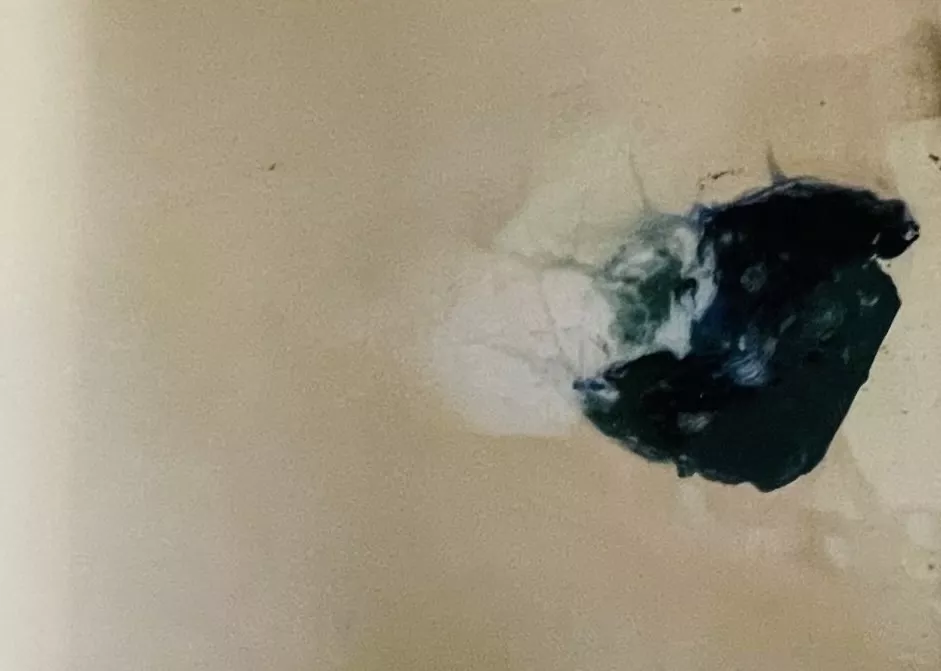
Olivier Debré's life
Olivier Debré (1920-1999) was born and died in Paris. His grandfather was a painter, and he rubbed shoulders with the art world from an early age. He was the brother of Michel Debré, General de Gaulle's Prime Minister and the man behind the Constitution of the Fifth Republic.
He graduated from the Lycée Montaigne and then the Sorbonne, and concurrently studied architecture at the Ecole des Beaux-Arts de Paris, where his uncle, Jacques Debas-Ponsan, taught. From time to time, he also attended Le Corbusier's studio. The painting Guernica is exhibited in Paris; he discovers this work at a young age, which will mark him forever.
Early in 1937, gallery owner Georges Aubry exhibits his work in Paris. Segonzac and Picasso noticed his work.
Like Maurice Mendjiksy, he transcribed the horror of the concentration camps in his paintings during and after the Second World War. In 1949, he exhibited at the Bing gallery, alongside Amedeo Modigliani. It was a success, and he set up his studio in Paris and exhibited at the Salon d'Automne.
In the 50s, he began to trace his artistic identity through muted colors and reliefs. He exhibits in New York and at the Salon d'octobre, where he meets Jacques Germain. His international career is launched. He began producing his singes-personnages, and his singes-landscapes, but soon discovered lithography, and devoted himself entirely to it.
In the 1960s, he returned to landscape representations and described his work as fervent abstraction. He received several large-format commissions, which would remain his most famous works. He exhibited in Montreal, Tokyo, Dakar, Stockholm and other cities.
Jacques Chirac commissioned him to create a memorial to General de Gaulle, to be donated to the city of Montreal. At the end of his career, he spent some time working for the manufacture de porcelaine de Sèvres, decorating porcelain works.
Retrospectives have been devoted to him. Some twenty years after his death, the city of Tours will open a museum in his name (Centre de Création Contemporaine Olivier Debré), which exhibits some of his works and promotes new artists.
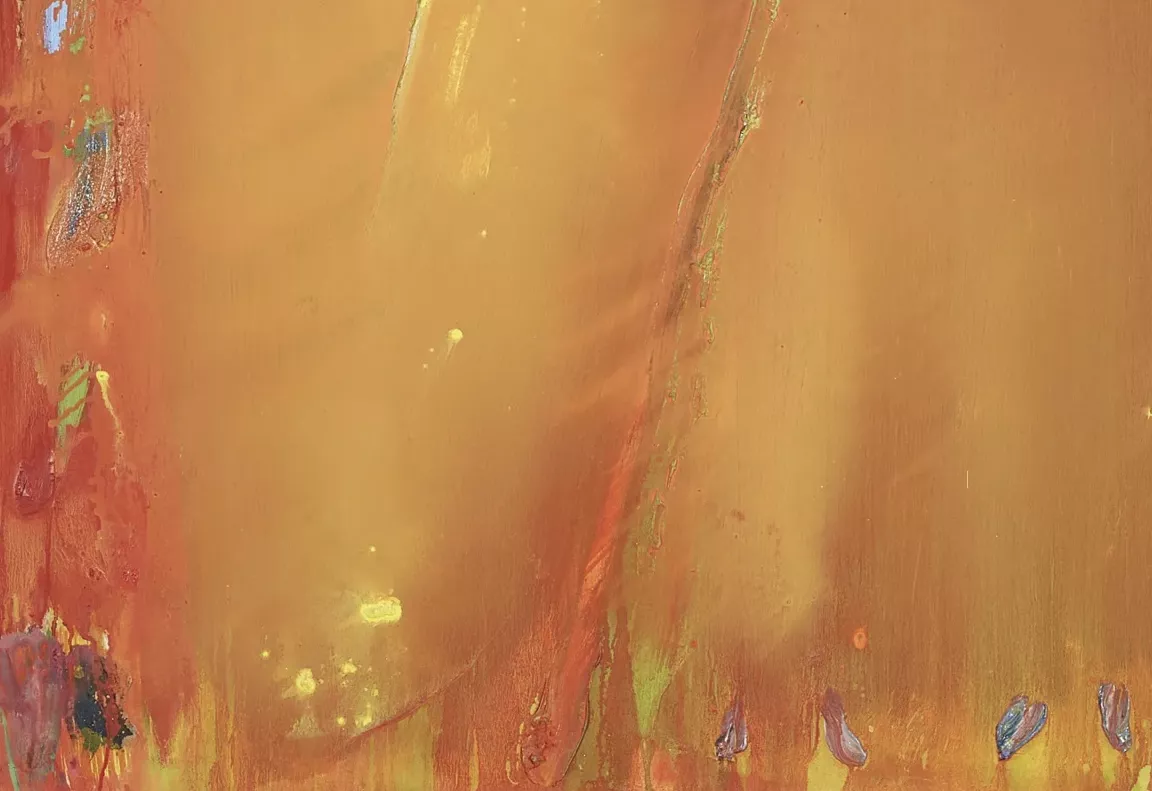
Focus on Paysage, Olivier Debré, 1957
Olivier Debré's 1957 work Paysage perfectly embodies the artist's quest to capture the essence of the natural world through abstraction.
This powerful canvas plunges us into a landscape where color, far from being a mere decorative element, becomes a real actor.
The broad flat tints of blues and greens blend and overlap in continuous movement, creating a sense of depth, of spaciousness.
The vibrant energy characteristic of the artist can be found here, where each brushstroke seems to reflect an instinctive gesture, like a direct response to the elements.
Sky and earth seem to melt together, to merge, but in a dynamic harmony, where each hue echoes the other.
In Paysage, the absence of figurative detail is a challenge. Olivier Debré does not illustrate a landscape per se; rather, he evokes the feeling of a space, the atmosphere of a nature in perpetual motion.
The viewer's gaze is caught by the shapes and colors, which, far from being merely representations, become a powerful emotional language.
The texture of the paint, thick and vibrant, invites us to enter the work, to almost touch it, so much does the material seem alive, pulsating.
Through this abstraction, Debré offers us a total immersion in nature, where we perceive the landscape less in its visible reality than in its essence and power.
The work thus reveals the strength of the artist's vision, which seeks not only to express an external world, but also to retranscribe the invisible, to touch man's primal sensations in the face of nature.
This canvas, like many of his creations, gives rise to an aesthetic experience in which color and form are, more than pictorial elements, vectors of emotions and profound sensations, reminding us of the evocative power of abstract art.
Olivier Debré's imprint on his period
Olivier Debré, through his work, marks an era when abstract art was unfolding in France with unprecedented power, breaking with figurative traditions and paving the way for a new approach to pictorial expression.
His contribution is distinguished by a constant search for the expressive power of color and gesture, part of a movement in which the painting becomes above all a place of pure emotion.
In the post-war context, where artists sought to reconnect with a form of raw, immediate truth, Debré placed himself at the crossroads of the influences of lyrical abstraction and geometric abstraction, while injecting a unique energy, deeply nourished by his perceptions of the natural world.
His imprint is strong, for he is not only a witness of his time, he becomes a major player in it, participating in the aesthetic revolution that transforms the relationship to art.
His large monumental canvases, which he exhibits around the world, and notably in major French museums, reaffirm the place of painting in a world increasingly dominated by photography and new media.
The way he captures space, movement and light in flat, pure colors resonates with a striking modernity, where the artist no longer seeks to represent nature, but to capture its essence, through a deeply felt abstraction.
Through his works, Olivier Debré became a key figure on the art scene of his time, an artist who, through his unique pictorial language, reinvented the art of painting and established himself as one of the greatest exponents of abstraction in France, influencing a whole generation of painters.
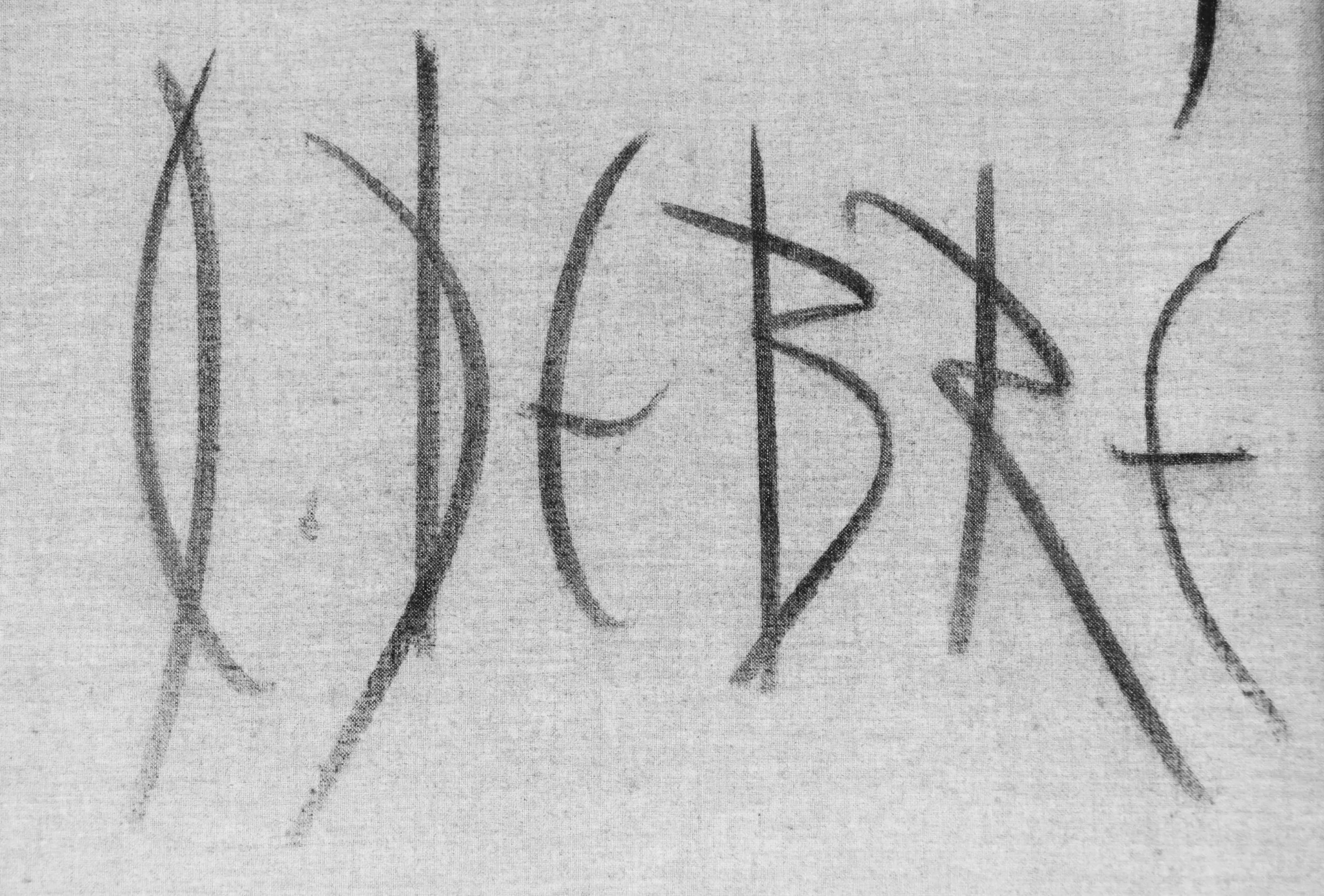
Recognizing the artist's signature
Olivier Debré very often signs his works, most often at the bottom of the painting, in a color that contrasts with the background.
Knowing the value of a work
If you happen to own a work by Olivier Debré or after the artist, don't hesitate to request a free appraisal using our form on our website.
A member of our team of experts and certified auctioneers will contact you promptly to provide you with an estimate of the market value of your work, not forgetting to send you ad hoc information about it.
If you are considering selling your work, you will also be accompanied by our specialists in order to benefit from alternatives to sell it at the best possible price, taking into account market inclinations.
Estimate in less than 24h
Discover in the same theme

Rating and value of paintings by Martial Raysse
Martial Raysse is a twentieth-century New Realist painter whose drawings and oil paintings are highly regarded and valuable.
Learn more >

Amalric Walter vases rating and value
Amalric Walter is a twentieth-century glassmaker who produced works for Daum that are highly prized at auction.
Learn more >

Rating and value of paintings by Georges Vantongerloo
Georges Vantongerloo is an abstract painter and member of the de Stijl group, whose works are highly regarded and valued.
Learn more >
D'autres tableaux abstraits vendus aux enchères

Estimated 2.000 - 4.000
Serge POLIAKOFF (1900-1969), Composition en rouge et bleu. 1965, Lithograph

Estimated Between €5,000 and €8,000
Jean MIOTTE (1926-2016), acrylic on canvas

Estimated 3.000 - 5.000
Roberto MATTA (1911-2002), Composition, Gouache on canvas

Secure site, anonymity preserved

Auctioneer approved by the State

Free and certified estimates
Frequently asked questions
-
Who was Olivier Debré, and what is his significance in 20th-century art?Olivier Debré (1920–1999) was a major 20th-century painter and a leading figure in French abstract art. Born into a family of artists in Paris, he developed a unique style that blended lyrical and geometric abstraction with a vibrant use of color. His large, monumental canvases, exhibited worldwide, left their mark on the postwar aesthetic revolution and influenced an entire generation of painters.
-
What is the price range for Olivier Debré's works based on the medium used?The value of the works varies considerably depending on the medium: prints and multiples range from €25 to €5,500, drawings and watercolors from €50 to €14,000, and paintings from €240 to €260,000. In 2021, a monochrome composition from 1959 sold for €260,000, illustrating the high-end potential of his paintings.
-
How can you authenticate a work by Olivier Debré?To authenticate a work by Olivier Debré, we recommend that you request a free appraisal from Auctie's by filling out our online form. Our team of experts and state-certified auctioneers will examine your artwork and provide you with an accurate and reliable estimate, with no obligation on your part.
-
When is the right time to sell a work by Olivier Debré?Yes, now is a good time to sell a work by Olivier Debré. The artist’s market value is on the rise, his paintings are particularly sought after—especially by French buyers—and the contemporary art market recognizes his historical significance. The experts at Auctie’s will identify the best terms and options to secure the highest price.
-
How does the appraisal process work at Auctie's, and how do I sell my artwork afterward?The appraisal is free and non-binding: simply fill out our online form, and an expert will contact you shortly to examine your artwork and provide you with a detailed appraisal within 48 hours. If you’d like to sell, Auctie’s, an auction house, will guide you from the appraisal to the auction and work with you to explore the best options for selling your artwork at the best price based on current market trends.
