



Value and quotation of works, paintings by Jean Fusaro

Key takeaways
- Prices for Jean Fusaro’s works vary considerably, ranging from €5 to €29,600, with oil-on-canvas paintings commanding the highest prices.
- The artist’s market value peaked in the 1990s, and his paintings remain in high demand despite fluctuations in auction prices.
- Jean Fusaro is associated with Pointillism and lyrical abstraction, favoring raw texture and the vibrancy of colors over formal perfection.
If you own a work by or after the artist Jean Fusaro, and would like to know its value, our state-approved experts and auctioneers will offer you their appraisal services.
Our specialists will carry out a free appraisal of your work, and provide you with a precise estimate of its value on the current market.
Then, if you wish to sell your work, we will direct you to the best possible arrangement to obtain the optimum price.
Rating and value of the artist Jean Fusaro
Considered one of the most promising Impressionist painters of his time, Jean Fusaro participated in the artistic revolution of the 20th century. His legacy includes paintings, watercolor drawings and prints.
At present, the prices of his works are rising under the auctioneers' gavels. His paintings are particularly prized, and the price at which they sell on the art market ranges from €5 to €29,600, a considerable delta but one that speaks volumes about the value that can be attributed to Fusaro's works.
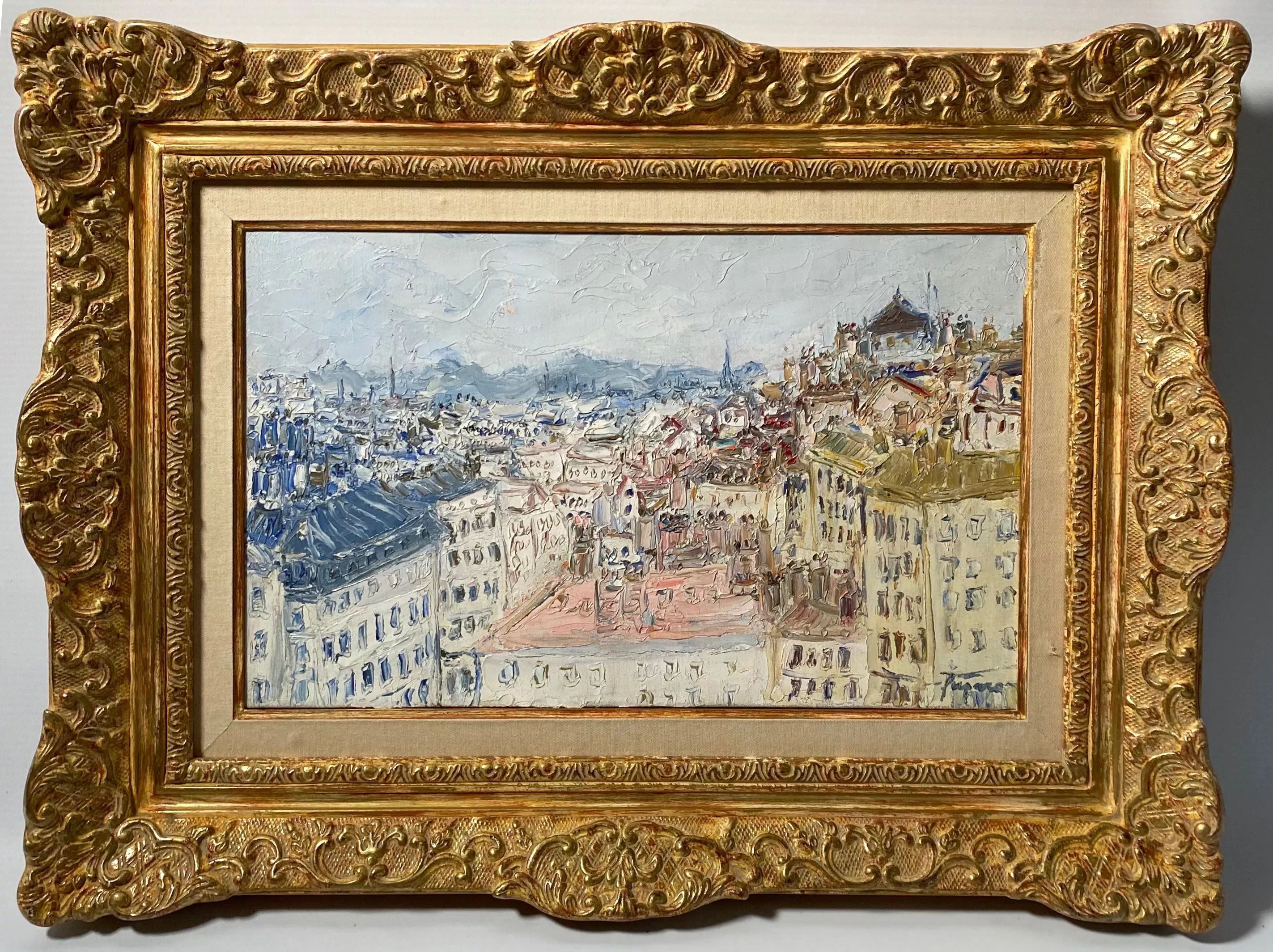
In 2015, a polychrome composition in neutral tones entitled Fenêtre ouverte sur Paris and dating from 1989 sold for €13,230 while it was estimated at between €2,940 and €4,410.
The artist's value peaked in the 1990s, but his works are still sought-after on the auction market.
Order of value from a single work by Jean Fusaro to the most prestigious
Technique used | Result |
|---|---|
Estamp | From €5 to €610 |
Drawing - watercolor | From 50 to 5,500€ |
Oil on canvas | From 100 to 29,600€ |
Estimate in less than 24h
Style and technique by artist Jean Fusaro
The question of style, with Jean Fusaro, seems to be posed in terms of contrasts and balances.
We know the artist's attachment to an almost raw texture - vigorous brushstrokes, superimpositions of colors - which, far from seeking perfection, favors a more instinctive, tactile approach.
"My gesture is an extension of my thought", he declares, and it is in this fusion of gesture and reflection that his work takes on its full meaning.
He is part of the pointillist movement, which also includes artists such as Camille Pissarro.
The simplification of forms, over the years, is coupled with an increased complexity of atmospheres, where each color seems to vibrate for its own sake, where the energy of movement meets the stillness of the gaze.
This evolution, towards the 1960s, is accompanied by an increasingly pronounced abstraction where figures and contours melt away, disappear and give way to fluid compositions, where matter itself seems suspended.
The unity between form and space becomes a primary issue here, and the search for visual harmony takes the form of a dispersion of elements, which respond to each other, unfolding, but never enclosing the composition in a rigid framework.
As one art critic put it, Fusaro succeeds in "sculpting light right on the canvas", transforming each nuance of color into a vibration that seems to propagate through space.
Instead of the illusion of a frozen form, there is an energy that flows and traverses the support, a dynamic that reflects the impossibility of separating the painter from his work, the intellect from the gesture.
This could be called the art of controlled freedom, where every touch seems simultaneously mastered and relaxed, every line animated by an inexhaustible creative breath.
The career of Jean Fusaro
Born in the south of France, the artist quickly turned to art, in a process of research, but also of confrontation with his times.
We know of his attachment to a vision of painting that yields neither to ease nor to academicism - a rejection of purely decorative figuration in favor of a deeper, more visceral commitment.
"Painting must be a conquest", he would say, underlining his desire to shake things up, to question, to seek a different relationship between the work and the viewer.
This path, which he began in the 1950s, is marked by an evolution that sees him successively influenced by modern currents - from Fauvism to lyrical abstraction - before finding his own voice, a voice whose colors and forms, as if suspended, come into dialogue with light.
It is within this framework of constant research that he participates in numerous group exhibitions, gradually forging a singular identity.
His encounters with artists such as Jean Bazaine and Hans Hartung marked a decisive turning point in his career, a form of visual and intellectual complicity that enabled him to deepen his work.
From the studio to the general public, Fusaro manages to integrate his influences, doubts and discoveries into a pictorial language where each composition becomes a manifesto.
Throughout his career, the artist stands out for his ability to capture the essence of his time, transforming it into living, pulsating matter, whether through his large canvases or his works on paper.
This could be called a career of reinvention, where each work seems to mark the culmination of perpetual research, without ever falling into repetition.
Focus on Jean Fusaro's Paysage de Provence
The question of light, in Jean Fusaro's Paysage de Provence, seems to be posed in terms of atmosphere and presence.
We know the artist's attachment to a painting that privileges visual emotion - a vibrant, almost palpable light that transcends simple representation to become a sensitive experience.
"What interests me is less the motif than what it evokes," he confided, thus affirming his rejection of the anecdotal in favor of the essential.
Here, the hills dissolve into a cameo of warm tones, where ochre and blue respond to each other in a harmony reminiscent of the landscapes reinterpreted by Nicolas de Staël, but with a gentleness that is unique to Fusaro.
This painting, executed in the 1970s, is part of a research in which color becomes the true subject of the work.
Far from the rigor of geometric abstractions or the radical ruptures of his time, Fusaro prefers a more instinctive approach, where each touch seems deposited in a precarious balance between structure and spontaneity.
This fluidity of composition evokes the landscapes of Zoran Mušič, but where the latter digs a certain gravity into the material, Fusaro lets emerge a lightness imbued with serenity.
As a contemporary critic wrote, "with Fusaro, every stroke is a whisper, every color a memory". This work, with its apparent simplicity, reveals a depth where the gaze wanders, oscillating between the memory of a place and immediate sensation.
This could be called an interior landscape, an invitation to perceive not what is seen, but what is felt, in a painting where light, once again, becomes the soul of the painting.
The legacy of Jean Fusaro
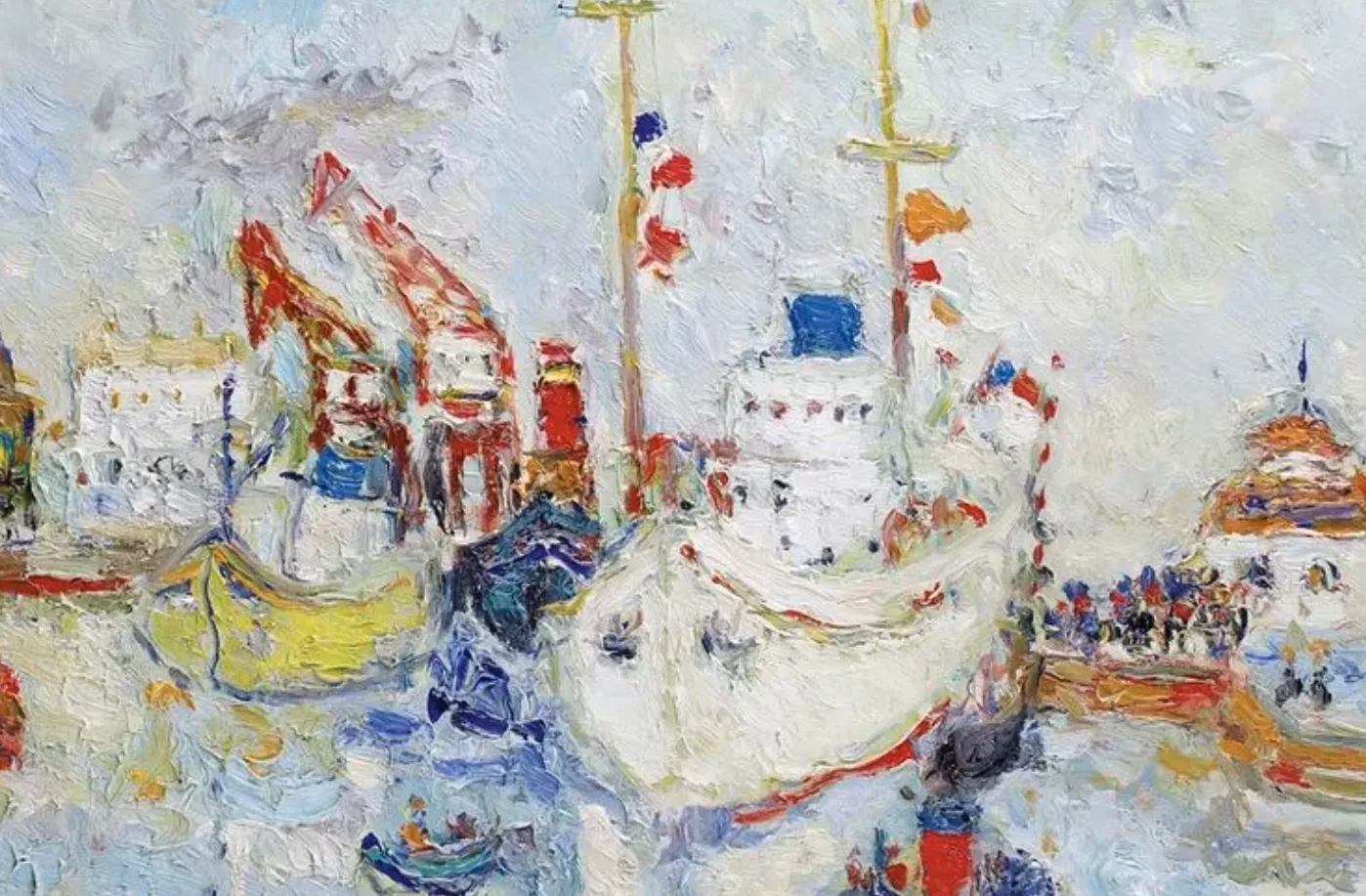
The question of legacy, with Jean Fusaro, seems to be posed in terms of echoes and transmission. We know of his attachment to a style of painting in which light, form and emotion interact in subtle harmony - a fragile yet powerful balance that transcends his era.
Art survives only in what it reveals to subsequent generations," he used to say, aware of the importance of leaving an imprint that goes beyond the simple materiality of the work.
Far from the thundering avant-gardes, Fusaro chose a more intimate path, where each canvas bears the traces of a quest for meaning and humanity.
His legacy lies as much in the singularity of his style as in this ability to invite the viewer on an inner journey, an introspection where color becomes language.
In the history of contemporary painting, Fusaro occupies a singular place, that of an artist who was able to combine tradition and modernity, intuition and reflection.
His works, often compared to those of figures such as Nicolas de Staël or Zoran Mušič, testify to a sensibility of their own, an uninterrupted dialogue with light and space. This continuity, this anchoring in a deeply human art, is evident in the influence he has exerted on many painters of his generation and beyond.
This could be called a silent but vibrant legacy, where painting becomes a bridge between eras, a living legacy that invites each viewer to pursue, in his or her own way, this search for beauty and truth.
Recognizing Jean Fusaro's signature
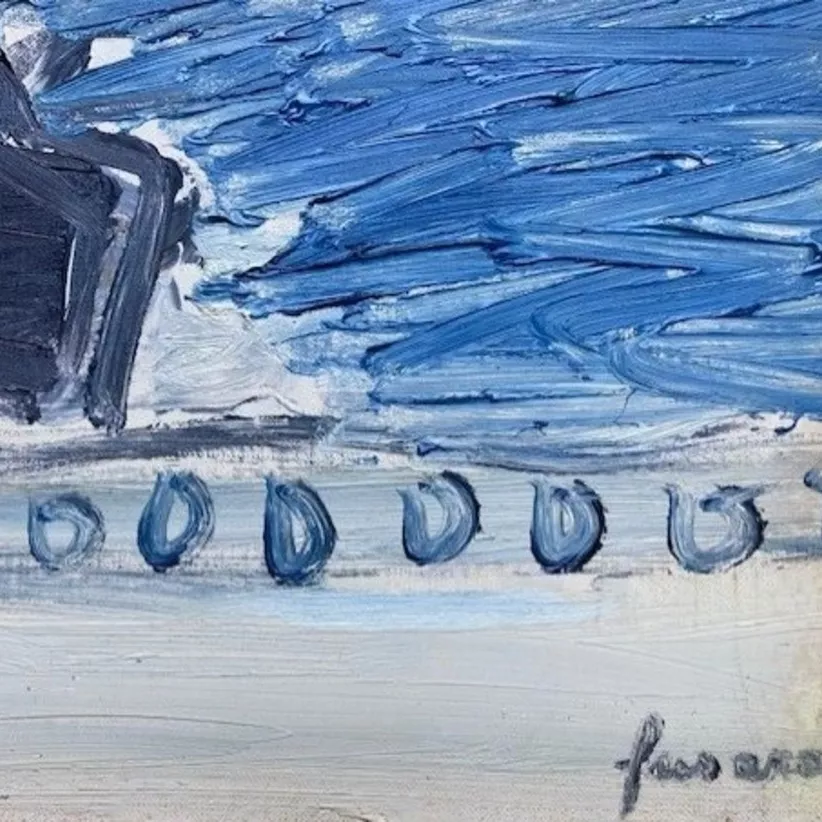
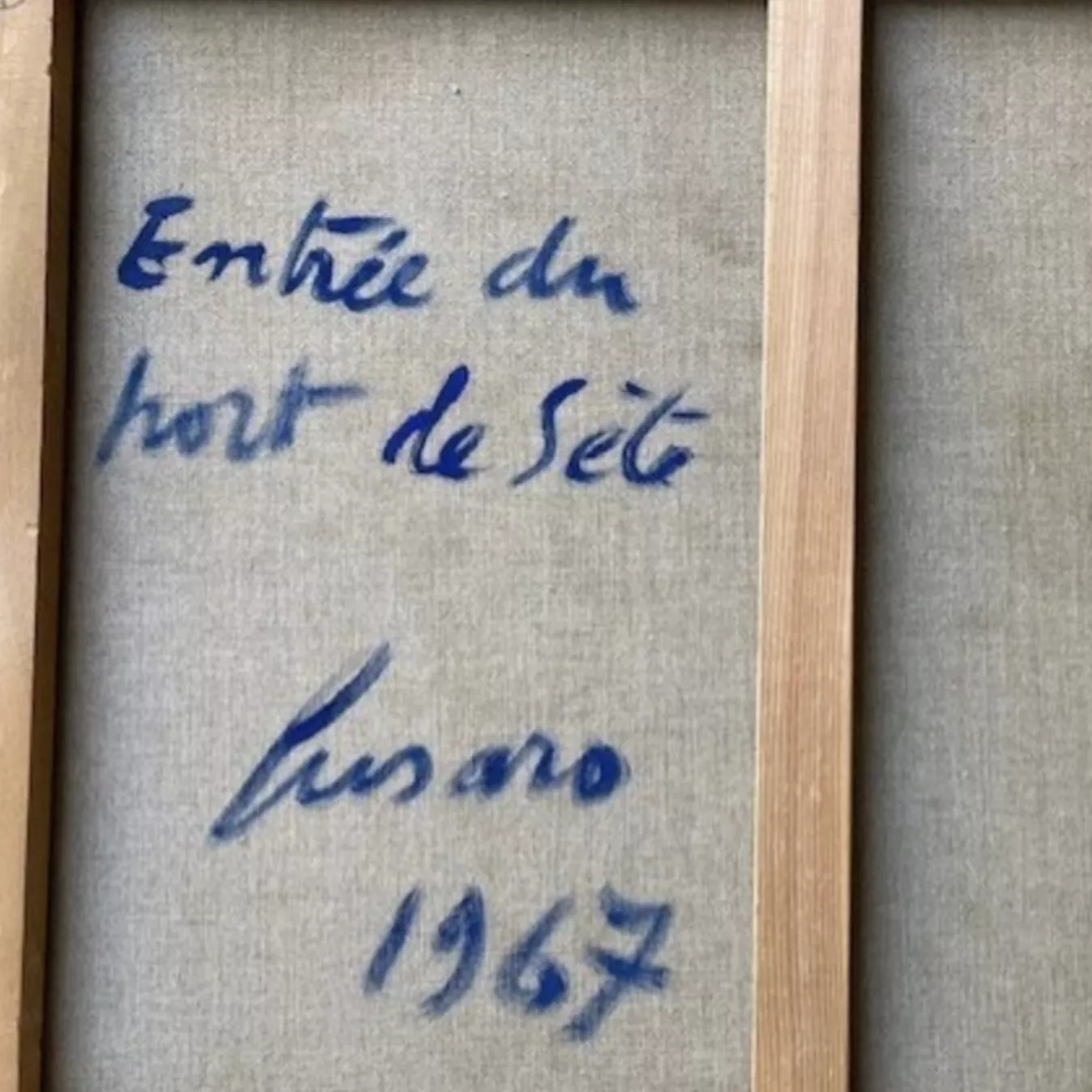
The artist's works are often signed. If he does, the signature appears at the bottom of the painting, in a color that contrasts with the background.
To find out the value of a work by Jean Fusaro
If you happen to own a work by or after Jean Fusaro, don't hesitate to request a free valuation using our form on our website.
A member of our team of experts and licensed auctioneers will contact you promptly to provide you with an estimate of the market value of your work, not forgetting to send you ad hoc information about it.
If you are considering selling your work, you will also be accompanied by our specialists in order to benefit from alternatives for selling it at the best possible price, taking into account market inclinations.
Estimate in less than 24h
Discover in the same theme

Rating and value of Jean Cocteau's works, paintings and draw...
Jean Cocteau is a twentieth-century artist whose drawings, ceramics and paintings are sought-after at auction.
Learn more >

Rating and value of paintings by Zeng Yilu
Zeng Yilu is a Chinese artist who has produced numerous works whose value has recently increased at auction. 100% free estimate
Learn more >

Rating and value of paintings by François Eberl
François Eberl was an Austro-Hungarian painter of the École de Paris, who produced many highly valued thematic paintings.
Learn more >
D'autres tableaux impressionnistes vendus aux enchères

Estimated 6.000 - 8.000
Mikhail Markianovich GUERMACHEFF (1867 - 1930) House under the snow, oil on canvas

Estimated 2.000 - 4.000
Jean DUFY (1888-1964) Vase of anemones, Watercolor

Estimated 600 € - 800 €
Henri ZUBER (1844-1909), Bridge at Artemare. Oil on canvas.

Secure site, anonymity preserved

Auctioneer approved by the State

Free and certified estimates
Frequently asked questions
-
Who is Jean Fusaro, and what is his artistic style?Jean Fusaro is a painter considered one of the most promising Impressionist painters of the 20th century. His style is characterized by vigorous brushstrokes, a raw texture, and layers of color that reflect an instinctive and tactile approach. Over the years, his work evolved toward increasing abstraction, in which light and color became the true subjects of his compositions, influenced by Pointillism and engaging in a dialogue with movements such as Fauvism and lyrical abstraction.
-
What is the price range for Jean Fusaro's works?The prices of Jean Fusaro’s works vary considerably depending on the medium and quality: prints range from €5 to €610, watercolor drawings from €50 to €5,500, and oil paintings on canvas from €100 to €29,600. A notable example: “Fenêtre ouverte sur Paris” (1989) sold for €13,230 in 2015, exceeding its initial estimate. Although his market value peaked in the 1990s, his works remain highly sought after on the auction market.
-
How do I have a work by Jean Fusaro authenticated and appraised?Auctie's offers a free, no-obligation appraisal of your artwork via a form on its website. A state-certified expert or auctioneer will examine your painting and provide you with an accurate estimate of its market value within 48 hours. This process allows you to obtain a reliable appraisal before making any decision to sell.
-
Is this the right time to sell a work by Jean Fusaro?Yes, now is a good time to sell. Although Jean Fusaro’s market value peaked in the 1990s, his works continue to be in high demand on the auction market, and prices are steadily rising at auction. A free appraisal will help you determine the current value of your artwork and the best terms for selling it.
-
How does the sale of a work by Jean Fusaro at Auctie's work?Auctie's supports sellers from the initial free appraisal through to the final auction. After our experts and certified auctioneers have appraised your artwork, we’ll offer you the best options for selling your painting at the best possible price, taking into account current market trends and demand for this type of artwork.
