



Rating and value of paintings by Emil Schumacher

Key takeaways
- Emil Schumacher, a pioneer of German Informal Art, has seen his market value rise steadily in the contemporary art market.
- Large-format paintings fetch between €200,000 and €600,000, while prints remain affordable at prices ranging from €200 to €12,000.
- His oil painting “Für Berlin” (1957) exceeded its estimate of €450,000 in 2020, more than four times its low estimate.
If you own a work by or based on the work of artist Emil Schumacher and would like to know its value, our state-approved experts and auctioneers will guide you.
Our specialists will carry out a free appraisal of your work, and provide you with an accurate estimate of its value on the current market.
Then, should you wish to sell your work, we will direct you to the best possible arrangement to obtain the optimum price.
Artist's rating and value
Considered one of the pioneers of German informal painting, Emil Schumacher exhibited widely during his lifetime. His reputation and presence on the art market are therefore already immense.
Today, his value continues to rise, and the artist is establishing himself as a sure bet on the art market.
A work by Schumacher can fetch millions of euros at auction, as evidenced by his oil on canvas Für Berlin,dating from 1957, fetched €450,000 in 2020 whereas it was estimated at between €100,000 and €150,000, more than four times the low estimate.
Order of value from the most basic to the most prestigious
Technique used | Result |
|---|---|
Estamp - multiple | From €25 to €23,350 |
Drawing - watercolor | From €100 to €67,380 |
Painting | From €180 to €450,000 |
Estimate in less than 24h
Style and technique of Emil Schumacher
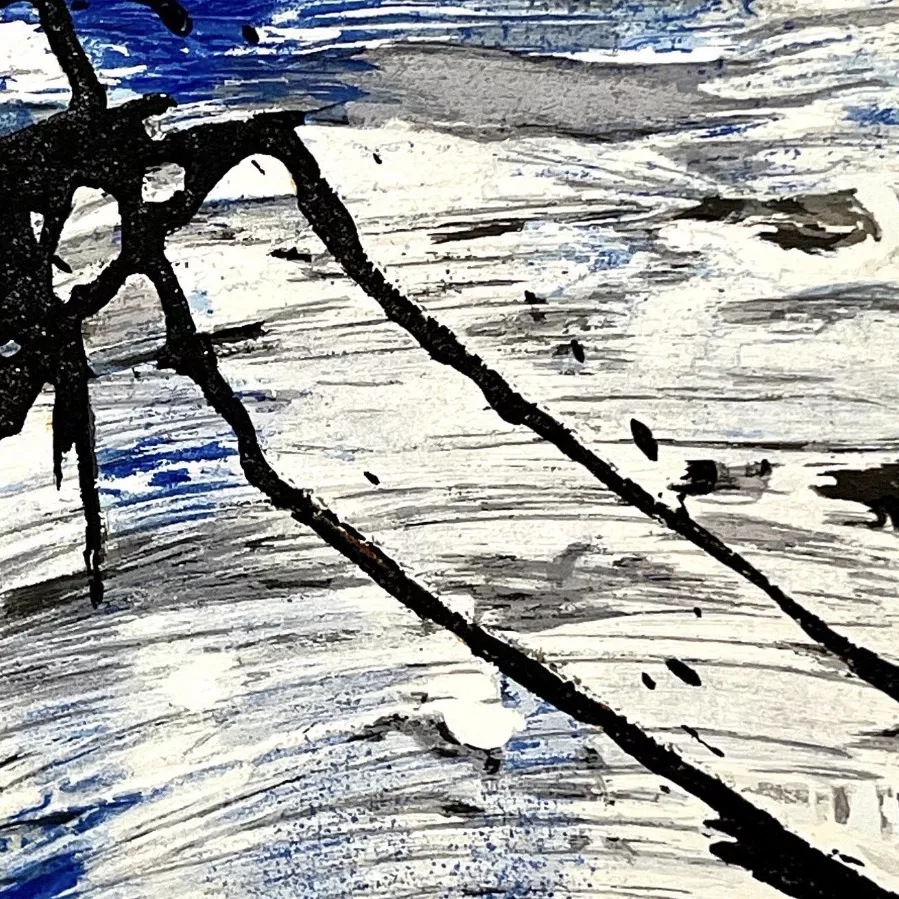
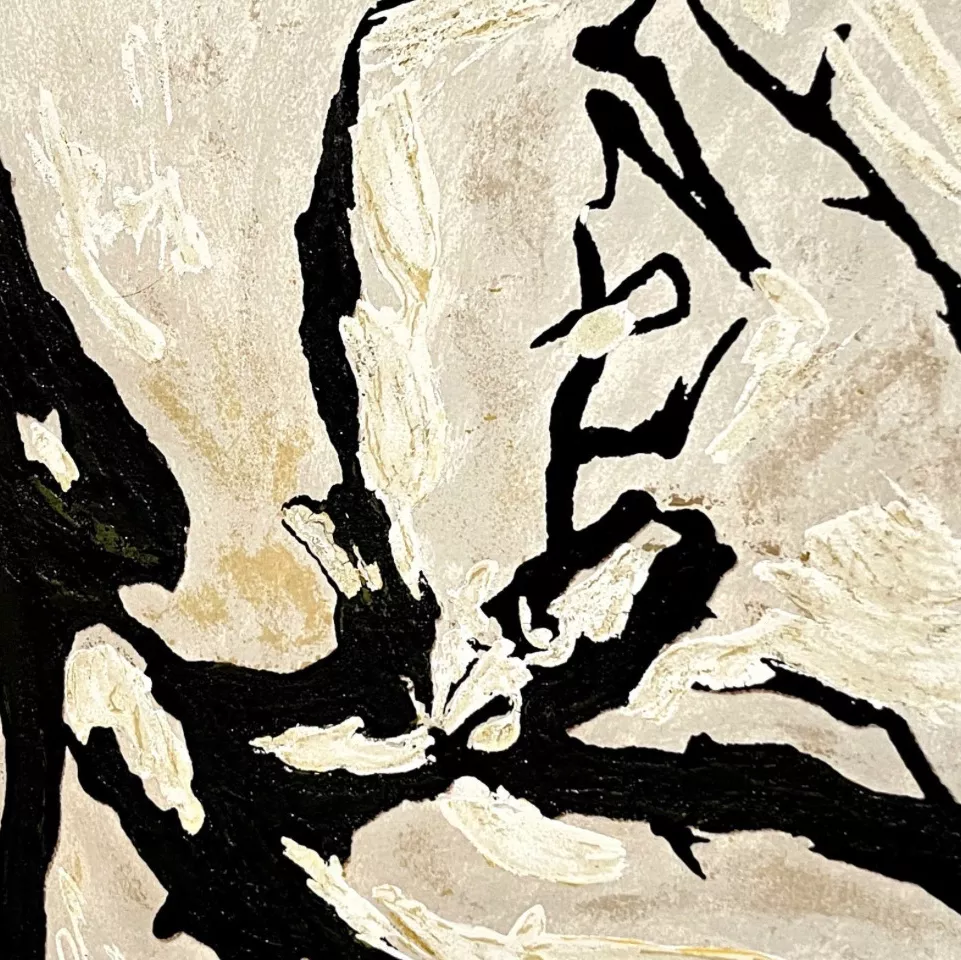
Emil Schumacher is a pioneer of informal art in Germany. He uses thick pictorial layers (impasto) applied with a spatula or broad brush, often mixed with mineral fillers, sand, or other non-traditional materials to achieve tactile relief and a quasi-sculptural surface.
He applies color energetically and spontaneously, favoring the free gesture derived from European informel, with an emphasis on arm movement and gestural dynamics as constitutive elements of composition.
Through his chromatic palette, he makes contrasting use of saturated colors (ochres, ferruginous reds, deep blues) and earthy tones, which he often works in superimposition to create optical saturation effects.
There's an absence of illusionistic perspective in the compositional structure, with an organization of the surface according to a logic of interlocking planes and overlapping color fields, thus emphasizing the flatness of the support.
He frequently integrates mixed techniques (oil paint, acrylic, pure pigments, collages of fabric or paper), reinforcing the visual and material complexity of the works).
He maintains a close relationship with calligraphy, with the presence of signs, tracings and marks close to gestural calligraphy, but devoid of an explicit narrative function, playing a plastic and rhythmic role. The artist applies a deliberate patina through scratching, rubbing and partial tearing of the material, creating a controlled erosion effect that gives the work an archaeological, even timeless dimension.
The artist shows a preference for large-scale formats, reinforcing the immersive impact and physical perception of the painted material.
The life of Emil Schumacher
Emil Schumacher (1912 - 1999) was a German painter who is famous for his contribution to informal art.
Born on August 29, 1912 in Hagen (North Rhine-Westphalia, Germany), he trained at the Kunstgewerbeschule in Dortmund from 1932 to 1935, where he studied graphics, drawing and craft techniques.
First working as a freelance graphic artist in the 1930s, he was mobilized during the Second World War and wounded, interrupting his artistic production during the conflict.
From 1945, he returned to painting, developing a style marked by expressive figuration before moving towards abstraction, and his first local exhibitions took place in Hagen and Osnabrück from the late 1940s.
In 1947, he co-founded the Junger Wester group in Recklinghausen, uniting young post-war German artists around a desire for pictorial renewal.
From the mid-1950s onwards, he took a turn towards informality, adopting a gestural, matierist pictorial language close to French Art Informel and Tachisme, thereby participating in Germany's integration into post-war international artistic debates.
He exhibited at Documenta II in 1959, Documenta III in Kassel, and the Venice Biennale in 1962. His works are acquired by major European and American museums.
He also pursues an academic career, being appointed Professor at the Hochschule für Bildende Künste in Hamburg (1958 - 1960), then at the Karlruhe Academy of Fine Arts (1966 - 1977), then Visiting Professor at the Mineapolis Academy of Fine Arts (1967) and the Beijing Academy of Fine Arts (1978).
He traveled to many countries, including Spain, Italy, Morocco and Egypt, all of which influenced his palette and gestures, encouraging him to explore effects of light and matter inspired by Mediterranean and Saharan landscapes.
In his final years, he pursued an abundant output between 1980 and 1990, and his late works are characterized by increased monumentality and brighter color.
He died in San José (Ibiza, Spain) and is buried in Hagen, his hometown, which preserves an important archive and collection of works.
Market segmentation and artist's quotation
Emil Schumacher presents a high and stable quotation. On the market, the general range of realized prices extends from USD 10 to USD 681,300, which speaks volumes about the value that can be attributed to the artist's works, depending on size, technique and rarity.
Für Berlin, for example, sold for €562,500, Räumliche Trennung went for €375,000, while Alf I fetched €306,250 (price with fees).
Large-format paintings or iconic works sold for between €200,000 and €600,000, with frequent peaks achieved in the six-figure range. Classical works (oils, small formats) generally fetch between €40,000 and €120,000, with Tamalan going for €317,200.
Works on paper and gouaches sell for between €8,000 and €30,000, depending on complexity, condition and provenance. Prints and editions, meanwhile, fetch more modest prices, ranging from €200 to €12,000.
More than 2,900 works by the artist have been sold at auction to date, and the market is strongly segmented according to medium : painting on canvas dominates in value, while prints remain affordable.
The record price in excess of 600,000 USD places Schumacher among the most highly-rated contemporary German artists of the post-war period.
Comparatively, other European informal figures such as Karel Appel, Hans Hartung, Jean Degottex or Pierre Soulages, often achieve similar prices, sometimes slightly higher depending on the provenance of the works and their documentary importance.
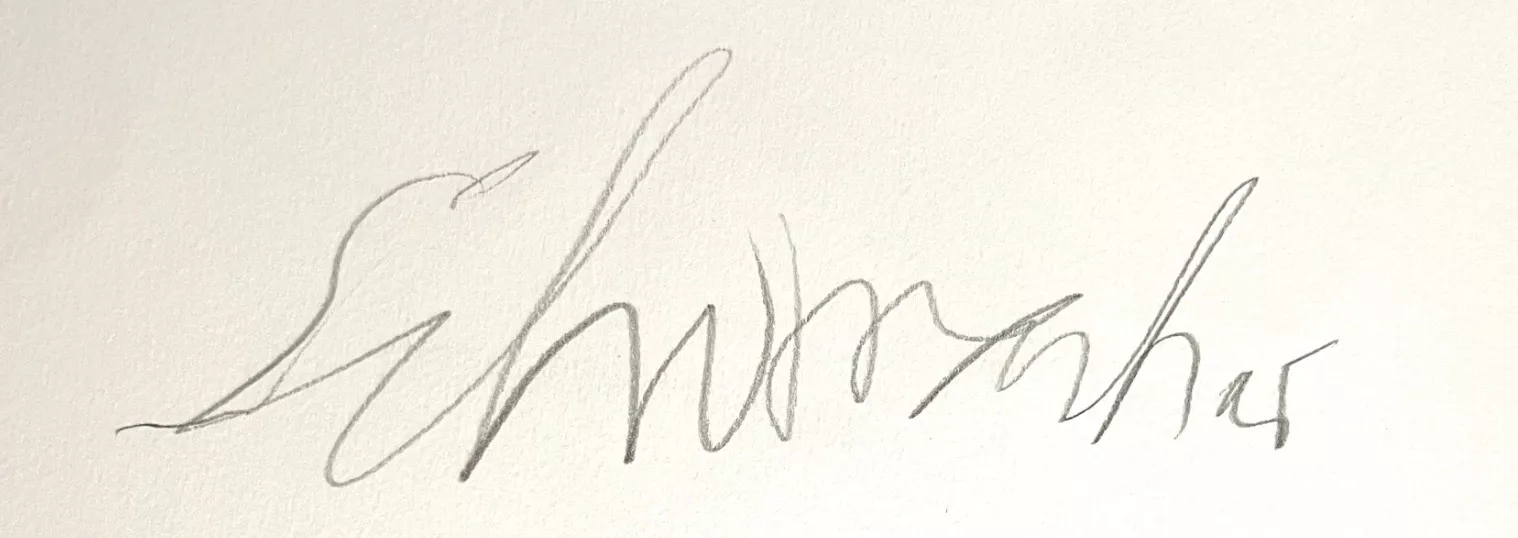
His signature
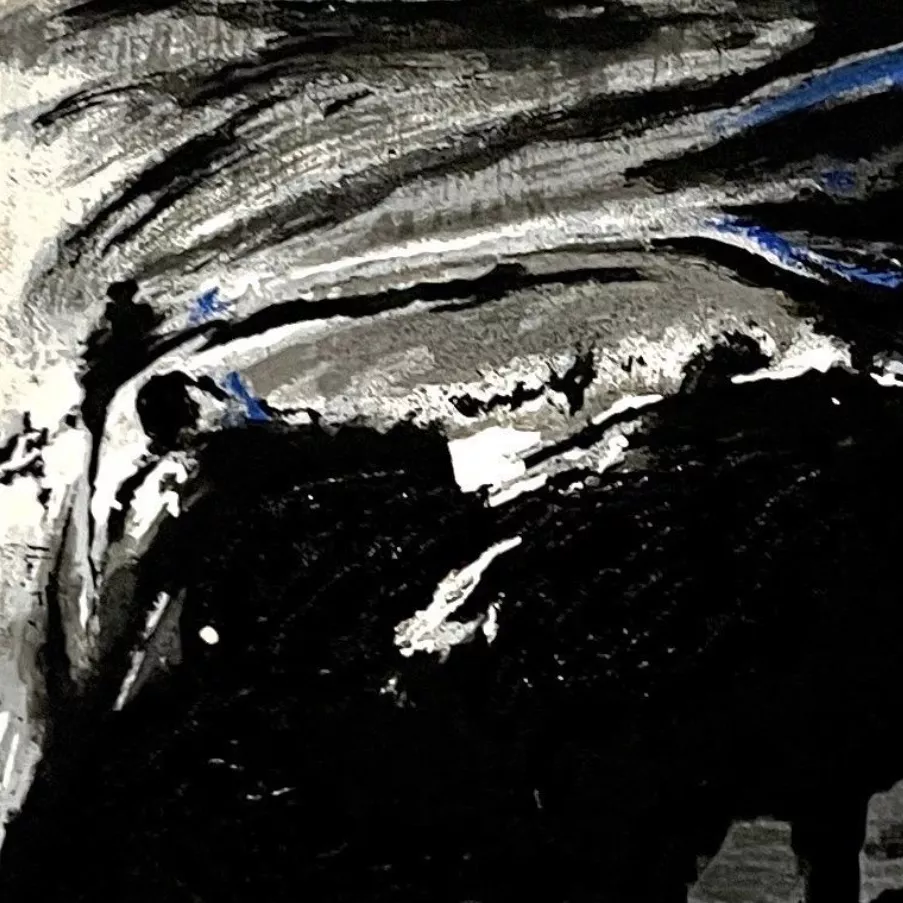
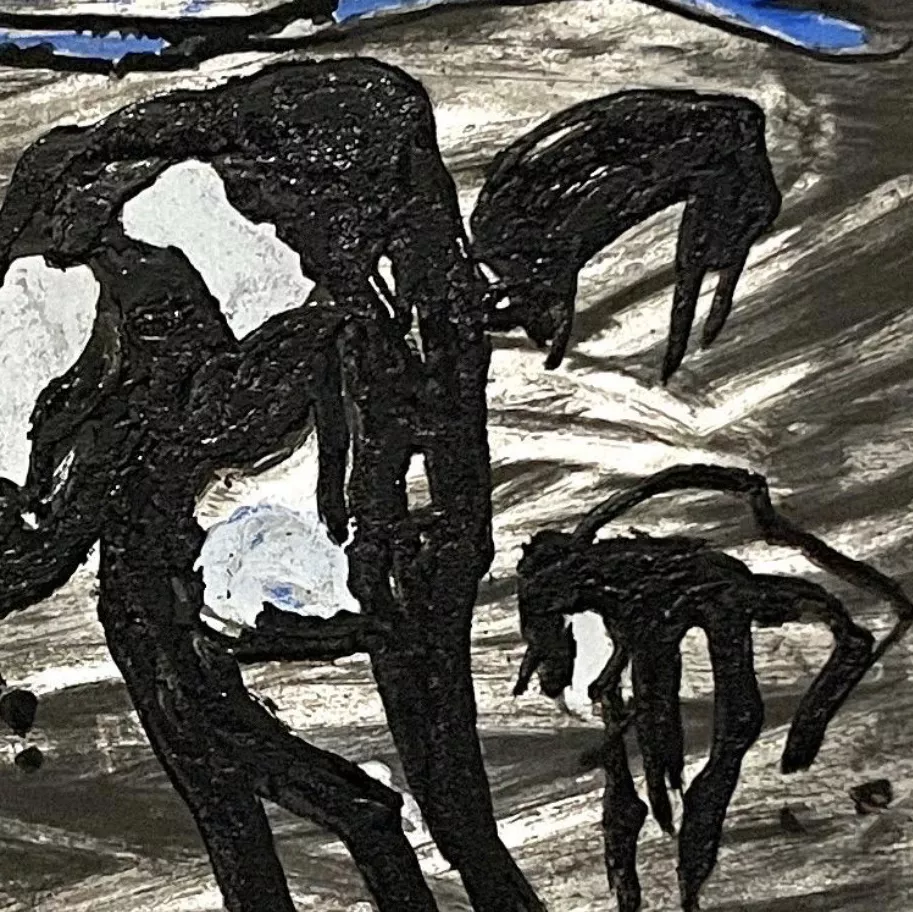
Although there are variations, here is a first example of his signature :
Our team remains at your disposal to identify your works.
Expertise your property
If you own a work by Emil Schumacher, don't hesitate to request a free appraisal by filling in our online form.
A member of our team of experts and certified auctioneers will contact you to provide an estimate of the market value of your work.
If you are considering selling your work, our specialists will also guide you through the various alternatives available to obtain the best possible price, taking into account market trends and the specific features of each work.
Estimate in less than 24h
Discover in the same theme

Rating and value of Charlotte Perriand's furniture
Charlotte Perriand designed a great deal of furniture during the 20th century. She was a great success during her lifetime, and her furniture still is...
Learn more >

Rating and value of works, paintings, drawings by Paul Cézan...
Paul Cézanne was an Impressionist painter and precursor of contemporary art. He produced many highly prized drawings and paintings
Learn more >

Rating and value of paintings by Huguette Caland
Huguette Caland is a Lebanese artist who has produced abstract works in various media, working with the body and eroticism.
Learn more >
D'autres tableaux abstraits vendus aux enchères

Estimated 2.000 - 4.000
Serge POLIAKOFF (1900-1969), Composition en rouge et bleu. 1965, Lithograph

Estimated Between €5,000 and €8,000
Jean MIOTTE (1926-2016), acrylic on canvas

Estimated 3.000 - 5.000
Roberto MATTA (1911-2002), Composition, Gouache on canvas

Secure site, anonymity preserved

Auctioneer approved by the State

Free and certified estimates
Frequently asked questions
-
Who was Emil Schumacher, and what is his role in art history?Emil Schumacher (1912–1999) was a German painter considered one of the pioneers of German Informal painting. After World War II, he co-founded the Junger Westen group and participated in major exhibitions such as Documenta II (1959) and the Venice Biennale (1962), while also teaching at prestigious art academies in Germany, the United States, and Asia. His gestural and materialist approach established him as a key figure in postwar international art discourse.
-
What is the price range for Emil Schumacher's works at auction?Prices vary considerably depending on the medium: large-format paintings fetch between €200,000 and €600,000, traditional works sell for between €40,000 and €120,000, drawings and gouaches between €8,000 and €30,000, while prints are more affordable, ranging from €200 to €12,000. Iconic works such as *Für Berlin* have fetched over €450,000 at auction.
-
How can you authenticate and appraise a work by Emil Schumacher?To authenticate and appraise a work by Schumacher, we recommend that you request a free appraisal from Auctie's. Our team of experts and state-certified auctioneers will examine your piece and provide you with an accurate estimate of its current market value, with no obligation on your part.
-
Is this a good time to sell a work by Emil Schumacher?Yes, now is a good time to sell. Emil Schumacher’s market value continues to rise, and the artist is establishing himself as a safe bet in the art market. With more than 2,900 works sold at auction and steady demand for his paintings, the market is showing sustained interest in this major figure of the German Informel movement.
-
How does the process of selling a work of art at Auctie's work?The process begins with a free, no-obligation appraisal conducted by our experts and certified auctioneers, who will contact you within 48 hours. If you wish to proceed, our specialists will guide you through the various options available to ensure you get the best possible price, taking into account market trends and the specific characteristics of your artwork, all the way through to its sale at auction.
