



Rating and value of paintings by Jean Degottex

Key takeaways
- Jean Degottex, a leading figure in lyrical abstraction since the 1950s, has seen his market value rise steadily in today’s art market.
- Prices for his works range from €40 for a print to €200,000 for a painting, such as “Antee III,” which was sold at auction in 2007.
- His style is characterized by a rigorous exploration of material, color, and space, blending controlled brushwork with precise chromatic research.
If you own a work by or based on the artist George Mathieu and would like to know its value, our state-approved experts and auctioneers will guide you.
Our specialists will carry out a free appraisal of your work, and provide you with an accurate estimate of its value on the current market.
Then, should you wish to sell your work, we will direct you to the best possible arrangement to obtain the optimum price.
Artist's rating and value
Considered a major artist of lyrical abstraction, Jean Degottex exhibited widely during his lifetime. As a result, he already enjoyed a certain notoriety and presence on the art market.
Today, his stock continues to rise, the artist establishing himself as a sure bet on the art market, with prices at which they sell ranging from €40 to €200,000 on the art market.
A work by Degottex can fetch hundreds of thousands of euros at auction, as demonstrated by his painting Antee III, which fetched €200,000 in 2007, whereas it was estimated at between €80,000 and €120,000.
Order of value from the most basic to the most prestigious
Technique used | Result |
|---|---|
Estamp - multiple | From €40 to €1,800 |
Sculpture - volume | From €650 to €7,000 |
Drawing - watercolor | From €40 to €45,000 |
Painting | From €300 to €200,000 |
Estimate in less than 24h
Artist's style and technique
Jean Degottex, in his exploration of the limits of painting, is distinguished by a radical, structured approach, where matter and form confront each other in a game of ceaseless tensions.
From the 1950s onwards, he adopted an abstract approach, influenced by the theories of informal art, while detaching himself from the gestural convulsions of his contemporaries.
Texture becomes for him a language in itself, a vibrant surface on which colors, laid down with meticulous density and precision, seem to develop independently of the hand that guides them.
The gesture, though mastered, fades behind a rigorous treatment of pictorial elements, an "architecture" of matter where each brushstroke, each streak, becomes an unbreakable unity.
His palette, often restricted to a range of dark, earthy tones, evokes a contemplative depth, creating zones of light and shadow that testify to his interest in the play of light and spatiality.
Degottex doesn't just describe; he structures, organizes and gives shape to pictorial space, making the medium itself a protagonist.
While his approach can be traced back to the influence of American and European abstract art, it is distinguished by a desire to achieve an aesthetic tension in which painting cannot be reduced to a mere decorative surface, but becomes a reflection on materiality and space in its formal purity.
Thus, Degottex's work draws on both the heritage of the avant-garde and a personal quest to redefine painting through a constant exploration of texture and composition.
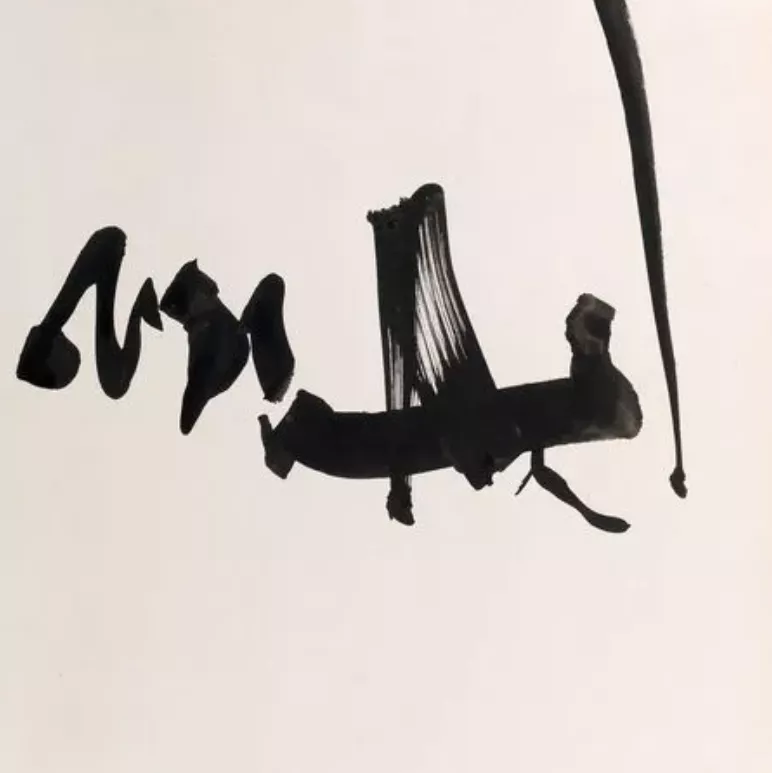
.
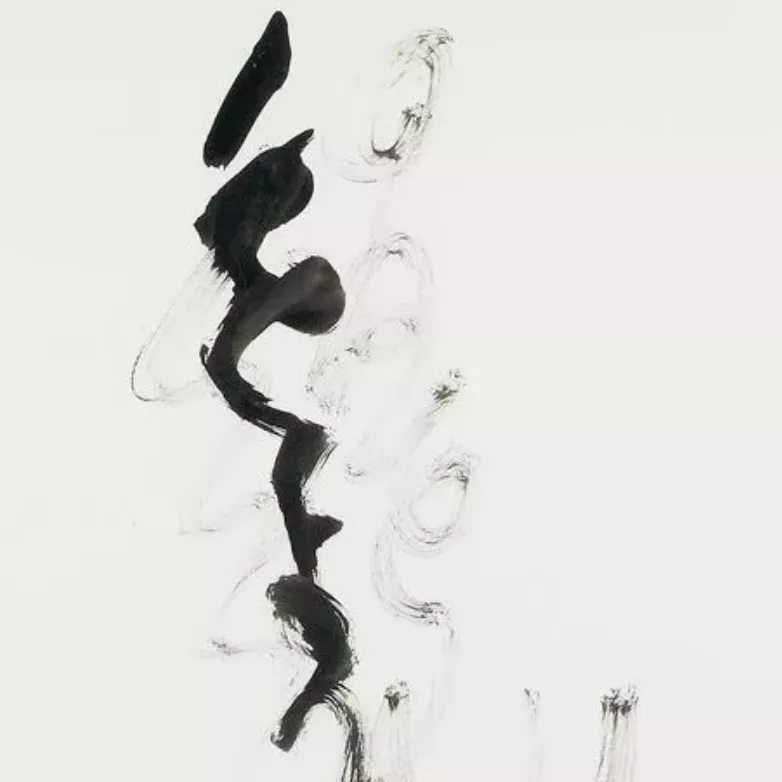
Jean Degottex, a major artist of lyrical abstraction
Jean Degottex, born in 1918 in Paris, is a painter whose artistic evolution is marked by a constant effort to understand and redefine the relationship between space, color and matter.
In the 1940s, he moved away from figurative painting towards abstraction, attracted by the influence of lyrical abstraction and informalism. In 1947, his first works already expressed a desire to escape preconceived forms, to free the canvas from the constraints of figuration.
His painting becomes a systematic exploration of gesture and matter, where color no longer serves solely to represent, but becomes a force of its own, a sensory experience.
The 1950s marked a turning point in his work, where he met influential artists such as Hans Hartung, Wols or Georges Mathieu.
These exchanges nourished his own pictorial language and led him to develop a distinctive technique where the brushstroke, sometimes violent, sometimes more measured, traces an imprint that seems to overflow the limits of the painting.
At the same time, he pursues his search for meaning through compositions in which the presence of matter and the space between forms occupy a primordial place.
His painting, while deeply rooted in abstraction, dialogues with movement, energy and the freedom of gesture.
Jean Degottex's imprint on his period
Jean Degottex's imprint on his period is manifest in his relentless quest for a painting freed from formal constraints. His works of the 1950s and 1960s, marked by a dynamic use of color and gesture, reaffirm his break with academic art.
At a time when abstract art was beginning to take hold, his approach to painting became a veritable act of rebellion against the established order.
His technique, a blend of vigorous gesture and meticulous chromatic research, succeeds in renewing pictorial space, giving birth to a language in which instinct and matter are paramount.
Through his innovations and his desire to constantly reinvent the act of painting, Degottex left an indelible mark on French abstraction, contributing to its singularity while influencing many contemporary artists.
The transition from figurative to abstract in his works is not without tension: he makes it an exploration, a challenge to traditional ordering. Each canvas becomes a space where emotion, guided by the material itself, emerges in a controlled explosion.
Thus, his work rests on an ideal of controlled improvisation, in which color no longer merely represents but takes shape, unfolds and imposes itself as an entity in itself.
By pushing back the boundaries of painting, he established his name among the major figures of his time, and his influence endures, notably through the singularity of his approach, which combines pure abstraction with a search for raw, immediate expression.
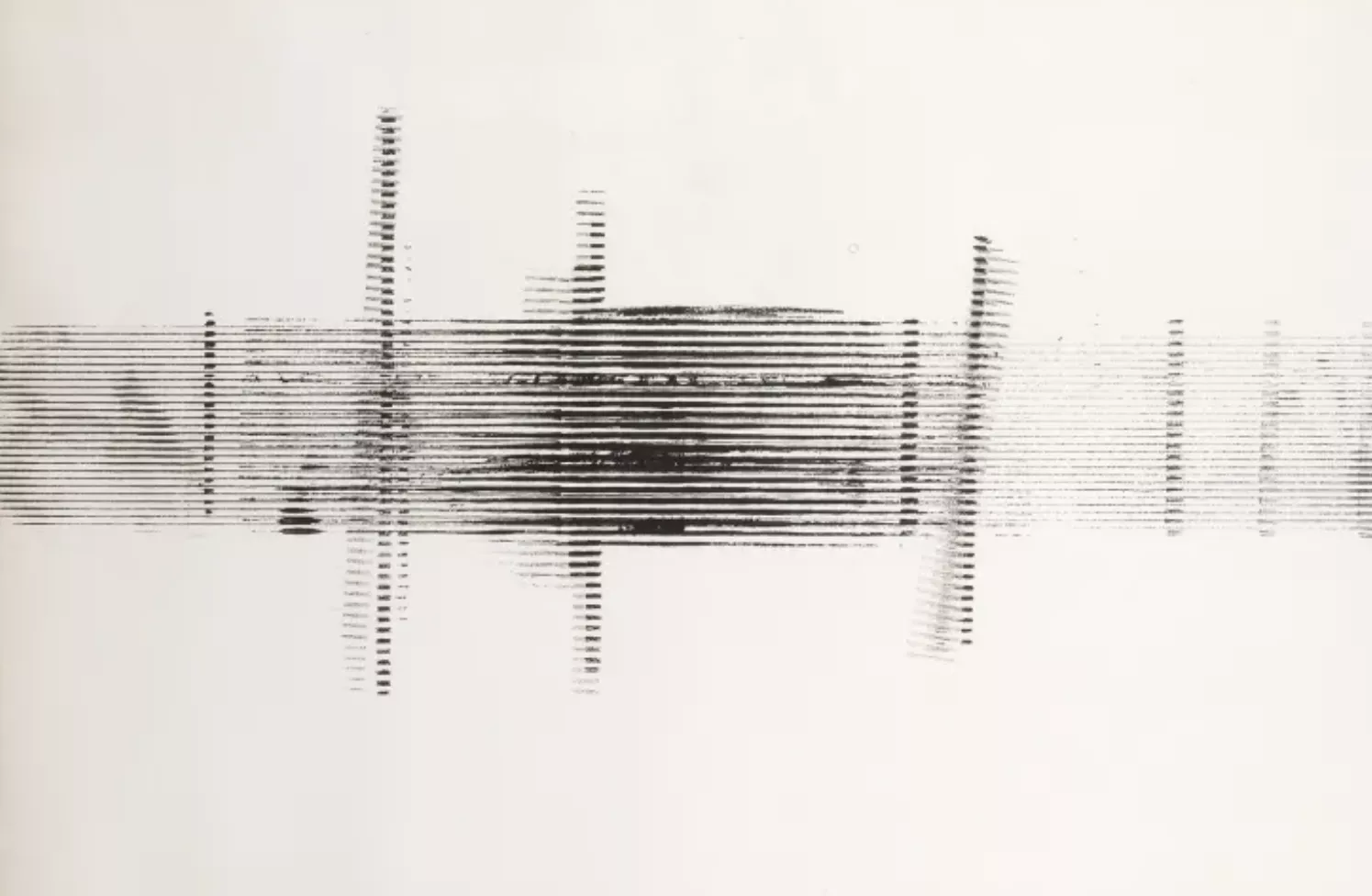
Focus on Le ciel éclaté, Jean Degottex, 1963
In Le Ciel éclaté (1963), Jean Degottex offers us a vibrant painting in which color, stripped of all traditional restraint, expresses itself almost organically.
Using broad, unrestrained gestures, he liberates pictorial matter, abandoning structure in favor of raw energy.
The background, bursting with exploded nuances, seems to decompose under the effect of a dazzling gesture, creating a tension between the irruption of color and structure.
Degottex, by abandoning a linear composition, grants each fragment of his painting autonomy while reaffirming their belonging to an indivisible whole. Here, color is not a mere means of illusion, it is the subject itself.
The vibrant hues of red, blue and yellow, burst across the canvas like a silent cry, unfolding in a kind of visual dance where each shade seems to melt into the next.
This play of textures, between solids and superimpositions, gives rise to an unexpected depth, redefining pictorial space.
The eye is caught by this fluidity, this setting in motion that brings the canvas to life. In this sense, Le Ciel éclaté does not merely depict a reality, but transforms it, rendering it almost physical, through the intensity of his gesture.
With this work, Degottex inscribes his practice in the continuity of the abstract research of the 1960s, while proposing a personal vocabulary, deeply marked by the urgency of the moment and the tension between the visible and the invisible.
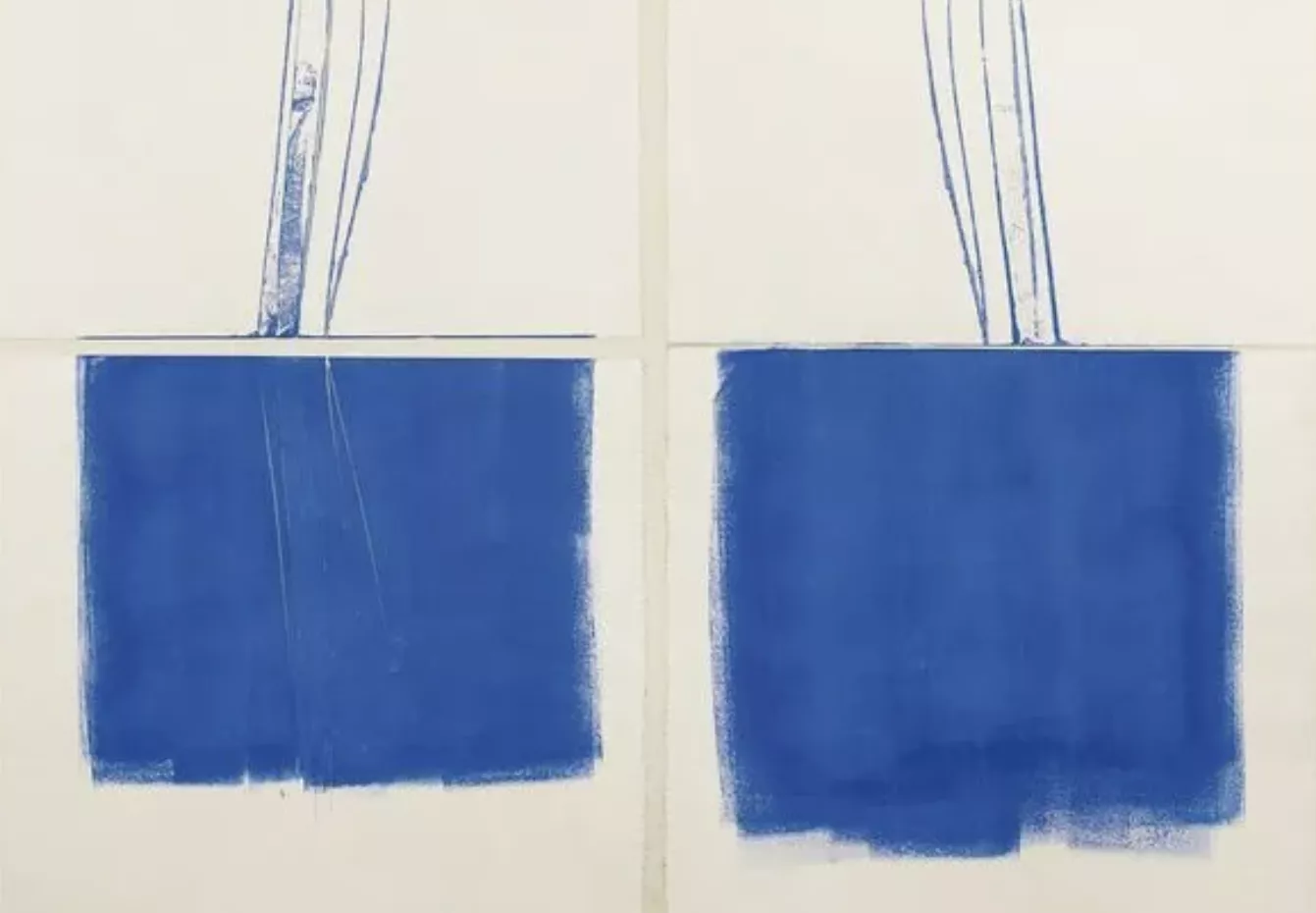
The stylistic influences of Jean Degottex
In his early works of the 1950s, Jean Degottex chose to turn to lyrical abstraction, a path where freedom of gesture became essential.
Borrowing from Abstract Expressionism, notably through the American Jackson Pollock, Degottex lets himself be guided by the impulse of the moment, a frenetic gesture that translates an unconstrained vision.
However, unlike Pollock, who plunges into raw energy, Degottex introduces a quest for mastery into his compositions, marked by a search for balance between chaos and harmony.
Geometry, though strictly absent, sometimes grazes the surface of his canvases, influenced by the traces left by Hans Hartung's geometric abstraction.
Alongside this, the spirit of the CoBrA movement, with its spontaneity and commitment to organic painting, also feeds his experimentation.
It is within this dynamic that Degottex succeeds in forging a personal pictorial language, where exploded forms and brilliant colors come together, sublimating the spontaneity of gesture while inscribing a structure specific to his imagination.
Today, works of lyrical abstraction, and in particular those by Jean Degottex, are highly appreciated by both collectors and amateurs, and fetch very high prices on the auction market.
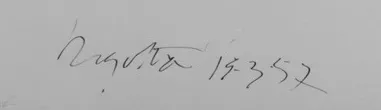
His signature
Although there are variations, here is a first example of his signature :
Expertise your property
If you own a work by Jean Degottex, don't hesitate to request a free appraisal by filling in our online form.
A member of our team of experts and certified auctioneers will contact you to provide an estimate of the market value of your work.
If you are considering selling your work, our specialists will also guide you through the various alternatives available to obtain the best possible price, taking into account market trends and the specific features of each work.
Estimate in less than 24h
Discover in the same theme

Rating and value of chairs, tables and desks by Jean Prouvé
Jean Prouvé is a 20th-century designer best known for his chairs, an essential piece of furniture that he reinvented. They are highly prized.
Learn more >

Rating and value of sculptures and bronzes by Albéric Collin
Albéric Collin is Belgium's most famous sculptor of animal bronzes, and his works are highly prized at auction.
Learn more >

Rating and value of sculptures, bronzes and paintings by Pau...
Paule Bisman is a 20th-century Belgian sculptor and painter. Her works reach unprecedented heights on the art market.
Learn more >
Other similar works sold at auction

Estimated 2.000 - 4.000
Serge POLIAKOFF (1900-1969), Composition en rouge et bleu. 1965, Lithograph

Estimated 1.000 - 2.000
Raymond GUERRIER (1920-2002), Composition I, Oil on canvas

Estimated 2.000 - 4.000
Pierre SOULAGES (1919-2022) Etching III. Vellum print

Estimated 300 - 500
Georges DAYEZ (1907-1991) The letter Oil on canvas

Estimated 300 - 500
Pierre JACQUEMON (1936-2001) Abstract composition Oil on canvas

Estimated 500 - 800
Raymond GRANDJEAN (1929-2006) Geometric composition with red background Oil on canvas

Secure site, anonymity preserved

Auctioneer approved by the State

Free and certified estimates
Frequently asked questions
-
Who is Jean Degottex, and what is his artistic background?Jean Degottex (1918–2002) was a leading painter of French lyrical abstraction. As early as the 1940s and 1950s, he turned to abstraction, influenced by artists such as Hans Hartung and Georges Mathieu. His distinctive approach combines controlled gestural brushwork with a structured exploration of texture, in which material and color become languages in their own right, freed from the constraints of figurative art.
-
What is the current price range for works by Jean Degottex?The prices of Degottex’s works vary depending on the medium: prints sell for between €40 and €1,800, sculptures between €650 and €7,000, drawings and watercolors between €40 and €45,000, and paintings between €300 and €200,000. His market value continues to rise, as the artist has established himself as a safe bet on the art market.
-
How can you authenticate a work by Jean Degottex?To authenticate a work by Degottex, we recommend that you request a free appraisal from Auctie's. Our experts and state-certified auctioneers will examine your work and provide you with an accurate estimate of its current market value, with no obligation on your part.
-
Is this the right time to sell a work by Jean Degottex?Yes, this is an excellent time to sell a work by Degottex. The artist’s market value is steadily rising, and he has established himself as a safe bet in the contemporary art market. Works of lyrical abstraction are highly prized by collectors, and the prices achieved at auction reflect sustained demand for this major artist.
-
How does the appraisal and sale process work at Auctie's?The appraisal is free and non-binding: fill out our online form, and a member of our team of experts will contact you to appraise your artwork. If you’re interested in selling, our specialists will guide you toward the best solution based on market trends, the condition of your artwork, and its specific characteristics, all the way through to the auction sale.
