



Rating and value of works, drawings, paintings by Emile Boggio

Key takeaways
- A Venezuelan Post-Impressionist painter (1857–1920), Emile Boggio is a rising star on the art market, with works selling for up to €76,000.
- His drawings sell for between €200 and €5,000, while his paintings range from €500 to over €76,000, depending on the technique and period.
- His style evolved from pre-1900 Symbolism to Post-Impressionism influenced by Monet and Van Gogh; his later paintings regularly fetch over €10,000 at auction.
Post-Impressionist painter of Venezuelan origin, Emile Boggio (1857-1920) represents a true cultural bridge between French and Venezuelan culture and stands out as one of the leading Latin American Impressionist painters.
If you own a work by or based on the artist Emile Boggio and would like to know its value, our state-approved experts and auctioneers will guide you.
Our specialists will carry out a free appraisal of your work, and provide you with a precise estimate of its value on the current market.
Then, if you wish to sell your work, we will direct you to the best possible arrangement to obtain the optimum price.
Rating and value of the artist Emile Boggio
Considered one of the leading Latin American postimpressionist painters, Emile Boggio enjoyed a certain notoriety on the market during his lifetime.
After his death, his value declined slightly before rising and stabilizing in recent years. Mainly present on the French, American and Venezuelan markets, the artist is establishing himself as a rising star on the art market.
A work signed by him can fetch tens of thousands of euros at auction. His oil on canvas Le moulin de Périgny was sold for over €76,000.
Order of value from the most basic to the most prestigious
Technique used | Result |
|---|---|
Drawing | From 200 to 5 000€ |
Painting | From 500 to 76 225€ |
Estimate in less than 24h
Style and technique of the artist Émile Boggio
Émile Boggio was appreciated by his contemporaries and received the support of many artists, including Renoir. His work is structured around three distinct periods, each marked by different stylistic influences and research.
Before 1900, he was part of a Symbolist aesthetic, under the influence of Pierre Puvis de Chavannes. He adopted a sober palette and a pictorial language borrowed from academic canons.
This period, although rarer on the market, is particularly sought-after, and some canvases can fetch several tens of thousands of euros at auction.
From the 20th century onwards, Boggio turned to postimpressionism. Fascinated by light, he drew inspiration from the work of Monet and Van Gogh. His brushstrokes became freer, his colors more fragmented, and his landscapes more vibrant. His works from this period, regularly presented in auction rooms, can exceed €10,000.
Finally, photography occupies an important place in his work. He uses it as a study tool, capturing moments and refining his compositions. Although numerous, his photographs remain rare on the market and remain little known today.
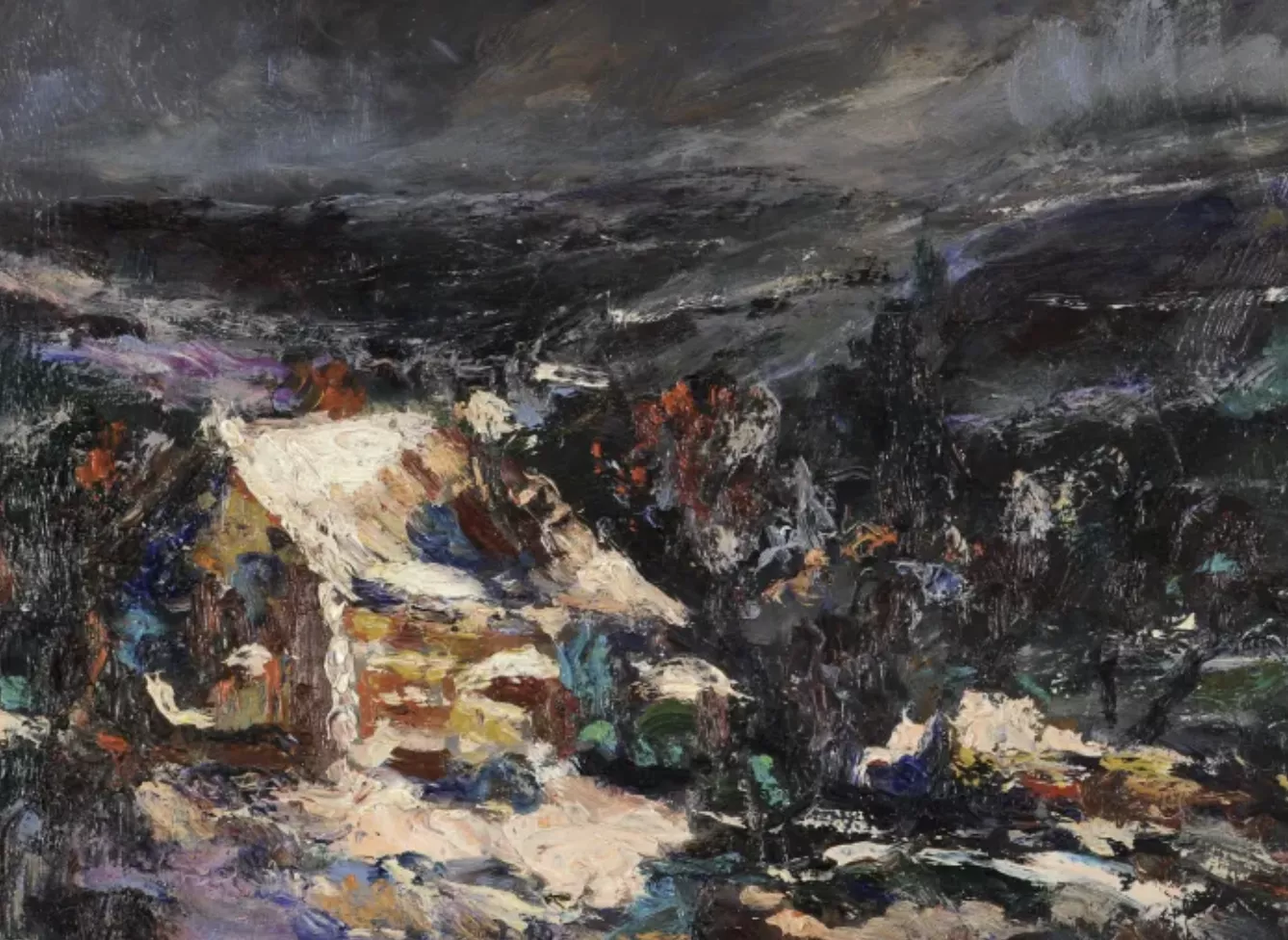
Boggio and Impressionism
Émile Boggio (1857-1920) showed an early interest in art, but initially trained as a businessman before devoting himself fully to painting. Trained at the Académie Julian, he began exhibiting at the Salon des artistes français in 1887 and established himself in Parisian artistic circles.
His style evolved over time, moving from a Symbolist influence to a luminous postimpressionism, inspired by Monet and Van Gogh. His research into color and light set him apart, and his vibrant landscapes seduced art lovers.
Although he settled mainly in France, he remained attached to his Venezuelan roots and made several trips to his native country, where he actively contributed to local artistic development. He teaches painting, passing on his knowledge to a new generation of artists.
Close to the great painters of his time, he maintains relations with Renoir and Pissarro and is also interested in photography, which he uses as a study medium for his compositions.
En 1919, weakened by illness, he retired to Auvers-sur-Oise, where he continued to paint until his death in 1920. His canvases, now rediscovered, bear witness to a sensitive and refined pictorial research, and are arousing growing interest on the art market.
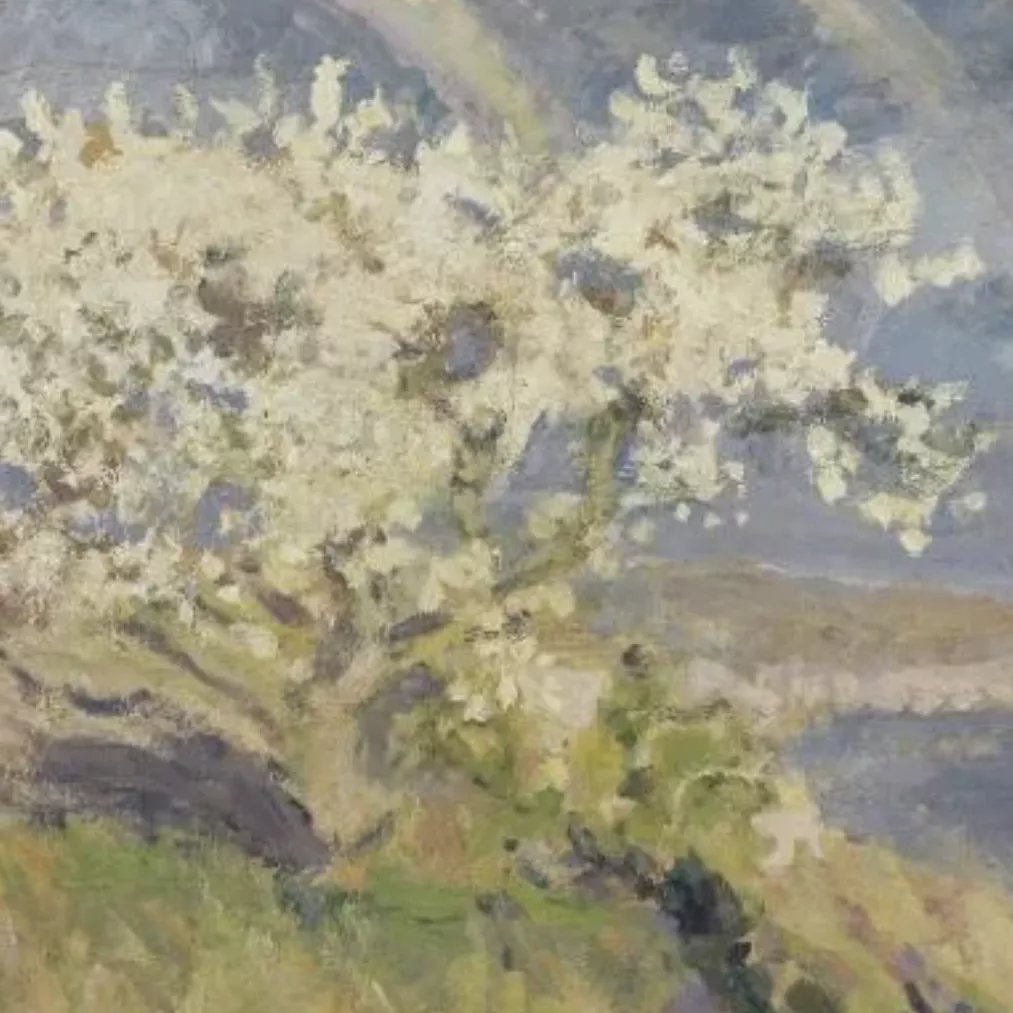
Focus on Le jardin en fleurs, Émile Boggio
Émile Boggio follows in the footsteps of Post-Impressionism, and Le Jardin en fleurs perfectly illustrates his artistic approach. The composition revolves around an abundance of vegetation, where the artist exploits a dynamic, fragmented brushstroke.
The application of color in small, juxtaposed strokes reinforces the effect of luminous vibration and testifies to an assimilation of Monet's research into optical perception.
The chromatic choice is based on a range of greens, yellows and reds, nuanced by subtle contrasts that give rhythm to the canvas.
The interaction of warm and cool tones accentuates depth and gives relief to the foliage. This approach is in line with Impressionist experimentation, yet stands out for its more pronounced structuring of the motif.
Boggio does not seek merely to capture a fleeting moment, but to elaborate a more constructed vision of nature.
The spatial organization of the work is based on a perspective suggested by colored masses, rather than by a rigorous outline.
This desire to convey an impression rather than a fixed reality is reflected in the treatment of flowers and foliage, where the pictorial material seems almost in motion.
The artist thus achieves a balance between spontaneity and rigor, where the brushstroke remains free without giving way to chaos.
With this work, Boggio asserts a singular plastic identity. His approach to landscapes, oscillating between observation and interpretation, has established him as a key figure of post-impressionism.
His paintings, although less well known to the general public, are now appreciated by amateurs and collectors.
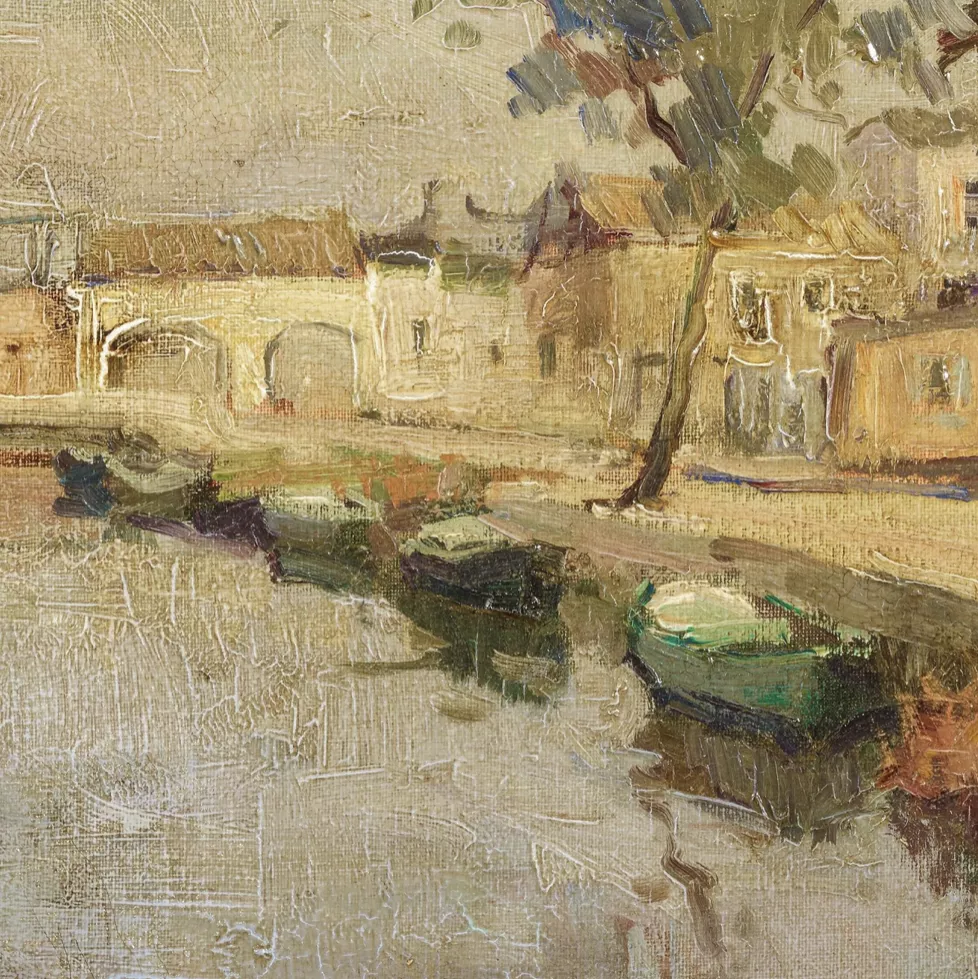
Emile Boggio's imprint on his period
Emile Boggio's stylistic imprint on his period is asserted in his ability to transgress the canons established by previous movements while integrating their essential teachings.
He manages to infuse his compositions with light and fluidity, borrowing from Impressionism his vibrant treatment of color and from his contemporaries, such as the Post-Impressionists, the demand for a more constructed search for pictorial space.
In this sense, his work not only reflects influences but transforms them to assert a personal approach to nature, and landscape in particular.
Through his canvases, he engages in an almost sensory quest, seeking to capture not only light and color but also the atmosphere of a suspended moment.
His scenes of gardens, riverbanks or forests become places of visual meditation, where nature unfolds in all its chromatic richness.
The material becomes moving under his brushstrokes, the brushstrokes freer, sometimes more textured, without forsaking careful composition.
His vision thus distances itself from the simple transcription of nature, infusing it with a new emotional and aesthetic depth.
The artist, with his particular interest in light, attributes to it a central role in the construction of his landscapes. The atmosphere is imbued with this light, which colors every aspect of the environment, from the leaves of the trees to the flowers to the waves of the water.
His pictorial research, guided by an already asserted modernity, is thus part of a subtle tension between the visible and the invisible.
This quest for light, nuance and shadow is a lasting legacy in the art of the first half of the 20th century.
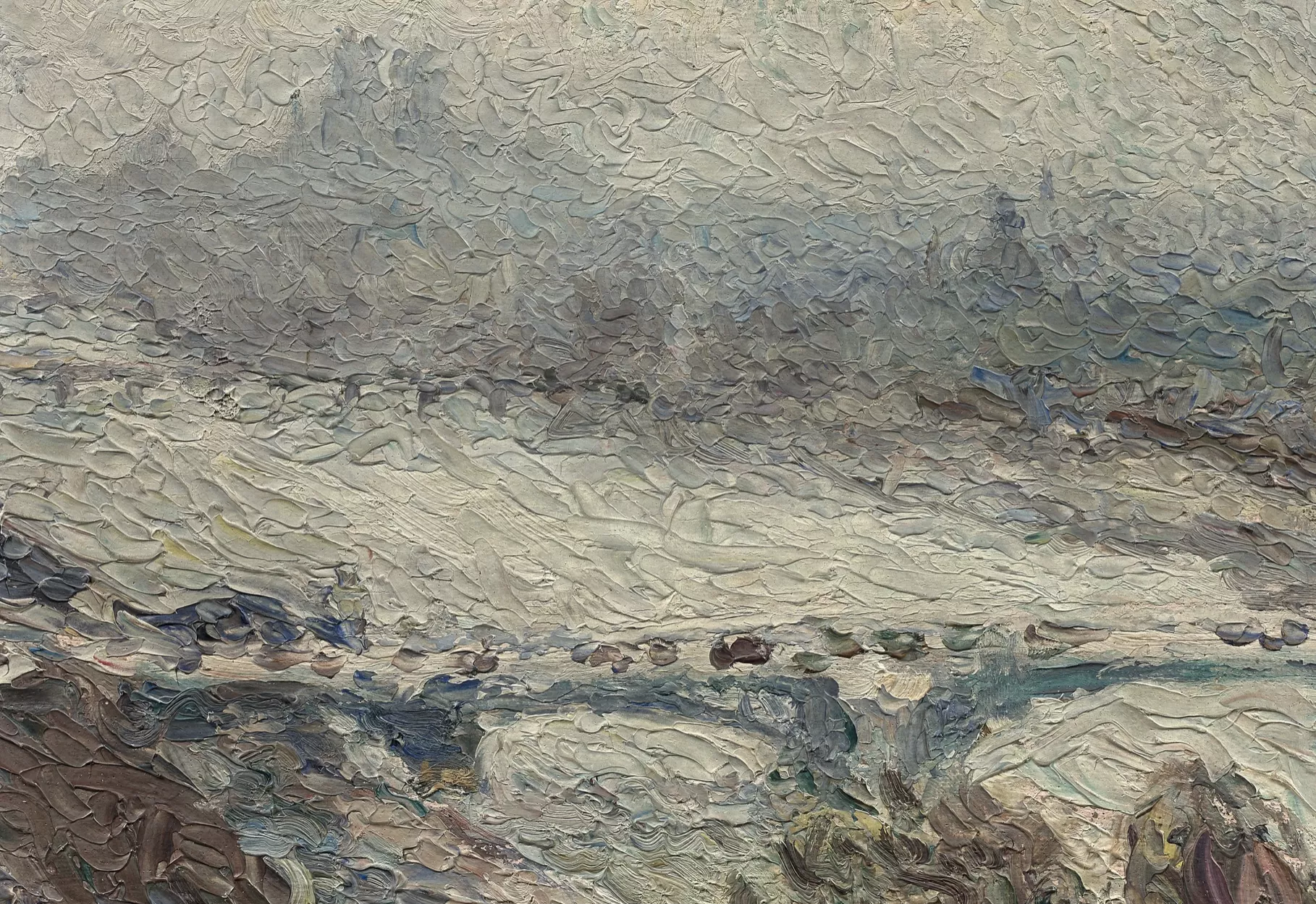
Artistic influences of Émile Boggio
Emile Boggio's stylistic influences are manifold, and reflect a constant dialogue with the major artistic movements of his time. From the outset, the artist's early works were close to the academic tradition and drew on the canons of the classical masters, while seeking to free himself from them.
Early on, his eye turned to Impressionism, and, through the study of light and color, he appropriated a brilliant palette, where vivid hues juxtaposed to capture the moment, the subtle variation of nature.
From this school, he retains the liveliness of the brushstrokes and the importance of the fleeting motif, while ensuring that his landscapes are not limited to a simple exercise in capturing atmosphere.
In contact with Impressionism, Boggio encounters the Post-Impressionists. It was in studying Claude Monet that he deepened his approach to light, reflections and texture, seeking to render the movement of light in all its fluidity, while infusing it with a more intimate dimension.
From Vincent van Gogh, he captures the expressive power of color, and that energy that transcends form to achieve a degree of emotional intensity. He is also stylistically close to artists such as Sydney Thompson or Virginie Demont Breton.
However, through this re-appropriation, the artist is not simply seeking to imitate, but to integrate her influences into a personal approach, at once more poetic and more rigorous in the structure of her compositions.
This quest for light and movement is finally enriched by his passion for photography, which enables him to capture precise moments with a rare acuity, while introducing rigor into the composition of his scenes.
This photographic eye, this acute sense of capturing the instantaneous, nourishes his work and leads him to transcend the limits of influences to propose a unique visual language of great modernity.
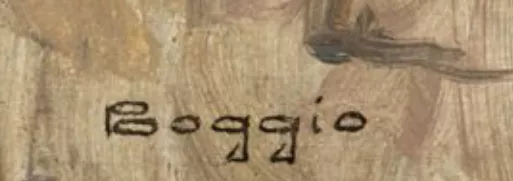
His signature
Emile Boggio's works are not all signed.
Although there are variations, here is a first example of his signature:
Expertise your property
If you own a work by Emile Boggio, feel free to request a free appraisal by filling in our online form. A member of our team of experts and chartered auctioneers will contact you to provide an estimate of the market value of your work.
If you are considering selling your work, our specialists will also guide you through the various alternatives available to obtain the best possible price, taking into account market trends and the specific features of each work.
Estimate in less than 24h
Discover in the same theme

Rating and value of chests of drawers, sideboards and bookca...
Pierre Chapo is an iconic 20th-century designer who has produced works that are prized and in demand on the auction market. Estimate in 24h
Learn more >

Rating and value of paintings by Marie Laurencin
Marie Laurencin is a 20th-century Fauvist and Cubist artist whose works are highly prized at auction.
Learn more >

Rating and value of Robert Picault's ceramics, services and...
Robert Picualt is a 20th-century ceramist who worked in Vallauris. He is the author of an important and valuable production.
Learn more >
Works from the same period sold at auction

Estimated 2 000 € - 3 000 €
Delphin ENJOLRAS (1857-1945) "A Midsummer Night's Dream", Oil on canvas

Estimated 600 € - 800 €
Henri ZUBER (1844-1909), Bridge at Artemare. Oil on canvas.

Estimated 3.000 - 5.000 €
Henri EPSTEIN (1892-1944), Place du sud de la France, Oil on canvas.

Estimated 3.000 - 5.000
Georges LAPCHINE (1885-1951) The port of St Tropez Oil on canvas

Secure site, anonymity preserved

Auctioneer approved by the State

Free and certified estimates
Frequently asked questions
-
Who was Émile Boggio, and what was his artistic background?Émile Boggio (1857–1920) was a Post-Impressionist painter of Venezuelan origin who trained at the Académie Julian in Paris. Recognized as one of the leading Latin American Impressionist painters, he built a cultural bridge between France and Venezuela, maintaining relationships with major artists such as Renoir and Pissarro. His style evolved from Symbolism to Post-Impressionism, inspired by Monet and Van Gogh, before he turned his attention to photography as a tool for study.
-
What are the price ranges for Émile Boggio's works?Émile Boggio’s drawings generally sell for between €200 and €5,000, while his paintings range from €500 to over €76,000. Works from his Symbolist period (before 1900) are particularly sought after and can fetch tens of thousands of euros at auction. His 20th-century Post-Impressionist paintings, which regularly appear at auction, generally exceed €10,000.
-
How can you authenticate a work by Émile Boggio and determine its value?To authenticate and appraise a work by Émile Boggio, we recommend that you request a free appraisal from Auctie's by filling out our online form. A state-certified expert or auctioneer will contact you to evaluate your artwork and provide you with an accurate estimate of its current market value, with no obligation.
-
Is this the right time to sell a work by Émile Boggio?Yes, now is a good time to sell a work by Émile Boggio. After a slight decline following his death, his market value has stabilized and has been rising in recent years. The artist is emerging as a rising star in the art market, particularly popular in France, the United States, and Venezuela, with growing interest from collectors and art lovers.
-
How does the sales process work at Auctie's?At Auctie's, the process begins with a free, no-obligation appraisal of your artwork by our experts and licensed auctioneers. We will provide you with an estimate within 48 hours. If you decide to sell, our specialists will guide you toward the best approach to achieve the highest possible price, taking into account market trends and the specific characteristics of your artwork, all the way through to the final sale.
