



Rating and value of paintings by Lucio Fontana

Key takeaways
- Lucio Fontana's works command stable, high prices, with auction prices ranging from 50 to 24,079,230 euros depending on the technique used.
- The artist is best known for his “Concetti Spaziali,” characterized by slashes and perforations that introduce a sculptural dimension to painting.
- Fontana founded the Spatialist movement in the 1940s, revolutionizing traditional painting by exploring space, movement, and the interaction between surface and volume.
If you own a work by or based on the artist Lucio Fontana and would like to know its value, our state-approved experts and auctioneers will guide you.
Our specialists will carry out a free appraisal of your work, and send you a precise estimate of its value on the current market.
Then, if you wish to sell your work, we will direct you to the best possible arrangement to obtain the optimum price.
Artist's rating and value
Because of his popularity, Lucio Fontana's rating on the art market is high and stable. Highly coveted by collectors, his futuristic paintings can fetch thousands of euros at auction.
The price at which they sell on the auction market ranges from €50 to €24,079,000, a consequent delta but one that speaks volumes about the value that can be attributed to the artist's works.
As witness his painting Concetto spatiale, La fine di Dio, dating from 1964 sold for €24,079,230 in 2015.
Order of value from the most basic to the most prestigious
Technique used | Result |
|---|---|
Ceramics | From €1,580 to €363,460 |
Estamp - multiple | From €50 to €80,000 |
Drawing - watercolor | From €100 to €537,380 |
Painting | From €50 to €24,079,230 |
Estimate in less than 24h
The artist's works and style
Lucio Fontana's works are characterized by his research into space and matter. His canvases are marked by notches and perforations. The artist is best known for his "Concetti Spaziali", which explore depth beyond the surface of the painting.
His style can be described as experimental. He pays particular attention to the effects of light, but also to the structure of the support. Fontana is strongly influenced by the twentieth-century avant-garde and spatial art, although he retains a personal approach to gesture. This testifies to a desire to open up a new space in painting.
The artist adopts a precise, cutting gesture - influenced on this point by theoretical reflection on art, while retaining a certain rigor in composition.
His technique is mastered both in the choice of materials and in the balance of forms, playing on the contrasts between smooth and cut surfaces, allowing him to introduce a sculptural dimension into his painting. For his monochromes, he works meticulously with the tension of the support, giving his works an immediate visual force.
His eye is turned towards the interaction between paint and void (lots of relief, shadow and depth as in spatialist art), but also towards an expression of gesture, where the incision becomes a plastic element in its own right.
He also works in ceramics and metal, which reveal in him the same research into material and the trace of gesture.
Fontana is thus distinguished by a radical approach to painting, which combines spontaneity of gesture and reflection on space. Like many artists of his time, he produced a body of work that oscillated between experimentation and mastery.
He blended influences, boldly pushing back the boundaries of the painting, but also establishing himself as one of the most innovative painters of his time.
Fontana's work is characterized by a radical approach to painting, combining spontaneity of gesture and reflection on space.

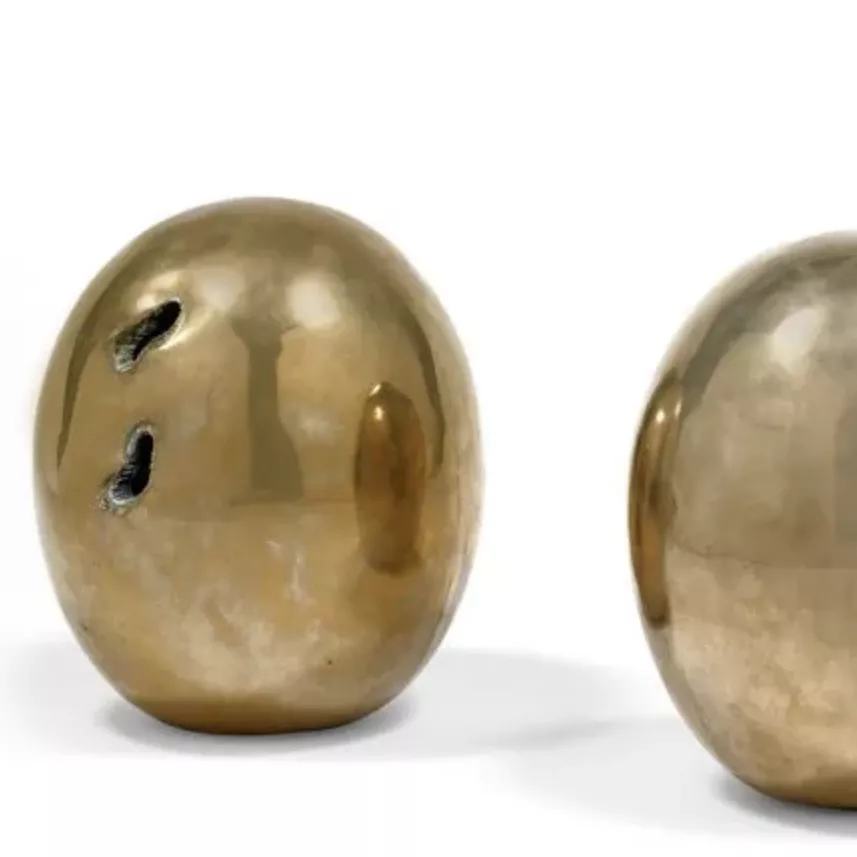
Lucio Fontana, Argentinian spatialist
Lucio Fontana was born in 1899 in Argentina. He spent part of his childhood in Italy, where he trained as a sculptor and painter. The artist is best known for founding the Spatialist movement, which challenged the traditional limits of art.
His career can be described as innovative. He paid particular attention to research into space, but also to the interactions between matter and light. Fontana was strongly influenced by Futurism and abstraction, even though he developed a singular approach. This testifies to a desire to explore a new artistic dimension.
The artist frequents avant-garde circles and teaches in Milan - influenced on this point by a desire for experimentation, while retaining a theoretical reflection on the evolution of art.
His work evolves in both painting and sculpture, and he multiplies supports and techniques, enabling him to develop a body of work in perpetual research. For his famous lacerated canvases, he works meticulously on the gesture, giving his work a unique conceptual force.
His gaze is turned towards the future (much research into space, new technologies and innovative materials), but also towards a redefinition of the artist's role, where the creative act becomes a process of openness and questioning.
He also explores ceramics and architecture, which reveal in him a willingness to go beyond traditional artistic categories.
Fontana is thus distinguished by his radical approach, which combines gesture with a reflection on space. Like many artists of his time, his work oscillates between tradition and modernity.
He blends influences, capturing the dynamics of gesture with great accuracy, but also establishing himself as one of the most daring creators of his time.
Focus on Concetto Spaziale, Attese, Lucio Fontana
Concetto Spaziale, Attese is characterized by a direct approach to gesture. The work is composed of a monochrome canvas, lacerated by clean cuts. The artist does not seek to represent a subject, but to open up a new pictorial dimension.
This work can be described as radical. Fontana pays particular attention to the materiality of the canvas, but also to the space created through the slits. The influence of Futurism and abstraction is perceptible, even if his approach goes beyond these currents. This testifies to a desire to break with traditional painting.
The artist adopts a precise gesture and a pared-down composition - influenced on this point by research into the void, while maintaining a rigor in the balance of the canvas.
His technique is mastered both in the execution of the incisions and in the choice of colors, playing on contrasts and light to give depth to the flat surface. For his canvases, he doesn't just paint, but physically intervenes on the support, giving the work a sculptural dimension.
His eye is turned towards painting in movement (much research into space and interaction with light), but also towards minimal expression, where gesture becomes the central element.
He applies this approach in a number of chromatic variations, which reveal his ongoing reflection on perception and matter.
Fontana is thus distinguished by a vision that transcends the boundaries of painting, combining destruction and creation. Like many artists of his time, he was the author of a body of work that questioned the very nature of art.
He mixed influences, rethinking the painting with great freedom but also establishing himself as one of the most innovative artists of his time.
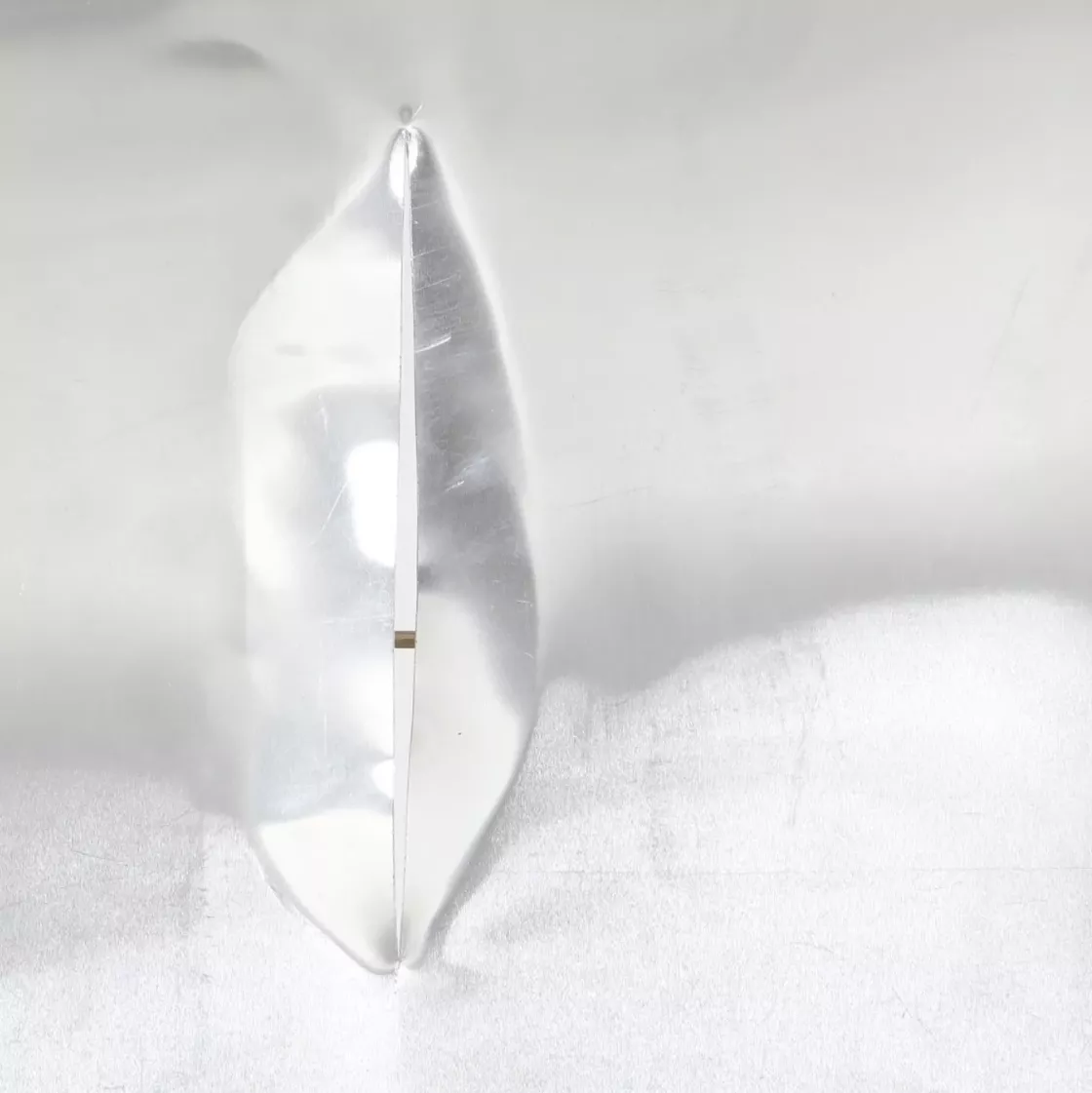

The artist's legacy on his period
Lucio Fontana marked his era with the creation of spatialism in the 1940s. In so doing, he instigated a radical break with the conventions of traditional painting. He explored space and movement by introducing three-dimensional elements into his works.
Most notable are the Concetti Spaziali (spatial concepts). The artist seeks to integrate the temporal and spatial dimension into painting, thereby breaking down the boundaries between surface and volume.
His work stands out for the impact of cuts and perforations. He makes the gesture of cutting and piercing the canvas emblematic, enabling the surface of the painting to be redefined both as a space that can be explored visually and as a material that can be manipulated physically.
Through this seminal gesture, he influences a whole generation of contemporary artists.
Fontana also works with an inspiration for kinetic and minimalist art. With his radical approach, he inspires artists of the minimalist and kinetic movement - through the integration of mobile, metallic and luminous elements.
He establishes himself as a pioneering artist in the integration of new methods and materials, thus paving the way for contemporary art.
Lucio Fontana thus demonstrates his theorist aspect, questioning the relationship between art and modern technology, a question that many artists also raised after him.
He demonstrates through his production his avant-garde vision of art. Fontana's legacy can also be measured in his influence on current artistic practice - where questions of space, movement and interactivity continue to influence the research of contemporary artists.
Today, Lucio Fontana is one of the best-selling artists at auction ; and his works are increasingly sought after by collectors - alongside artists such as Jean Dubuffet, Pierre Soulages or Zao Wou-Ki.
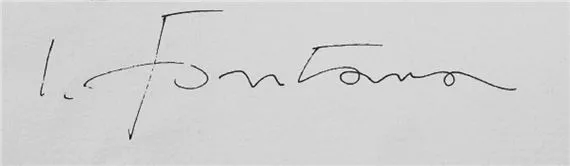
His signature
Not all of Lucio Fontana's works are signed.
Although there are variations, here is a first example of his signature :
Expertise your property
If you own a work by Lucio Fontana, don't hesitate to request a free appraisal by filling in our online form.
A member of our team of experts and licensed auctioneers will contact you to provide an estimate of the market value of your work.
If you are considering selling your work, our specialists will also guide you through the various alternatives available to obtain the best possible price, taking into account market trends and the specificities of each work.
Estimate in less than 24h
Discover in the same theme

Rating and value of works, paintings, drawings by Maximilien...
Maximilien Luce is a 20th-century post-impressionist artist who produced many paintings and drawings that are quoted on the art market.
Learn more >

Rating and value of paintings by Marie Louise von Motesiczky
Marie Louise von Motesiczky is an Austrian New Objectivity artist. Her paintings are highly prized.
Learn more >

Rating and value of paintings, oils on canvas by Georges Mat...
Georges Mathieu is a twentieth-century painter who combined monarchical convictions and lyrical abstraction in his work. He is highly regarded.
Learn more >
Works from the same period sold at auction


Secure site, anonymity preserved

Auctioneer approved by the State

Free and certified estimates
Frequently asked questions
-
Who is Lucio Fontana, and what is his contribution to art history?Lucio Fontana (1899–1994) was an Argentine artist who founded the Spatialist movement in the 1940s, marking a radical break with traditional painting. He is best known for his “Concetti Spaziali” (spatial concepts), in which he slashed and pierced the canvas to explore the spatial and three-dimensional aspects of painting, influencing several generations of contemporary artists.
-
What is the price range for Lucio Fontana's works at auction?Prices for works by Lucio Fontana vary considerably depending on the medium and rarity: prints range from 50 to 80,000 euros, watercolor drawings from 100 to 537,380 euros, ceramics between €1,580 and €363,460, and paintings between €50 and over €24 million. His painting “Concetto Spaziale, La fine di Dio” (1964) fetched €24,079,230 in 2015, illustrating the exceptional value of major works.
-
How do you authenticate a work by Lucio Fontana?To authenticate a work by Lucio Fontana, we recommend that you request a free appraisal from Auctie's by filling out our online form. A certified expert or auctioneer will examine your work and provide you with an accurate estimate of its market value, with no obligation on your part.
-
What are the distinctive characteristics of Lucio Fontana's style?Fontana’s style is characterized by an exploration of space and matter, with canvases marked by clean cuts and perforations. His approach combines spontaneous gesture with rigorous theoretical reflection, exploring the interaction between paint and empty space, the effects of light, and introducing a sculptural dimension to painting through the interplay of contrasts between smooth surfaces and cuts.
-
How do I sell a work by Lucio Fontana at Auctie's?Auctie's supports you from appraisal to the final bid: after a free evaluation of your artwork by our experts, we guide you through the various options available, taking into account market trends and the unique characteristics of your piece to help you achieve the best possible price at auction.
