



Rating and value of paintings by Jean Puy

Key takeaways
- Jean Puy’s works sell for between €70 and €88,420, depending on the medium, with his paintings fetching the highest prices.
- A 20th-century Fauvist painter (1876–1960), Jean Puy was involved in the “Salon VII” scandal of 1905 alongside Matisse and Derain.
- His oil on canvas “Standing Nude” exceeded estimates when it sold for €77,000 in 2014, revealing significant upside potential.
If you own a work by or based on the artist Jean Puy and would like to know its value, our state-approved experts and auctioneers will guide you.
Our specialists will carry out a free appraisal of your work, and provide you with a precise estimate of its value on the current market.
Then, should you wish to sell your work, we'll direct you to the best possible arrangement to obtain the optimum price.
Rating and value of the artist
On the art market, works by Jean Puy are fairly common. Associated with the Fauvist group, works from this movement are the most sought-after by 20th-century collectors, especially those depicting nature.
Equally prized, his works that are not categorized as Fauvist can fetch tens of thousands of euros at auction. Jean Puy's works sell for between €70 and €88,420 on the art market, a substantial range but one that speaks volumes about the value that can be attributed to these works.
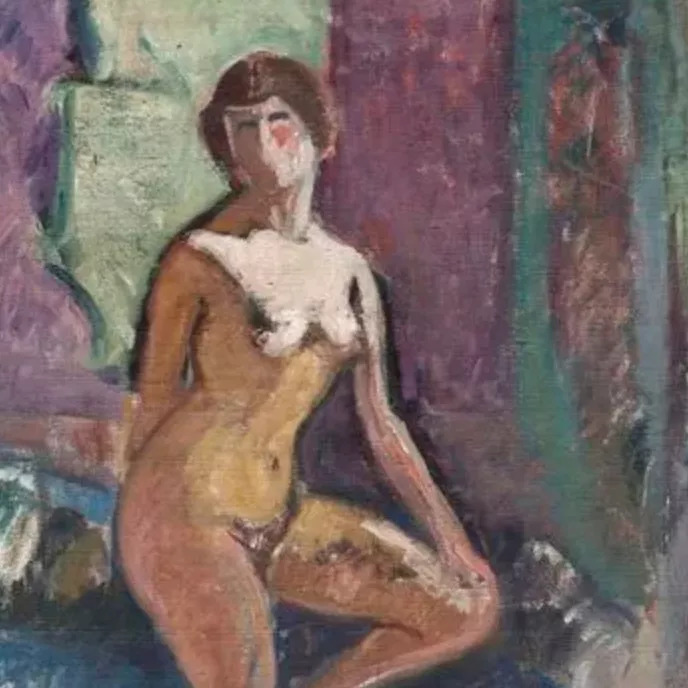
In 2014, his oil on canvas Standing Nude sold for €77,000 while it was estimated at between €20,000 and €25,000, suggesting significant upside potential for his works.
Order of value from the most basic to the most prestigious
Technique used | Result |
|---|---|
Estamp - multiple | From €70 to €300 |
Drawing - watercolor | From €70 to €9,300 |
Painting | From €230 to €88,420 |
Estimate in less than 24h
The artist's style and technique
Jean Puy's works are characterized by synthetic, pared-down compositions (i.e., the horizon line is drawn at the height of the painting), a sacrifice of detail and a simplification of light.
The link between color and light is established through the flat color or the fragmented brushstroke, which spaces out to leave the canvas in reserve. This presence of the reserve in the painting is intended to evoke light and its dazzling effect on the viewer in a sparing manner. He is an essential member of the Fauvist group.
Jean Puy established himself as a bold colorist, adopting a bright, vivid palette characteristic of the Fauvists, but never falling into a brutal exaggeration of color. His hues remain harmonious, with subtle contrasts preserving the softness and balance of his compositions.
The artist's touch is fluid and spontaneous, his brushwork free, his brushstrokes visible and expressive, bringing a sense of movement and life to his subjects. Puy is far from seeking excessive detail, favoring a more instinctive approach, enabling him to capture the essence of a scene in a few strokes.
Although he is a Fauvist, there is a not inconsiderable postimpressionist influence in Jean Puy's work, which retains a sensibility inherited from Impressionism, especially in the treatment of light and atmosphere.
He thus plays with light variations and reflection effects, bringing depth to his landscapes and interior scenes. This method is complemented by a supple, uncluttered drawing style; his compositions are structured with simple, sinuous lines, reinforced by a light outline that remains assertive.
The subjects he depicts are often imbued with gentleness and a certain intimacy, as he favors depictions of everyday life, portraits and female nudes, which are often treated with tenderness.
As a result, his works exude a peaceful atmosphere, bordering on melancholy, which contrasts with the chromatic intensity - the signature of fauvism.
His own fauvism is more nuanced, defined by the color and light that dominate without ever overwhelming the sensitivity of the subject. His canvases, which are both expressive and delicate, are part of a measured modernity, never imposing themselves as a total break with the past. These small subtleties make him one of the most poetic artists of the Fauvist movement.
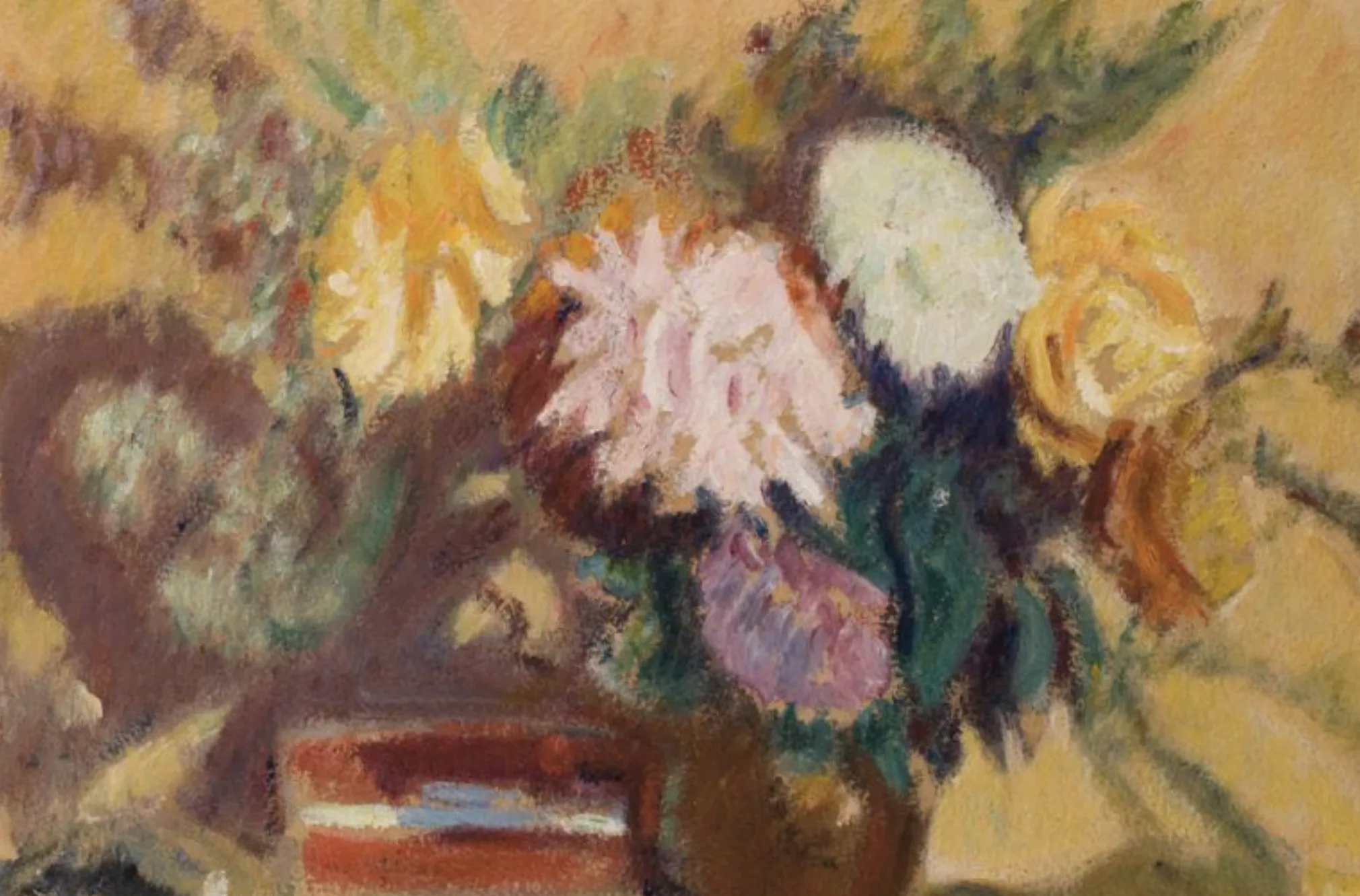
Jean Puy, forgotten figure of Fauvism
Jean Puy (1876-1960) is a 20th-century Fauvist painter.
Born into a family of industrialists from the Loire region, he studied at the Ecole des Beaux-Arts in Lyon and then at the Académie Julian, where he learned to paint in the studios of Gustave Moreau and Eugène Carrière. He was part of the Salle VII scandal, along with Camoin, Derain, Matisse and others in 1905.
Initially influenced by pointillism, he soon turned to fauvism. As his career progressed, he used increasingly warmer shades of color and made his compositions more complex. Following his exhibitions at the Salon d'Automne and the Salon des Indépendants, Berthe Weil took him under her wing.
Ambroise Vollard, the famous Fauvist dealer, agreed to sell his paintings - success naturally followed. Through his assistance, the collector Shchukin acquires some of his paintings.
After the Second World War, he moves away from Fauvism to seek balance in compositions and work more on the transmission of emotions.
He dies in 1960, aged 83, in the town of his birth.
He dies in 1960, aged 83, in the town of his birth.
He dies in 1960, aged 83, in the town of his birth.
Focus on Femme lisant, Jean Puy
Femme lisant by Jean Puy depicts a young woman seated indoors, a book in hand. The light is soft, illuminating the protagonist's face as well as the room around her, creating a peaceful, intimate atmosphere characteristic of Jean Puy's work.
Warm colors dominate, materializing in tones of ochre, pink and pastel blue - which respond harmoniously.
In this painting, his Fauvism is characterized as soothing, tempering his use of bright colors, thus using them to soften the mood. Chromatic harmony is paramount with Jean Puy, the hues not imposing themselves as pure, or more colloquially as garish, but subtly juxtaposed to create a sense of calm and interiority.
His touch is fluid and expressive, the brushstrokes remaining highly visible, giving an impression of spontaneity and lightness. The rendering of the face is both sketchy and precise, capturing a moment of concentration without ever freezing the figure.
The light is diffused and enveloping, Puy not seeking to sculpt the light with violent contrasts, but rather to melt and blur the light throughout the painting. The softness of the light thus reinforces the serenity of the scene and highlights the subject without harshness.
The Impressionist influence present in many of the artist's paintings is felt here, as the artist manages to capture a moment of individuality with great sensitivity, joining the Impressionists' technique on this point.
The absence of the viewer's gaze, deliberately chosen by the painter, reinforces the impression of a closed universe, where the woman is immersed in her own world.
In this painting, Jean Puy succeeds in combining the freedom of Fauvism with an almost Impressionist softness. The painterly touch, the color and the light are at the service of an everyday scene that is imbued with tranquility and elegance.
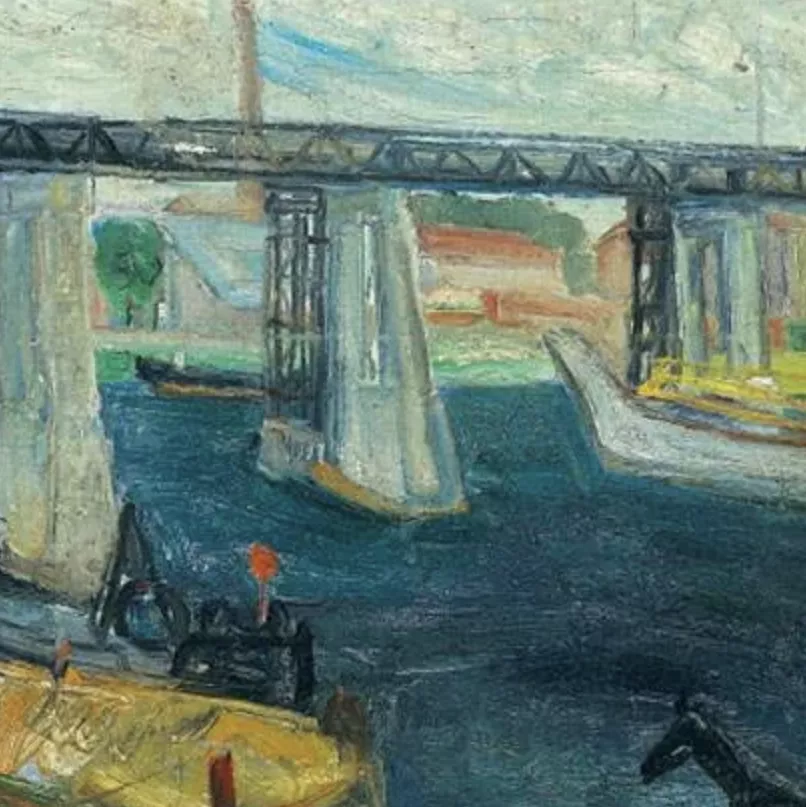
Jean Puy's imprint on his period
Jean Puy made a lasting mark on his period, notably with the scandal of Salle VII, which introduced the pictorial and artistic upheavals that took place in the 20th century.
Today, many of his works are exhibited in museums in France and around the world, but collectors play the greatest role in the preservation of his work.
He established himself as a discreet but essential Fauve, belonging to the select circle of the first alongside Matisse, Derain, Vlaminck and Manguin, contributing to the movement's fame and growth from 1905. His more measured approach to Fauvism, with its emphasis on chromatic harmony and soft forms, shows another side of the movement, one that is less brutal, but no less innovative.
Puy thus bridges the gap between tradition and modernity in the first milestones of modern painting, fusing Impressionist heritage with the boldness of Fauvist colors. In this way, he struck a balance between structure and spontaneity.
Through his work, Jean Puy demonstrated that Fauvism was not simply an explosion of vivid colors applied in broad flat tints, but that this movement could also easily and simply translate a search for refinement and elegance.
His influence is discreet but enduring, and his art inspires with its ability to transcribe intimate scenes with a luminous palette and fluid brushstrokes. Through his work, he influenced artists who, like him, sought to reconcile the modernity of color with a softer approach to the human figure.
He was a key player in the avant-garde of the early 20th century, his participation in the 1905 Salon d'Automne triggering a decisive break with academic canons, opening up the field of possibilities for the many artistic explorations that were to take place in his century.
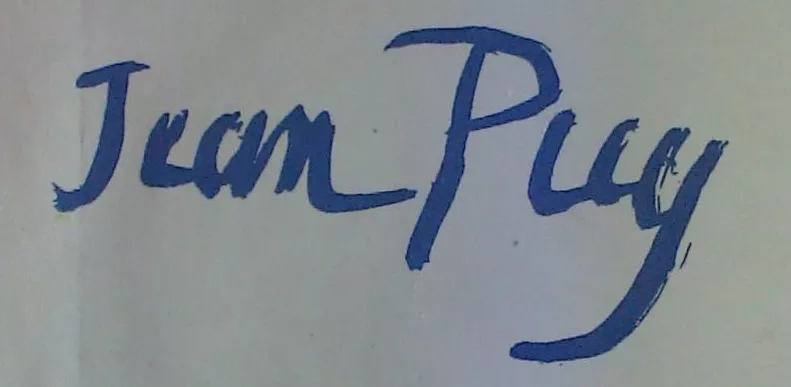
The artist's signature
Not all of Jean Puy's works are signed.
Although there are variations, here is a first example of his signature :
Expertise your property
If you happen to own a work by Jean Puy, request a free appraisal without further delay via our form on our website.
A member of our team will contact you promptly to provide you with an estimate of the value of your work, as well as ad hoc information about it.
If you are considering selling your work, you will also be accompanied by our specialists in order to benefit from alternatives to sell it at the best possible price.
Estimate in less than 24h
Discover in the same theme

Rating and value of paintings by Olga Rozanova
Olga Rozanova is a twentieth-century Russian avant-garde artist who has produced works that are listed and valued at auction.
Learn more >

Rating and value of paintings and laquers by Le Quoc Loc
Le Quoc Loc is a modern Vietnamese artist who has worked mainly in lacquer. His works are highly valued.
Learn more >

Rating and value of vases by Lucien Levy Dhurmer and Clément...
Clément Massier and Lucien-Lévy Dhurmer collaborated on Art Nouveau vases, which command high prices and are highly valued at auction.
Learn more >
D'autres tableaux de fauvistes vendus aux enchères

Estimated 8.000 - 15.000
Maurice de VLAMINCK (1876-1958), Still life with jugs and leeks, oil on canvas

Estimated 18.000 - 30.000
Charles CAMOIN (1879-1965) "Le Port de Marseille, 1928" Oil on canvas.

Estimated 200€ - 400€
André DERAIN (1880-1954) Decorative project, black ink (insolation),...

Estimated 2.000 - 4.000
Jean DUFY (1888-1964) Vase of anemones, Watercolor

Estimated 2.000 - 4.000
Jean DUFY (1888-1964) Vase of anemones, Watercolor

Secure site, anonymity preserved

Auctioneer approved by the State

Free and certified estimates
Frequently asked questions
-
Who is Jean Puy, and what is his artistic background?Jean Puy (1876–1960) was a French Fauvist painter, a discreet yet essential figure in the movement. Born into a family of industrialists in the Loire region, he studied at the Académie Julian and took part in the “Salon VII” scandal of 1905 alongside Matisse and Derain. His Fauvism is distinguished by a restrained approach, emphasizing chromatic harmony and soft forms rather than the brutal exaggeration of color.
-
What is the price range for Jean Puy's works?Jean Puy's works sell for between €70 and €88,420 on the art market. Prints and multiples range from €70 to €300, drawings and watercolors from €70 to €9,300, and paintings from €230 to €88,420. In 2014, his oil on canvas “Nu debout” sold for €77,000, despite an estimate of between €20,000 and €25,000, revealing significant upside potential.
-
How can you authenticate a work by Jean Puy?To authenticate a work by Jean Puy, we recommend that you request a free appraisal from Auctie's using our online form. A state-certified auctioneer or appraiser will examine your item and provide you with an accurate estimate, with no obligation on your part, within 48 hours.
-
Should I sell a work by Jean Puy now?Yes, the market for Fauvist works remains vibrant, and collectors of 20th-century art are actively seeking out paintings from this movement, particularly those depicting nature and intimate scenes. The gradual rediscovery of Jean Puy, an artist who had long been forgotten, offers an interesting opportunity for sellers.
-
How does the sale of a work of art work at Auctie's?The process begins with a free, no-obligation appraisal conducted by our experts. Once you’ve agreed to proceed, Auctie’s guides you through every step—from appraisal to auction—offering you the best options for selling your artwork at the best possible price. Our auction house manages the entire process to ensure a stress-free sale.
