



Rating and value of paintings by Charles Camoin

Key takeaways
- A French Fauvist artist (1879–1965) whose works fetch prices ranging from €20 to €255,000 on the auction market, depending on the medium used.
- Camoin’s oil-on-canvas paintings, particularly his Mediterranean landscapes, sell for between €210 and €255,000, with a record price of €255,000 set by *Port de Cassis* in 2010.
- Rising and stable market value characterized by strong demand from collectors for his landscapes; numerous forgeries in circulation—appraisal recommended prior to sale.
If you own a work by artist Charles Camoin or based on his work and would like to know its value, our state-approved experts and auctioneers will guide you.
Our specialists will carry out a free appraisal of your work, and provide you with an accurate estimate of its value on the current market. Then, if you wish to sell your work, we will guide you towards the best possible arrangement to obtain the optimum price.
Artist's rating and value
An important Fauvist artist of the 20th century, Charles Camoin has a high and growing rating on the auction market. Rarely seen in auction rooms, Camoin's paintings attract a large number of collectors, particularly landscape enthusiasts.
Thus, the painter has established himself as a sure bet on the art market, with prices for his works ranging from €20 to €255,000, a substantial delta but one that speaks volumes about the value that can be attributed to the artist's works. Witness his oil on canvas Port de Cassis, adjudged €255,000 in 2010.
Order of value from the most basic to the most prestigious
Technique used | Result |
|---|---|
Estamp - multiple | From €20 to €380 |
Drawing - watercolor | From €140 to €12,000 |
Oil on canvas | From €210 to €255,000 |
Estimate in less than 24h
The artist's works and style
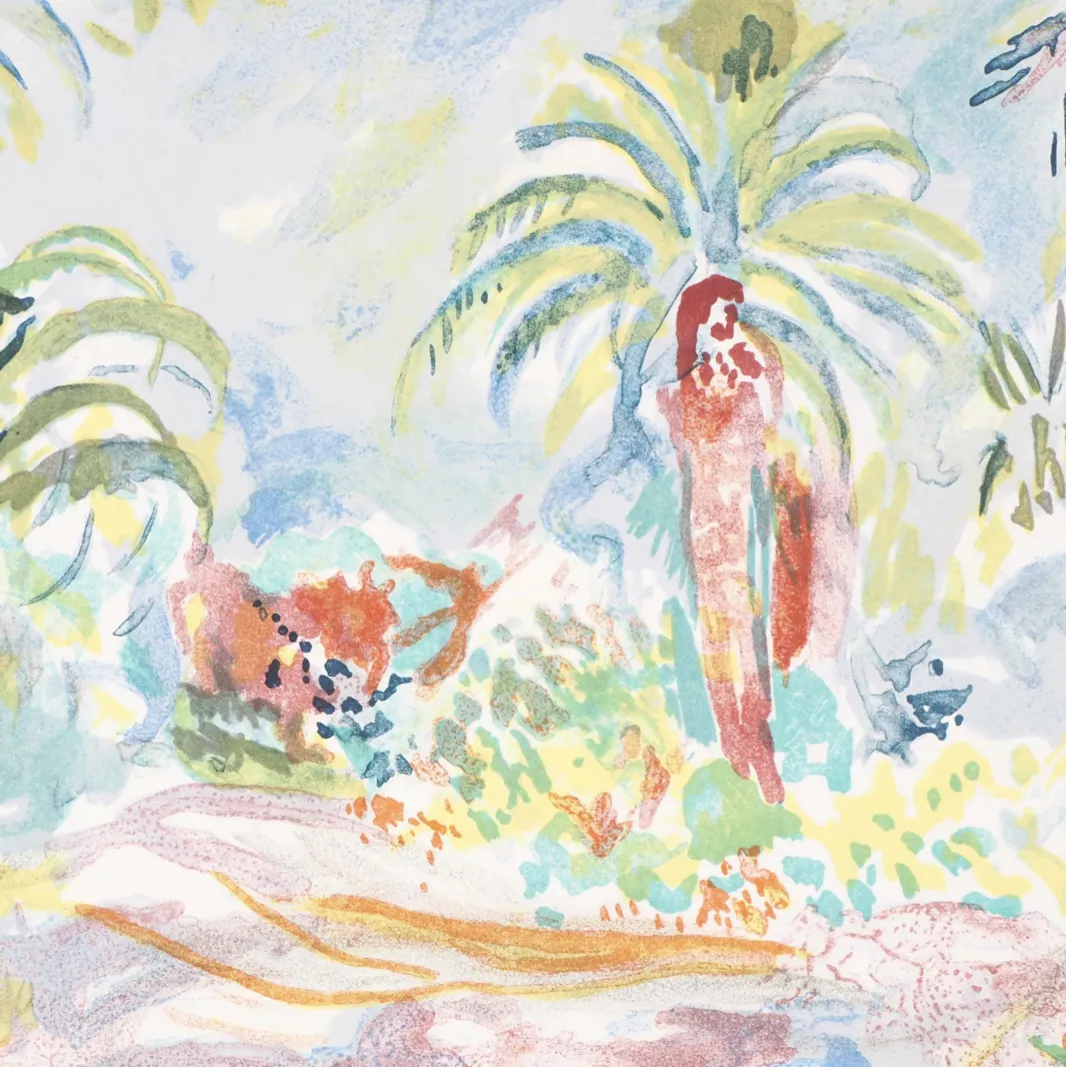
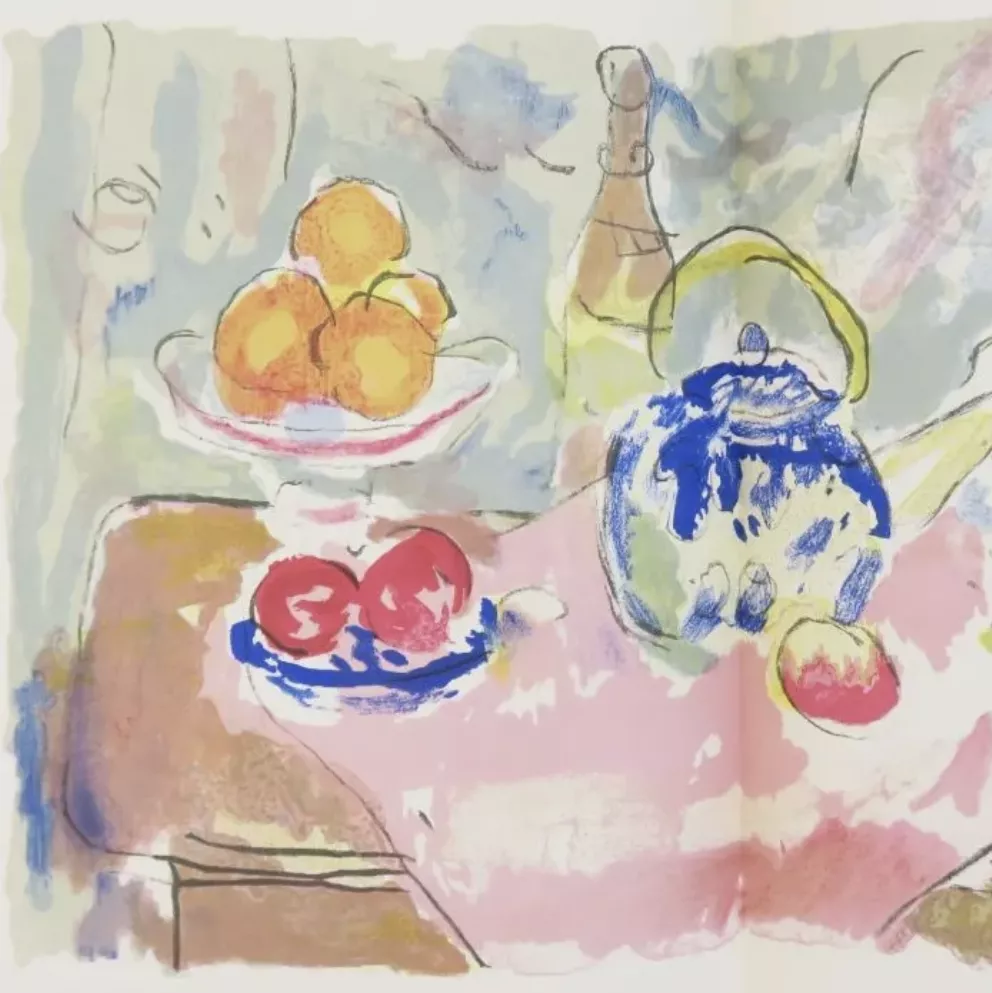
Audacious and expressive, Charles Camoin's style is distinguished by pure pigments and a luminous treatment of color.
He was part of the Fauvist group, which formed in 1905 at the Salon d'Automne. Along with other artists such as Vlaminck, they made use of some of the achievements of Impressionism while bringing a new way of painting up to date.
The life of Charles Camoin
Charles Camoin (1879-1965) was a Fauvist French painter of the early 20th century.
His father ran a painting and decorating business. On the latter's death, he lived between Paris and Marseille, where he took drawing classes at the École des Beaux-Arts.
After winning a prize, he decided to devote himself solely to art and not to business, and moved to Paris permanently to do so.
He then studied in Gustave Moreau's studio, where he met the future pioneers of fauvism : Henri Matisse, Albert Marquet and Henri Manguin. In the end, he had very little contact with Gustave Moreau, who died soon after taking him under his tutelage.
The artist himself would say that it was above all Marquet and Matisse who provided him with skills and knowledge, thus influencing his work and vice versa.
Fernand Cormon then ran the atelier des quatre fauves, whose teaching they disliked, because it was too academic. They entered the Camillo Academy, which was freer from academic norms. They became interested in the color work of Delacroix and Rubens.
Camoin was also influenced by the Impressionists. In 1900, he left for his military service in the Aix-en-Provence region, where he met Cézanne. A strong character, Cézanne befriended Camoin and advised him.
On his return to Paris, he exhibited at the Salon des Indépendants and the Salon d'Automne. With the Fauve group and Jean Puy, he also exhibited at the Berthe Weil gallery. He also takes advantage of this period to travel to Italy and see the paintings of the greatest Italian painters, which pushes him to work on expression.
The following year, he exhibits in Salle VII at the Salon d'Automne - a landmark event in twentieth-century art history that will make the Fauvists known thanks to Louis de Vauxcelles.
Camoin regularly spent time in Provence, which is why he produced numerous oil paintings of Saint-Tropez.
From 1906, he exhibited at the Galerie Kahweiler, which ensured him success with the public as well as regular commissions from collectors. Thanks to his connections with other German dealers, he exerted a certain influence on the Expressionists in that country.
August Macke, among others, took an interest in his work. This interest led to his paintings being exhibited at the Sonderbund in Cologne, and in other countries: Belgium, the United States, Russia ...
He then spent time in Tangiers with Matisse, but never produced an Orientalist painting.
He then spent time in Tangiers with Matisse, but never produced an Orientalist painting.
He then spent time in Tangiers with Matisse, but never produced an Orientalist painting.
The importance of the Fauvist movement in the history of art
Fauvism, an artistic movement that emerged at the beginning of the 20th century, represents a decisive break in the history of art, particularly in the way color is used to express emotions rather than to imitate reality.
This movement officially emerged in 1905 at the Salon d'Automne in Paris, where a group of artists, including Henri Matisse, André Derain, and Maurice de Vlaminck, shocked the public with canvases in pure colors, applied in bold, unmodeled flat tints, leading the critic Louis de Vauxcelles to describe them as "fauves".
Fauvism, although relatively short-lived, from around 1904 to 1908, marks a fundamental turning point, freeing color from its traditional constraints and placing personal expression at the center of artistic creation.
Camoin's painting as seen by the public
Charles Camoin (1879-1965), a key figure in this movement, played an essential role in the evolution and diffusion of Fauve principles. Born in Marseille, he joined Gustave Moreau's studio at the École des Beaux-Arts in Paris, where he befriended Matisse.
From his earliest works, Camoin stood out for his dazzling use of color, which he pushed to unprecedented intensities, seeking to translate the light and vitality of the Mediterranean landscape he was particularly fond of.
Contrary to some of his contemporaries, Camoin did not limit himself to formal experimentation; he retained a strong connection with visible reality, but transposed it into a vibrant chromatic language that prefigured abstraction.
Fauvism, for Camoin, is not just a technique, but a philosophy of color as a vector of emotion. This approach is reflected in his landscapes of Southern France, where sea and sky melt into harmonies of blue, green, and ochre, creating an atmosphere of luminous serenity.
Even after the dissolution of the Fauvist group, Camoin continued to explore the expressive possibilities of color throughout his career, marking a continuous evolution that extends well beyond the Fauvist period proper.
As a Fauvist figure, Charles Camoin made a valuable contribution to modern art through his unique exploration of the expressive potential of color.
His work bears witness to the transition between figuration and abstraction, while retaining a particular sensitivity to Mediterranean landscapes that characterizes much of his work.
Fauvism, thanks to artists like Camoin, leaves an indelible mark on the development of modern art, paving the way for later avant-garde movements such as Cubism and Expressionism.
In short, Charles Camoin's work illustrates not only the principles of Fauvism but also its ongoing evolution, making him a key player in twentieth-century art history.
Charles Camoin's imprint on his period
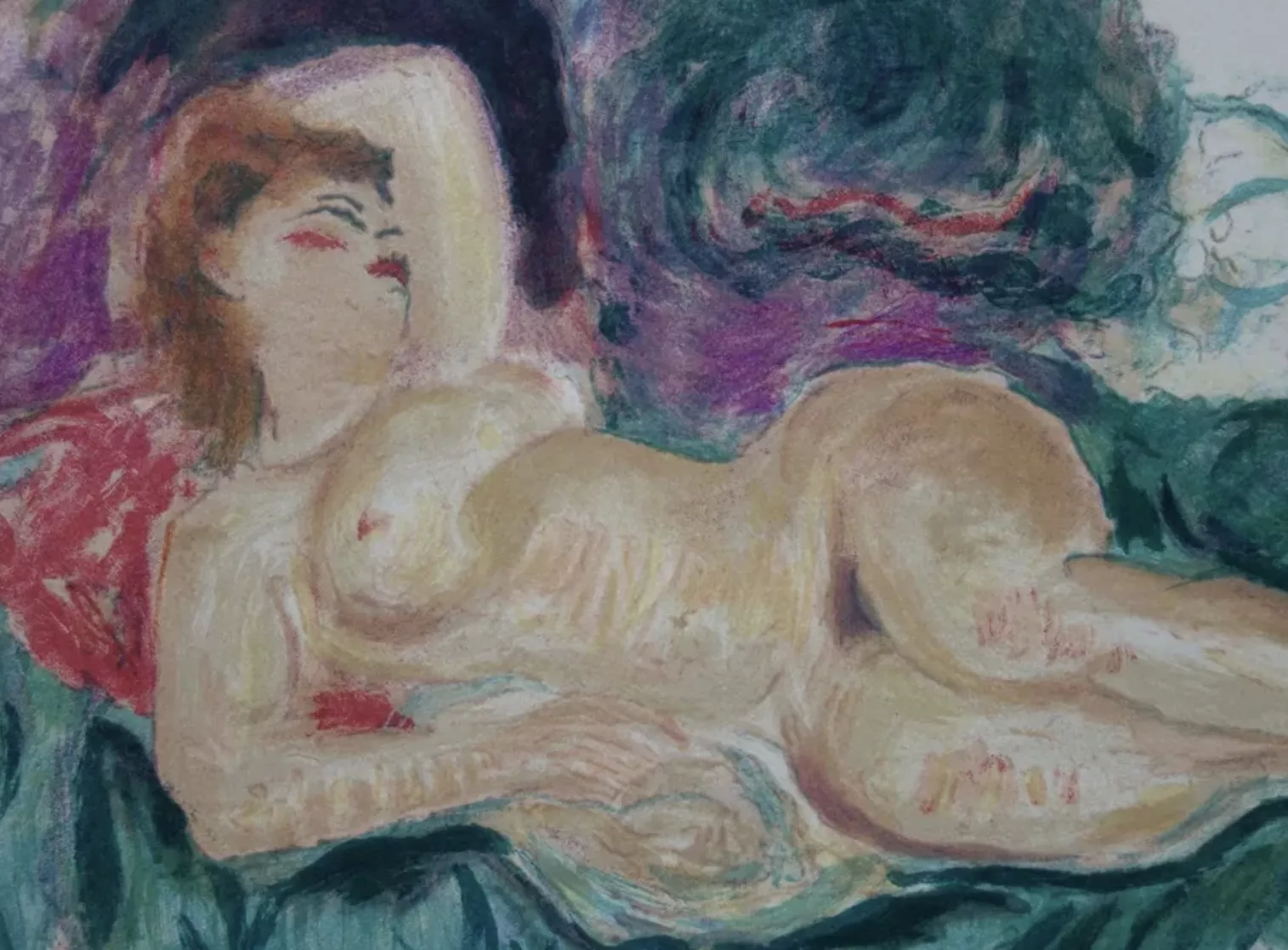
Charles Camoin is a painter who helped revolutionize twentieth-century painting. He is the author of a very significant output.
Some of his works are held in museums in France and around the world, but the majority of his paintings are owned by private collectors - who regularly reintroduce them on the auction market.
.
Why sell a Fauvist painting at auction ?
Fauvist paintings, with their bold use of color and crucial role in the evolution of modern art, attract particular interest and can achieve record prices. What's more, auctions offer certain security and transparency, with publicly accessible results, reinforcing the reputation of the artist and his works on the market. In conclusion, selling Fauvist paintings at auction is a wise strategy for sellers wishing to achieve optimum valuation of their works while benefiting from the recognition and publicity offered by these events.
At Auctie's, your painting is first entrusted to an auctioneer and then to an expert specializing in his or her field, who works by consulting all available sources in France to bring out the best in your painting.
We rely on the best sources, and place great importance on catalogs raisonnés, the context of the work's creation, the artist's biography and the provenance of your painting.
His signature
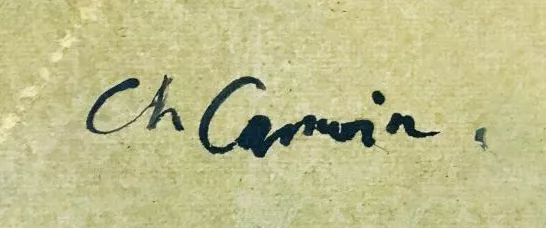
Not all of Charles Camoin's works are signed, and there are an enormous number of forgeries.
Although there are variations, here is a first example of his signature:
Expertise your property
If you own a work by Charles Camoin, don't hesitate to request a free appraisal by filling in our online form. A member of our team of experts and certified auctioneers will contact you to provide an estimate of the market value of your work.
If you are considering selling your work, our specialists will also guide you through the various alternatives available to obtain the best possible price, taking into account market trends and the specific features of each work.
.Estimate in less than 24h
Discover in the same theme

Rating and value of works, paintings, sculptures by Arman
Arman is a twentieth-century painter and sculptor whose figurative works are highly prized at auction.
Learn more >

Ratings and values of paintings by Jean-Paul Riopelle
Jean-Paul Riopelle is a 20th-century Surrealist painter whose works are highly regarded and quoted on the auction market.
Learn more >

Rating and value of drawings, prints and lithographs by Igor...
Igor Mitoraj is a 20th-century sculptor and draughtsman who has produced works that are highly regarded and in demand on the auction market.
Learn more >
Similar works sold at auction

Estimated 8.000 - 15.000
Maurice de VLAMINCK (1876-1958), Still life with jugs and leeks, oil on canvas

Estimated 5.000 - 10.000
Jean Roger SOURGEN (1883-1978), Lake and pine forest, oil on canvas

Estimated 2.000 - 3.000
Raymond THIBÉSART (1874-1968) Apple trees in blossom, oil on canvas

Estimated 800 - 1.500
André DEVAMBEZ (1867-1943) Little Red Riding Hood, Gouache and watercolor on paper

Estimated 2.000 - 4.000
Charles LACOSTE (1870-1959) Starry night, Oil on paper mounted on canvas

Estimated 5.000 - 8.000
Robert PINCHON (1886-1943) View of a port on the banks of the Seine, Oil on canvas

Secure site, anonymity preserved

Auctioneer approved by the State

Free and certified estimates
Frequently asked questions
-
Who is Charles Camoin, and what is his significance in art history?Charles Camoin (1879–1965) was a major French Fauvist painter of the 20th century and a key figure in the Fauvist movement that emerged in 1905. A friend and student of Henri Matisse in Gustave Moreau’s studio, he distinguished himself through his vibrant use of color to express emotions rather than imitate reality, particularly in his Mediterranean landscapes. His work marks the transition from figuration to abstraction, influencing the avant-garde movements that followed, including Cubism and Expressionism.
-
What is the price range for Charles Camoin's works at auction?Prices for works by Charles Camoin vary considerably depending on the medium and quality: prints range from €20 to €380, drawings and watercolors from €140 to €12,000, and oil paintings on canvas from €210 to €255,000. This record was set in 2010 with the oil on canvas titled “Port de Cassis.” Camoin’s paintings attract many collectors and represent a safe bet in the art market.
-
How can you authenticate a work by Charles Camoin?To authenticate a work by Charles Camoin, we recommend that you submit a request for a free appraisal with Auctie's. Our state-certified auctioneers and specialized experts examine the work by consulting all available sources, including catalogs raisonné, provenance, and the context in which it was created. This free, no-obligation appraisal will allow you to confirm the work’s authenticity and obtain an accurate estimate of its market value.
-
Is this a good time to sell a painting by Charles Camoin?Yes, this is an excellent time to sell a work by Charles Camoin. As a leading figure of Fauvism, his paintings are attracting particular interest and can fetch record prices. Fauvist works are gaining increasing recognition in the art market, and auctions offer transparency and security that enhance the value of the artwork and the artist’s reputation.
-
How does the appraisal process work at Auctie's?The appraisal is free and non-binding. After filling out our online form, an expert or certified auctioneer will contact you within 48 hours to appraise your artwork. Our team reviews all relevant factors: catalogs raisonné, provenance, creative context, and the artist’s biography. If you’re interested in selling, our specialists will guide you toward the best strategy to achieve the highest possible price.
