



Rating and value of works, drawings, paintings by Jackson Pollock

Key takeaways
- Jackson Pollock, the pioneer of action painting and a leading figure in American Abstract Expressionism (1912–1956), had a lasting influence on the history of modern art.
- Oil-on-canvas works have fetched record prices ranging from 15,000 to 46.5 million euros, notably “Number 17, 1951,” which sold for 46 million euros in 2021.
- His works vary by medium: prints (€65–307,550), watercolor drawings (€500–3.5 million), and sculptures (€375–44,350).
Inventor of action painting, Jackson Pollock (1912 - 1956), is a key name in American Expressionism. Pollock brought a new energy and spontaneity to the artistic gesture, greatly influencing the American school of painting.
If you own a work by or based on the artist Jackson Pollock and would like to know its value, our state-approved experts and auctioneers will guide you.
Our specialists will carry out a free appraisal of your work, and send you a precise estimate of its value on the current market. Thereafter, if you wish to sell your work, we will direct you to the best possible arrangement to obtain the optimum price.
Artist's rating and value
A major figure of American Expressionism, Jackson Pollock quickly made his mark on the international art market.
Highly prized and sought-after, Pollock's paintings can fetch several tens of millions of euros at auction, as evidenced by his canvas Number 17, 1951,estimated at over 46 million euros at Sotheby's in 2021. Thus, Jackson Pollock establishes himself as a sure bet on the art market.
Order of value from the most basic to the most prestigious
Technique used | Result |
|---|---|
Estamp - multiple | From €65 to €307,550 |
Sculpture - volume | From €375 to €44,350 |
Drawing - watercolor | From €500 to €3,526,780 |
Oil on canvas | From €15,000 to €46,548,045 |
Estimate in less than 24h
The artist's works and style
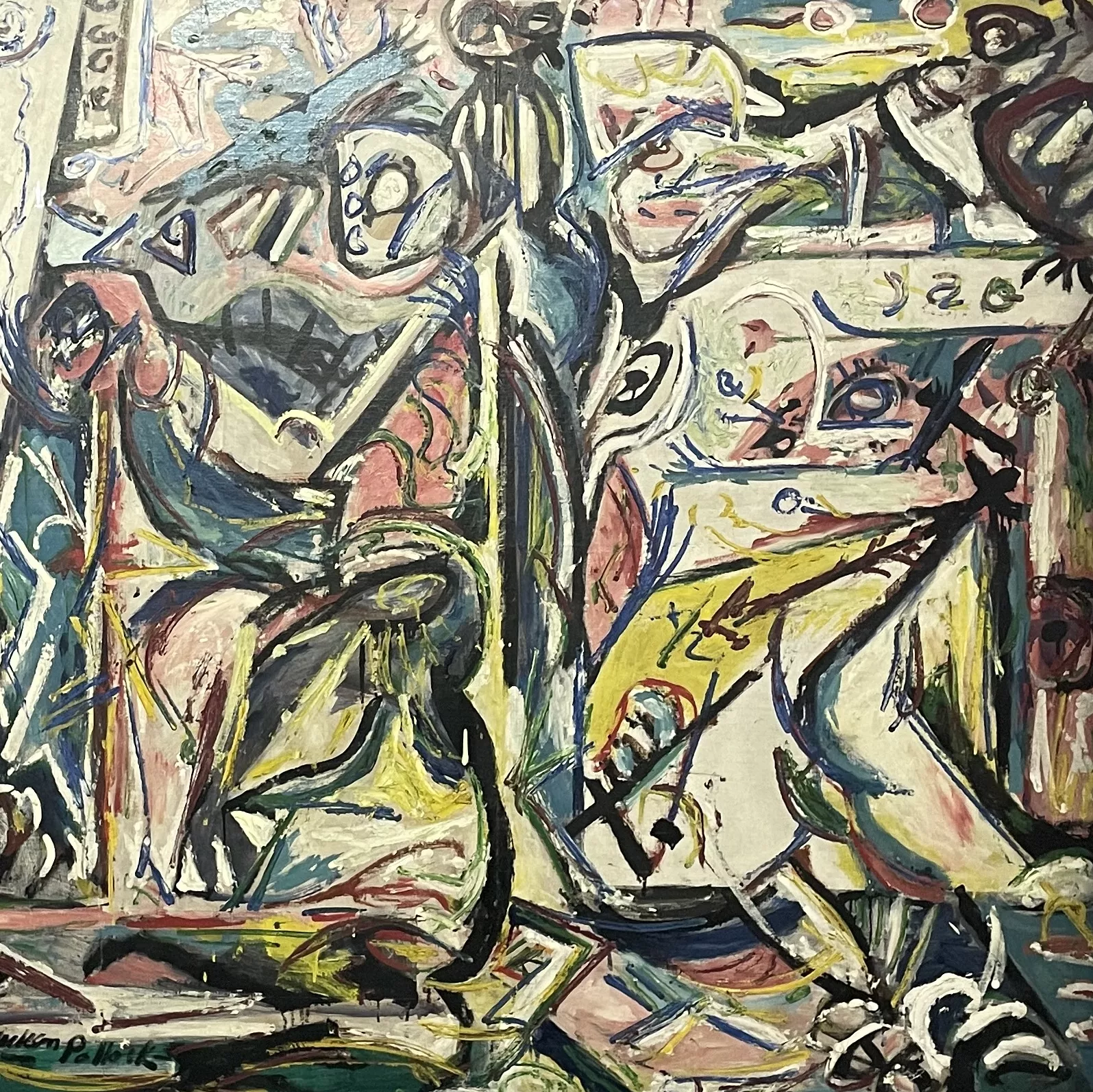
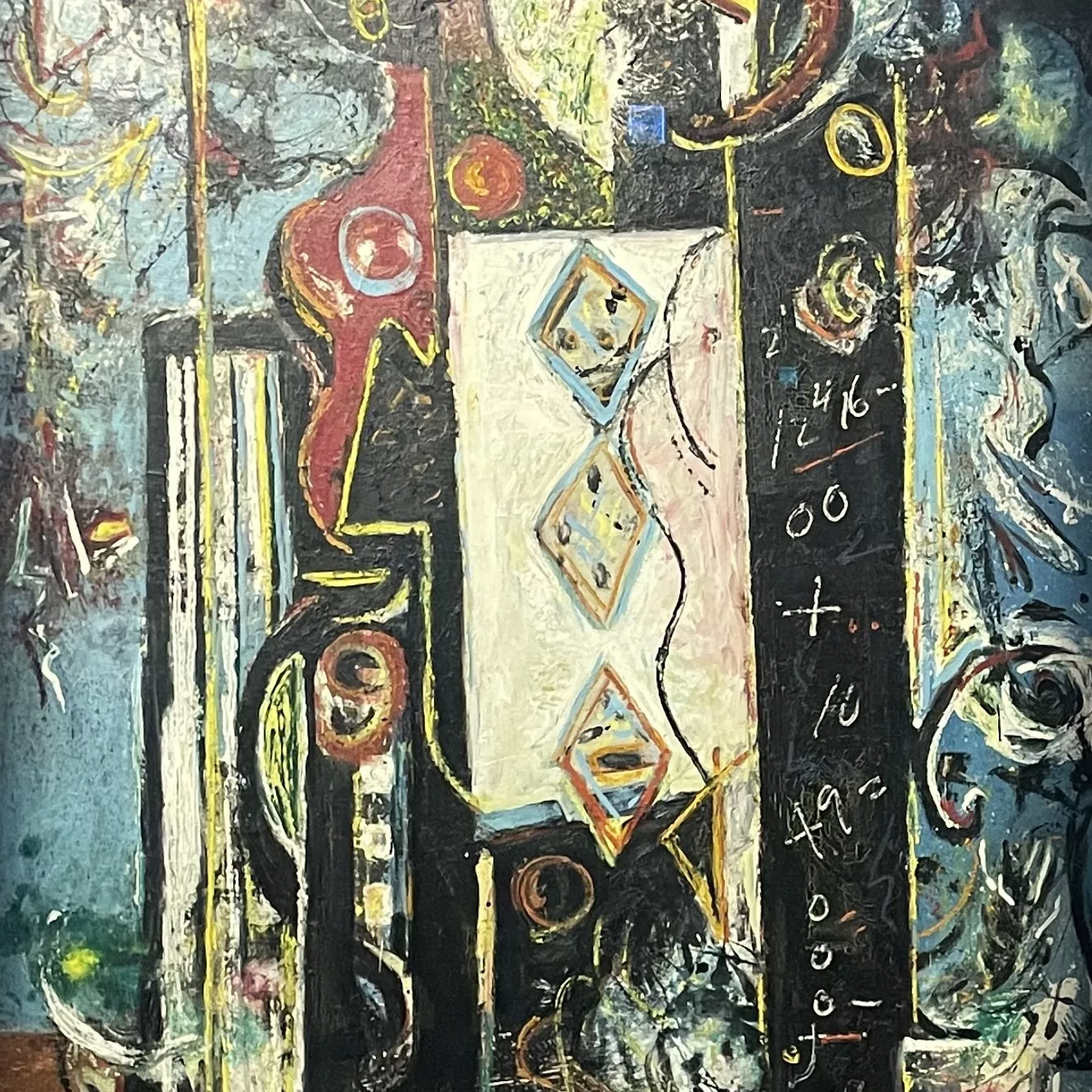
Jackson Pollock nurtures a deep passion for primitive art and is inspired by Indian rituals. His painting style, at once surrealist and abstract expressionist, evolved over time by combining various techniques.
The artist's canvases oscillate between figuratism and abstraction, sometimes distorted to create a sensation of undulation. Jackson Pollock also produced portraits that were equally abstract.
The artist also produced a number of sculptures, including self-portraits in bronzes and abstract sculptures in glass.
Jackson Pollock's life
Jackson Pollock was born in Wyoming in 1912.
From an early age, Pollock was influenced by the primitive art and Indian rituals he observed in his hometown. He spent these years in eight successive cities, in Arizona and California.
After leaving high school in 1927, already developing an addiction to alcohol, he briefly joined the School of Manual Arts in California before moving to New York in 1930. There, he studied mural painting and life modeling with realist painter Thomas Hart Benton, before taking up sculpture. He was already fascinated by material and format.
He was drawn to Orozco's murals and frescoes. President Roosevelt and the New Deal policy will enable him to flourish in this format thanks to projects aimed at helping artists.
He incorporates stenciling and airbrushing into his work, and discovers John Graham's Primitive art and Picasso, which inspires him enormously. His study of the Guernica exhibition and other works by the Cubist master were to influence him greatly.
He is particularly focused on Picasso's minotaurs, which remind him of the primitive figures of the Indian peoples of his native region.
His career was regularly interrupted by successive rehabs and therapies, as the artist found it extremely difficult to extricate himself from his addictions. Returning to his studio at the end of the 30s, his works took on a more expressionist tone.
He also drew inspiration from shamanic cultures, whose creative process was explained by Hubert Damisch. After the exhibition, Lee Krasner took a close interest in his work, bringing him closer to Willem de Kooning, Clement Greenberg and Hans Hoffman.
He coined the term all over, which corresponds to a process aimed at arranging elements evenly around the painting. At this time, he was stylistically close to Janet Sobel.
From 1947, he began to work by pouring paint directly into the pot, as artists such as Georg Baselitz and Olivier Debré. He controls the lines and fluidity of paint and pigment, unlike other abstract artists who allow natural movement to flourish.
From 1948, he no longer titles his paintings but only numbers them, putting more emphasis on the serial mechanism and defending the idea of privileging painting over the confusion that titles can sometimes bring.
He is considered the first American painter of abstract expressionism, and represented the USA at the Venice Biennale in 1950.
He then coined the expression " action painting " in 1952, aimed at qualifying the pictorial technique and the American abstract art movement of the time. He then carried out a number of other experiments, and began painting on his canvases with syringes.
The following years were marked by his countless surrealist drawings, reminiscent of Picasso, as well as his key early works.
The artist painted on the ground and drew inspiration from West Indian methods. Pollock often poured paint directly onto the canvas. Known through the press, the artist experimented with different techniques and mediums, integrating figures into his works and playing with fluid or thick paint effects.
For him, his paintings had an autonomous life and the painter's role was to let them emerge.
Pollock died drunk in a car accident in 1956.
The role of Abstract Expressionism in the USA
Abstract Expressionism is a major artistic movement that emerged in the USA in the 1940s, marking a decisive turning point in the history of modern art.
This post-war period, marked by upheaval and cultural reinvention, saw the birth of a generation of artists seeking to explore the depths of the human soul through radically new forms and techniques.
Far from academic conventions and figurative representations, Abstract Expressionism is distinguished by an unprecedented gestural freedom and emotional intensity, reflecting the urgency and anguish of an age in search of meaning.
Jackson Pollock, the emblematic figure of this movement, single-handedly embodies this break with previous artistic traditions.
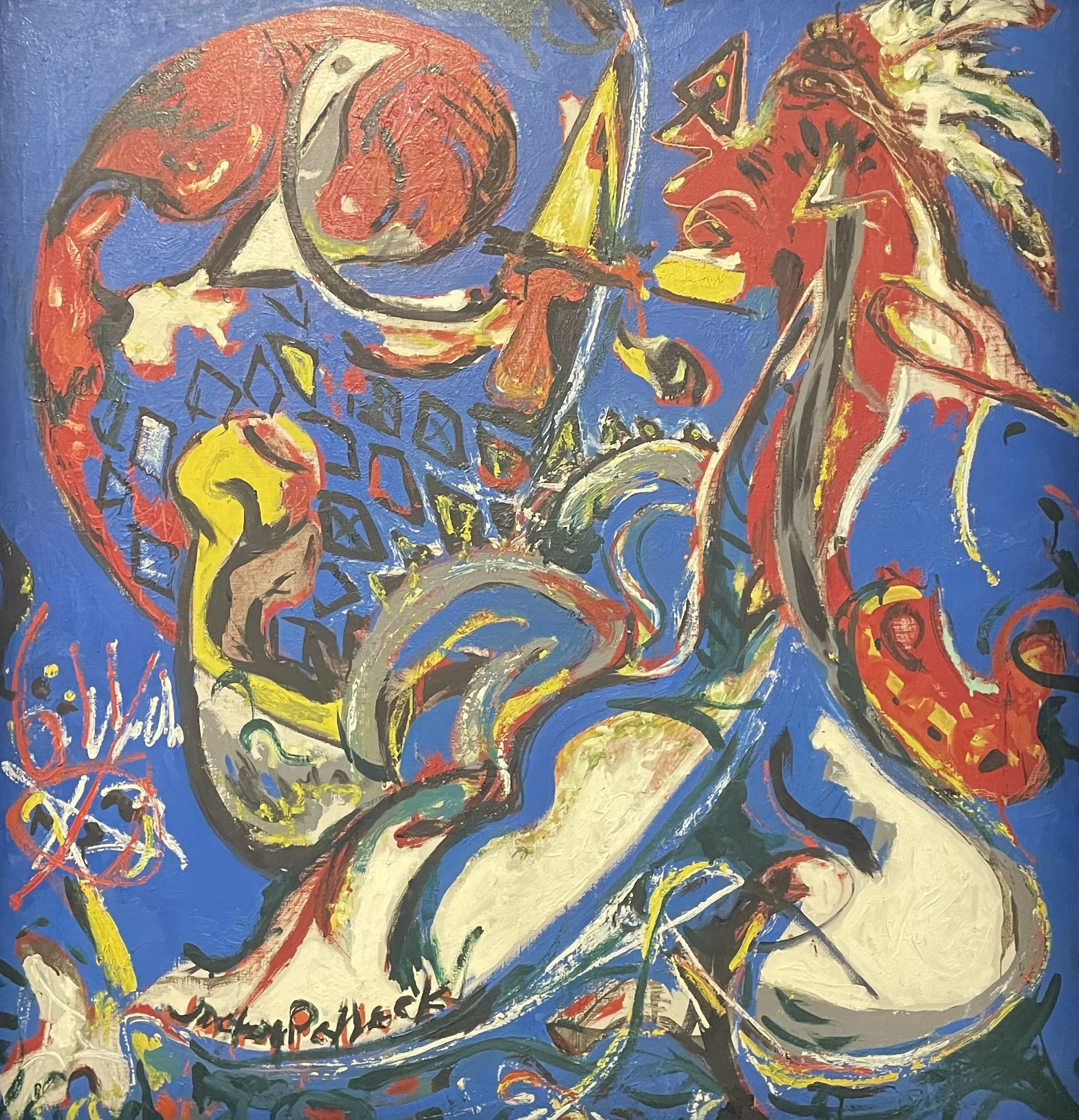
His work, often perceived as a form of total liberation of the artistic gesture, is characterized by the technique of " drip painting " or "peinture par coulures", which he developed from 1947 onwards.
This method involves pouring or spraying paint onto a canvas laid out on the ground, creating dynamic compositions where every line seems both spontaneous and controlled.
Pollock does not seek to represent the visible world, but to express deep emotional and psychic states, giving rise to an art form where the geste of the painter becomes the very essence of the work.
The Abstract Expressionism movement is characterized by a desire to push back the boundaries of form and content.
In contrast to the European artists of Surrealism or Cubism, the American Abstract Expressionists, such as Pollock, Willem de Kooning or Mark Rothko, reject any attempt at figuration or explicit narrative.
They privilege the exploration of the inner forces of the human being, often through monumental works where color, texture and movement create an almost tangible presence.
This approach, which emphasizes the act of creation itself, is what Pollock describes as "action painting": a process in which the artist's energy and gesture are captured in the final work.
Understanding Jackson Pollock's work
The impact of Abstract Expressionism goes far beyond visual art. It reflects a cultural and philosophical climate in which individuality and authenticity are exalted. The artists of this movement seek to connect with an inner truth, often as a reaction against the dehumanization perceived in the modern world. In this, Abstract Expressionism is not only an aesthetic exploration, but also an existential quest, where each canvas becomes a battleground for the artist's soul.
In Pollock's works, for example, canvases become living surfaces, where every drip of paint bears witness to a struggle between order and chaos, control and letting go. By refusing to give titles to his works from 1948 onwards, Pollock insists on the autonomous nature of his creations, inviting the viewer to a free interpretation, devoid of any textual reference. This approach reinforces the idea that art is a universal language, capable of expressing emotions and experiences that transcend words.
Abstract Expressionism, through its major figures such as Jackson Pollock, not only redefined the boundaries of art, but also asserted America's place in the global artistic landscape. By emphasizing pure expression and spontaneity of gesture, this movement opened the way to new forms of creation, influencing generations of artists and expanding the field of possibilities in contemporary art.
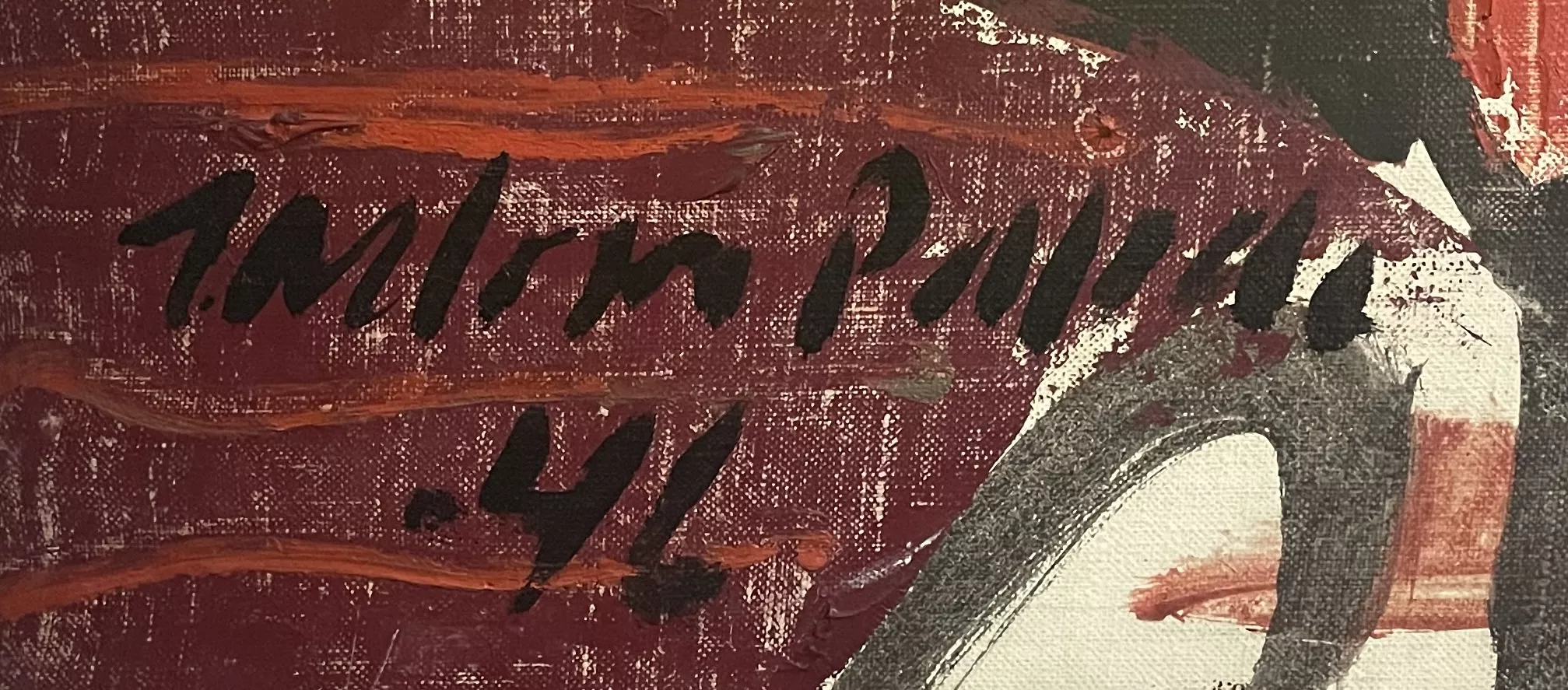
His signature
Not all of Jackson Pollock's works are signed.
Although there are variants, here's a first example of his signature:
Expertise your property
If you own a Jackson Pollock work, don't hesitate to request a free appraisal by filling in our online form. A member of our team of experts and chartered auctioneers will contact you to provide an estimate of the market value of your Jackson Pollock work.
If you are considering selling your work, our specialists will also guide you through the various alternatives available to obtain the best possible price, taking into account market trends and the specific features of each work.
Estimate in less than 24h
Discover in the same theme

Rating and value of Goudji's works, sculptures and jewelry
Goudji, the unusual goldsmith and sculptor of the 20th century, wields the arts of fire to create an enchanting universe that is highly prized at auct...
Learn more >

Rating and value of sculptures and bronzes by Mahmoud Mokhta...
Mahmoud Mokhtar is an Egyptian sculptor who has produced many works that are highly valued at auction. 24h estimate.
Learn more >

Rating and value of paintings, oils on canvas by Georges Mat...
Georges Mathieu is a twentieth-century painter who combined monarchical convictions and lyrical abstraction in his work. He is highly regarded.
Learn more >
Similar works sold at auction


Secure site, anonymity preserved

Auctioneer approved by the State

Free and certified estimates
Frequently asked questions
-
Who was Jackson Pollock, and what was his contribution to modern art?Jackson Pollock (1912–1956) was the pioneer of action painting and a leading figure in American Abstract Expressionism. He revolutionized painting by developing the “drip painting” technique beginning in 1947, pouring paint directly onto canvases laid out on the floor. His approach brought a new energy and spontaneity to the artistic process, significantly influencing the American school of painting and cementing the United States’ place in the global art scene.
-
What is the market value of Jackson Pollock's works?Jackson Pollock's works are highly sought after on the art market. Estimates vary considerably depending on the medium: prints range from €65 to €307,550, drawings and watercolors from €500 to €3,526,780, and oil paintings on canvas from €15,000 to over €46 million. For example, his painting “Number 17, 1951” sold for over 46 million euros at Sotheby’s in 2021, confirming that Pollock is a safe bet on the art market.
-
How do you authenticate a work by Jackson Pollock?To authenticate a work by Jackson Pollock, contact Auctie's by filling out a free appraisal request form. Our experts and state-certified auctioneers will examine your artwork and provide you with an accurate estimate of its market value. This appraisal is free and non-binding, and you will receive a response within 48 hours.
-
Is this the right time to sell a Jackson Pollock painting?Yes, now is an excellent time to sell a work by Jackson Pollock. His paintings remain highly sought after on the international art market, and Abstract Expressionism continues to enjoy strong demand. The prices achieved at recent auctions demonstrate the strength of the market for works by this major artist.
-
How does the sale of a work of art work at Auctie's?At Auctie's, we guide you from the appraisal to the auction. You start with a free, no-obligation appraisal of your artwork by our experts. If you decide to sell, our specialists will then guide you through the various options available to help you achieve the best possible price, taking into account market trends and the unique characteristics of your artwork. We are a licensed auction house dedicated to maximizing your sales proceeds.
