



Rating and value of sculptures, ceramics and bronzes by Armand Petersen

Key takeaways
- Bronze sculptures by Armand Petersen (1891–1969) sell for between €915 and €60,000, with his piece “Le Lama” fetching €60,000 in 2023.
- A Swiss animal sculptor recognized as early as 1929, Petersen distinguished himself through subtle expression and constant attention to detail in his creations, joining Pompon’s circle at the Jardin des Plantes in 1926.
- His works in Sèvres porcelain and Bing & Grøndahl porcelain are valued between €100 and €2,970, with a limited supply at auction that is highly sought after by collectors worldwide.
If you own a work by or after Armand Petersen, and would like to know its value, our state-approved experts and auctioneers will offer you their appraisal services.
Our specialists will carry out a free appraisal of your work, and provide you with a precise estimate of its value on the current market. Then, should you wish to sell your work, we will guide you towards the best possible arrangement to obtain the optimum price.
Rating and value of works by Armand Petersen
Armand Petersen produced unique sculptures. Now, prices for these creations can rise considerably under the auctioneer's hammer. His sculptures are particularly prized, by buyers from all over the world.
The price at which they sell on the art market ranges from €100 to €60,000, at the moment, a substantial gap but one that says a lot about the value that can be attributed to Petersen's works. In 2023, his bronze sculpture Le Lama sold for €60,000, originally estimated at €50,000-70,000.
Order of value from a simple work to the most prestigious
Technique used | Result |
|---|---|
Ceramic | From €100 to €2,970 |
Bronze | From €915 to €60,000 |
Estimate in less than 24h
Style and technique by artist Armand Petersen
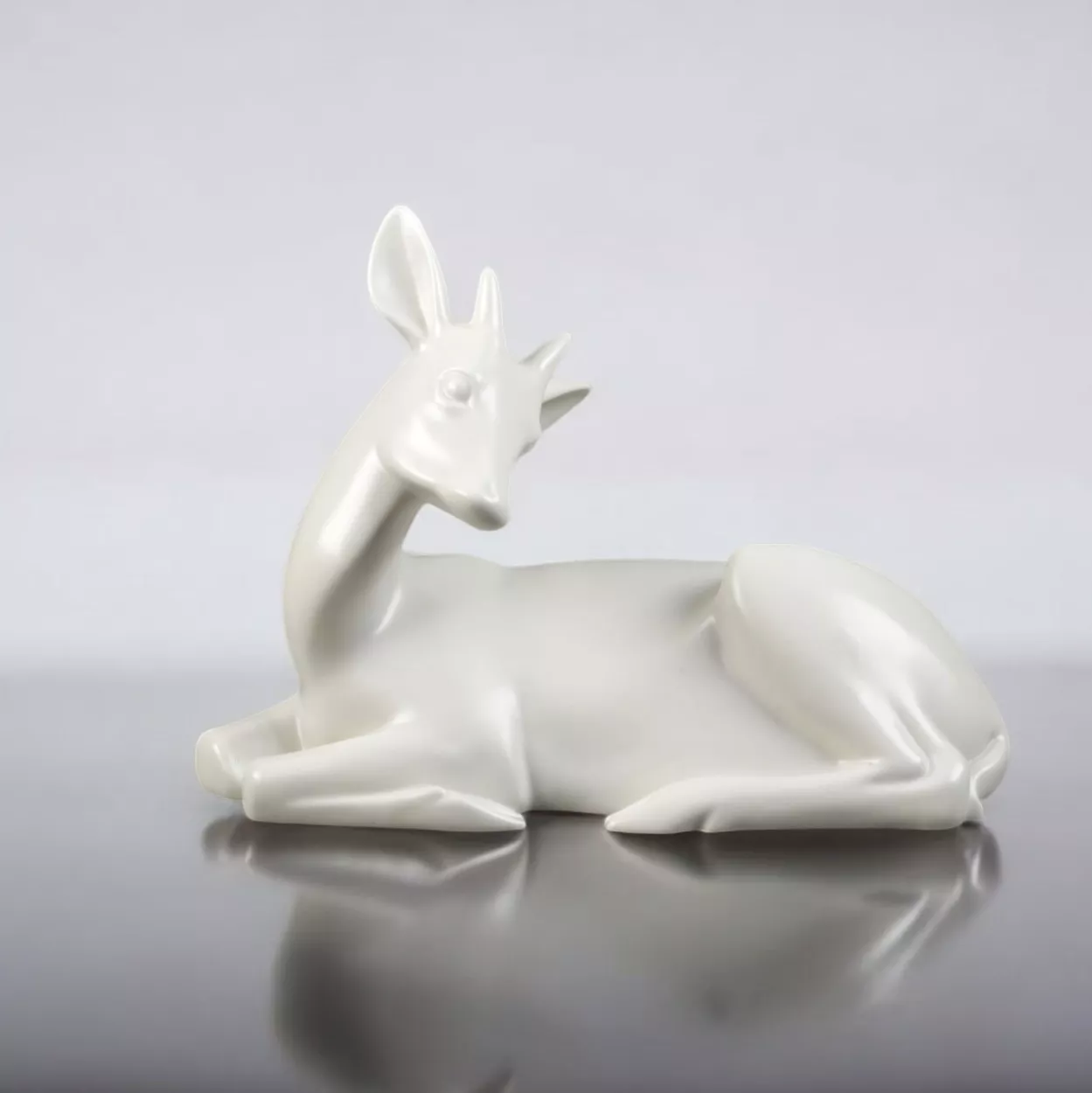
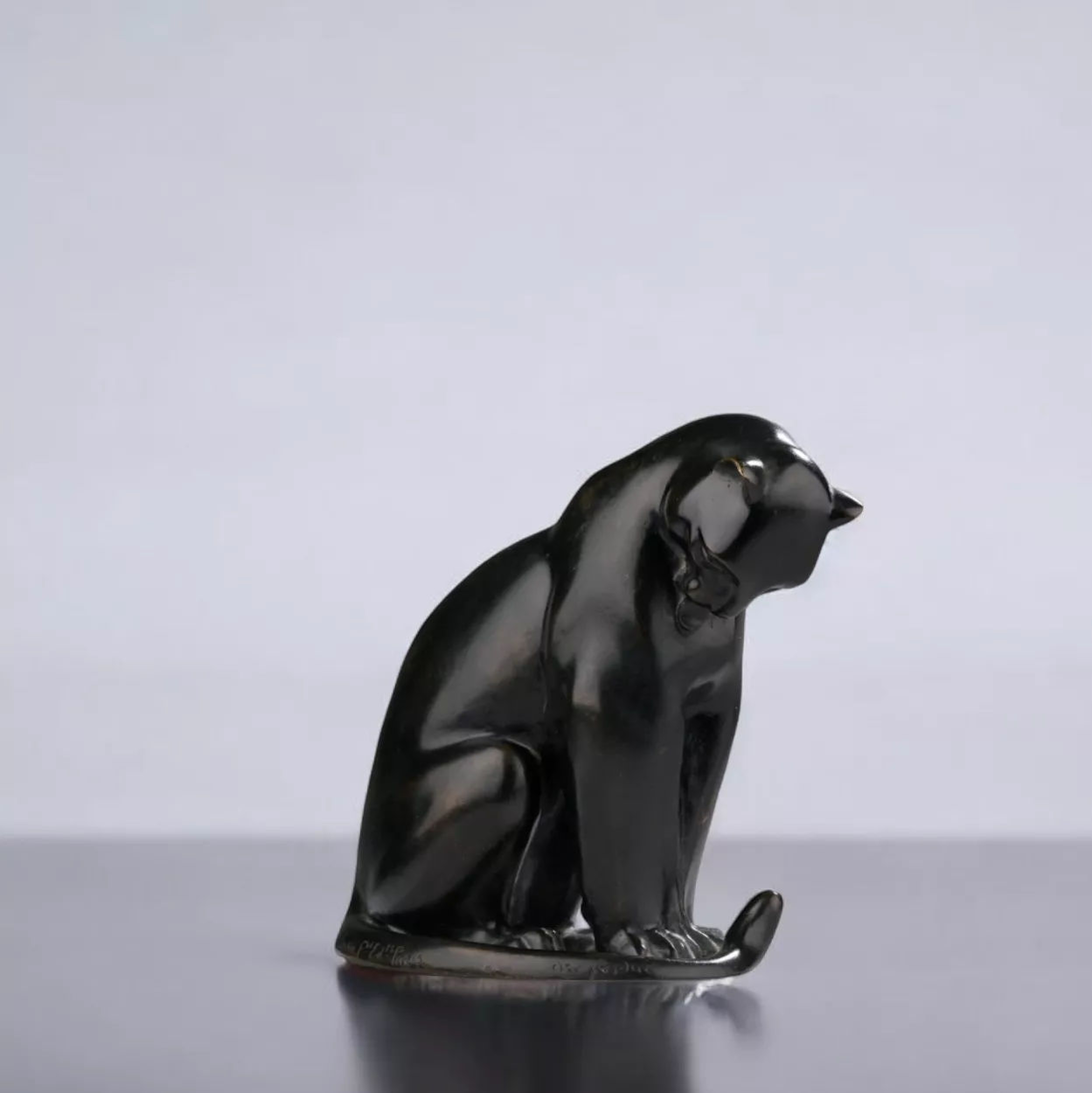
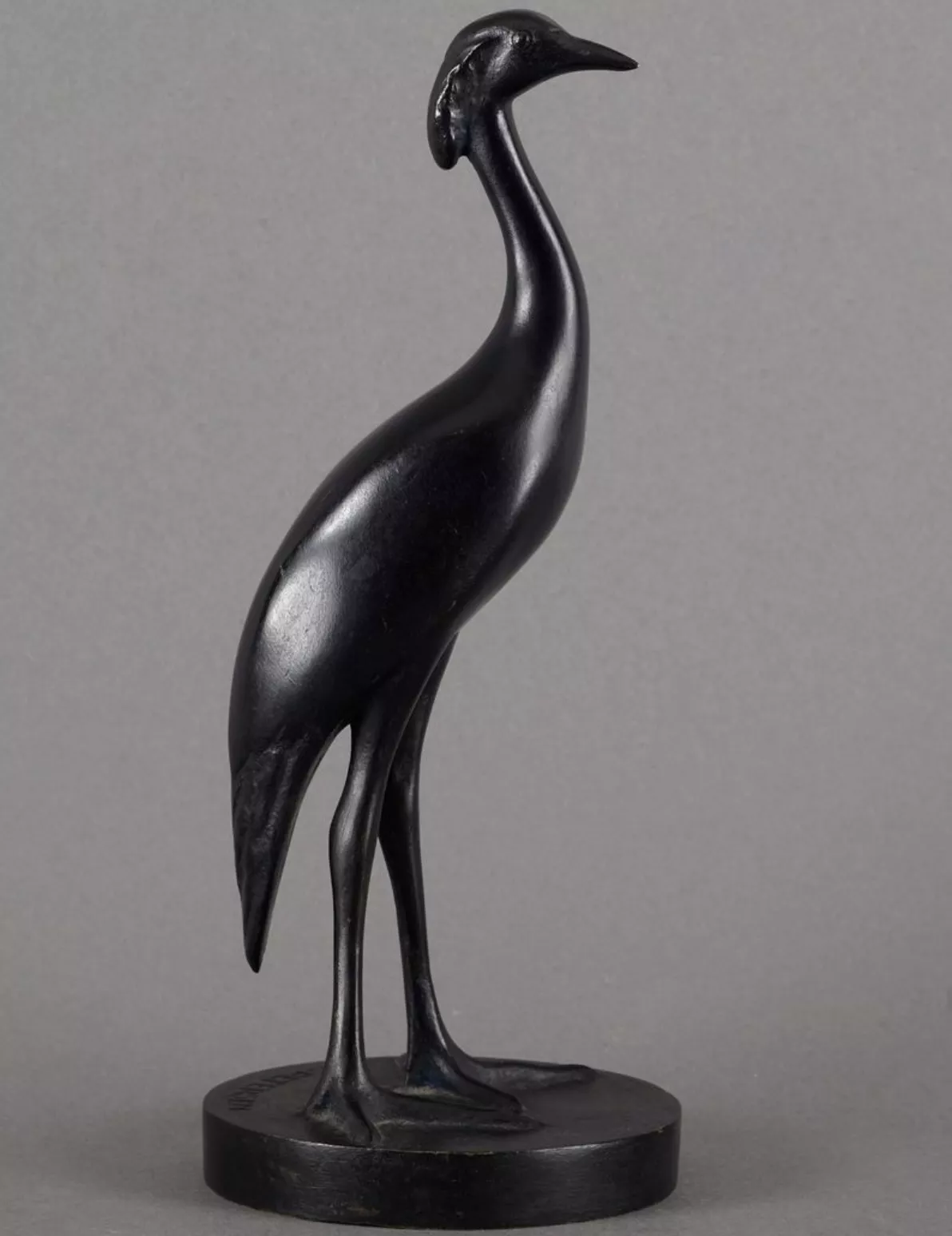
Armand Petersen is a contemporary sculptor who works mainly with bronze. The sculptures that sell on the auction market are therefore mostly bronzes, but he has also produced works in ceramics - most notably porcelain.
His work is close to artists such as Édouard Marcel Sandoz, Georges Lucien Guyot, and Albéric Collin.
The career of Armand Petersen
Armand Petersen (1891-1969), of Danish origin, was born in Basel, Switzerland. He started out at the École d'Arts Industriels in Geneva, where he studied goldsmithing and chasing.
In 1914, he moved to Paris to continue his training, but it was ultimately in the studio of Hungarian sculptor Bêla Markup that he spent four years familiarizing himself with modeling.
Markup, a specialist in animal sculpture, introduced him to animals at the Budapest Zoo.
In 1924, animal art was booming. Pompon, famous since his Ours Blanc presented at the Salon d'Automne in 1922, gathered around him at the Jardin des Plantes a new generation of animal artists, who studied animals following his advice.
In 1926, Petersen took his turn in animal art by working at the fauverie at the Jardin des Plantes, joining Pompon's circle of disciples.
The first exhibition of the "Animaliers" took place in 1927 at the Brandt gallery, where Petersen exhibited alongside Sandoz, Bigot, Artus and Pompon.
His talent did not go unnoticed. At the same time, the Manufacture de Sèvres, looking for contemporary works to adapt in colored soft stoneware, chose three sculptures by Petersen.
In contrast to Pompon's creations, which embody "bêtes du Bon Dieu", Petersen's exude a constant vigilance, a subtle expression that distinguishes him as a master of animal sculpture.
As early as 1929, only two years after his debut, he was already recognized as one of the best of his generation, often cited just after Pompon.
In 1931, the "Douze Animaliers Français" group was formed, and although Swiss, Petersen participated as a guest.
The economic crisis of 1932 forced many artists, including Petersen, to multiply ceramic editions to support themselves, notably at the Manufacture de Sèvres and Bing & Grøndahl in Copenhagen.
After Pompon's death in 1933, the Animaliers group quickly dissolved. However, thanks to Sandoz, who took over the Brandt gallery, they continued to meet until 1939, when the war dispersed them for good.
In 1935, Petersen obtained French nationality, while continuing to exhibit regularly in Switzerland.
Animal sculpture in the 20th century
Animal sculpture in the 20th century embodies a veritable renaissance in art, by reinterpreting the age-old bond between man and animal.
At a time when the industrial age was in full swing and the modern world was accelerating, animal artists found an inexhaustible source of inspiration in nature and its creatures, which they sought to represent with a new sensibility.
This artistic genre, often marginalized, enjoyed a resurgence in popularity thanks to visionary sculptors who managed to capture the essence of animals with remarkable depth and expressiveness.
In the early 20th century, animal sculpture was reinvented by sculptors such as François Pompon, whose works simplify forms without sacrificing the essence of the animal.
Pompon, a former practitioner of Rodin, turned away from the hyperrealist approach to privilege clean lines and smooth volumes, seeking to capture the essence of the creatures he sculpted.
His Ours Blanc, presented at the Salon d'Automne in 1922, became a symbol of this new style. With its soft contours and almost minimalist appearance, it inspired a whole generation of animal artists who sought to express animal life with an economy of formal means, without losing sight of the intrinsic energy of the subject.
Parallel to Pompon, sculptors such as Rembrandt Bugatti demonstrated a striking realism, but with a personal touch of their own. Bugatti, often associated with his sculptures of wild beasts and elephants, spent long hours observing animals in zoos, notably in Antwerp.
His works, imbued with an acute sensitivity, reflect not only the morphology of the animals, but also their character and behavior, capturing moments of tension, rest or social interaction.
The raw texture of his sculptures, often left visible, bears witness to his intense and direct creative process.
In the 1920s and 1930s, animal sculpture enjoyed a veritable golden age in Europe. In France, in addition to Pompon, artists such as Paul Jouve, Édouard-Marcel Sandoz and Armand Petersen stood out for their ability to capture the soul of animals.
Jouve, for example, excelled in depictions of large felines and birds, combining anatomical precision with expressiveness.
Sandoz, meanwhile, was interested not only in exotic animals but also in domestic species, which he interpreted with particular sensitivity. Petersen, of Swiss origin, brings a touch of concern and vigilance to his works, differentiating his creations from those of his contemporaries.
Parallel to this, the Art Deco movement, which dominated the period between the wars, also influenced animal sculpture. Geometric shapes, clean lines and luxurious materials such as bronze and ivory are favored, giving sculptures a modern yet refined appearance.
Animals become stylized motifs, integrated into architectural or decorative compositions, reinforcing the idea that animal art can also be a decorative art.
World War II marked a break, but the post-war period saw animal sculpture reinvented once again.
The artists of this period, influenced by abstraction and existentialism, explored new ways of representing the animal world.
The forms sometimes became more stylized, the materials more varied, but the interest in wildlife persisted, once again underlining the unbreakable link between humanity and nature.
In the 20th century, animal sculpture has thus evolved to reflect the concerns of its time, from the purity of form to the expressiveness of volume, while remaining deeply attached to the beauty and diversity of the animal world.
Each artist has contributed his or her own vision, enriching this artistic genre with a diversity of approaches that continues to inspire and fascinate.
Focus on the hippopotamus at the Manufacture de Sèvres
The hippopotamus that Armand Petersen created for the Manufacture de Sèvres is a work that perfectly embodies his unique approach to animal sculpture.
At first glance, this imposing animal seems solidly anchored to the ground. But beyond this appearance, Petersen infuses his creation with a subtle tension, an almost palpable vigilance, that transforms this sculpture into much more than a simple naturalistic representation.
Petersen, true to his style, avoids any superfluous embellishment. The forms are pared down, the lines softened, creating a silhouette that is both robust and fluid.
This economy of means is at the service of expression: the hippopotamus, despite its heaviness, exudes a sense of watchful calm, as if ready to move at any moment, with that calculated slowness typical of the species.
This stylistic choice reflects Petersen's interest in the essence of his subjects, which he manages to capture without resorting to an overabundance of detail.
The material chosen by the Manufacture de Sèvres, this soft stoneware colored in deep hues, adds an extra dimension to the work.
The stoneware, with its soft texture and satin finish, gives the animal a slightly moiré, almost watery appearance, evoking the hippo's natural habitat, the rivers and swamps where it spends most of its time.
This smooth, almost sensual surface invites caressing, creating a tactile interaction with the observer that contrasts with the often ferocious image of this animal.
The expression on the hippo's face is another striking detail. Rather than presenting a simple mask of bestiality, Petersen endows his subject with an almost meditative expression. The half-closed gaze is enigmatic, evoking both an inner placidity and a discreet attention to its surroundings. This duality in expression adds a psychological depth to the sculpture, setting it apart from more classical representations.
Finally, the work testifies to Petersen's ability to adapt to the technical and aesthetic demands of the Manufacture de Sèvres while retaining his distinctive style. He manages to combine the finesse and modernity of the design with a fidelity to the nature of the animal, making this sculpture a key piece in the revival of animal ceramics in the 20th century.
The work perfectly illustrates Petersen's ability to transform a familiar subject into a creation that is both modern and timeless, marking an important milestone in the evolution of animal art in the century.
The success of Armand Petersen's sculptures
Armand Petersen produced exceptional pieces, whose form and motifs evolved over the course of his career. He is now a highly regarded and renowned artist.
His works are rarely seen in auction rooms and are in great demand.
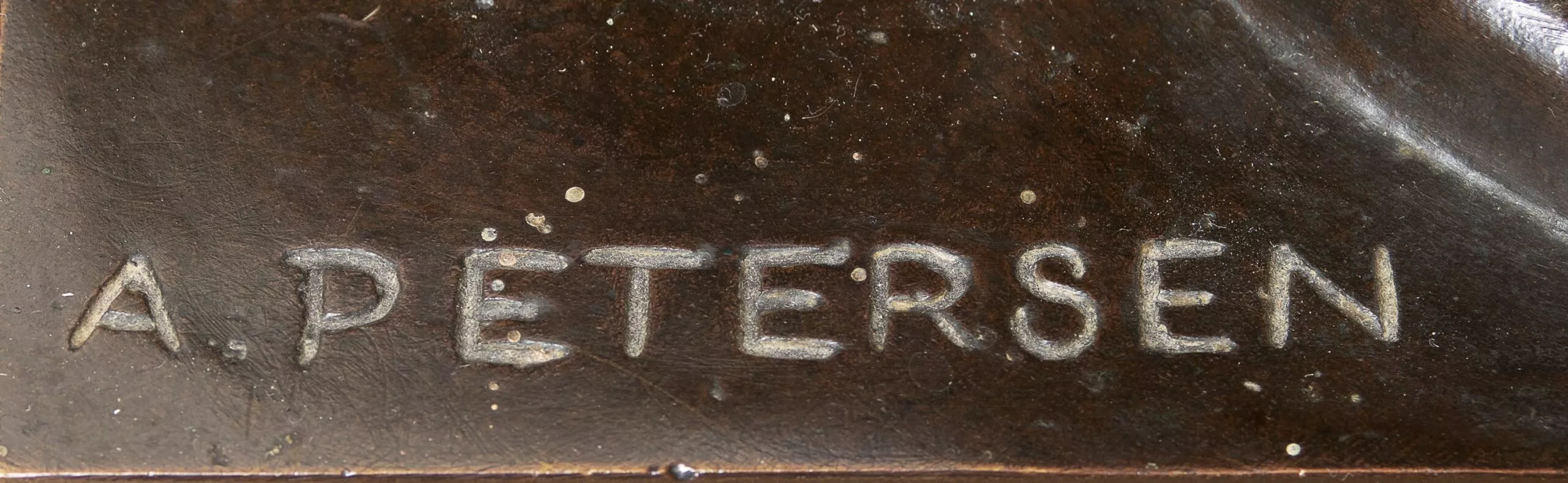
Recognizing Armand Petersen's signature
Armand Petersen doesn't always sign his works. If you think you own one, it's best to have it appraised.
Knowing the value of a work
If you happen to own a creation by Armand Petersen or think you might, don't hesitate to request a free appraisal using our form on our website.
A member of our team of experts and licensed auctioneers will contact you promptly to provide you with an estimate of the market value of your piece, as well as ad hoc information about it.
If you wish to sell your property, you will also be accompanied by our specialists in order to benefit from alternatives for selling it at the best possible price, taking into account the inclinations of the market.
.Estimate in less than 24h
Discover in the same theme

Rating and value of works, prints, paintings by Pierre Alech...
Pierre Alechinksy is a twentieth-century expressionist and surrealist painter who produced many works that are highly regarded on the auction market.
Learn more >

Rating and value of paintings by Vladimir Terlikowski
Vladimir Terlikowski is a twentieth-century Polish painter whose works are highly valued at auction.
Learn more >

Rating and value of paintings by Hans Bouman
Hans Bouman is a painter close to gestural expressionism who has produced works that are highly rated and valued at auction.
Learn more >
Other animal sculptures at auction

Estimated Between €2,000 and €4,000
Edouard Marcel SANDOZ (1881-1971) curly stingray, bronze print

Estimated Between €1,500 and €3,000
César BALDACCINI dit CESAR (1921-1998), Poule Cartier, bronze print

Estimated 1.500 - 3.000
Antoine Louis BARYE (1796-1875) Eagle and heron, bronze print with shaded brown-green patina

Estimated 500 - 1.000
Yves BENOIST-GIRONIERE (1903-1983) Wild boar and its wild boar, bronze print with brown patina

Secure site, anonymity preserved

Auctioneer approved by the State

Free and certified estimates
Frequently asked questions
-
Who is Armand Petersen, and what is his artistic background?Armand Petersen (1891–1969) was a Swiss sculptor of Danish origin who specialized in animal sculpture. Trained in Geneva and then in Paris, he made a name for himself as early as 1926 by joining the circle of François Pompon’s disciples at the Jardin des Plantes. Recognized as one of the masters of 20th-century animal sculpture, he participated in major exhibitions of the 1920s and 1930s alongside Sandoz, Bugatti, and Jouve, before becoming a member of the group “Les Douze Animaliers Français” in 1931.
-
What is the price range for Armand Petersen's sculptures and ceramics?Armand Petersen's works sell for between €100 and €60,000, depending on the type and rarity. Ceramics generally range from €100 to €2,970, while bronzes range from €915 to €60,000. For example, his bronze sculpture “Le Lama” sold for €60,000 in 2023. These price differences reflect variations in technique, the significance of the piece, and its condition.
-
How can you authenticate a work by Armand Petersen and determine its value?Since Armand Petersen did not always sign his works, an appraisal is recommended. Auctie's offers a free, no-obligation estimate via an online form. A state-certified auctioneer or appraiser will contact you within 48 hours to examine the work, confirm its attribution, and provide you with an accurate estimate of its current market value.
-
Is this the right time to sell a work by Armand Petersen?Yes, now is the right time to sell. Armand Petersen’s sculptures are highly sought after by collectors worldwide and rarely appear at auction, which enhances their value. The growing interest in 20th-century animal sculpture and his established reputation as a master of this artistic movement are driving up market prices.
-
How do I sell a sculpture or ceramic piece by Armand Petersen on Auctie's?Auctie's guides you from the appraisal to the auction. After requesting a free appraisal via the online form, our experts will suggest the best sales options to help you achieve the highest possible price, taking market trends into account. Our licensed auctioneers manage the entire sales process.
