



Ratings and values of paintings by Elisabeth Chaplin

Key takeaways
- Élisabeth Chaplin’s works sell for between €50 and €12,500, with a proven potential for price appreciation in 2017 (an oil painting sold for €12,000 against an estimate of €8,000–10,000).
- A Franco-Italian artist (1890–1982) associated with the Nabi group, she excelled at depicting family scenes and portraits of young girls in soft, harmonious tones.
- Her “Family Portrait” (1912, 178 x 250 cm), acquired by the Italian government in 1914, is housed at the Palazzo Pitti and exemplifies her early mastery of monumental composition.
If you own a work by artist Elisabeth Chaplin or based on her work and would like to know its value, our state-approved experts and auctioneers will guide you.
Our specialists will carry out a free appraisal of your work, and provide you with an accurate estimate of its value on the current market.
Then, should you wish to sell your work, we will direct you to the best possible arrangement to obtain the optimum price.
Artist's rating and value
On the art market, works by Élisabeth Chaplin are fairly common. Associated with the Nabi group, works from this movement are the most sought-after by 20th-century collectors, especially those depicting nature.
Also prized, her works that are not categorized as Nabi can fetch thousands of euros at auction. Élisabeth Chaplin's works sell for between €50 and €12,500 on the art market, a substantial range but one that says a lot about the value that can be attributed to these works.
In 2017, her oil on canvas Deux nus ou double autoportrait sold for €12,000 while it was estimated at between €8,000 and €10,000, suggesting a potential upside for her works.
Order of value from the most basic to the most prestigious
Technique used | Results |
|---|---|
Drawing - watercolor | From €50 to €3,400 |
Painting | From €50 to €12,500 |
Estimate in less than 24h
The artist's style and technique
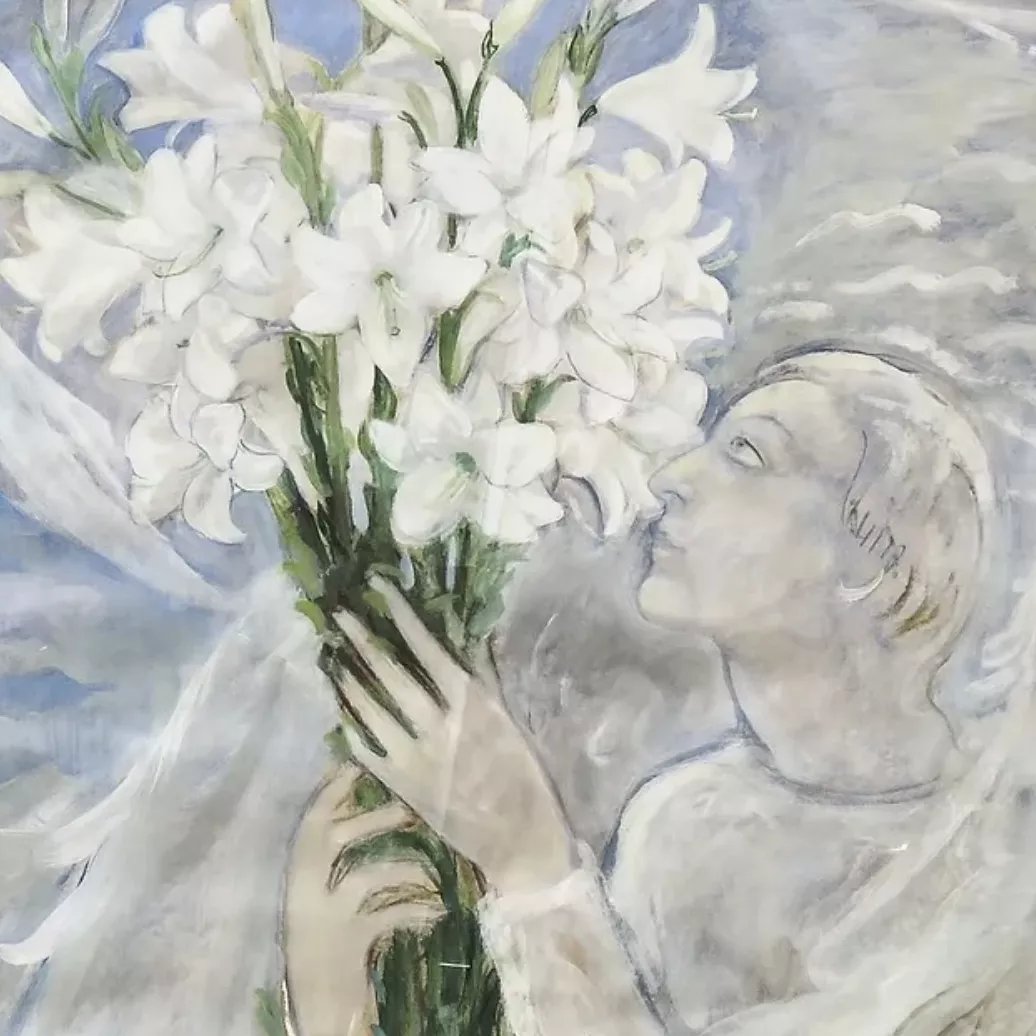
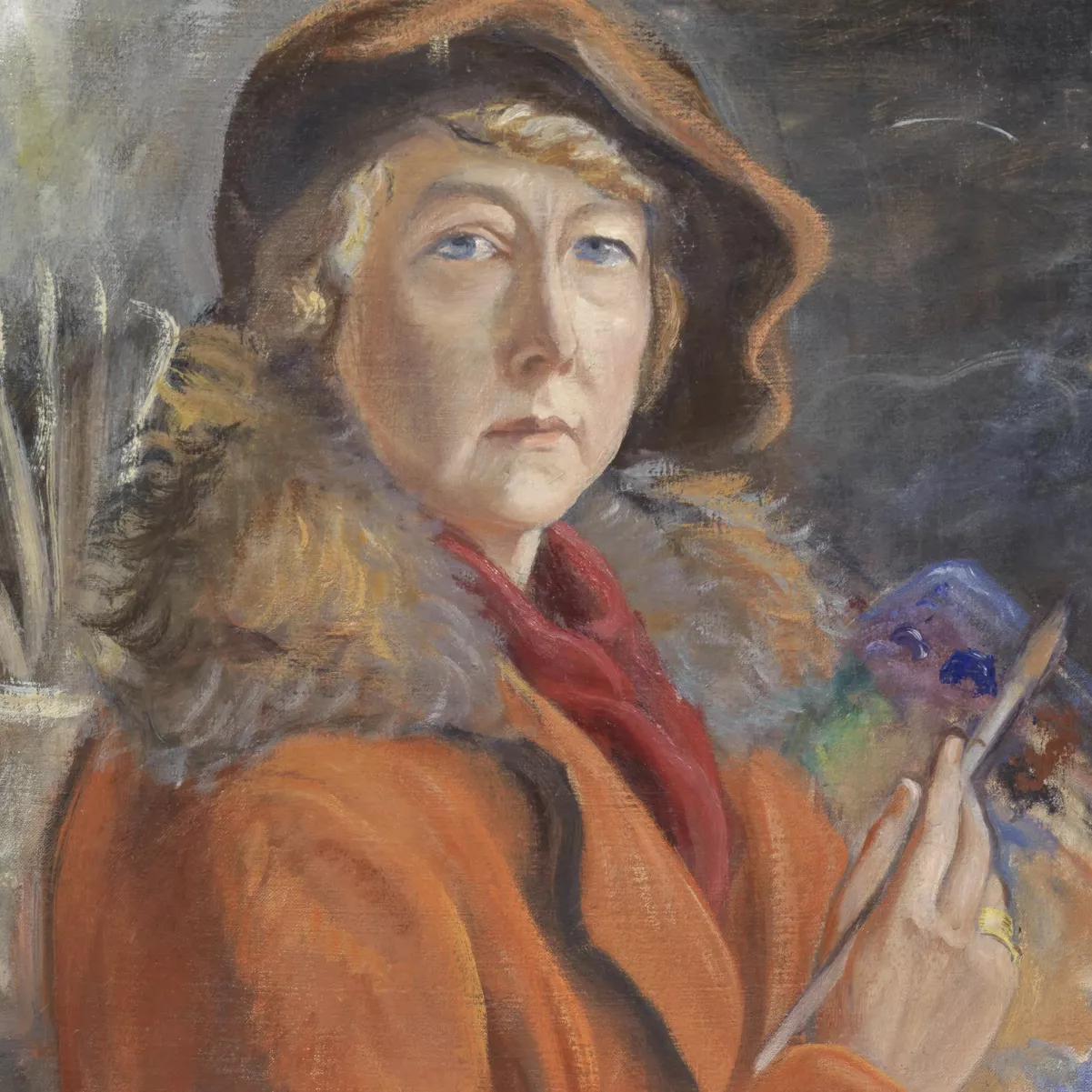
Elisabeth Chaplin (1890 - 1982) was a Franco-Italian artist at the crossroads of symbolism, modern classicism and decorative painting. From the outset, she adopted a decorative style marked by clarity of composition and softness of modelling, influenced by the Pre-Raphaelites, the Nabis and Italian frescoes.
She was both independent and inspired by her time, developing a unique pictorial language, between formal rigor and inner poetry. Her work combines feminine grace, silent interiority and discreet monumentality.
A self-taught artist, she trained by copying the Old Masters in Florence's museums, which explains her very solid technique (clean drawing and architectural composition).
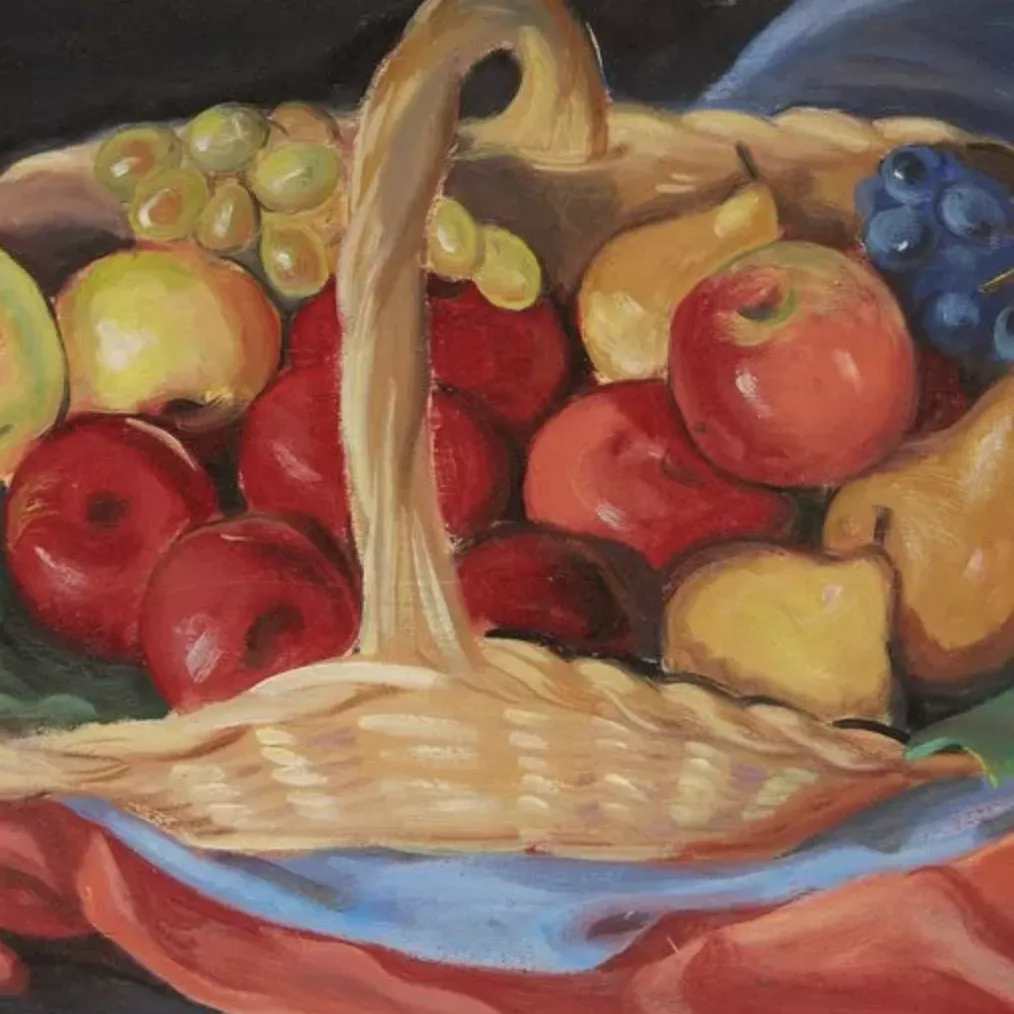
She uses oil on canvas with a smooth, sparsely impastoed material, favoring subtle transitions from one hue to another. Her style is sometimes reminiscent of a mural fresco, with large volumes, simplified details and frontal figures.
The artist uses light colors, often pinks, water greens, pale ochres and milky blues, in a soft, muted harmony. The light in her compositions is diffused, enveloping, often of latent rather than spectacular origin, giving the scenes a dreamlike yet calm atmosphere.
Chaplin excels in cool and warm tonal harmonies, giving her compositions a delicate visual stability.
Her subjects are predominantly female : family scenes, portraits of young girls, maternities and contemplative figures. The composition is balanced, symmetrical and centered, often with a sensitive relationship to space, background and symbolic objects (books, curtained mirrors).
She captures attitudes, gestures and glances with finesse. Chaplin creates murals and sets, integrating his painting into the architectural space. She is influenced by Tuscan painting (quattrocento), French symbolism and the decorative arts of her time. Unlike her expressionist or fauvist contemporaries, she cultivates continuity with a tradition of meditative beauty.
The life of Élisabeth Chaplin
Élisabeth Chaplin (1890 - 1982) was a Franco-Italian artist with a discreet but rich career and deep roots in Florentine culture.
Born in Fontainebleau into a family of French origin, artists and intellectuals, she spent her childhood in Italy, first in Savignano and then in Florence, where she developed a sensitive eye for nature, color and the arts.
She trained as a self-taught painter, copying Italian masters in Florence's museums, particularly the Uffizi. At an early age, she was spotted by Florence's artistic elite, notably by Giovanni Fattori, a leading figure in the macchiaioli movement.
She first exhibited at the Florence Fine Arts Society in 1910. In 1914, she presented Ritratto di Famiglia (Family Portrait) at the Venice Biennale. The painting was acquired by the Italian State, an exceptional event for such a young artist.
Chaplin regularly took part in the Parisian Salons, but remained faithful to Italy, where she lived most of her life. She settled in Florence, in the family villa on via degli artisti, which became both her home and her studio.
The artist deliberately steered clear of the noisy avant-gardes, while remaining in touch with networks of artists and writers. She worked steadily throughout her life, producing portraits, family scenes, female figures, self-portraits and a few frescoes.
She rejects fashion, preferring a quiet, meditative style of painting, focused on clarity, light, balance and the dignity of the models. She also created religious wall decorations in Tuscan churches.
In her final years, there was renewed interest in her work, particularly in Italy, as a representative of timeless art. Elisabeth Chaplin died in Florence in 1982, aged 91.
In 2013, the Uffizi Museum dedicated a tribute exhibition to her.
Today, she is considered one of the few French female painters of the first half of the 20th century to have built up a coherent, independent body of work, without breaking with the figurative tradition.
Focus on Portrait de famille, Élisabeth Chaplin
Élisabeth Chaplin painted Portrait de famille in 1912. This oil on canvas is a monumental format (178 x 250 cm) preserved at the Palazzo Pitti Gallery of Modern Art and acquired by the Italian state in 1914. It depicts the members of the Chaplin family in a drawing room, each absorbed in quiet activity.
The organization is horizontal, calm and symmetrical, influenced by the Renaissance masters (notably Piero della Francesca and the Tuscan group portraits). Each figure is independent, with no direct interaction with the others. The artist depicts herself on the far right, in profile, in a discreet yet assertive posture.
The light is soft, diffused, illuminating the faces delicately, without violent chiaroscuro. The palette of tones is muted (golden ochres, soft greens, grayed blues, beiges) aiming to create a warm but restrained atmosphere.
Each element is shaped with precision and sobriety, without overload or superfluous ornament. The interior is bourgeois and sober (armchairs, curtains, piano, books, carpets), no demonstrative luxury, but a hushed intellectual comfort.
The objects accompany the characters without dominating them : the painting suggests a stable, cultivated inner world freed from external tumult.
The painting is often interpreted as a manifesto of intimacy painting, close to Vuillard or Bonnard, but in a more meditative spirit. It's also a quiet affirmation of Chaplin's artistic identity as a woman, young and self-taught but already a master of her language.
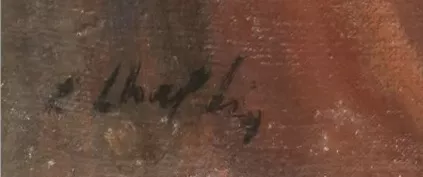
The artist's signature
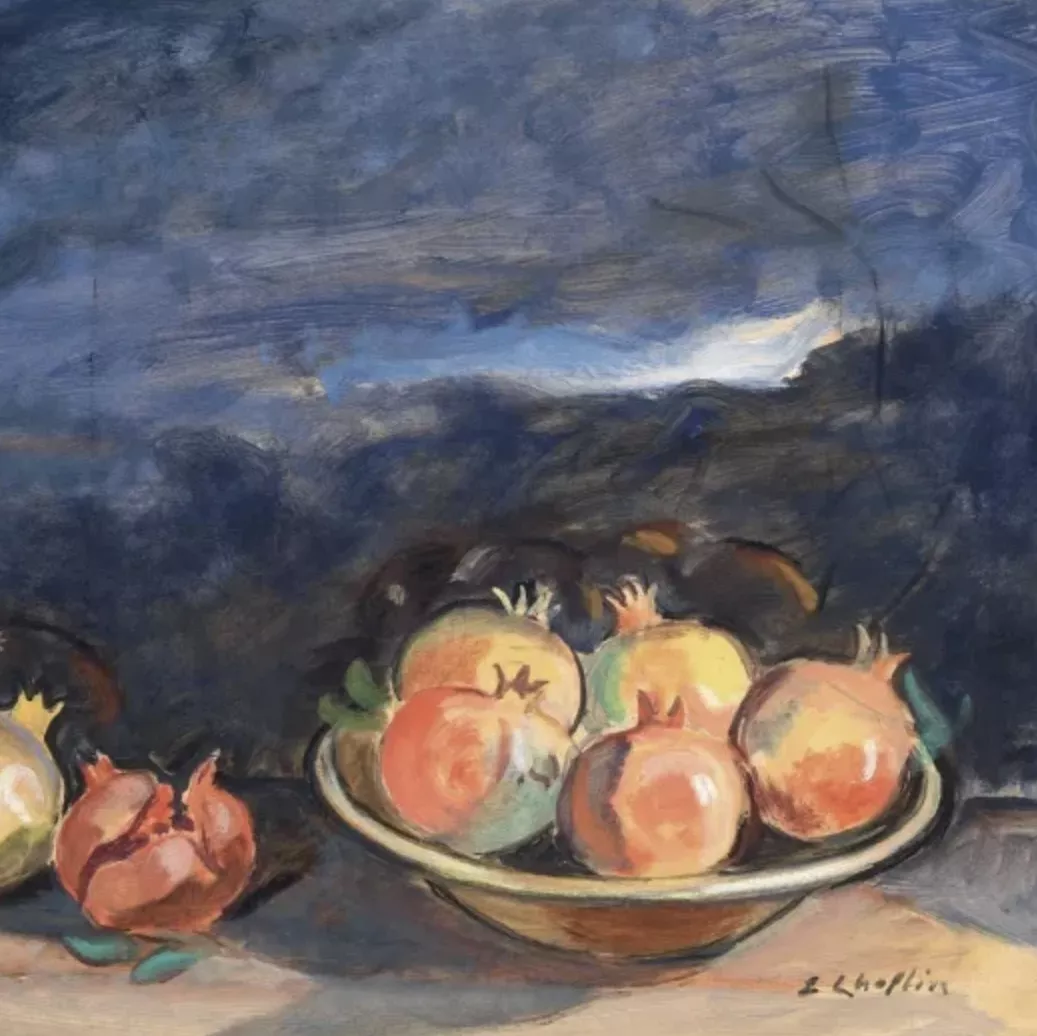
Not all of Elisabeth Chaplin's works are signed.
Although there are variations, here is a first example of her signature :
Expertise your property
If you happen to own a work by Élisabeth Chaplin, request a free appraisal without further ado, using the form on our website.
A member of our team will contact you promptly to provide you with an estimate of the value of your work, as well as any relevant information about it.
If you're considering selling your work, our specialists will also be on hand to help you find alternatives for selling it at the best possible price.
.Estimate in less than 24h
Discover in the same theme

Rating and value of works, drawings, paintings by Étienne Di...
Étienne Dinet was an Orientalist painter of the early 20th century who produced many oil on canvas paintings listed at auction. Estimated in 24h.
Learn more >

Rating and value of Roberto Matta's paintings and drawings
Roberto Matta is a 20th-century Surrealist artist whose works are highly regarded and valued on the auction market.
Learn more >

Rating and value of paintings, drawings and watercolours by...
Mai Thu is a 20th-century Franco-Vietnamese artist who has produced works that are highly rated and valued at auction.
Learn more >
D'autres tableaux modernes figuratifs vendus aux enchères

Estimated 800 - 1.500
Jean Roger SOURGEN (1883-1978) Trees and dunes Oil on panel

Estimated 3.000 - 5.000
Georges LAPCHINE (1885-1951) The port of St Tropez Oil on canvas

Estimated 18.000 - 30.000
Charles CAMOIN (1879-1965) "Le Port de Marseille, 1928" Oil on canvas.

Estimated 1.500 - 3.000
Jean VANDEN EECKHOUDT (1875-1946), Basket of persimmons, Oil on canvas

Estimated 2.000 - 4.000
Charles LACOSTE (1870-1959) Starry night, Oil on paper mounted on canvas

Secure site, anonymity preserved

Auctioneer approved by the State

Free and certified estimates
Frequently asked questions
-
Who is Élisabeth Chaplin, and what is her artistic background?Élisabeth Chaplin (1890–1982) was a self-taught Franco-Italian artist who trained in Florence by copying the old masters. As a member of the Nabi group, she developed a unique style at the intersection of Symbolism, modern Classicism, and decorative painting, influenced by the Pre-Raphaelites and Italian frescoes. Recognized as early as 1914 at the Venice Biennale, she deliberately distanced herself from the avant-garde movements to cultivate a meditative and figurative style that remained consistent throughout her career.
-
What is the price range for Élisabeth Chaplin's works on the market?Élisabeth Chaplin’s works sell for between €50 and €12,500, depending on the medium and size. Drawings and watercolors range from €50 to €3,400, while oil paintings can fetch up to €12,500. Her works in the Nabi style, particularly those depicting nature, are highly sought after by collectors. In 2017, her oil on canvas titled “Two Nudes or Double Self-Portrait” exceeded its estimate, selling for €12,000, indicating potential for future appreciation.
-
How can you authenticate and appraise a work by Élisabeth Chaplin?To authenticate and appraise a work by Élisabeth Chaplin, contact Auctie's via the online form to request a free, no-obligation appraisal. A state-certified auctioneer or appraiser will examine your artwork and provide you with an accurate estimate of its current market value within 48 hours. This free appraisal is an essential prerequisite before any sale.
-
Is this the right time to sell a work by Élisabeth Chaplin?Yes, now is a good time to sell a work by Élisabeth Chaplin. Her paintings enjoy steady demand in the art market, particularly among 20th-century collectors seeking works from the Nabi movement. The upward trend observed in recent auctions—notably the fact that “Deux nus ou double autoportrait” sold above estimate in 2017—suggests a growing interest in her work.
-
How does the sale of a work by Élisabeth Chaplin at Auctie's work?Auctie's guides you from the appraisal to the auction. After a free, no-obligation appraisal by our experts, we’ll help you choose the best possible approach to get the highest price for your artwork. As a licensed auction house, our specialists will guide you through every step of the sale to maximize the value of your item.
