



Rating and value of paintings by Pierre Bonnard

Key takeaways
- Prices for Pierre Bonnard’s paintings range from €10 to €15,133,200, with his still lifes being particularly sought after on the art market.
- Oil-on-canvas works command the highest prices (up to 15,133,200€), while prints and drawings range from 10€ to 1,655,500€.
- Painted in 1912, “La Terrasse” sold for €15,133,200 in 2019, far exceeding its initial estimate of €4.45 to €7.12 million.
If you own a work by or after the artist Pierre Bonnard, and you d like to know its value, our state-approved experts and auctioneers will offer you their appraisal services.
Our specialists will carry out a free appraisal of your work, and provide you with a precise estimate of its value on the current market.
Then, if you wish to sell your painting, we will direct you to the best possible arrangement to obtain the optimum price.
Rating and value of the artist Pierre Bonnard
Considered an important painter of modern art, Pierre Bonnard quickly established himself in the history of 20th century art.
This legacy is made up of various creations : mainly oils on canvas, among which are still lifes.
At present, the prices of his works are rising enormously under auctioneers' hammers. His still lifes are particularly prized, and the price at which they sell on the art market ranges from €10 to €15,133,200, a considerable gap but one that speaks volumes about the value that can be attributed to Pierre Bonnard's paintings.
In 2019, an oil on canvas, La Terrasse, dating from 1912, sold for 15,133,200€ while it was estimated at between 4,450,000 and 7,121,500€.
Order of value from a single work to the most prestigious
Technique used | Result |
|---|---|
Estamp - multiple | From €10 to €383,500 |
Drawing - watercolor | From 100 to 1 655 500€ |
Oil on canvas | From 300 to 15 133 200€ |
Estimate in less than 24h
Pierre Bonnard's style and technique
Pierre Bonnard, an essential figure of post-impressionism and a founding member of the Nabis, left his mark on art history with an intimate, sensitive approach, emphasizing light and color as vectors of emotion.
Through his work, he transcended traditional representation by exploring delicate compositions where observation and memory mingle to capture the fleeting essence of everyday life.
Bonnard, often compared to contemporaries such as Vuillard, Vlaminck or Derain, distinguished himself by his luminous palette and his concern to translate atmosphere more than precise detail.
His still lifes occupy a central place in his work, a genre where he found a privileged space for his chromatic exploration.
These seemingly modest scenes reveal a depth where each object - fruit, flowers, crockery - is a piece of a carefully orchestrated whole.
Flowers, recurrent in his compositions, are not mere decorative motifs but vibrant, almost living elements.
Their color, often saturated and deliberately removed from realism, becomes a means of evoking intense sensations.
Warm reds, bright yellows or soothing blues are applied in subtle strokes, reflecting both the immediacy of a memory and the prolonged reflection of a painter fascinated by the effects of light.
Similarly, fruit plays an essential role in his still lifes. Bonnard uses them to experiment with textures and the play of light.
Oranges, figs or grapes, bathed in diffused light, seem to float in the space of the painting, transforming the scene into a chromatic reverie.
The omnipresent light envelops these elements, lending his still lifes a visual poetry that goes far beyond the simple imitation of reality.
Another notable aspect of his still lifes is their often atypical staging. Bonnard's compositions are characterized by unexpected angles and tight framing, testifying to his precise yet intuitive eye.
Objects sometimes seem to emerge from the shadows or fade into the light, creating paintings where the intimacy of everyday life is transformed into an almost dreamlike experience.
This constant interplay between reality and abstraction allows Bonnard to evoke universal emotions from ordinary subjects.
Thus, Bonnard, through his still lifes, sublimates the banal into a hymn to color and light.
With subtle technique and unparalleled sensitivity, he transforms every detail into a fragment of pure emotion, where color becomes a living memory and the poetry of everyday life is expressed in all its richness.
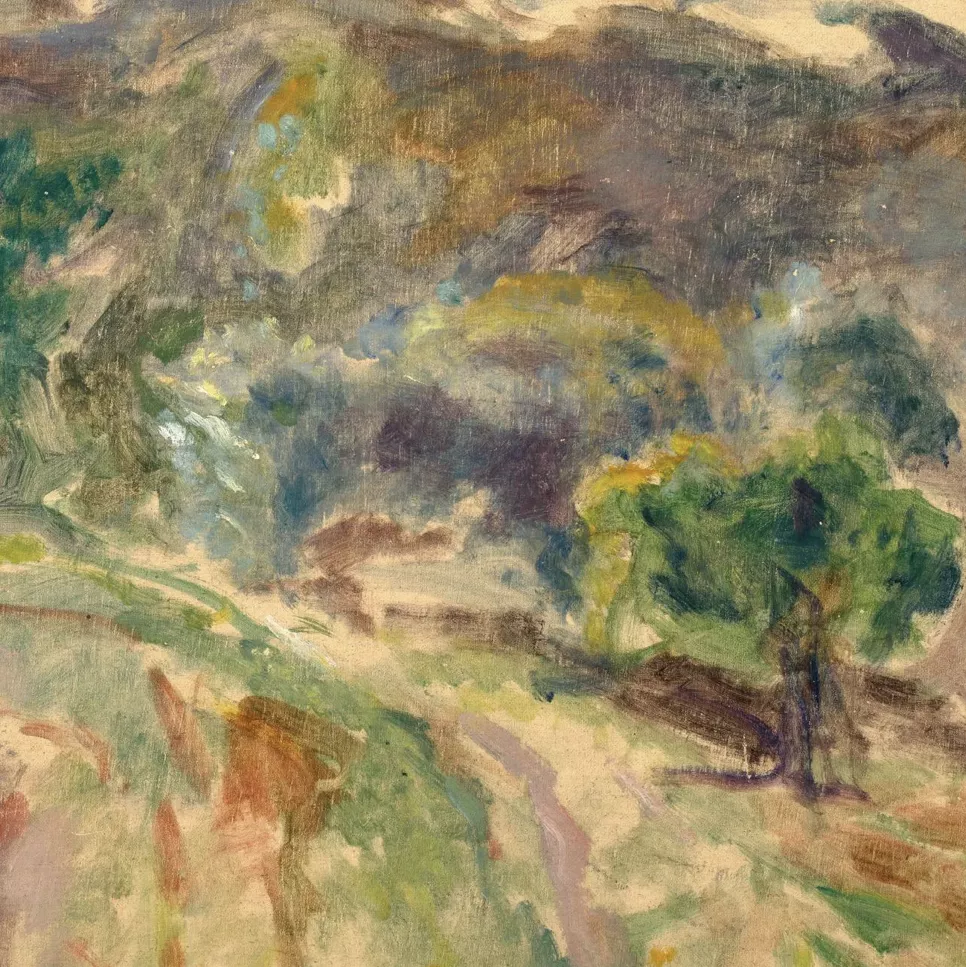
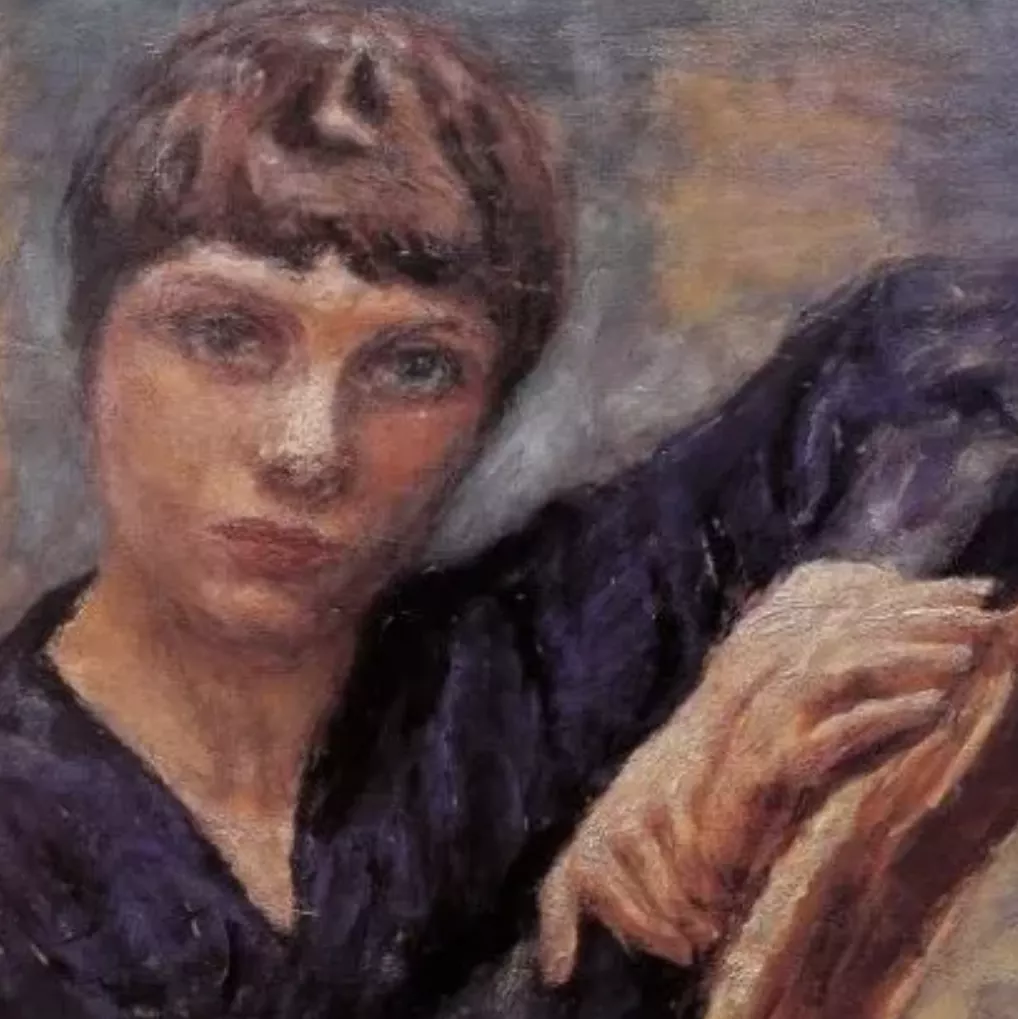
Pierre Bonnard's work in colorimetry
Pierre Bonnard, undisputed master of color, made colorimetry the core of his artistic work, relentlessly exploring chromatic subtleties to create compositions imbued with life and sensitivity.
For him, color is never a mere decorative element, but a powerful tool for translating nuances of light, atmosphere and emotion.
He often worked from visual memories, allowing him to interpret reality through a poetic prism, enriching his canvases with vibrant, unexpected hues.
His rich, nuanced palette oscillates between bright tones and halftones, playing on subtle contrasts to reinforce the intensity of his scenes.
Bonnard favored bold juxtapositions, combining deep reds with bright yellows or soft greens with intense purples, creating colorful harmonies that seem to vibrate to the viewer's eye.
This instinctive approach to color reflects his desire to go beyond realism to capture a more sensory truth, where each hue dialogues with the composition as a whole.
His use of color is particularly remarkable in his play with light. Bonnard skilfully manipulated gradations and reflections to immerse his scenes in a soft, enveloping light.
Shadows, far from being monochrome, come in delicate variations, while lit areas radiate warmth and brilliance.
This meticulous work gives his paintings an almost tactile depth, where color seems to exist for itself while serving to magnify the subject.
So, in Bonnard's work, colorimetry goes beyond technique to become a veritable visual language, a means of expressing the intangible.
His colors, sometimes soothing, sometimes intense, finely convey the ephemerality of sensations and the poetry of everyday life, making each work a unique chromatic universe.
The career of Pierre Bonnard
Pierre Bonnard, born in Fontenay-aux-Roses in 1867, was one of the most singular painters of his time, making a lasting mark on art history with his intimate, luminous vision of the world.
Trained at the Académie Julian and the École des Beaux-Arts in Paris, he soon joined the Nabis, an avant-garde group inspired by Paul Gauguin, where he developed an aesthetic based on emotion and spirituality.
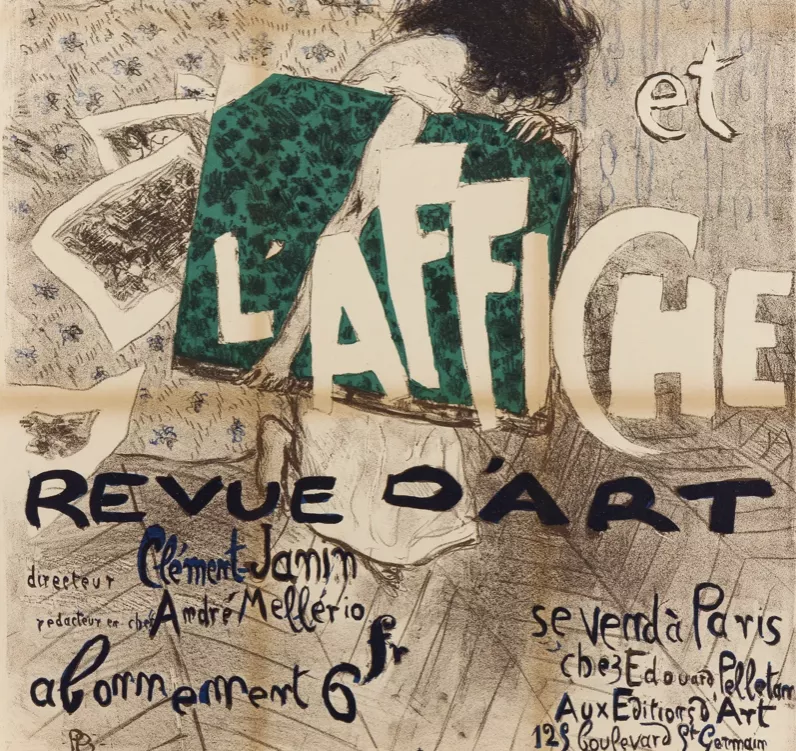
Named "le nabi très japonard" for his admiration of Japanese prints, he incorporated graphic and decorative influences into his early works, which would remain at the heart of his art.
Bonnard nevertheless turned away from the strict principles of the Nabis to assert himself in a more personal path.
Throughout his career, he favored intimate, familiar scenes: interiors bathed in light, Mediterranean landscapes and portraits imbued with tenderness.
Married to Marthe de Méligny, his companion and muse, he tirelessly depicted her in intimate moments, capturing the poetry of everyday life with a unique sensitivity.
His art, often described as postimpressionist, evolves towards an ever-deeper research into light and color, making his canvases vibrant spaces where emotion takes precedence over detail.
Although often in the background of the Parisian art scene, Bonnard enjoyed growing recognition during his lifetime, exhibiting regularly at the Salon des Indépendants and the Salon d'Automne.
His works, imbued with a timeless gentleness, bear witness to a profoundly human view of the world, where every fragment of life becomes an infinite source of beauty.
The legacy of Pierre Bonnard
The legacy of Pierre Bonnard stands as a celebration of color, light and intimacy, having a lasting influence on the generations of artists who followed him.
A true master of the suspended moment, he was able to magnify everyday life by giving it a poetic and universal dimension, inviting the viewer to rediscover the beauty of simple moments.
His instinctive approach to composition and color, in which every hue seems to vibrate with emotion, has left its mark on major figures in modern and contemporary art, from Matisse to Rothko, via the expressionists.
Bonnard also redefined the relationship to figurative painting at a time when abstraction was gaining ground. His work, halfway between reality and memory, testifies to a unique balance between formal innovation and attachment to the visible.
Today, his works continue to captivate with their chromatic richness and emotional depth, making Bonnard a key figure in museums and collections around the world.
More than just a painter, he remains a poet of light, whose art invites infinite contemplation.
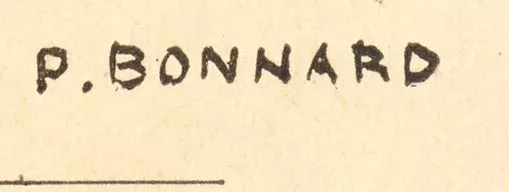
Pierre Bonnard's signature
Pierre Bonnard often signs his works, but his signature has changed over the years. Expertise remains essential to ensure the authenticity of your work.
Knowing the value of a work
If you happen to own a work by or after Pierre Bonnard, don't hesitate to request a free appraisal using our form on our website.
A member of our team of experts and certified auctioneers will contact you promptly to provide you with an estimate of the market value of your work, as well as ad hoc information about it.
If you wish to sell your work, you will also be accompanied by our specialists in order to benefit from alternatives for selling it at the best possible price, taking into account the inclinations of the market.
.Estimate in less than 24h
Discover in the same theme

The value of Jacques Germain's works and paintings
Jacques Germain's value justifies a closer look at his works. Get your painting appraised by a state-approved expert.
Learn more >

Gilbert Poillerat's furniture, tables and lighting price and...
Gilbert Poillerat is a twentieth-century master wrought-iron craftsman who has produced works that are listed and valued on the auction market.
Learn more >

Ratings and values of paintings by Elisabeth Chaplin
Elisabeth Chaplin is a Franco-Italian artist who has produced works that are highly valued at auction. 24h estimate.
Learn more >
Works from the same period sold at auction

Estimated 2.000 - 4.000
Charles LACOSTE (1870-1959) Starry night, Oil on paper mounted on canvas

Estimated 5.000 - 8.000
Robert PINCHON (1886-1943) View of a port on the banks of the Seine, Oil on canvas

Estimated 20.000 - 30.000
Chaffic ABBOUD (1926-2004) "La visite", Oil on canvas

Estimated 2.000 - 4.000
Maximilien LUCE (1858-1941), Moulineux, l'entrée du village, circa 1903, Oil on canvas

Estimated 1.500 - 3.000
Jean VANDEN EECKHOUDT (1875-1946), Basket of persimmons, Oil on canvas

Estimated 12.000 - 15.000
Paul AIZPIRI (1919-2016), Still life of flowers, Oil on canvas

Secure site, anonymity preserved

Auctioneer approved by the State

Free and certified estimates
Frequently asked questions
-
Who is Pierre Bonnard, and what is his artistic context?Pierre Bonnard (1867–1940) was a leading figure of Post-Impressionism and a founding member of the Nabis, an avant-garde group inspired by Paul Gauguin. Nicknamed “the very Japanese Nabi,” he left his mark on the history of modern art through his intimate approach to light and color, exploring delicate compositions in which observation and memory intertwine. His influence extends to the masters of the 20th century, from Matisse to Rothko.
-
What is the price range for works by Pierre Bonnard?Prices for works by Pierre Bonnard vary considerably depending on the medium and quality. Prints range from €10 to €383,500, drawings and watercolors from €100 to €1,655,500, and oil paintings on canvas—the most prestigious works—from €300 to €15,133,200. In 2019, “La Terrasse” (1912) exceeded its estimate, selling for €15,133,200.
-
How can you authenticate a work by Pierre Bonnard?To authenticate a work by Pierre Bonnard, we recommend that you request a free appraisal from Auctie's using our online form. A certified expert or auctioneer will examine your work and provide you with an accurate assessment of its authenticity and market value within 48 hours, with no obligation.
-
Is this the right time to sell a work by Pierre Bonnard?Yes, this is an excellent time to sell a work by Pierre Bonnard. Prices for his paintings are rising significantly on the art market, especially his still lifes, which are particularly sought after. Demand for his works remains strong among collectors and institutions, which ensures that your piece will fetch the best possible price.
-
How does the appraisal process work at Auctie's?Appraisals at Auctie's are free and non-binding. Simply submit your request via our online form, and one of our experts or licensed auctioneers will contact you promptly to examine your artwork. You will then receive an accurate estimate of its market value, along with relevant information. If you wish to sell, we’ll offer you the best options to get the highest price.
