



Rating and value of Robert Picault's ceramics, services and plates

Key takeaways
- Ceramics by Robert Picault (1919–2000) fetch prices ranging from €20 to €9,000, depending on their prestige and provenance.
- An artist based in Vallauris since 1945, Picault developed a distinctive style combining geometric patterns and a limited color palette (white, copper green, and manganese brown).
- In 2022, a bowl titled *Fruiter* sold for 9,000 €, despite an initial estimate of 800 to 1,200 €, illustrating the strong demand from French and European collectors.
If you own an object by or after Robert Picault, and would like to know its value, our state-approved experts and auctioneers will offer you their appraisal services.
Our specialists will carry out a free appraisal of your work, and provide you with an accurate estimate of its value on the current market.
Then, if you'd like to sell your work, we'll direct you to the best possible arrangement to get the best price for it.
Robert Picault
Robert Picault is a French artist who is fairly well known to collectors of ceramics and sculpture.
If you own one of his works, its value may be higher than you think. On the art market, the prices of Robert Picault's works can be quite high at the auctioneers' gavel.
His ceramic works are particularly prized by French and European buyers, and the price at which they sell on the art market ranges from €20 to €9,000, a fairly substantial range,but one that says a lot about the value that can be attributed to Picault's works.
In 2022, a ceramic bowl titled Fruitier sold for €9,000 while it was estimated at between €800 and €1,200.
Order of value ranging from a simple work to the most prestigious
Technique used | Result |
|---|---|
Ceramics | From €25 to €9,000 |
Estimate in less than 24h
Style and technique by artist Robert Picault
Robert Picault (1919-2000) was a ceramic artist rooted in the Mediterranean tradition. Settling in Vallauris in the 1940s, Picault developed a style that drew on the simple forms of Provençal utilitarian ceramics.
At the same time, he enriched them with a personal decorative grammar, inspired both by local tradition and more archaic motifs.
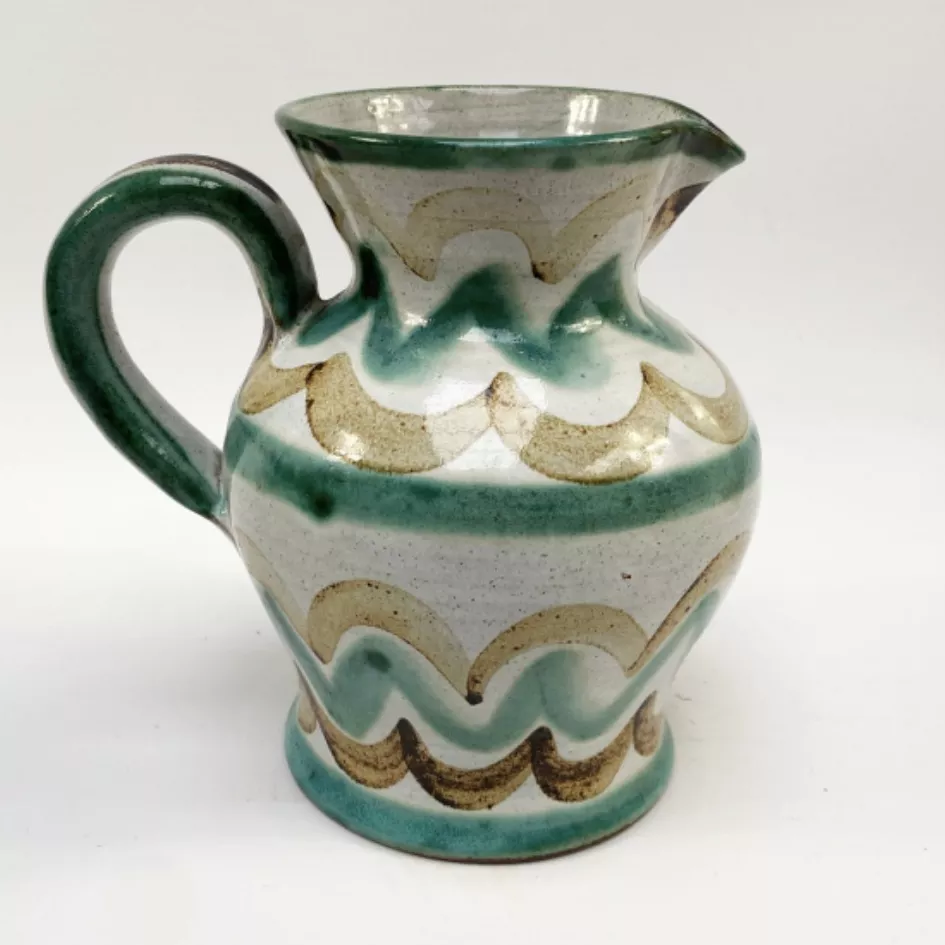
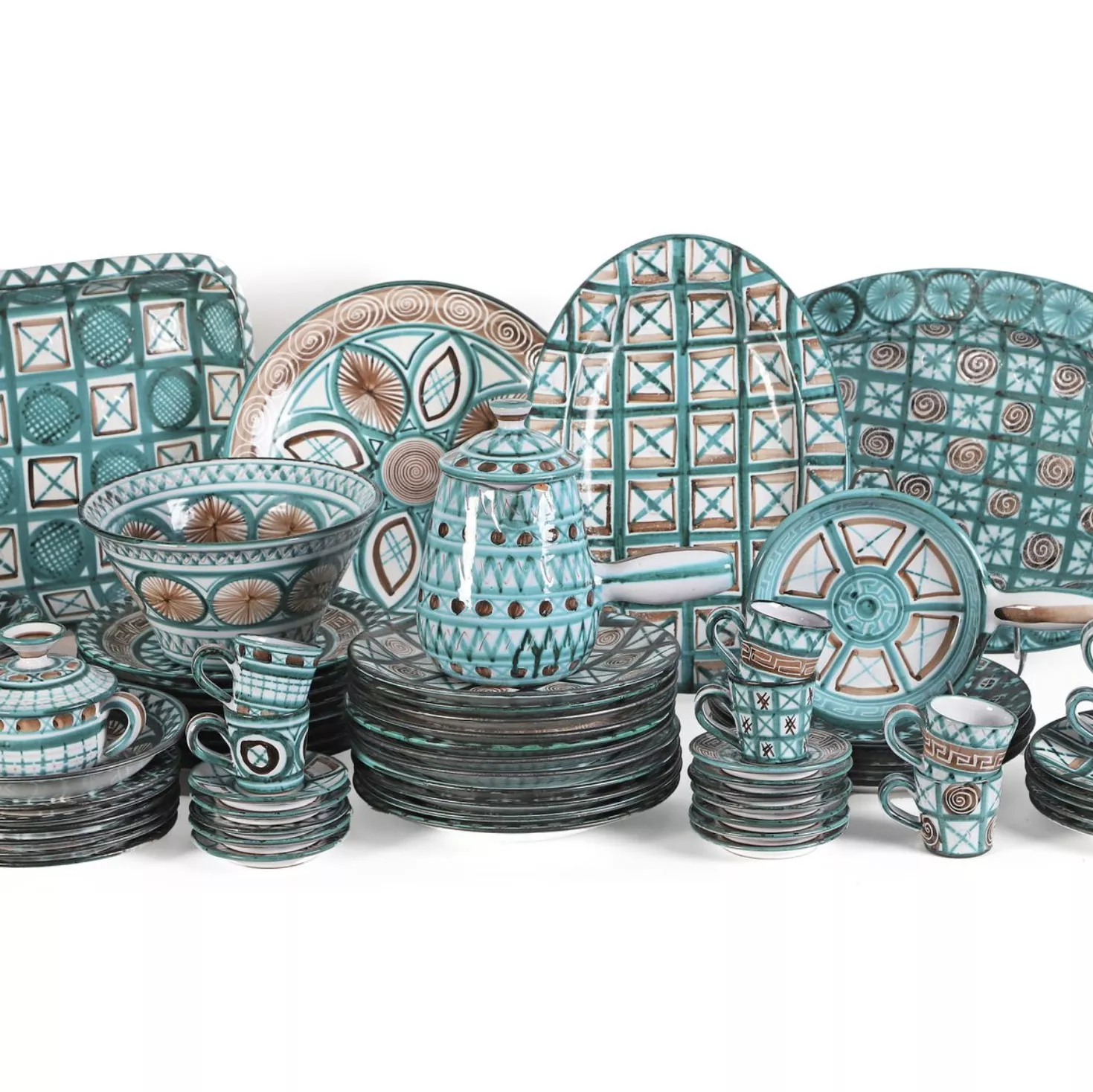
He often resorted to a recurring and immediately recognizable ornamental repertoire. He uses simple geometric motifs (chevrons, waves, spirals, lines) that he traces with green copper oxide or brown manganese on a white or green enamel background.
These elements, which are systematically repeated, create a strong, identifying visual unity.
The artist's palette is deliberately restricted, his technique based on the use of three exclusive colors (enamel white, copper green and manganese brown.
The forms chosen are modest and functional, insofar as the artist mainly works with everyday objects (plates, dishes, carafes, pitchers, cups...) in forms that are quite flexible.
He turns his ceramics by hand, always thinking of them for use, so that the utilitarian object becomes a medium for ornamental expression.
The artist was close to Picasso in Vallauris, and Picault shares with him a certain taste for archaic forms, simplified signs and the spontaneity of gesture. However, where Picasso explored ceramics quite freely, Picault refined a structured, repetitive decorative system.
His production lies between craft and series, as he preserves the potter's gesture. He developed a regular, coherent, accessible production, which circulated widely in the 1950s-70s, thus embodying a modern Mediterranean aesthetic.
Robert Picault thus imposed an identifiable style, made up of pared-down motifs, sober colors and modest shapes. His ceramics, designed to be both decorative and utilitarian, embody a simple, joyful and accessible modernity that is still very much part of the Vallauris identity and post-war spirit.
The life of Robert Picault
Robert Picault, before creating his ceramics in the south of France, trained at the École des arts appliqués in Paris.
It was here that he developed a marked taste for the arts of fire, and ceramics in particular. He moved to Vallauris after the war, in 1945. The region was in the midst of an artistic revival.
He opened his own studio there in 1948, at a time when many artists (ceramists, painters, sculptors) were settling in the region, attracted by its landscapes and know-how.
He worked closely with Picasso, at the Madoura studio, thus participating in the artistic effervescence of Vallauris in the 50s. This proximity influenced his taste for stylized forms and refined motifs, while reinforcing his roots in a revisited Mediterranean aesthetic.
He is an independent craftsman with an assertive style. In the early 50s, he developed a taste for stylized motifs and pure forms, while reinforcing his roots in a revisited Mediterranean aesthetic.
Robert Picault led his career as an independent craftsman, imposing an assertive style. From the early 50s, he developed a production of utilitarian and decorative pieces marked by an immediately recognizable personal style: simple shapes, recurring geometric motifs, a palette reduced to three shades.
As a result, he imposed a strong identity on the post-war French ceramics landscape. His work evolves between craftsmanship and commercial distribution. His creations, distributed in numerous galleries and boutiques in France and abroad, contributed to the democratization of art ceramics.
Always paying close attention to the quality of his workmanship, he succeeded in reaching a wide public thanks to an accessible and coherent production. His work has evolved between craftsmanship and commercial distribution.
He remained faithful to Vallauris until the end of his life, working ceramics until the end of his career and participating in local artistic life. He died in 2000, leaving an abundant body of work emblematic of a certain Mediterranean art de vivre.
Picault thus embodies a discreet but essential figure in the post-war revival of French ceramics. Thanks to his local roots, his friendship with Picasso and his instantly recognizable style, he left a lasting mark on the history of 20th-century ceramics.
Focus on Pichet decorated with green and brown geometric motifs (circa 1955), Robert Picault
This pitcher is typical of Robert Picault's production in the 1950s, and features a simple, generous and functional shape, with a slightly flared neck, sturdy handle and rounded body.
Utility ceramics here become the medium for fully realized plastic research. The ornamental repertoire he uses is recurrent and codified, with the surface of the pitcher entirely decorated with freehand geometric motifs (chevrons, rhombuses, grids, spirals...).
These signs, which are always executed in copper oxide (green) and manganese (brown), are emblematic of his repetitive and instantly recognizable graphic style.
The palette he uses is restrained and harmonious, creating a contrast between the white of the background enamel and the decorative colors. This deliberate restriction of the chromatic range gives the whole a formal coherence akin to a coded visual language.
The decoration is designed to follow the shape, in the sense that the motifs are not plastered on, but fit perfectly with the pitcher's volumes. The decoration is distributed according to a rhythmic logic, which underlines the roundness of the body, the movement of the handle and the dynamics of the pourer.
The work of the gesture is visible and assumed, the brush-drawn motifs retain the manual character of the gesture, slightly irregular, which gives the object its living character. Far from a quest for industrial perfection. Picault values the hand, rhythm and repetition.
This object therefore testifies to Robert Picault's desire for a popular and refined art, and embodies a certain post-war ideal : accessible, functional, and rooted in a craft tradition, while remaining open to decorative modernity.
It illustrates both the discreet refinement of the gesture and the desire to produce for everyday use. With this creation, Robert Picault demonstrates that a simple domestic object can become a work of art in its own right. In it, he asserts a personal style based on repetition, legibility and formal joy.
In this way, he is helping to make Vallauris ceramics one of the major centers of 20th-century ceramics, along with other artists such as Clément Massier or François Lembo.
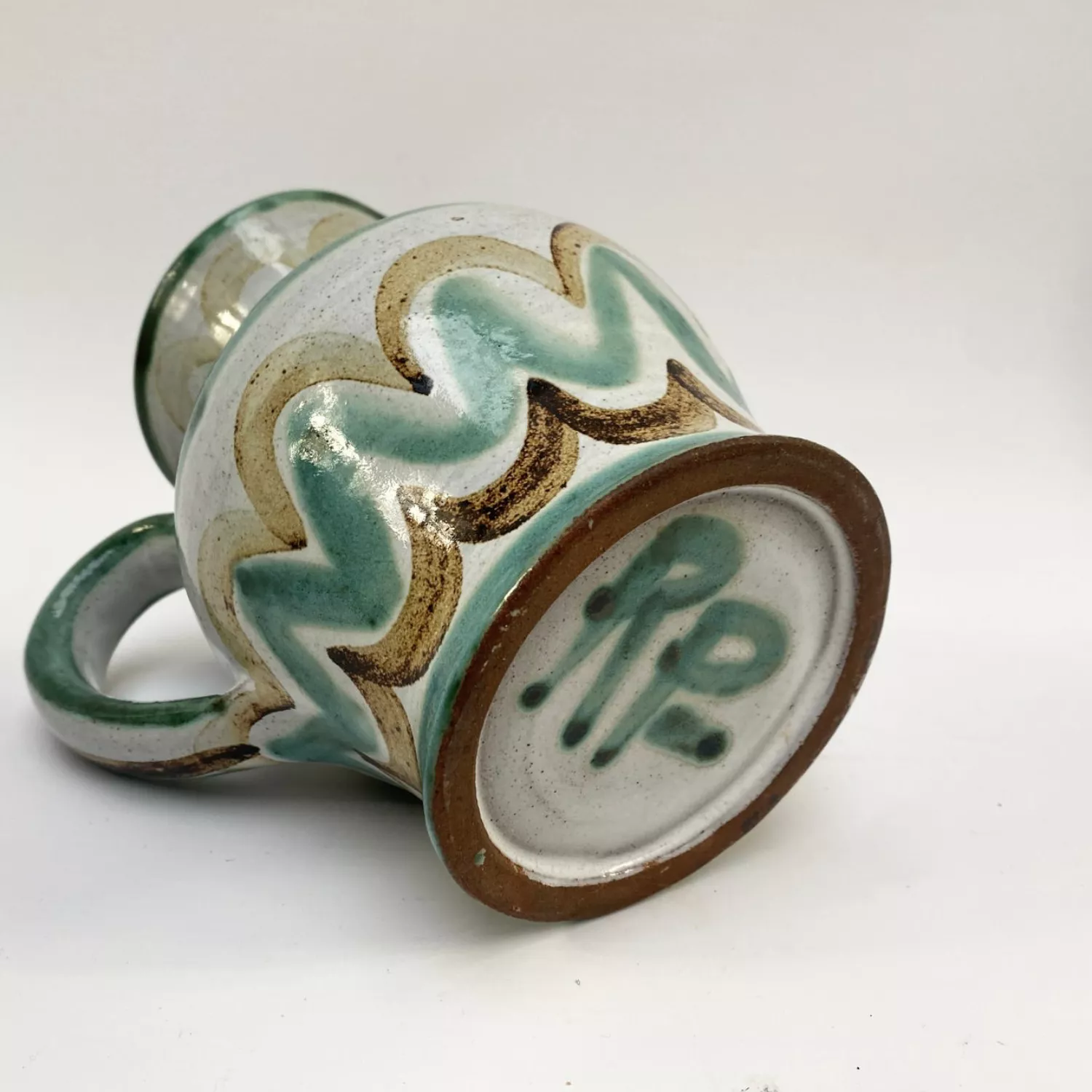
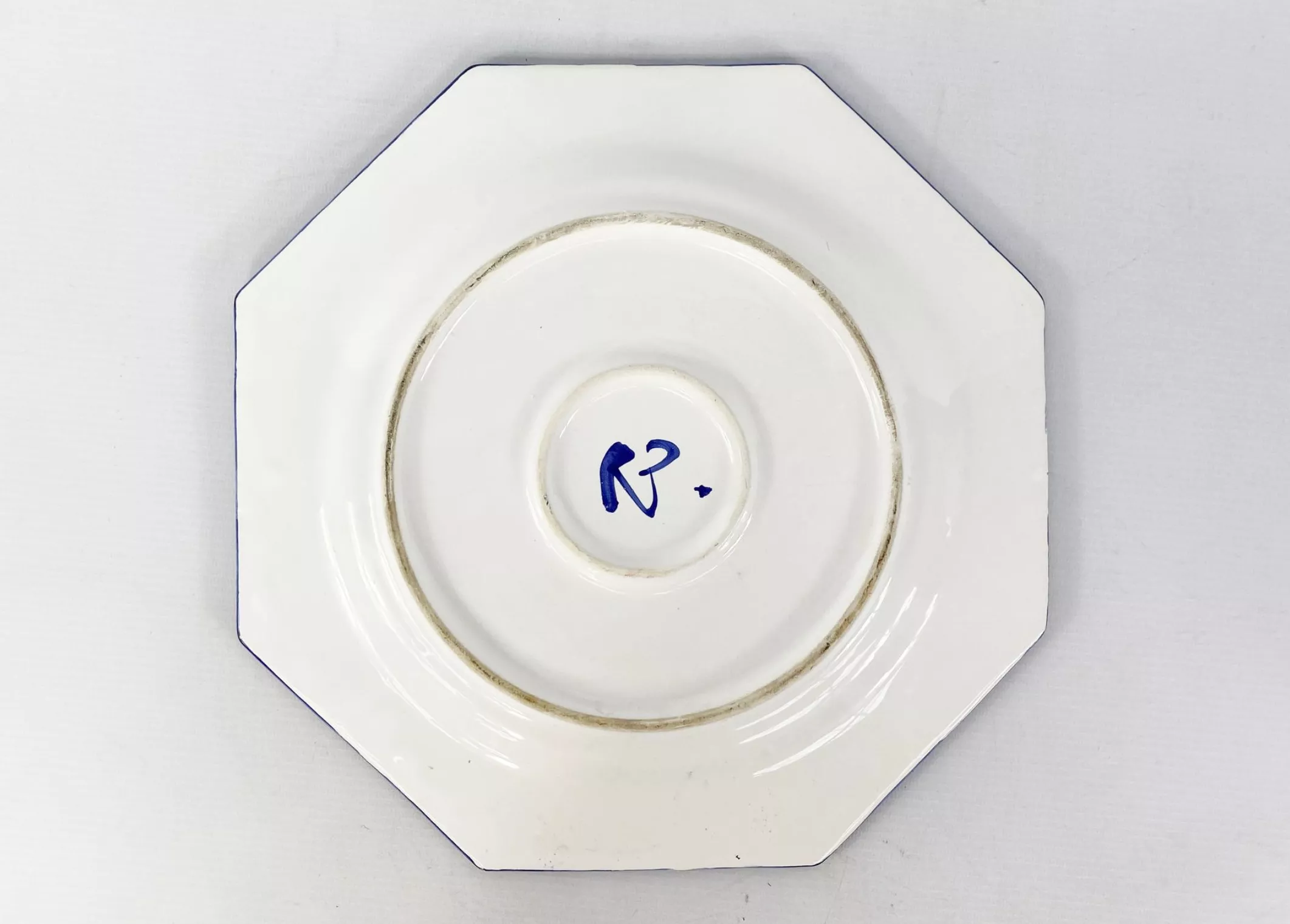
Recognizing Robert Picault's signature
Not all objects produced by Robert Picualt are signed, or may be signed differently depending on the period. Moreover, copies do exist, which is why it's important to appraise your work.
Knowing the value of a work
If you happen to own a work by or after Robert Picault, don't hesitate to request a free appraisal using our form on our website.
A member of our team of experts and certified auctioneers will contact you promptly to provide you with an estimate of the market value of your work, as well as ad hoc information about it.
If you are considering selling your work, you will also be accompanied by our specialists in order to benefit from alternatives for selling it at the best possible price, taking into account market inclinations.
Estimate in less than 24h
Discover in the same theme

Rating and value of François Raty's paintings and ceramics
François Raty is a talented and innovative contemporary artist who has produced works that are sought-after and quoted on the auction market.
Learn more >

Rating and value of paintings and drawings by Édouard Vuilla...
Édouard Vuillard is a 20th-century Nabi and Japonist painter. He produced many paintings with a high auction value.
Learn more >

Christian Liaigre's furniture, armchairs and lighting price...
Christian Liaigre is a twentieth-century designer and decorator whose furniture is highly prized at auction.
Learn more >
Similar works sold at auction

Estimated 2.000 - 4.000 €
PABLO PICASSO (1881-1973) ATELIER MADOURA " Profil de femme n° 67 " Round plate.

Estimated 500 - 800€
Pierre Adrien Dalpayrat (1844-1910), ceramic mask

Estimated 18.000 - 20.000
PICASSO Pablo (after, 1881-1973) MADOURA (ceramist, publisher) "Femme du barbu" turned pitcher

Estimated 1.500 - 3.000
Robert PICAULT (1919-2000), Large service in glazed earthenware with geometric decorations

Estimated 2.000 - 3.000
Pablo PICASSO (1881-1973) MADOURA Service Black face, A plate

Estimated 3.000 - 5.000
Georges JOUVE (1910-1964) Free-form bowl, circa 1955. Black glazed ceramic proof

Secure site, anonymity preserved

Auctioneer approved by the State

Free and certified estimates
Frequently asked questions
-
Who is Robert Picault, and what is his artistic background?Robert Picault (1919–2000) was a French ceramic artist rooted in the Mediterranean tradition who settled in Vallauris in 1945. Close to Picasso, he developed a distinctive style based on simplified geometric motifs (herringbones, spirals, waves) drawn with copper and manganese oxides on a white or green background. His work embodies an accessible and joyful modernity, straddling the line between craftsmanship and commercial production, and remains emblematic of postwar French ceramics.
-
What is the price range for Robert Picault's ceramics?Robert Picault’s ceramic works sell for between €20 and €9,000; this range reflects variations in technique, size, complexity, and the condition of each piece. In 2022, a ceramic bowl titled “Fruitier” exceeded its estimate, selling for €9,000, even though it had been estimated at between €800 and €1,200.
-
How can you authenticate a work by Robert Picault?To authenticate a Robert Picault ceramic piece, we recommend that you request a free appraisal from Auctie's using our online form. Our state-certified experts and auctioneers will examine your piece and provide you with an accurate estimate within 48 hours, with no obligation. This step is particularly important because not all of Picault’s pieces are signed, and copies do exist.
-
Is this a good time to sell a ceramic piece by Robert Picault?Yes, now is a good time to sell a piece of Robert Picault’s ceramics. His works are particularly sought after by French and European collectors, and the market for 20th-century art ceramics remains vibrant. Interest in this type of postwar utilitarian and decorative piece has grown in recent years.
-
How does the appraisal and sale process work at Auctie's?The appraisal is free and non-binding: simply submit your artwork via our online form, and an expert will contact you and provide you with an accurate appraisal within 48 hours. If you decide to sell, our specialists will guide you every step of the way, from the appraisal to the auction, and offer you the best options to achieve the highest possible price based on current market trends.
