



Rating and value of paintings by Amédée Ozenfant

Key takeaways
- Amédée Ozenfant, a major Cubist and Purist artist who co-founded the movement in 1918 with Le Corbusier, fetches prices ranging from €20 to €756,130 at auction.
- His painting "La Source: Woman with a Pitcher" (1917) sold for €756,130 in 2024, demonstrating the significantly higher value of signed paintings compared to prints and drawings.
- Ozenfant developed a rational and minimalist style characterized by the geometric simplification of forms, the harmony of volumes, and the rejection of excessive ornamentation to express a “new clarity.”
If you own a work by or based on the artist Amédée Ozenfant and would like to know its value, our state-approved experts and auctioneers will guide you.
Our specialists will carry out a free appraisal of your work, and provide you with an accurate estimate of its value on the current market.
Then, if you wish to sell your work, we will direct you to the best possible arrangement to obtain the optimum price.
Rating and value of the artist
A major cubist and purist artist, Amédée Ozenfant is highly prized in auction rooms. Highly appreciated and sought after by collectors, the artist is a sure bet on the market.
At auction, the price at which works sell ranges from €20 to €756,130, a considerable delta but one that speaks volumes about the value that can be attributed to the artist's works.
A painting by Amédée Ozenfant can fetch hundreds of thousands of euros at the hammer, as evidenced by his painting La Source : femme au broc, dating from 1917 sold for €756,130 in 2024, whereas it was estimated at between €567,000 and €756,130.
Order of value from the most basic to the most prestigious
Technique used | Result |
|---|---|
Estamp - multiple | From €20 to €3,800 |
Drawing - watercolor | From €10 to €242,000 |
Painting | From €840 to €756,130 |
Estimate in less than 24h
Style and technique of Amédée Ozenfant
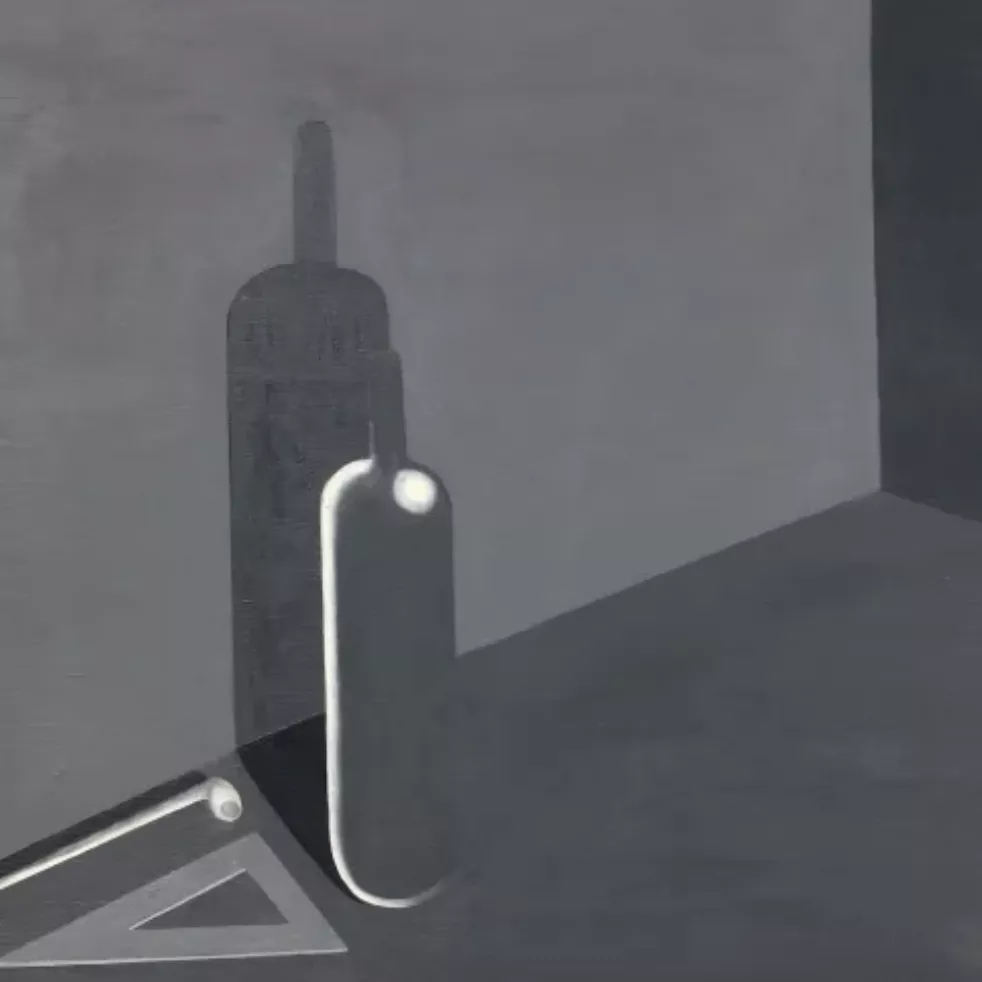
In the 1910s, Amédée Ozenfant, through his participation in the Cubist movement, developed a style in which the rigor of deconstruction blended with an aesthetic quest for unity and harmony.
His technical approach, marked by a clear desire for synthesis, favors a reintegration of forms and volumes into a rational architecture, where each line, each plane, blends into a subtle balance.
Ozenfant adopts an analytical approach that consists in deconstructing reality to restore a purer interpretation, without neglecting the visual aspect of the work.
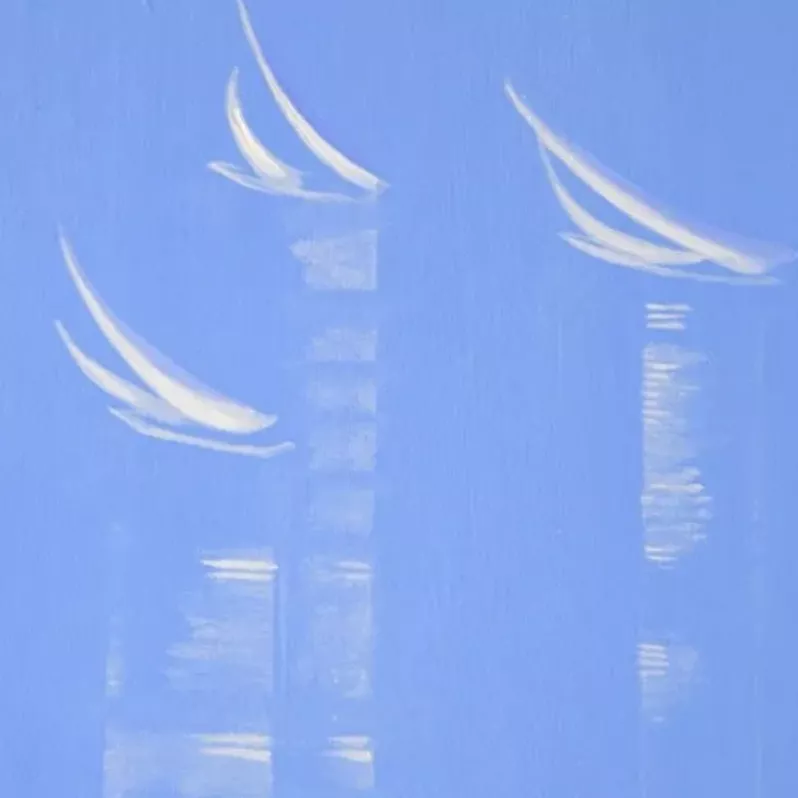
Thus, he turns away from the pure art of Cubism to bring out a more precise, ordered version of representation: plasticity becomes his main objective. Surfaces are sharp, volumes clearly defined, colors often reduced to simple, almost cold tones, in a desire to return to the very essence of things.
Through his methodical, structured approach, he sought to restore Cubism's analytical character while opening it up to a new dimension of elegance and clarity. The treatment of objects, reduced to their basic geometric forms, displays this desire for rationalization that becomes the signature of his approach.
In this search for a "new clarity", Ozenfant also adopts a singular relationship to drawing, favoring a precise, almost graphic line that gives his works an almost architectural quality.
In this, he does not hesitate to break with the chromatic exuberance of Fauvism to re-establish a constructed harmony, an ordered vision of reality stripped of the superfluous, thus heralding a landmark development in the evolution of Cubism.
The life of Amédée Ozenfant
Amédée Ozenfant was born into a modest family in Saint-Quentin, Aisne, in 1886. It was in this context that the artist began his studies at the École des Beaux-Arts in Paris, where he was introduced to a style of painting marked by a taste for order and structure.
From his earliest works, Ozenfant moved away from academic idealism to explore a more radical plastic vocabulary, influenced by the emergence of Cubism.
It was in 1918 that he founded, with Le Corbusier and Charlotte Perriand, the purist movement, which sought to simplify forms, reduce them to their geometric essence and free themselves from the decorative excesses of Impressionism and Fauvism.
Through this approach, he claimed an art of clarity, a form of aesthetic rationalism that stood in direct opposition to the emotional outbursts of earlier art.
The break with ornamental and subjective styles became his hobbyhorse, and his painting then unfolded within a strictly constructed framework.
Ozenfant not only adopted the Cubist vocabulary, but orchestrated it in a methodical approach in which simplicity, harmony and purity of form took center stage.
This return to a rationalist vision of art runs through his entire career, right up to his death in 1966, establishing Ozenfant as a defining figure of modernity.
Through his commitment and thoughtfulness, he marked an era by giving cubism a new impetus, a new direction that would echo throughout the XXᵉ century.
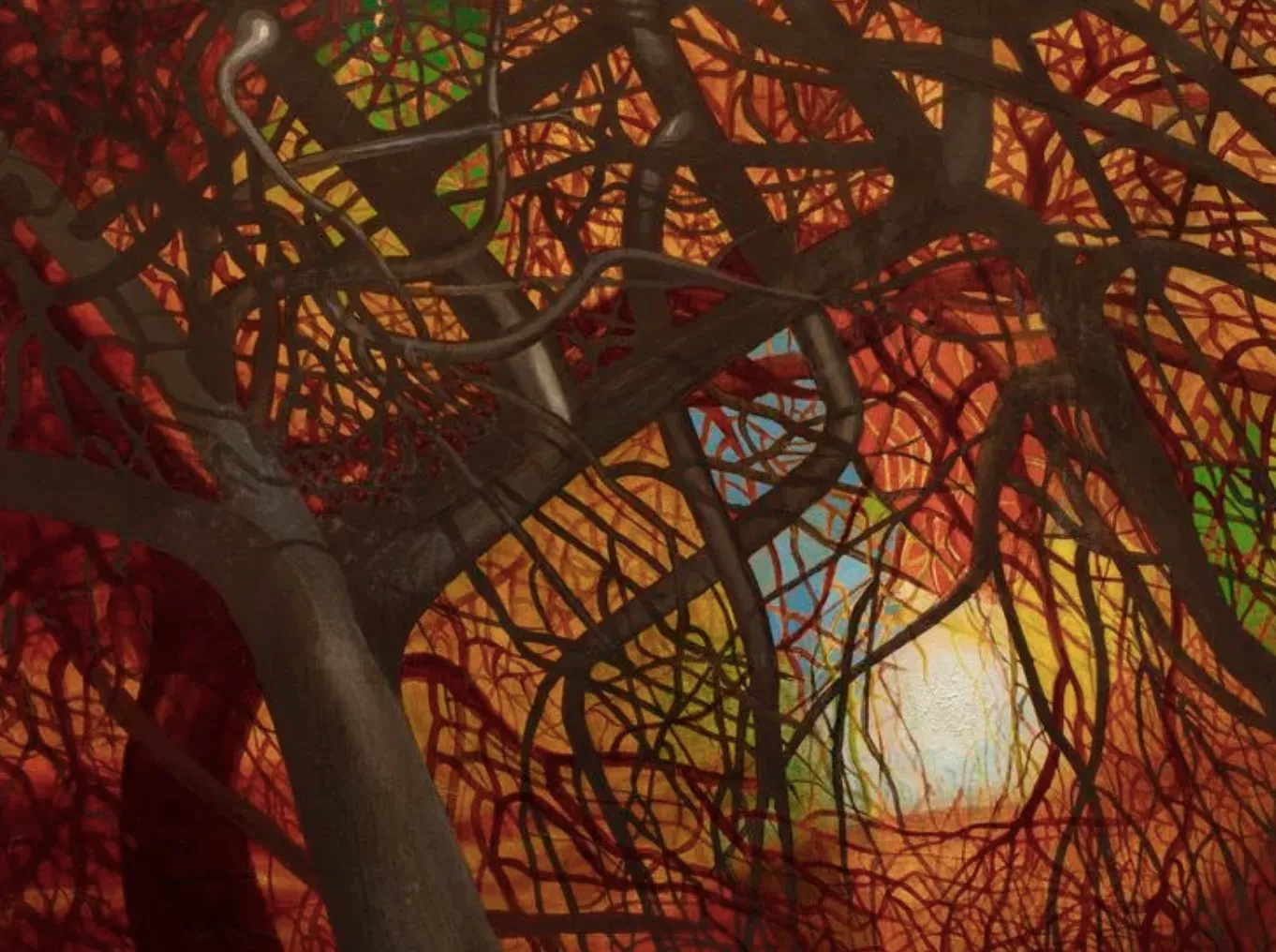
Focus on La nature au compotier, Amédée Ozenfant, 1922
In La Nature morte au compotier (1922), Ozenfant deploys a rigorous vision of object and space, marked by adherence to his purist ideal.
Through simplified geometric forms, the artist composes a scene where the elements, arranged with almost architectural precision, integrate in perfect balance.
The use of light and shadow, almost non-existent or subtly suggested, serves as a foundation for the construction of the canvas, placing the emphasis on structure rather than the illusion of reality.
The volumes are treated as autonomous entities, responding to each other without emotional or pictorial interference.
Ozenfant, true to his aesthetic, favors warm tones and restrained colors, avoiding dramatic bursts or contrasts.
This choice reinforces the idea of clarity and purity he championed in the purist movement. This painting is the expression of a rationality that aims to capture the very essence of nature, not in its realistic representation but in its logical construction.
Objects are treated not just as isolated forms but as elements participating in a strict organization of space, an organization that translates the ideal of a world governed by the harmony and simplicity of elemental forms.
The work thus becomes a manifesto of Ozenfant's desire to transpose the vision of art into a purified language, stripped of all subjectivity.
In this work, the artist does not seek to retranscribe an external reality, but to draw out its hidden order, in an approach that places art at the service of rational thought and formal beauty.
The imprint of Amédée Ozenfant
Amédée Ozenfant, through his relentless quest for rational, pure art, left an indelible mark on the evolution of modern art, particularly through the purist movement he founded with Le Corbusier in 1918.
This radical commitment to a simplification of form, devoid of excessive ornament, was a direct response to the exuberance of Fauvism and the subjective drifts of Post-Impressionism.
The artist imposes a clear vision, in which the object is reduced to its essential lines, its primary volumes, inscribing in the canvas a methodical organization of space.
This return to geometry, far from being limited to a mere fashion, is transformed into a language in its own right, which irrigates all the artistic practices of his time.
Through this quest for purity, Ozenfant positioned himself as a precursor of an ordered abstraction that would influence future generations, from the pioneers of Constructivism to the artists of Minimal Art.
As an art theorist, Ozenfant also asserts himself as a central figure of modernity, redefining art as a tool for intellectual reflection, not simply an emotional act.
His work, a break with academism and past fashions, places Ozenfant in the line of the great reformers of his time, managing to link strict formal research with deeper reflection on the place of art in a changing world.
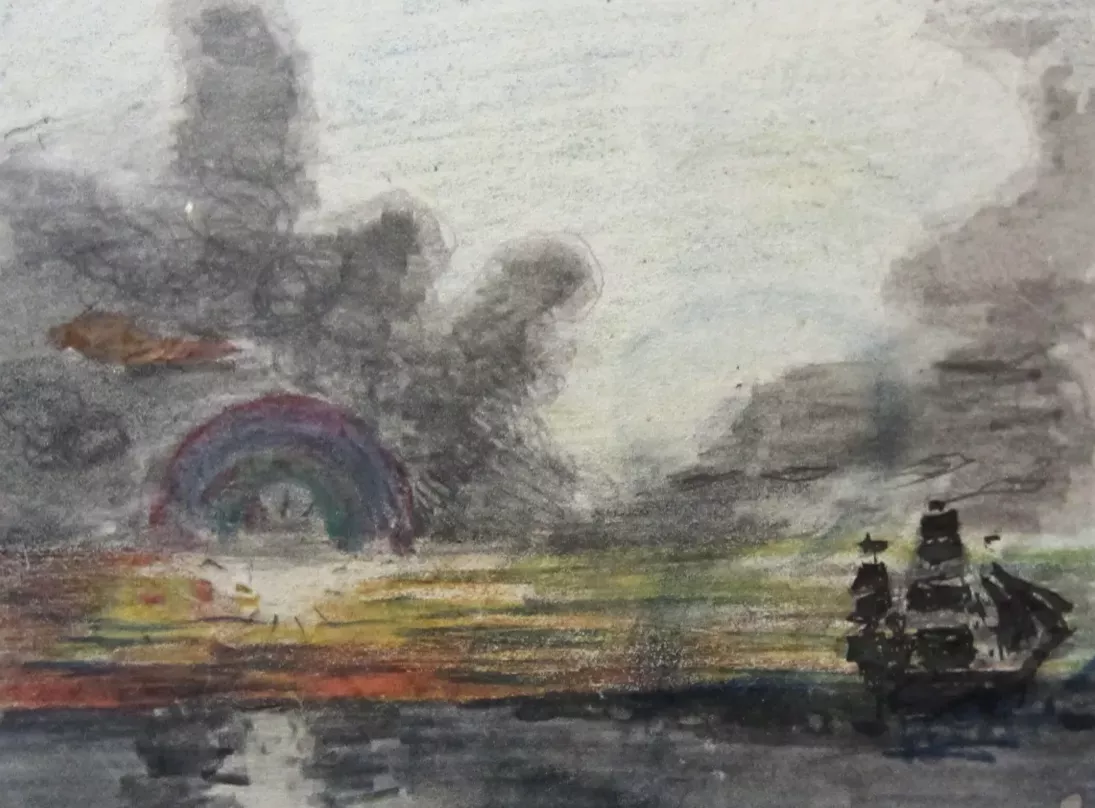
Both stylistically close to Cubists like Léopold Gottilieb or the brothers Villon, then purists, Ozenfant's work follows in a completely unique wake that has not ceased to amaze the art world.
The stylistic influences of Amédée Ozenfant
Amédée Ozenfant, in his stylistic development, feeds mainly on the idealism of cubism, but gradually detaches himself from its most fragmented aspects to purify form and expression.
His dialogue with the works of Picasso and Braque, in the early years of the XXᵉ century, marks a fundamental step in his quest to rationalize pictorial elements.
Nevertheless, he freed himself from analytical cubism to strive for an ideal of clarity, in which the simplification of forms and the harmony of volumes play a central role.
Through his rapprochement with Le Corbusier, he drew a strong influence from architectural thought, directing his practice towards a quasi-architectural vision of composition.
The principles of proportion, balance and structure, essential to the design of a space, are interwoven into his painting, which he also wants to be constructed and rational.
The deepening of his links with classical art, particularly Greek statuary, can also be seen in his treatment of geometric forms and his respect for a certain majesty of volumes.
Finally, his rejection of decorative art and subjective emotion leads him to cultivate a cold, almost austere aesthetic, where the quest for purity is based on reflection that is more intellectual than sensory.
Ozenfant, through this constant evolution, thus builds a bridge between the cubism of his origins and a more refined formalism, which would set a trend and influence several generations of artists and theorists.
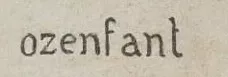
His signature
Not all Amédée Ozenfant's works are signed.
Although there are variations, here's a first example of his signature:
Expertise your property
If you own a work by Amédée Ozenfant, don't hesitate to request a free appraisal by filling in our online form.
A member of our team of experts and licensed auctioneers will contact you to provide an estimate of the market value of your work.
If you are considering selling your work, our specialists will also guide you through the various alternatives available to obtain the best possible price, taking into account market trends and the specific features of each work.
Estimate in less than 24h
Discover in the same theme

Rating and value of Amedeo Modigliani's works
Amedeo Modigliani is a 20th-century painter, draughtsman and sculptor. The value of his works may surprise you!
Learn more >

Rating and value of sculptures, paintings and drawings by Ar...
Aristide Maillol is a 20th-century sculptor and painter. He produced many works that are highly valued at auction.
Learn more >

Rating and value of vases and ceramics by Gabriel Argy Rouss...
Gabriel Argy Rousseau is a French ceramist and glassmaker who has produced works that are highly regarded and valued at auction.
Learn more >
Other similar paintings sold at auction

Estimated 4.000 - 6.000
Pierre HODÉ (1889-1942) Vue de Port, Oil on canvas

Estimated 2.000 - 4.000
Pierre HODÉ (1889-1942) "Étude pour l'Usine" Oil on canvas

Estimated 1.000 - 2.000
Raymond GUERRIER (1920-2002), Composition I, Oil on canvas

Estimated 5.000 - 8.000
Claude VENARD (1913-1994), Landscape with the Eiffel Tower, Oil on canvas.

Estimated 6.000 - 8.000
Vera MOLNAR (1924-2023), Extravagant Line A, Acrylic on canvas

Estimated 300 - 500
Georges DAYEZ (1907-1991) The letter Oil on canvas

Secure site, anonymity preserved

Auctioneer approved by the State

Free and certified estimates
Frequently asked questions
-
Who was Amédée Ozenfant, and what role did he play in the history of modern art?Amédée Ozenfant (1886–1966) was a leading Cubist and Purist artist who founded the Purist movement in 1918 with Le Corbusier. He distinguished himself through his quest for a rational and pure art, simplifying geometric forms and rejecting the exuberance of Fauvism to establish a constructed and orderly harmony. His approach profoundly influenced the evolution of Cubism and subsequent generations of 20th-century artists.
-
What is the price range for Amédée Ozenfant's works at auction?Auction prices for Ozenfant’s works vary considerably depending on the medium and quality: prints sell for between €20 and €3,800, drawings and watercolors between €10 and €242,000, and paintings between €840 and over €756,000. His major painting, “La Source: Woman with a Pitcher” (1917), sold for €756,130 in 2024, illustrating the potential of his leading works.
-
How do I have a work by Amédée Ozenfant authenticated?To authenticate a work by Ozenfant, we recommend that you request a free appraisal from Auctie's by filling out our online form. A certified expert or auctioneer will examine your work and provide you with an accurate, no-obligation estimate within 48 hours.
-
Is this the right time to sell a work by Amédée Ozenfant?Yes, now is a good time to sell a work by Ozenfant. The artist is highly sought after at auction and greatly admired by collectors, establishing himself as a safe bet in the modern art market. Demand remains strong for works by this major figure of the Cubist and Purist movements.
-
How does the appraisal and sale of a work of art take place at Auctie's?Auctie's supports you every step of the way: after a free, no-obligation appraisal by our experts, we guide you toward the optimal sales strategy to achieve the best possible price. Our state-certified auctioneers will manage your artwork through the entire auction process, taking into account market trends and the unique characteristics of your piece.
