



Rating and value of paintings by Vilmos Huszar

Key takeaways
- Hungarian abstract painter (1884–1960), co-founder of the De Stijl movement, whose works sell for between €30 and €162,900 at auction.
- His geometric compositions, which use primary colors, vertical and horizontal lines, and simple shapes, form rational constructions devoid of narrative or depth.
- His major works from 1917–1925 continue to attract sustained interest from collectors of geometric abstraction, particularly his paintings, drawings, and graphic designs.
If you own a work by or based on the artist Vilmos Huszar and would like to know its value, our state-approved experts and auctioneers will guide you.
Our specialists will carry out a free appraisal of your work, and provide you with a precise estimate of its value on the current market.
Then, if you wish to sell your work, we will direct you to the best possible arrangement to obtain the optimum price.
Artist's rating and value
Hungarian abstract painter Vilmos Huszar, who is fairly well known in Europe, achieved great fame during his lifetime. Today, his works are highly prized on the market, particularly by collectors of his school.
The artist therefore maintains a stable and lively quotation, with his creations being sold for between €30 and €162,900 on the auction market.
A work by Huszar can sell for more than a hundred thousand euros, as demonstrated by his oil on canvas Abstract composition, dating from 1918, sold for €162,900 in 2017, whereas it was estimated at between €8,600 and €12,900.
Order of value from the most basic to the most prestigious
Technique used | Result |
|---|---|
Sculpture - volume | From €320 to €2,300 |
Estamp - multiple | From €30 to €3,100 |
Drawing - watercolor | From 280 to 30 900€ |
Painting | From 320 to 162 900€ |
Estimate in less than 24h
The artist's works and style
In Vilmos Huszár's painting, structure retains this function of field organization, form distribution, rhythmic stability.
But it no longer relies on figuration or anecdote: it's based on geometric modules, clean flat tints, bold lines, arranged according to a logic of visual tension.
Color, pure, unadulterated, laid down without modeling, becomes an active element of composition, articulating planes, introducing movement. Drawing disappears, replaced by a system of axes and internal relationships that guide the eye without lingering.
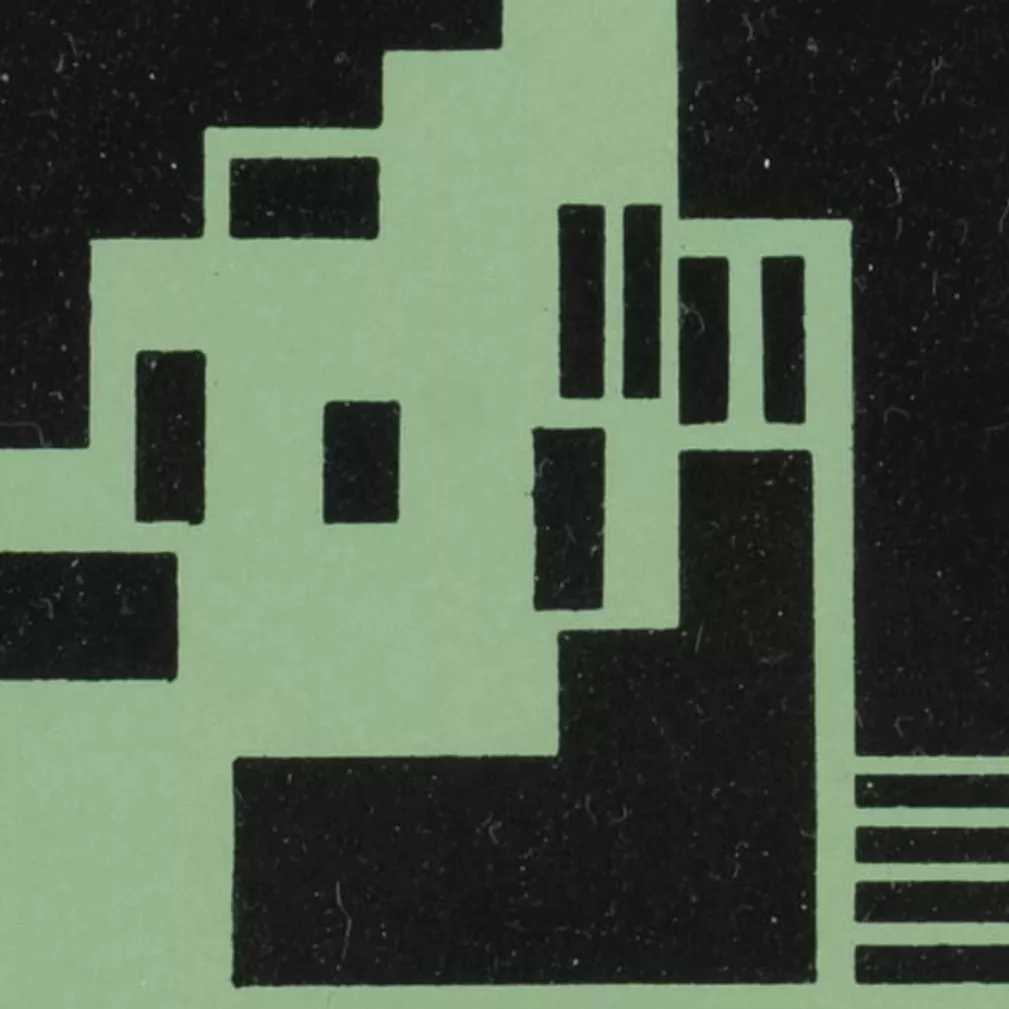
In his neoplastic paintings, influenced by De Stijl, the surface is no longer the site of representation, but of construction. No detail, no depth, no texture: everything is reduced to simple forms, to calculated balances.
This formal reduction is found in Composition (fig. 1), where the black grid, the colored rectangles, the whites left empty compose a field without hierarchy, without center, without subject. The gaze circulates horizontally and vertically, never stopped, never focused.
Color - red, blue, yellow - doesn't express an emotion, it establishes a presence, defines a position in space. Each element exists through its relationship to the others, in a strict system, where the entire surface is activated.
The plane becomes autonomous, it supports nothing, it frames nothing: it is the very object of the painting. Withdrawn from both narrative and illusion, Vilmos Huszár's technique affirms a painting without depth or figure, founded on the equality of forms, on organized abstraction, on construction as finality.
The life of Vilmos Huszar
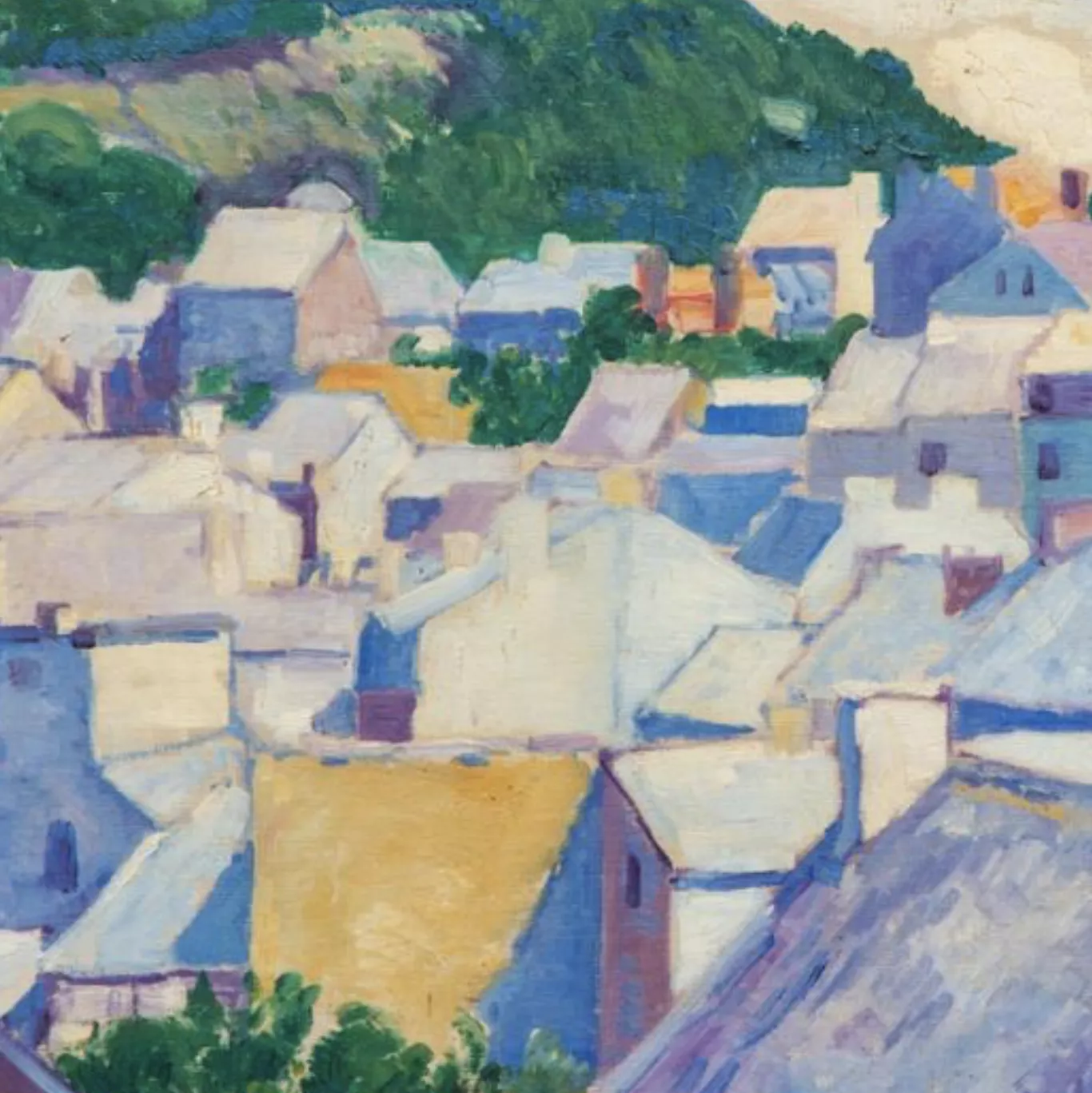
Vilmos Huszar (1884 - 1960) was a Hungarian artist born in Budapest, who was linked to the De Stijl movement for part of his career.
He trained at the Budapest School of Applied Arts, and at the Hollosy studio in Munich. In 1905, he left Hungary for the Netherlands, where he produced his first paintings, which were strongly influenced by the realist movement and the work of Van Gogh.
Huszar then tested Nabi painting (cf Ker-Xavier Roussel or Maurice Denis for his preprésentants in France). In the early 1910s, he worked mainly for Dutch high society, for whom he produced portraits, as well as a number of stained-glass windows. Under the influence of the Parisian avant-gardes, the shades of color he used in his works became simpler.
In 1917, he met Bart van der Leck, who introduced him to Neoplasticism. He then worked with colored surfaces as well as two-dimensional space, and geometric shapes arranged vertically and horizontally.
Huszar thus participated in the founding of the De Stijl movement, along with Piet Mondrian and Theo van Doesburg. This movement combines sculpture, design and painting, and consists of reducing compositions to primary colors (+ black and white) and vertical and horizontal lines.
The artist thus founded the magazine De Stijl, with van Doesburg. He designed the issue's first cover. He went on to do a great deal of graphic work, typography and advertising illustration, and was commissioned to do so.
However, this movement only suited him for a short time, as he left it in 1923 - in order to produce more figurative paintings once again. Remaining in the Netherlands, he worked after De Stijl in Hierden, where he worked in industrial and commercial graphics.
He then returned to landscape paintings and the search for a pure, non-objective language.
Focus on Composition en rouge, bleu et jaune, Georges Vantongerloo
In Composition en rouge, bleu et jaune (fig. 1), the surface retains this property of measured balance, visual clarity, restrained tension. But it is no longer based on frontal symmetry or an asserted center: it is constructed by internal relationships, by displacements, by interruptions.
Black lines, straightforward, vertical and horizontal, do not delimit a space; they give it rhythm, fragment it, impose an order. Solid colors - red, blue, yellow - don't fill: they occupy, they balance, they punctuate. White is not a void: it is an active zone, a breathing field, a counterpoint.
There is no figure, no background, no depth. Every element is equivalent, every form stable, every color laid down without variation. The eye circulates without stopping, gliding from one edge to the other, according to a logic of sliding and equivalence.
The composition seeks neither to seduce nor to express: it exposes a structure, it maintains a balance. Thus, removed from any external reference, the image asserts itself as an autonomous object, without narrative, without center, without outside. A painting of position, not representation.
Vilmos Huzsàr's imprint on his period
In Vilmos Huszár's work, composition retains this function of rational construction, of ordering forms, of visual stability. But it is no longer based on subject or figuration: it is articulated around a geometric system, strict relationships between lines, colors and surfaces.
Within the De Stijl movement, of which he was a founder, Huszár developed a painting without anecdote, without motif, without hierarchy. Each element is reduced to its function: the line organizes, the color balances, the plane activates. The image is no longer a place of representation, it becomes a field of pure relationships.
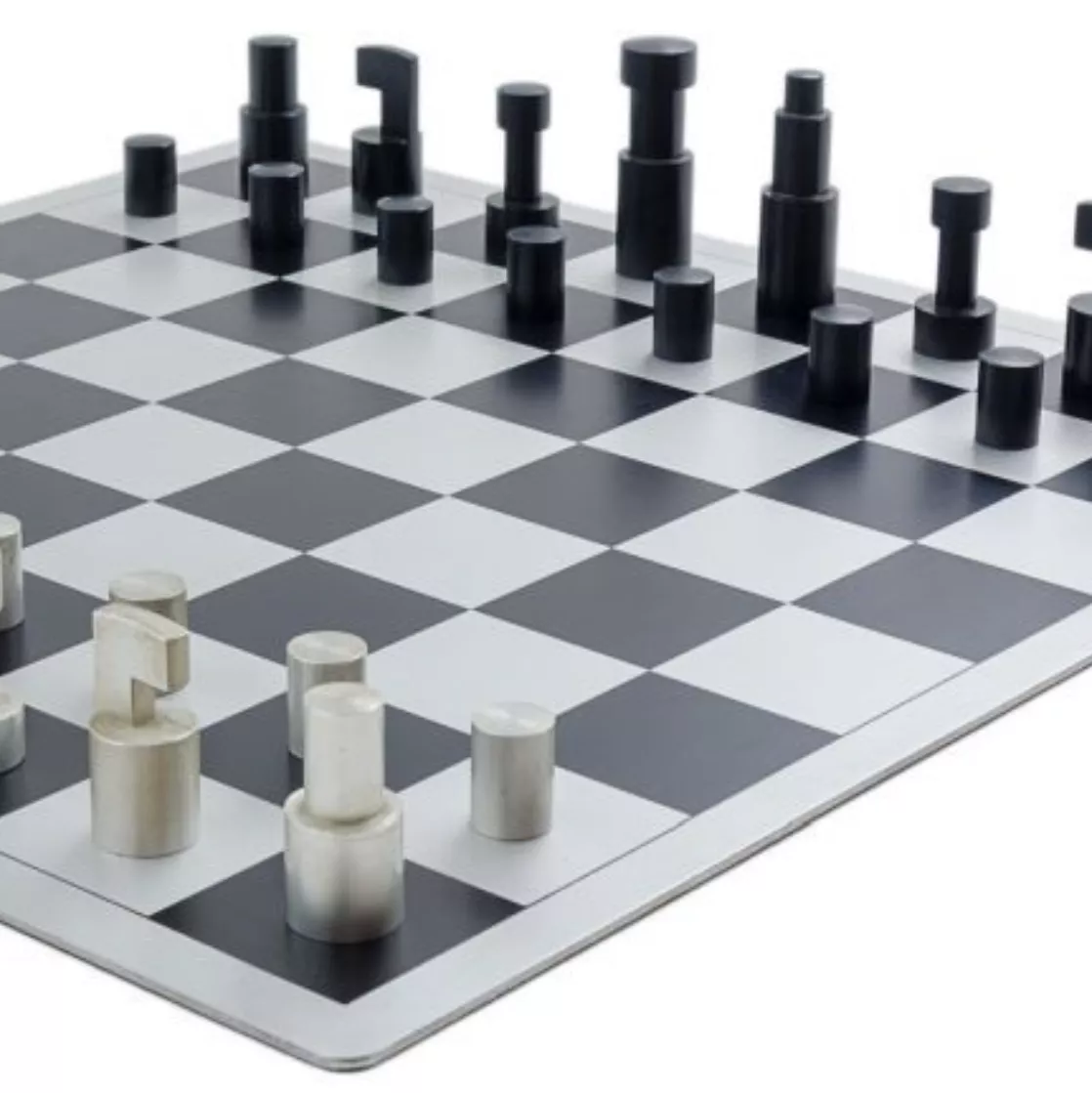
This conception goes beyond the frame of the painting. It applies to graphic space, to the object, to architecture, according to a logic of plastic unification.
Huszár's influence, though more discreet than that of Mondrian or Van Doesburg, is part of the same refusal of subjectivity, in the same search for a universal language.
Thus, removed from both individual expression and the illusionist tradition, his imprint on his period is exerted in rigor, formal coherence, clarity of structure - a painting thought of as construction, without narrative, without center, without outside.
The success of Vilmos Huszar's works at auction
In the art market, Vilmos Huszár's work retains this value of formal rigor, plastic clarity, historical inscription in the avant-gardes.
But it is not distinguished by the rarity of an isolated gesture: it stands out by its participation in a whole, by its role in the formation of the De Stijl language, by the precision of its implementation.
At auction, his works - paintings, drawings, graphic models - meet with sustained interest, driven by the gradual recognition of his place in the neo-plastic movement. Pieces dating from the years 1917-1925, when they appear on the market, achieve solid results, often reinforced by the rarity of his major compositions.
Collectors, attentive to the history of geometric abstraction, are looking for works both inscribed in the De Stijl system and marked by Huszár's own flexibility: a freer use of the curve, attention to rhythm, sensitivity to the medium.
Preparatory drawings, printed studies or posters are also sought after, as evidence of his interdisciplinary work.
So, removed from spectacular speculation but buoyed by the solidity of his formal heritage, Huszár's success at auction rests on the legibility of his work, its place in the history of modernism, and the constancy of his plastic demands.
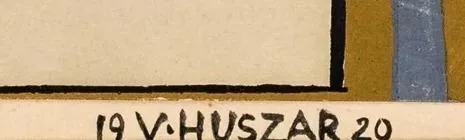
His signature
Not all of Vilmos Huszàr's works are signed.
Although there are variations, here is a first example of his signature:
Expertise your property
If you own a work by Vilmos Huszàr, don't hesitate to request a free appraisal by filling in our online form.
A member of our team of experts and certified auctioneers will contact you to provide an estimate of the market value of your work.
If you are considering selling your work, our specialists will also guide you through the various alternatives available to obtain the best possible price, taking into account market trends and the specific features of each work.
Estimate in less than 24h
Discover in the same theme

Rating and value of paintings by Nikolai Sapunov
Nikolai Sapunov is a twentieth-century Russian Symbolist painter whose paintings are highly valued at auction.
Learn more >

Rating and value of animal sculptures and bronzes by André V...
André Vincent Becquerel is a twentieth-century animal sculptor who produced a large number of bronzes with high market liquidity.
Learn more >

Rating and value of drawings and paintings by Blanche August...
Blanche Augustine Camus is a French Neo-Impressionist artist who has produced numerous works that are highly valued and command high prices.
Learn more >
D'autres tableaux abstraits vendus aux enchères

Estimated 2.000 - 4.000
Serge POLIAKOFF (1900-1969), Composition en rouge et bleu. 1965, Lithograph

Estimated Between €5,000 and €8,000
Jean MIOTTE (1926-2016), acrylic on canvas

Estimated 3.000 - 5.000
Roberto MATTA (1911-2002), Composition, Gouache on canvas

Secure site, anonymity preserved

Auctioneer approved by the State

Free and certified estimates
Frequently asked questions
-
Who was Vilmos Huszar, and what was his role in the De Stijl movement?Vilmos Huszar (1884–1960) was a Hungarian abstract painter and a founder of the De Stijl movement in the Netherlands, alongside Piet Mondrian and Theo van Doesburg. He developed a geometric style of painting based on simple shapes, primary colors, and vertical and horizontal lines, before leaving the movement in 1923 to return to figurative art and landscape painting.
-
What are the price ranges for Vilmos Huszar's works, broken down by technique?Vilmos Huszar’s works sell for between €30 and €162,900, depending on the medium and rarity. Paintings command the highest auction prices (up to €162,900), while prints range from €30 to €3,100, drawings and watercolors from €280 to €30,900, and sculptures from €320 to €2,300.
-
How do I have a work by Vilmos Huszar appraised at Auctie's?Auctie's offers a free, no-obligation appraisal of your artwork: fill out the online form, and a certified expert or auctioneer will contact you to provide an accurate estimate of your item's market value—you'll receive a response within 48 hours.
-
Why is now the right time to sell a work by Vilmos Huszar?The market for Huszar’s works remains strong and is driven by growing recognition of his place in geometric abstraction and modernism. Works dated 1917–1925 continue to attract sustained interest from avant-garde collectors, with steady demand for his major compositions and interdisciplinary works.
-
How do I sell a work by Vilmos Huszar through Auctie's?After a free appraisal, Auctie's guides you through the best options for selling your artwork, taking into account market trends and the specific characteristics of your piece. The auction house supports you from the initial estimate through to the final sale to ensure you achieve the best possible price.
