



Rating and value of paintings by Bart van der Leck

Key takeaways
- Paintings by Bart van der Leck (1876–1958) sell for between €70 and €310,000, with works from the 1910s and 1920s being particularly sought after by collectors.
- His minimalist style combines pure color, geometry, and forms simplified to their essence, inspired by the De Stijl movement and influencing Piet Mondrian in particular.
- As a co-founder of the magazine *De Stijl* in 1917, he achieved an innovative synthesis between painting and architecture through various media: stained glass, ceramics, tapestry, and drawing.
If you own a work by or based on the work of artist Bart van der Leck and would like to know its value, our state-approved experts and auctioneers will guide you.
Our specialists will carry out a free appraisal of your work, and provide you with an accurate estimate of its value on the current market.
Then, should you wish to sell your work, we will direct you to the best possible arrangement to obtain the optimum price.
Artist's rating and value
In his lifetime, Bart van der Leck enjoyed great success and a high international rating that has not diminished today. His paintings and drawings produced in the 1910s and 1920s are the most highly prized and attract a great deal of interest from collectors.
The price at which they sell on the art market ranges from €70 to €310,000, a consequent delta but one that speaks volumes about the value that can be attributed to the artist's works.
A work by van der Leck can fetch hundreds of thousands of euros, as demonstrated by his painting Composition, dating from 1918, which sold for €310,000 in 2001, whereas it was estimated at between €140,000 and €220,000.
Order of value from the most basic to the most prestigious
Technique used | Result |
|---|---|
Upholstery | From €670 to €15,000 |
Ceramics | From €400 to €22,000 | Estamp - multiple | From €70 to €25,530 |
Drawing - watercolor | From €180 to €55,000 |
Painting | From €40 to €310,000 |
Estimate in less than 24h
The artist's style and technique
Bart van der Leck developed a refined style based on pure line and color. His work began in a Symbolist vein, marked by a Post-Impressionist influence, before evolving towards radical abstraction under the impetus of the De Stijl movement.
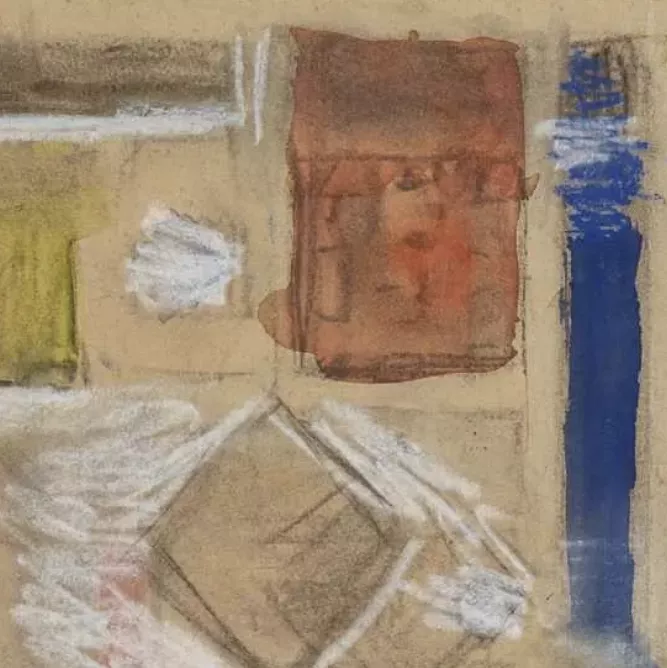
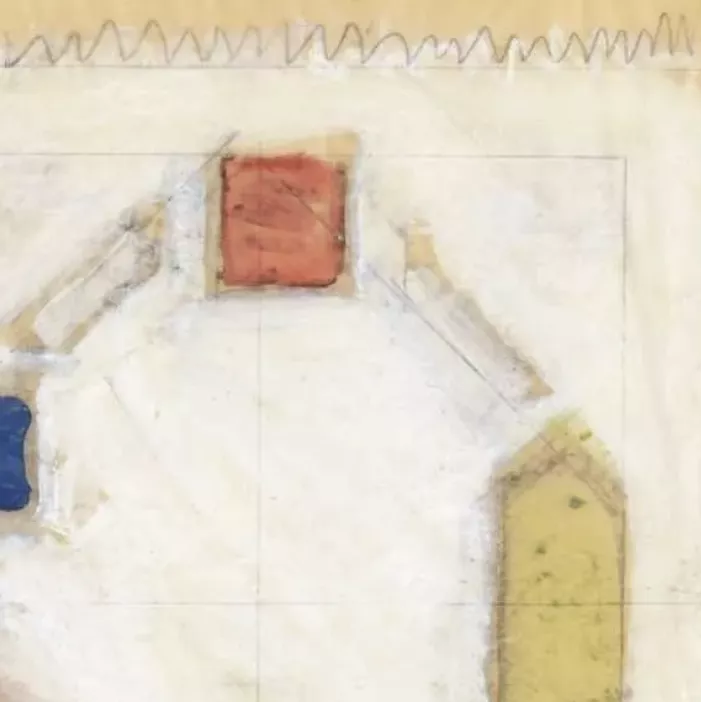
He simplifies forms down to the essentials, eliminating all superfluous detail to leave only flat tints of red, blue and yellow, delineated by sharp, clean contours.
His use of solid color recalls the aesthetics of stained glass, with a graphic clarity that sometimes evokes posters or modern typography.
While he shares with Piet Mondrian a quest for harmony based on geometry and rigorous composition, he nevertheless rejects strict orthogonality and retains a certain dynamism in the structure of the image.
His works, marked by a tension between rigorous construction and formal freedom, reveal a taste for balance without rigidity, where the fragmentation of the motif gives an impression of contained movement.
His approach, at the crossroads of painting and design, reflects a desire to bring art and industry into dialogue, as evidenced by his collaborations with architecture and the applied arts.
The life of Bart van der Leck
Genesis of his work
Bart van der Leck (1876-1958) was a Dutch abstract painter active in the 20th century. A member of the De Stijl group, he was stylistically very close to Piet Mondrian. However, his research did not necessarily follow the same lines throughout his work.
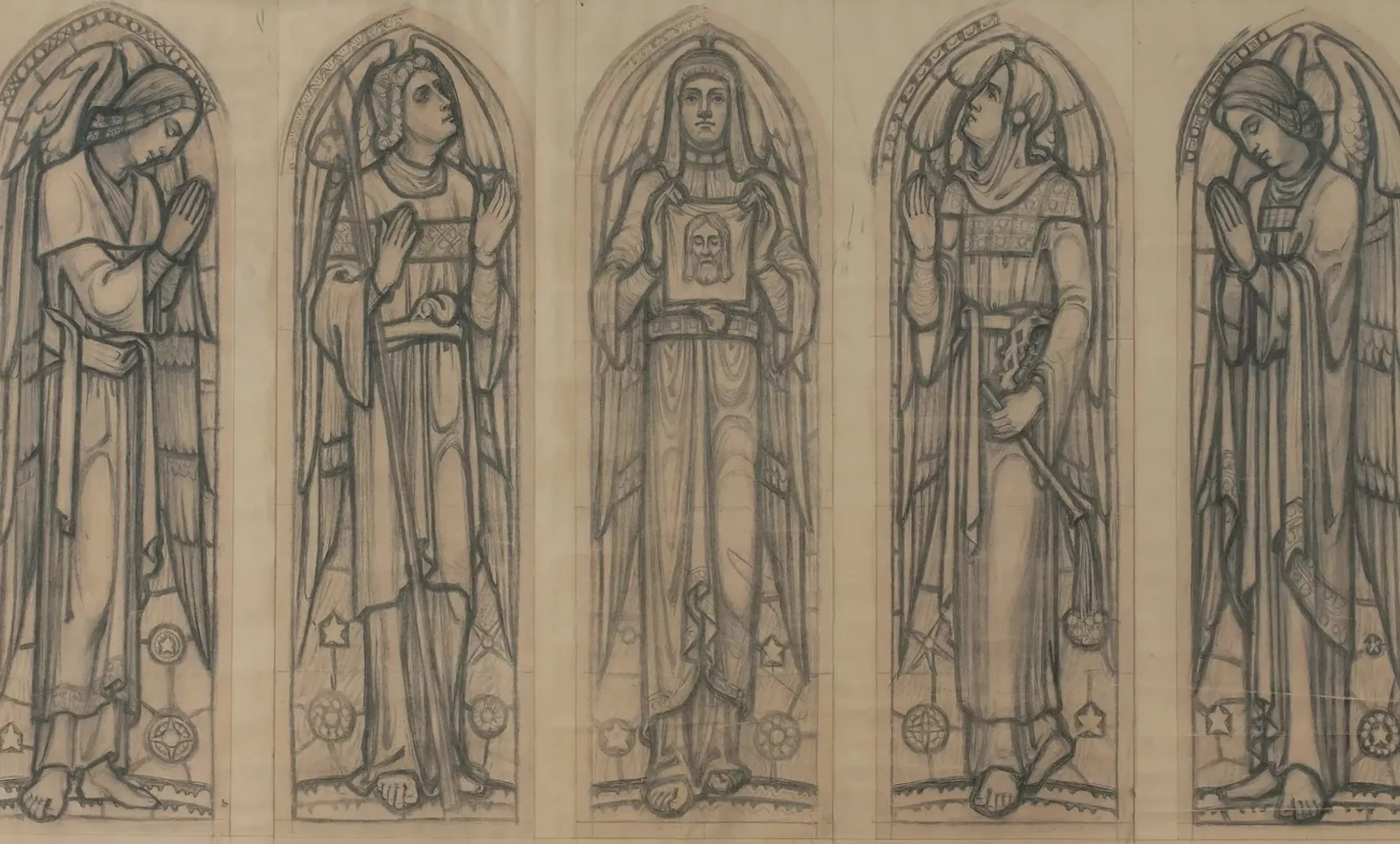
Born in Utrecht and from a working-class background, nothing predestined Van der Leck for a career as an abstract painter. He first studied glass painting - his first medium, quite unusual among abstract artists, was stained glass, which he worked on for at least eight years.
Eager to broaden his techniques and training, the artist then studied decorative arts in Amsterdam, in addition to perfecting his drawing skills. His meeting with Piet Klaarhamer, an architect and cabinetmaker, led to fairly lengthy collaborations in the field of decorative arts.
At the same time, he continued to work on stained glass, then in full swing in the Netherlands - the Dutch Church having just authorized the construction of neo-Gothic churches.
Initially influenced by ancient Egyptian iconography and motifs, but also by the European symbolists (for example, Odilon Redon, Félicien Rops or Pierre Puvis de Chavannes among the most famous).
Bart van der Leck then returned to his working-class roots, where he drew inspiration to construct his scenes and the composition of his paintings, also adding elements of the agricultural world.
He shares the desire of the Russian painters of the '10s and '20s to make art accessible to as many people as possible.
The development of abstraction in his work
In this, there's also a bit of Millet in Van der Leck, even if art history will remember more his abstract works. He soon found a patron in Hendricus Petrus Bremmer, a Dutch art critic of the period.
Faintly - it was in these same 1910s that Bart van der Leck already placed himself on the edge of abstraction, well ahead of his time, since postimpressionism had not said its last word and analytical cubism had only just been born.
Thanks to his connections in the architectural world, Bart van der Leck has the opportunity to meet the Kröller-Muller couple, collectors who commission him to design a stained-glass window for their company's headquarters.
The artist travels for a time to Spain and Algeria (some drawings circulating on the market still recount this trip).
The two canvases La Tempête and Le travail au port were to mark a turning point in his career, as they synthesized the plastic functions of painting and architecture.
Mondrian and the end of his career
It seems to have been Bart van der Leck who influenced Mondrian on the choice and use of primary colors in the arrangement of canvas with black and white, a combination he had been able to experiment with years earlier in architecture when furnishing his own home.
It was through Mondrian, however, that he met Theo van Doesburg. The three artists founded the De Stijl magazine in 1917, which van der Leck soon left following a disagreement with Doesburg. This is also why we don't necessarily think of van der Leck when we think of Mondrian.
However, Bart van der Leck's ambition was to establish a synthesis of painting and architecture, taking great care not to privilege painting in this work, and to treat both disciplines on an equal footing.
His research within abstraction ends with the canvas Composition, produced between 1918 and 1920, which operate a synthesis of the research he has carried out into abstract painting over the last fifteen years.
Then, from 1920 onwards, he returned to more figurative subjects, producing still lifes in particular, for which he used the lessons learned from his experiments with abstraction with regard to geometric forms.
Focus on Le Calavier, Bart van der Leck, 1916
With Le Cavalier, Bart van der Leck takes formal simplification to its paroxysm. The horse and rider are nothing more than silhouettes broken up into flat areas of red, blue and yellow, detached on a white background that accentuates the impression of purity.
The geometric shapes fit together with architectural precision, evoking a stained-glass composition in which each element is articulated according to a logic of controlled fragmentation.
The abstraction does not, however, remove the dynamics of the scene. The horse, reduced to a succession of stylized rectangles and curves, seems to move forward with restrained vigor, as if the movement were broken down into a series of colored planes.
The absence of modeling and traditional perspective reinforces the frontality of the painting, giving the figures an almost emblematic presence. Halfway between painting and design, Le Cavalier reflects this search for a universal visual language, where color and form suffice to structure the image.
Bart van der Leck's imprint on his period
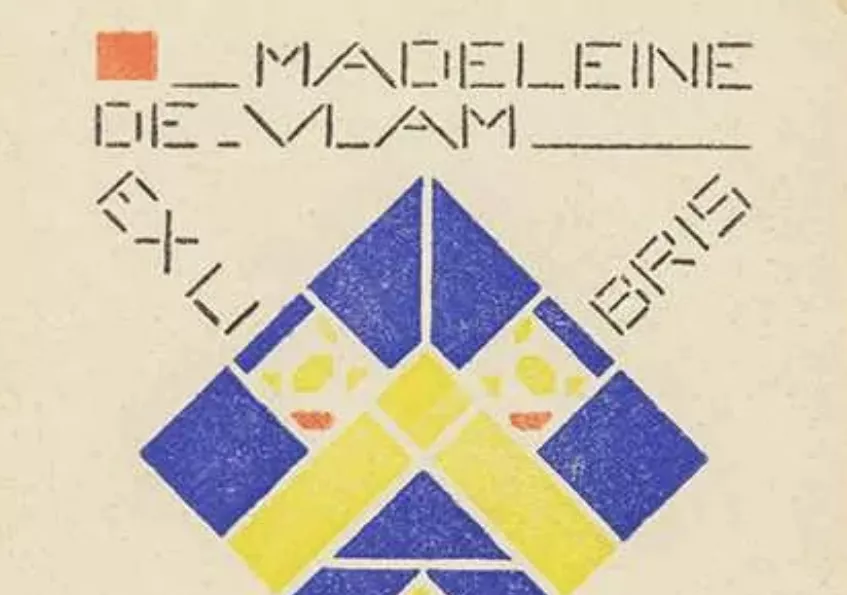
Bart van der Leck leaves behind an abundant and heterogeneous body of work, ranging from architecture and painting to tapestry, ceramics and drawing.
Van der Leck successfully researched the synthesis of painting and architecture, starting with stained glass - which may seem surprising, but is ultimately coherent, given that stained glass calls on paint and is then installed in a building (sacred or not, cf. the stained glass created for the Kröller-Mullers).
His art and research influenced Mondrian, and many other artists of his time. Van der Leck thus leaves a little-known but very important mark on the history of modern art.
Throughout his career, the painter enjoyed international success, exhibiting his works in numerous galleries and museums around the world. Today, his paintings can be found in prestigious public and private collections.
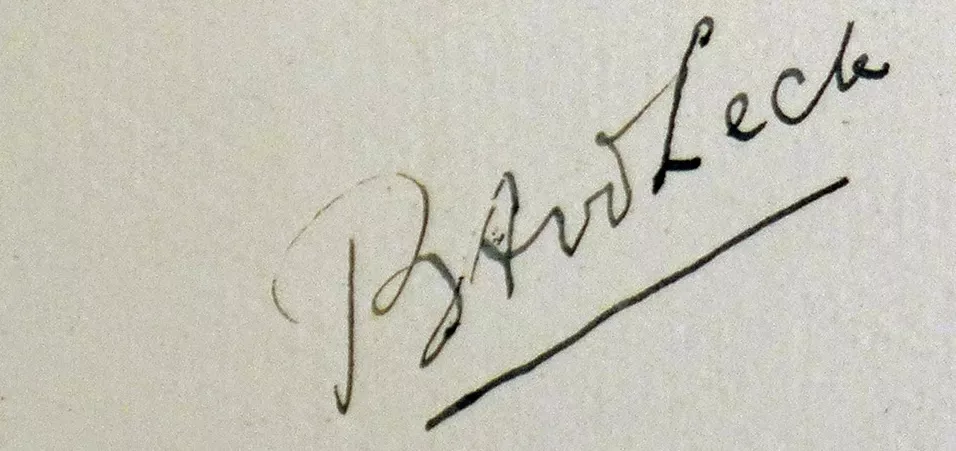
His signature
Although there are variations, here is a first example of his signature :
Expertise your property
If you happen to own a work by Bart van der Leck, request a free appraisal without further delay via our form on our website.
A member of our team will contact you promptly to provide you with an estimate of the value of your work, as well as ad hoc information about it.
If you are considering selling your work, you will also be accompanied by our specialists in order to benefit from alternatives for selling it at the best possible price.
.Estimate in less than 24h
Discover in the same theme

Rating and value of works, drawings, paintings by François L...
François Lembo is a ceramist and goldsmith whose mirrors are highly prized at auction. Estimated in 24h.
Learn more >

Rating and value of paintings by Ker-Xavier Roussel
Ker-Xavier Roussel was a Nabi artist of the early 20th century, whose oils on canvas and drawings are sought-after at auction.
Learn more >

Rating and value of paintings by Arnulf Rainer
Arnulf Rainer is an abstract Austrian artist who has produced works that are highly regarded and valued.
Learn more >
D'autres tableaux abstraits vendus aux enchères

Estimated 2.000 - 4.000
Serge POLIAKOFF (1900-1969), Composition en rouge et bleu. 1965, Lithograph

Estimated Between €5,000 and €8,000
Jean MIOTTE (1926-2016), acrylic on canvas

Estimated 3.000 - 5.000
Roberto MATTA (1911-2002), Composition, Gouache on canvas

Secure site, anonymity preserved

Auctioneer approved by the State

Free and certified estimates
Frequently asked questions
-
Who is Bart van der Leck, and what is his significance in the history of modern art?Bart van der Leck (1876–1958) was a Dutch abstract painter and a founding member of the De Stijl movement. Although often overshadowed by Mondrian, he played a crucial role in the development of abstraction and the synthesis between painting and architecture. His influence on Mondrian himself and his innovative explorations of the use of primary colors rank him among the major figures of 20th-century modern art.
-
What is the price range for Bart van der Leck's works on the market?Prices for Bart van der Leck’s works vary considerably depending on the medium and period. His paintings range from €40 to €310,000, while his drawings and watercolors range from €180 to €55,000. Works produced in the 1910s and 1920s are the most sought-after by collectors and attract the greatest interest on the market.
-
How do I have a work by Bart van der Leck authenticated and appraised?To authenticate and appraise a work by Bart van der Leck, we recommend that you request a free appraisal from our state-certified auctioneers and experts via our online form. A member of our team will contact you promptly to provide you with an accurate estimate of your artwork’s value, with no obligation on your part.
-
Is this a good time to sell a work by Bart van der Leck?Yes, now is a good time to sell a work by this artist. Van der Leck enjoys a stable, international market value that has not declined since his lifetime, with collectors showing consistent interest in his paintings and drawings from the 1910s and 1920s. Our specialists will help you determine the best sales strategy to achieve the highest possible price.
-
How does the process of selling a work of art at Auctie's work?The process begins with a free, no-obligation appraisal conducted by our experts. Once the appraisal is complete, if you wish to sell, our specialists will assist you and guide you toward the best options for selling your artwork at the highest possible price, from the appraisal through to the auction.
