



Rating and value of sculptures, drawings and paintings by Paul Troubetzkoy

Key takeaways
- Paul Troubetzkoy, a Russian sculptor (1866–1938) nicknamed the “Russian Rodin,” sells his works for between €70 and €142,900 on the art market.
- His bronze sculptures, cast using the lost-wax method, emphasize an impressionistic style and psychological resemblance rather than realism.
- The value of his works varies considerably depending on the medium: watercolor drawings from €220 to €2,180, paintings from €260 to €93,060, and sculptures from €70 to €142,900.
If you own a work by or based on the artist Paul Troubetzkoy and would like to know its value, our state-approved experts and auctioneers will guide you.
Our specialists will carry out a free appraisal of your work, and send you a precise estimate of its value on the current market.
Then, if you wish to sell your work, we will direct you to the best possible arrangement to obtain the optimum price.
Rating and value of the artist
An important Russian artist, Paul Troubetzkoy has a high rating on the auction market. Appreciated, Troubetzkoy's works sell for between €70 and €142,900 on the art market, a sizeable delta but one that speaks volumes about the value that can be attributed to the artist's works.
As evidenced by his bronze sculpture Madame Goujon, sold for €142,900 in 2012 at Sotheby's, while it was estimated at between €62,130 and €86,980.
Order of value from the most basic to the most prestigious
Technique used | Result |
|---|---|
Drawing - watercolor | From €220 to €2,180 |
Paintings | From €260 to €93,060 |
Sculpture - volume | From €70 to €142,900 |
Estimate in less than 24h
Artist's style and technique
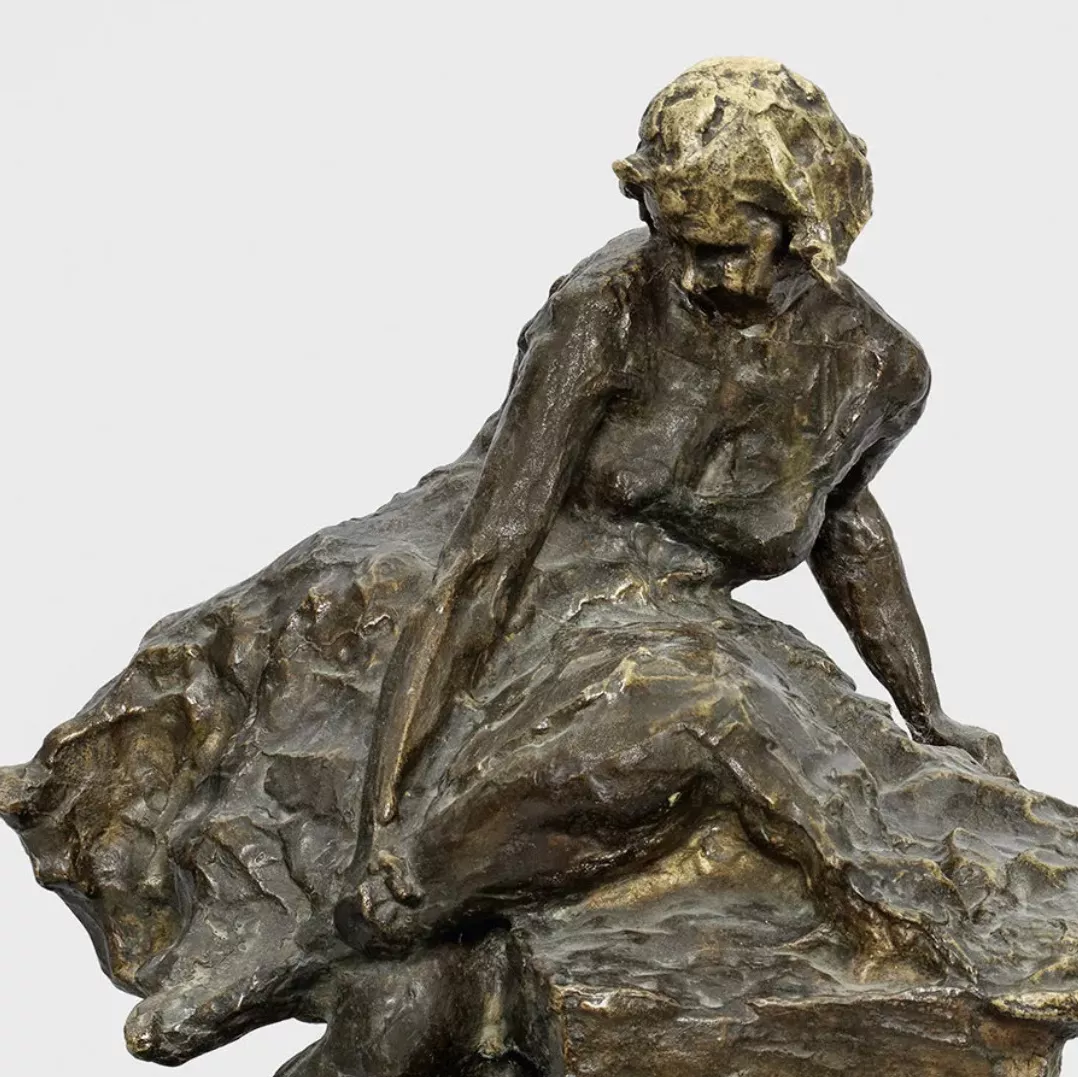
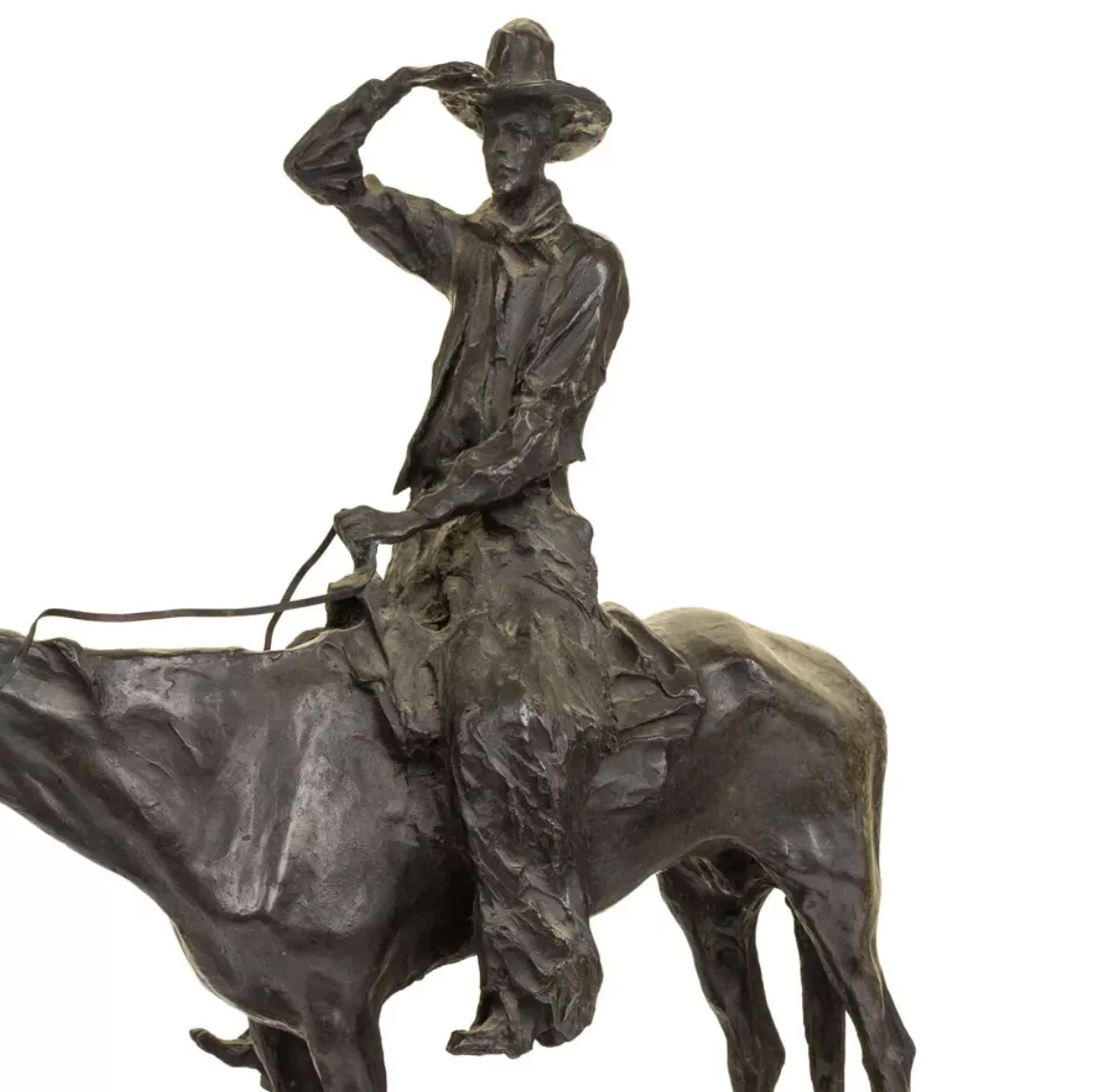
Paul Troubetzkoy is a modern Russian sculptor who produced mostly bronze sculptures. Nicknamed the " Rodin Russian ", he produces many portraits
He works mainly with bronze, but also with plaster and terracotta for sketches and studio casting. Casting is mostly done with lost wax, which preserves the spontaneity of the modeling.
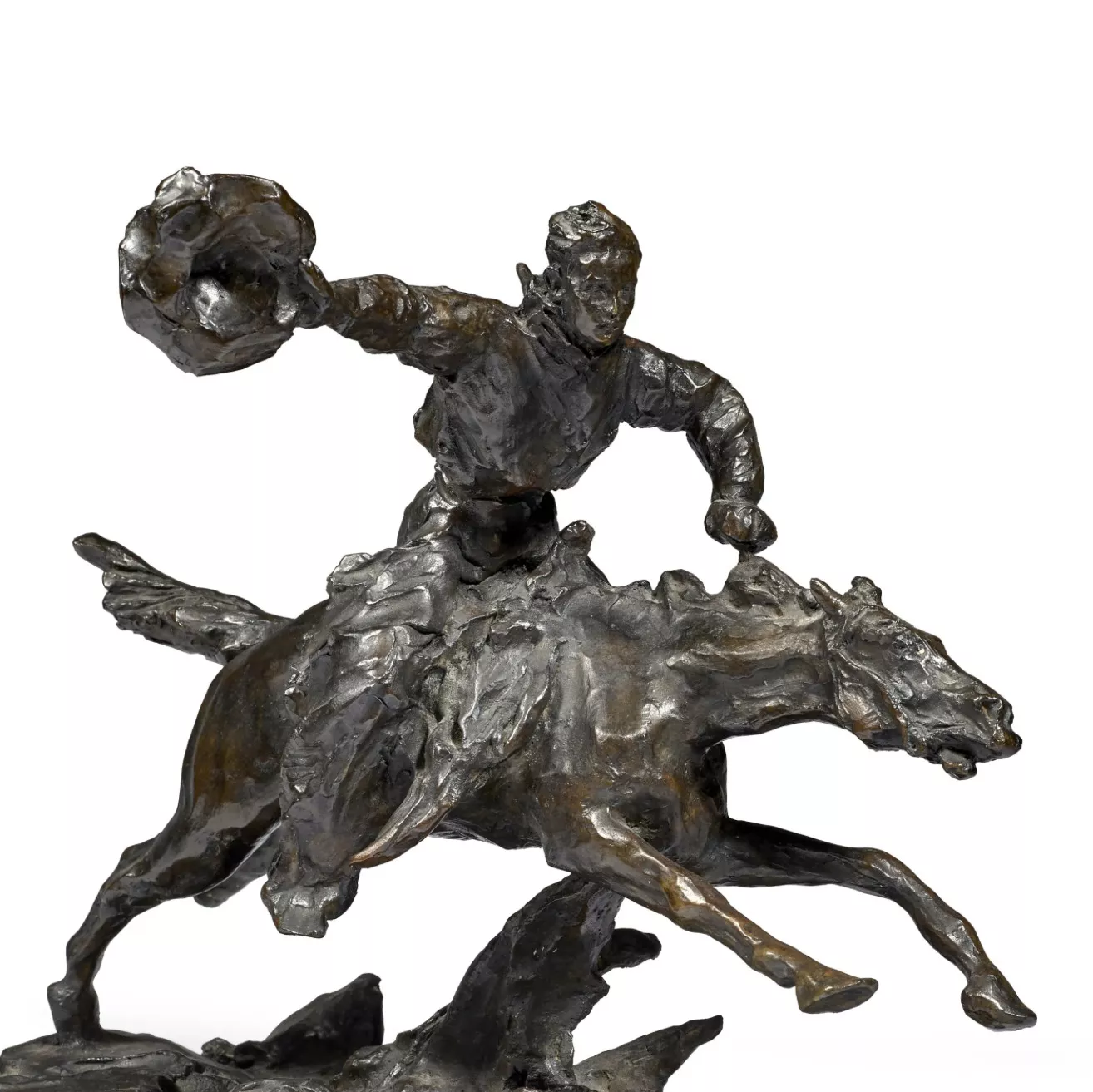
Bases are sometimes integrated into compositions, treated as a plastic extension of the sculpture. Modeling is direct, rapid and gestural, emphasizing the impression of energy and finished detail. The surface is marked by a vibrant texture (striations, finger marks, tool marks left visible).
The volumes are unpolished, favoring a dynamic, luminous rendering through fragmentation of the surface. His aesthetic is close to sculptural impressionism, where the material registers gesture and light. Troubetzkoy mainly creates figures and portraits, often on a reduced or medium scale.
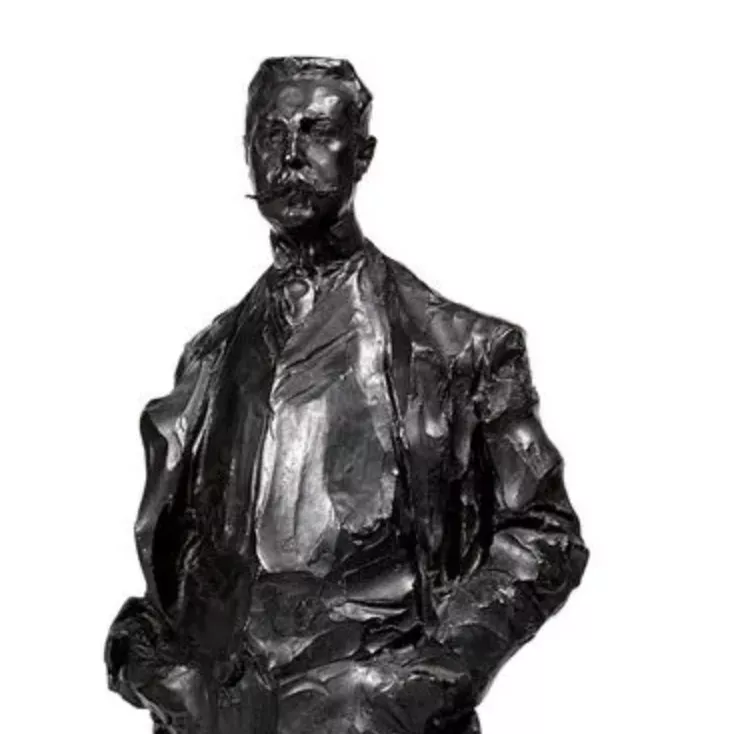
In his practice, he strives for psychological resemblance rather than mimetic realism, capturing character, attitude and movement. Human or animal figures captured in natural, sometimes fleeting attitudes, which convey the vivacity of the moment.
He very often depicts worldly figures, such as aristocrats, artists, writers, who are captured with an elegance that is not academic.
The postures of his sculptures are often offset, asymmetrical, which helps to introduce an internal dynamic. He sometimes seeks subtle imbalances and misalignments that give an impression of movement.
The volume is worked in successive masses, accentuating tactile perception and optical vibration. The patinas are varied, with deep brown, antique green and satin black, sometimes enhanced by warmer shades. The patina is applied to accentuate the contrast between shadowy areas and light-catching reliefs.
Heir to Impressionism, he attempted to transpose this movement into sculpture (often compared to Medardo Rosso). Breaking with the Russian and European academicism of his time, through a search for spontaneity and immediacy.
Paul Troubetzkoy is internationally recognized, notably in France, Italy and the United States, for his modern approach to portraiture.
The life of Paul Troubetzkoy
Paul Troubetzkoy (1866 - 1938) was a Russian artist born in 1866 in Intra, Italy. He was the son of Pierre Troubetzkoy, a Russian diplomat, and Adèle Sellar, an American singer. He was mainly self-taught, although he was encouraged by his family's artistic milieu through his contacts with local artists.
He was initially interested in painting, before turning to sculpture from the 1880s onwards. He held his first exhibitions in Milan in the 1980s, and was soon noticed for his impressionist style of sculpture, which contrasted with the prevailing academicism.
It was during this period that he made the acquaintance of Medaro Rosso, an Italian sculptor and pioneer of plastic impressionism, whose influence was to prove decisive. Between 1897 and 1906, he was a professor at the Imperial Academy of Fine Arts in Moscow, where he painted numerous portraits of personalities such as Tolstoy, Rodin, a number of aristocrats, writers and musicians).
In 1906, he organized a solo exhibition in Paris at the Salon d'Automne, where he was enthusiastically received. Troubetzkoy then moved to Paris, where he rubbed shoulders with Rodin and became a recognized figure on the European art scene. He also traveled and exhibited regularly in the United States, New York and Chicago, where he acquired a prestigious clientele.
Paul Troubetzkoy was also a convinced vegetarian, criticizing industrial society and animal exploitation. His friendship with Leo Tolstoy strengthened his ethical and spiritual commitment, and he produced several portraits of the novelist, testifying to his respect and the psychological depth of the character.
He received numerous official and private commissions, including sculptural portraits of political, aristocratic and cultural figures. His works were exhibited in major institutions, contributing to his international reputation.
The artist won numerous awards, including a gold medal at the 1900 Paris Universal Exhibition. He continued to work between Italy, France and the USA during the 1920s-30s, and died in Suna, near Verbania in Italy at the age of 72.
The artist is today considered one of the great exponents of sculptural impressionism. His portraits of Tolstoy, Rodin and European and American high society have become emblematic of his style.
His works are now housed in major museums, including the Musée d'Orsay (Paris), MoMA (New York) and Milan's Galerie d'Art Moderne. Today, he is listed on the art market alongside other Russian sculptors such as Neizvetsny, Aronson or Lavroff.
Focus on Portrait of Leo Tolstoy, Paul Troubetzkoy
This portrait, painted in 1898 for the first version, is kept at the Musée d'Orsay, at the Tretiakov Gallery in Moscow and in private collections for later versions.
It depicts the Russian novelist standing or sitting, depending on the version, dressed in a simple peasant blouse. His silhouette is deliberately massive yet supple, with a slightly slumped posture, conveying the writer's simplicity and humility.
The volumes are not detailed : face, clothes and hands are sketched more than described, through a vibrant modulation of the material. The surface is unpolished, and retains the fingerprint of the tool, creating luminous asperities.
The sculpture gives an effect of instant impression, the artist privileging the capture of character rather than exact resemblance to the model. The material thus becomes a visual pulsation, animated by striations and reliefs that catch the light.
Troubetskoy's portrait translates Tolstoy's austerity and moral strength, with the absence of ornamentation and a simple posture. The impressionistic treatment makes the portrait almost spiritual, and expresses an interiority beyond the physical.
The bronze, raw in appearance, reinforces the image of a man rooted in the earth, close to the people and to nature. The viewer perceives an overall movement rather than detailed figuration. The sculpture functions as a living presence rather than a static object.
The asperities of the surface create a play of light and shadow that constantly animates the figure. As a result, this work embodies Troubetskoy's genius for capturing the soul of a character through rapid, vibrant facture.
The portrait of Tolstoy has thus become one of the icons of the writer's modern imagery, often reproduced and exhibited. It confirms Troubetzkoy's role as a mediator between plastic impressionism and the tradition of Russian psychological portraiture.
Paul Troubetzkoy's imprint on his time
Paul Troubetzkoy is a sculptor who left his mark on 19th-century art in Russia. His works are part of prestigious collections and are sought after by many buyers, who play the greatest role in preserving his works although some are exhibited in museums.
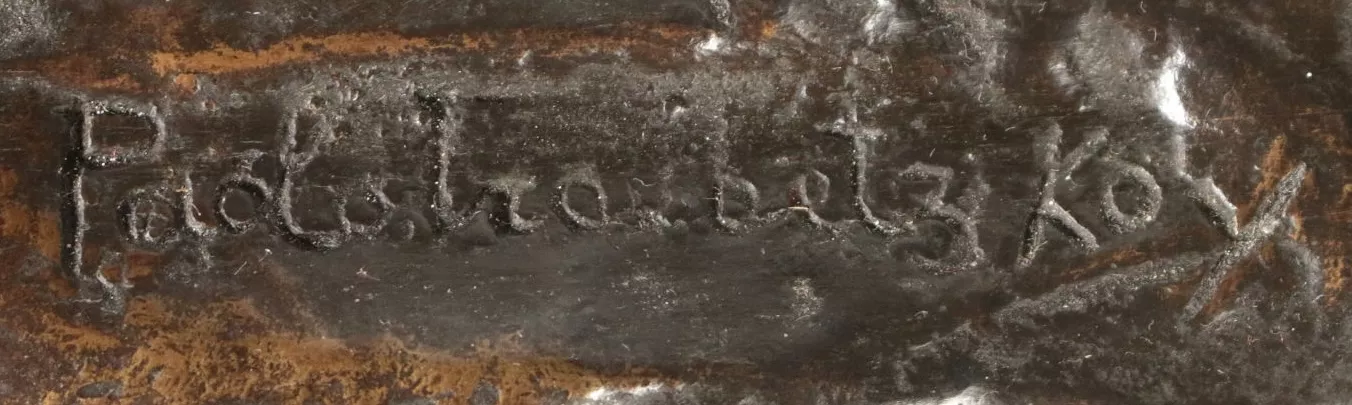
His signature
Not all of Paul Troubetzkoy's works are signed.
Although there are variations, here is a first example of his signature:
Expertise your property
If you happen to own a work by or after Paul Troubetzkoy, don't hesitate to request a free valuation by filling in our form on our website.
A member of our team of experts and chartered auctioneers will contact you promptly with an estimate of the value of your work, and will ensure that you receive ad hoc information about it.
If you are planning to sell your work, you will also be accompanied by our specialists in order to benefit from alternatives for selling it at the best possible price, taking into account the inclinations of the market and its specificities.
Estimate in less than 24h
Discover in the same theme

Rating and value of paintings by Mai Thu
Mai Thu is a Vietnamese artist who has produced watercolors and silk paintings that are listed and valued on the auction market.
Learn more >

Rating and value of Nicolas de Staël's drawings, lithographs...
Nicolas de Staël is a Franco-Russian painter who has produced works including drawings and prints that are highly prized and sought-after at auction.
Learn more >

Rating and value of paintings by Martial Raysse
Martial Raysse is a twentieth-century New Realist painter whose drawings and oil paintings are highly regarded and valuable.
Learn more >
Similar works sold at auction

Estimated 800 - 1.500€
Barye, seated lion

Estimated Between €1,500 and €3,000
Renato CARVILLANI (1896-1986), seated woman, gilded bronze print

Estimated Between €10,000 and €20,000
Baltasar LOBO (1910-1993), female nude in bronze

Estimated 800 - 1.500
Henry Étienne DUMAIGE (1830-1888), bronze print

Estimated 500 - 1.000
After Stefano MADERNO (1575-1636), Hercules and Antaeus, bronze with brown patina

Secure site, anonymity preserved

Auctioneer approved by the State

Free and certified estimates
Frequently asked questions
-
Who is Paul Troubetzkoy, and what is his artistic background?Paul Troubetzkoy (1866–1938) was an internationally renowned Russian sculptor, nicknamed the “Russian Rodin.” As a heir to Impressionist sculpture, he drew inspiration in particular from Medardo Rosso and distinguished himself by breaking with academic tradition, favoring spontaneity, gesture, and the psychological portrayal of his subjects. He taught at the Imperial Academy of Fine Arts in Moscow and later settled in Paris, becoming a major figure in the European art scene of the 19th and 20th centuries.
-
What is the price range for Paul Troubetzkoy's sculptures, paintings, and drawings?Paul Troubetzkoy’s works vary significantly in value depending on the medium. Drawings and watercolors sell for between €220 and €2,180, paintings for between €260 and €93,060, and three-dimensional sculptures for between €70 and €142,900. These variations reflect the importance of factors such as the work’s size, provenance, and condition.
-
How can you authenticate a work by Paul Troubetzkoy?To authenticate a work by Troubetzkoy, we recommend requesting a free, no-obligation appraisal from Auctie's. Our experts and state-certified auctioneers will examine your artwork and provide you with an accurate estimate within 48 hours. This appraisal guarantees a reliable verification of authenticity and market value.
-
Is this the right time to sell a work by Paul Troubetzkoy?Yes, now is a good time to sell a work by Paul Troubetzkoy. The art market recognizes the sculptor as one of the leading figures of Impressionist sculpture; his works are featured in the most prestigious museums (the Musée d’Orsay, MoMA, and the Galleria d’Arte Moderna in Milan), and demand from collectors remains strong for this type of high-quality portrait.
-
How does the sales process work at Auctie's?At Auctie's, the process is simple and transparent: you start by requesting a free, no-obligation estimate from our experts, who will provide their assessment within 48 hours. If you decide to sell, we’ll guide you every step of the way—from appraisal to auction—to secure the best possible terms and get the highest price for your artwork.
