



Rating and value of works, sculptures, compressions by César

Key takeaways
- César’s *Compressions* sell for between €200 and €291,523 (a record set in 2018), with the car models commanding the highest prices.
- An artist from Marseille (1921–1998) who discovered the hydraulic press in 1958 in Gennevilliers, revolutionizing sculpture with New Realism.
- Prices vary by type: car “Compressions” (€22,000–255,000) and metal “Compressions” (€1,000–65,000) command the highest estimates.
A welded-iron sculptor, César (1921-1998) discovered a hydraulic press in a scrapyard in Gennevilliers in the 1960s. Fascinated by its power to deform and transform objects, the artist took the plunge and created three extraordinary compressions of cars.
Presented the same year at the Salon de Mai, these works entitled "Trois Tonnes" caused a scandal. Yet César's Compressions become major works in Art History.
If you own a Compression made by César or based on his work and would like to know its value, our state-approved experts and auctioneers will guide you.
Our specialists will carry out a free appraisal of your object, and send you a precise estimate of its value on the current market.
Then, if you wish to sell your object, we'll direct you to the best possible scheme to get the best price for it.
Rating and value of Compressions César
Major works of the 20th century, Compressions by César sell for between €200 and €291,523 (record for the artist achieved in 2018).
Highly prized by collectors, the price of Compressions varies according to their size and material.
Despite the great popularity and diversity of these works, Compressions made from carcasses are the most highly priced.
Order of value from the most basic to the most prestigious
Type of compression | Result |
|---|---|
Golden compression | From €1,300 to €20,000 |
Small-size compression (>7cm) | From €350 to €34,650 |
Jewellery compressions | From €287 to €38,768 € |
Bronze compressions | From €450 to €45,000 |
Compressions metal | From €1,000 to €65,000 |
Can/plastic compressions | From 300 to €80,000 |
Car compressions | €22,000 to €255,000 |
Estimate in less than 24h
César's life and experimentation with Compressions
César Baldaccini, known as César, was born in Marseille in 1921. From an early age, César was recognized as a prodigy. Endowed with an innate talent for drawing, he first studied drawing and then sculpture at the Beaux-Arts de Marseille.
The artist continued his studies in Paris. César was very interested in modern sculpture and the works of Brancusi, Picasso, Matisse and Giacometti.
He produced his first works in iron, an easy-to-handle and inexpensive material. At the time, each of César's works was unique, and he worked and welded them himself in the original material.
César's first Compressions had their origins as early as 1958, when he compacted copper plates and ribbons.
Not long afterwards, the artist discovered a huge press used to manipulate materials, capable of reducing a car, at a scrap dealer's in Gennevilliers. This gave him the idea of creating three compressed car bales, which he hyperbolically named "3 tonnes".
César experienced two periods of creation of his Compressions. The first spans from 1959 to 1970, while the second runs from 1976 to 1998. His Compressions are often imbued with humor, such as the Compressions d'orfèvrerie or de cristal.
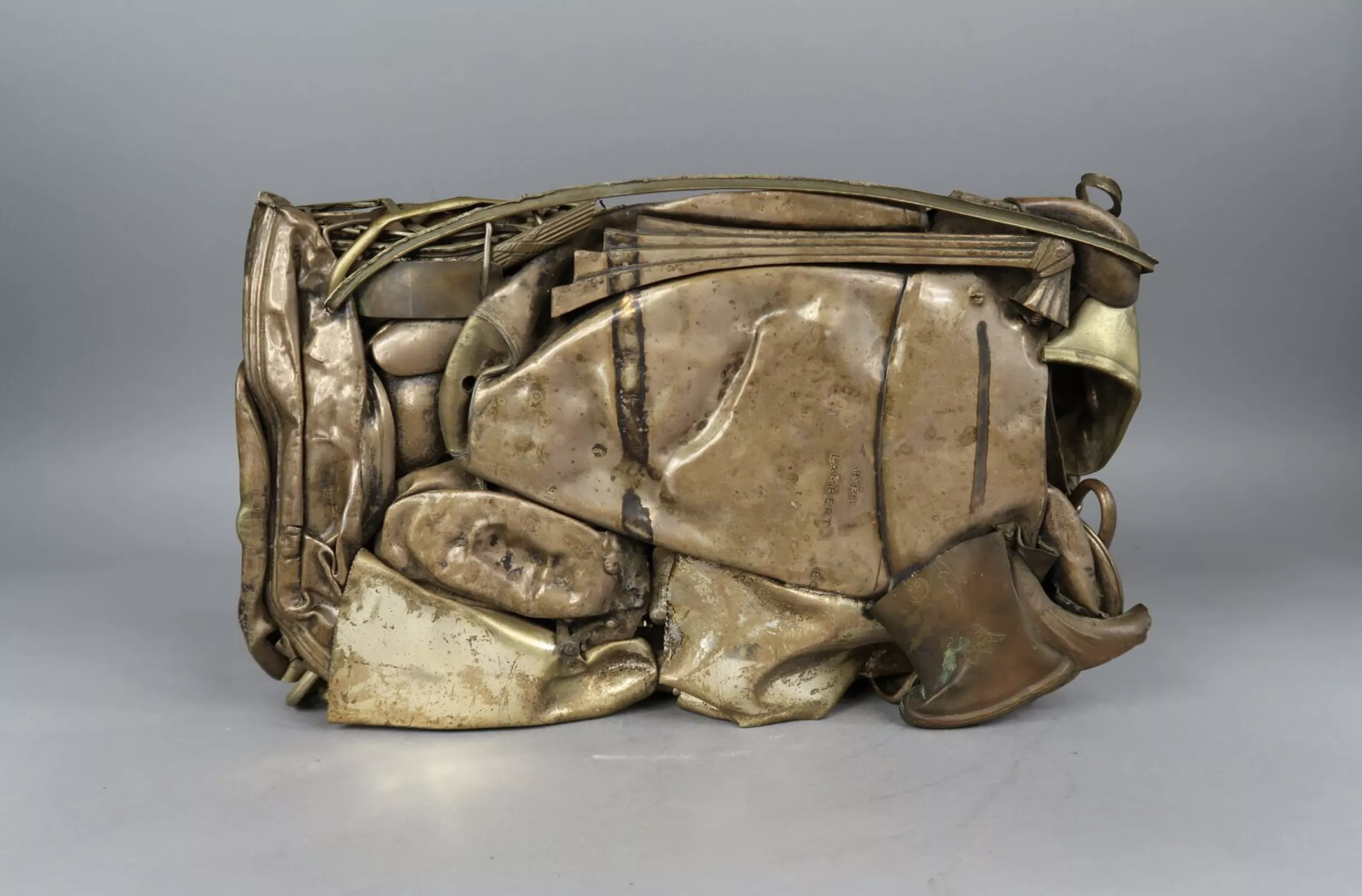
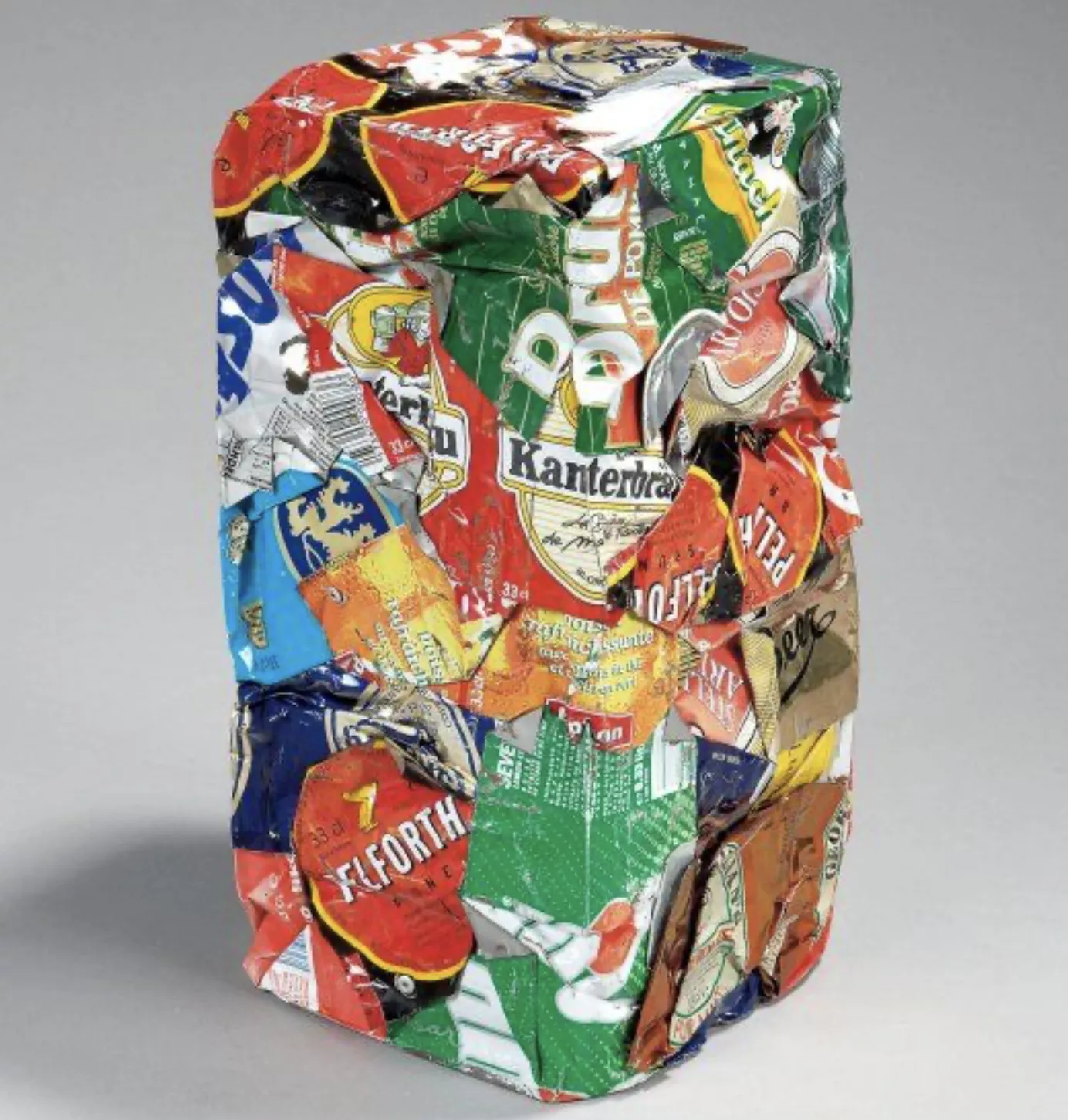
In 1961, César experimented withDirected Compressions. The elements to be compressed are carefully selected according to shape and color, then weighed.
Some sets of Compressionsare composed solely of car fenders, while others include a black car, two red hoods and twelve bumpers, for example. The shapes are rectangular, flat or square.
Later, the artist expands his creations by adding other elements such as license plates, metal packaging and aluminum tubes. He also compresses two-wheelers.
César's early Compressions lead him into the Nouveau Réalisme movement. This group, considered eccentric, explores new perspectives in art.
Focus on Compression de voitures, 1959
Compression de voitures is a work created by César and housed at the Centre Pompidou. The artist literally compressed car bodies using hydraulic presses. The materials used in this work are compressed car sheet metal, sometimes painted or polychromed.
This is the first large-scale compression to be exhibited, marking a turning point in César's career and in the history of contemporary sculpture.
This work was born out of the discovery of an industrial hydraulic press, César taking hold of a tool used for scrap metal. He doesn't sculpt in the traditional sense of the word, but rather orients, selects and composes from pre-existing materials.
The artistic gesture lies in the choice of vehicle, partial control of the press and the way the final block is presented. Compression becomes a form of transformed readymade, between destruction, recycling and creation.
The volume is dense, compact, with irregular and chaotic contours, with an accumulation of deformed, shattered and twisted sheet metal. The metal surface is sometimes shiny, sometimes oxidized, revealing traces of paint, chrome or shattered headlights.
Industrial material is diverted towards a raw, violent aesthetic, yet paradoxically harmonious. There is no base or pedestal, the object asserts itself as an autonomous sculptural monument, carrying a raw force.
The conceptual scope overturns the status of sculpture, and of form created by compression rather than addition. It denounces consumer society and mass production, while feeding off them plastically. The work thus becomes a metaphor for accident, wear and tear, and the end of the object.
It is also an act of transmutation: scrap metal becomes art, through an operation that is both mechanical and conceptual. César links poor materials and industrial culture to a new poetics of the contemporary.
This work was initially perceived as scandalous or provocative, but was later recognized as founding the Nouveau Réalisme. It anticipates reflections on recycling, the critique of modernity and the erasure of the artist's hand.
This work also exerts an influence on Arte Povera, and certain performative gestures of the 1970s. César reiterated this principle on numerous occasions, using precious metals, plastic materials and varying scales.
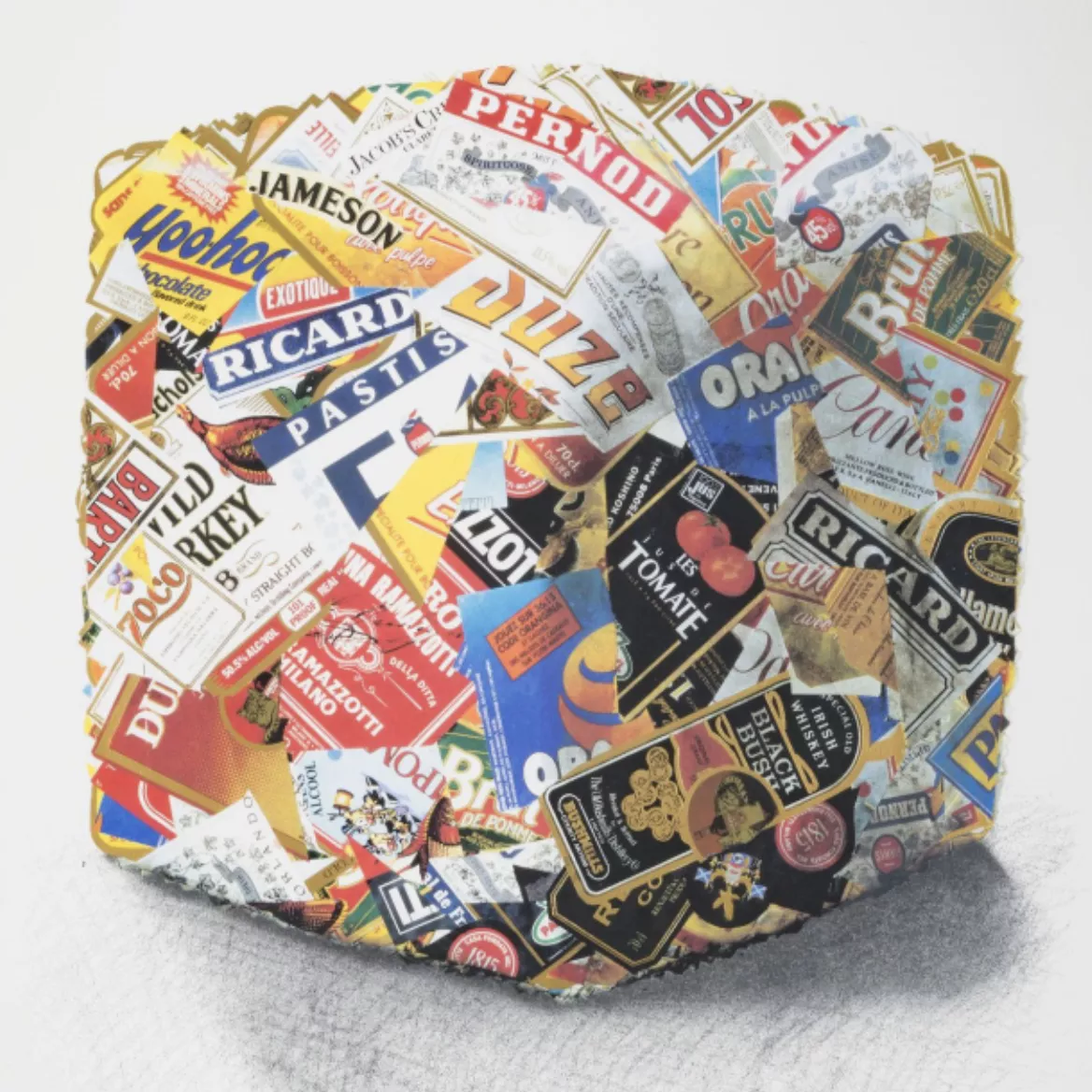
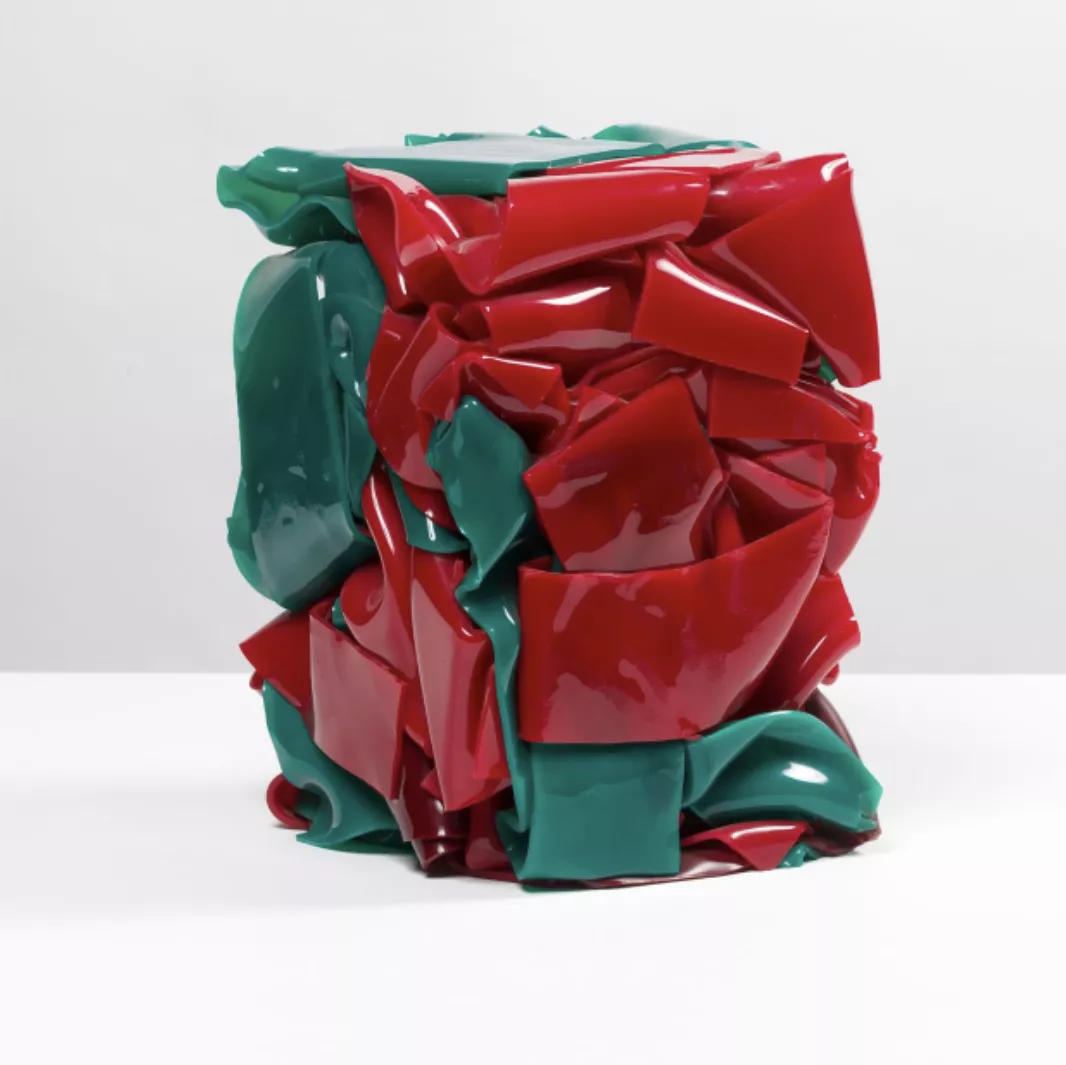
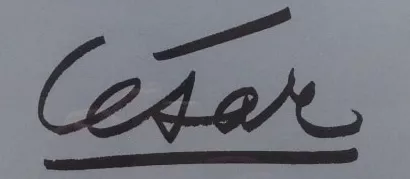
His signature
Not all of Caesar's works are signed.
Although there are variations, here's a first example of his signature:
Expertise your property
If you own a Compression by Caesar, feel free to request a free appraisal by filling out our online form.
A member of our team of experts and licensed auctioneers will contact you to provide an estimate of the market value of your Compression signed by Caesar.
If you are considering selling your work, our specialists will also guide you through the various alternatives available to obtain the best possible price, taking into account market trends and the specific features of each work.
.Estimate in less than 24h
Discover in the same theme

Value of works and paintings by Mela Muter
Mela Muter, a 20th-century painter, produced many paintings during her career. Their value is on the rise.
Learn more >

Rating and value of paintings and drawings by Constantin Kor...
Constantin Korovine was a Russian post-impressionist painter who produced drawings and oils on canvas that were sought-after and appreciated at auctio...
Learn more >

Rating and value of works, sculptures, bronzes by Robert Cou...
Robert Couturier is a 20th-century artist who produced sculptures and furniture. His works are relatively popular at auction.
Learn more >
Works from the same period sold at auction

Estimated Between €1,500 and €3,000
Renato CARVILLANI (1896-1986), seated woman, gilded bronze print

Estimated Between €15,000 and €20,000
César BALDACCINI dit CESAR (1921-1998), yellow gold pendant, jewelry compression

Estimated Between €1,500 and €3,000
César BALDACCINI dit CESAR (1921-1998), Poule Cartier, bronze print

Estimated 1.500 - 3.000
Salvador DALI (1904-1989) Gilded bronze menorah on a travertine base

Estimated 4000€ - 6000€
Claude LALANNE (1925-2019) Hydrangea" ornamentation in gilt bronze...

Estimated 3500€ - 5000€
Igor MITORAJ (1944-2014) Centurion Bronze with blue patina...

Secure site, anonymity preserved

Auctioneer approved by the State

Free and certified estimates
Frequently asked questions
-
Who is César, and what is his contribution to art history?César Baldaccini (1921–1998) was a sculptor from Marseille and the founder of the New Realism movement. After studying at the Beaux-Arts, he rose to fame in 1959 upon discovering a hydraulic press, which he repurposed to create the “Compressions”: major works of the 20th century in which he compacted cars, precious metals, and everyday objects. His works overturn the traditional concept of sculpture by prioritizing mechanical transformation over manual creation.
-
What are the odds for *César's Compressions*?César’s “Compressions” sell for between €200 and €291,523, depending on the type and size. The most valuable are the car “Compressions,” which fetch between €22,000 and €255,000. Gold, bronze, or small-scale “Compressions” range from €300 to €45,000. Their value depends primarily on the material used, their size, and the period in which they were created.
-
How can you authenticate a "Compression de César" and determine its value?Request a free, no-obligation estimate from Auctie's by filling out our online form. A state-certified expert or auctioneer will examine your artwork and provide you with an accurate assessment of its market value within 48 hours. This appraisal will help you determine the current value of your *Compression* and make an informed decision.
-
Is this the right time to sell a "Compression de César"?Yes, César’s *Compressions* remain highly sought after by collectors, and the market for them remains vibrant. They are major works of the 20th century, and current market trends are favorable for their sale. Our experts will guide you in choosing the best sales strategy to achieve the highest possible price.
-
How does the sale of a Compression work at Auctie's?Auctie's supports sellers from the free appraisal all the way through to the auction. After our experts provide you with an accurate appraisal of your artwork, we guide you toward the best selling conditions, taking into account the unique characteristics of each *Compression* and current market trends. You’ll benefit from our auction house’s network and expertise to maximize the value of your item.
