



Rating and value of works, ceramics and mirrors by Mithé Espelt

Key takeaways
- Mithé Espelt’s works sell for between €220 and €54,000 at auction; her piece *Feu* fetched €54,000 in 2023.
- A French ceramicist born in 1923, she is a master of glazed earthenware and transforms everyday objects into works of art with stylized floral motifs.
- Her unsigned creations include mirrors (€220–54,000), boxes (€300–3,000), jewelry (€450–1,300), and light fixtures (€7,500–9,000).
If you own a work by or based on ceramist Mithé Espelt and would like to know its value, our state-approved experts and auctioneers will guide you.
Our specialists will carry out a free appraisal of your work, and provide you with an accurate estimate of its value on the current market.
Then, should you wish to sell your work, we will direct you to the best possible arrangement to obtain the optimum price.
Artist's rating and value
Known for her joyful, poetic and colorful universe, Mithé Espelt was determined to make her creations accessible to all. Very popular, Mithé Espelt's works quickly became a great success.
Today, the artist's standing on the auction market is only increasing, and the price at which her works sell ranges from €220 to €54,000, a considerable range but one that speaks volumes about the value that can be attributed to the artist's works.
Highly prized by collectors, Mithé Espelt's works soar at auction and can fetch tens of thousands of euros. Witness his mirror Feu, adjudged at €54,000 in 2023.
Order of value from the most basic to the most prestigious
Object types | Result |
|---|---|
Jewelry | From €450 to €1,300 |
Boxes | From €300 to €3,000 |
Luminaires | From €7,500 to 9,000 |
Mirrors | From €220 to €54,000 |
Estimate in less than 24h
Style and techniques of Mithé Espelt's creations
Mithé Espelt, ceramic artist, is distinguished by a unique and refined style, embodying elegance and delicacy in the field of French decorative ceramics.
His creations, mainly focused on everyday objects transformed into true works of art, testify to a singular and profoundly modern aesthetic vision.
His work reveals a perfect mastery of glazed earthenware techniques, skilfully blending precision and creativity to design pieces with often uncluttered forms, imbued with a subtle balance between the utilitarian and the ornamental.
Through fluid contours and harmonious compositions, she succeeds in integrating artistic elements with practical objects, making each of them both functional and poetic.
She favors meticulous decors, enhanced by shimmering enamels with perfect finishes, which catch the light and accentuate the finesse of the reliefs.
These interplays of materials, oscillating between the brilliance of gilding, sometimes applied with gold leaf, and the softness of matte surfaces, reflect a constant quest for harmony and innovation.
The diversity of textures invites the viewer to a tactile and visual exploration, where every detail reveals meticulous care and a keen sense of composition.
Inspired by nature and floral motifs, Mithé Espelt infuses her creations with a timeless charm, while anchoring her work in a modernist aesthetic.
Her pieces are distinguished by stylized motifs that recall the influence of Art Deco and post-war decorative trends, where simplicity of line is combined with vibrant visual richness.
Each object reflects a desire to transcend the everyday, offering the observer an experience that is both aesthetic and emotional.
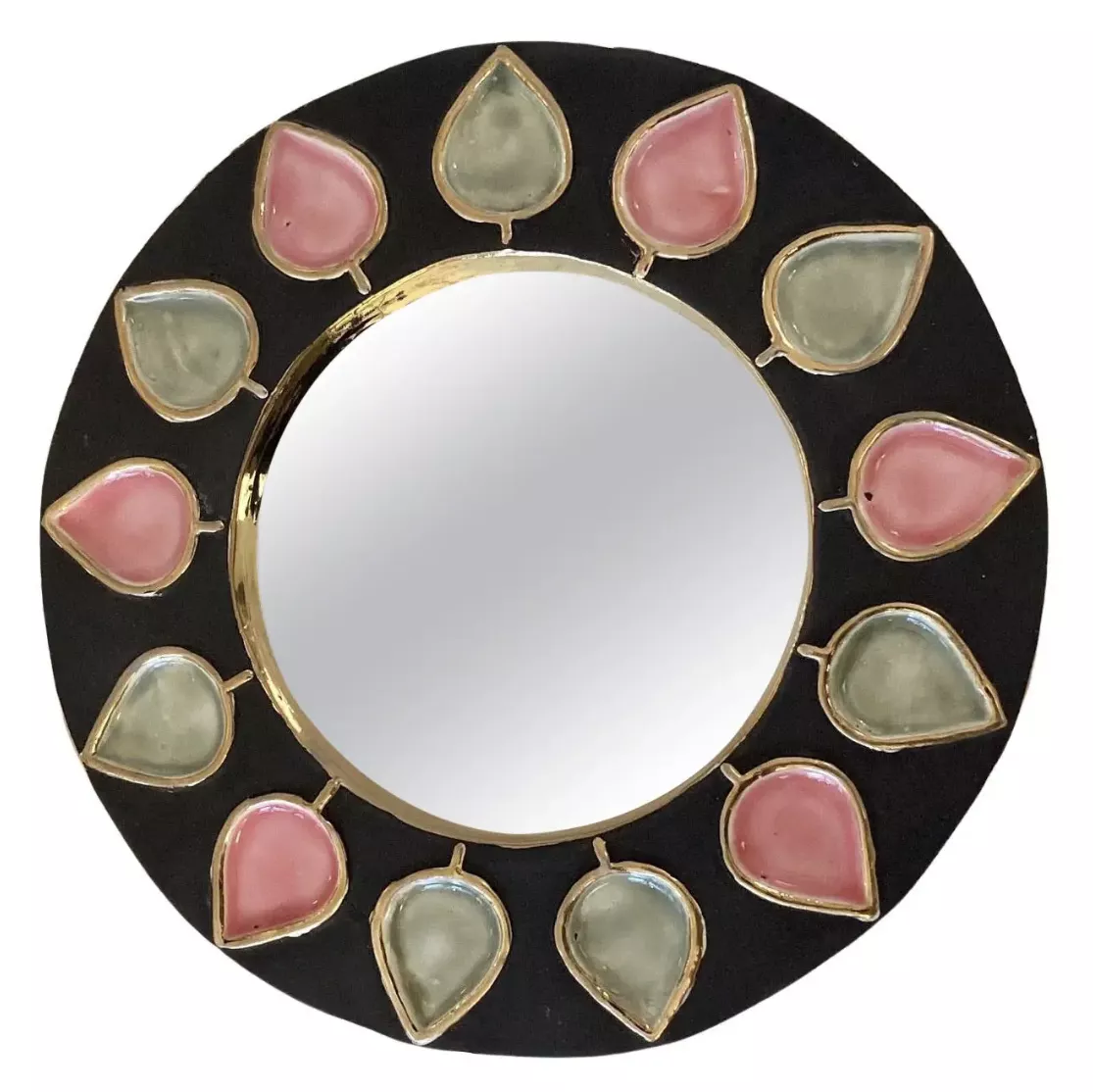
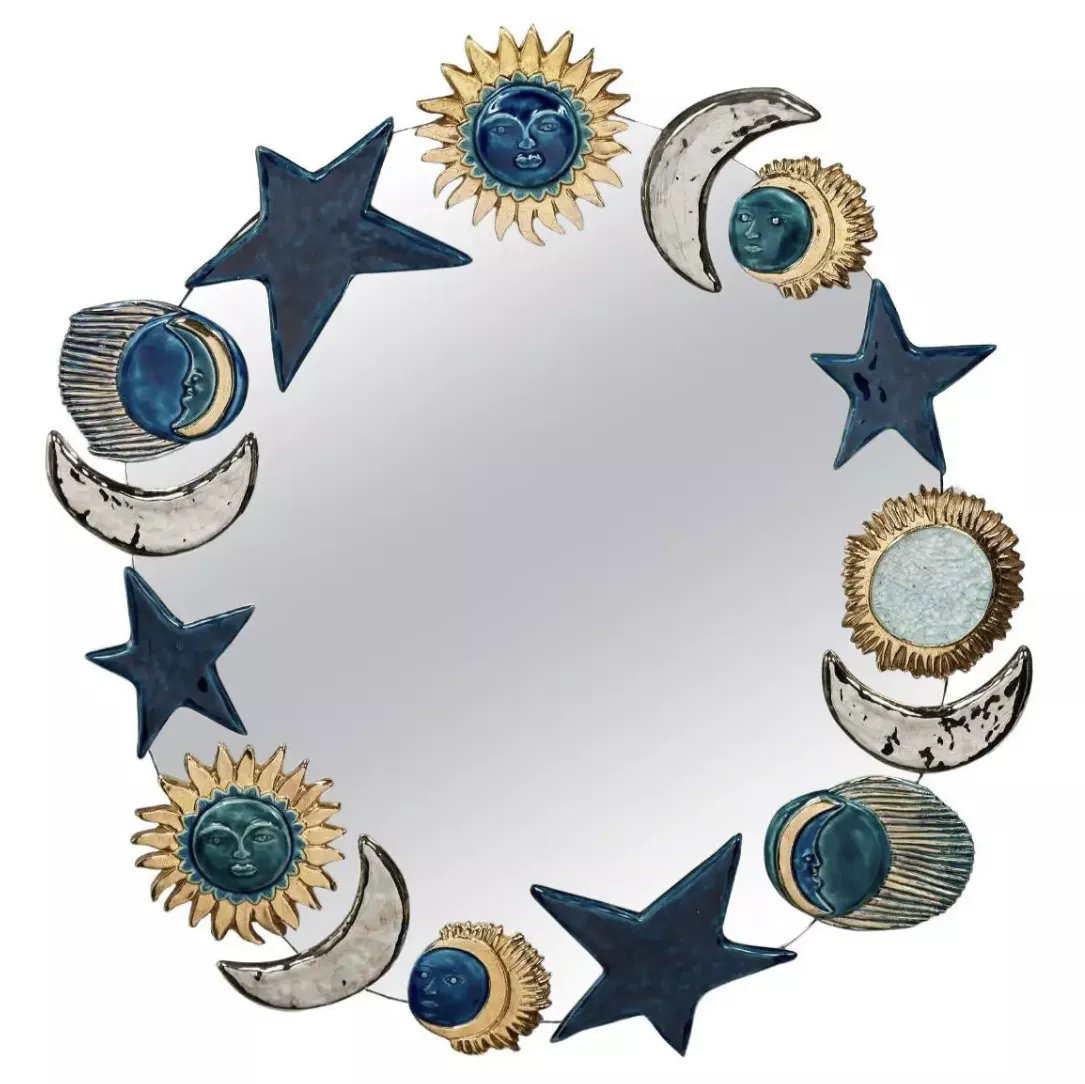
The life of Mithé Espelt
Mithé Espelt, born in 1923 in the south of France, grew up in an environment bathed in Mediterranean light, which nurtured her taste for contrasts and luminous textures.
From an early age, she developed a passion for the arts, and then entered the Beaux-Arts in Montpellier, where she developed a solid technical training and a unique sensibility for the decorative arts.
Eager to discover new things, she continued her apprenticeship in Paris, a bubbling center of artistic innovation, where she was exposed to modernist currents and Art Deco influences, which would leave a lasting imprint on her work.
Returning to her native region, Mithé Espelt set up her studio in Lunel, a place both close to nature and imbued with serenity, which was to become the scene of her creative explorations.
Refusing to conform to the expectations of the traditional art market, she chose a singular path, marked by a constant search for authenticity and intimacy in her work.
This artistic independence translates into pieces that are often unsigned, a deliberate approach that reflects her desire to let her creations speak for themselves, with no intermediary or hierarchy between artist and object.
During the 1950s and 1960s, her works met with discreet but significant success, attracting the attention of customers sensitive to her refined world and meticulous finishes.
She notably collaborated with renowned designers, while retaining an artisanal approach that enabled her to prioritize quality over quantity.
Her creations, mainly mirrors and decorative boxes in glazed earthenware, are distinguished by their delicacy and timelessness, becoming prized objects for a discerning clientele.
Until the end of her life, Mithé Espelt remained faithful to her artistic commitment, working with passion and discretion. Long unknown to the general public, his works are now being rediscovered, celebrating his essential role in the revival of French decorative ceramics in the 20th century.
This renewed interest highlights the elegance and originality of his style, establishing Mithé Espelt as an essential figure in the art of craftsmanship.
Mithé Espelt and the ceramists of the 20th
Mithé Espelt is part of a generation of ceramic artists who, like Line Vautrin, Georges Jouve or Roger Capron, redefined the decorative arts in the 20th century by infusing everyday objects with a touch of modernity and elegance.
They all share a remarkable ability to sublimate traditional materials while integrating them into a resolutely contemporary aesthetic.
Mithé Espelt's creations find an obvious proximity to those of Line Vautrin, particularly in the art of the decorative mirror.
Both transform this functional object into a work of art in its own right, where ornamental detail and meticulous treatment of materials, whether glazed earthenware or talosel, create refined, unique pieces.
Their approach is distinguished by a search for balance between utility and visual poetry, making each creation captivating.
With Georges Jouve, Espelt shares a particular sensitivity to form and light. Both explore clean contours and impeccable finishes, using glazes to magnify the surfaces of their works.
Where Jouve focuses on sculptural pieces with organic lines, Espelt applies this same attention to more intimate objects, such as his boxes and mirrors, while retaining a similar sophistication in textures and reflections.
Roger Capron, meanwhile, joins Mithé Espelt in revisiting utilitarian objects with a modernist aesthetic. Both incorporate stylized decorative motifs and favor luminous, harmonious palettes.
Capron and Espelt also share a demanding approach to craftsmanship, where each piece reflects a constant concern for quality and innovation.
Through these parallels, Mithé Espelt asserts herself as an essential figure in the decorative arts of her time, anchored in a collective dynamic while cultivating a deeply personal style.
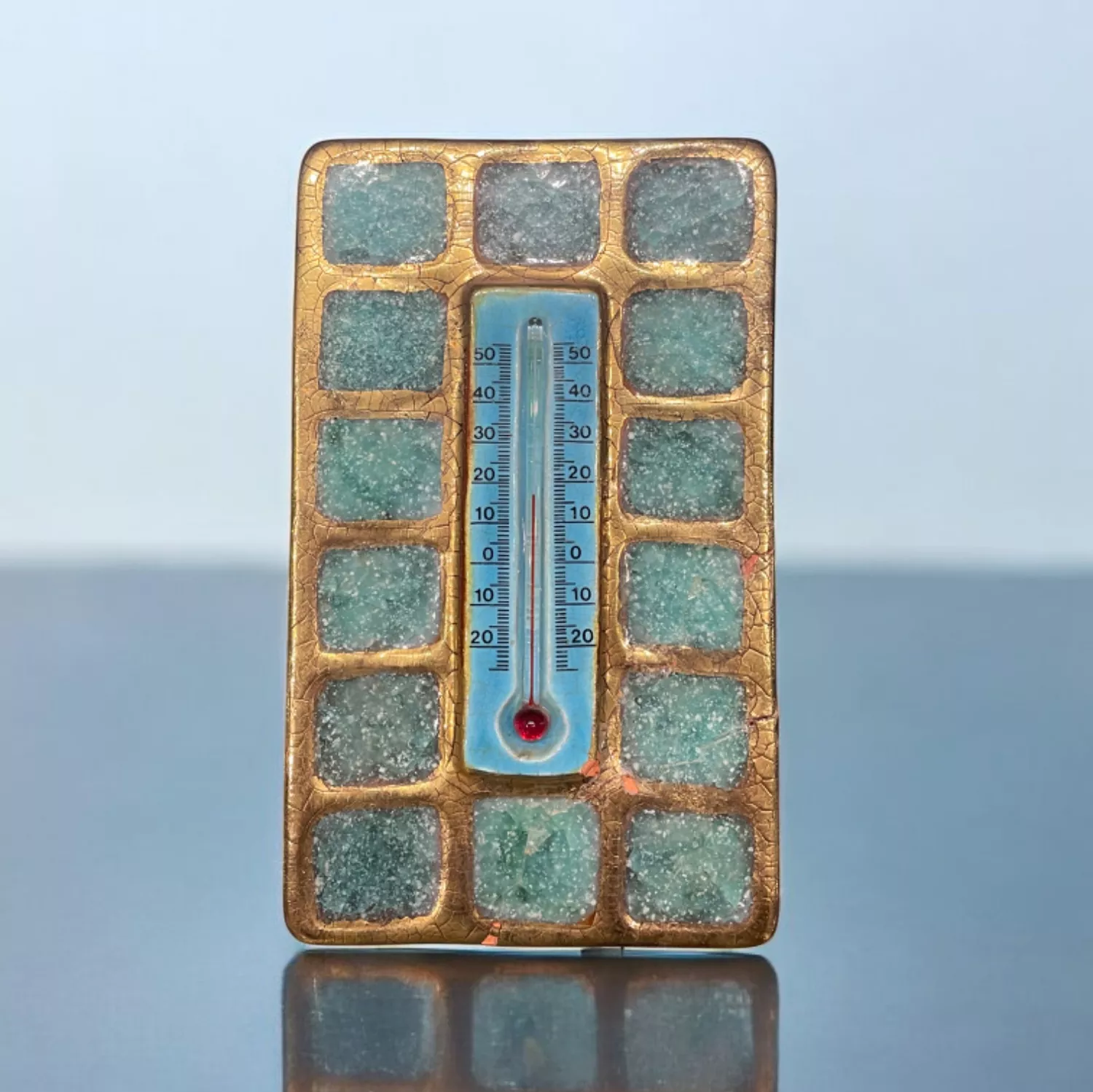
The artist's work and style
The Miroir aux trois fleurs, made by Mithé Espelt in the 1950s, perfectly embodies understated elegance and the culmination of a meticulous search for beauty in everyday objects.
This mirror, all in glazed earthenware, is distinguished by its frame adorned with three stylized flowers, which seem to bloom all around the central mirror.
The finesse of the contours, the delicate relief of the petals and the harmony of the colors - a subtle blend of blue, green and gold - give the work a visual depth that captures the light with a rare subtlety.
Espelt's craftsmanship transforms a utilitarian object into a true work of art. The seemingly simple floral motifs are rich in treatment, with each petal carefully shaped and glazed.
The interplay between the matt and glossy areas of the decoration allows the eye to gradually discover the texture of the object, accentuating the poetry of the frame while highlighting the mirror itself.
The reflections created by the enamel vary with the angle, giving the work a changing, almost living dimension, in constant dialogue with the ambient light.
In this Miroir aux trois fleurs, the artist doesn't just decorate, she breathes soul into the object. The apparent simplicity of the design hides a complexity of detail, testimony to a perfect mastery of material and glaze.
In a few precise gestures, Espelt transforms ceramics into an everyday art, creating a balance between function and aesthetics, between modernity and tradition.
This mirror is a perfect example of her style: a purely visual poetry that makes the ordinary precious, and an invitation to rediscover the beauty of the simplest objects.
His signature
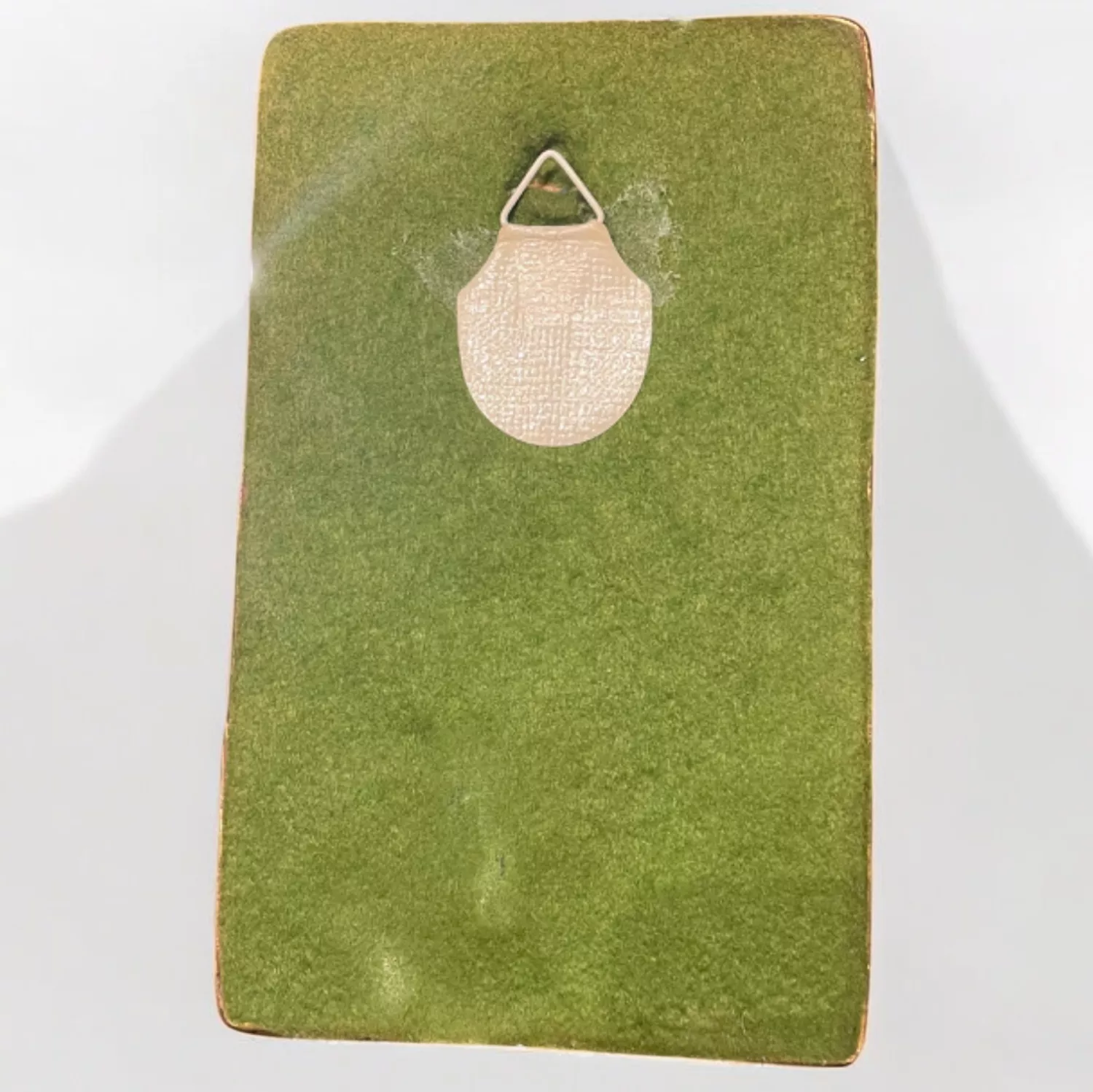
Mithé Espelt's works are not signed.It is important to note that for most of his works, the artist uses a layer of felt on the back of his works or inside the boxes.
Expertise your property
If you own a work by Mithé Espelt don't hesitate to request a free appraisal by filling in our online form.
A member of our team of experts and chartered auctioneers will contact you to provide an estimate of the market value of your work signed by Mithé Espelt.
If you are considering selling your work, our specialists will also guide you through the various alternatives available to obtain the best possible price, taking into account market trends and the specific features of each object.
Estimate in less than 24h
Discover in the same theme

Rating and value of paintings by André Barbier
André Barbier is a twentieth-century Impressionist painter who produced paintings that are highly valued at auction.
Learn more >

Rating and value of paintings by Camille Bryen
Camille Bryen is a painter and poet of lyrical abstraction who has produced numerous paintings of considerable value.
Learn more >

Rating and value of paintings by Pierre Paulus
Pierre Paulus is a Belgian post-impressionist painter who produced many works that are highly valued at auction.
Learn more >
Works from the same period sold at auction

Estimated Between €1,000 and €2,000
Mithé ESPELT (1923-2020) Glazed ceramic mirror, "Soleil" model

Estimated 400 - 800
Mithé ESPELT (1923-2020) Round wall mirror, circa 1954, Monaco model

Estimated 2.000 - 4.000
Mithé ESPELT (1923-2020) Round wall mirror, circa 1975, Soleil model

Estimated 1.000 - 2.000
Mithe ESPELT (1923-2020), Round wall mirror model Soleil

Estimated 800 - 1.500
Mithe ESPELT (1923-2020) Square wall mirror, floral design

Estimated 1.000 - 2.000
MITHÉ ESPELT (1923-2020) Round wall mirror, circa 1990, model in stamped earthenware and blue enamel

Estimated 1.800 - 2.700
MITHÉ ESPELT (1923-2020) Wall-mounted mirror, Oblong model circa 1949, in stamped clay and crackled gold

Estimated 1.000 - 2.000
MITHÉ ESPELT (1923-2020). Ouvéa" orange-red glazed ceramic mirror

Estimated 800 - 1.500
MITHÉ ESPELT (1923-2020), Wall mirror, Stèle model, circa 1965

Secure site, anonymity preserved

Auctioneer approved by the State

Free and certified estimates
Frequently asked questions
-
Who is Mithé Espelt, and what is her artistic background?Mithé Espelt (1923–) is a 20th-century French ceramic artist, known for her glazed earthenware creations that blend modernism and poetry. Trained at the Beaux-Arts in Montpellier and later in Paris, she belongs to the generation of great ceramic artists and designers alongside Line Vautrin and Georges Jouve, redefining the decorative arts by integrating art into everyday objects. Her style is characterized by stylized floral motifs, impeccable finishes, and a subtle balance between utility and beauty.
-
What is the market value and price range of Mithé Espelt's works?Mithé Espelt’s value on the auction market continues to rise. Prices range from €220 to €54,000 depending on the type of item: jewelry sells for between €450 and €1,300, boxes between €300 and €3,000, light fixtures between €7,500 and €9,000, and mirrors between €220 and €54,000. His “Feu” mirror, in particular, sold for 54,000 € in 2023.
-
How can I authenticate a work by Mithé Espelt and get an estimate?Mithé Espelt’s works are generally unsigned, but often feature a layer of felt on the back or inside. To authenticate your piece and determine its exact value, Auctie’s offers a free, no-obligation appraisal by its certified experts and auctioneers. Our team will contact you within 48 hours to provide a reliable estimate based on current market trends.
-
Is this the right time to sell a work by Mithé Espelt?Yes, this is an excellent time to sell. Mithé Espelt’s market value continues to rise, and her works are attracting growing interest from collectors. This rediscovery of the artist—long overlooked by the general public—is cementing her status as a key figure in 20th-century decorative arts and driving strong auction results.
-
How does the sale of a work by Mithé Espelt take place at Auctie's?Auctie's supports sellers from the free appraisal all the way through to the auction. After filling out our online form, an expert will contact you to appraise your artwork and suggest the best sales options, taking market trends into account. Our specialists will guide you in achieving the best possible price while respecting the artist’s signature and the condition of your piece.
