



Rating and value of sculptures, bronzes and marbles by Naoum Aronson

Key takeaways
- Naoum Aronson’s works sell for between €140 and €77,380, with his bronzes being particularly sought after at auction, notably the statue *Salome*, which sold for €77,380 in 2010.
- A Russian Symbolist sculptor (1872–1943), Aronson primarily worked in lost-wax bronze casting, a technique that preserves the energy of the modeling process and creates his characteristic vibrant surfaces.
- His busts of famous figures (Tolstoy, Beethoven, Pasteur) combine psychological realism and expressionism, elevating his subjects as symbols of memory and universal moral conscience.
If you own a work by or after the artist Naoum Aronson, and would like to know its value, our state-approved experts and auctioneers will offer you their appraisal services.
Our specialists will carry out a free appraisal of your work, and provide you with a precise estimate of its value on the current market.
Then, should you wish to sell your work, we will direct you to the best possible arrangement to obtain the optimum price.
Rating and value of artist Naoum Aronson
Considered an important artist of naturalistic sculpture, Aronson leaves behind a unique artistic repertoire, within which bronze works occupy a prominent place.
At present, the prices of his works are rising enormously under the auctioneer's hammer. His creations are particularly prized, and the price at which they sell on the art market ranges from €140 to €77,380, a considerable range but one that speaks volumes about the value that can be attributed to Aronson's works.
In 2010, a bronze statue, Salome, sold for €77,380, while it was estimated at between €59,530 and €83,330.
Order of value from a simple work to the most prestigious
Technique used | Result |
|---|---|
Marble | From €5,200 to €42,640 |
Bronze | From €140 to €77,380 |
Estimate in less than 24h
Artist's style and technique
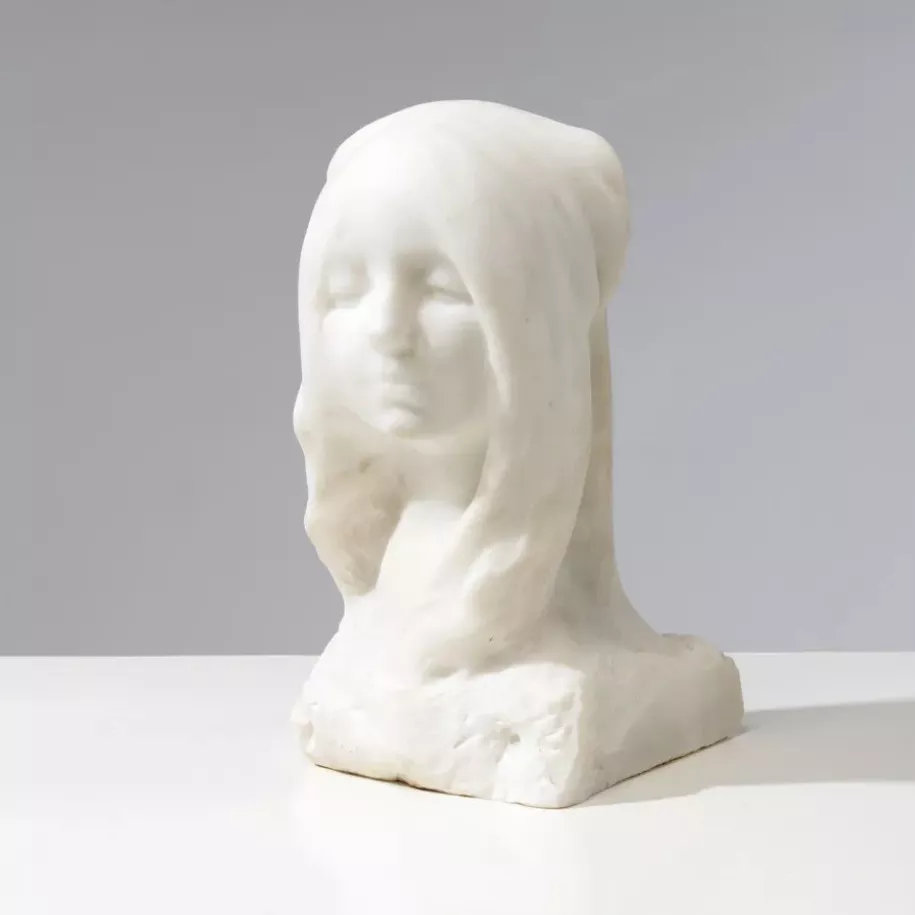
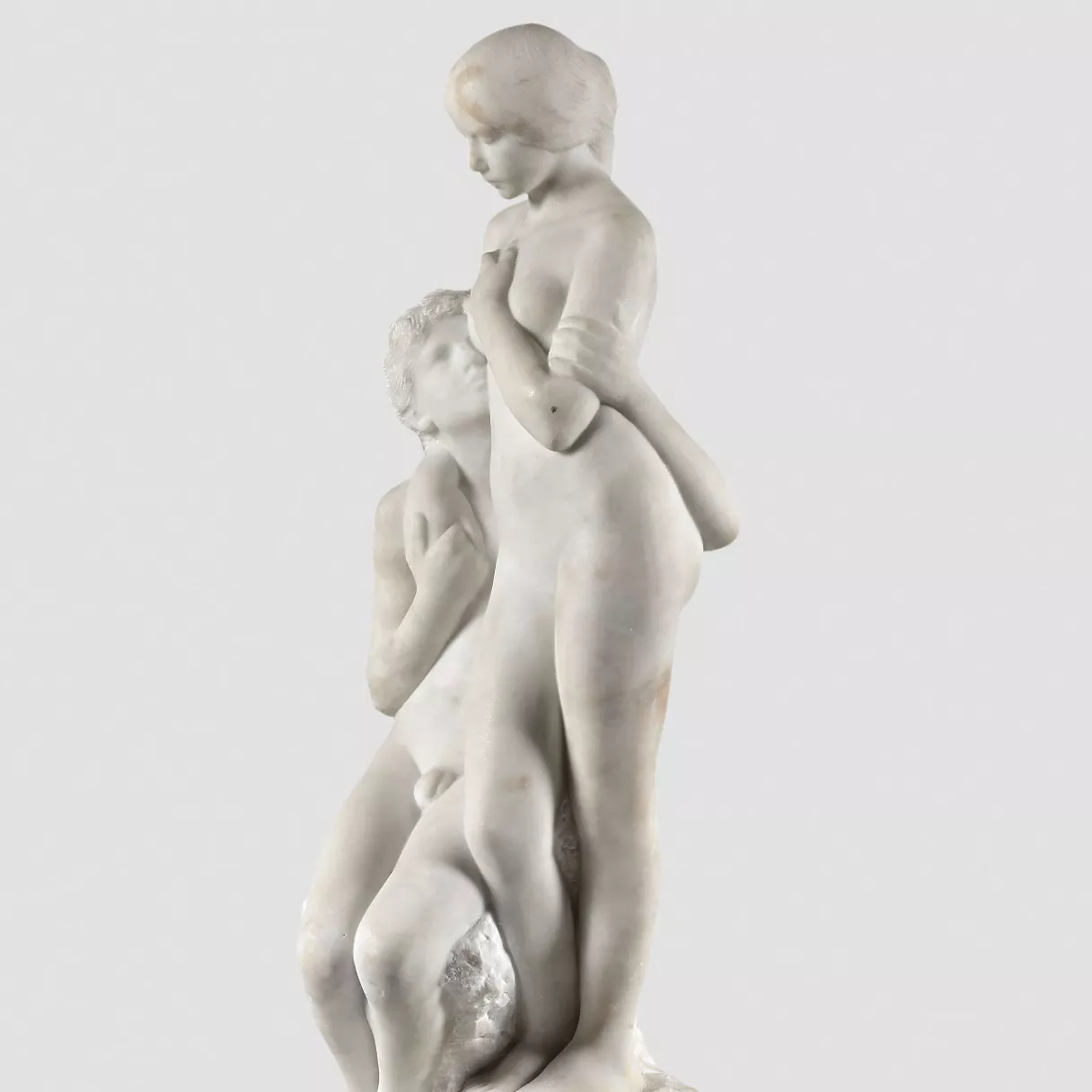
Naoum Aronson is a twentieth-century artist who produced various sculptures within the Symbolist movement. His work is closely linked to representations of the body and faces. Technically, he is influenced by Auguste Rodin, who was his master for many years, as well as Michelangelo's contrapposto.
The artist mainly works in bronze, sometimes in marble or plaster for his preparatory models, and works with lost-wax casting, which enables him to retain the nervousness of the modeling.
He works in ronde-bosse, but also in monumental busts or medallions. The modeling is energetic and supple, and the artist's hand remains visible. The surface is often vibrant, marked by asperities and irregularities, reinforcing the figure's living character.
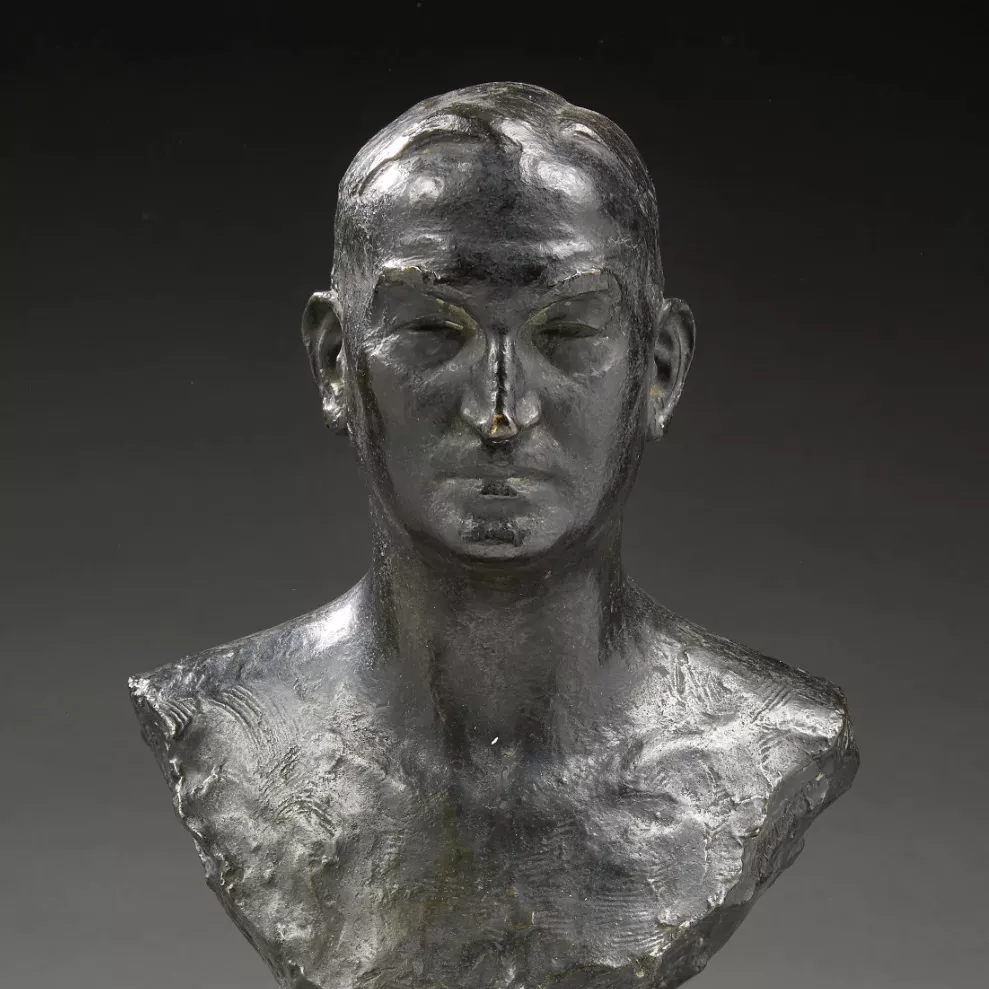
In contrast to smooth academicism, Aronson seeks a psychological presence through the treatment of matter. He is a renowned portraitist, sculpting numerous personalities including Tolstoy, Beethoven, Pasteur and Gambetta.
His depictions are halfway between realism and plastic expression. His gilded heads and busts are endowed with a certain inner strength, sometimes idealized but always expressive. His work is influenced by late Romanticism and symbolism, with a search for moral grandeur in the subjects.
The forms are generally massive and compact, giving an impression of solidity and monumentality. The emphasis is on the face and head, often disproportionate to the rest of the body. He also works with shadows and reliefs accentuated by an uneven surface that catches the light dramatically.
His works are conceived as tributes, with memorials and commemorative busts dominating his output. Sculpture becomes a vehicle of memory and a means of magnifying the great figures of politics, science and culture.
Through his expressive treatment, he displaces simple likeness to achieve an allegorical dimension, for example Beethoven as the embodiment of creative genius.
He is heir to the Russian tradition, inspired by the realist school of Moscow and St. Petersburg, but marked by the Parisian climate of the Belle Époque. The style is situated between psychological realism (Rodin, Dalou) and a moderate form of expressionism. He seeks a balance between fidelity to the model and exaltation of character.
Naoum Aronson, his life, his work
Naoum Aronson (1872-1943), a Russian artist, became an important figure in 20th-century sculpture, particularly with regard to Symbolist sculpture.
A native of Kreslau (Russian Empire, now in Latvia), he began his training at the Vilnius Academy of Fine Arts. In 1891, he moved to Paris, where he met Rodin. Alongside Hector Lemaire, he then studied at the Ecole Supérieure des Arts Décoratifs.
Taking a break from his career and training to honor his military service, he returned to France shortly afterwards and began making numerous busts of famous personalities (Tolstoi, Rasputin...).
He made a name for himself with these works, and presented some of them at the 1937 Exposition Universelle.
Aronson was then forced to flee the Occupation, and so settled in New York, where he died a few years later.
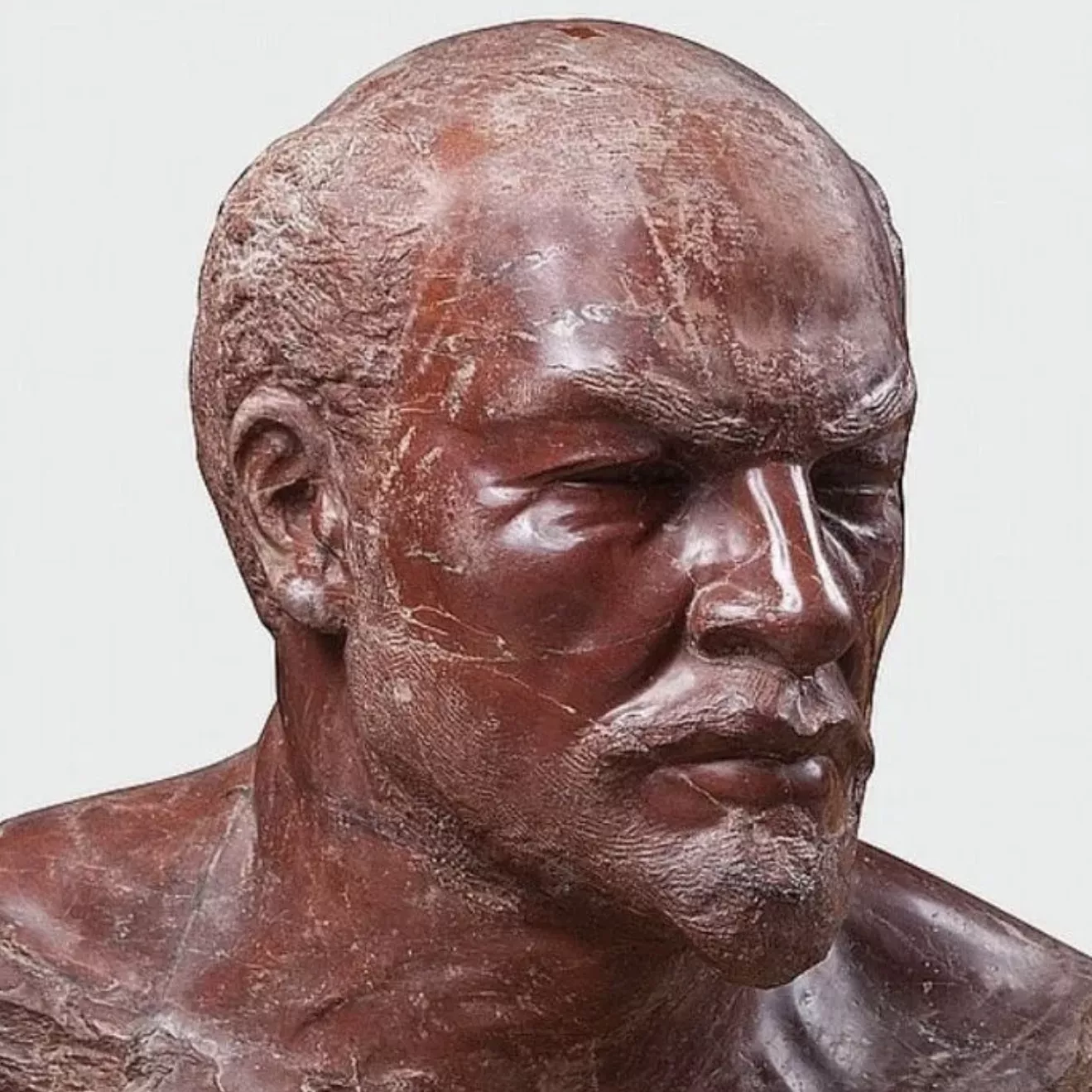
Focus on the Bust of Leo Tolstoy, 1903
This bust was cast in bronze using the lost-wax technique. It is kept at the Russian State Museum, St. Petersburg, and in private collections.
The format is a monumental bust, concentrated on the head, neck and upper torso. Its position is frontal, with the gaze slightly downward, conveying a meditative attitude.
There are no accessory details, clothing is sketched out, and it is focused on facial expression. The vibrant surface is uneven, with direct, energetic modeling. Fingerprints and tool marks are visible, giving a sensation of living matter.
There is a contrast between polished areas (forehead, nose) and rougher parts (beards, hair). Tolstoy is depicted as a powerful, ascetic figure, with a thick beard and deep gaze.
The face expresses inner strength and moral gravity, in keeping with the writer's spiritual stature. The roughness of the surface suggests the tension between flesh and spirit, between the man and the idea he embodies.
The writer is not only portrayed, but mythologized as a universal moral conscience. With this treatment, Aronson goes beyond mere likeness and turns him into an allegory of the thinker and spiritual guide.
Naoum Aronson's imprint on his period
Naoum Aronson is a well-known artist among sculpture enthusiasts, the author of a fairly substantial artistic output. Today, most of his works are kept by private collectors, which increases the value and success of his works on the auction market.
His marble sculptures are particularly prized as they are absolutely unique pieces that reveal the artist's inspiration and way of working, but his bronzes are indisputably his most famous and prized works, which keep breaking records on the auction market.
Recognizing Naoum Aronson's signature
It's not always easy to decipher or even be lucky enough to come across a work signed by Aronson, which is why expertise is important.
Knowing the value of a work
If you happen to own a work by Naoum Aronson, request a free appraisal without further delay via our form on our website.
A member of our team will contact you promptly with an estimate of the value of your work, not forgetting to send you ad hoc information about it.
If you're considering selling your work, our specialists will also help you find alternatives to sell it at the best possible price.
Estimate in less than 24h
Discover in the same theme

Rating and value of paintings by Suzanne Valadon
Suzanne Valadon is a twentieth-century French artist who produced paintings that are highly regarded and valued on the auction market.
Learn more >

Rating and value of sculptures, drawings and paintings by Pa...
Paul Troubetzkoy is a twentieth-century Russian sculptor whose works are highly valued on the auction market.
Learn more >

Rating and value of drawings and paintings by Vladimir Baran...
Vladimir Baranoff Rossiné is a painter associated with Cubism whose works command high prices and are highly valued at auction.
Learn more >
Similar sculptures sold at auction


Secure site, anonymity preserved

Auctioneer approved by the State

Free and certified estimates
Frequently asked questions
-
Who is Naoum Aronson, and what is his artistic background?Naoum Aronson (1872–1943) was a leading Russian sculptor of the 20th century, known for his Symbolist works. Trained in Paris under the influence of Auguste Rodin, he established himself as an internationally renowned portraitist, creating busts of great figures such as Tolstoy, Beethoven, and Pasteur. His style combines psychological realism with expressionism, seeking to transcend mere likeness to achieve a spiritual and allegorical dimension.
-
What is the price range for Naoum Aronson's sculptures?Naoum Aronson's works sell for between €140 and €77,380, depending on the type and quality. His bronze sculptures are his most prestigious and highly valued works, while his marble sculptures range in price from €5,200 to €42,640. Prices vary considerably depending on the work’s historical significance, provenance, and condition.
-
How can you authenticate a work by Naoum Aronson?Authenticating a work by Aronson requires professional expertise, particularly because not all of his sculptures are always legibly signed. Auctie's offers a free, no-obligation appraisal via an online form; a certified auctioneer will examine your artwork and provide you with their findings within 48 hours.
-
Is this a good time to sell a sculpture by Naoum Aronson?Yes, now is an excellent time to sell a work by Aronson. His prices are rising significantly on the auction market, and his bronze sculptures, in particular, continue to break records. Demand from collectors remains strong, especially for commemorative busts and portraits of historical figures.
-
How does the appraisal and sale of a work of art take place at Auctie's?The appraisal is completely free and non-binding: simply submit your artwork via our online form, and an expert auctioneer will appraise it within 48 hours. If you decide to sell, our specialists will guide you every step of the way—from appraisal to auction—offering you the best options to achieve the highest possible price.
