



Rating and value of works, sculptures by Jules Aimé Dalou

Key takeaways
- Sculptures by Jules Aimé Dalou (1838–1902), a French realist artist, sell for between €10 and €130,470, depending on the technique and materials used.
- Marble is the most highly valued material, with prices ranging from €1,300 to €130,470, while bronze ranges from €10 to €119,825.
- In 2019, the marble bust “Baigneuse surprise” sold for €45,000, confirming the artist’s high standing among French and English collectors.
If you own a work by or after the artist Jules Aimé Dalou, and would like to know its value, our state-approved experts and auctioneers will offer you their appraisal services.
Our specialists will carry out a free appraisal of your work, and provide you with a precise estimate of its value on the current market.
Then, if you wish to sell your work, we will direct you to the best possible arrangement to obtain the optimum price.
Rating and value of the artist Jules Aimé Dalou
Dalou is an artist from the Realist group. His legacy consists of sculptures in several materials and drawings. At present, prices for his works are exploding under auctioneers' hammers.
His sculptures are particularly prized especially by French and English buyers, and the price at which they sell on the Art market ranges from €10 to €130,470, a considerable delta but one that speaks volumes about the value that can be attributed to Dalou's works.
In 2019, a marble bust, Baigneuse surprise, sold for €45,000 while it was estimated at between €40,000 and €60,000. The artist's quotation is high and varies according to the quantity of works present on the auction market.
Order of value from a single work to the most prestigious
Technique used | Result |
|---|---|
Drawing - aquarelle | From 230 to 800€ |
Bronze sculpture | From 10 to 119 825€ |
Bas- reliefrelief in bronze | From €120 to €10,000 |
Sculpture in marble | From €1,300 to €130,470 |
Estimate in less than 24h
Style and technique of the artist Jules Aimé Dalou
Jules Aimé Dalou is a realist artist, whose work is distinguished by meticulous attention to detail and a deep sensitivity to the human condition.
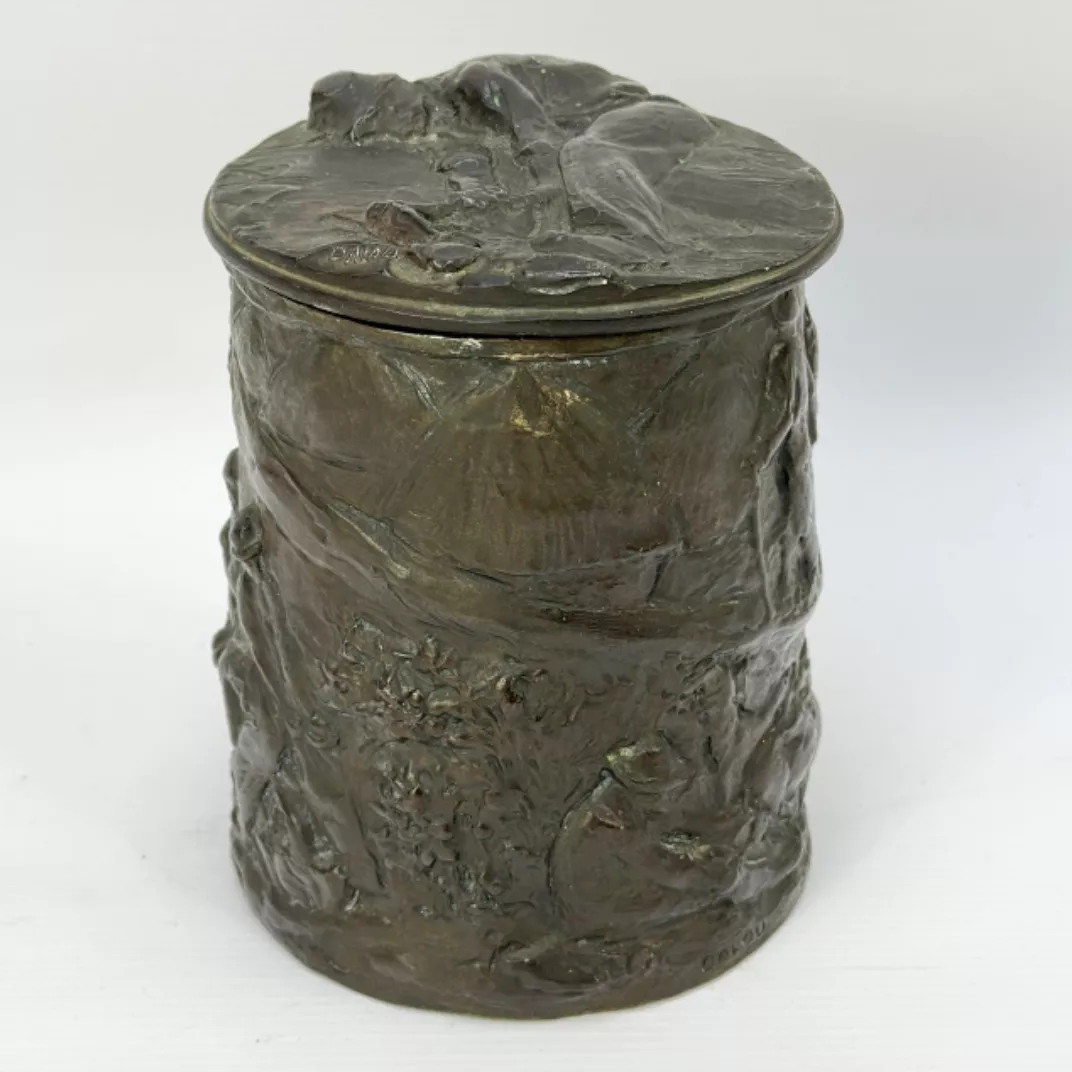
His sculptures, imbued with a striking naturalism, often capture everyday scenes, where he sublimates the simplicity of ordinary life. Some of his works are also part of the neo-baroque movement, reflecting a mastery of movement and dramatic intensity that give his compositions a palpable energy.
He works mainly with bronze and marble, materials he handles with virtuosity to create volumes full of life and dynamism.
Influenced by Jean-Baptiste Carpeaux, he shares with the latter a strong expressiveness and a love for expressive modeling, while developing his own style, imbued with tenderness and humanity.
His sculptures, whether monumental or more intimate, reveal a deep knowledge of anatomy and a keen sense of composition.
The life of Jules Aimé Dalou
Jules Aimé Dalou (1838-1902) was a 19th-century French sculptor and artist, renowned for his works marked by deep political and social commitment.
Born in Paris to a Protestant family, he was brought up in a secular spirit, which forged in him an ardent republicanism. At an early age, he attracted the attention of Jean-Baptiste Carpeaux thanks to his talent for drawing, and was introduced by the latter to the Petite École, which later became the École supérieure des Arts Décoratifs.
In 1854, he entered the École des Beaux-Arts, where he studied both painting and sculpture, quickly developing a predilection for the latter.
To support himself, Dalou worked for ornamentalists, where he met Auguste Rodin, with whom he became close friends. He contributed to the decoration of numerous buildings, demonstrating great skill in the art of goldsmithing, particularly in the service of the Ferrière brothers.
Although his attempts to win the prestigious Prix de Rome failed four times, he was undeterred. His works exhibited at the Salon were acquired by the State, testifying to the growing recognition of his talent.
A staunch Republican, Dalou became actively involved during the Franco-Prussian War, and was appointed provisional administrator of the Louvre by Gustave Courbet, with the mission of preserving the museum's treasures from acts of vandalism.
After the defeat, he joined the Communards and had to go into exile in London after the Semaine Sanglante.
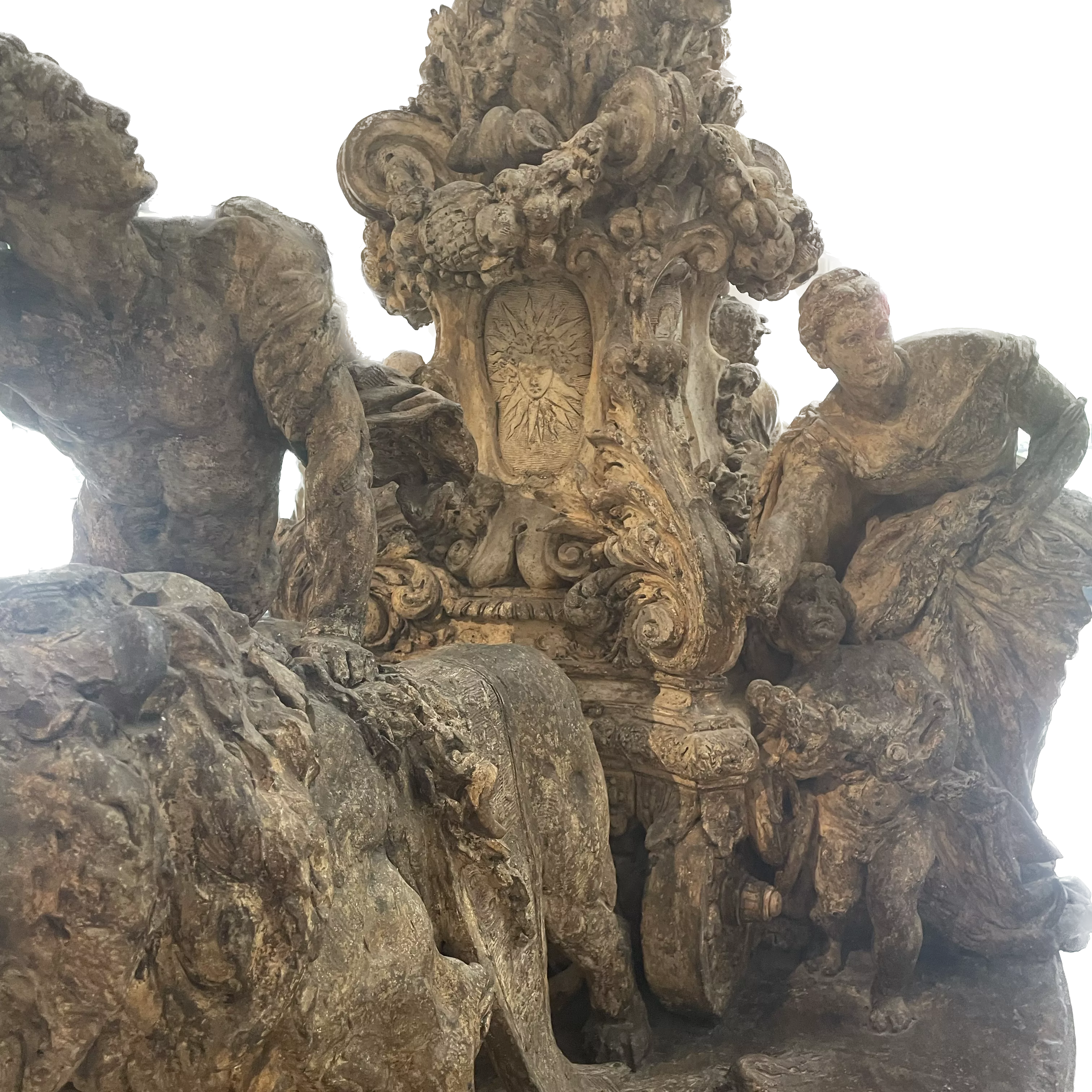
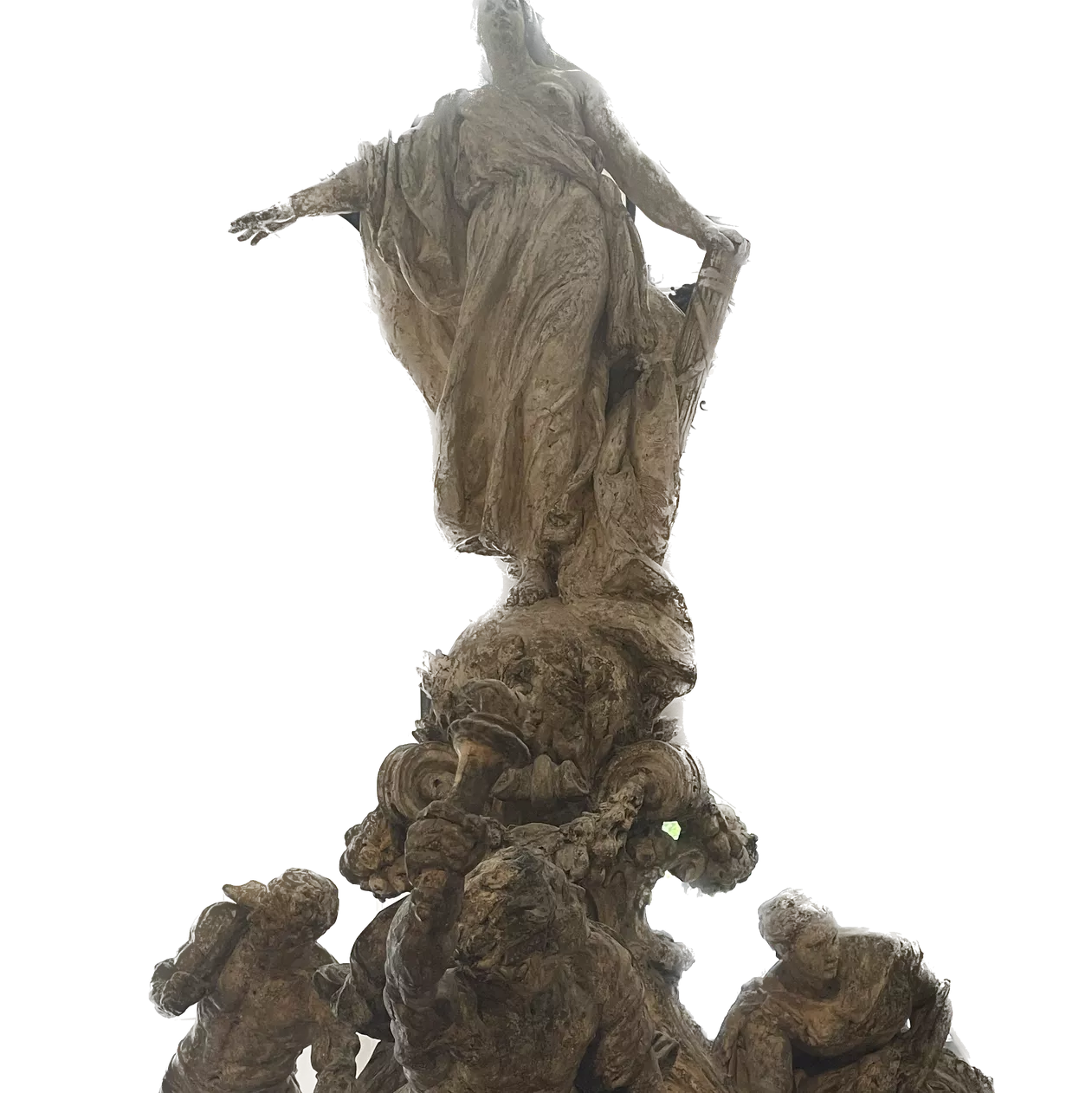
During his exile, he taught and continued to sculpt, influencing the British art scene. His return to France marked the beginning of a fruitful period, during which he devoted twenty years to the realization of his major work, Le Triomphe de la République, an imposing monument which today adorns the Place de la Nation in Paris.
Jules Aimé Dalou died in 1902, the victim of a heart condition, leaving behind an artistic legacy deeply rooted in the ideals of social justice and republican devotion, which continues to fascinate and inspire.
Dalou's legacy
Jules Aimé Dalou leaves behind an artistic legacy marked by his mastery of the human form and his ability to express intense emotions through sculpture.
His works, whose anatomical precision and expressiveness are remarkable, continue to be admired for their dynamism and emotional power, and today he is considered one of the most important sculptors of 19th-century France.
The realization of monumental works for the French state, such as Le Triomphe de la République, will have marked his career, inscribing his art in the national heritage and reinforcing his central role in the public sculpture of his time.
Private collectors play a great role in the preservation of his work, in view of the grandeur and diversity of his production, which is not limited to official commissions.
Many of his sculptures, whether bas-reliefs, portraits or more intimist compositions, thus find their way into private collections, testifying to the enduring appeal of his art.
However, some of his major works are exhibited in museums, ensuring public visibility for his talent and confirming his place in the history of French sculpture.
Focus on La vérité méconnue ou le miroir brisé by Jules Aimé Dalou
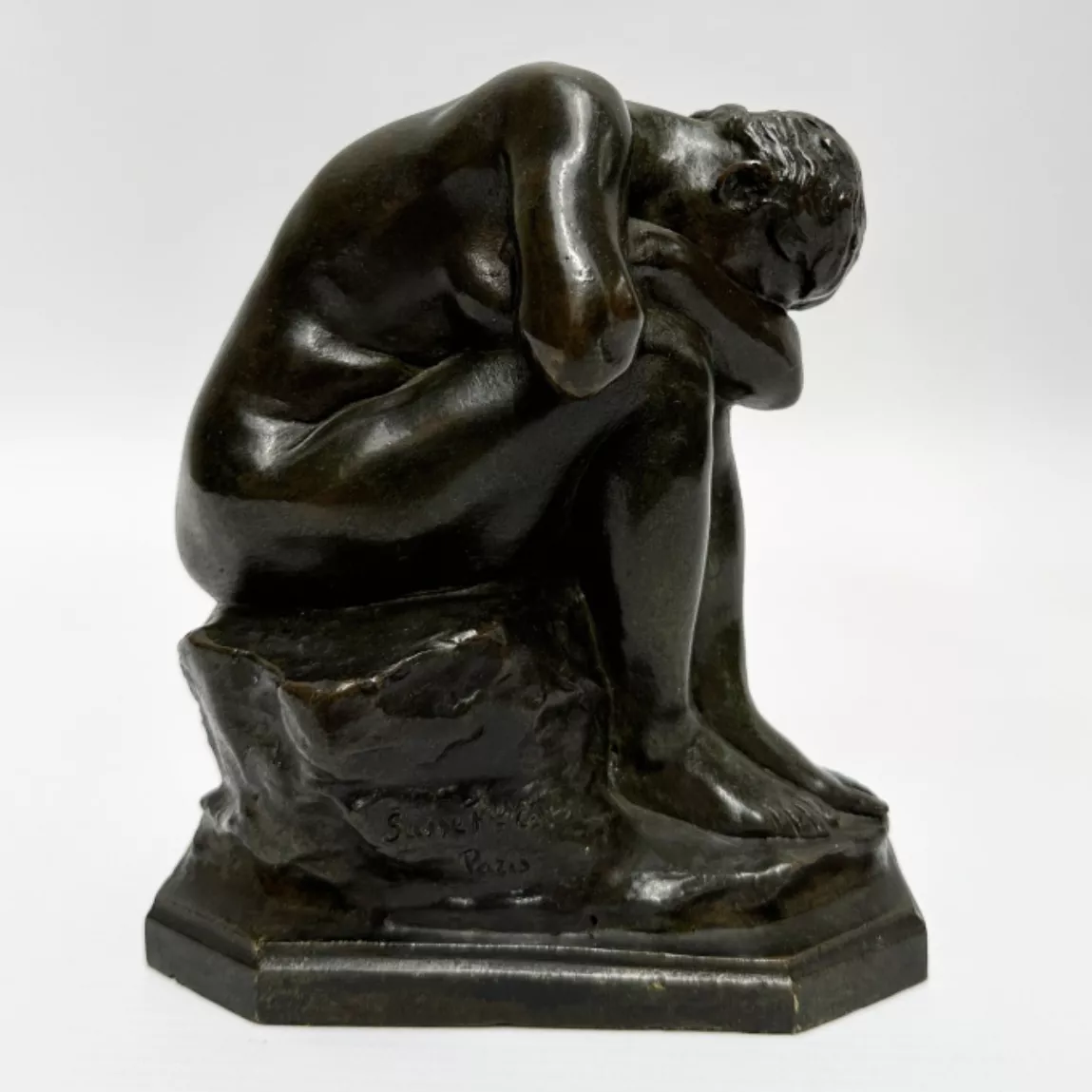
La vérité méconnue ou le miroir brisé is a significant work by Jules Aimé Dalou, illustrating his ability to fuse technique and emotion within a sculpture, and is fairly representative of his approach and artistic vein.
This bronze work features a female figure withdrawn into herself, a choice that expresses both vulnerability and introspection. As in many of Dalou's sculptures, the work is characterized by an important melancholy, the central subject of his work.
The silhouette of the woman, seated on a rough base, is sculpted with remarkable precision. Every curve of the body is carefully worked, revealing an undeniable mastery of human anatomy.
The forms, though realistic, seem to carry an emotional charge, making the figure almost alive. Dalou succeeds in creating a dialogue between body and space, where the figure's withdrawal suggests a rich inner world, but also a palpable despair.
The work's title, La vérité méconnue ou le miroir brisé, evokes universal themes relatively recurrent in the art history of Jules Aimé Dalou's period, the 19th century being marked by significant social changes.
The woman's position, with her head buried between her arms, symbolizes a refusal or inability to face up to a disturbing reality. This gesture of withdrawal evokes an inner struggle against a truth that, although indispensable, is difficult to accept.
In this way, Dalou invites us to reflect on our own relationship with truth and the way it can escape us.
The aspect of the broken mirror is also central to the interpretation of this sculpture. It suggests that truth, though essential, can prove painful and destabilizing. The woman, by protecting herself, gives up a clear vision of herself and the world around her.
This is a reminder that confronting our inner truths can be an unsettling experience, often marked by denial or flight. Through this work, Dalou bears witness to the fragility of the human spirit in the face of reality.
The pedestal, on which the figure rests, plays a symbolic role in the work. It is both solid and rough, reinforcing the idea of an implacable reality that sustains the weight of existence.
This contrast between the softness of the human form and the hardness of the stone suggests a tension between the beauty of life and the hardness of the truths it conceals.
This duality is at the heart of Dalou's work, which, through this sculpture, explores the complexity of human emotions.
Above all, La vérité méconnue ou le miroir brisé is a work that goes beyond mere physical representation to explore profound psychological themes.
Thanks to his realistic style and expressiveness, Dalou succeeds in evoking a multitude of emotions, making this sculpture a true mirror of humanity's inner struggles.
This work testifies to the enduring appeal of his art and its ability to touch the viewer, inviting personal reflection on human truth and vulnerability. In this sense, Dalou asserts himself as an essential sculptor, whose work continues to inspire and resonate in our understanding of the human condition.
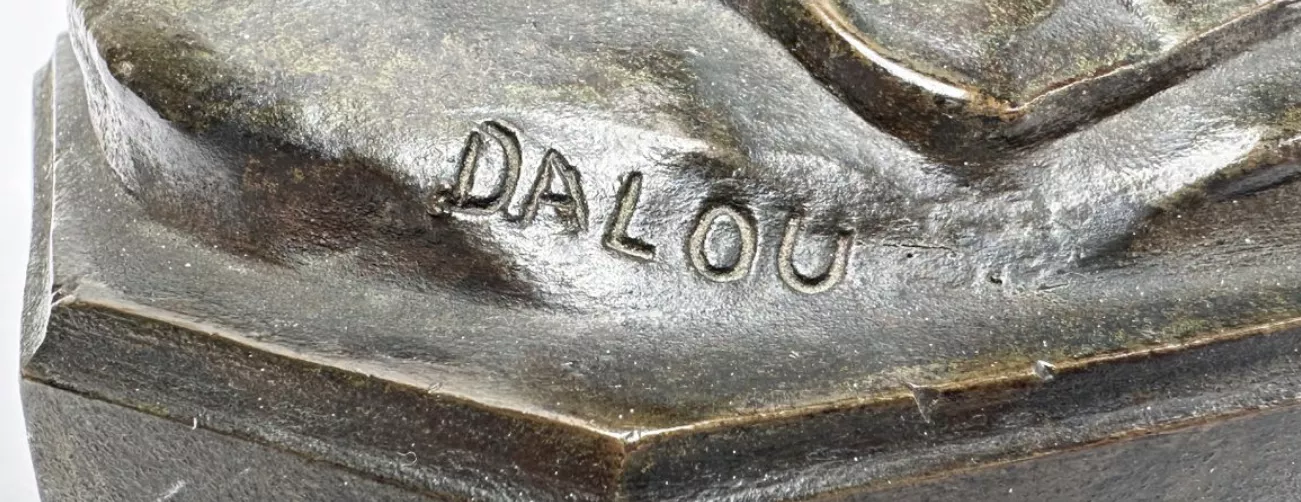
Recognize Dalou's signature
The artist doesn't always sign his works. If you think you own one, it's best to have it appraised. The signature may differ depending on the type of work: sculpture, drawing or painting. There are also copies, which is why expertise is important.
Knowing the value of a work
If you happen to own a work by or after Jules-Aimé Dalou, don't hesitate to request a free appraisal using our form on our website.
A member of our team of experts and chartered auctioneers will contact you promptly to provide you with an estimate of the market value of your work, as well as ad hoc information about it.
If you are considering selling your work, you will also be accompanied by our specialists in order to benefit from alternatives for selling it at the best possible price, taking into account the inclinations of the market.
.Estimate in less than 24h
Works from the same period sold at auction

Estimated 15.000 - 20.000 €
Alfred Auguste Janniot (1889-1968) attributed to : Very large bas-relief

Estimated 600 - 800 €
Alexandre Gabriel DECAMPS (1803-1860) Two children reading.

Estimated 9 000 - 12 000 €
Guillaume FOUACE (1837-1895) Pheasant and hare.

Estimated 10.000 - 15.000 €
Ebridge Ayer BURBANK(1858-1949), Young African-American boy, Oil on panel.

Estimated 800 - 1.500€
Barye, seated lion
Discover in the same theme

Rating and value of paintings by Hans Zatzka
Hans Zatka is a 19th-century neoclassical painter whose works are highly valued at auction.
Learn more >

Rating and value of furniture, desks, chests of drawers by P...
Paul Sormani was a 19th-century cabinetmaker who produced a number of pieces of furniture that are highly valued at auction. Estimate in 24h
Learn more >

Rating and value of bronzes and sculptures by Alexandra Laza...
Alexandra Lazareff is a contemporary artist who has created numerous bronze sculptures that command high prices and are highly valued.
Learn more >

Secure site, anonymity preserved

Auctioneer approved by the State

Free and certified estimates
Frequently asked questions
-
Who was Jules Aimé Dalou, and what was his artistic context?Jules Aimé Dalou (1838–1902) was a 19th-century French sculptor and a leading figure of Realism and Neo-Baroque. Influenced by Jean-Baptiste Carpeaux, he distinguished himself through his political and social activism, his exile during the Paris Commune, and his monumental works such as *The Triumph of the Republic* at Place de la Nation. His sculptures, marked by naturalism and expressiveness, capture the human condition with a remarkable mastery of anatomy.
-
What are the price ranges for Jules Aimé Dalou's sculptures?Prices for Dalou’s works vary considerably depending on the medium and quality: drawings and watercolors range from €230 to €800, bronze sculptures from €10 to €119,825, bronze bas-reliefs between €120 and €10,000, and marble sculptures between €1,300 and €130,470. This wide range reflects the diversity of his body of work and the particular interest that French and English collectors have in his pieces.
-
How can you authenticate a work by Jules Aimé Dalou?Authenticating a work by Dalou requires professional expertise, particularly because the artist did not consistently sign his works and because there are copies on the market. We recommend that you request a free appraisal using the form on the Auctie's website: a certified expert or auctioneer will contact you shortly to examine the work and provide you with a comprehensive appraisal.
-
Is this the right time to sell a Dalou sculpture?Yes, now is a good time to sell: Dalou’s market value is particularly high, and his sculptures are in steady demand among French and English collectors. The market for his works is vibrant, and the prices achieved at auction confirm the enduring interest in this major 19th-century artist.
-
How does the free appraisal at Auctie's work, and how do I sell my artwork?The appraisal is free and non-binding: simply fill out a form on the website, and a certified expert or auctioneer will contact you shortly to examine the artwork and provide you with an appraisal. If you decide to sell, our specialists will guide you through the process from appraisal to auction, offering you the best options to achieve the highest possible price based on current market trends.
