



Rating and value of works, paintings, drawings by Henri Fantin-Latour

Key takeaways
- Fantin-Latour's floral still lifes sell for between €10 and €3.7 million, with strong demand from British and American collectors.
- Paintings command the highest prices (€500 to €3.7 million), while watercolor drawings range from €85 to €102,640 and prints from €10 to €28,740.
- In 2022, “Still Life with Daisy Queens” exceeded its estimate of €697,480–€929,970, selling for €1.9 million at auction.
If you own a work by or after the artist Henri Fantin-Latour, and would like to know its value, our state-approved experts and auctioneers will offer you their appraisal services.
Our specialists will carry out a free appraisal of your work, and provide you with a precise estimate of its value on the current market.
Then, if you wish to sell your work, we will direct you to the best possible arrangement to obtain the optimum price.
Rating and value of the artist Henri Fantin-Latour
Fantin-Latour is an artist who came from symbolism and realism. His legacy consists mainly of paintings and drawings. At present, prices for his works are exploding at auctioneers' gavels.
His flower still lifes are particularly prized above all by English and American buyers, and the price at which they sell on the Art market ranges from €10 to €3,712,930, a considerable delta but one that speaks volumes about the value that can be attributed to Fantin-Latour's works.
In 2022, a painting entitled Nature morte aux reines-marguerites sold for €1,918,070 while it was estimated at between €697,480 and €929,970. The artist's quotation is very high and varies according to the quantity of works present on the auction market.
Order of value from a single work to the most prestigious
Technique used | Result |
|---|---|
Estamp | From €10 to €28,740 |
Drawing - watercolor | From 85 to 102 640€ |
Painting | From 500 to 3 712 930€ |
Estimate in less than 24h
Style and technique of the artist Henri Fantin-Latour
Henri Fantin-Latour, a central figure of the 19th century, is known for his unusually elegant still lifes of flowers. His style is characterized by a classical rigor, inherited from the academic tradition, but enriched by a modern sensibility.
He favors meticulous realism, where every detail, from the velvety softness of a petal to the texture of a vase, is captured with remarkable finesse. The choice of a subtle palette, dominated by pastel tones and hushed nuances, reinforces this impression of softness and tranquility.
This technical refinement is combined with a composition that is always carefully orchestrated, where harmony and balance play an essential role.
He works with light with particular attention, staging his bouquets like precious objects, bathed in a diffuse clarity that seems to suspend them in time.
Fantin-Latour, while moving away from Impressionist boldness, opts for a more intimate, contemplative style of painting, revealing an unrivalled mastery of floral painting.
He follows in the stylistic vein of several artists, including his wife, Victoria Fantin-Latour, with whom he collaborated, but also in those of older artists such as Anne Vallayer-Coster. In addition, several artists have been influenced by her work, including Paul Aïzpiri.
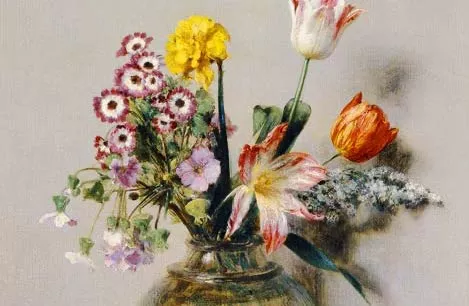
Henri Fantin-Latour, master of flower still lifes
Henri Théodore Fantin-Latour (1836-1904) is recognized as an essential master of flower still lifes, bringing his own depth and elegance to this often deprecated genre.
Born in Grenoble, he received his early artistic training from his father, Théodore Fantin-Latour, before moving to Paris in 1850.
Enrolled at the Petite École de Dessin, then at the Beaux-Arts de Paris, he perfected his technique with Edgar Degas and developed a pronounced taste for self-portraiture.
It was in London, where he was a regular visitor, that his career really took off. His works were well received, particularly by British collectors.
At this time, he also learned the art of engraving from Edwin Edwards, which enriched his artistic vocabulary. His still lifes, particularly those of flowers, began to achieve growing success, thanks in part to his exhibitions at London's Royal Academy.
Fantin-Latour deliberately chose to devote himself to still life, a genre considered minor by the Académie des Beaux-Arts.
He saw it as an opportunity to demonstrate that flower painting can equal, even surpass, the great historical subjects through the subtlety of its composition and mastery of light.
In France, although he exhibited alongside major figures such as Manet, Renoir and Monet, he maintained a more traditional approach, preferring finesse and meticulousness to the boldness of the Impressionists.
Married to Victoria Dubourg, also a painter, Fantin-Latour found their union a source of inspiration and artistic support. While his still lifes remain his most famous work, his affiliation with Symbolism shines through more strongly in his etchings.
He died in 1904 in Buré, leaving behind an artistic legacy profoundly marked by his sense of detail and his attachment to the simple beauty of flowers, works today considered timeless masterpieces.
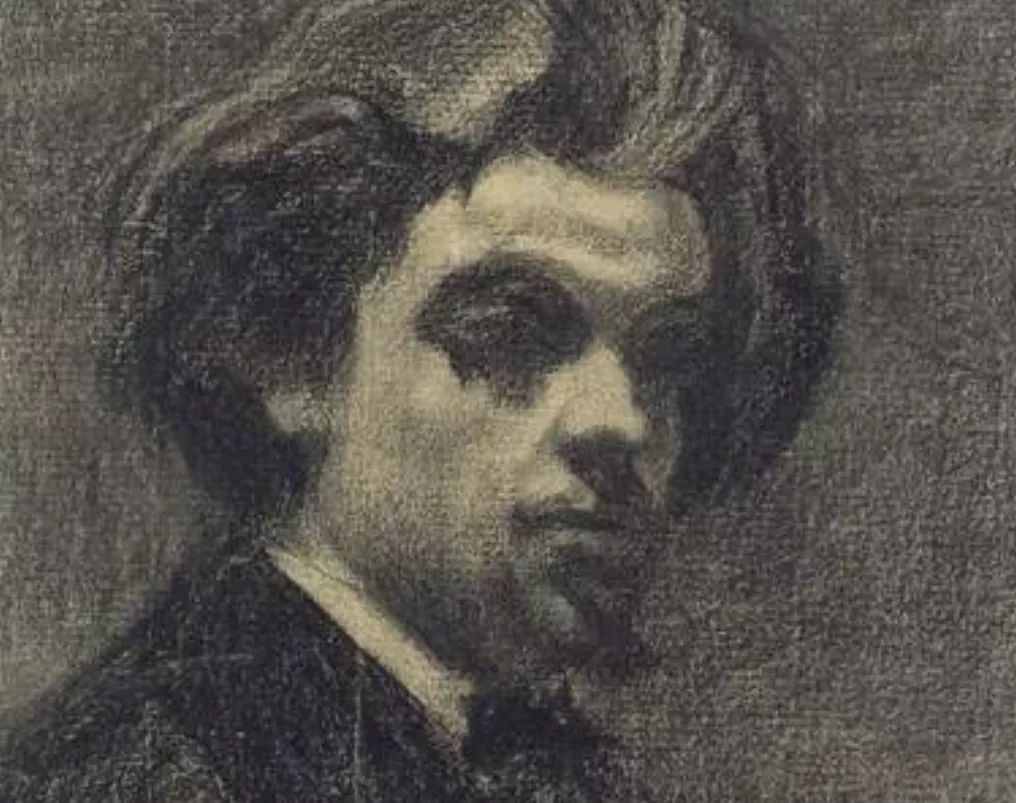
The legacy of Fantin-Latour
Fantin-Latour leaves behind an artistic legacy marked by an unrivalled mastery of still life and a versatility rare in his time.
His works, admired as much for their technical precision as for their emotional depth, continue to fascinate and bear witness to his importance in the history of 19th-century art.
He died leaving behind an imposing artistic body of work, heralding the currents to come, notably through his concern for quasi-photographic detail. His interest in photography, visible in his collection of erotic snapshots, reflects an artistic curiosity that went beyond painting.
Private collectors played an essential role in preserving his work, although some of his pieces found their way into museums.
Despite his discreet character, Fantin-Latour's influence endures, both through the gentleness of his floral compositions and his subtle approach to symbolism, found notably in his prints.
One work, one look: By the table by H. F-L.
Focus on Roses in a dish, Henri Fantin-Latour
Roses in a dish: a celebration of ephemeral beauty
In "Roses in a dish", Henri Fantin-Latour plunges us into a delicate, refined exploration of still life. This work, emblematic of his talent, reveals a gentle gesture and a subtle balance between color and light, offering a poetic vision of flowering.
Each flower is painted with remarkable meticulousness, capturing the velvety texture of their petals and the richness of their nuances.
Fantin-Latour succeeds in bringing each rose to life, making them almost palpable. This composition exudes a soothing sensuality, an atmosphere of serenity that invites contemplation.
The pure white dish serves as a showcase for these dazzling flowers. Its elegant, slightly curved shape creates a harmonious contrast with the density of the roses, offering a visual balance that seems to defy gravity.
The choice of this modest yet refined vessel underlines the idea that beauty can reside in simplicity. It reminds us that nature itself, often perceived as extravagant, finds its value in everyday, accessible elements.
The background, all subtle nuances, plays a primordial role in the composition. Like a delicate fog, it envelops the roses and the dish, softening the contours while accentuating the vibrant colors.
This almost ethereal atmosphere creates an effect of depth that evokes an intimate, secret space, where the viewer can get lost in the details.
Gentle shadows glide across the canvas, creating plays of light that highlight the beauty of the flowers, almost as if they were glowing from within.
Every detail of this work reveals Fantin-Latour's passion for nature and his commitment to art. The roses, in particular, are not just flowers; they embody a reflection on the transience of life.
Their delicate forms and ephemeral radiance remind us that beauty does not last, that it is both precious and fragile. This reflection invites the viewer to ponder, to appreciate this suspended moment, to celebrate nature while accepting its impermanence.
Fantin-Latour doesn't hesitate to explore symbolism through his painting. Roses can also be interpreted as symbols of love and passion, adding an emotional dimension to the work.
So, Roses in a Dish doesn't just depict flowers, but rises to a deeper level of meaning, touching on the universal of human feelings.
Fantin-Latour's technical mastery is also evident in his ability to capture variations in light and color.
The light reflections on the petals add an almost three-dimensional dimension to the whole, making the work vibrant and alive. Skillfully placed touches of white and yellow create a contrast that reinforces the richness of the roses and their brilliance.
In conclusion, Roses in a Dish is much more than a simple still life; it's an ode to the fleeting beauty of life. Through this work, Fantin-Latour reminds us that art can transcend the everyday, transforming fleeting moments into eternal memories.
The artist's legacy endures, like the roses themselves, embodying a beauty that remains etched in the mind, reminding each of us of the power that art can have to capture the moment.
Recognizing Fantin-Latour's signature
The artist doesn't always sign his works. If you think you own one, it's best to have it appraised. The signature may differ depending on the type of work: sculpture, drawing or painting. There are also copies, which is why expertise is important.
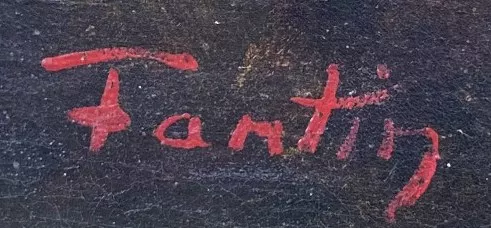
Knowing the value of a work
If you happen to own a work by Henri-Fantin Latour or after the artist, don't hesitate to request a free appraisal using our form on our website.
A member of our team of experts and certified auctioneers will contact you promptly to provide you with an estimate of the market value of your work, not forgetting to send you ad hoc information about it.
If you are considering selling your work, you will also be accompanied by our specialists in order to benefit from alternatives for selling it at the best possible price, taking into account market inclinations.
Estimate in less than 24h
Works from the same period sold at auction

Estimated 15.000 - 20.000 €
Alfred Auguste Janniot (1889-1968) attributed to : Very large bas-relief

Estimated 2 000 € - 3 000 €
Delphin ENJOLRAS (1857-1945) "A Midsummer Night's Dream", Oil on canvas

Estimated 600 - 800 €
Alexandre Gabriel DECAMPS (1803-1860) Two children reading.

Estimated 9 000 - 12 000 €
Guillaume FOUACE (1837-1895) Pheasant and hare.

Estimated 600 € - 800 €
Henri ZUBER (1844-1909), Bridge at Artemare. Oil on canvas.

Estimated 10.000 - 15.000 €
Ebridge Ayer BURBANK(1858-1949), Young African-American boy, Oil on panel.
Discover in the same theme

Value and quotation of Émile Gallé's earthenware works
Nineteenth-century artist Émile Gallé produced a considerable number of works, notably in earthenware. Their vote is high. Estimated in 24h.
Learn more >

Rating and value of works, paintings by Louis Léopold Boilly
Louis Léopold Boilly is a 19th-century neoclassical painter whose trompe-l'oeil works are particularly valuable, and his price is stable.
Learn more >

Rating and value of artists and objects by Ernest Baptiste L...
Ernest Baptiste Leveillé was a glassmaker active in the second half of the 19th century who produced vases and other objects that fetch high prices at...
Learn more >

Secure site, anonymity preserved

Auctioneer approved by the State

Free and certified estimates
Frequently asked questions
-
Who was Henri Fantin-Latour, and why is he significant in art history?Henri Fantin-Latour (1836–1904) was a renowned 19th-century master of floral still life. Born in Grenoble, he settled first in Paris and then in London, where his career took off among British collectors. A central figure in Realism and Symbolism, he adopted a more traditional approach than the Impressionists, emphasizing finesse, meticulous detail, and an unparalleled mastery of light and composition.
-
What are the prices and market values of Fantin-Latour's works on the current market?Fantin-Latour's prices vary considerably depending on the type of work. Prints sell for between €10 and €28,740, drawings and watercolors for between €85 and €102,640, while paintings fetch prices ranging from €500 to €3,712,930. His floral still lifes are particularly sought after by British and American buyers, and prices continue to rise steadily at auction.
-
How can a work attributed to Henri Fantin-Latour be authenticated?Authentication requires professional expertise, as the artist did not consistently sign his works and copies exist. We recommend that you submit your artwork for a free appraisal using the form on the Auctie’s website: our experts and state-certified auctioneers will contact you within 48 hours to assess the authenticity and value of your item, with no obligation.
-
How do you sell a work by Fantin-Latour?If you own a work by Fantin-Latour or an after-image, Auctie's will guide you through the process from appraisal to auction. Request a free appraisal through our website: our specialists will guide you toward the best possible sales approach and advise you on the optimal strategy to achieve the best price, taking current market trends into account.
-
Is this the right time to sell a work by Fantin-Latour?Yes, this is an excellent time to sell. Prices for Fantin-Latour’s works are skyrocketing at auction, particularly for his floral still lifes, which are in high demand among British and American collectors. The artist’s market value is very high and continues to rise, making his work an attractive art investment to capitalize on today.
