



Rating and value of paintings by Paul Aïzpiri

Key takeaways
- Aïzpiri’s works, particularly his Expressionist paintings, fetch up to €110,000 at auction, often exceeding their initial estimates.
- Estimates vary by medium: oil on canvas from €100,000 to €110,000; watercolor drawings from €50 to €23,200; prints from €10 to €2,900.
- A figurative painter of the École de Paris since 1940, Aïzpiri is known for his colorful portraits and landscapes in warm Mediterranean hues, with his floral still lifes being particularly popular among collectors.
If you own a work by or based on the artist Paul Aïzpiri and would like to know its value, our state-approved experts and auctioneers will guide you.
Our specialists will carry out a free appraisal of your work, and provide you with an accurate estimate of its value on the current market.
Then, should you wish to sell your work, we will direct you to the best possible arrangement to obtain the optimum price.
Artist's rating and value
Paul Aïzpiri's work is common and highly rated on the auction market. His works arouse interest among collectors and art lovers, particularly those who appreciate painting associated with the École de Paris.
The most sought-after pieces are expressionist paintings. Thus, a work signed Aïzpiri can fetch millions of euros at auction, like his painting La terrasse sur la baie de Saint-Tropez,dating from 1969 sold for €110,000, while it was estimated at between €70,000 and €90,000.
High upside potential is detected in his works, particularly his colorful oil-painted landscapes and still lifes.
Order of value from the most basic to the most prestigious
Technique used | Result |
|---|---|
Ceramics | From €300 to €700 |
Estamp - multiple | From €10 to €2,900 |
Drawing - watercolor | From €50 to €23,200 |
Oil on canvas | From €100 to €110,000 |
Estimate in less than 24h
The artist's style and technique
Paul Aïzpiri moved to Paris in the 1940s. He joined the École de Paris, a group of cosmopolitan artists attracted by the artistic richness of the capital. His work, deeply marked by his Basque roots, remains faithful to figurative painting.
His works, often portraits and scenes of daily life, are characterized by great vitality. Like some of his contemporaries, Aïzpiri seeks to express direct emotions through his subjects, rather than depicting them with an eye for detail. He emphasizes the strength of forms rather than their precision.
His bright, vivid color palette is dominated by warm hues, evoking the light of the south. The textures he uses lend relief to his compositions, while accentuating the human presence in his paintings.
In his portraits, the faces are stylized, but always imbued with a profound humanity. They convey universal feelings such as joy, energy or tenderness.
His paintings capture the essence of his models, in a vibrant, expressive style, sometimes reminiscent of the Fauvists without the raw exuberance of form. For Aïzpiri, painting is a tribute to life, full of color and emotion.
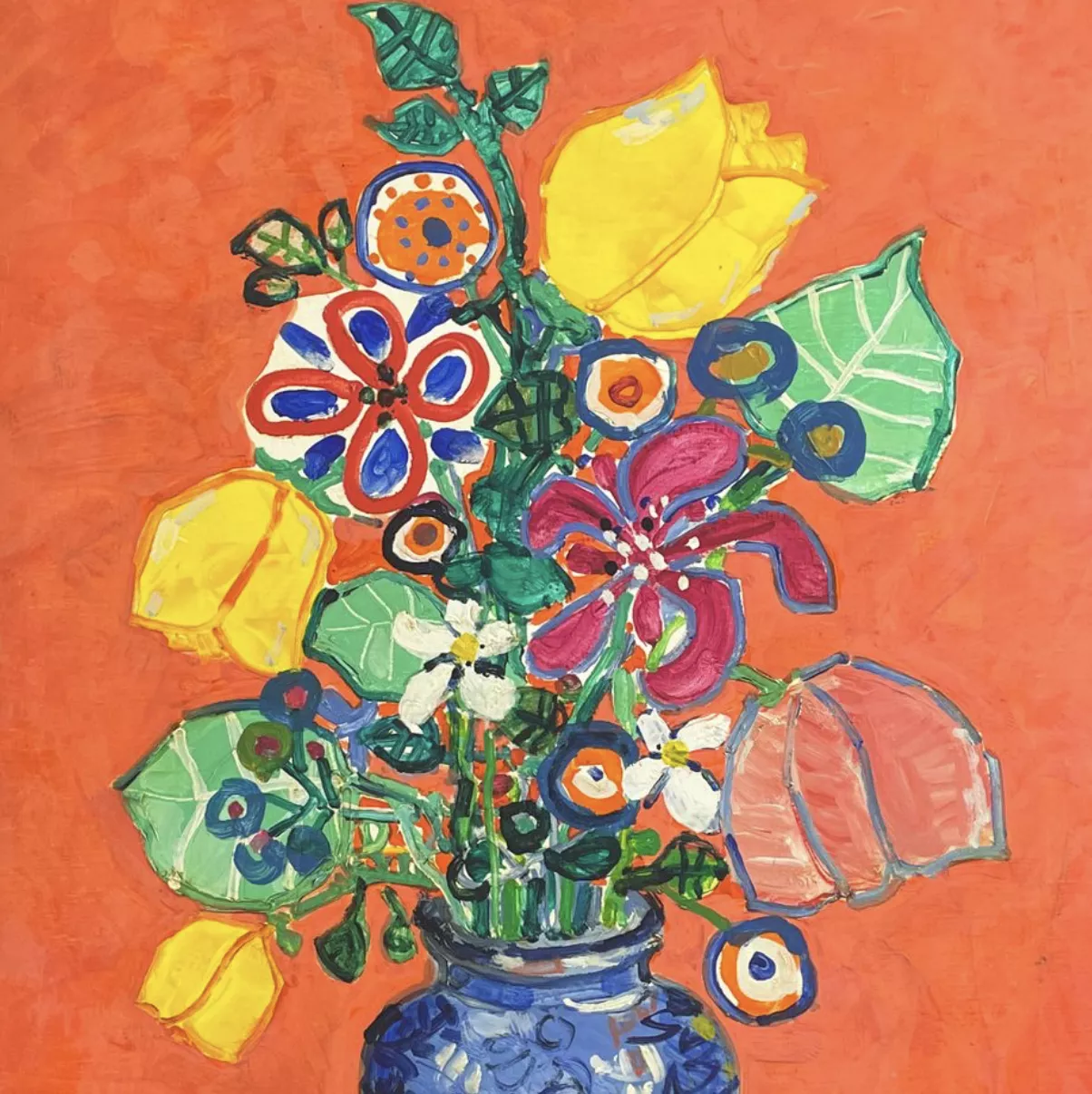
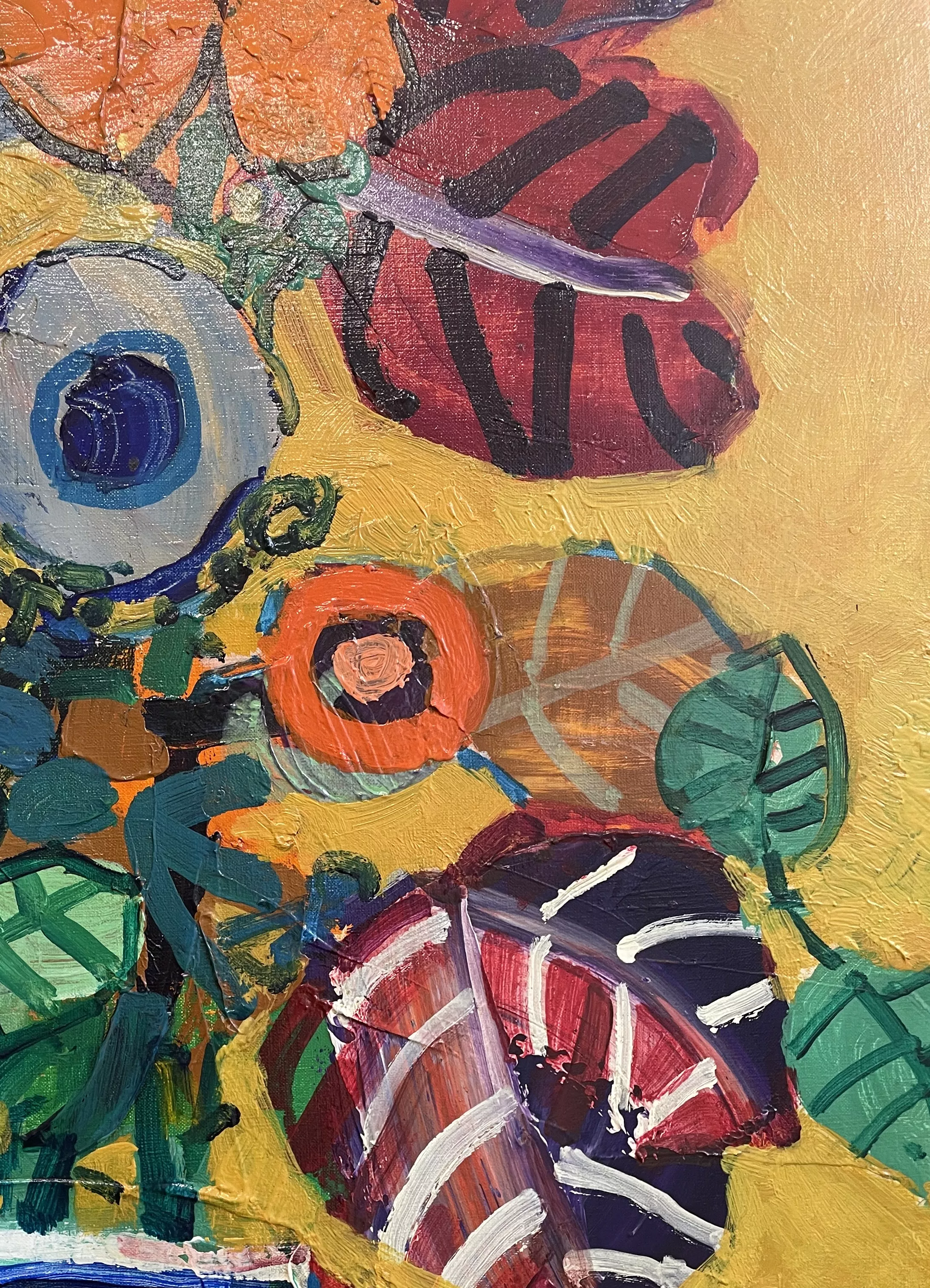
The life of Paul Aïzpiri
Paul Aïzpiri (1919-2016), French painter, was born in Paris into a family of artists of Basque origin. From an early age, he was immersed in an artistic environment that would shape his career. From childhood, he was passionate about drawing and painting, but it was only after the Second World War that he could really devote himself to his art.
In the 1940s, he moved to Paris, attracted by its creative energy, particularly in Montparnasse, a meeting place for artists from all over the world. He rubbed shoulders with painters such as Bernard Buffet, but remained deeply attached to his own Mediterranean roots, which would color his palette.
These were difficult years in material terms, but they marked the start of a rich and colorful artistic career. Aïzpiri took part in numerous exhibitions, where he quickly made a name for himself. He stands out for his ability to create vivid scenes of life, imbued with warmth and vitality.
Specializing in portraits and landscapes, Aïzpiri depicts the human figure with a keen sense of color and a great generosity of material.
Contrary to some of his contemporaries, who explore more abstract or minimalist forms, Aïzpiri remains faithful to figurative painting, where emotion dominates.
His works, influenced by fauvism and post-impressionism, are marked by an explosion of bright colors, reflecting his attachment to light and joie de vivre.
Although his art quickly met with some success, notably through exhibitions abroad, Aïzpiri remained a discreet man, reluctant to seek the limelight.
His career is stable, marked by international recognition, with regular exhibitions in Paris and major cities such as Tokyo and New York.
Throughout his life, Paul Aïzpiri remained faithful to his style, which he evolved without ever betraying his colorful, optimistic vision of the world.
He passed away in 2016, leaving behind a luminous body of work, celebrated for its sensitivity and humanity. Aïzpiri is now recognized as a major figure in French figurative painting, admired for his ability to capture the very essence of life in his vitality-filled paintings.
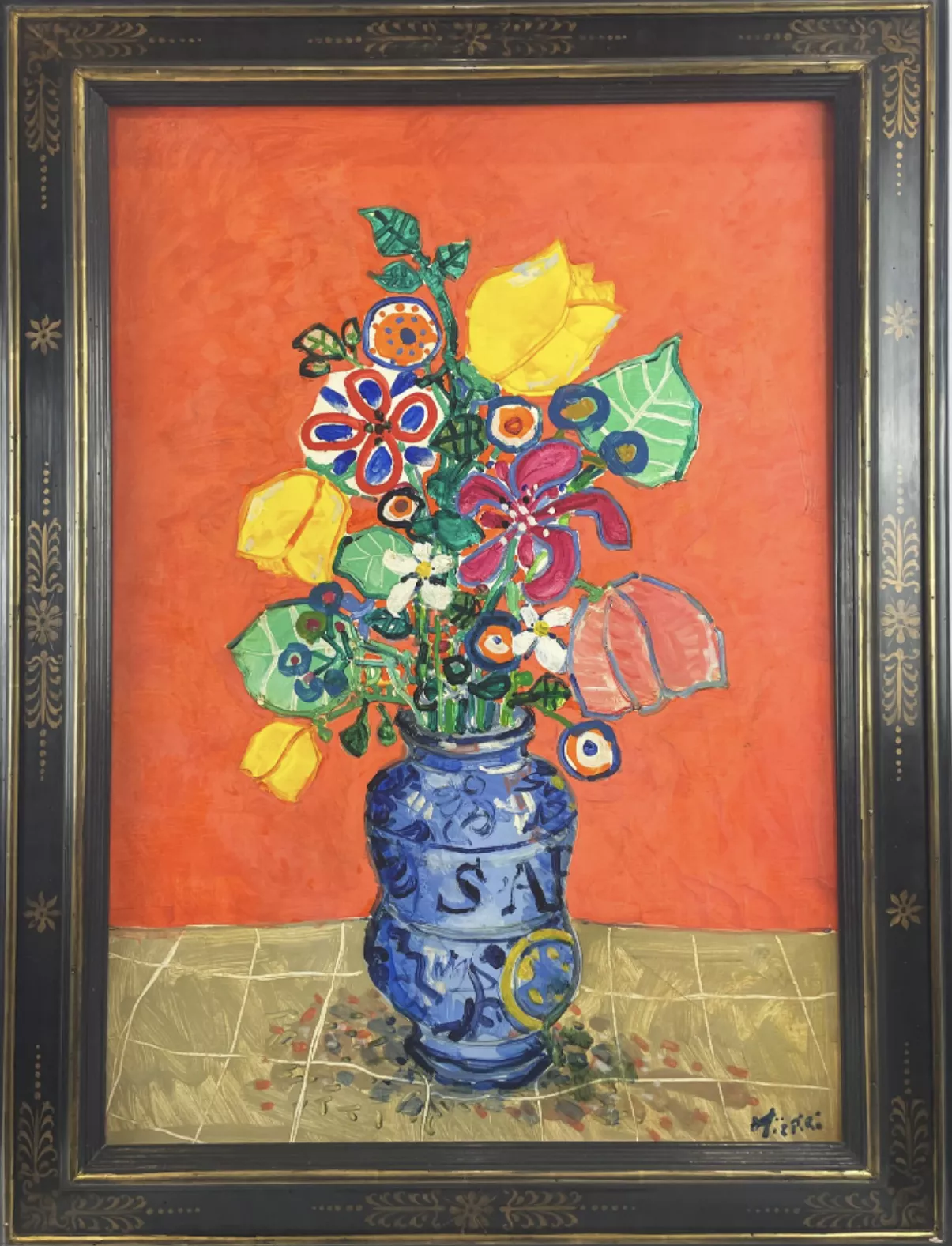
Focus on Paul Aïzpiri's still life of flowers (cover)
This painting by Paul Aïzpiri depicts a bouquet of flowers in a vase, a seemingly simple composition, but one of remarkable visual intensity.
The luminous yellow background immediately catches the eye, giving the work a radiant warmth that evokes the Mediterranean light so dear to the Basque-born artist.
This bright yellow creates a dynamic, joyful atmosphere, bathing the flowers in a kind of vibrant halo. This color dominates the entire canvas, but far from overwhelming the rest of the composition, it allows the other hues to assert themselves all the more strongly.
The flowers themselves, stylized and almost naïve, recall the influence of fauvism, a movement that had a profound effect on Aïzpiri. As with Maurice de Vlaminck, colors here are primary and frank, with reds, oranges and blues seemingly dancing across the canvas.
However, where Vlaminck often plays on the lightness and elegance of lines, Aïzpiri brings a thickness of matter that lends his compositions a more raw, spontaneous energy. The flowers, with their simplified forms, almost float on the canvas, detaching themselves from the luminous background, yet remaining firmly anchored in the pictorial material.
Aïzpiri's work is also reminiscent of that of Raoul Dufy and of Jean Puy, two other masters of color and vitality. Like Dufy, Aïzpiri favors clarity of form and chromatic exuberance.
Floral motifs, stylized to the extreme, seem almost abstract in their treatment, yet retain a strong figurative presence. Petals and leaves, with their geometric shapes and saturated colors, bring a sense of movement and freedom.
This deliberate simplification of forms creates an almost decorative composition, without making it superficial. On the contrary, Aïzpiri manages to infuse every detail with heartfelt emotion.
The vase containing this bouquet is also a key element of the composition. Its imposing presence and geometric motifs add a decorative dimension to the work. The way Aïzpiri plays with the vase's shapes and colors echoes her work with materials.
The vase, with its bright blue lines and stylized details, seems to dialogue with the rest of the composition, creating a perfect balance between structure and spontaneity. This brings to mind Pablo Picasso's work on ceramics, where the simplification of form and emphasis on material give the object a new artistic dimension.
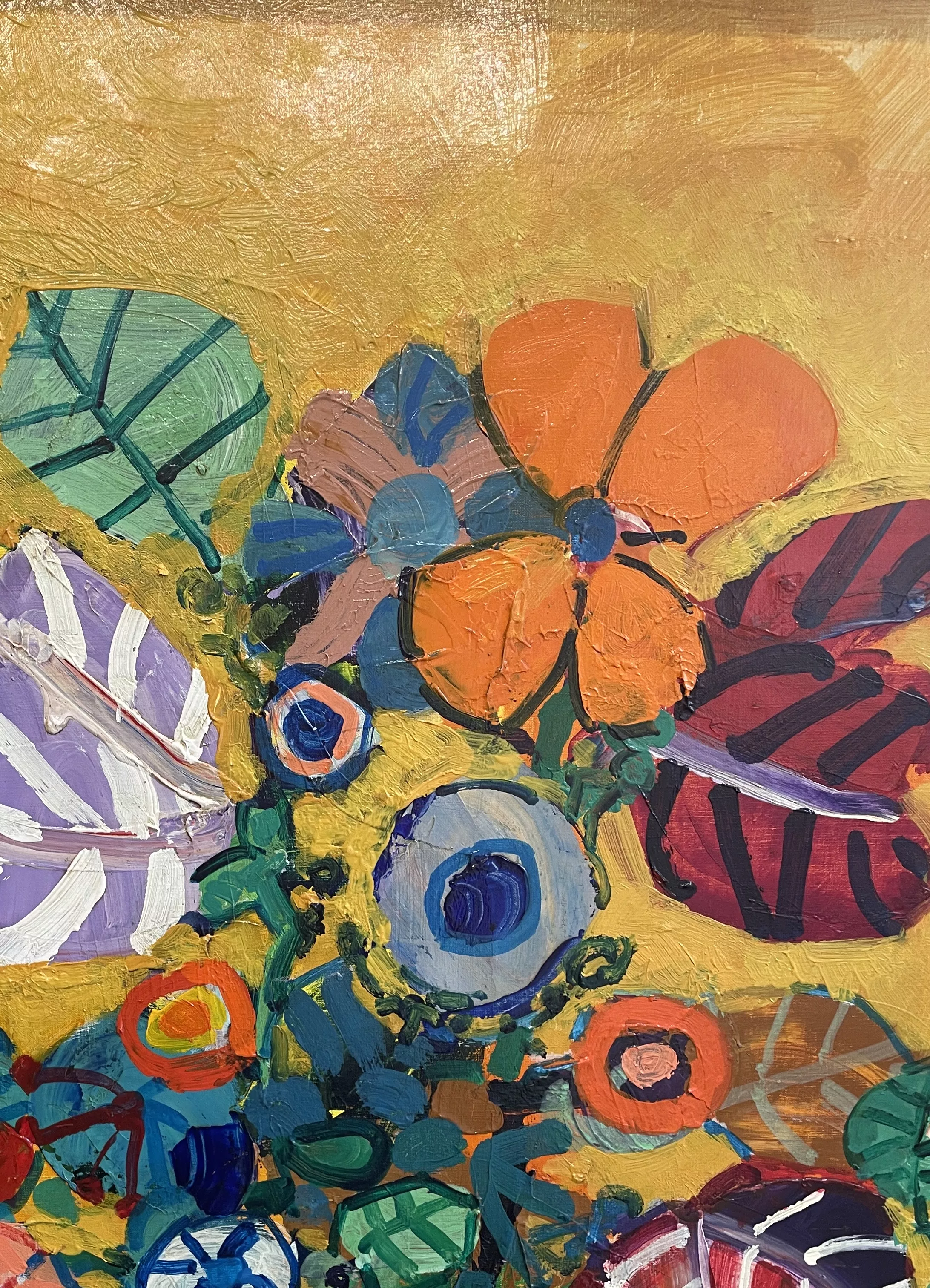
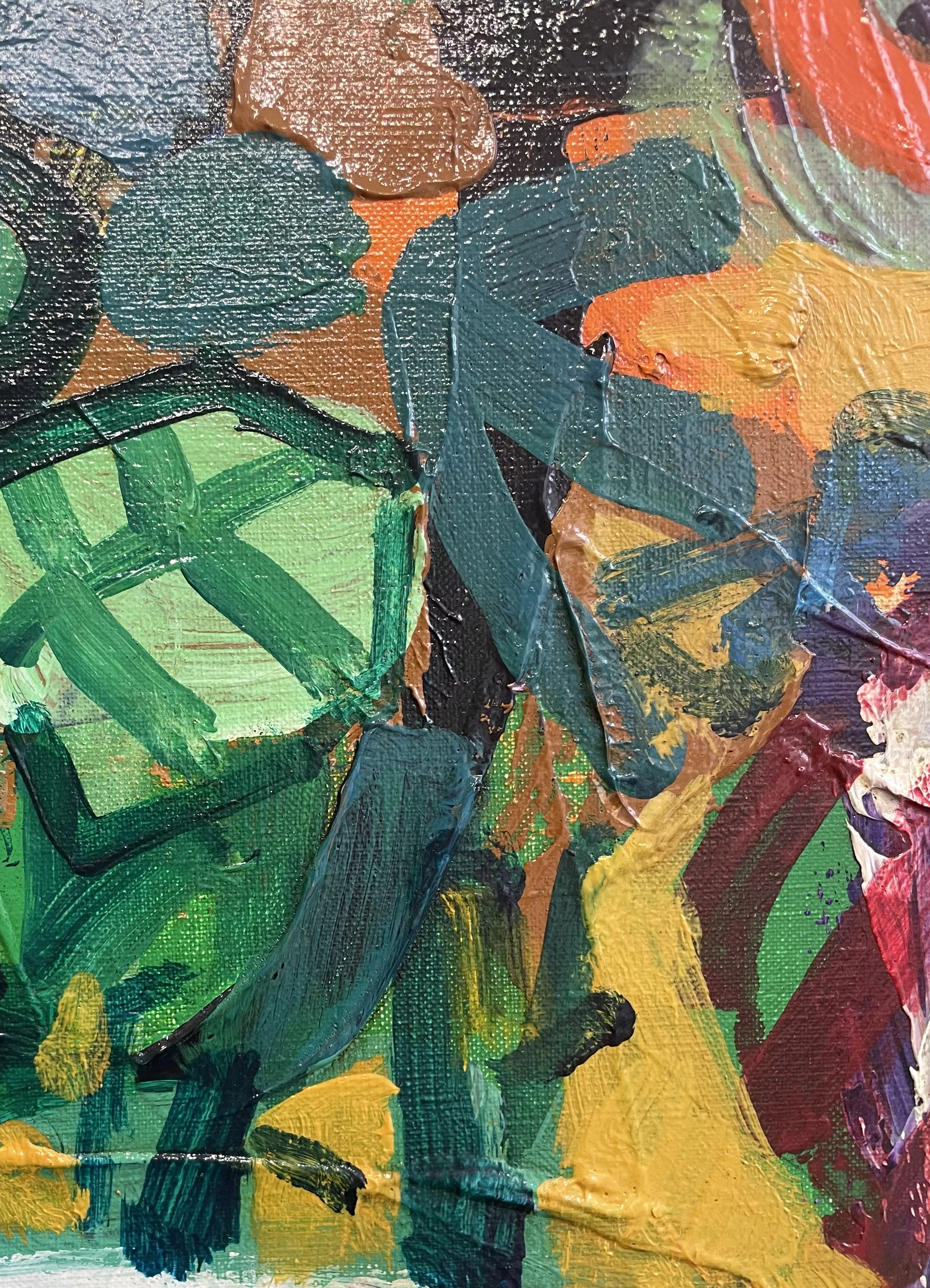
The textural richness of the painting is also noteworthy. Aïzpiri uses generous, almost sculptural brushstrokes to create relief and give her work a tactile dimension. This way of working with matter reinforces the emotional intensity of the painting.
Each flower, each leaf seems to have a life of its own, as if they had been shaped with the same vital energy that the artist infuses into the whole of his work.
Aïzpiri's whole soul can be found in this painting, this love for color, matter, and this quest for a painting that celebrates life. Unlike some of his contemporaries who ventured into more abstract or minimalist territory, Aïzpiri remains faithful to the figure, to representation.
But he does so with a freedom of tone and an intensity that make his works immediately recognizable. His compositions, even the simplest ones like this bouquet of flowers, are imbued with a vitality and generosity that is rare.
In conclusion, this painting by Paul Aïzpiri bears witness to his talent for capturing the beauty and energy of the world around him. He bridges the gap between a figurative tradition and a modern approach to color and material, following in the footsteps of the great colorists of the 20th century.
His bold use of vivid hues, combined with a simplification of form, places this work in a tradition that celebrates the still life of flowers in all its aspects. Here, Aïzpiri offers us a still life brimming with life and emotion, reminding us that, for him, painting is above all a celebration of existence.
L'empreinte de Paul Aïzpiri
Paul Aïzpiri, although he never achieved the renown of certain giants of modern art, leaves a singular and lasting imprint on the art world. His work, imbued with a colorful vitality and joie de vivre, appeals to a growing number of collectors.
Through his compositions, Aïzpiri has captured a certain essence of everyday beauty, always marked by a touch of modernity. Her floral scenes, landscapes and portraits, often bathed in vibrant colors, reflect a search for authenticity, halfway between tradition and the avant-garde.
His paintings, dominated by bold, vibrant colors, testify to a technical mastery but also to a more personal approach to painting, where emotion and instinct take precedence over meticulous detail.
This singular treatment, both expressive and joyful, is today the subject of growing interest among art lovers. The liveliness of his works, whether still lifes or landscapes, seduces with its communicative energy and ability to transfigure reality through color.
Despite his discreet recognition within institutions, Aïzpiri's works are mainly preserved in private collections, where they enjoy an intimate and personal appreciation. This preservation by dedicated collectors is essential to the survival of his artistic legacy.
These works, sometimes still underestimated compared to other contemporary artists, are gradually gaining in value, both for their quality and their rarity on the market.
At specialized auctions, it is not uncommon to see Aïzpiri's paintings fetch respectable prices, consolidating his place among the artists appreciated by connoisseurs.
Paul Aïzpiri's quotation, although it has fluctuated over the years, now seems to have stabilized, buoyed by continuing interest in his work. While his name has never achieved the international fame of artists such as Picasso or Braque, his canvases are nonetheless prized for their unique vitality and timelessness.
His floral scenes, in particular, continue to amaze with the strength of their composition and the richness of their palette. Collectors, sensitive to this expressiveness, are numerous in following closely the evolution of his quotation.
In short, Paul Aïzpiri, a discreet but unavoidable figure on the twentieth-century art scene, continues to seduce a loyal public thanks to his distinctive visual language.
The sincerity and generosity of his work, through which he manages to retranscribe the beauty of everyday life with an inimitable energy, ensure his paintings a lasting place on the art market, where they continue to evolve, supported by passionate collectors.
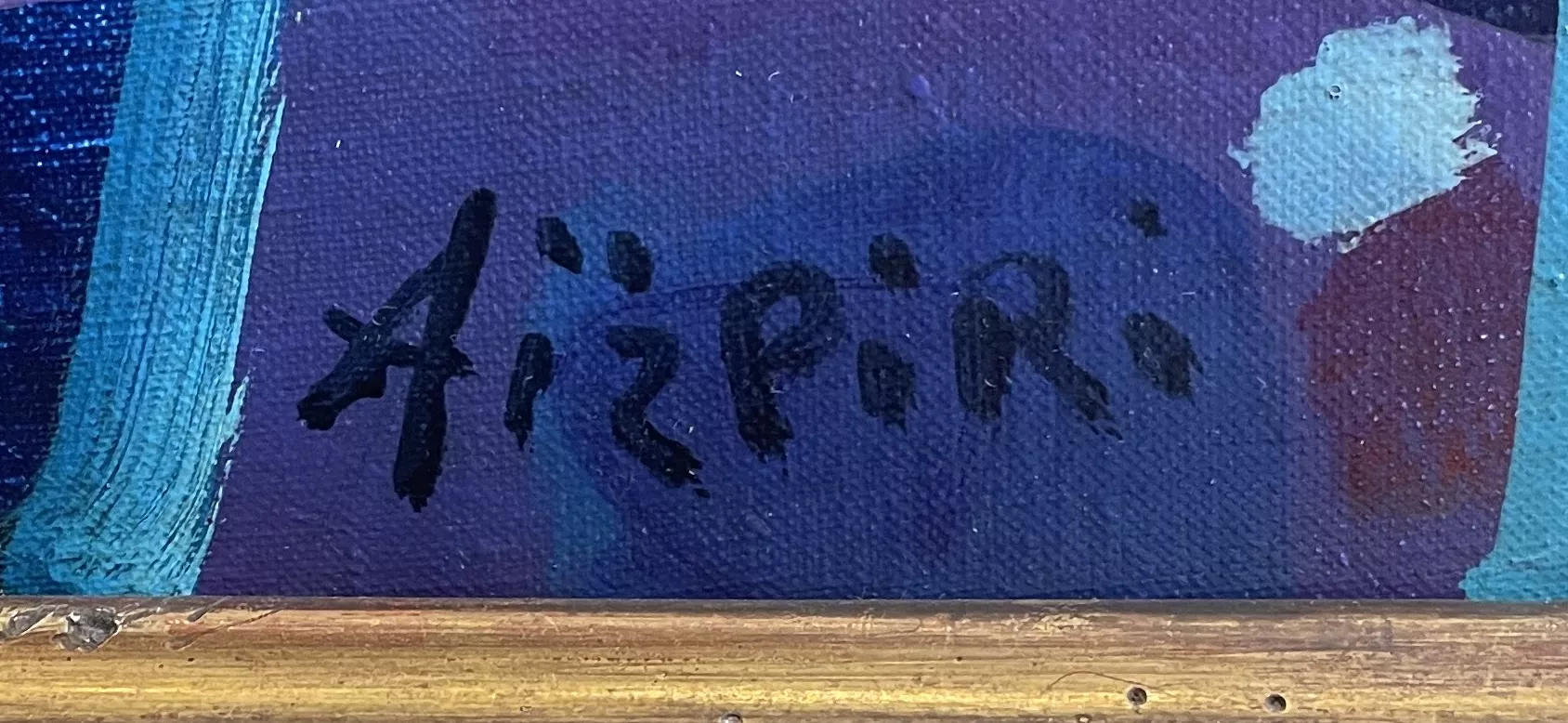
His signature
Not all of Paul Aïzpiri's works are signed. It is also possible that it is a copy or that the mention has faded over time, which is why expertise is paramount.
Expertise your property
If you own a work by Paul Aïzpiri, don't hesitate to request a free appraisal by filling in our online form.
A member of our team of experts and certified auctioneers will contact you to provide an estimate of the market value of your work.
If you are considering selling your work, our specialists will also guide you through the various alternatives available to obtain the best possible price, taking into account market trends and the specific features of each work.
Estimate in less than 24h
Discover in the same theme

Rating and value of works, paintings, drawings by René Magri...
René Magritte is a twentieth-century surrealist painter and draughtsman with a sandy reputation on the auction market.
Learn more >

Rating and value of paintings by Marcelle Loubchansky
Marcelle Louchansky is a lyrical abstraction artist whose stock has risen in recent years. Her works are highly prized at auction.
Learn more >

Rating and value of paintings by Auguste Herbin
Auguste Herbin is a painter and theoretician of abstraction who has produced works that are highly valued at auction.
Learn more >
Other still lifes sold at auction

Estimated 15.000 - 20.000
Anthony II CLAESZ (1616-1642), Still life of flowers, oil on canvas

Estimated 8.000 - 12.000
Guillaume FOUACE (1837 - 1895), Still life with lobster, oil on canvas

Estimated 8.000 - 15.000
Maurice de VLAMINCK (1876-1958), Still life with jugs and leeks, oil on canvas

Estimated 3.000 - 5.000
Guillaume FOUACE (1837-1895), Still life with oysters, Oil on canvas

Estimated 3.000 - 5.000
Guillaume FOUACE, (1837-1895) Still life with melon, Oil on canvas

Estimated 4.000 - 6.000
Guillaume FOUACE (1837-1895), Still life with Roquefort cheese, Oil on canvas

Secure site, anonymity preserved

Auctioneer approved by the State

Free and certified estimates
Frequently asked questions
-
Who is Paul Aïzpiri, and what is his artistic background?Paul Aïzpiri (1919–2016) was a French painter of Basque origin who moved to Paris in the 1940s and joined the École de Paris. A devotee of figurative painting, he stood out for his vibrant expressionist style, his portraits and landscapes in vivid colors inspired by Mediterranean light, and his work influenced by Fauvism and Post-Impressionism.
-
What is the price range for Paul Aïzpiri's works, depending on the medium?Prices vary considerably depending on the medium: ceramics range from €300 to €700, prints and multiples between €10 and €2,900, watercolor drawings between €50 and €23,200, and oil paintings on canvas between €100 and €110,000. His Expressionist paintings, particularly his colorful landscapes and still lifes, are the most sought-after and show strong potential for appreciation.
-
How do I have a work by Paul Aïzpiri authenticated and appraised?Auctie's offers a free, no-obligation appraisal of your artwork by state-certified auctioneers and experts. You'll receive an accurate estimate of its current market value within 48 hours, making the appraisal request process quick and easy.
-
Is this the right time to sell a work by Paul Aïzpiri?Yes, this is a good time: Paul Aïzpiri’s market value has stabilized and is on the rise, driven by collectors’ continued interest in his work. His works, which are still sometimes undervalued compared to those of other contemporary artists, are gradually gaining value on the auction market.
-
How does the sale of a work of art work at Auctie's?Auctie's supports you every step of the way: after a free appraisal of your artwork, our experts will guide you toward the best sales approach to achieve the highest possible price. We then organize the auction with the assistance of licensed auctioneers.
